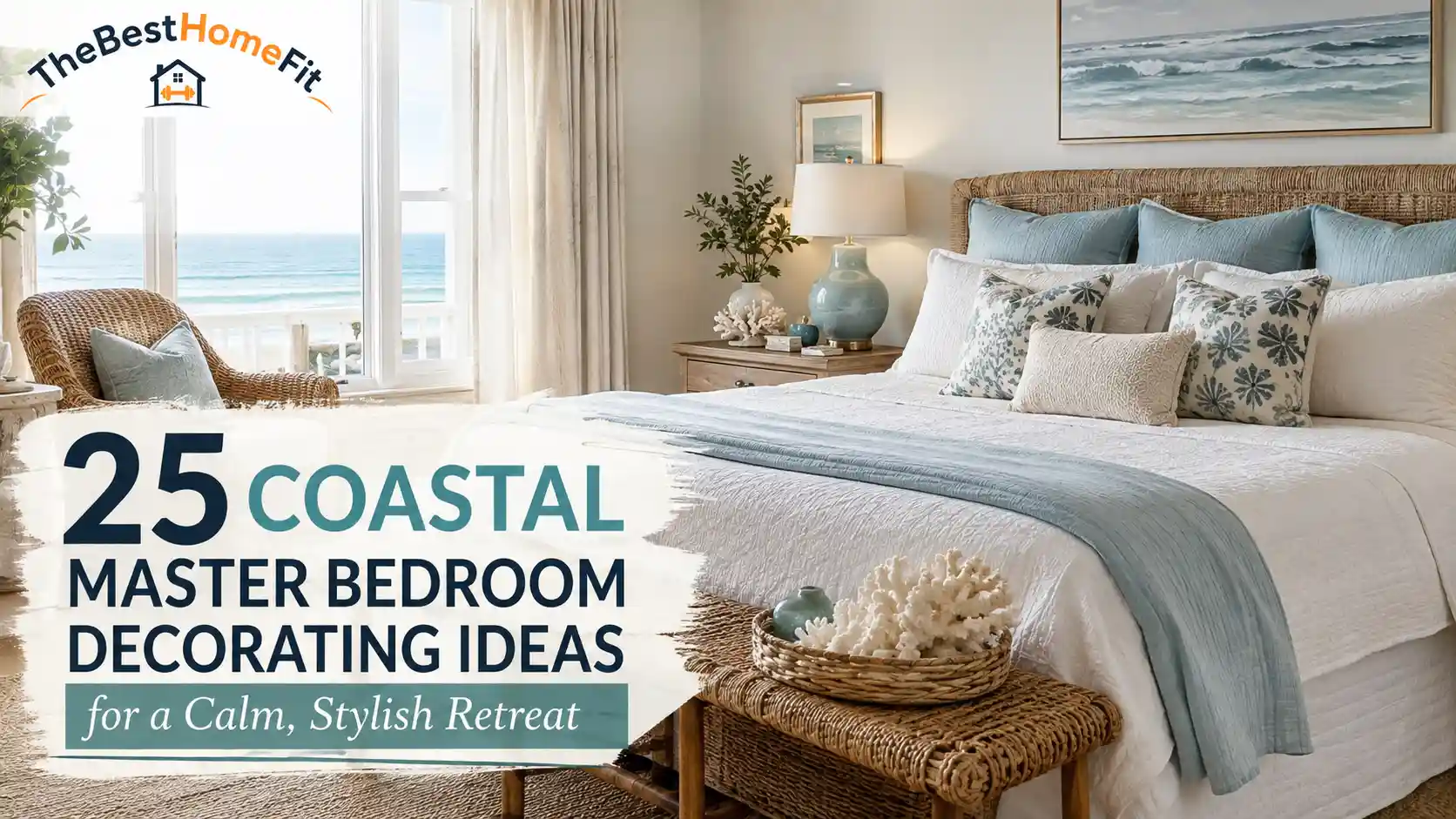
A coastal bedroom should feel light, comfortable, and naturally relaxing. However, creating that feeling requires more than adding blue cushions, seashells, or nautical artwork. The most successful coastal interiors combine warm neutral colours, natural textures, breathable fabrics, practical furniture, and carefully selected decorative details.
These coastal master bedroom decorating ideas will help you design a peaceful retreat whether you live beside the ocean, in a city apartment, or in a colder inland climate. You will find ideas for modern, neutral, luxury, small, rental-friendly, and budget-conscious bedrooms, along with practical guidance on layout, lighting, flooring, storage, and climate.
The goal is not to make your bedroom look like a themed beach shop. It is to create a calm, sophisticated room that feels fresh, comfortable, and connected to nature.
What Makes a Master Bedroom Look Coastal?
Coastal design is inspired by the colours, materials, light, and relaxed atmosphere associated with the shoreline. It does not need to include obvious beach symbols.
A balanced coastal bedroom normally includes five essential elements:
- A light or nature-inspired colour palette
- Natural materials such as wood, linen, cotton, rattan, or jute
- Soft, layered bedding
- Plenty of natural or warm artificial light
- A limited number of coastal-inspired accessories
The basic formula is simple:
Warm neutral base + ocean-inspired accents + natural textures + soft fabrics + uncluttered styling
Coastal and nautical styles are not exactly the same. Nautical rooms often use anchors, ropes, navy stripes, ships, and other maritime symbols. Coastal rooms are usually softer and more understated. They focus on atmosphere rather than obvious themes.
Choose Your Coastal Master Bedroom Style
Before buying furniture or choosing paint, decide what type of coastal bedroom you want. Having a clear style direction will prevent the room from feeling mismatched.
Modern Coastal
Modern coastal bedrooms combine clean furniture lines with soft colours and natural textures. White, cream, beige, muted blue, and light wood are common.
Use minimal accessories, contemporary lighting, simple artwork, and streamlined furniture. Avoid filling every surface with decorative objects.
Hamptons Style
Hamptons-style bedrooms are elegant, spacious, and slightly more formal. They often feature crisp white bedding, navy accents, upholstered headboards, symmetrical bedside tables, panelled walls, and polished lighting.
This style works particularly well in larger bedrooms with high ceilings or generous natural light.
Coastal Boho
Coastal boho bedrooms feel casual, creative, and highly textured. They may include rattan furniture, handmade textiles, woven wall decorations, relaxed linen bedding, plants, and warm earthy colours.
To prevent visual clutter, keep the overall colour palette limited.
Coastal Farmhouse
Coastal farmhouse style combines beach-inspired colours with rustic materials. White or weathered furniture, wooden beams, simple cotton bedding, vintage accessories, and practical storage all work well.
The key is to balance rustic pieces with lighter coastal colours.
Classic New England Coastal
This style often features navy, white, soft grey, striped fabrics, traditional furniture, and subtle maritime references. It is more structured than tropical or bohemian coastal design.
Mediterranean Coastal
Mediterranean coastal bedrooms use warmer colours and materials. Think white plaster walls, terracotta accents, natural wood, linen curtains, woven lighting, and muted ocean blue.
This style is ideal when you want the bedroom to feel sunny and relaxed rather than cool and formal.
Choose the Right Coastal Bedroom Colour Palette
Colour creates the foundation of the room. Coastal bedrooms do not have to be completely white and blue.
Warm White, Cream, and Sand
Warm whites and sandy neutrals create a soft, timeless base. They reflect light without making the bedroom feel cold.
Try combining:
- Warm white walls
- Cream bedding
- Beige curtains
- Light oak furniture
- Pale blue accessories
Pale Blue and Soft Grey
This combination creates a calm, airy appearance. Use pale blue on bedding, artwork, or one feature wall rather than covering every surface.
Seafoam Green and Natural Wood
Seafoam, sage, and muted green shades work well for a natural coastal look. Pair them with light wood, linen, and off-white fabrics.
Navy and Crisp White
Navy creates contrast and works particularly well in Hamptons or New England-inspired bedrooms. Use it carefully through cushions, lamps, a bench, or one accent wall.
Taupe, Driftwood, and Dusty Blue
These colours create a more mature coastal bedroom. They work well with existing dark wood furniture or colder climates.
Muted Coral and Sunset Accents
Small amounts of coral, blush, terracotta, or peach can warm up a neutral coastal room. Limit these colours to artwork, cushions, or decorative objects.
25 Coastal Master Bedroom Decorating Ideas
1. Start With Warm White Walls
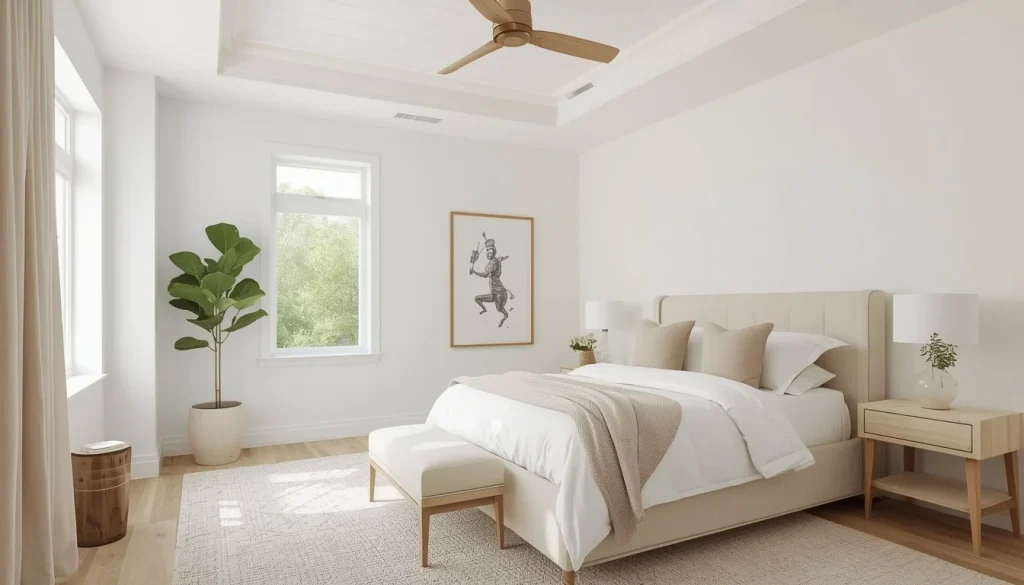
Warm white walls create a bright base while keeping the room comfortable and inviting. Avoid extremely cold whites, especially if your bedroom receives limited sunlight.
Cream, ivory, soft white, and pale greige are often easier to live with than brilliant white.
2. Make the Bed the Main Focal Point
The bed should visually anchor the room. Place it against the strongest uninterrupted wall whenever possible and create balance with bedside tables, lighting, or artwork.
A well-dressed bed makes the entire room feel more complete, even when the rest of the decoration is simple.
3. Choose a Rattan or Cane Headboard
Rattan and cane add natural texture without making the room feel heavy. They work especially well with white bedding, light wood furniture, and linen curtains.
In a small bedroom, choose an open cane design that allows the wall behind it to remain visible.
4. Use a Light-Wood Bed Frame
White oak, ash, maple, and washed wood finishes reinforce the relaxed coastal atmosphere. Choose a simple bed frame with clean lines instead of an overly ornate design.
Dark furniture can still work, but light wood usually makes the room feel more open.
5. Layer White and Blue Bedding
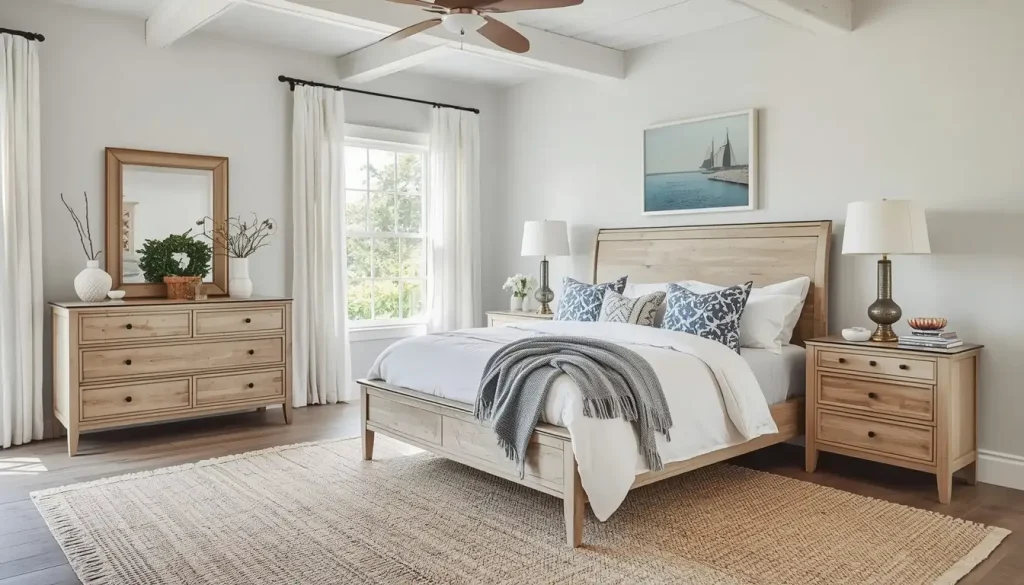
Begin with white or cream sheets, add a lightweight quilt or duvet, and finish with a folded throw and a few accent cushions.
Use different shades of blue rather than one bright matching colour. Pale blue, slate, denim, and navy can create depth without looking repetitive.
6. Select Breathable Linen or Cotton Bedding
Coastal bedrooms should feel comfortable as well as attractive. Linen, cotton percale, and lightweight cotton blends are ideal for warm climates.
In colder regions, layer these fabrics with a wool throw, thicker quilt, or textured blanket.
7. Add a Jute or Seagrass Rug
A natural-fibre rug introduces texture and defines the sleeping area. Choose a rug large enough to extend beyond both sides and the foot of the bed.
For additional softness, select a wool-and-jute blend or layer a smaller soft rug over a larger natural-fibre base.
8. Hang Light, Airy Curtains
Linen-look or sheer curtains help soften windows and allow natural light to enter. Hang the curtain rod higher and wider than the window to make the room appear taller and more spacious.
For privacy and sleep, combine sheer curtains with blackout blinds or lined panels.
9. Install Woven Roman Shades
Woven shades add warmth and texture while controlling light. They work especially well in neutral bedrooms where the design depends on natural materials rather than strong colours.
Choose moisture-resistant options in humid climates.
10. Create a Panelled Feature Wall
Shiplap, tongue-and-groove, board-and-batten, and simple wall moulding can add architectural interest behind the bed.
Keep the colour soft and consistent with the rest of the room. White, pale blue, muted green, or light greige are safe choices.
11. Use Grasscloth or Textured Wallpaper
Grasscloth and linen-effect wallpaper can make a coastal bedroom feel more sophisticated. They provide texture without relying on obvious beach patterns.
For rental properties, consider removable wallpaper behind the bed.
12. Add Oversized Coastal Artwork
One large artwork usually looks better than many small beach-themed signs. Choose abstract ocean art, soft landscape photography, botanical prints, or an image of a meaningful coastal location.
Make sure the artwork is wide enough to relate visually to the bed.
13. Introduce Blue Through Accessories
You do not need blue walls to create a coastal bedroom. Add blue through cushions, throws, lamps, vases, artwork, or a bench.
Repeating the colour in two or three areas will make the room feel coordinated.
14. Choose Practical Coastal Bedside Tables
Look for bedside tables in light wood, whitewashed finishes, cane-front designs, or simple painted styles.
Storage is important in a main bedroom. At least one drawer or closed compartment will help keep personal items out of sight.
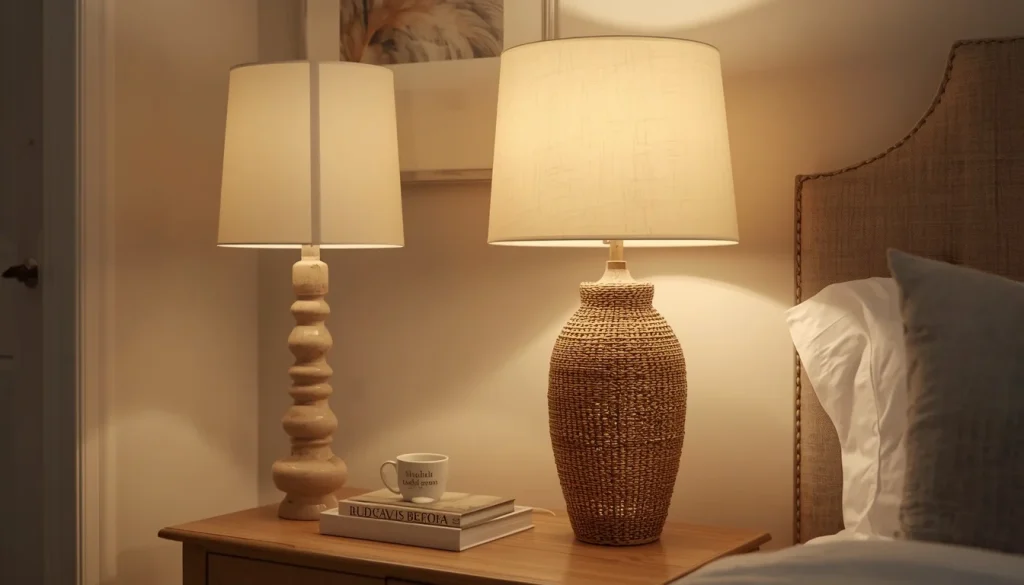
15. Use Ceramic, Glass, or Textured Lamps
Ceramic, clear glass, frosted glass, and woven lamps work well in coastal interiors. Choose warm bulbs to prevent the bedroom from feeling cold at night.
The bottom of the lampshade should sit close to eye level when you are seated in bed.
16. Add a Woven Pendant Light
A rattan, bamboo, linen, or paper pendant can become a subtle statement feature. Choose a design that feels light rather than bulky.
If the ceiling is low, use a semi-flush woven fixture instead.
17. Create a Coastal Reading Corner
An empty corner can become a useful reading area with a comfortable chair, compact side table, floor lamp, and soft throw.
Choose a chair in cream, pale blue, natural linen, or subtle stripes.
18. Place a Bench at the End of the Bed
A bench adds function and makes the room look more finished. It provides a place to sit, arrange cushions, or prepare clothes.
Choose woven, upholstered, or light-wood designs. Make sure there is enough walking space between the bench and other furniture.
19. Bring in Greenery
Plants add life and natural colour. Palms, olive trees, rubber plants, and simple leafy plants can complement coastal materials.
Select plants that suit the bedroom’s actual light level. A realistic artificial plant is better than an unhealthy live plant.
20. Display Handmade or Natural Objects
A piece of driftwood, handmade ceramic vase, woven basket, carved bowl, or locally produced artwork can give the room character.
Use only a few meaningful objects rather than filling shelves with mass-produced coastal accessories.

21. Use Mirrors to Reflect Natural Light
Place a mirror opposite or beside a window to distribute light around the bedroom. A large mirror can also make a small room feel wider.
Wood, rattan, and simple metal frames all work well.
22. Choose Furniture With Visual Space
Furniture raised on visible legs makes the floor appear more open. This is particularly helpful in smaller bedrooms.
Avoid overcrowding the room with a complete matching furniture set. Select only the pieces you genuinely need.
23. Add Hidden Bedroom Storage
A calm coastal bedroom should not feel cluttered. Use storage beds, closed bedside tables, under-bed boxes, baskets, wardrobes, or a storage bench.
Closed storage is especially important for everyday items that do not contribute to the decoration.
24. Layer Natural Textures
Combine smooth cotton, relaxed linen, woven jute, natural wood, cane, wool, and ceramic. Variation in texture prevents a neutral room from appearing flat.
Do not use every natural material at once. Repeat two or three materials throughout the bedroom.
25. Keep Coastal Accessories Minimal
A bedroom does not need anchors, boats, shells, starfish, ropes, and signs at the same time.
Choose two to four clear coastal details and allow the colours, fabrics, and textures to communicate the rest of the style.
Neutral Coastal Master Bedroom Ideas
A neutral coastal bedroom can feel calm and sophisticated without using obvious blue accents.
Start with warm white, ivory, beige, oatmeal, or pale taupe. Add light wood furniture, cream bedding, natural curtains, and a textured rug.
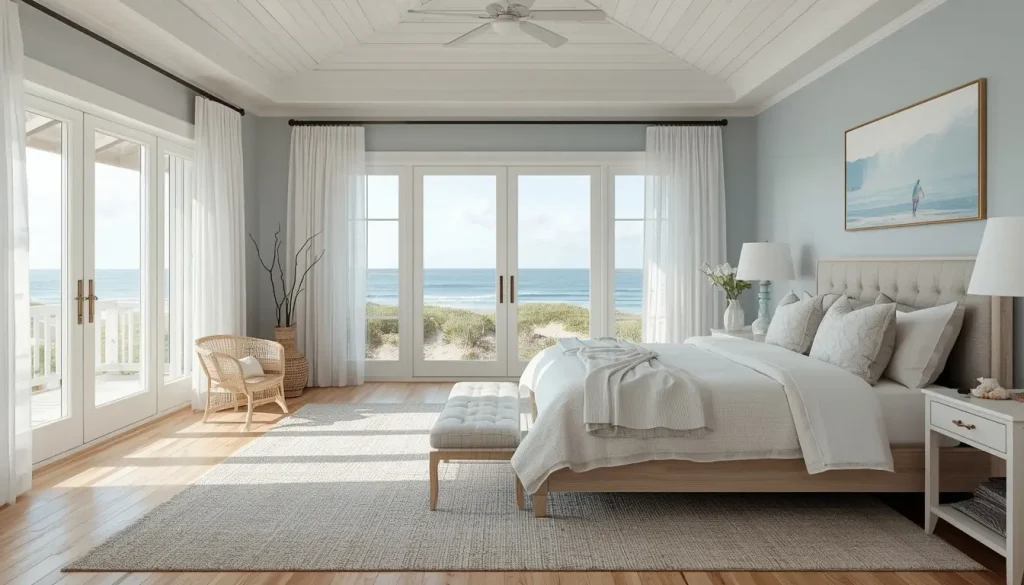
To prevent the room from feeling plain, include contrast through:
- Darker wood details
- Black or bronze lighting
- Textured cushions
- Woven baskets
- Large-scale artwork
- Green plants
A white and beige coastal bedroom works best when the materials have visible texture. Linen, wool, cane, jute, and natural wood create interest without requiring strong colour.
Can a Coastal Master Bedroom Be Dark and Moody?
Coastal design does not always have to be pale. Dark navy, slate blue, deep green, charcoal, and weathered brown can create a dramatic coastal bedroom.
Use dark colours strategically. A navy feature wall behind the bed can work well when balanced with white bedding, pale curtains, light flooring, and warm lighting.
Dark furniture can also be incorporated successfully. Pair it with:
- Light walls
- Cream or white bedding
- A pale rug
- Woven accessories
- Soft blue or green accents
- Warm metallic details
The goal is to create contrast without making the entire room feel heavy.
Modern Coastal Master Bedroom Ideas
Modern coastal bedrooms are cleaner and less literal than traditional beach-themed rooms.
Choose furniture with simple lines, neutral walls, and a restrained colour palette. Replace obvious shell artwork with abstract ocean prints or large landscape photography.
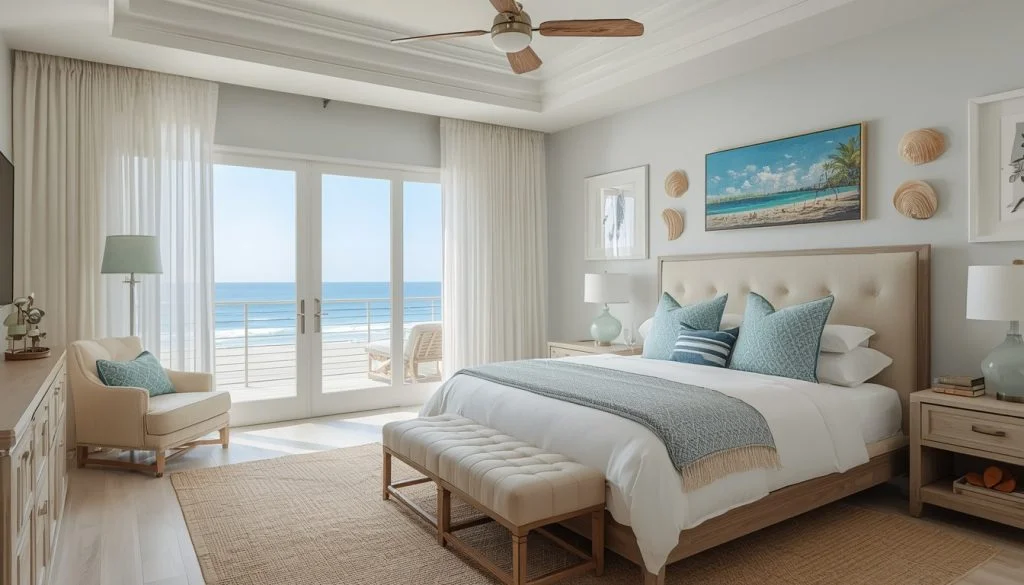
Black, bronze, or brushed brass accents can make the room feel more contemporary. Use them through curtain rods, lighting, handles, or picture frames.
Keep decorative surfaces relatively clear. One lamp, one book, and one small object on a bedside table will usually look more refined than several accessories.
Luxury Coastal Master Bedroom Ideas
A luxurious coastal bedroom depends more on proportion, comfort, and finishing than expensive beach accessories.
Invest in Layered Bedding
Use high-quality sheets, a full duvet, a lightweight quilt, sleeping pillows, decorative cushions, and a folded throw. Keep the arrangement comfortable rather than excessive.
Install Full-Length Curtains
Curtains that extend from near the ceiling to the floor make the bedroom feel taller and more polished.
Create Symmetry
Matching bedside tables and lamps can give the room a calm, hotel-like appearance. Symmetry works especially well in Hamptons and classic coastal interiors.
Use One Oversized Statement
Choose one strong feature, such as a large headboard, pendant light, artwork, rug, or upholstered bench. Avoid making every item compete for attention.
Mix Refined and Natural Materials
Combine linen, wool, ceramic, natural wood, and subtle metallic finishes. This creates a luxurious room without losing the relaxed coastal feeling.
Small Coastal Master Bedroom Ideas
A small coastal bedroom should feel open and functional rather than filled with decorative furniture.
Use a consistent colour palette across walls, curtains, bedding, and large furniture. Fewer colour changes will make the room feel less divided.
Choose bedside tables with drawers, wall-mounted sconces, storage under the bed, and furniture with visible legs.
Use one appropriately sized rug instead of several small rugs. A larger rug can make the sleeping area feel more generous.
Limit the room to one main statement feature. This could be a cane headboard, panelled wall, pendant light, or large artwork.
Avoid oversized benches, deep armchairs, and bulky wardrobes unless the room can accommodate them comfortably.
How to Plan a Coastal Master Bedroom Layout
A beautiful bedroom will not feel relaxing if the furniture arrangement is awkward.
Choose the Best Wall for the Bed
Place the bed against a solid wall where possible. Avoid blocking windows, doors, wardrobes, or main walking routes.
Maintain Comfortable Walkways
Leave enough room to move around both sides of the bed. The pathway between the bed and dresser should also remain clear.
Position the Rug Correctly
For a large bed, place the rug beneath the lower two-thirds of the frame so it extends beyond both sides and the foot.
A small rug floating only at the end of the bed can make the room look disconnected.
Balance Bedside Furniture
Bedside tables do not need to match perfectly, but they should have a similar visual weight. Their height should be reasonably close to the top of the mattress.
Protect Natural Light
Do not place tall furniture directly in front of a window unless there is no practical alternative.
Create Zones in Large Bedrooms
A large main bedroom can include separate areas for sleeping, reading, dressing, or working. Use rugs, lighting, and furniture placement to define each zone.
Coastal Master Bedroom Accent Wall Ideas
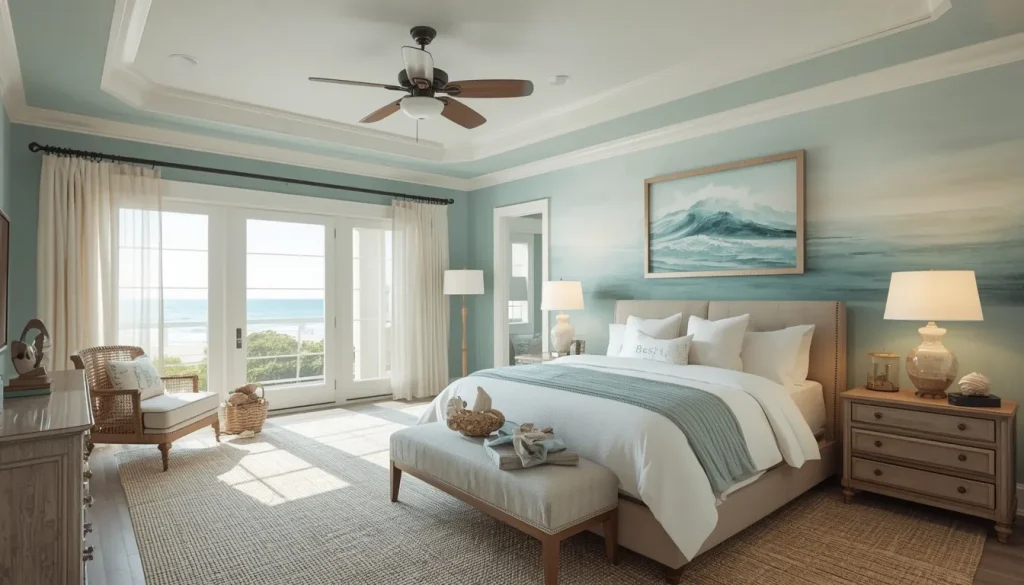
An accent wall can provide character without overwhelming the room.
Painted Blue or Green Wall
Muted blue, dusty aqua, seafoam, slate, or soft green can create a calm focal point behind the bed.
White Shiplap
White shiplap adds subtle structure and works with modern, farmhouse, and classic coastal styles.
Natural Wood Panelling
Light or whitewashed wood creates warmth. Use vertical panels to make the ceiling appear higher.
Grasscloth Wallpaper
Grasscloth provides sophisticated natural texture and works especially well in neutral coastal bedrooms.
Board-and-Batten
Board-and-batten panelling can add architectural detail without making the room feel overly rustic.
Coastal Mural
A soft landscape or abstract ocean mural can create impact. Choose a muted design rather than a highly realistic tropical beach scene.
Coastal Ceiling Ideas
The ceiling can contribute to the design, particularly in rooms with architectural character.
White shiplap can make a vaulted ceiling feel brighter. Exposed wood beams can add warmth and contrast. In larger bedrooms, a woven ceiling fan or pendant light can strengthen the coastal atmosphere.
Choose ceiling fans with simple blades and a quiet motor. The design should support the room rather than dominate it.
Best Flooring for a Coastal Master Bedroom
Light Wood Flooring
Light oak, whitewashed wood, and pale laminate create an airy appearance. They pair easily with jute, wool, and patterned rugs.
Dark Wood Flooring
Dark flooring can work in a coastal bedroom when the walls, bedding, and curtains are light. Use a large pale rug to soften the contrast.
Carpet
Neutral carpet can create a cosy coastal bedroom, especially in colder climates. Choose cream, beige, oatmeal, or light grey.
Tile
Tile is practical in warm or humid regions. Add softness with an appropriately sized rug and layered bedding.
Existing Flooring
You do not need to replace the floor to achieve a coastal look. A large rug can visually connect the flooring to the new colour palette.
Rental-Friendly Coastal Master Bedroom Ideas
You can create a coastal bedroom without painting walls or making permanent changes.
Start with the elements that have the greatest visual impact:
- Bedding
- Curtains
- Rug
- Headboard
- Lighting
- Artwork
Use removable wallpaper, adhesive wall hooks, freestanding lamps, lightweight mirrors, and furniture that can move with you.
Cover unattractive flooring with a large rug. If existing furniture is dark, lighten the room with pale fabrics, natural baskets, and warm white lighting.
Avoid making expensive custom changes to a space you do not own.
Coastal Master Bedroom Ideas on a Budget
A full renovation is not necessary. Focus on changes that affect the largest surfaces first.
Under $200
Depending on local prices, focus on:
- Cushion covers
- A throw blanket
- Simple artwork
- New lampshades
- Baskets
- Small decorative accessories
Between $200 and $500
Consider:
- New bedding
- Curtains
- A medium-sized rug
- Wall paint
- Updated bedside lighting
Between $500 and $1,000
You may be able to add:
- A new headboard
- Larger rug
- New bedside tables
- A storage bench
- Upgraded window treatments
Above $1,000
Prioritise long-term improvements such as:
- A quality bed frame
- Flooring
- Built-in storage
- Wall panelling
- Professional painting
- Custom curtains
Spend money on comfort and function before decorative objects.
Adapt Coastal Bedroom Décor to Your Climate
The same coastal design does not work equally well in every region.
Warm and Humid Climates
Choose breathable cotton or linen bedding, washable fabrics, moisture-resistant finishes, and good ventilation.
Avoid placing untreated rattan, jute, or wooden furniture directly against damp walls. Allow space for air to circulate.
Select mould-resistant paint where humidity is a recurring problem.
Cold Climates
Create a warmer coastal bedroom with layered rugs, wool throws, upholstered furniture, thermal curtains, and warm bulbs.
Use beige, oatmeal, driftwood, dusty blue, and muted navy rather than relying only on crisp white.
You can maintain the coastal appearance while adding heavier winter layers.
Seasonal Decorating
Keep the core furniture and colour palette consistent. Change lightweight throws, cushions, duvets, and curtains according to the season.
This is more practical than redesigning the entire room twice a year.
How to Create a Coastal Master Bedroom Mood Board
A mood board helps you avoid buying items that look attractive individually but do not work together.
Choose One Main Inspiration Image
Select a room that reflects the atmosphere you want. Focus on the overall feeling rather than copying every product.
Select Three Main Colours
Choose one dominant neutral, one secondary colour, and one accent colour.
For example:
- Warm white
- Sandy beige
- Dusty blue
Collect Material References
Add examples of wood, bedding, curtains, rugs, and metal finishes. Check whether the materials feel consistent.
Add Large Furniture First
Place the bed, bedside tables, dresser, rug, and lighting on the mood board before adding small accessories.
Remove Anything That Does Not Fit
If an item belongs to a different colour palette or coastal style, leave it out even if you like it individually.
Coastal Master Bedroom Shopping Checklist
Use this checklist before buying decorative accessories:
- Warm neutral wall colour
- Comfortable bed and mattress
- Coordinated bedding
- Functional bedside tables
- Bedside lighting
- Window treatments
- Appropriately sized rug
- Closed storage
- One main artwork
- One or two natural woven elements
- Comfortable seating, if space allows
- A small amount of greenery
- Limited decorative accessories
The bed, lighting, storage, curtains, and rug should come before small decorations.
Coastal Bedroom Decorating Mistakes to Avoid
Using Too Many Nautical Symbols
Anchors, ropes, ships, shells, fish, and signs can quickly make the room look themed rather than refined.
Making Everything Blue and White
Add beige, green, grey, wood, black, or warm metallic details to create depth.
Buying a Complete Matching Furniture Set
A room looks more natural when furniture pieces coordinate without appearing identical.
Using Too Many Woven Materials
Rattan, jute, cane, bamboo, and seagrass are attractive, but using all of them together can make the room feel visually busy.
Ignoring Storage
Visible clutter will weaken the calm coastal effect, regardless of the colour palette.
Blocking Natural Light
Heavy curtains and poorly placed furniture can make the room feel smaller and darker.
Choosing Incorrect Furniture Sizes
Oversized furniture can make a small room difficult to use. Tiny furniture can look lost in a large main bedroom.
Using Cold Lighting
Bright blue-white bulbs can make a coastal room feel clinical. Warm lighting usually creates a more relaxing environment.
Choosing Theme Over Comfort
The bedroom must support sleep, storage, movement, privacy, and daily routines. Decoration should improve the room rather than interfere with its function.
Frequently Asked Questions
What Colours Are Best for a Coastal Master Bedroom?
Warm white, cream, sand, beige, pale blue, seafoam green, soft grey, navy, and driftwood brown all work well. Choose a neutral base and add one or two ocean-inspired accent colours.
How Can I Make My Bedroom Look Coastal?
Begin with light or neutral walls, natural materials, breathable bedding, simple window treatments, and warm lighting. Add a few subtle coastal details through artwork, cushions, or woven accessories.
Can I Create a Coastal Bedroom Without Using Blue?
Yes. Use white, cream, beige, oatmeal, light wood, rattan, linen, and soft green. Natural textures can communicate the coastal style without any blue.
What Is the Difference Between Coastal and Nautical Décor?
Coastal décor focuses on light, texture, natural materials, and relaxed colours. Nautical décor uses more obvious maritime elements such as anchors, ships, ropes, navy stripes, and marine symbols.
How Can I Make a Coastal Bedroom Look Expensive?
Use full-length curtains, layered bedding, properly sized rugs, balanced lighting, large-scale artwork, and limited accessories. Good proportions and uncluttered styling are more important than expensive decorations.
What Type of Bedding Works Best?
Cotton, linen, cotton percale, and other breathable fabrics work well. Use lightweight layers in warm climates and add wool or thicker quilts in colder regions.
Can Dark Furniture Work in a Coastal Bedroom?
Yes. Balance dark furniture with pale walls, light bedding, a large neutral rug, woven textures, and warm lighting.
How Do I Decorate a Small Coastal Master Bedroom?
Use a consistent light colour palette, furniture with visible legs, wall-mounted lighting, hidden storage, and one main decorative feature. Avoid overcrowding the room.
How Can I Create a Coastal Bedroom on a Budget?
Start with bedding, curtains, paint, cushions, lighting, and artwork. Reuse existing furniture and add natural textures through affordable baskets, rugs, and fabric accessories.
Is Coastal Bedroom Décor Still Timeless?
A subtle coastal bedroom can remain timeless because it is based on natural colours, useful furniture, and comfortable materials. Highly themed nautical accessories are more likely to look dated.
How Many Coastal Accessories Should a Bedroom Have?
There is no fixed number, but two to four obvious coastal accents are usually enough. Allow the colour palette, fabrics, and natural materials to create the overall atmosphere.
Final Thoughts
The best coastal master bedroom decorating ideas combine comfort, function, and a relaxed connection to nature. You do not need to live near the ocean or fill the room with shells and nautical signs.
Start with the largest elements: wall colour, bed, bedding, curtains, rug, and lighting. Then introduce natural materials, soft ocean-inspired colours, practical storage, and a small number of meaningful accessories.
Whether you prefer modern coastal, Hamptons, coastal boho, farmhouse, neutral, or moody design, consistency is the key. Choose one clear direction and repeat the same colours and materials throughout the room.
Begin with one simple update, such as lighter bedding, better curtains, or a natural-texture rug. Build the room gradually, and focus on creating a bedroom that feels calm, comfortable, and personal.

“A comfortable home and a healthy lifestyle go hand in hand.”
Hi, I’m Ethan Carter, the founder and lead editor of TheBestHomeFit. I’m passionate about helping people create beautiful, functional living spaces while building healthier lifestyles at home. Over the years, I’ve spent countless hours researching home decor trends, testing home gym equipment, and reviewing products to help readers make smarter buying decisions.
Through TheBestHomeFit, I share practical home improvement ideas, honest product reviews, buying guides, and fitness tips designed for everyday homeowners. My goal is to make it easier for you to create a home that looks great, feels comfortable, and supports your well-being.
When I’m not researching the latest products or writing in-depth guides, you’ll usually find me redesigning a room, trying new home workout routines, or enjoying quality time with my family.