An open closet can solve a surprisingly common bedroom problem: you need more storage, but you do not want a large, bulky wardrobe taking over the room.
The right open closet setup can keep clothes easy to reach while making better use of empty walls, corners, alcoves, and vertical space. It can also work well in bedrooms without a built-in closet.
The challenge is keeping everything organized. When clothes, shoes, bags, and accessories stay visible, clutter can quickly become part of the room.
That is why the best open closetideas for bedroom spaces combine good storage with a simple, intentional layout.
Below, you will find ideas for small bedrooms, rentals, rooms without closets, doorless closets, DIY projects, and more.
What Is an Open Closet?
An open closet is a clothing storage area without traditional solid doors.
It may include:
- Hanging rails
- Shelves
- Drawers
- Shoe racks
- Storage baskets
- Hooks
- Cabinets
- Freestanding clothing racks
Some open closets are built directly onto a wall. Others use modular systems that can be moved or adjusted.
You may also hear the term open wardrobe, especially in the UK and Australia. A clothing rack may also be called a clothes rail or garment rack.
The main advantage is simple: your clothes remain visible and easy to access.
The downside is that an open closet needs more regular organization than a closed wardrobe.
Best Open Closet Ideas for Bedroom
There is no single open closet layout that works for every bedroom.
The best option depends on your available wall space, clothing collection, budget, and whether you rent or own your home.
Here are 25 practical ideas to consider.
1. Build a Simple Wall-Mounted Open Closet
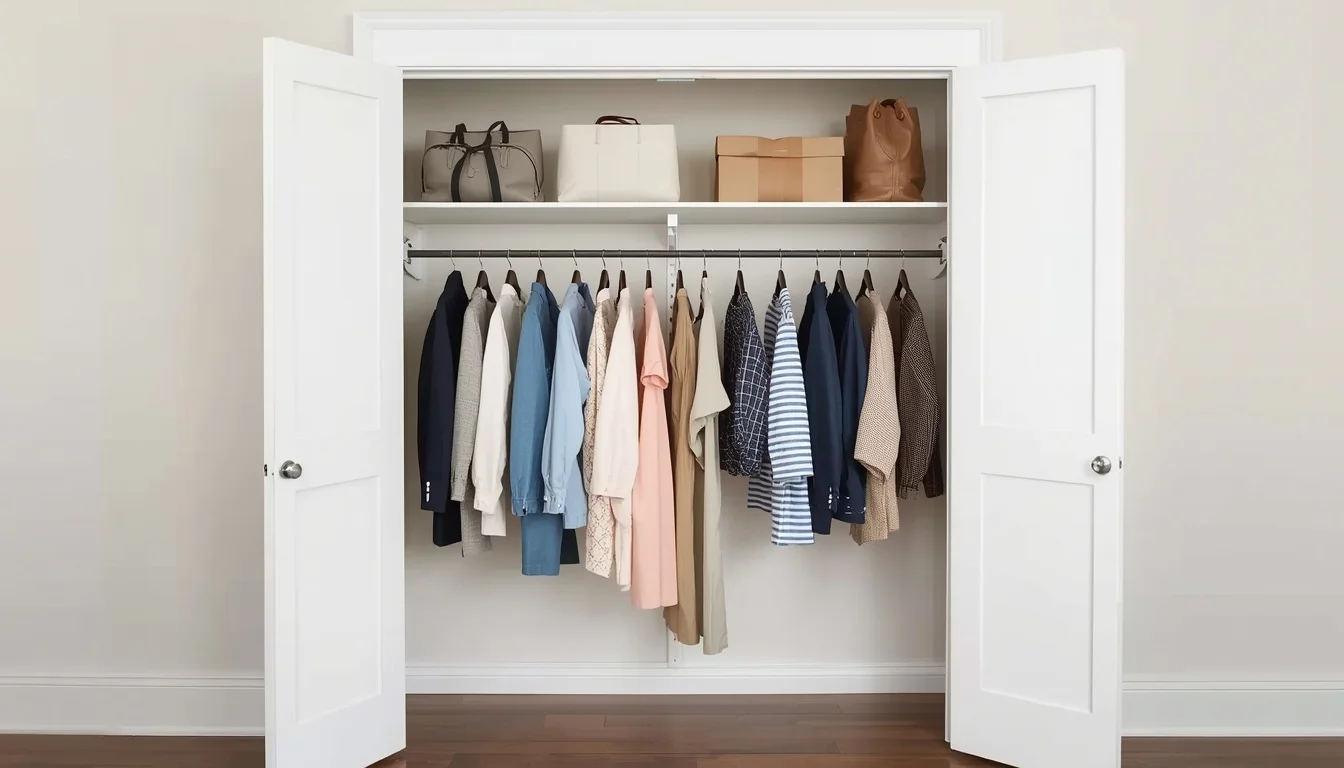
A wall-mounted open closet is one of the cleanest ways to create storage without using much floor space.
Install a hanging rod below one or two shelves.
Use the rail for shirts, jackets, dresses, and trousers. Store boxes, bags, or folded clothes on the upper shelves.
This layout works especially well on an empty bedroom wall.
2. Use a Freestanding Clothing Rack
A freestanding clothing rack is ideal if you want an easy setup with little or no installation.
It is also one of the best renter-friendly options.
Choose a model with:
- A hanging rail
- Lower shoe storage
- Side hooks
- Upper shelving
A narrow rack can fit into small bedrooms without making the space feel crowded.
3. Create an Open Closet With Shelves and Hanging Rods
Combining shelves with hanging space gives you more flexibility than using a clothing rail alone.
You can hang wrinkle-prone clothing while folding:
- Jeans
- Sweaters
- T-shirts
- Bedding
- Towels
Adding baskets to some shelves also creates hidden storage for smaller items.
4. Turn an Empty Bedroom Corner Into a Closet
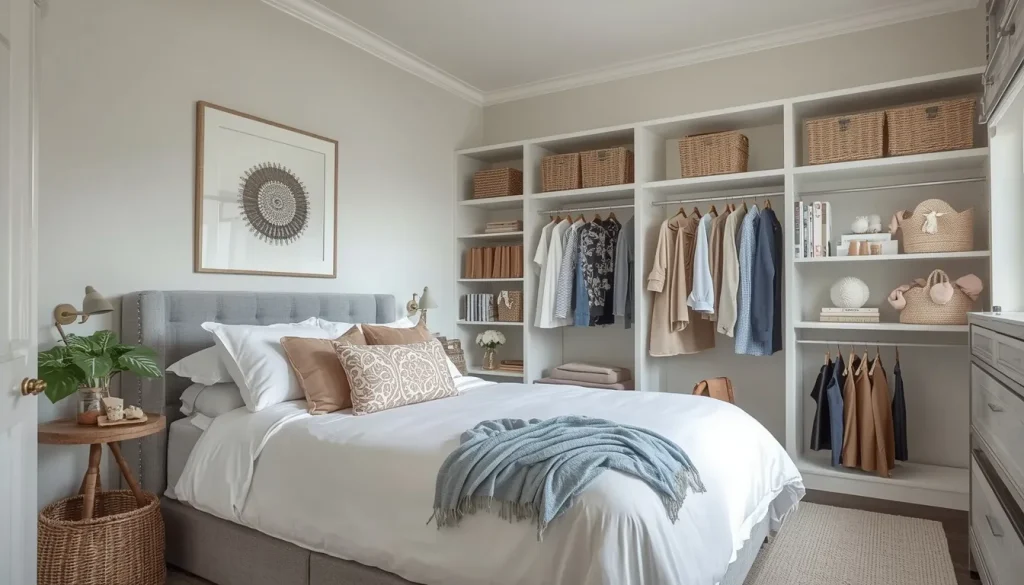
Corners often become wasted space.
An L-shaped rail or corner shelving system can turn that unused area into a practical open wardrobe.
This approach works well when you cannot dedicate an entire wall to storage.
Keep the structure visually light so the corner does not feel too heavy.
5. Use a Full-Wall Open Closet System
If you have a large clothing collection, use an entire wall.
A full-wall system can combine:
- Double hanging sections
- Long hanging space
- Shelves
- Drawers
- Shoe storage
- Accessory storage
Try to keep the arrangement symmetrical or visually balanced.
That helps a large open closet feel intentional rather than cluttered.
6. Create a Floor-to-Ceiling Open Closet
Vertical space is valuable, especially in a small bedroom.
Extend shelving toward the ceiling and reserve the highest shelves for items you do not use every day.
Good options include:
- Seasonal clothing
- Extra bedding
- Luggage
- Storage boxes
- Occasion wear
Keep everyday clothes closer to eye level.
7. Add Floating Shelves Above a Clothes Rail
A simple clothes rail can become much more useful with floating shelves above it.
The rail handles hanging clothes, while the shelves provide room for folded items and accessories.
This is a great minimalist option for people who do not own a huge wardrobe.
8. Combine a Dresser With an Open Clothing Rack
Not everything looks good on display.
Use an open rack for shirts, dresses, coats, and attractive clothing. Keep underwear, socks, sleepwear, and smaller items inside a dresser.
This combination gives you the best of both open and closed storage.
It can also make the bedroom look much tidier.
9. Build an Open Closet Around a Window
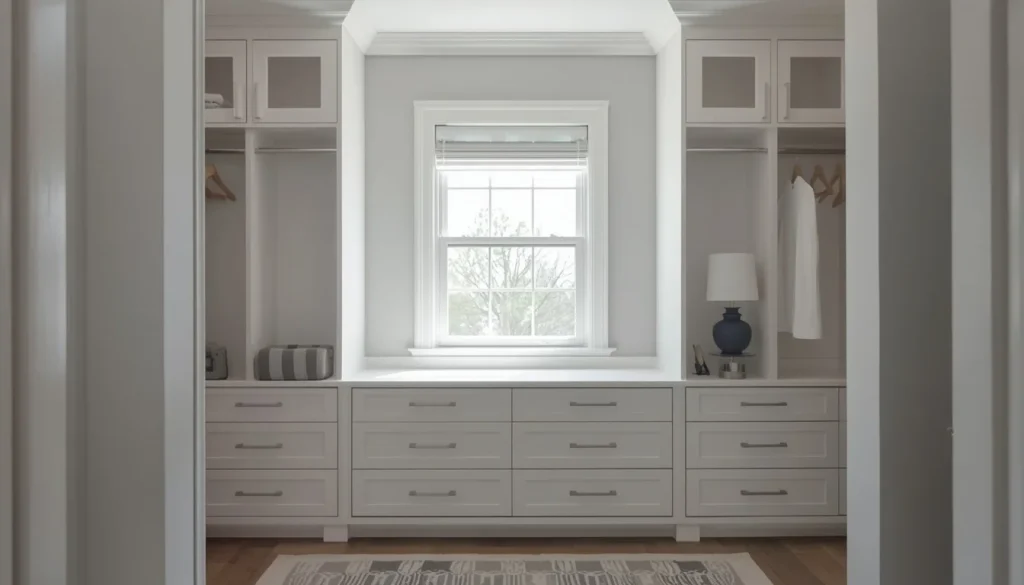
A window does not always have to interrupt your storage plan.
If wall space allows, install narrow closet sections on both sides of the window.
Low drawers or cabinets may also fit below the window.
Avoid blocking natural light or curtains.
10. Use Modular Closet Units
A modular open closet system lets you change the layout as your needs change.
You can add or remove:
- Shelves
- Rails
- Drawers
- Baskets
- Shoe racks
This flexibility is helpful for growing wardrobes and frequently changing rooms.
11. Try an Industrial Pipe Open Closet
Metal pipe rails can create an industrial-style open wardrobe.
They pair especially well with:
- Wood shelves
- Brick walls
- Neutral colors
- Dark hardware
Keep the rest of the room simple so the closet does not dominate the bedroom.
12. Create a Minimalist Open Wardrobe
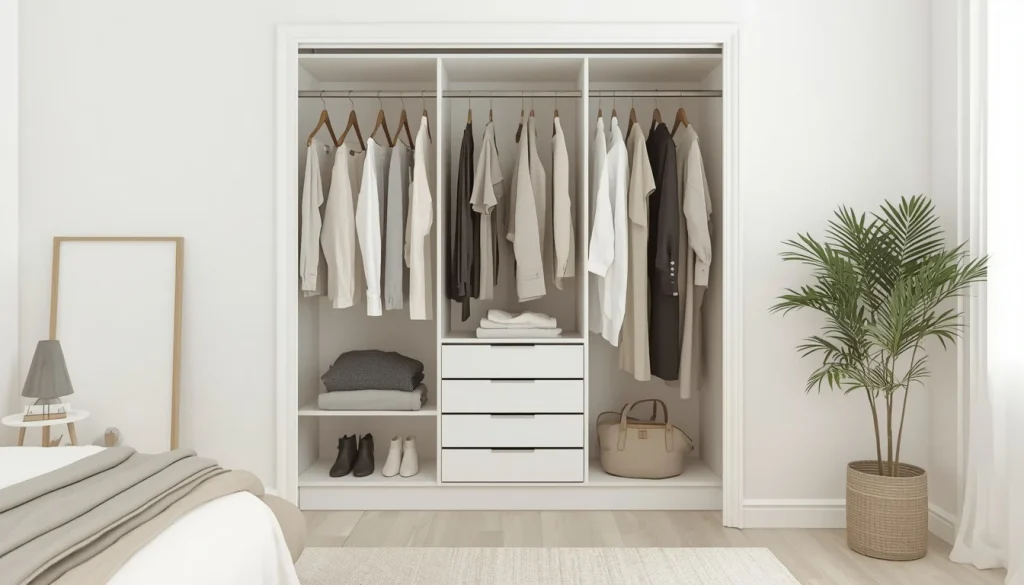
If you like a calm bedroom, avoid filling every inch of the closet.
Use one rail, a few shelves, matching hangers, and only the clothes you actually wear.
A minimalist open wardrobe works best when you regularly declutter.
13. Add an Open Closet Behind the Bed
A large bedroom may allow you to create a dressing area behind the bed.
Use a partial divider, headboard wall, or freestanding storage system to separate the sleeping and dressing zones.
This layout can make one room feel like two defined spaces.
14. Use a Curtain to Hide an Open Closet
An open closet does not have to stay open all the time.
Install a curtain in front of the storage area.
Close it when the closet looks busy. Open it when you need easy access.
Floor-to-ceiling curtains can also make the room feel softer and more finished.
15. Create a Boutique-Style Open Closet
Turn your favorite clothing into part of the room decor.
Display:
- Shoes
- Handbags
- Jackets
- Hats
- Jewelry
Leave enough empty space between items.
Boutique-style storage looks best when the closet feels curated rather than packed.
16. Add Built-In Shoe Shelves
Shoes can quickly make an open closet look messy.
Give them a dedicated storage zone.
Low shelves work well because shoes stay easy to reach without taking valuable hanging space.
Keep frequently worn pairs closest to the floor.
17. Use Baskets and Storage Boxes
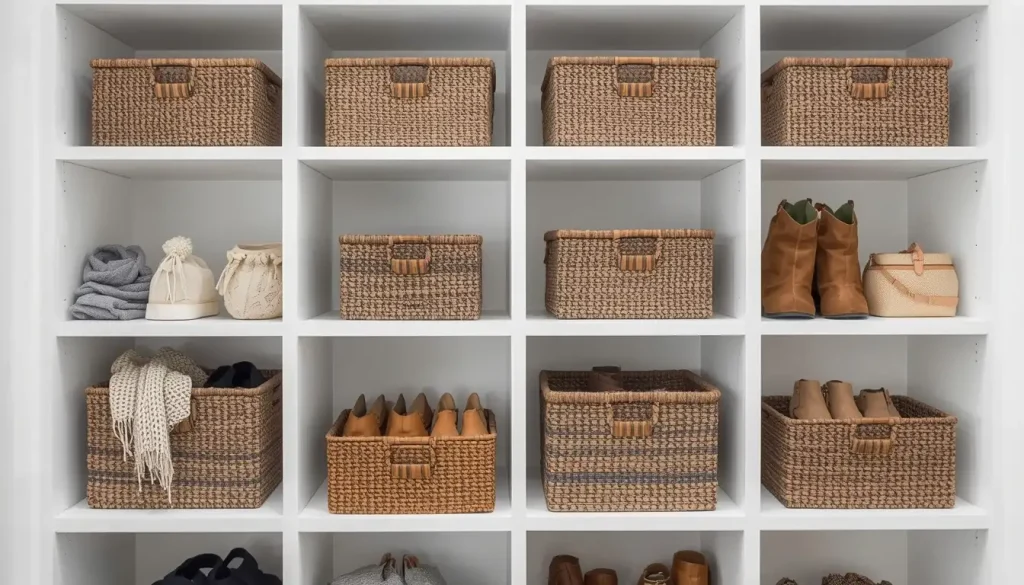
Open shelves do not mean every item must remain visible.
Use matching baskets or boxes for:
- Scarves
- Belts
- Socks
- Seasonal accessories
- Small bags
This creates a cleaner look while still keeping storage accessible.
18. Add Drawers for Small Clothing Items
Drawers are one of the best ways to prevent visual clutter.
Use them for anything that is difficult to stack neatly.
An open closet with drawers often feels more organized than one made entirely from rails and shelves.
19. Install Double Hanging Rods
Double hanging rails can significantly increase storage capacity.
Place one rail above another for shorter clothing such as:
- Shirts
- Blouses
- Jackets
- Folded trousers on hangers
Keep a separate section for long dresses or coats.
20. Add Hooks for Bags, Hats, and Accessories
Hooks make use of narrow wall areas that may otherwise stay empty.
Install them beside the closet for:
- Handbags
- Hats
- Belts
- Scarves
- Robes
Do not overload the hooks. Too many visible accessories can quickly make the bedroom feel busy.
21. Use a Mirror Beside the Open Closet
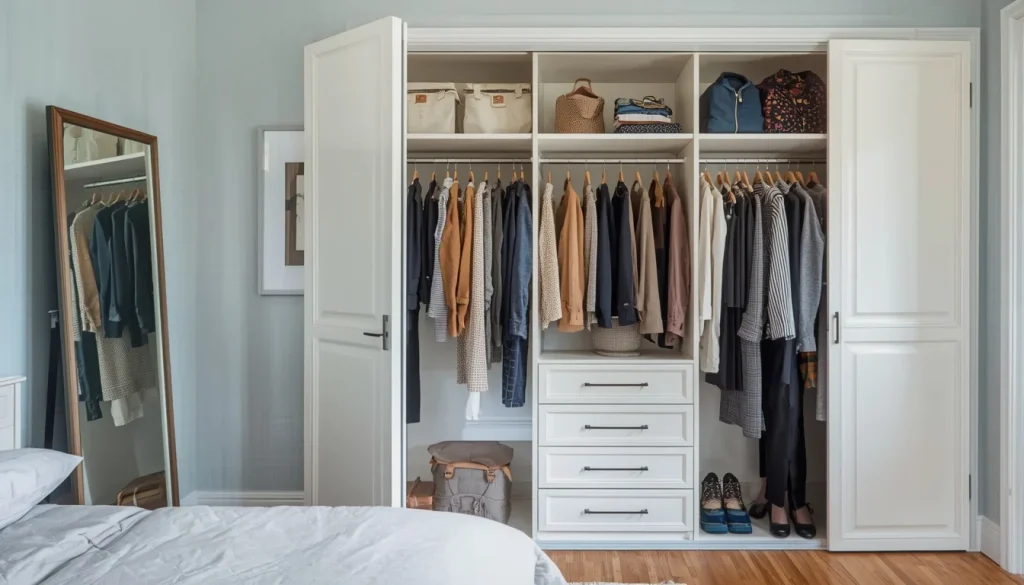
A full-length mirror makes an open wardrobe more functional.
Place it near your hanging clothes so you can check outfits without walking across the room.
Mirrors can also help a small bedroom feel brighter and more open.
22. Add Lighting to an Open Closet
Good lighting makes it easier to find clothing and helps the closet look more intentional.
Consider:
- LED strips
- Wall lights
- Under-shelf lighting
- Rechargeable motion lights
Avoid placing heat-producing lights too close to clothing.
23. Create a Renter-Friendly Open Closet
Renters may want storage without permanent changes.
Use:
- Freestanding rails
- Modular shelving
- Portable wardrobes
- Tension systems
- Lightweight drawer units
You can take the entire system with you when you move.
24. Build a DIY Open Closet on a Budget
You do not need an expensive custom wardrobe.
A basic DIY open closet may require only:
- A sturdy rail
- Wall brackets
- Shelves
- A small drawer unit
- Storage baskets
Plan the layout before buying materials.
A simple design usually looks better than a complicated design built without enough space.
25. Create a Small Open Closet in an Awkward Nook
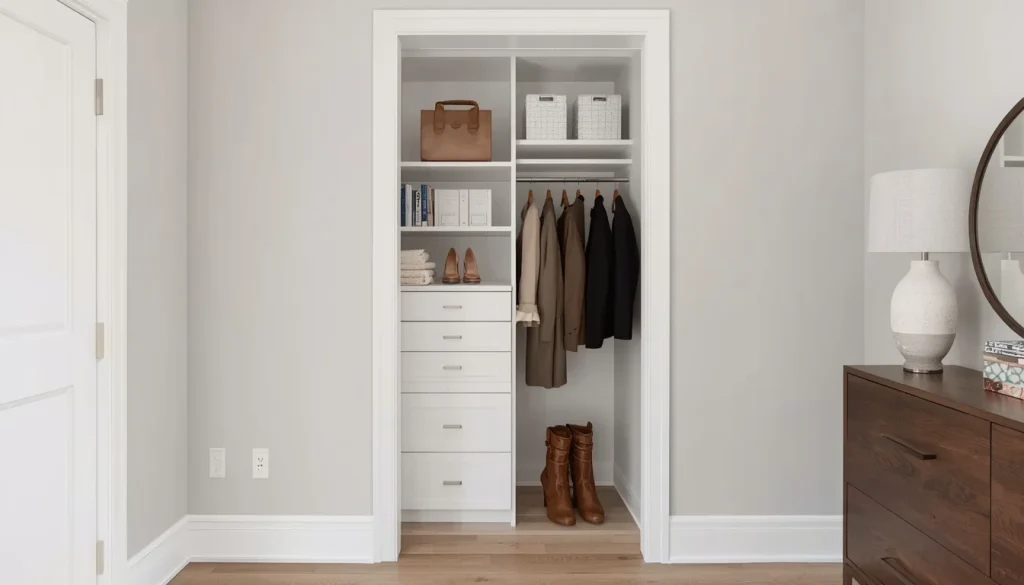
Small alcoves, recessed walls, and unused corners can make excellent closet locations.
Measure the space carefully and build around its actual shape.
Even a narrow nook may fit a short rail, several shelves, and hooks.
Open Closet Ideas for a Small Bedroom
Small bedrooms need storage that uses height without consuming too much floor space.
The goal is to make the closet useful without making the bedroom feel smaller.
Use Vertical Wall Space
Install shelves above the main hanging rail.
High storage works especially well for seasonal clothes, luggage, and boxes.
Choose a Narrow Clothing Rack
A slim garment rack can fit beside a bed, dresser, or doorway.
Avoid oversized racks if you have limited walking space.
Install Double Hanging Rails
Two rails make better use of wall height than one.
Use them for shorter garments and reserve a separate area for long clothes.
Use the Space Above the Closet
The area near the ceiling often goes unused.
Add high shelves for lightweight items you rarely need.
Keep heavy objects lower for safer access.
Combine Open Closet and Under-Bed Storage
Not every item needs to fit inside the closet.
Use under-bed boxes for seasonal clothing, spare bedding, or rarely worn shoes.
This keeps the visible closet less crowded.
Keep the Layout Visually Light
Choose slim frames, open shelves, and simple colors.
Heavy cabinetry can make a small bedroom feel even smaller.
Open Closet Ideas for Bedrooms Without a Closet
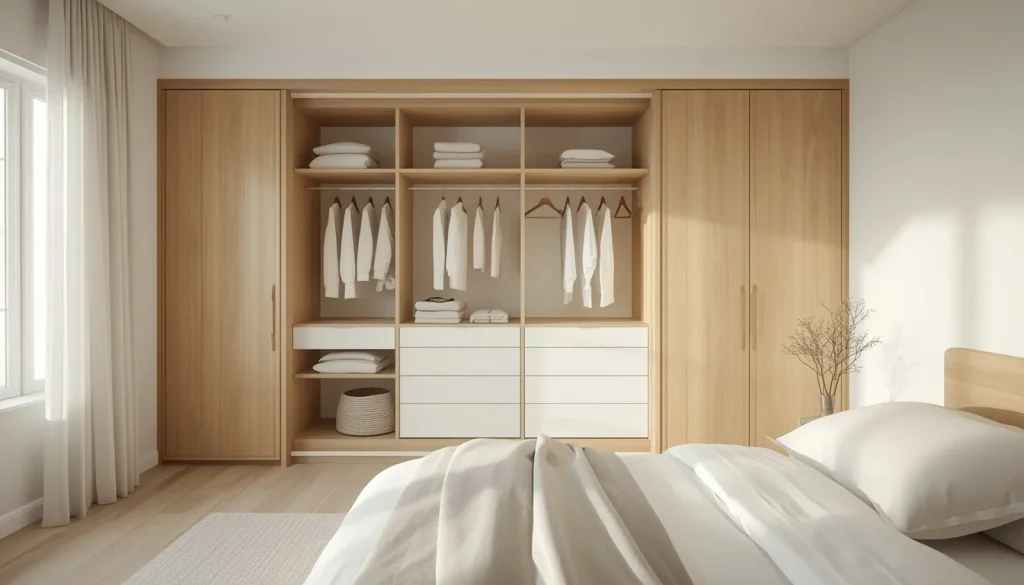
A bedroom without a built-in closet can still have excellent clothing storage.
You just need to create a defined storage zone.
Create a Closet Along an Empty Wall
Use a full wall for rails, shelves, and drawers.
This often creates more usable storage than a small traditional reach-in closet.
Convert an Unused Corner
An empty corner can hold a narrow rack or L-shaped shelving system.
This is especially useful in oddly shaped bedrooms.
Use a Clothing Rack and Dresser Combination
Hang clothes you want easy access to.
Place folded and personal items inside the dresser.
This simple setup can work in almost any bedroom.
Turn an Alcove Into an Open Wardrobe
If your bedroom has a recessed wall, treat it like a built-in closet.
Add rails and shelves inside the alcove.
A curtain can make it feel more private when needed.
Open Closet Without Doors Ideas
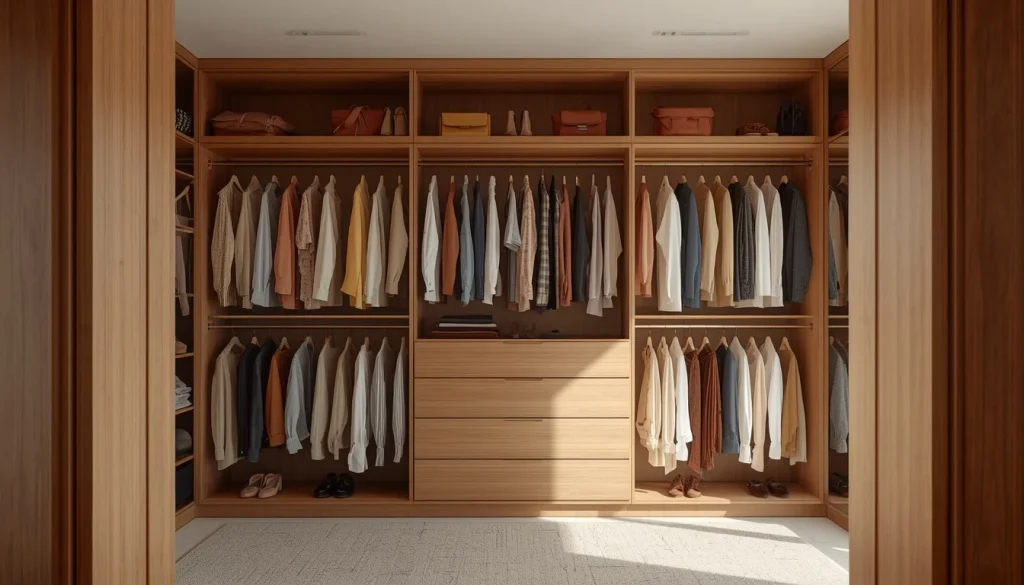
Removing closet doors can make a small bedroom easier to use.
It may also prevent swinging doors from blocking nearby furniture.
Turn a Reach-In Closet Into an Open Closet
If you already have a reach-in closet, simply removing the doors can change how the space feels.
Organize the interior carefully because everything will become visible.
Remove Closet Doors for More Floor Space
Traditional hinged doors need clearance.
Removing them may make it easier to place furniture close to the closet.
Style a Doorless Closet Like Part of the Bedroom
Use colors and materials that match the rest of the room.
Matching hangers, baskets, and shelves help the closet feel intentional.
Add a Curtain When You Want Privacy
A curtain gives you flexibility.
Keep the closet open during normal use and close it when you want a calmer bedroom.
Open Closet System Ideas for a Bedroom
A closet system creates more structure than a single clothing rack.
It is usually a better choice if you have several types of clothing and accessories.
Wall-Mounted Open Closet System
Wall-mounted systems keep much of the floor clear.
They are useful for maximizing vertical storage.
Freestanding Open Closet System
Freestanding systems require less permanent installation.
They are a strong choice for renters.
Modular Shelving and Rail System
A modular system can change as your storage needs change.
You can move shelves or add new sections later.
Adjustable Open Closet System
Adjustable rails and shelves help accommodate different clothing lengths and storage needs.
They are particularly useful for children, couples, or changing wardrobes.
Open Closet With Shelves, Drawers, and Hanging Space
A balanced open closet should not rely on one type of storage.
Different clothes need different solutions.
Use hanging space for items that wrinkle easily.
Use shelves for folded clothes.
Use drawers for smaller personal items.
Use baskets for accessories.
Use low shelves for shoes.
This combination creates a more functional closet and reduces visible clutter.
Open Closet Layout Ideas
Your room shape should guide your closet layout.
Single-Wall Open Closet
Best for simple rectangular bedrooms.
It keeps storage concentrated in one area.
L-Shaped Open Closet
Best for corners and rooms with two usable connecting walls.
Corner Open Closet
Best for small bedrooms where a full wall is not available.
Two-Wall Open Closet
Best for larger bedrooms that need significant storage.
Keep enough clear space between the storage and nearby furniture.
Closet Around a Window
Best when the window occupies valuable wall space.
Build storage beside it rather than covering it.
Open Walk-In Closet Layout
If you have a larger dressing area, use open shelving and rails around the perimeter.
Leave comfortable movement space in the middle.
How to Make an Open Closet Look Good
The easiest way to improve an open closet is to reduce visual noise.
Use Matching Hangers
Different hanger styles can make even neatly arranged clothing look cluttered.
Using one hanger style creates instant consistency.
Stick to a Simple Color Palette
Choose storage boxes, baskets, rails, and shelves that work with the bedroom colors.
You do not need everything to match exactly.
It just needs to feel connected.
Organize Clothes by Type or Color
Group shirts with shirts, jackets with jackets, and dresses with dresses.
You can then arrange each category by color if you want a more polished look.
Use Matching Baskets and Boxes
Storage containers hide smaller items while creating a more uniform appearance.
Display Your Best Shoes and Accessories
Open closets look better when display areas feature a few intentional pieces rather than everything you own.
Hide Everyday Clutter in Drawers
Some items simply look better behind a drawer front.
Use closed storage for anything difficult to keep visually tidy.
How to Keep an Open Closet Organized
An open closet works best when every item has a defined place.
Start by removing clothes you no longer wear.
Then separate your wardrobe into categories.
Keep frequently worn items at comfortable reaching height.
Store rarely used clothing higher up.
Give shoes, accessories, and folded clothes their own zones.
Avoid packing rails too tightly. Clothes are easier to see and access when they have breathing room.
A quick weekly reset can prevent small piles from turning into long-term clutter.
How to Hide an Open Closet Without Adding Doors
Sometimes you want open storage without seeing it every moment.
Fortunately, you do not need traditional closet doors.
Hang Floor-to-Ceiling Curtains
Long curtains create a soft, clean wall when closed.
They can also make ceilings look taller.
Use a Tension-Rod Curtain
A tension rod can work in smaller openings and may require less permanent installation.
Add a Folding Screen
A decorative folding screen can hide part of an open wardrobe while adding character to the room.
Use a Room Divider
A freestanding divider can separate your sleeping area from the clothing zone.
This works especially well in studio-style bedrooms.
Combine Open Storage With Closed Drawers
You may not need to hide the entire closet.
Keeping messy items inside drawers may be enough to make the open sections look tidy.
How to Protect Clothes From Dust and Sunlight
Open closets expose clothing more than closed wardrobes.
A few simple habits can reduce the problem.
Keep the Closet Area Clean
Dust shelves, rails, and nearby surfaces regularly.
Vacuum or sweep underneath clothing racks.
Use Garment Bags for Special Clothes
Protect suits, formal dresses, and delicate fabrics with breathable garment covers.
Keep Delicate Clothing Away From Strong Sunlight
Continuous direct sunlight can fade some fabrics over time.
If your closet sits near a bright window, consider curtains, blinds, or a different clothing position.
Store Seasonal Clothing in Closed Bins
Clothes you will not wear for several months do not need to stay exposed.
Clean them before storage and place them in suitable containers.
Avoid Overcrowding
Crowded clothing is harder to clean around and harder to inspect.
Leave enough room to move garments easily.
Open Closet Ideas for Renters
Renters need flexibility.
Avoid permanent built-ins unless your lease allows them.
Good renter-friendly choices include:
- Freestanding clothing rails
- Modular wardrobes
- Portable shelves
- Drawer units
- Tension systems
- Rolling garment racks
- Removable hooks where suitable
Choose pieces that can work in your next home too.
Budget-Friendly DIY Open Closet Ideas
A low-cost open closet can still look polished.
Wall Rod and Shelf Closet
Install one strong clothing rod with a shelf above it.
This is simple, practical, and easy to customize.
Pipe Clothing Rack
Metal pipes can create a sturdy industrial-style rail.
Cube Organizer Closet
Use cube shelves for folded clothes, baskets, shoes, and accessories.
Add a nearby clothing rail for hanging items.
Repurpose an Existing Dresser
Instead of replacing everything, keep your existing dresser and build open hanging storage around it.
Build With Adjustable Shelving
Adjustable shelves are helpful because you can change the layout later without rebuilding the entire closet.
Open Closet Styles for Different Bedrooms
Your closet should feel like part of the room.
Modern Open Closet
Use clean lines, neutral colors, and simple hardware.
Minimalist Open Closet
Keep only essential storage and avoid overcrowding.
Scandinavian Open Wardrobe
Combine light wood, white finishes, woven baskets, and simple shapes.
Industrial Open Closet
Use dark metal rails, wood shelves, and simple exposed hardware.
Boho Open Closet
Mix natural textures, baskets, wood, and relaxed fabrics.
Luxury Boutique-Style Open Closet
Use thoughtful lighting, evenly spaced clothing, shelves for accessories, and a large mirror.
Farmhouse Open Closet
Use warm wood, simple shelves, baskets, and traditional hardware.
Best Materials for an Open Bedroom Closet
The right material depends on your budget, style, and how much weight the closet must hold.
Wood
Wood adds warmth and works well for shelves, cabinets, and custom storage.
Metal
Metal rails are strong, slim, and suitable for modern or industrial bedrooms.
Wire Shelving
Wire shelving is lightweight and practical, especially inside utility-style closet systems.
Wood and Metal
Combining wood shelves with metal rails creates a balanced look that fits many bedroom styles.
Whatever material you choose, make sure shelves and rails are installed securely and can support the expected weight.
What Should You Store in an Open Closet?
Open closets work best when storage is divided by item type.
Hanging Clothes
Use rails for shirts, dresses, jackets, trousers, and other wrinkle-prone garments.
Folded Clothes
Use shelves for sweaters, jeans, T-shirts, and similar items.
Shoes
Store shoes on lower shelves or dedicated racks.
Bags
Place handbags on shelves or hooks where they can keep their shape.
Jewelry and Accessories
Use small trays, drawer organizers, or hooks.
Seasonal Clothing
Keep rarely used clothing on higher shelves or inside closed containers.
Open Closet vs. Traditional Closet: Which Is Better?
Neither option is automatically better.
The right choice depends on how you use your bedroom.
| Feature | Open Closet | Traditional Closet |
|---|---|---|
| Easy access | Excellent | Good |
| Visibility | Everything is visible | Mostly hidden |
| Small-space flexibility | High | Depends on layout |
| Organization needed | High | Moderate |
| Dust protection | Lower | Better |
| Style flexibility | High | Moderate |
| Renter-friendly options | Many | Fewer |
| Installation cost | Can be low | Often higher |
Choose an open closet if you value flexibility, easy access, and visible storage.
Choose a traditional closet if you prefer to hide clothing and reduce dust exposure.
Pros and Cons of an Open Closet in a Bedroom
Open closets offer several advantages, but they are not perfect for everyone.
Benefits of an Open Closet
Easy access: You can see your wardrobe immediately.
Flexible layouts: Open systems can fit walls, corners, and unusual spaces.
Good for small rooms: You can avoid bulky furniture and use vertical space.
Budget options exist: A basic rail-and-shelf setup can cost far less than custom cabinetry.
Decorative potential: Clothing and accessories can become part of the bedroom design.
Drawbacks of an Open Closet
Clutter stays visible: Poor organization affects the whole room.
More dust exposure: Clothes are less protected than inside a closed wardrobe.
Regular maintenance: You need to return items to their proper place.
Too much storage can overwhelm the room: Large open systems may feel visually heavy.
How Much Space Do You Need for an Open Closet?
Start with your clothes, not the closet system.
Measure the area where you plan to install storage.
Then measure the type of clothing you need to hang.
Long dresses and coats need more vertical room than shirts.
Also consider shelf depth, drawer clearance, and walking space.
Do not buy a closet simply because it technically fits the wall.
You should still be able to:
- Open nearby drawers
- Walk comfortably
- Make the bed
- Access windows
- Open the bedroom door
- Reach clothing without squeezing around furniture
Always check the manufacturer’s dimensions before buying a ready-made system.
How to Plan an Open Closet Before You Build It
A good layout begins with a short inventory.
Measure Your Available Space
Measure:
- Wall width
- Ceiling height
- Floor space
- Corners
- Windows
- Doors
- Electrical outlets
Decide What You Need to Store
Count how much clothing needs:
- Hanging space
- Folded storage
- Drawers
- Shoe storage
- Accessory storage
This prevents you from building a closet that looks good but does not fit your actual wardrobe.
Plan Hanging, Shelf, and Drawer Space
Do not give every inch to hanging clothes.
A balanced storage system is usually easier to maintain.
Keep Enough Walking Space
Avoid creating a closet that blocks normal movement around the bedroom.
Choose Materials That Match the Bedroom
Your open closet stays visible, so finishes matter more than they would inside a closed closet.
Plan Lighting
Make sure you can clearly see clothing, especially in darker corners.
Common Open Closet Mistakes to Avoid
A few mistakes can make even an expensive open closet frustrating to use.
Adding Too Much Open Storage
More shelves are not always better.
Too many visible items can create clutter.
Ignoring Vertical Space
If your ceiling is high, use some of that height for less frequently used storage.
Using Too Few Drawers or Baskets
Small items often need hidden storage.
Otherwise, they end up scattered across shelves.
Overcrowding Clothing Rails
Tightly packed clothes are difficult to see and remove.
Declutter before adding more storage.
Ignoring Dust
Open storage needs more regular cleaning than a closed wardrobe.
Mixing Too Many Storage Styles
Different baskets, boxes, rails, hangers, and finishes can make the closet look chaotic.
Keep the visual choices simple.
Forgetting Walking Space
A closet is not useful if it makes the bedroom uncomfortable.
Measure circulation space before installation.
Frequently Asked Questions About 25 Open Closet Ideas for Bedroom
Is an open closet a good idea for a bedroom?
Yes, an open closet can be a practical choice if you want flexible storage and easy access to clothing. It works especially well in small bedrooms, rentals, and rooms without built-in closets. However, it requires regular organization because everything remains visible.
How do I make an open closet look less cluttered?
Use matching hangers, group clothes by category, keep shelves partially empty, and use baskets or drawers for small items. Regular decluttering also makes a major difference.
How can I make an open closet in a small bedroom?
Use a narrow clothing rail, wall-mounted shelves, double hanging rods, and vertical storage. Avoid deep or bulky furniture that reduces walking space.
How do you create an open closet without drilling?
Use freestanding garment racks, modular shelving units, portable wardrobes, or suitable tension systems. Always follow product instructions and make sure the setup is stable.
How can I hide an open closet in a bedroom?
Curtains are one of the easiest options. You can also use a folding screen, room divider, or mixed open-and-closed storage.
How do I protect clothes from dust in an open closet?
Clean the area regularly, avoid overcrowding, use garment bags for delicate clothing, and store seasonal items inside closed containers.
Is an open closet cheaper than a built-in closet?
It can be. A simple rail-and-shelf system may cost far less than custom cabinetry. However, large modular or custom open systems can also become expensive.
What can I use instead of a closet in a bedroom?
You can use a clothing rack, clothes rail, dresser, shelving system, freestanding wardrobe, modular closet, wall hooks, or a combination of these options.
Can I use a reach-in closet without doors?
Yes. Removing the doors can create easier access and may make a small room feel less restricted. The interior will remain visible, so organization becomes more important.
What is the difference between an open closet and an open wardrobe?
The terms often describe similar storage. “Open closet” is more common in North America, while “open wardrobe” and “clothes rail” are widely used in the UK, Australia, and other regions.
Can an open closet work in a rental bedroom?
Yes. Freestanding and modular systems are particularly useful for renters because they usually require fewer permanent changes.
Final Thoughts on Open Closet Ideas for Bedroom
The best open closet is not necessarily the biggest or most expensive one.
It is the closet that fits your room, your clothes, and the way you live.
For a small bedroom, use vertical wall storage and slim rails.
For a rental, choose freestanding or modular pieces.
For a bedroom without a closet, turn an empty wall, alcove, or corner into a dedicated storage zone.
For a cleaner look, combine visible hanging space with drawers, baskets, and closed containers.
And if you want the closet hidden sometimes, add a curtain or room divider instead of traditional doors.
Most importantly, do not design your open closet around pictures alone. Design it around what you actually own.
When every shirt, shoe, bag, and folded item has a clear place, an open closet becomes more than a storage solution. It becomes a practical part of the bedroom itself.

“A comfortable home and a healthy lifestyle go hand in hand.”
Hi, I’m Ethan Carter, the founder and lead editor of TheBestHomeFit. I’m passionate about helping people create beautiful, functional living spaces while building healthier lifestyles at home. Over the years, I’ve spent countless hours researching home decor trends, testing home gym equipment, and reviewing products to help readers make smarter buying decisions.
Through TheBestHomeFit, I share practical home improvement ideas, honest product reviews, buying guides, and fitness tips designed for everyday homeowners. My goal is to make it easier for you to create a home that looks great, feels comfortable, and supports your well-being.
When I’m not researching the latest products or writing in-depth guides, you’ll usually find me redesigning a room, trying new home workout routines, or enjoying quality time with my family.