

Your bedroom should be the most comfortable room in your home, yet it’s often the hardest to furnish well. Too much furniture makes the room feel cramped, while too little leaves it looking unfinished and lacking personality.
The real challenge usually isn’t picking pretty furniture, it’s solving specific problems: an awkward layout, not enough storage, or a budget that doesn’t match your style goals.
This guide walks through exactly how to solve those problems, with real scenarios, region-specific pricing, and styling advice that works whether you’re furnishing a studio apartment or a spacious primary suite.
Why Bedroom Furnishings Matter
Bedroom furnishings do much more than fill empty space. Every piece affects how comfortable, functional, and calm your bedroom feels and the wrong combination can quietly work against your sleep and daily routine.
Well-planned bedroom furniture should:
- Improve daily comfort and ease of movement
- Maximize the storage you actually have available
- Create visual balance so the room doesn’t feel top-heavy or empty
- Support better organization, reducing daily clutter
- Reflect your personal style rather than a generic showroom look
Instead of buying furniture piece by piece, treat your bedroom as one connected design. A beautiful bed frame loses its impact if the nightstands are the wrong height or the dresser blocks the closet door — so plan the room as a system, not a shopping list.
How to Choose Bedroom Furnishings That Fit Your Space
Before buying anything, understand the room you’re actually furnishing — not the room you wish you had.
Measure Everything First
Always measure:
- Room length and width
- Ceiling height (especially under sloped ceilings or dormers)
- Window locations and how far they sit from the floor
- Door swing clearance
- Closet access width
- Walking pathways between furniture
As a working rule, leave:
- 24–30 inches (60–76 cm) around the bed for comfortable movement
- At least 36 inches (91 cm) for main walkways where possible
If your room can’t accommodate these clearances with your ideal furniture list, that’s a signal to downsize a piece not to skip the clearance. Cramped walkways are one of the top reasons bedrooms feel smaller than they are, regardless of how nice the furniture looks.
Decide How You Actually Use Your Bedroom
Think about your real daily routine, not an idealized version of it.
Ask yourself:
- Do you read before bed, and would a wall-mounted reading light work better than a bulky lamp?
- Do you need extra clothing storage because your closet is small or shared?
- Do you work from home and need a small desk tucked into the room?
- Do you watch TV in bed, and does that change where outlets need to be?
- Do you have pets that need floor-level space or a dedicated bed?
Your furniture choices should support this routine rather than simply matching a trend you saw online. A gorgeous reading chair is wasted space if you never actually sit in it.
Start With the Largest Furniture Piece
The bed should always be your starting point, since it’s the piece with the least flexibility in placement — it usually needs to sit against a solid wall, away from direct window drafts, and clear of door swings.
Once the bed is positioned, arrange the remaining furnishings around it. Nightstands go first (they need to stay within arm’s reach), then the dresser or wardrobe, then any additional seating.
Essential Bedroom Furniture Every Room Needs
Not every bedroom requires every piece of furniture. Focus on what adds real, daily value rather than filling the room for the sake of it.
Bed Frame
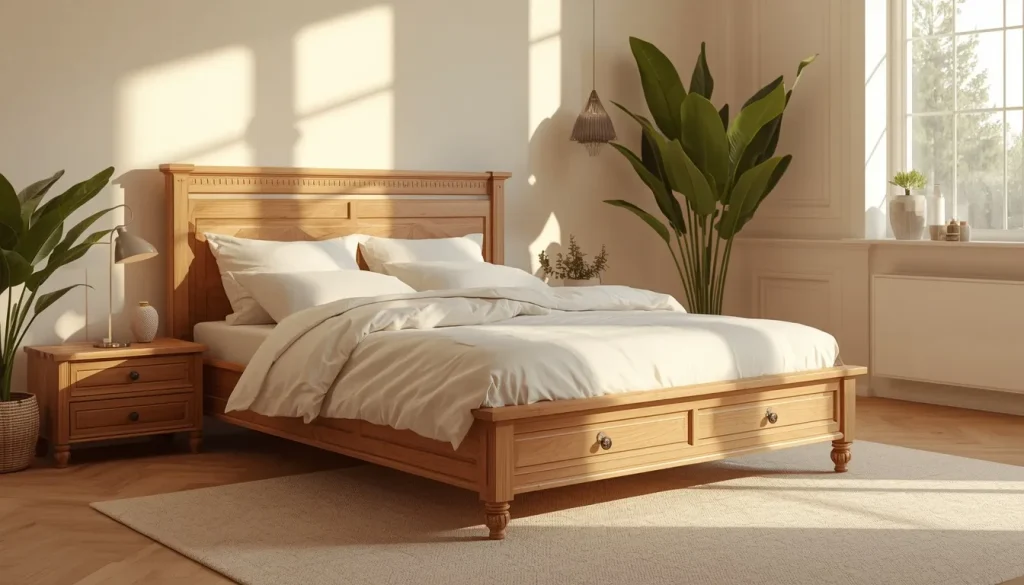
The bed is naturally the room’s focal point and the piece worth investing the most in, since it affects both sleep quality and the room’s overall look.
Popular options include:
- Upholstered beds — best if you want a softer, hotel-like look and don’t mind occasional fabric cleaning
- Wooden platform beds — a durable, low-maintenance choice that works with almost any style
- Storage beds — the best option if your room has limited closet space, since the base doubles as drawer or lift-top storage
- Sleigh beds — add a traditional, curved silhouette but take up more visual and floor space
- Metal frames — lightweight and often the most affordable, though they can feel colder in a cozy-style room
- Adjustable beds — worth the extra cost if you read, work, or watch TV in bed regularly
If you’re short on storage anywhere else in the room, a storage bed is usually the single highest-impact furniture decision you can make.
Nightstands
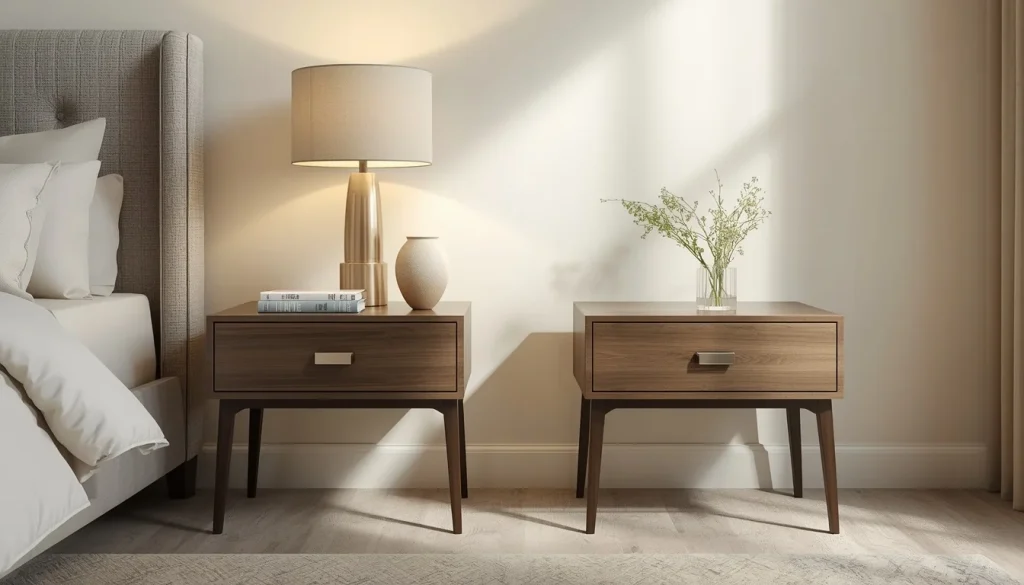
Nightstands provide convenient storage while visually balancing the sides of the bed.
Look for features like:
- Soft-close drawers (prevents late-night noise)
- Built-in charging ports, especially useful if your outlets are far from the bed
- Open shelving for books or a water glass
- Hidden storage for medication, glasses, or chargers
Ideally, nightstands should sit roughly level with your mattress height — a nightstand that’s too low forces you to reach down, which is a small but real daily annoyance.
Dresser
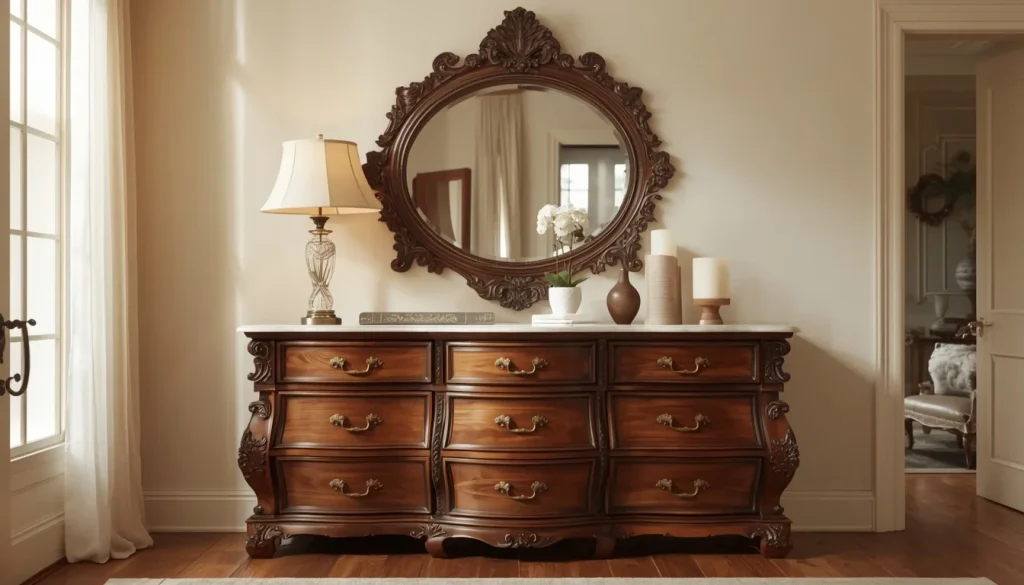
A dresser reduces closet clutter while providing dedicated storage for folded clothing.
Choose drawer sizes based on what you store most often:
- Large drawers for sweaters and bulky items
- Medium drawers for jeans and everyday clothing
- Small, shallow drawers for accessories, socks, and jewelry
Wardrobe or Armoire
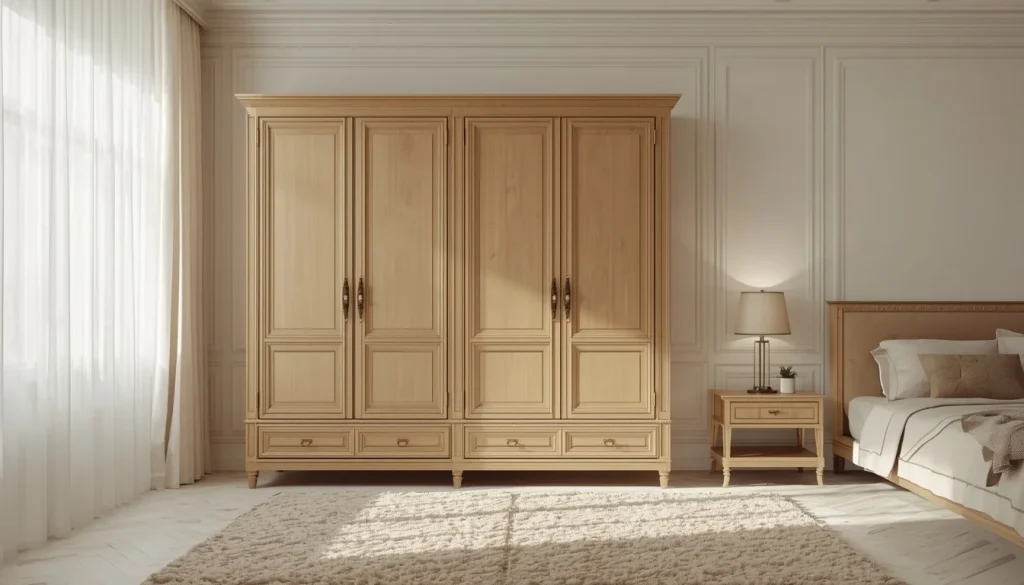
If your home has limited closet space common in many UK, Canadian, and Australian apartments a wardrobe provides essential storage for:
- Hanging clothes
- Shoes
- Seasonal items
- Extra bedding
Many modern wardrobes include mirrored doors and adjustable interior shelving, which helps justify the extra footprint they take up.
Bedroom Bench
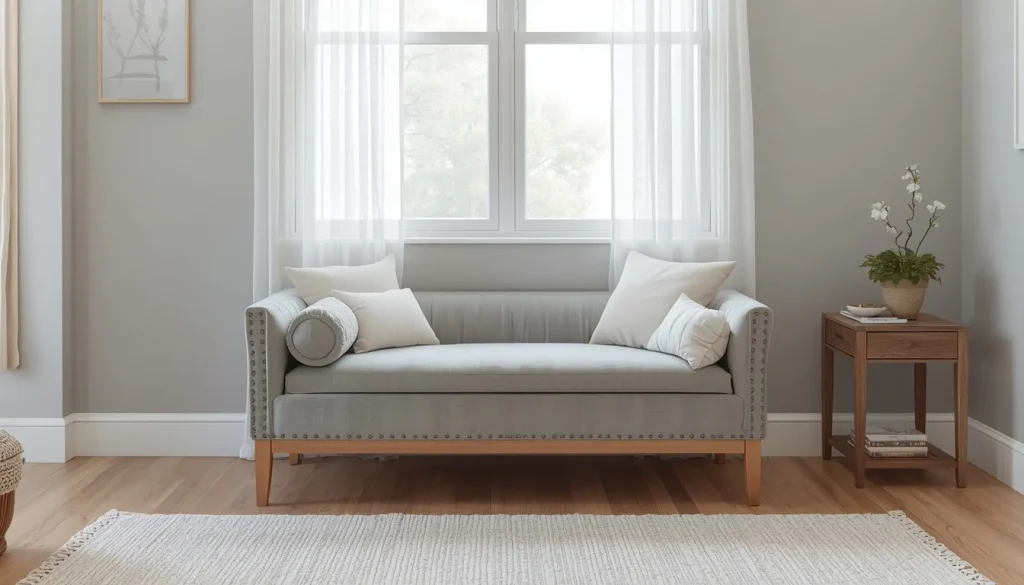
A bench placed at the foot of the bed adds both style and function without competing for wall space.
It can be used for:
- Putting on shoes in the morning
- Storing extra blankets (if it has a lift-top)
- Displaying decorative pillows overnight
- Everyday seating when getting dressed
Accent Chair
If space allows, a comfortable chair creates a small reading or relaxation corner but only add one if you’ll genuinely use it, since an unused chair becomes a clothing pile within weeks.
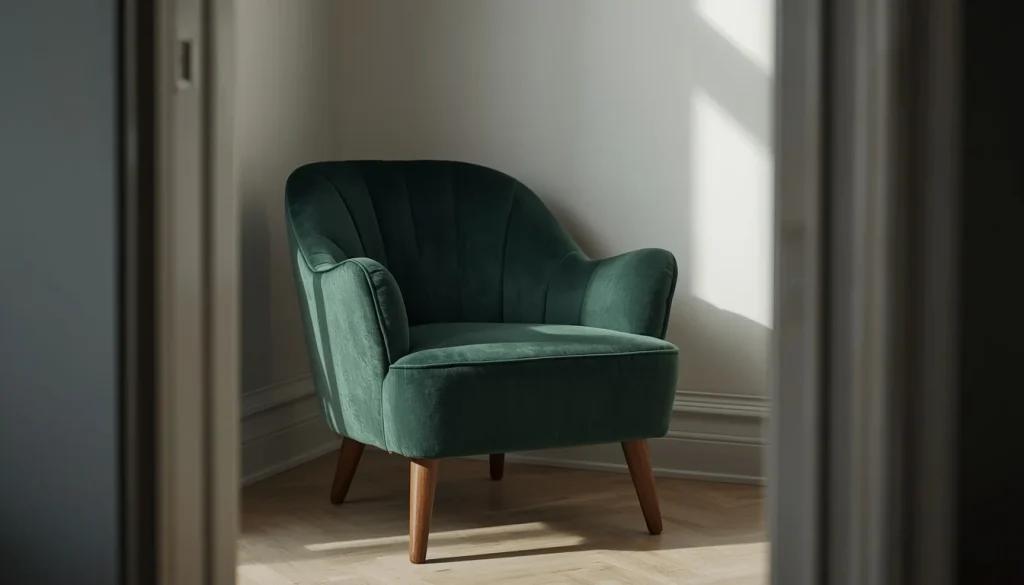
Pair it with:
- A floor lamp positioned over the shoulder for reading light
- A small side table for a drink or book
- A soft throw blanket
Stylish Bedroom Furnishing Ideas for Different Design Styles
Modern Bedroom
Modern bedrooms work best when every piece earns its place. Start with a low-profile platform bed in a neutral tone like charcoal, white, or warm gray, this keeps the room feeling grounded without adding visual weight.
Pair it with floating nightstands mounted 24–26 inches from the floor. This creates the illusion of extra floor space, which matters most in rooms under 120 sq ft (11 sq m).
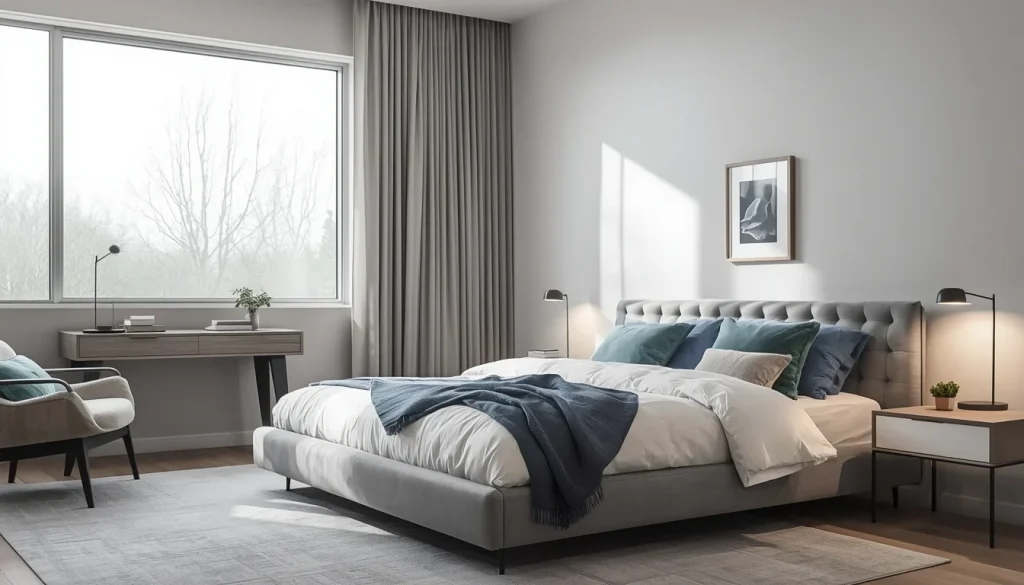
Keep decorative accents to two or three items per surface. Matte black hardware, handles, lamp bases, curtain rods, ties the look together without needing a full matching furniture set.
Best for: Renters or homeowners who want a clean look without a full renovation budget.
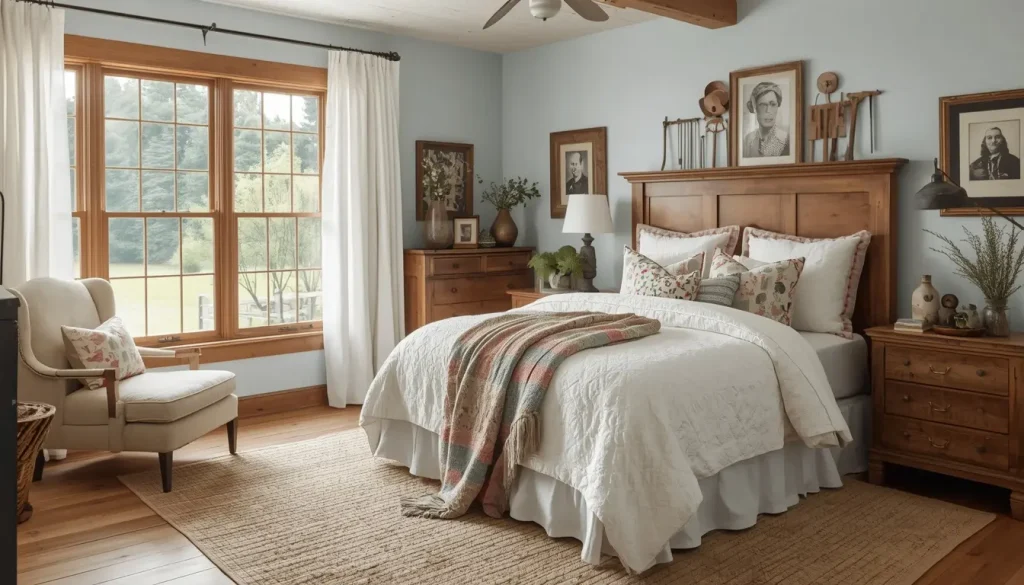
Farmhouse Bedroom
Farmhouse interiors combine warmth with timeless character, using texture rather than color to create visual interest.
Popular furnishings include:
- Natural wood furniture with visible grain, rather than painted finishes
- Linen bedding in off-white or soft neutral tones
- Rustic benches at the foot of the bed
- Woven baskets used as open storage instead of closed drawers
- Antique-inspired lighting, such as a schoolhouse pendant or wall sconces
Best for: Bedrooms with some natural light and at least a little extra floor space, since farmhouse pieces tend to be visually heavier.
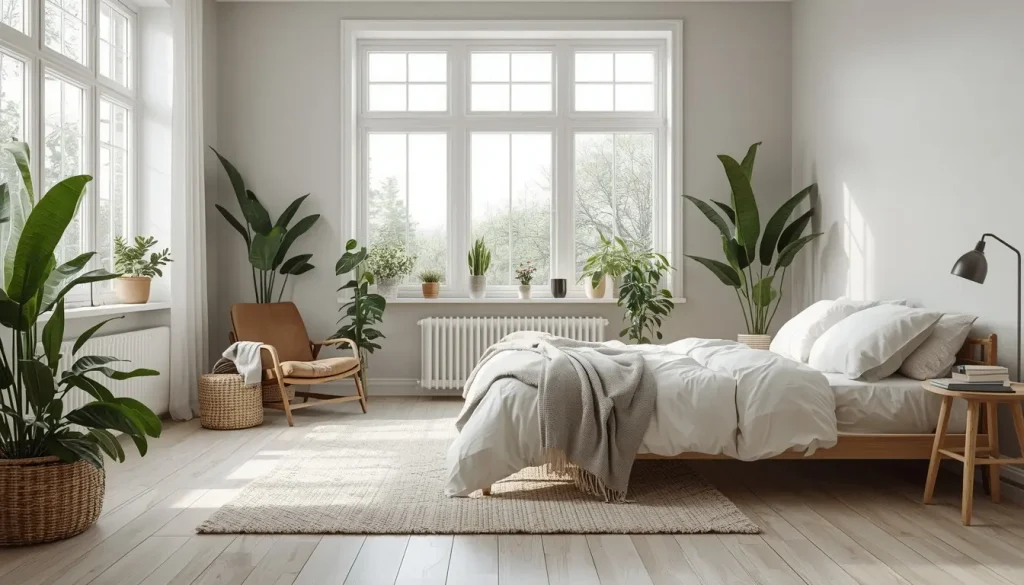
Scandinavian Bedroom
Scandinavian design focuses on simplicity, natural light, and comfort over decoration.
Use:
- Light oak or ash furniture to keep the room feeling airy
- White or light gray bedding as the visual base
- Minimal accessories one piece of art, one plant, nothing more
- Soft textures like a wool throw or sheepskin accent
- Functional, closed storage to avoid visual clutter
Best for: Small to medium bedrooms where light-colored furniture will make the space feel larger.
Contemporary Bedroom
Contemporary spaces blend clean lines with comfort, updating more often than “modern” to reflect current trends.
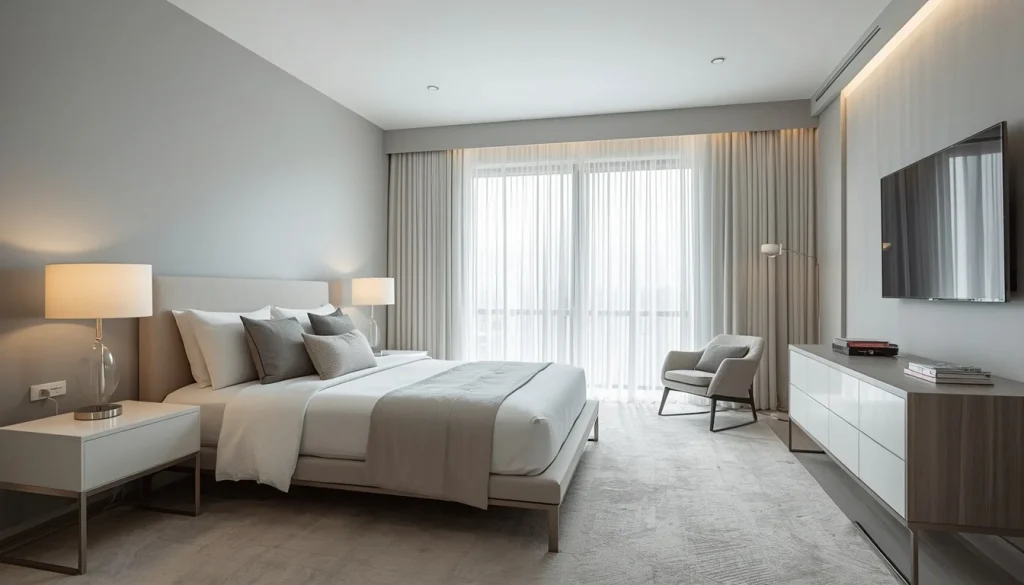
Choose:
- Upholstered headboards in a neutral fabric
- Curved furniture edges to soften the room
- Layered lighting — overhead, task, and ambient
- Neutral color palettes with one accent color
- Mixed materials, such as wood paired with metal or stone accents
Traditional Bedroom
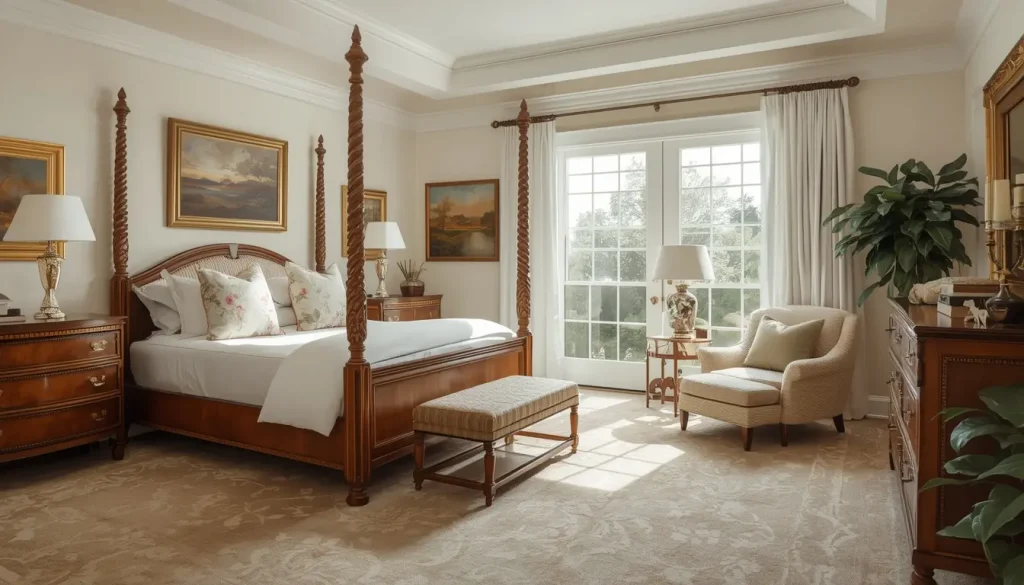
Traditional bedrooms feel elegant and timeless, often built around a matched furniture set.
Look for:
- Rich wood finishes like cherry, mahogany, or dark walnut
- Decorative moldings on dressers and headboards
- Matching furniture sets for a cohesive look
- Classic table lamps with fabric shades
- Symmetrical layouts, with identical nightstands on each side of the bed
Bedroom Furnishing Ideas by Room Size
Small Bedrooms
In smaller rooms, every piece must serve more than one purpose.
Good choices include:
- Storage beds instead of a separate dresser
- Floating shelves instead of a bulky bookcase
- Wall-mounted lights to free up nightstand surface space
- Narrow dressers (12–14 inches deep) instead of standard 18–20 inch depths
- Mirrored wardrobes, which visually double the sense of space
Avoid oversized furniture that blocks natural movement, a bed that’s technically too big for the room will make it feel smaller than a well-proportioned bed with breathing room around it.
Medium Bedrooms
Medium-sized rooms offer more flexibility without requiring major compromises.
Consider adding:
- Larger nightstands with two drawers instead of one
- A reading chair in an unused corner
- A bedroom bench at the foot of the bed
- A decorative rug to visually define the sleeping area
- A full-size dresser instead of a compact one
Large Primary Bedrooms
Larger bedrooms allow you to create separate functional zones rather than one single furniture cluster.
You might include:
- A sitting area with two chairs and a small table
- A vanity table near natural light
- A large wardrobe or walk-in-style built-in
- Fireplace-adjacent seating, if applicable
- Bookshelves for a personal library corner
- A decorative console table along an unused wall
How to Furnish a Bedroom When Space Is Tight (Real Scenarios)
General size categories only go so far, here’s how to solve the specific layout problems that come up most often.
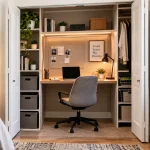
Scenario 1: You need a bed, wardrobe, and desk in under 100 sq ft
Choose a bed with built-in drawer storage instead of a separate dresser, this alone frees up 15–20 sq ft of floor space. Mount the desk against the wall opposite the bed, and use a wall-mounted, fold-down design if the room is under 90 sq ft.
Skip a freestanding wardrobe entirely if your closet has at least 3 feet of hanging space; only add a slim 12-inch garment rack if you genuinely need overflow storage.
Scenario 2: Your room has an awkward alcove or sloped ceiling
Place the bed under the lowest part of a sloped ceiling only if there’s at least 3 feet of clearance at the headboard, anything less will feel oppressive and make getting in and out of bed awkward. Use the alcove itself for a built-in or freestanding narrow bookshelf under 10 inches deep, rather than a dresser, which typically needs 18–20 inches of depth to function properly.
Scenario 3: You’re furnishing a shared bedroom (kids or roommates)
Use a divided storage system, either one dresser with clearly split drawer ownership, or two identical narrow dressers instead of one large shared one.
This small change avoids daily conflict over shared drawers and keeps the room visually balanced, since matching pieces read as one cohesive layout rather than two competing setups.
Scenario 4: You want a hotel-style look but have a limited budget
Focus your budget on the bed and bedding first a well-made bed accounts for most of how “finished” a bedroom feels. Use two identical, inexpensive nightstands and lamps for symmetry, and add one higher-quality textured item, like a linen throw or a single piece of art, as the visual anchor. Symmetry and one quality item consistently read as more expensive than several mismatched mid-range pieces.
Best Materials for Bedroom Furniture
The material you choose affects durability, maintenance, and long-term appearance more than the style does.
| Material | Best For | Pros | Cons |
|---|---|---|---|
| Solid Wood | Long-term investment pieces | Durable, timeless, ages well | Higher upfront price |
| Engineered Wood | Budget-friendly furniture | Affordable, lightweight | Less durable, can’t be refinished |
| Metal | Modern bedrooms | Strong, lightweight, low maintenance | Can feel cold or industrial |
| Upholstered | Luxury comfort pieces | Soft, elegant, adds texture | Requires more frequent cleaning |
| Rattan | Coastal and boho styles | Lightweight, natural texture | Less suitable for heavy daily use |
As a general rule, invest in solid wood or well-built upholstery for the bed frame (the piece you touch daily), and save on engineered wood for lower-contact pieces like a bench or occasional side table.
Storage Solutions That Keep Bedrooms Organized
Hidden storage makes bedrooms feel larger and calmer, since visual clutter is one of the biggest reasons a well-furnished room still feels chaotic.
Under-Bed Storage
Perfect for items you don’t need daily access to:
- Seasonal clothing
- Extra pairs of shoes
- Spare blankets and pillows
- Holiday decorations
Look for bed frames with at least 8–10 inches of clearance, or add flat under-bed storage boxes if your current frame sits too low.
Storage Ottomans
These provide extra seating at the foot of the bed or in a corner, while hiding clutter inside — a good option if you don’t have room for a full bench.
Floating Shelves
Ideal for displaying, rather than hiding, items you actually want visible:
- Books you’re currently reading
- A small plant
- Framed artwork or photos
- A few curated decorative objects
Limit floating shelves to items you’d be comfortable seeing every day — they lose their effect quickly if overloaded.
Built-In Cabinets
Custom built-ins maximize storage while keeping a seamless, wall-to-wall appearance, which works especially well around an awkward alcove or sloped ceiling.
Although they cost more upfront, they typically add long-term resale value to your home, unlike most freestanding furniture.
Bedroom Furniture Pricing by Region
Since furniture pricing varies significantly by country, here’s a realistic comparison across your main markets. These are approximate mid-market ranges and will shift with materials, retailer, and current exchange rates.
| Furniture Piece | USA (USD) | UK (GBP) | Canada (CAD) | Australia (AUD) |
|---|---|---|---|---|
| Bed Frame | $250–$2,000+ | £200–£1,600+ | $340–$2,700+ | $380–$3,000+ |
| Nightstand | $75–$400 | £60–£320 | $100–$540 | $115–$600 |
| Dresser | $250–$1,200 | £200–£950 | $340–$1,600 | $380–$1,800 |
| Wardrobe | $300–$2,000 | £240–£1,600 | $400–$2,700 | $460–$3,000 |
| Bedroom Bench | $120–$700 | £95–£560 | $160–$950 | $185–$1,050 |
| Accent Chair | $150–$900 | £120–£720 | $200–$1,200 | $230–$1,350 |
A practical rule across all four regions: allocate roughly 40% of your total furniture budget to the bed frame and mattress, since these two pieces get the most daily use and have the biggest impact on comfort.
How to Accessorize Without Overcrowding
Furniture creates the foundation, but accessories make the room feel finished — as long as you stop before it feels cluttered.
Choose accessories intentionally:
- Area rug, sized to extend at least 18 inches beyond the sides of the bed
- Table lamps, matched in pairs for symmetry
- Artwork, ideally one larger piece rather than several small ones
- Indoor plants, one or two rather than a full collection
- Decorative pillows, limited to three or four on the bed
- Throw blankets, folded rather than draped over every surface
- Curtains, hung close to the ceiling to make windows feel taller
- Mirrors, positioned to reflect light rather than clutter
Avoid filling every surface. Empty space is what makes a room feel calm rather than busy — it’s not “unfinished,” it’s intentional.
Budget-Friendly Bedroom Furnishing Ideas
Creating a beautiful bedroom doesn’t always require buying everything new.
Mix High and Low Pieces
Invest in a quality bed frame and mattress, since these are used every day, while saving on lower-contact items like lamps, artwork, and small décor.
Buy Multi-Functional Furniture
Look for furniture that serves multiple purposes, such as:
- Storage beds instead of a bed plus a separate dresser
- Lift-top benches instead of a bench plus a blanket chest
- Nesting tables instead of a full nightstand and side table
- Wardrobes with built-in mirrors instead of a wardrobe plus a wall mirror
Refresh Existing Furniture
Instead of replacing furniture outright:
- Paint wooden dressers in a current neutral tone
- Replace drawer hardware for an inexpensive style update
- Add peel-and-stick wallpaper inside open shelving or a wardrobe interior
- Reupholster a bench seat or headboard panel
Small updates like these can meaningfully improve older furniture without the cost of full replacement.
Common Mistakes to Avoid
Many bedrooms become less functional because of a few repeated decorating mistakes.
- Buying furniture before measuring the room
- Choosing oversized pieces for small bedrooms
- Blocking windows or closet doors with furniture placement
- Purchasing a complete matching furniture set without checking it fits the room’s actual dimensions
- Ignoring real storage needs in favor of appearance alone
- Relying on a single overhead light source
- Forgetting to leave enough walking space around the bed
- Filling every surface and corner with décor
A thoughtful layout consistently has a bigger impact on how a room feels than the price of the furniture in it.
Frequently Asked Questions on Bedroom Furnishings Ideas
What furniture should every bedroom have?
Most bedrooms need a bed frame, mattress, at least one nightstand, and a dresser. Additional pieces like wardrobes, benches, or accent chairs should be added based on your available space and actual storage needs, not just to fill the room.
How do I furnish a small bedroom?
Choose space-saving furniture like storage beds, floating shelves, and narrow dressers under 14 inches deep. Prioritize pieces that serve more than one function, and keep at least 24 inches of walking space clear around the bed so the room doesn’t feel boxed in.
Is it better to buy a matching bedroom furniture set?
Furniture sets create an easy, coordinated look, but mixing complementary pieces in similar tones often produces a more personal result. If you do mix pieces, keep the wood tone or finish consistent across at least two items to avoid the room feeling disjointed.
What color furniture makes a bedroom look bigger?
Light-colored furniture — white, light oak, or soft gray finishes — reflects more natural light and helps smaller bedrooms feel brighter. Pairing light furniture with a light wall color extends this effect further, since there’s less visual contrast between the walls and the pieces in front of them.
How much should I budget for bedroom furnishings?
For a basic setup (bed, nightstands, dresser), budget $800–$1,800 in the US, £650–£1,450 in the UK, $1,050–$2,400 in Canada, or $1,150–$2,650 in Australia. Premium or custom furniture can push this well past $5,000. Start by allocating around 40% of your budget to the bed frame and mattress.
What’s the best bedroom layout for a room with only one window?
Position the bed on the same wall as the window if possible, so you get natural light without direct glare when waking up. Keep the wall directly opposite the window free for a dresser or wardrobe, since it typically receives the least sunlight and won’t fade fabric or wood finishes as quickly.
What’s the best material for bedroom furniture?
Solid wood remains one of the best long-term investments because of its durability and timeless appearance, especially for the bed frame. Engineered wood offers a more affordable alternative for lower-contact pieces, while upholstered items add comfort and softness where you want it most.
Final Thoughts
The best bedroom furnishings combine comfort, functionality, and personal style but the real difference between a bedroom that works and one that doesn’t usually comes down to solving your specific layout and storage problems first, and choosing style second. Start with the bed, measure honestly, and build outward from there.
Whether you’re furnishing a compact apartment or a spacious primary suite, this kind of planning helps you avoid costly mistakes and build a room you’ll genuinely enjoy for years.
For more room-by-room guides, explore related resources on TheBestHomeFit.com, including how to measure a room before buying furniture, how to choose the right mattress size, and which storage beds work best for small apartments or leave a comment with your specific bedroom layout question.

“A comfortable home and a healthy lifestyle go hand in hand.”
Hi, I’m Ethan Carter, the founder and lead editor of TheBestHomeFit. I’m passionate about helping people create beautiful, functional living spaces while building healthier lifestyles at home. Over the years, I’ve spent countless hours researching home decor trends, testing home gym equipment, and reviewing products to help readers make smarter buying decisions.
Through TheBestHomeFit, I share practical home improvement ideas, honest product reviews, buying guides, and fitness tips designed for everyday homeowners. My goal is to make it easier for you to create a home that looks great, feels comfortable, and supports your well-being.
When I’m not researching the latest products or writing in-depth guides, you’ll usually find me redesigning a room, trying new home workout routines, or enjoying quality time with my family.


3 thoughts on “Bedroom Furnishings Ideas That Make Any Bedroom Feel Complete”