

Green is one of those bedroom colours that can completely change the feeling of a room. A soft sage green can create a gentle, understated look, while olive and forest green can make a bedroom feel warmer and more inviting. Emerald green, on the other hand, brings a richer appearance that works beautifully with cream bedding, dark wood and warm metallic accents.
But choosing green is not always as simple as picking a colour you like. Some shades look brighter in natural daylight and more muted at night. Others can appear too yellow, too grey or darker than expected once they are on the wall. The colour of your furniture, flooring, curtains and bedding also affects the final result.
The good news is that you do not need to renovate your entire bedroom to make green work. Sometimes, changing the bedding, painting one wall or adding a few well-chosen accessories is enough.
These green colour bedroom ideas will help you choose a suitable shade, find colour combinations that work, and create a bedroom that looks stylish without sacrificing comfort or practicality.
Which Green Colour Is Best for a Bedroom?
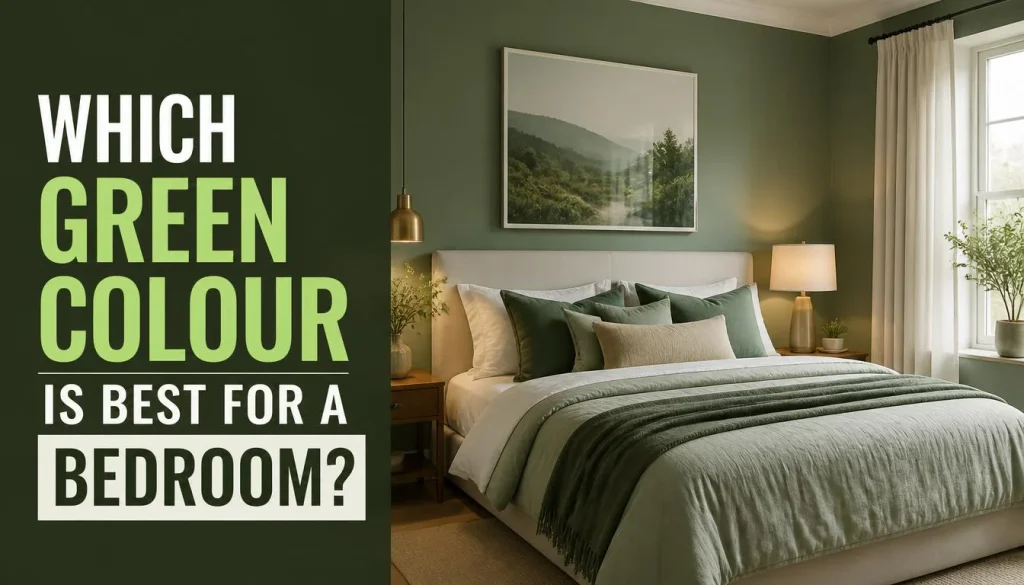
Before choosing a design, think about the atmosphere you want to create. Do you prefer a bright, airy room, a warm and earthy retreat, or a darker bedroom with a little more drama?
Here are six green shades worth considering.
Sage Green for a Soft, Relaxing Look
Image suggestion: Sage green bedroom walls, cream bedding and light oak furniture.
Sage green is a versatile choice because it looks subtle without feeling completely neutral. Its muted appearance works well with warm white, cream, beige, linen and natural wood.
Try sage walls with an upholstered cream headboard, light oak bedside tables and soft white curtains. This combination suits modern, Scandinavian, minimalist and farmhouse interiors.
Sage is also a good starting point if you enjoy colour but do not want your bedroom to feel overly bold.
Olive Green for a Warm, Earthy Bedroom
Olive green has a warmer, more grounded character. It works particularly well with walnut furniture, tan accents, woven baskets and natural fabrics.
For a comfortable, lived-in look, pair olive walls with beige bedding, a textured rug and warm bedside lighting. If your bedroom already has brown wooden furniture, olive can help the different materials feel connected.
Mint Green for a Fresh, Airy Space
Mint green feels lighter and fresher than most deep greens. It works well in bedrooms where you want a little colour without an intense visual effect.
Combine mint green with white bedding, pale wood, light grey and simple furniture. To keep the room from looking too pastel-heavy, add one or two natural textures, such as a woven rug or linen curtains.
Eucalyptus Green for a Subtle Blue-Green Effect
Eucalyptus green sits between soft green and blue-green, depending on the shade. It is a useful option when ordinary sage feels too warm or olive feels too earthy.
Try eucalyptus walls with ivory bedding, pale oak furniture and muted blue accessories for a relaxed, contemporary scheme.
Forest Green for a Moody Bedroom
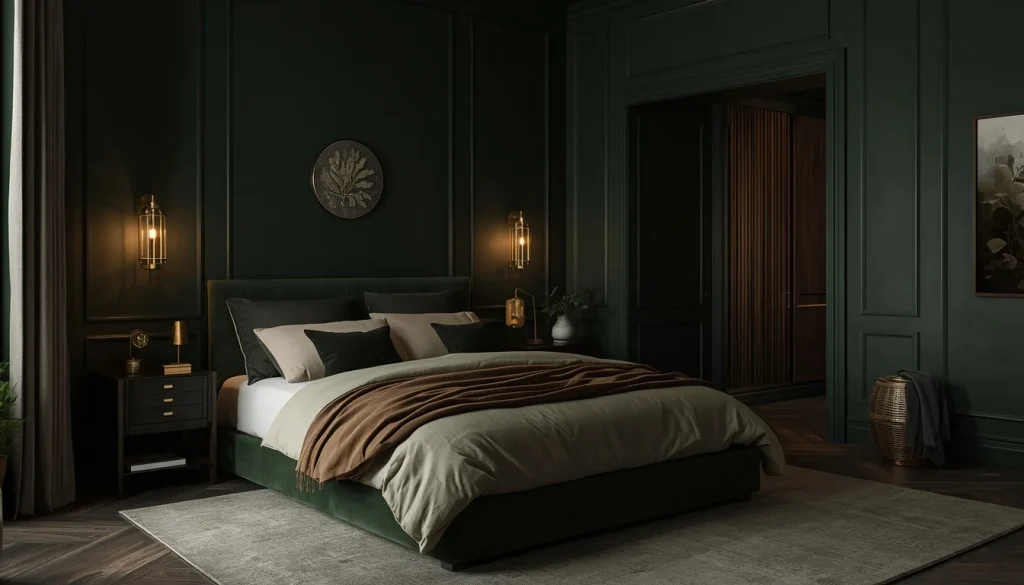
Forest green creates depth and makes a strong visual statement. It can be particularly effective behind the bed, where it provides a backdrop for lighter bedding and contrasting furniture.
Pair it with cream, walnut, aged brass or warm beige. If your bedroom receives little natural light, consider using forest green on one wall rather than automatically painting the entire room.
Emerald Green for a More Luxurious Finish
Emerald green is richer and more saturated than sage or olive. It works well when you want the bedroom to feel distinctive and polished.
You can introduce emerald through a velvet headboard, an accent wall, an upholstered chair or decorative cushions. Pair it with warm white, brass and dark wood to keep the look balanced.
For additional shade inspiration, the green bedroom paint collection from Benjamin Moore is a useful starting point.
25 Green Colour Bedroom Ideas to Try at Home
You do not need to follow one decorating style to create a beautiful green bedroom. The ideas below cover different shades, colour combinations, furniture choices, room sizes and budgets.
1. Paint All Four Walls Sage Green
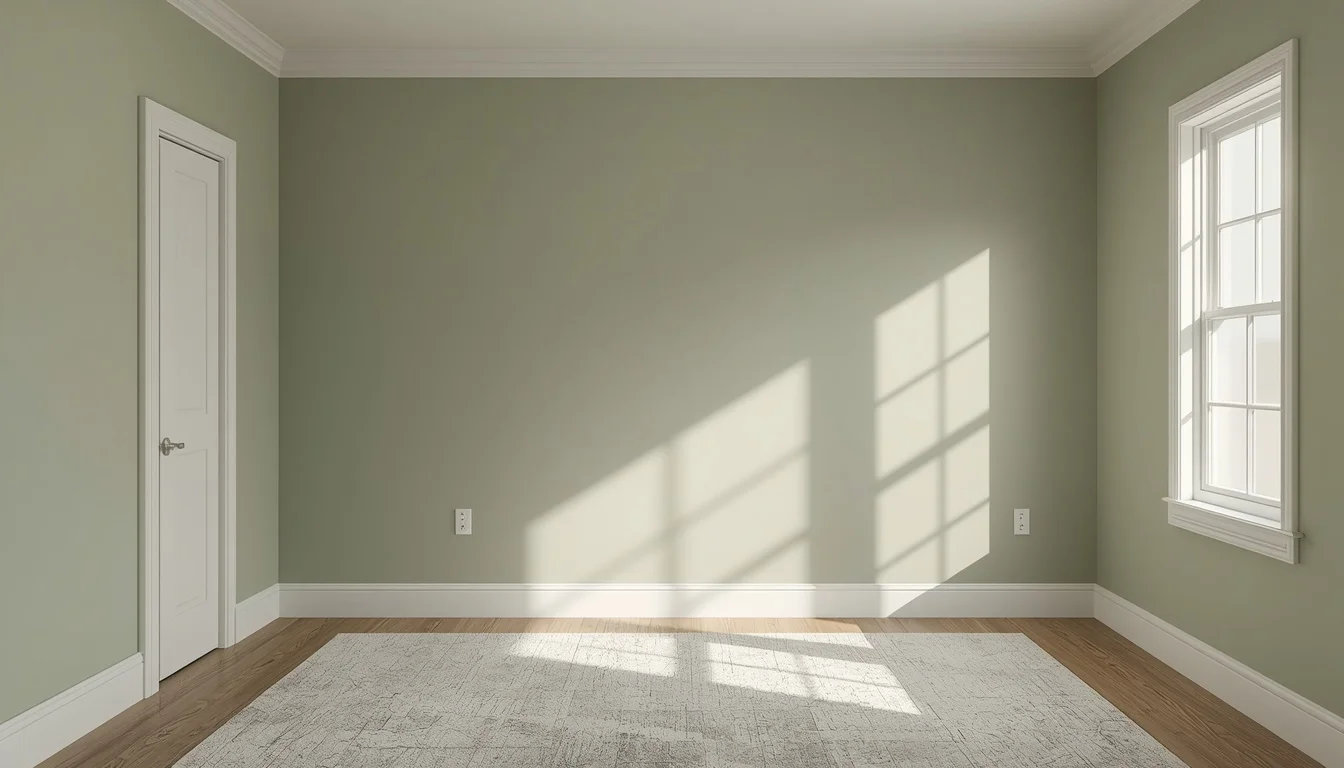
If you want a consistent, calm appearance, consider painting all four bedroom walls sage green.
Unlike a very saturated colour, a muted sage can provide a gentle background for furniture and decorative pieces. Add cream bedding, oak bedside tables and soft curtains to prevent the room from feeling too cool.
This approach works particularly well when you want colour without a strong contrast between walls and furnishings.
2. Pair Olive Green Walls With Natural Wood
Olive green and natural wood create an earthy combination that feels comfortable rather than overly decorated.
Use olive walls with oak or walnut furniture, beige bedding and a woven rug. You can introduce extra warmth with leather details or brown ceramic accessories.
If your floor is already a warm wood tone, look at olive samples alongside it before buying paint. The undertones should complement each other instead of competing.
3. Use Mint Green to Refresh a Small Bedroom
A small bedroom can benefit from a lighter green that does not dominate the space.
Try mint or pale green on the walls, with white bedding, slim bedside tables and light-coloured curtains. Keep the furniture proportional to the room so the colour scheme is not overwhelmed by bulky pieces.
You do not have to avoid dark colours in small rooms, but lighter green is often an easier starting point when you want an airy appearance.
4. Create a Forest Green Accent Wall Behind the Bed
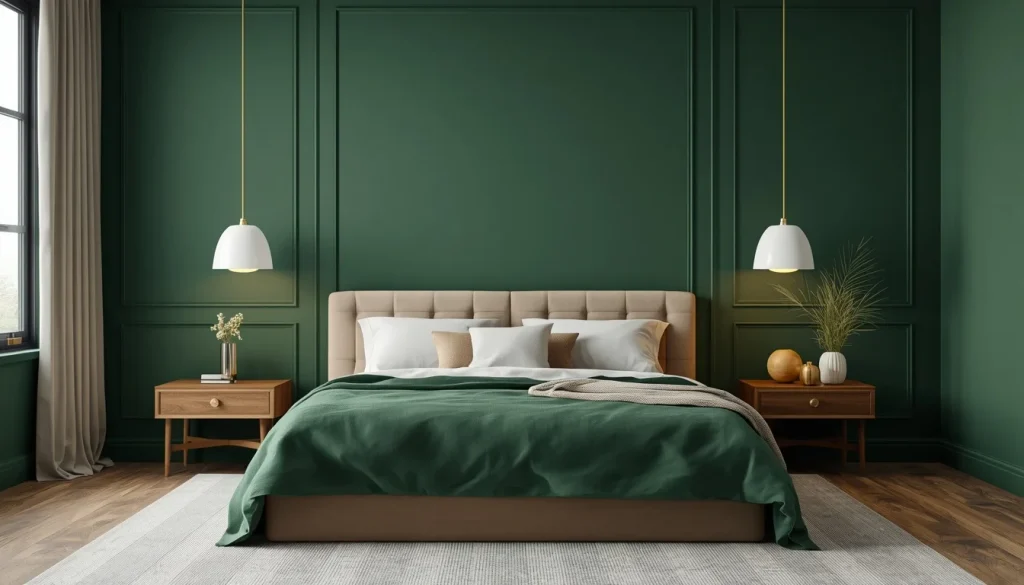
An accent wall is a practical way to introduce a strong green without committing to it throughout the bedroom.
Paint the wall behind the headboard in forest green and keep the other walls warm white, cream or a complementary neutral. Add lighter bedding and bedside lamps to give the dark colour some contrast.
This design works especially well when the bed is the natural focal point of the room.
5. Create an Emerald Green Bedroom With Brass Accents
Emerald green and warm brass can give a bedroom a refined, elegant appearance.
Start with one major feature, such as an emerald headboard or painted wall. Then repeat the brass finish through bedside lamps, drawer handles or a mirror frame.
A small number of matching details usually looks more considered than introducing metallic finishes everywhere.
6. Combine Green and Cream for a Timeless Look
Green and cream are easy to live with because the combination offers colour without becoming too contrast-heavy.
Try sage or olive walls with cream bedding, ivory curtains and a soft beige rug. If you prefer not to paint, reverse the arrangement by keeping the walls cream and introducing green through the bedding and accessories.
This is a particularly useful option if you want to refresh your bedroom without replacing your existing furniture.
7. Pair Green and Beige for a Warm, Neutral Bedroom
Beige softens green and helps connect it with the rest of the room.
For example, use muted green walls, beige curtains, an oatmeal-coloured duvet and natural wood furniture. Add darker green cushions to create a little more depth.
Choose beige fabrics with similar undertones to the green. A warm olive may work better with sandy beige than with a very cool grey-beige.
8. Mix Green and Grey for a Modern Bedroom
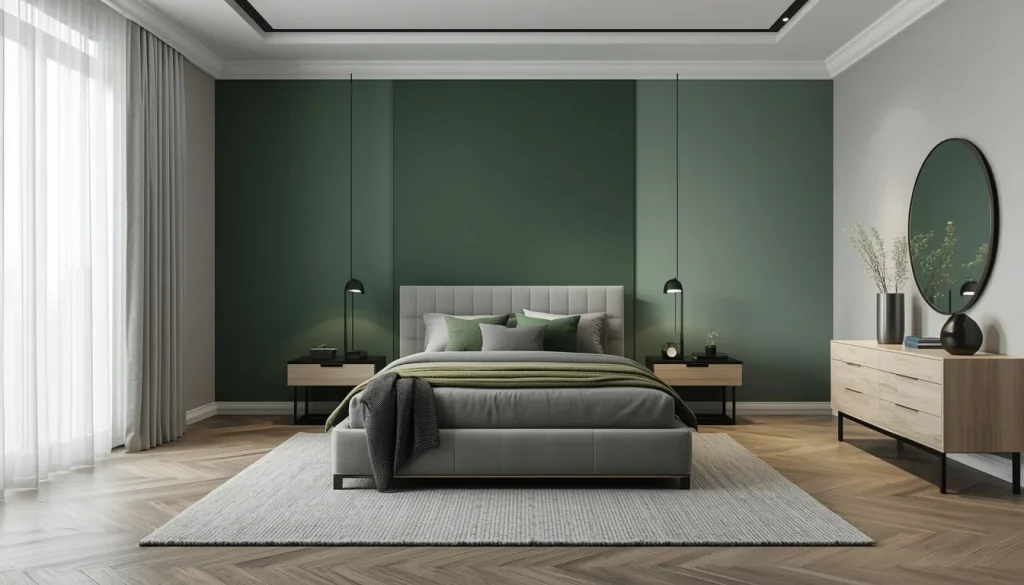
Green and grey can create a simple, contemporary bedroom, but the undertones matter.
Muted sage can work well with warm grey bedding, while olive often suits greige and other earthy neutrals. If you prefer charcoal grey, introduce cream or off-white to keep the overall palette from looking too dark.
Use grey in the rug, curtains, headboard or bedding rather than automatically adding it to every surface.
9. Combine Green and Pink for a Softer, More Personal Space
Green and pink can feel sophisticated when you choose muted shades.
Pair sage walls with blush bedding, or combine olive with dusty pink cushions. For a richer look, use a forest green feature wall with muted rose textiles.
The important thing is to let one colour lead. If both colours are very bright, the bedroom can feel busy.
For more examples of how to balance these shades, explore our pink and green bedroom ideas.
10. Use Blue and Green for a Calm, Layered Colour Scheme
Blue and green can work together without making a bedroom look overly colourful, provided you keep their tones coordinated.
Try sage walls with dusty blue bedding, or use navy as an accent against a softer green background. White, ivory and natural wood can help the two colours sit comfortably together.
This combination works well in contemporary, coastal and nature-inspired bedrooms.
See our guide to blue-green bedroom ideas for more ways to combine the shades.
11. Add Black Accents to a Green Bedroom
Black provides definition and can make a green bedroom feel more modern.
Use black picture frames, curtain rods, bedside lamps or furniture legs against sage, olive or forest green. If you also have dark flooring and dark furniture, keep the bedding or curtains lighter so the room does not become visually heavy.
You only need a few repeated black details to make the combination feel intentional.
12. Try an Earthy Green and Brown Colour Scheme
Green and brown work naturally together, especially when you introduce materials with different textures.
Combine moss or olive green with walnut furniture, brown leather, woven baskets and linen bedding. Terracotta accessories can add warmth without introducing too many competing colours.
This approach is ideal if you prefer a relaxed, nature-inspired bedroom rather than a polished, high-contrast design.
13. Paint a Two-Tone Green Bedroom Wall
If a single green wall feels too plain, try using two related shades.
For example, use a deeper sage or olive on the lower half of the wall and a lighter green or warm white above it. A clean horizontal division can add structure without the expense of extensive wall treatments.
Keep the bedding relatively simple so the wall remains the main feature.
14. Introduce Green Through Botanical Wallpaper
Green wallpaper can bring colour and pattern into the bedroom at the same time.
Consider leafy prints, delicate florals or subtle botanical designs behind the bed. If the pattern is large or visually busy, keep the other walls and bedding understated.
This is a good option when you want the room to have personality without relying on several different paint colours.
15. Try Green Colour Drenching
Colour drenching means using a similar colour across several surfaces, such as walls, doors, trim and sometimes the ceiling.
In a green bedroom, this might mean carrying sage or forest green across the walls and architectural details. The result can feel cohesive, especially when the room contains furniture and fabrics with different textures.
Before committing to a deep green, test the colour throughout the room. Make sure the furniture, lighting and textiles provide enough visual variation.
16. Keep Neutral Walls and Introduce Green Bedding
You do not need green walls to create a green bedroom.
Keep the walls white, cream or beige and introduce green through a duvet cover, quilt, throw and cushions. This approach is especially useful if you are renting or simply do not want to repaint.
It also lets you test whether you enjoy living with a particular shade before making a more permanent change.
17. Use Green Curtains to Frame the Windows
Green curtains can make a noticeable difference without changing your wall colour.
Sage and eucalyptus suit lighter interiors, while olive and forest green create more contrast against cream or warm white walls.
Floor-length curtains can also create a more finished look. Choose a fabric and thickness that provide the amount of daylight and privacy you need.
18. Make a Green Upholstered Headboard the Focal Point
A green headboard is a useful alternative to a painted accent wall.
Choose velvet if you want a richer appearance, or linen if you prefer a softer, more relaxed style. Pair the headboard with neutral bedding and a wall colour that complements its undertone.
This approach can also make it easier to change the room later because the green is confined to one major piece.
19. Bring Green Into the Room With Plants and Natural Textures
Indoor plants can complement a green bedroom without requiring every accessory to match the wall colour.
Combine plants with wood, woven baskets, linen, cotton and other natural textures. Vary the size and shape of your accessories rather than putting identical objects on every surface.
If the room receives very little daylight, choose plants suitable for the available conditions or use botanical artwork instead.
20. Add Green Wall Panelling or a Painted Ceiling
Green can be used beyond ordinary painted walls.
Painted panelling behind the bed adds visual depth, while a green ceiling can make a room feel more enveloping. A lighter ceiling green usually creates a subtler effect than using the same deep shade everywhere.
You can also paint the trim or doors to connect the room’s architectural details with the main colour scheme.
21. Create a Modern Green Bedroom With Minimal Furniture
For a modern bedroom, focus on clean lines, simple bedding and a controlled colour palette.
Use olive or muted sage with black details, pale wood and warm white textiles. Avoid filling every empty space with decorative objects.
The aim is to give the main green enough room to stand out without making the bedroom feel cluttered.
22. Choose a Rustic Green Bedroom With Warm Materials
If you enjoy farmhouse or rustic interiors, olive, moss and muted sage are strong choices.
Combine green walls with timber furniture, woven storage, natural linen and traditional-style lighting. A slightly aged finish on furniture can work well with these earthy shades.
Keep the room comfortable and practical rather than trying to make every item look perfectly coordinated.
23. Create a Coastal or Scandinavian Green Bedroom
For a lighter appearance, combine pale sage or eucalyptus with white, cream and light timber.
Use simple furniture, soft textiles and a few blue or natural accents. Avoid too many dark accessories if you want to maintain the airy feeling.
This style works particularly well in compact rooms and bedrooms where you want a clean, uncomplicated look.
24. Design a Green Bedroom Without Painting
If you rent your home or cannot make permanent changes, build the colour scheme through movable items.
Start with green bedding, then add curtains, cushions, a rug or botanical artwork. Removable wallpaper may also be an option, provided it is suitable for your wall surface and permitted under your tenancy agreement.
This gives you flexibility to adjust the shade or remove the decor when needed.
25. Refresh Your Green Bedroom on a Budget
A green bedroom makeover does not need to involve buying new furniture.
Start by identifying the part of the room that needs the most attention. You might repaint one wall, replace tired cushion covers, change the bedding or update an old bedside lamp.
Rearranging existing furniture and removing unnecessary clutter can also make the room feel different.
If you are unsure which change to make first, our broader bedroom decor ideas guide offers more practical ways to update a bedroom without replacing everything.
What Colours Go Best With Green in a Bedroom?
Once you have chosen the main green, the next step is deciding what to pair with it. The best combination depends on whether you want a light, warm, modern or dramatic result.
| Colour combination | Best use | Overall effect |
|---|---|---|
| Green and white | Walls, bedding and trim | Fresh and simple |
| Green and cream | Bedding, curtains and upholstery | Soft and inviting |
| Green and beige | Rugs, fabrics and furniture | Warm and earthy |
| Green and grey | Bedding and modern accessories | Contemporary |
| Green and pink | Cushions, bedding and artwork | Soft but distinctive |
| Green and blue | Bedding and accent pieces | Calm and layered |
| Green and brown | Timber furniture and textiles | Natural and grounded |
| Green and black | Frames, lamps and hardware | Modern and defined |
| Green and gold | Lamps, mirrors and handles | Rich and elegant |
| Green and terracotta | Cushions, pottery and artwork | Warm and organic |
You do not need to use several of these combinations in one room. Start with your main green, choose one supporting neutral, and introduce one accent colour if the room needs it.
How to Choose the Right Green Paint for Your Bedroom
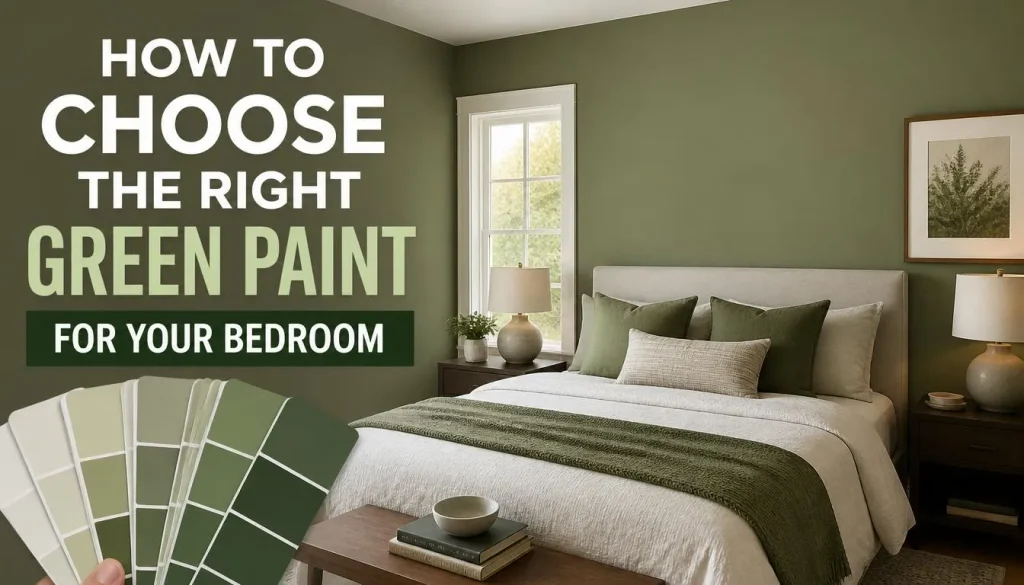
Choosing paint is often the point where a bedroom makeover becomes difficult. A colour that looks perfect on a screen may appear quite different in your own room.
Consider the Natural Light
Notice how much daylight enters the bedroom and which walls receive it.
Some rooms receive warm, direct sunlight, while others remain relatively cool or shaded. This can change how green appears on the wall.
The Sherwin-Williams guide to choosing paint colours based on room orientation explains how lighting and window direction affect paint choices.
Understand Warm and Cool Undertones
Two green paints can look similar on a sample card but behave differently in a furnished room.
Some greens have yellow or earthy undertones, while others lean towards blue or grey. The right choice depends partly on your existing floor, furniture, curtains and textiles.
For a better comparison, read this guide to understanding paint undertones from Sherwin-Williams.
Test Paint Samples Before Committing
Do not choose a shade based only on a photograph or small colour card.
Apply samples to more than one part of the room and check them in the morning, afternoon and evening. Look at the samples beside your bed, flooring and larger furniture pieces.
This extra step can help you avoid buying a full tin of paint that looks completely different from what you expected.
Decide Between an Accent Wall and All-Green Walls
An accent wall is a useful starting point if you are unsure about a darker shade.
Painting the entire bedroom green can look cohesive, but it requires more confidence in the colour and its relationship with the furniture. Consider testing the shade over a larger area before committing to all four walls.
For additional inspiration, see our bedroom paint ideas guide.
Green Bedroom Ideas for Small, Dark and Large Rooms
The same shade can work differently in different spaces. Consider the size of your room, the amount of daylight and how much furniture you need to fit inside it.
For Small Bedrooms
Pale sage, mint and eucalyptus can help maintain a lighter appearance. Use light bedding and avoid oversized furniture that restricts movement.
If you prefer a dark green, try it behind the bed or on a smaller architectural feature. A dark colour is not automatically unsuitable for a small room; the overall balance matters more.
For Large Bedrooms
Larger rooms can accommodate more saturated shades such as forest, hunter or emerald green.
You can also use deeper colours across more than one wall. Layer different fabrics and warm lighting to prevent the room from feeling empty or unfinished.
For Bedrooms With Limited Natural Light
Think about how the bedroom looks after sunset as well as during the day.
Warm olive or muted earthy greens may create a comfortable atmosphere, but some shades can appear dull in low light. Use several light sources, such as a main ceiling light and bedside lamps, instead of relying on one fixture.
For Bright Bedrooms
Rooms with generous daylight offer more flexibility. You can experiment with pale green walls or darker shades, depending on your preferred style.
However, strong sunlight can also change the way paint appears. Always test your chosen shade on the actual wall before making a final decision.
Green Bedroom Lighting, Flooring and Furniture Tips
A green bedroom looks more cohesive when the colour works with the permanent elements of the room.
Choose Furniture That Complements the Green
Light oak and ash usually suit pale green and sage. Walnut and darker wood can look particularly good with olive, forest and emerald green.
White and cream furniture provide contrast, while black furniture creates a more defined, contemporary appearance.
You do not need to replace furniture simply because it does not match your new colour scheme. Sometimes changing the bedding or adding complementary accessories is enough.
Think About the Flooring
Wood flooring, beige carpet and neutral rugs can work with many green shades.
If your floor is already strongly coloured or patterned, choose a simpler green palette so the room does not feel too busy. If the floor is neutral, you have more freedom to experiment with different shades and textures.
Layer the Lighting
Use the main ceiling light for general illumination, bedside lamps for reading and softer accent lighting to create atmosphere.
The best arrangement depends on the way you use the bedroom. A room where you read, work or get dressed needs more functional light than one used mainly for sleeping.
Check the appearance of your green paint under the bulbs you intend to use. Artificial lighting can change how warm, cool or muted a shade appears.
Common Green Bedroom Decorating Mistakes to Avoid
Even a good colour scheme can look disappointing if the details are not considered.
Choosing paint without testing it: A shade can look different on a screen, on a sample card and on a full wall. Test it in your actual room before buying enough for the whole project.
Using too many competing colours: Green does not need several accent colours to look interesting. Start with a dominant shade, a supporting neutral and one accent.
Making every surface dark: Dark green walls, dark furniture and heavy curtains can create an overly enclosed effect, particularly in rooms with limited daylight. Add lighter textiles and suitable lighting.
Ignoring undertones: A green that clashes with your flooring or existing furniture can make the whole room feel disconnected. Compare the main finishes before choosing the paint.
Matching every item exactly: A bedroom often feels more natural when the greens vary slightly across walls, bedding and decorative accessories.
Forgetting texture: A room with one colour and one type of fabric can feel flat. Use a mixture of linen, cotton, wood, woven materials and upholstery to add depth.
Buying everything at once: Start with the largest or most important elements, then add smaller accessories. This makes it easier to judge what the room actually needs and helps prevent unnecessary spending.
Frequently Asked Questions
Is Green a Good Colour for a Bedroom?
Green is a versatile choice for a bedroom because it ranges from soft, muted shades to deep, dramatic tones. The best option depends on your preferred style, natural light, furnishings and how you want the room to look.
What Is the Best Green Colour for a Small Bedroom?
Pale sage, mint and eucalyptus are useful options when you want to maintain a light, open appearance. Dark green can also work in a small bedroom, especially as a feature wall balanced with lighter fabrics and suitable lighting.
What Colours Go With Green Bedroom Walls?
White, cream, beige, grey, brown, pink, blue, black, gold and terracotta can all work with green. Choose the combination according to the undertone of your green and the atmosphere you want to create.
Does Dark Green Make a Bedroom Look Smaller?
Dark green can make walls feel more visually prominent, but it does not automatically make a bedroom unsuitable or uncomfortable. Lighting, furniture placement, contrast and the amount of dark colour used all affect the result.
Should I Paint All Four Bedroom Walls Green?
You can paint all four walls green if the shade works with your light and furnishings. If you are uncertain, start with an accent wall or test the paint on several large areas before committing.
What Bedding Looks Best With Green Walls?
Cream, white, beige, oatmeal, dusty pink, brown and complementary green shades can all work. Neutral bedding is usually an easy starting point because it allows the wall colour to remain the main feature.
How Can I Decorate a Green Bedroom Without Painting?
Use green bedding, curtains, cushions, rugs, artwork, plants or an upholstered headboard. These options let you create a cohesive colour scheme without permanently changing the walls.
How Can I Make a Green Bedroom Look More Expensive?
Focus on a consistent palette, well-chosen lighting, textured bedding, full-length curtains and a few coordinated accessories. You do not need expensive furniture; keeping the room uncluttered and the colours balanced can make a meaningful difference.
Final Thoughts
The best green colour bedroom ideas are the ones that work with your home, not just the ones that look attractive in photographs. Sage and eucalyptus offer a subtle starting point, olive creates warmth, and forest or emerald green can make a stronger statement.
Before choosing a paint colour, consider the natural light, existing furniture, flooring and the overall feeling you want to create. If you are working with a limited budget or cannot paint, begin with bedding, curtains, artwork or a few carefully chosen accessories.
You do not need to change everything at once. Start with one main green, build the palette around it, and introduce complementary textures and lighting. With a little planning, you can create a bedroom that feels personal, comfortable and stylish for years to come.

“A comfortable home and a healthy lifestyle go hand in hand.”
Hi, I’m Ethan Carter, the founder and lead editor of TheBestHomeFit. I’m passionate about helping people create beautiful, functional living spaces while building healthier lifestyles at home. Over the years, I’ve spent countless hours researching home decor trends, testing home gym equipment, and reviewing products to help readers make smarter buying decisions.
Through TheBestHomeFit, I share practical home improvement ideas, honest product reviews, buying guides, and fitness tips designed for everyday homeowners. My goal is to make it easier for you to create a home that looks great, feels comfortable, and supports your well-being.
When I’m not researching the latest products or writing in-depth guides, you’ll usually find me redesigning a room, trying new home workout routines, or enjoying quality time with my family.