

Coastal bedroom ideas are not limited to beach houses or properties near the ocean. With the right colors, natural textures, furniture, and lighting, you can create a calm coastal retreat in almost any home.
The best coastal bedrooms feel light, comfortable, and collected rather than overly themed. Instead of filling the room with anchors, seashells, and nautical signs, focus on warm whites, sandy neutrals, muted blues, light wood, linen, rattan, and woven accents.
Current coastal interiors are also becoming warmer and more individual. Designers are combining traditional blues and whites with cream, sand, wood tones, textured walls, personal artwork, and organic materials.
This guide covers modern coastal bedroom ideas, small-room solutions, neutral color palettes, furniture, bedding, wall decor, rental-friendly updates, children’s rooms, budget makeovers, and common decorating mistakes.
What Is a Coastal Bedroom?
A coastal bedroom is a relaxing space inspired by the colors, materials, and atmosphere associated with the sea, sand, and sky. It commonly features light colors, natural wood, breathable-looking fabrics, woven textures, comfortable bedding, and subtle ocean-inspired accents.
The objective is not to recreate a themed beach resort. A successful coastal bedroom should feel fresh, open, restful, and personal.
What Makes a Bedroom Look Coastal?
You do not need to renovate the entire room to achieve a coastal look. Most coastal bedrooms are built around five basic design elements.
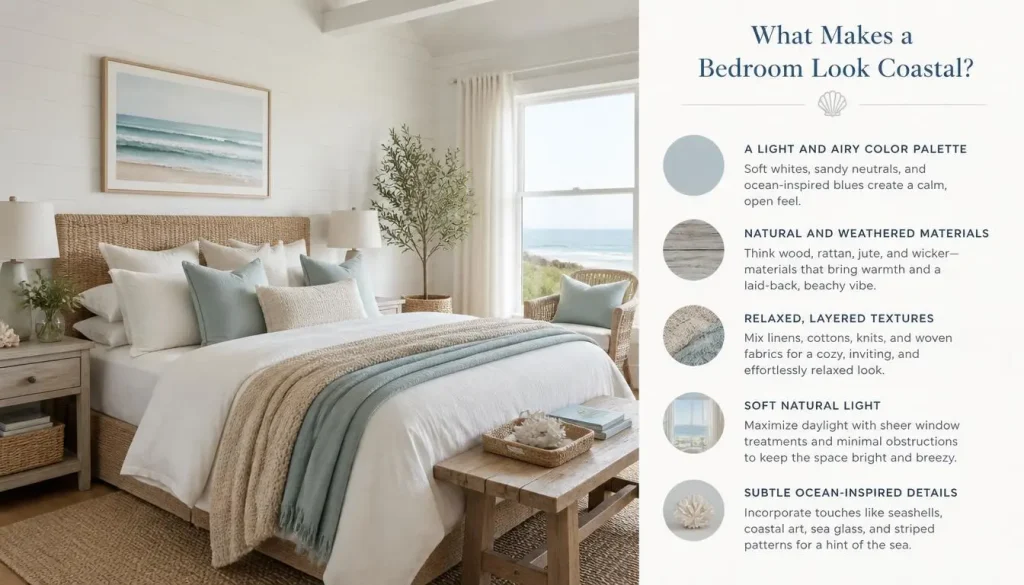
A Light and Airy Color Palette
White, cream, beige, pale gray, soft blue, and muted green create a calm foundation. These shades reflect the colors commonly associated with clouds, sand, driftwood, sea glass, and ocean water.
Use lighter colors on large surfaces such as walls, bedding, curtains, and rugs. Deeper colors such as navy, charcoal, or forest green can then be introduced through smaller accents.
Natural and Weathered Materials
Rattan, cane, wicker, jute, linen, cotton, oak, and whitewashed wood add warmth and texture. These materials help a coastal bedroom feel organic without requiring obvious beach decorations.
Choose two or three natural materials and repeat them throughout the room. For example, combine a cane headboard, linen curtains, and a jute rug.
Relaxed, Layered Textures
An all-white coastal bedroom can look cold when every surface is smooth. Layering different textures prevents the room from feeling flat.
Combine crisp cotton sheets with a linen duvet, a knitted throw, woven baskets, a textured rug, and an upholstered bench. Keep the colors coordinated so the room remains peaceful.
Soft Natural Light
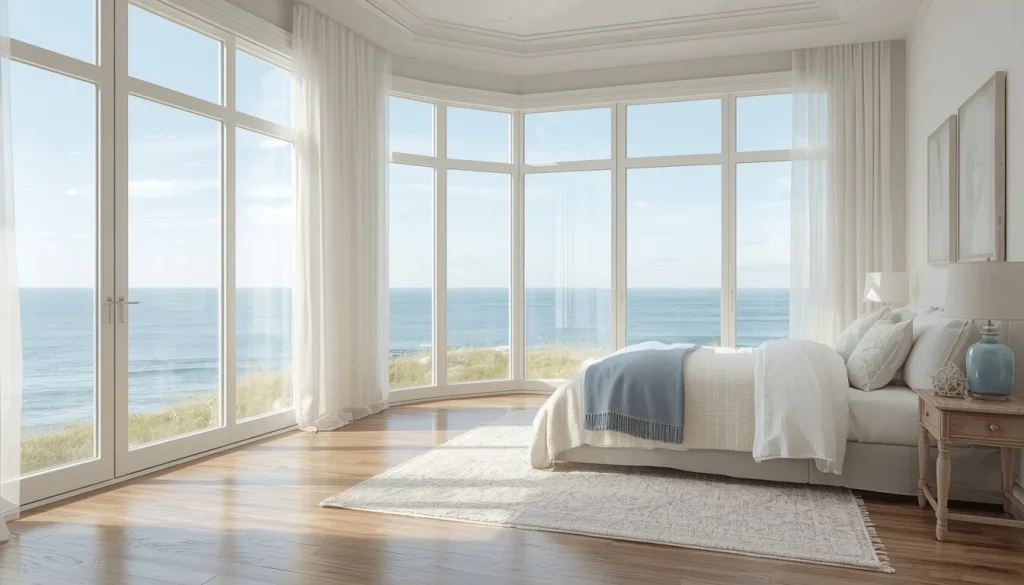
Natural light makes coastal colors and materials feel brighter. Use sheer curtains, lightweight linen drapes, or woven shades that provide privacy without making the room feel heavy.
In darker bedrooms, create a similar effect with mirrors, warm bedside lamps, wall sconces, and pale reflective surfaces.
Subtle Ocean-Inspired Details
A coastal bedroom does not need dozens of seashells or nautical signs. One large seascape, a blue ceramic lamp, a piece of driftwood, or a collection of sea-glass-colored cushions may be enough.
Subtle references usually create a more elegant and timeless result.
Best Coastal Bedroom Color Schemes
The traditional blue-and-white palette remains popular, but it is not the only option. Choose a color scheme that matches the amount of light in your room, your existing furniture, and the atmosphere you want to create.
| Coastal style | Main colors | Suggested accents |
|---|---|---|
| Classic coastal | White, soft blue and sand | Navy, sea green and natural wood |
| Modern coastal | Warm white, greige and light oak | Black, muted blue and bronze |
| Neutral coastal | Cream, beige and oatmeal | Taupe, tan and textured white |
| Luxury coastal | Ivory, soft gray and pale blue | Brass, dark navy and marble |
| Coastal farmhouse | Cream, weathered wood and gray | Dusty blue and matte black |
| Tropical coastal | White, aqua and pale green | Coral, leaf green and warm wood |
| Moody coastal | Deep blue, charcoal and taupe | Cream, walnut and aged brass |
Blue and White Coastal Bedroom
Blue and white create a recognizable coastal look. Use white as the dominant color and add blue through bedding, curtains, artwork, or an accent chair.
Combining several shades of blue usually looks more natural than matching every accessory. Try pale blue, denim, navy, and blue-gray in different proportions.
Neutral Coastal Bedroom
A neutral coastal bedroom uses cream, beige, ivory, taupe, and light wood instead of strong ocean colors. Texture becomes especially important in this palette.
Add interest through a woven headboard, slub linen bedding, a jute rug, ceramic lamps, and warm wood furniture.
Sage Green Coastal Bedroom
Sage green creates a softer alternative to blue. It works well with warm white, sandy beige, natural linen, and pale oak.
Use sage on an accent wall, upholstered headboard, quilt, or curtain. Avoid combining too many different green shades in a small room.
Navy Coastal Bedroom
Navy creates depth and can make a coastal bedroom feel more polished. It works particularly well on a headboard, feature wall, bench, curtain border, or patterned rug.
Balance navy with white, cream, light wood, and warm lighting so the room does not become too dark.
Coastal Bedroom Ideas Without Blue
Blue is optional. A room can still feel coastal when it uses warm white, sand, oatmeal, driftwood gray, tan, terracotta, muted green, and natural materials.
Focus on an airy layout, layered linen, woven furniture, light wood, and artwork inspired by beaches, dunes, grasses, or coastal landscapes.
35 Coastal Bedroom Ideas
The following ideas can be adapted to primary bedrooms, guest rooms, children’s rooms, rental apartments, and small spaces.
1. Begin With Warm White Walls
Warm white walls create a flexible background for coastal bedroom decor. Choose a white with cream, beige, or soft gray undertones rather than an extremely bright white.
A warmer base works well with rattan, oak, jute, linen, and sandy colors. It also allows you to update blue, green, coral, or navy accents later without repainting the entire room.
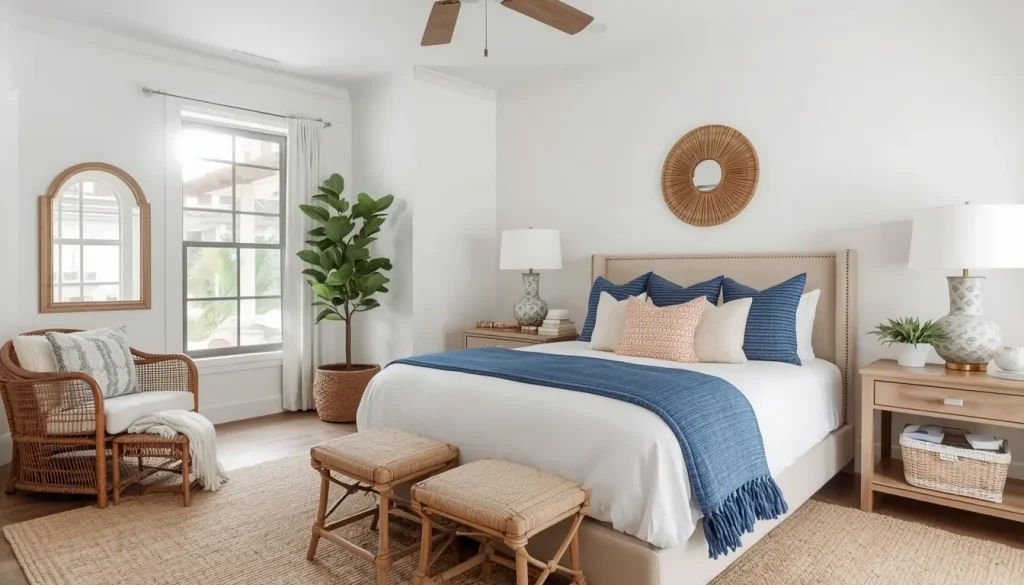
2. Layer Blue and White Bedding
Start with white sheets and introduce blue through a quilt, duvet cover, throw, or decorative pillows. Use a combination of solid fabrics and restrained patterns.
For a balanced bed, choose one main pattern, one smaller pattern, and several plain textures. Avoid using stripes, coral prints, nautical symbols, and florals all at once.
3. Install a Rattan or Cane Headboard
A rattan or cane headboard can become the main coastal feature in a bedroom. It introduces natural texture without using additional floor space.
Pair it with simple bedding and restrained wall decor. If the headboard has a detailed woven pattern, keep the nightstands and lamps relatively simple.
4. Choose a Light Wood Bed Frame
Light oak, ash, pine, or whitewashed wood can make a room feel relaxed and natural. A clean-lined wooden bed works especially well in modern coastal and Scandinavian-coastal bedrooms.
Coordinate the bed with furniture that has similar undertones. The pieces do not need to match exactly, but they should feel visually connected.

5. Introduce Sandy Beige Tones
Beige, tan, camel, and oatmeal represent the warmer side of coastal design. Use them in rugs, upholstered furniture, curtains, cushions, or blankets.
These shades prevent white-and-blue rooms from feeling cold. They also work well in neutral coastal bedrooms that do not use blue.
6. Use Linen-Look Bedding
Linen and linen-look textiles create a relaxed, gently textured appearance. Choose a duvet or coverlet in white, cream, pale blue, sage, or beige.
A slightly informal finish suits coastal interiors, but the bed should still look intentional. Smooth the main bedding and allow only the top throw or pillows to appear casually arranged.
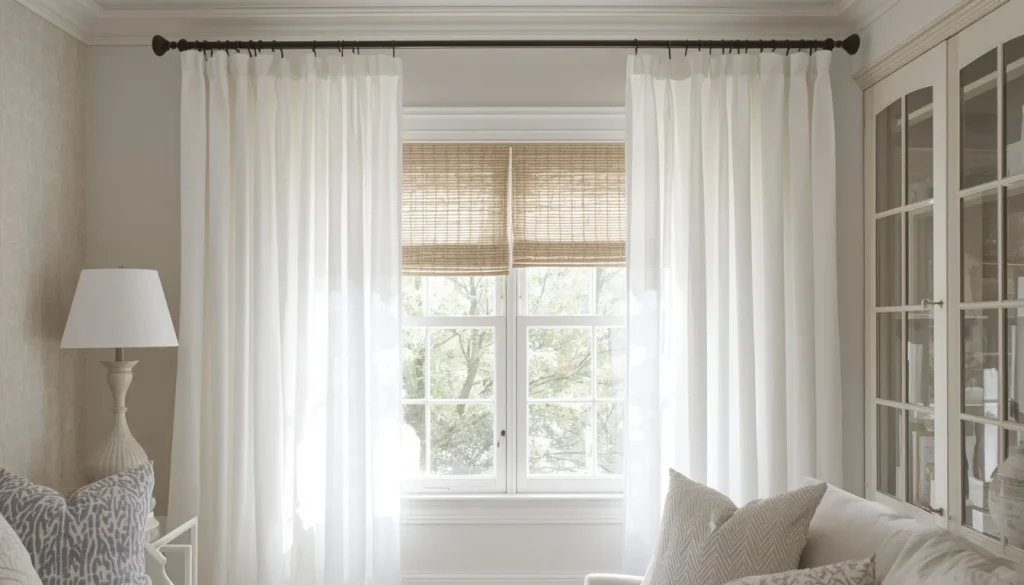
7. Hang Sheer White Curtains
Sheer curtains soften daylight and create a breezy appearance. Hang the curtain rod close to the ceiling and extend it beyond the window frame to make the opening appear larger.
For additional privacy or insulation, combine sheers with lined curtains, Roman shades, or woven blinds.
8. Ground the Room With a Jute or Sisal Rug
A natural-fiber rug adds texture and visually anchors the bed. Choose a size that extends beyond the sides and foot of the bed instead of placing a very small rug in the center.
For additional softness, layer a washable cotton rug over a larger natural-look rug.
9. Add a Woven Pendant Light
A rattan, bamboo, or woven pendant can create a strong coastal focal point. It works particularly well in a bedroom with simple furniture and a neutral ceiling.
Check the scale before buying. A tiny pendant may look lost in a large room, while an oversized fixture can overwhelm a low ceiling.
10. Display One Oversized Coastal Artwork
One large piece of art often looks calmer than several small beach-themed decorations. Choose an abstract ocean painting, coastal landscape, minimalist shoreline photograph, or botanical print.
Select artwork that repeats two or three colors already present in the bedroom. This helps the room feel coordinated rather than themed.
11. Paint a Soft Blue Accent Wall
A pale blue or blue-gray wall behind the bed can introduce coastal color without dominating the room. Keep the remaining walls white, ivory, or light neutral.
Test the color at different times of day. Blue paint can appear much cooler in a north-facing or dimly lit room.
12. Add White Shiplap Behind the Bed
Shiplap can introduce architectural character and a beach-cottage feeling. Use it on one wall instead of covering every surface.
Vertical boards can make a low room feel taller, while horizontal boards can visually widen the wall. Keep the surrounding decor restrained so the paneling remains the main feature.
13. Use Vertical Tongue-and-Groove Paneling
Slim vertical paneling draws attention upward and can make a compact bedroom feel taller. Painting the paneling and surrounding walls in the same color creates fewer visual breaks.
Designers currently recommend clean, narrow vertical panels and seamless color application when the goal is to make a small bedroom feel more spacious.
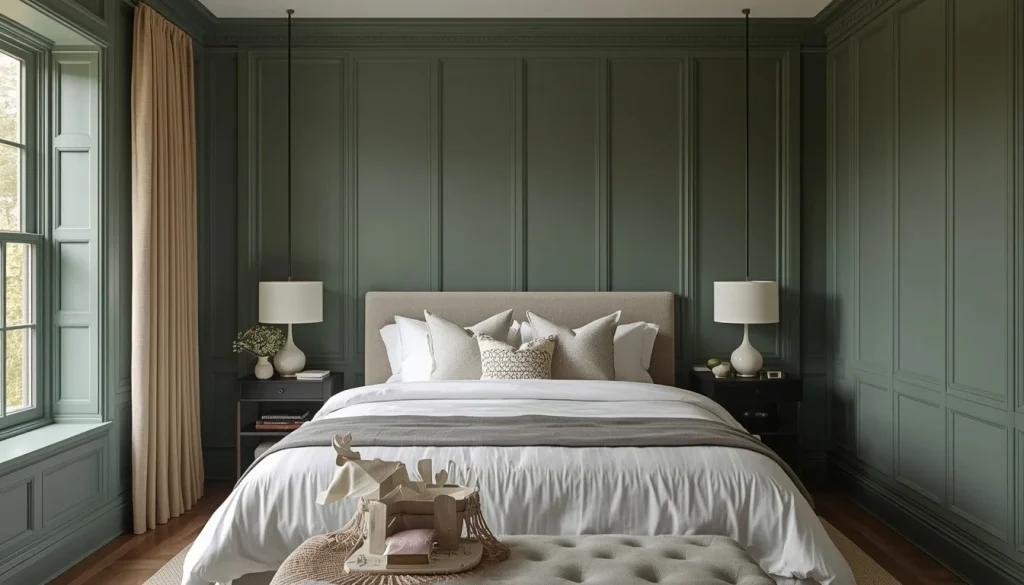
14. Style the Bed With Textured Pillows
Use pillows with subtle texture rather than covering the bed with literal beach motifs. Bouclé, linen, cotton, waffle weave, embroidery, and fine stripes can all work.
Three to five decorative pillows are usually enough for a standard bed. Keep enough open space so the bed still looks comfortable and practical.
15. Mix Stripes With Solid Neutrals
Stripes are a classic coastal pattern, but they should not appear on every textile. Use stripes on one feature, such as a quilt, cushion, rug, or curtain border.
Balance them with solid white, beige, pale blue, or navy. Thin irregular stripes usually feel more relaxed than bold, perfectly matched nautical patterns.
16. Choose Cane or Wicker Nightstands
Cane-fronted or wicker nightstands add texture beside an upholstered or wooden bed. They are especially suitable for California coastal, boho coastal, and organic modern bedrooms.
Choose nightstands with drawers or enclosed compartments when you need to hide chargers, books, and personal items.
17. Incorporate Weathered Wood Furniture
A weathered dresser, bench, or bedside table can give the room a collected beach-house character. One distressed piece is usually enough.
Avoid filling the bedroom with heavily distressed furniture. Mix the weathered item with cleaner, more contemporary pieces to keep the result current.
18. Add Sea-Glass Green Accents
Sea-glass green works beautifully with white, pale gray, beige, and blue. Introduce it through ceramic lamps, cushions, artwork, or a small chair.
Use muted green rather than highly saturated turquoise when you want a sophisticated coastal bedroom.
19. Add Black Accents to a Modern Coastal Bedroom
Small black details can give a pale coastal room more definition. Consider matte-black curtain rods, picture frames, sconces, handles, or a simple bench frame.
Repeat black in two or three places so it looks intentional. Avoid allowing it to become the dominant color unless you are creating a moody coastal bedroom.
20. Place a Bench at the Foot of the Bed
A bench adds function and helps complete the bed area. Choose light wood, woven cane, linen upholstery, or a simple slipcovered design.
Leave enough walking space between the bench and the opposite wall. In a small room, use a narrow bench or an upholstered storage ottoman.
21. Organize Clutter With Woven Baskets
Woven baskets suit coastal decor while providing storage for blankets, cushions, toys, laundry, or reading materials.
Use fewer, larger baskets instead of placing many small ones throughout the room. This keeps the space organized and reduces visual clutter.
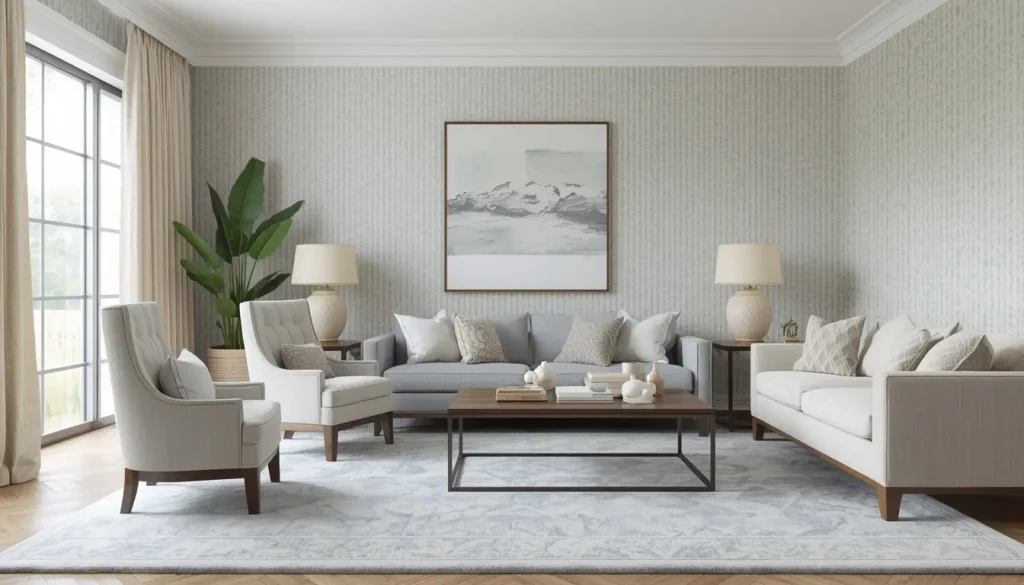
22. Add a Soft Blue or Neutral Area Rug
A pale blue, cream, gray, or sand-colored rug can soften the room and connect the furniture. Subtle stripes, faded geometric patterns, and vintage-inspired designs work well.
Choose a low-contrast pattern when the bedding or wallpaper already has a strong design.
23. Bring in Greenery
A healthy plant or arrangement of branches can add color and an organic element. Choose a plant that suits the bedroom’s available light and your care routine.
In rooms where live plants are impractical, use a high-quality artificial branch or dried grasses in a simple ceramic vase.
24. Use Ceramic Bedside Lamps
Ceramic lamps in white, blue, green, beige, or textured stone finishes can reinforce a coastal palette without appearing overly themed.
Use appropriately sized lamps. The bottom of the shade should generally sit near eye level when you are seated or lying in bed, depending on how the lamp will be used.
25. Create a Coastal Reading Corner
Place a compact chair near a window with a small table, reading lamp, and lightweight throw. Choose rattan, slipcovered linen, or softly upholstered seating.
In a small bedroom, avoid adding a chair that becomes a place for clothes. A narrow bench or wall-mounted reading light may be more useful.
26. Use a Mirror to Reflect Light
Position a mirror where it can reflect a window, lamp, artwork, or attractive part of the room. A woven, pale wood, or simple painted frame can complement coastal decor.
Avoid placing mirrors where they reflect clutter, an open bathroom, or an unfinished storage area.
27. Add Vintage Coastal Accessories Sparingly
A vintage map, old glass bottle, framed maritime print, weathered stool, or antique chest can introduce history and personality.
The room should not look like a souvenir shop. Select one or two meaningful items and combine them with contemporary furniture and textiles.
28. Create a Minimalist Coastal Bedroom
Use a restrained palette of warm white, beige, pale wood, and one muted accent color. Select furniture with clean lines and leave unnecessary surfaces clear.
Texture is essential in a minimalist coastal bedroom. Add linen, woven fibers, timber, and soft rugs to prevent the room from looking unfinished.
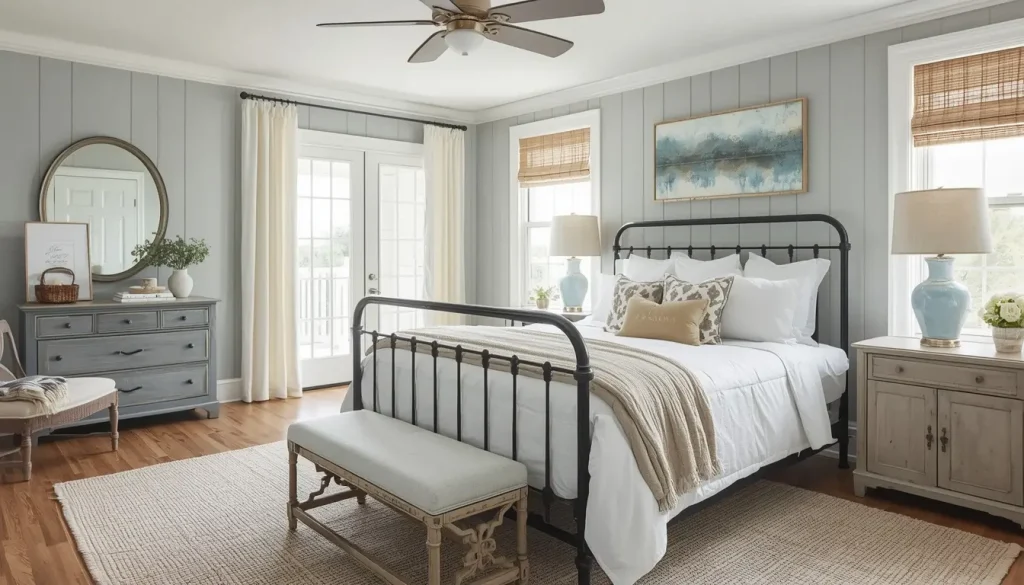
29. Design a Coastal Farmhouse Bedroom
Combine coastal colors with farmhouse materials such as painted wood, vintage furniture, simple paneling, and natural textiles.
Use dusty blue, cream, gray, and warm wood rather than strong nautical colors. A black metal bed can work when balanced with soft bedding and woven details.
30. Try Coastal Grandmother Style
Coastal grandmother style combines classic comfort with understated seaside elegance. Use slipcovered furniture, linen, blue-and-white ceramics, traditional lamps, subtle stripes, and vintage-inspired artwork.
Keep the room refined by choosing a limited palette and avoiding excessive decorative accessories.
31. Combine Coastal and Boho Styles
A boho coastal bedroom can include rattan furniture, woven wall decor, natural textiles, relaxed bedding, and a few handcrafted accessories.
Limit the palette to white, sand, brown, muted blue, or green. Too many bright colors and small decorative objects can make the room feel busy.
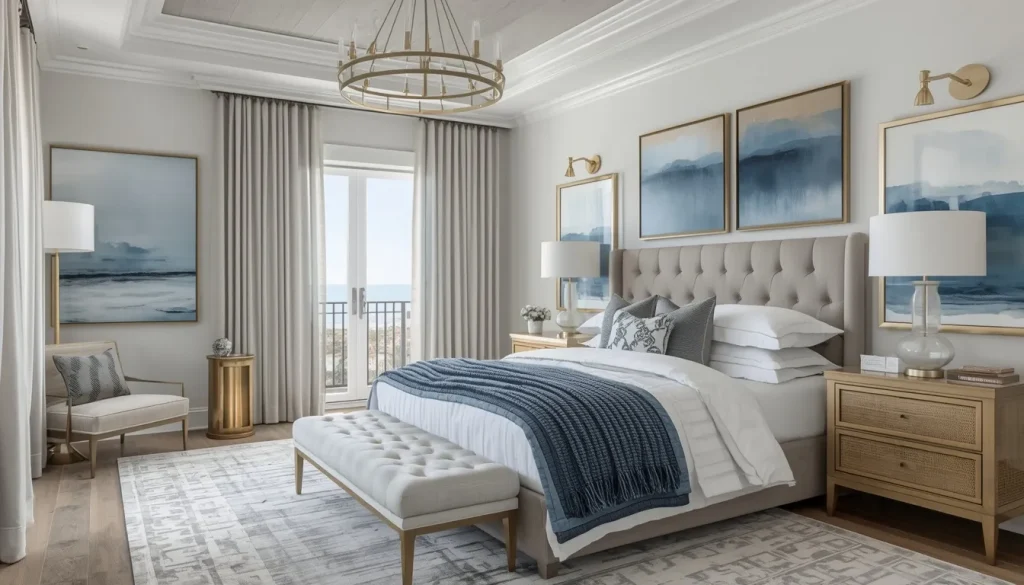
32. Create a Luxury Coastal Bedroom
Use high-quality bedding, an upholstered headboard, layered lighting, full-length curtains, large artwork, and substantial nightstands.
Luxury comes from scale, comfort, and careful coordination rather than shiny beach-themed accessories. Add brass, bronze, marble, or dark navy in small amounts for a polished finish.
33. Add Tropical Coastal Details
Use pale aqua, soft green, white, warm timber, and botanical patterns to create a tropical coastal atmosphere.
Choose one main botanical feature, such as wallpaper, curtains, or artwork. Keep the remaining fabrics simple so the room remains restful.
34. Experiment With a Moody Coastal Palette
A coastal bedroom does not have to be pale. Deep navy, stormy blue, charcoal, olive, dark wood, and warm taupe can create a cocooning atmosphere.
Balance darker walls with cream bedding, warm lamps, textured fabrics, and reflective surfaces. This approach works particularly well in larger bedrooms.
35. Keep the Final Design Uncluttered
Once the main furniture, bedding, lighting, and artwork are in place, remove any accessory that does not improve the room.
Coastal style depends on visual breathing space. A few well-chosen objects will usually create a stronger result than many small decorations.
Popular Coastal Bedroom Styles
Understanding the different versions of coastal design can help you select furniture and colors more confidently.
Modern Coastal Bedroom
Modern coastal style combines light colors and natural materials with streamlined furniture, abstract art, and minimal decoration.
Use warm white, pale oak, greige, muted blue, and restrained black accents. Avoid heavily distressed furniture and obvious nautical symbols.
California Coastal Bedroom
California coastal bedrooms often feel relaxed, sunny, and informal. They commonly combine warm white walls, light wood, woven furniture, textured neutral bedding, and indoor greenery.
Add muted terracotta, sage, or faded blue for a warmer interpretation.
Hamptons-Style Coastal Bedroom
Hamptons coastal style tends to be more structured and polished. Use crisp white, navy, pale blue, tailored curtains, upholstered furniture, symmetrical lighting, and classic paneling.
Choose fewer but more substantial accessories to maintain an elegant finish.
Organic Modern Coastal Bedroom
Organic modern coastal design uses warm neutral colors, rounded forms, natural wood, stone-like ceramics, woven textures, and clean-lined furniture.
This style is ideal for readers who want a coastal bedroom without blue or nautical decor.

Coastal Cottage Bedroom
A coastal cottage bedroom can feel collected and slightly nostalgic. Use painted furniture, floral or striped fabrics, vintage artwork, white paneling, and cozy layered bedding.
Keep the palette gentle to prevent the mix of patterns and furniture from looking chaotic.
Cape Cod Bedroom
Cape Cod style often combines classic blue and white with traditional furniture, simple paneling, woven accents, and maritime references.
Use nautical details selectively. One framed map or striped textile may be more effective than multiple anchors, ropes, and boat decorations.
Small Coastal Bedroom Ideas
A small bedroom needs visual simplicity and furniture that fits the available floor space.
Choose a bed size that leaves a usable walkway. Designers commonly recommend approximately 30 to 36 inches of clearance where the room allows, although compact rooms may require a more flexible arrangement.
Choose a Storage Bed
Under-bed drawers or a lift-up storage base can hold spare bedding, seasonal clothing, and luggage. This may reduce the need for an additional dresser.
Select a bed with a simple front so the storage mechanism does not dominate the room.
Use Wall-Mounted Bedside Lights
Wall sconces free the surface of small nightstands. Plug-in sconces are useful for rental bedrooms where new electrical wiring is not possible.
Install adjustable fixtures when the lights will also be used for reading.
Replace Nightstands With Floating Shelves
A narrow floating shelf can hold a lamp, phone, book, and glass of water without occupying much floor space.
Keep wiring controlled and avoid overloading the shelf with decorative objects.
Use Vertical Lines
Vertical wall paneling, tall curtains, and narrow artwork can draw attention toward the ceiling. This helps reduce the visual emphasis on the room’s limited width.
Limit the Main Palette
Use two main colors and one accent color. A restrained palette helps furniture and walls visually connect, making the room feel less fragmented.
Coastal Bedroom Ideas for Apartments and Rentals
You can create a coastal apartment bedroom without painting walls, replacing flooring, or making permanent alterations.
Use Removable Wallpaper
Apply peel-and-stick wallpaper behind the bed or inside a shallow alcove. Choose a subtle stripe, botanical design, watercolor pattern, or textured grasscloth effect.
Confirm that the product is suitable for your wall finish and test a small hidden area before installation.
Introduce Color Through Bedding
When wall painting is not permitted, use a blue, green, beige, or patterned duvet as the room’s main feature.
Coordinate it with removable artwork, lamps, curtains, and a rug rather than buying an entirely new furniture set.
Use Plug-In Lighting
Plug-in sconces and floor lamps can improve layered lighting without electrical work. Hide visible cables with suitable cable covers or position furniture strategically.
Cover Unattractive Flooring
A large area rug can soften carpet, laminate, or hard flooring that does not match your preferred coastal aesthetic.
Choose a flat-weave or washable rug when maintenance and frequent moving are concerns.
Select Furniture You Can Reuse
Choose a neutral bed, dresser, and nightstand that can work in a future home. Express the coastal style through portable items such as bedding, lamps, baskets, artwork, and curtains.
Coastal Bedroom Ideas for Kids and Teens
A coastal children’s bedroom should be playful, functional, and easy to update as the child grows.

Create a Subtle Coastal Kids’ Bedroom
Use pale blue, aqua, green, white, or sand as the main palette. Add one playful feature such as ocean wallpaper, a wave-patterned rug, or marine-animal artwork.
Keep expensive furniture neutral so it can remain useful when the theme changes.
Design a Coastal Teen Bedroom
For a more mature appearance, use navy, white, gray, natural wood, and clean-lined furniture. Add personality through photographs, surf-inspired artwork, cushions, and a display shelf.
Provide practical storage and a comfortable study area rather than focusing only on decoration.
Create a Coastal Bunk Room
Use built-in or freestanding bunk beds with individual reading lights and storage. Coordinate the bedding without making every bed identical.
Simple stripes, checks, solids, and numbered hooks can create an organized vacation-home feeling.
Style a Twin-Bed Guest Room
Place a small table or chest between twin beds and use matching lamps to create balance. Coordinate the bedding through color while allowing slight differences in pillows or throws.
This arrangement works for children, adult guests, and shared vacation bedrooms.
Coastal Bedroom Walls, Floors, and Windows
Architectural surfaces can establish the coastal style before accessories are added.
Coastal Wallpaper
Choose watercolor waves, soft stripes, botanical prints, seabirds, grasses, or abstract shoreline patterns. Use bold wallpaper on one feature wall and keep the remaining surfaces simple.
Limewash and Textured Walls
Limewash-look paint and subtle plaster finishes can add depth to neutral coastal bedrooms. Their soft visual movement works well with natural wood and linen.
Always follow the product manufacturer’s preparation and application guidance.
Coastal Flooring
Light wood, whitewashed finishes, natural-look flooring, and pale neutral carpet can all support a coastal palette.
If replacing the floor is not practical, use a large rug to introduce the desired color and texture.
Coastal Window Treatments
Sheer curtains create softness, while woven shades add natural texture. Lined linen-look curtains may be better when you need greater privacy or light control.
Hang curtains high and wide to give the window a more generous appearance.
Coastal Bedroom Bedding and Textile Ideas
The bed is usually the largest visual element in the room, so bedding has a major influence on the overall style.
Begin With a Simple Foundation
Use white, ivory, pale gray, or light blue sheets and a neutral duvet. This creates a foundation that can be updated through seasonal throws and pillows.
Add a Lightweight Quilt
A quilt or coverlet can add color and pattern without making the bed look overly formal. Stripes, small florals, geometric stitching, and faded botanical prints suit coastal rooms.
Mix Patterns Carefully
Combine patterns of different scales. For example, use a broad stripe with a small botanical print and several solid fabrics.
Repeat at least one color across the different patterns to create unity.
Coordinate Curtains and Bedding
The curtains and bedding do not need to match. Instead, repeat one shared color or texture.
If the bedding has a strong pattern, use solid curtains. If the bedding is plain, the window treatment can carry more visual interest.
Coastal Bedroom Furniture Ideas
Coastal bedroom furniture should support the room’s light, relaxed character while providing practical storage.
| Furniture item | Coastal option | Suitable for |
|---|---|---|
| Bed | Rattan, upholstered linen or light wood | Most coastal styles |
| Headboard | Cane, woven fiber or textured upholstery | Natural focal point |
| Nightstand | Whitewashed wood, oak or cane-fronted design | Bedside storage |
| Dresser | Light wood or softly painted finish | Clothing storage |
| Bench | Woven, upholstered or simple timber design | Primary bedrooms |
| Chair | Rattan, slipcovered or compact upholstered chair | Reading corners |
| Wardrobe | Warm white or pale wood | Rooms without built-ins |
Avoid buying a complete matching furniture set unless the design is very simple. Combining coordinated pieces with different textures generally creates a more natural, collected appearance.
Coastal Bedroom Ideas on a Budget
A coastal bedroom makeover does not require replacing every item.
Make Changes for Less Than $100
Depending on local prices, begin with small updates such as:
- New cushion covers
- A lightweight throw
- Secondhand artwork
- A woven basket
- A ceramic lamp
- New drawer handles
- A small plant or vase of branches
Choose one color palette before shopping so the inexpensive pieces still look coordinated.
Focus on Bedding First
Replacing a duvet cover, quilt, or throw can change the room more quickly than buying decorative accessories.
Keep the sheets and main furniture neutral, then use bedding to establish the coastal colors.
Shop Secondhand
Look for light wood nightstands, painted dressers, ceramic lamps, framed art, benches, and mirrors. Check measurements carefully before purchasing.
A piece does not need to be marketed as “coastal” to work in a coastal bedroom.
Refinish Existing Furniture
Paint a dark nightstand warm white, replace heavy handles, or update a wooden dresser with a lighter finish.
Prepare the surface correctly and use products appropriate for the furniture material.
Create Simple Wall Art
Frame personal beach photographs, abstract watercolor prints, vintage maps, or pressed coastal grasses.
Use matching frames to make inexpensive prints feel more intentional.
Coastal Primary Bedroom Ideas
A primary bedroom should balance coastal style with comfort and storage.
Use a substantial headboard, layered bedding, bedside lighting, full-length curtains, and an appropriately sized rug. Coordinated nightstands can create balance, but they do not need to be identical.
Where space allows, add a bench or compact seating area. Keep personal storage concealed so the room maintains a restful appearance.
Coastal Guest Bedroom Ideas
A coastal guest bedroom should be inviting but not overloaded with decorative objects.
Provide clear bedside surfaces, accessible lighting, extra blankets, hangers, charging options, and a place for luggage. Use washable bedding and keep strongly scented products to a minimum.
A neutral coastal palette is particularly useful in guest rooms because it can appeal to people with different tastes.
How to Create a Coastal Bedroom for a Humid Climate
Bedrooms in humid locations need practical material choices in addition to attractive styling.
Choose washable bedding, easily cleaned rugs, and furniture finishes suitable for the conditions in your home. Avoid overcrowding the room, especially around exterior walls, and maintain airflow according to your property’s needs.
Clean woven materials regularly, follow manufacturer care guidance, and avoid placing moisture-sensitive accessories where persistent condensation or dampness occurs.
Coastal Bedroom Trends for 2026
Current coastal design is moving away from rooms filled with obvious nautical symbols. The stronger direction is warmer, more textured, and more personal.
Contemporary coastal interiors are using cream, sand, timber, plaster-like finishes, paneling, linen, stone, curated artwork, and restrained shell or seaside references.
Warm Neutrals
Warm white, cream, oatmeal, beige, and natural wood are replacing stark white as the only foundation for coastal rooms.
Organic Modern Coastal Style
Rounded furniture, sculptural lighting, warm wood, stone-like ceramics, and natural textiles are bringing coastal and organic modern styles closer together.
Warm neutral palettes remain a defining feature of organic modern interiors.
Textured Walls
Paneling, limewash effects, subtle plaster finishes, and textured wallpaper are being used to add depth without introducing more decorative objects.
Personal Artwork
Generic beach signs are being replaced by personal photography, abstract art, handmade pieces, and artwork connected to a meaningful place.
Darker Coastal Accents
Navy, olive, walnut, charcoal, and earthy red can add contrast to pale coastal rooms. The goal is depth rather than a completely dark design.
Timeless Choices Over Fast Trends
Natural materials, comfortable bedding, practical furniture, and restrained palettes generally provide a stronger long-term foundation than novelty decorations.
How to Make Coastal Decor Look Elegant, Not Tacky
The difference between an elegant coastal bedroom and a themed room usually comes down to restraint.
Avoid Too Many Literal Motifs
Do not use anchors, ropes, seashells, starfish, boat models, and beach signs in the same room.
Choose one subtle reference and allow the colors and materials to communicate the coastal atmosphere.
Prioritize Texture
Use linen, cotton, wood, woven fibers, ceramics, and textured walls instead of relying on printed beach accessories.
Use Muted Colors
Pale blue, navy, sage, sand, cream, and driftwood gray are easier to coordinate than multiple bright tropical colors.
Invest in One Focal Point
Choose a strong headboard, artwork, pendant, wallpaper, or view. Allow the remaining elements to support that feature.
Include Personal Items
Display a photograph from a meaningful trip, a handmade ceramic piece, or art that genuinely reflects your taste. This prevents the bedroom from resembling a furniture showroom.
Common Coastal Bedroom Decorating Mistakes
Using Too Much Blue and White
Blue and white are effective, but a room made entirely from these colors can feel cold. Introduce beige, tan, warm wood, or natural woven textures.
Buying Too Many Beach-Themed Accessories
A collection of small themed decorations creates clutter. Replace several small objects with one larger piece of artwork or a functional woven basket.
Ignoring the Room’s Natural Light
A pale blue that looks beautiful online may appear gray in a darker room. Test paint and fabric samples under your actual lighting conditions.
Choosing Furniture That Is Too Large
Measure the room, doors, walking paths, and wall space before purchasing furniture. Select fewer pieces when space is limited.
Mixing Too Many Wood Undertones
Wood furniture does not need to match perfectly, but extremely red, orange, gray, and yellow finishes can compete. Repeat similar warm or cool undertones.
Depending on One Ceiling Light
A bedroom is more comfortable when it includes several light sources. Combine overhead lighting with bedside lamps, sconces, or a floor lamp.
Creating a Matching Showroom
A complete matching set can make the room feel impersonal. Mix coordinated pieces with different materials, shapes, and finishes.
Step-by-Step Coastal Bedroom Makeover Plan
Step 1: Choose Your Coastal Style
Decide whether you prefer modern coastal, Hamptons, California coastal, coastal farmhouse, coastal cottage, tropical, or organic modern.
Save a small number of reference images that consistently represent the chosen direction.
Step 2: Select Three Main Colors
Choose one dominant color, one supporting neutral, and one accent.
For example:
- Warm white, sand, and pale blue
- Cream, light oak, and sage
- White, navy, and tan
- Beige, ivory, and muted coral
Step 3: Review the Existing Furniture
Identify which pieces can remain, which can be refinished, and which genuinely need replacement.
Do not discard functional furniture simply because it was not sold as coastal decor.
Step 4: Update the Largest Surfaces
Begin with walls, flooring, curtains, and bedding. These elements have more visual impact than small decorative objects.
Step 5: Style the Bed
Use comfortable sheets, a duvet or quilt, a folded throw, and a limited number of pillows.
Repeat the room’s main colors without making every fabric identical.
Step 6: Improve Lighting and Storage
Add bedside lighting, concealed storage, and a mirror where useful. Remove unnecessary furniture that restricts movement.
Step 7: Add Finishing Details
Complete the room with artwork, a rug, baskets, plants, or ceramics. Stop adding accessories when the room feels balanced.

Coastal Bedroom Shopping Checklist
Use this checklist to prioritize purchases:
- Bed frame or headboard
- Mattress and pillows
- Sheets and duvet
- Quilt or coverlet
- Decorative cushions
- Bedside tables
- Bedside lamps or sconces
- Area rug
- Curtains or blinds
- Dresser or wardrobe
- Storage baskets
- Bench or chair
- Mirror
- Wall art
- Plant or decorative branches
Measure the room and create a budget before shopping. Buying fewer well-proportioned pieces is usually more effective than filling the bedroom with inexpensive accessories.
Frequently Asked Questions About Coastal Bedrooms
What colors are best for a coastal bedroom?
White, cream, beige, pale blue, navy, muted green, driftwood gray, and sandy brown all work well. Choose two or three main colors and repeat them throughout the bedding, furniture, rug, and artwork.
How can I make my bedroom look coastal?
Begin with a light neutral base. Add natural wood, linen-look bedding, a woven rug, soft blue or green accents, and one subtle piece of coastal artwork. Remove clutter and avoid using too many literal beach decorations.
Can a coastal bedroom work without blue?
Yes. Use cream, beige, warm white, light oak, taupe, muted green, terracotta, and woven natural textures. The room can feel coastal through its materials, lightness, and relaxed atmosphere rather than its use of blue.
What is the difference between coastal and nautical decor?
Coastal decor is generally inspired by the colors, textures, and relaxed feeling of coastal environments. Nautical decor uses more direct maritime references, such as navy stripes, anchors, ropes, flags, and boats.
How do I make coastal decor look modern?
Use clean-lined furniture, warm neutral colors, abstract artwork, simple lighting, pale wood, and restrained black accents. Limit distressed finishes and obvious beach-themed accessories.
How can I decorate a small coastal bedroom?
Choose appropriately scaled furniture, use under-bed storage, install wall-mounted lights, select a light color palette, and keep accessories minimal. A large mirror and high-mounted curtains can also improve the sense of openness.
What furniture works best in a coastal bedroom?
Light wood, cane, rattan, wicker, painted furniture, and simple upholstered pieces work well. Prioritize comfort, storage, and suitable proportions rather than buying furniture based only on its style label.
Are shiplap walls necessary for coastal style?
No. Coastal style can be created with paint, wallpaper, linen, wood furniture, woven materials, soft colors, and suitable artwork. Shiplap is only one possible architectural detail.
How can I create a coastal bedroom on a budget?
Update the bedding, cushion covers, lamp, artwork, and hardware before replacing furniture. Shop secondhand, repaint suitable pieces, and use baskets or rugs to introduce texture.
What curtains work in a coastal bedroom?
Sheer white curtains, linen-look drapes, woven shades, and simple Roman blinds all work. Select the level of privacy, insulation, and light control required for your room.
How do I make a coastal bedroom feel cozy?
Add a warm neutral color, layered bedding, a soft rug, bedside lamps, curtains, and several natural textures. Avoid relying only on white and pale blue, as the room may otherwise feel cool or unfinished.
Is coastal bedroom decor still in style?
Coastal design remains relevant because it can be interpreted in many ways. Current versions emphasize warm neutrals, natural materials, comfortable rooms, personal artwork, and subtle coastal references instead of rigid nautical themes.
Final Thoughts
The most effective coastal bedroom ideas combine comfort, simplicity, natural texture, and a carefully chosen color palette. You do not need to live beside the ocean or completely renovate your room to create the look.
Begin with one meaningful change, such as new bedding, warm white paint, a woven headboard, lighter curtains, or a natural-textured rug. Build the room gradually and choose pieces that suit your space, climate, budget, and personal style.
A coastal bedroom should ultimately feel calm and comfortable—not like a collection of beach-themed decorations.

“A comfortable home and a healthy lifestyle go hand in hand.”
Hi, I’m Ethan Carter, the founder and lead editor of TheBestHomeFit. I’m passionate about helping people create beautiful, functional living spaces while building healthier lifestyles at home. Over the years, I’ve spent countless hours researching home decor trends, testing home gym equipment, and reviewing products to help readers make smarter buying decisions.
Through TheBestHomeFit, I share practical home improvement ideas, honest product reviews, buying guides, and fitness tips designed for everyday homeowners. My goal is to make it easier for you to create a home that looks great, feels comfortable, and supports your well-being.
When I’m not researching the latest products or writing in-depth guides, you’ll usually find me redesigning a room, trying new home workout routines, or enjoying quality time with my family.



1 thought on “35 Coastal Bedroom Ideas for a Calm and Breezy Retreat”