

The right bedroom lighting can make a room feel calmer, larger, warmer, and more comfortable. It can also improve everyday tasks such as reading, dressing, working, applying makeup, and finding clothes inside a wardrobe.
Many bedrooms rely on one central ceiling fixture. Although that may provide basic visibility, it rarely creates a relaxing or practical environment. A well-designed bedroom usually combines several light sources at different heights and brightness levels.
In this guide, you will discover practical bedroom lighting ideas for small rooms, master bedrooms, rented homes, dark spaces, low ceilings, reading areas, wardrobes, and different interior styles. You will also learn how to choose bulbs, position fixtures, estimate brightness, and avoid common lighting mistakes.
How to Choose the Right Bedroom Lighting
Before buying lamps or fixtures, think about how the room is used. A bedroom may need to support several activities, and each activity requires a different type of light.
Consider How You Use the Bedroom
Start by listing the activities that regularly take place in your bedroom.

You may need lighting for:
- Sleeping and relaxing
- Reading in bed
- Getting dressed
- Applying makeup
- Working or studying
- Watching television
- Cleaning and organizing
- Creating a romantic or cozy atmosphere
- Moving safely through the room at night
A person who only uses the bedroom for sleeping will need a different lighting plan from someone who also works, studies, or gets ready there every morning.
Check the Bedroom Size and Ceiling Height
The size and proportions of the room affect which fixtures will work best.
A small bedroom may benefit from wall-mounted lights, slim floor lamps, or bedside pendants that free up surface space. A large master bedroom may require several lighting zones, including ceiling lighting, bedside lights, wardrobe lighting, and a reading-area lamp.
Ceiling height is also important. Low ceilings usually work best with flush-mount or semi-flush fixtures, while high or vaulted ceilings can accommodate larger pendants and chandeliers.
Consider Natural Light and Room Colors
Natural light can reduce the need for artificial lighting during the day. However, the amount of daylight depends on window size, window direction, curtains, nearby buildings, and the season.
Dark walls, heavy curtains, and matte finishes absorb more light. Pale walls, mirrors, glass surfaces, and satin finishes reflect more light around the room.
A north-facing or windowless bedroom may require more light sources than a bright south-facing room.
Plan the Lighting Before Buying Fixtures
Before making a purchase, check:
- The position of the bed
- Nightstand height and width
- Available electrical outlets
- Existing ceiling wiring
- Switch locations
- Wardrobe and mirror placement
- Desk or dressing-table position
- Whether the property is rented
- Whether professional electrical work is required
- Your total budget
Planning first can help you avoid buying fixtures that are too large, too bright, difficult to control, or impossible to install.
Use the Three Layers of Bedroom Lighting
Most well-lit bedrooms use three main lighting layers: ambient, task, and accent lighting.
Ambient Lighting
Ambient lighting provides general illumination throughout the room. It allows you to walk around, make the bed, clean, and see the overall space.
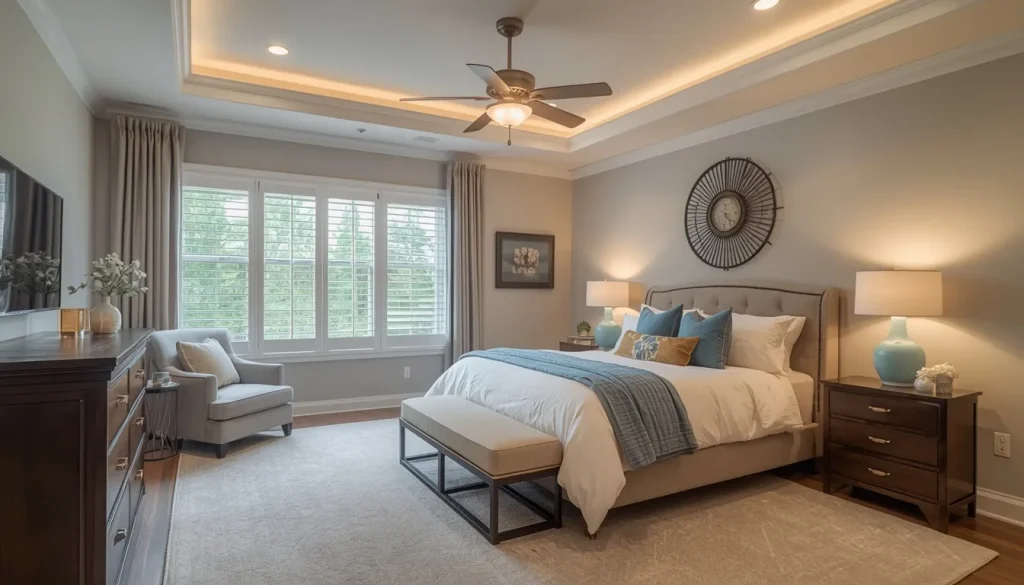
Common ambient lighting options include:
- Flush-mount ceiling lights
- Semi-flush fixtures
- Chandeliers
- Pendant lights
- Recessed lights
- Ceiling fans with lights
- Large floor lamps
Ambient light should be bright enough for everyday use but adjustable enough to avoid feeling harsh at night.
Task Lighting
Task lighting provides focused illumination for a specific activity.
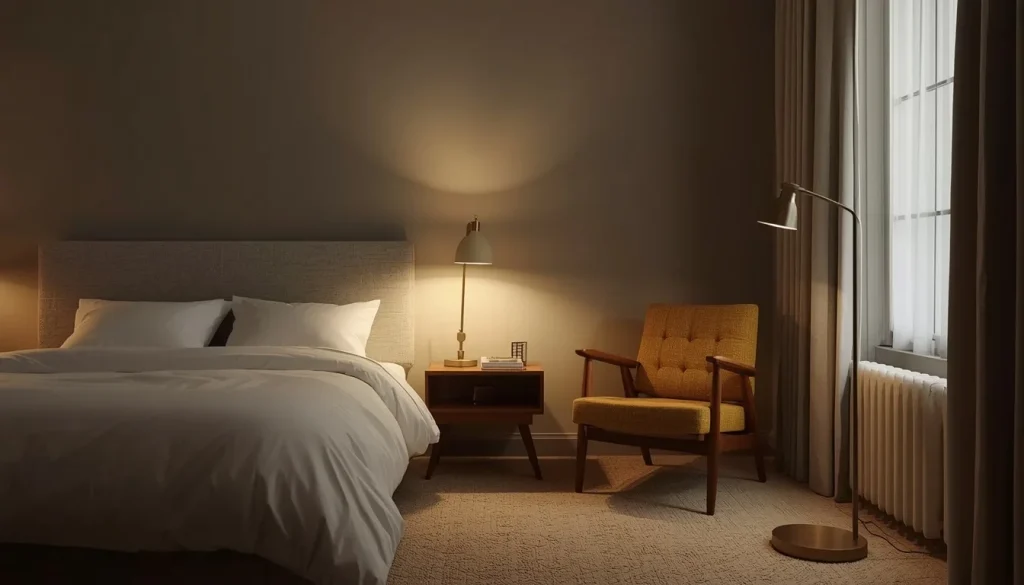
Examples include:
- Bedside reading lamps
- Adjustable wall sconces
- Desk lamps
- Dressing-table lights
- Wardrobe lights
- Floor lamps beside reading chairs
Task lighting should illuminate the activity without shining directly into your eyes.
Accent and Mood Lighting
Accent lighting adds atmosphere and highlights decorative features.

You can use it to illuminate:
- Artwork
- Shelves
- Headboards
- Feature walls
- Architectural details
- Decorative objects
- The space under a bed
- Ceiling coves
Accent lighting is usually softer than task lighting and works best when controlled separately.
1. Install a Statement Ceiling Light
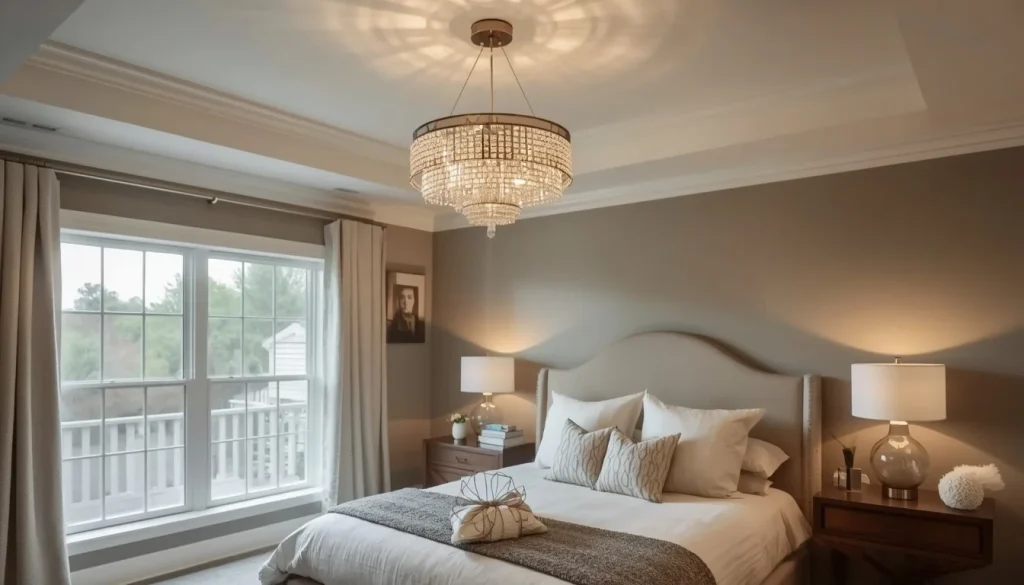
A statement ceiling fixture can become the visual centerpiece of the bedroom. It works especially well in a master bedroom or a room with a high ceiling.
Choose a fixture that matches the scale of the room. A very small pendant can look lost in a large bedroom, while an oversized chandelier may overwhelm a compact space.
For a balanced result, connect the fixture to a dimmer so it can provide bright light during cleaning and softer light in the evening.
2. Choose a Flush-Mount Light for a Low Ceiling
Flush-mount fixtures sit close to the ceiling and are a practical choice for bedrooms with limited height.
They provide general illumination without making the room feel crowded. Modern flush-mount designs are available in simple, decorative, traditional, and minimalist styles.
Choose a fixture with a frosted diffuser to reduce glare and spread light more evenly.
3. Use a Semi-Flush Ceiling Fixture
A semi-flush fixture hangs slightly below the ceiling. It offers more visual interest than a flush-mount light while requiring less clearance than a pendant or chandelier.
This option works well in rooms with standard ceiling heights. It can also help spread light upward and outward, especially when the design includes an open or translucent shade.
4. Add a Bedroom Chandelier
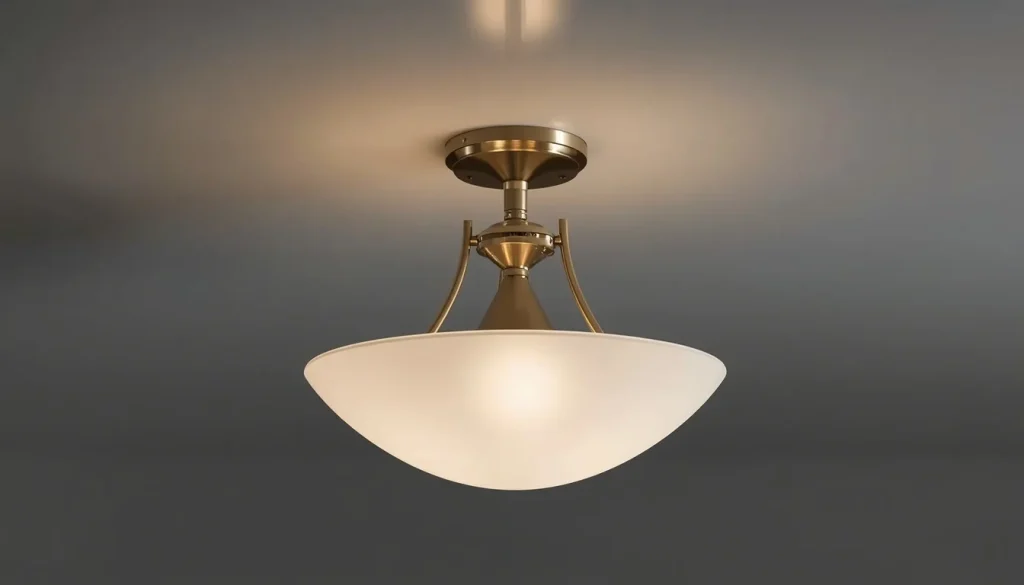
A chandelier can make a bedroom feel luxurious, romantic, or hotel-inspired.
It is most suitable for:
- Large bedrooms
- High ceilings
- Vaulted ceilings
- Rooms with a central bed layout
- Traditional or glamorous interiors
Avoid hanging a large fixture where it may interfere with walking paths or create a safety concern. The fixture should feel proportionate to the bed and the room.
5. Hang Pendant Lights Beside the Bed
Bedside pendants save space on the nightstand and create a clean, symmetrical look.
They are particularly useful in small bedrooms where table space is limited. Pendant lights can also make the bed feel more visually anchored.
Place each pendant above the nightstand rather than directly over the pillow. Make sure the light is low enough to be useful but high enough to avoid head contact.

Plug-in pendants and swag lights can offer a renter-friendly alternative to hardwired fixtures.
6. Install Wall Sconces Above the Nightstands
Wall sconces provide focused bedside lighting without taking up surface space.
Adjustable swing-arm sconces are ideal for reading because the beam can be directed toward a book and moved away when not needed.
Fixed sconces can work well for decorative lighting, but they may be less flexible. Before installation, sit on the bed and test the proposed position to make sure the light will not shine directly into your eyes.
Renters can use plug-in sconces or rechargeable wall lights instead of permanent wiring.
7. Use Matching Bedside Lamps for Symmetry
Matching lamps create a balanced, calm, and polished appearance.
This approach works well in:
- Traditional bedrooms
- Hotel-style bedrooms
- Luxury master bedrooms
- Minimalist spaces
- Shared bedrooms
The lamps do not need to be identical to the ceiling fixture, but they should relate to the room through color, finish, shape, or material.

8. Mix Different Bedside Lamps
Bedside lamps do not always need to match. Mismatched lamps can make a bedroom feel more personal, relaxed, and collected over time.
To keep the arrangement intentional, repeat at least one design element. For example, choose different lamp bases with similar shade colors, or use different shapes in the same metal finish.
Try to maintain similar visual weight so one side of the bed does not feel much heavier than the other.
9. Add Adjustable Reading Lights
A good reading light should illuminate the page without lighting the entire bedroom.
Adjustable reading lights are especially useful for couples with different sleep schedules. Each person can control their own light without disturbing the other.
Look for:
- Flexible arms
- Rotating heads
- Focused beams
- Independent switches
- Dimmable controls
- Warm light settings
Position the light slightly behind or beside the reader so it shines onto the page rather than into the face.
10. Place a Floor Lamp in an Empty Corner
A floor lamp can brighten a dark corner while adding height and visual balance.
Use a floor lamp beside:
- A reading chair
- A dresser
- A bedroom desk
- An empty corner
- A full-length mirror
An uplighter can reflect light from the ceiling, while an adjustable floor lamp can provide focused task lighting.

11. Create a Cozy Reading Nook
A bedroom reading nook can make an unused corner more functional.
Combine:
- A comfortable chair
- A floor or table lamp
- A small side table
- A cushion or throw
- A nearby bookshelf
Choose a lamp that provides enough focused light for reading while maintaining a warm atmosphere.
12. Add LED Lighting Behind the Headboard
Hidden LED strips behind a headboard can create a soft, indirect glow.
This works particularly well in modern, minimalist, luxury, and hotel-inspired bedrooms.
For a professional finish:
- Hide the strip from direct view
- Use a diffuser channel
- Choose a warm or adjustable white setting
- Avoid exposed LED dots
- Connect the strip to a dimmer or smart controller
The goal is to create a halo effect rather than a bright line of light.
13. Install Under-Bed Lighting
Under-bed lighting can create a floating effect while improving nighttime visibility.
Motion-activated LED strips are useful for people who need to get out of bed during the night. They provide low-level illumination without requiring the main ceiling light.
Keep the brightness low and position the strips so the light is reflected from the floor rather than shining directly outward.
14. Use Cove Lighting Around the Ceiling
Cove lighting uses a hidden light source to wash the ceiling or upper walls with a soft glow.
It can make a bedroom feel more spacious and luxurious. It is especially effective in rooms with dropped ceilings, decorative moldings, or recessed architectural details.
Use dimmable LED strips and choose a consistent color temperature with the rest of the room.
15. Highlight Artwork With Picture Lights
A picture light can turn artwork into a bedroom focal point.
Use it above:
- Framed prints
- Paintings
- Textile art
- Photography
- Decorative panels
Choose a fixture that spreads light evenly across the artwork without producing excessive glare.

16. Illuminate Shelves and Display Areas
Shelf lighting can add depth to the room and highlight books, plants, photographs, and decorative objects.
Options include:
- LED strips
- Rechargeable puck lights
- Small table lamps
- Integrated cabinet lights
- Battery-powered shelf lights
Keep the brightness lower than the main room lighting so the shelves remain an accent rather than a distraction.
17. Add Lighting Inside the Wardrobe
Wardrobe lighting makes it easier to distinguish colors, find clothing, and organize storage.
Useful options include:
- Motion-activated LED strips
- Rechargeable bar lights
- Puck lights
- Integrated rail lighting
- Door-activated lights
Position the light near the front of the wardrobe so your body does not block it when you stand in front of the shelves.
18. Improve Dressing-Table Lighting
A dressing table requires even, flattering illumination.
A single light above the mirror can create shadows under the eyes and chin. For better results, place lights on both sides of the mirror at approximately face level.
Choose bulbs with good color rendering so makeup, clothing, and skin tones appear natural.
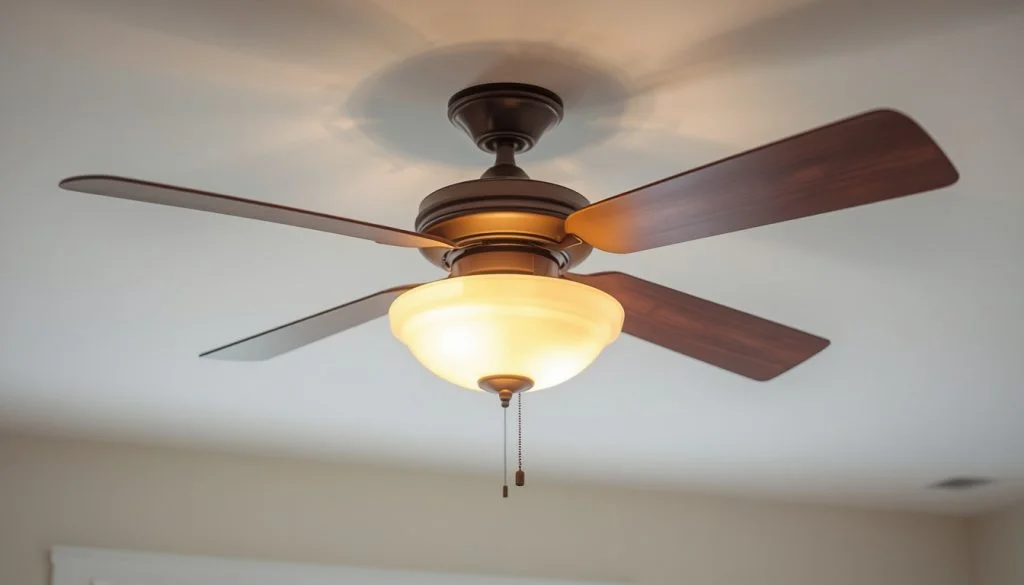
19. Use a Ceiling Fan With a Light
A ceiling fan with an integrated light can be practical in warm climates and bedrooms with limited ceiling wiring.
Choose a quiet model designed for bedroom use. Ideally, the fan and light should have separate controls so one can be used without the other.
Low-profile fan designs are available for standard or slightly lower ceilings.
20. Add Smart Bedroom Lighting
Smart lighting allows you to control brightness, color temperature, schedules, and scenes through an app, remote, or voice assistant.
Useful bedroom routines include:
- Bright morning lighting
- Gradual wake-up lighting
- Reading mode
- Relaxing evening mode
- Low-level night lighting
- Automatic switch-off
- Vacation schedules
Smart bulbs are easy to install, while smart switches can control several fixtures at once. Maintain a convenient manual control so the room remains easy to use for guests.
21. Use Dimmers to Control the Mood
A dimmer is one of the most useful bedroom lighting upgrades.
Bright light may be necessary for dressing, organizing, and cleaning. Softer light is usually more comfortable before sleep.
Use separate dimmers where possible for:
- Ceiling lighting
- Bedside lights
- Accent lighting
- Wardrobe lighting
- Reading lights
Confirm that the bulbs and fixtures are compatible with the selected dimmer.
22. Try Rechargeable or Cordless Lamps
Rechargeable lamps are useful when outlets are limited or permanent wiring is not possible.
They can be placed on:
- Nightstands
- Shelves
- Dressers
- Window ledges
- Small desks
- Wall-mounted brackets
Check battery life, charging time, brightness levels, and whether replacement batteries are available.
23. Add Decorative String or Fairy Lights
String lights can create a relaxed, playful, or bohemian atmosphere.
They work well in:
- Teen bedrooms
- Dorm rooms
- Canopy beds
- Boho interiors
- Reading corners
- Photo displays
Avoid covering the entire room with exposed wires. Use a simple arrangement and secure the lights properly. Choose products intended for indoor use and follow the manufacturer’s safety instructions.
24. Use Warm Lampshades to Soften the Light
The lampshade has a major effect on how a lamp feels.
Fabric, linen, pleated, and frosted shades soften the bulb and reduce harsh glare. Dark or dense shades direct more light upward and downward, while pale shades allow more light to spread through the room.
A warm-toned shade can make the light appear softer even when the bulb itself remains unchanged.
25. Maximize Natural Bedroom Lighting
Artificial lighting works best when combined with natural daylight.
To make better use of daylight:
- Use light-filtering curtains during the day
- Keep large furniture away from windows
- Place mirrors near or opposite windows
- Choose lighter wall colors
- Use reflective or satin finishes
- Clean windows regularly
- Avoid oversized window treatments in small rooms
Blackout curtains can still be used at night, but they should be easy to open fully during the day.
26. Use Lamps to Light Dark Corners
One central ceiling light often leaves the corners of a bedroom underlit.
Add a floor lamp, shelf lamp, or small accent lamp to create a more even distribution of light.
Lighting the corners can also make the room appear larger because the boundaries of the space remain visible.
27. Add Motion-Sensor Night Lighting
Motion-sensor lighting is useful for nighttime navigation.
It can be placed:
- Under the bed
- Along the skirting board
- Inside a wardrobe
- Near the bedroom door
- Between the bed and bathroom
- Near steps or level changes
Choose a low brightness setting so the light provides visibility without fully waking the user.
28. Combine Different Fixture Finishes
Bedroom fixtures do not all need to use the same finish.
You can combine brass, chrome, black, bronze, wood, glass, ceramic, or woven materials. The room will feel more coordinated when each finish appears more than once.
For example, black wall sconces may relate to black drawer handles, while a brass ceiling light may connect with a brass mirror frame.
29. Make Lighting a Decorative Feature
Lighting can function as artwork.
Consider:
- Sculptural table lamps
- Oversized pendants
- Colored glass fixtures
- Ceramic lamp bases
- Woven shades
- Minimal geometric sconces
- Vintage-inspired lamps
- Artistic ceiling fixtures
Choose decorative fixtures that still provide the type of light the room needs.
30. Create Separate Lighting Scenes
A flexible bedroom should support different lighting scenes.
Morning Scene
Use brighter ambient light and wardrobe lighting to support dressing and organization.
Reading Scene
Use focused bedside lighting with low ambient brightness.
Relaxing Scene
Dim the main lights and use warm bedside or accent lamps.
Romantic Scene
Use low-level, indirect lighting with minimal glare.
Cleaning Scene
Use full ambient brightness so dust, clutter, and surfaces are easy to see.
Night Scene
Use very low motion-sensor or under-bed lighting.
Bedroom Lighting Layout Ideas by Room Size
A good layout depends on the size and function of the bedroom.
Small Bedroom Lighting Layout
A practical small-bedroom plan may include:
- One flush-mount ceiling fixture
- Two wall-mounted bedside lights
- One wardrobe light
- One small accent lamp
- A dimmer or smart control
Wall lights and pendants can free up nightstand space.
Medium Bedroom Lighting Layout
A medium bedroom may need:
- One main ceiling light
- Two bedside lamps or sconces
- One wardrobe or dressing light
- One floor or accent lamp
- Separate controls for ambient and bedside lighting
Large Master Bedroom Lighting Layout
A large bedroom benefits from several zones:
- A central chandelier or ceiling fixture
- Bedside reading lights
- A floor lamp near a chair
- Dressing-table lighting
- Wardrobe lighting
- Accent lighting behind the bed
- Separate dimmers for different zones
Bedroom Office Combination Layout
A bedroom office needs a clear difference between work lighting and relaxation lighting.
Use a brighter desk lamp for work, but keep the rest of the room warm and adjustable. Position the desk light carefully to reduce reflections on screens.
At the end of the workday, turn off the task light and switch to lower, warmer bedroom lighting.
Bedroom Lighting Ideas Without a Ceiling Light
A bedroom can still be well lit without an overhead fixture.
Use a Large Floor Lamp
A powerful floor lamp can provide general illumination, especially when it directs light toward the ceiling.
Combine Several Table Lamps
Place lamps at different heights around the room. For example, use two bedside lamps, one dresser lamp, and one shelf lamp.
Install Plug-In Wall Sconces
Plug-in sconces provide wall-mounted lighting without permanent electrical work.
Use Rechargeable Wall Lights
Rechargeable lights are useful for renters or rooms with limited outlets.
Try a Swag Pendant
A plug-in swag pendant can hang from a ceiling hook and connect to a wall outlet.
Add Smart Plugs
Smart plugs allow several lamps to be controlled together through an app, remote, schedule, or voice command.
How to Light a Dark Bedroom
A dark bedroom needs several light sources rather than one extremely bright fixture.
Light the Corners
Use floor lamps, shelf lights, or wall sconces to prevent large dark areas.
Illuminate the Walls and Ceiling
Light reflected from walls and ceilings feels softer and helps the room appear brighter.
Use Reflective Surfaces
Mirrors, glass, metallic finishes, and pale surfaces can distribute light more effectively.
Choose Suitable Lampshades
Light-colored or translucent shades usually allow more light to spread through the room.
Add Wardrobe and Under-Bed Lighting
Small hidden lights can improve visibility without making the room feel overly bright.
Avoid One Harsh Central Light
A single bright fixture may create glare while leaving corners dark. Use layered lighting instead.
Recessed and Track Lighting Ideas for Bedrooms
Recessed lights are also called can lights, pot lights, or downlights in different regions.
Are Recessed Lights Good for a Bedroom?
Recessed lights can provide clean, unobtrusive ambient lighting. However, they should not be the only light source.
Combine them with bedside lamps, wall sconces, or floor lamps to create a softer atmosphere.
Where Should Bedroom Downlights Be Positioned?
Position downlights around the room rather than directly above the pillows. Perimeter placement can illuminate walls, wardrobes, and circulation areas without producing uncomfortable glare from the bed.
Use Recessed Lights on a Dimmer
Downlights can feel harsh at full brightness. A compatible dimmer provides better control.
Add Track Lighting for Flexibility
Track lights can be directed toward artwork, wardrobes, shelves, or architectural features.
They are particularly useful in attic bedrooms, rooms with sloped ceilings, or spaces where furniture positions may change.
Bedroom Lighting Placement Guide
Correct placement is just as important as fixture style.
How High Should a Bedside Lamp Be?
The lower edge of the shade should generally sit near shoulder or eye level when you are seated in bed. The exact height depends on the mattress, headboard, nightstand, and user.
The bulb should remain hidden behind the shade from a normal reading position.
How High Should Wall Sconces Be?
Wall sconces should be reachable and positioned to direct light toward reading material.
Before drilling, sit in the bed and hold the fixture or a paper template against the wall. This simple test can prevent costly placement mistakes.
How Low Should Bedside Pendants Hang?
A bedside pendant should hang above the nightstand with enough clearance for everyday use. It should not hang where a person may hit it when getting into bed.
Should the Ceiling Light Be Centered Over the Bed?
The best position depends on the room layout.
Centering the fixture in the room may provide more balanced general lighting. Centering it over the bed may create a stronger decorative focal point. Consider wardrobes, walking paths, ceiling fans, and furniture placement before deciding.
Where Should Dressing Lights Be Placed?
Place lights on both sides of the mirror where possible. This produces more even facial illumination than one light directly above the mirror.
How Many Lumens Does a Bedroom Need?
Lumens measure brightness. Watts measure energy use.
The ideal amount of light depends on:
- Room size
- Wall color
- Ceiling height
- Fixture design
- Lampshade opacity
- Natural light
- Activities performed in the room
As a general starting point, ambient bedroom lighting may use approximately 10 to 20 lumens per square foot, or roughly 110 to 215 lumens per square meter.
For example, a 150-square-foot bedroom may begin with an estimated total of 1,500 to 3,000 lumens distributed across several fixtures.
This is not a strict rule. Dark walls, high ceilings, thick shades, or limited daylight may require more light. A bright room with reflective surfaces may need less.
Task lighting should be added separately for reading, dressing, and desk work.
How to Choose the Best Light Bulbs for a Bedroom
The bulb affects brightness, color, comfort, energy use, and how accurately colors appear.
Choose the Right Color Temperature
Color temperature is measured in kelvins.
- Around 2200K to 2700K produces an extra-warm, candle-like appearance
- Around 2700K to 3000K creates a warm, relaxing bedroom atmosphere
- Around 3000K to 4000K may suit dressing tables, desks, and task areas
- Adjustable white bulbs allow the color temperature to change throughout the day
For most bedrooms, warm white light is the safest general choice.
Check the Lumens
Do not choose a bulb based only on watts. Compare lumens to understand how much light the bulb produces.
Consider Color Rendering
Color rendering affects how accurately clothing, makeup, artwork, and skin tones appear.
Bulbs with good color rendering are especially useful near wardrobes, mirrors, and dressing tables.
Confirm Dimming Compatibility
Not every LED bulb works correctly with every dimmer. Check both the bulb and dimmer specifications before installation.
Choose Clear or Frosted Bulbs Carefully
Clear bulbs work well in decorative fixtures where the bulb is intended to be visible. Frosted bulbs usually produce softer, more even light and reduce glare.
Check the Bulb Base
Bulb-base standards vary by fixture and region. Confirm the required screw or bayonet fitting before buying replacements.
How to Create Sleep-Friendly Bedroom Lighting
Bedroom lighting should support a calm evening routine.
Use Brighter Light Earlier in the Day
Brighter light can make morning tasks and daytime activities easier.
Reduce Brightness Before Bed
Lower the brightness during the evening to create a quieter atmosphere.
Choose Warm Evening Light
Warm-toned bedside lamps and indirect lighting usually feel more relaxing than bright, cool-white overhead light.
Avoid Direct Glare
A visible bulb or spotlight aimed at the bed can feel uncomfortable. Use shades, diffusers, or reflected light.
Create a Bedtime Scene
A smart lighting scene can turn off the main ceiling fixture, dim the bedside lamps, and activate low-level night lighting.
Use Separate Reading Lights
In a shared bedroom, separate reading lights allow one person to read while the other sleeps.
Bedroom Lighting Ideas Above and Around the Bed
The wall behind the bed is often the main focal point of the bedroom.
Add a Picture Light Above the Headboard
A picture light can illuminate artwork or the headboard itself.
Install Integrated Headboard Lighting
Built-in headboard lights provide a clean appearance and focused reading illumination.
Backlight a Feature Wall
Hidden LED lighting can emphasize wood panels, wallpaper, molding, or textured finishes.
Use Pendants Beside the Bed
Pendants usually work better beside the bed than directly above the pillows.
Light a Canopy Bed
Small concealed lights can highlight the frame of a canopy or four-poster bed. Keep wires hidden and fixtures securely installed.
Accessible Bedroom Lighting Ideas
Accessible lighting can make a bedroom safer and easier to use.
Keep Controls Within Reach
Place bedside switches, remotes, or controls where they can be reached without getting out of bed.
Add Motion-Sensor Floor Lighting
Low-level motion lighting can reduce the risk of trips during the night.
Improve the Path to the Bathroom
Illuminate the route between the bed, door, and bathroom without using harsh overhead light.
Reduce Glare and Deep Shadows
Use diffused fixtures and several evenly distributed light sources.
Use Voice or Remote Controls
Voice assistants, remotes, and smart switches may help users with limited mobility.
Improve Switch Visibility
High-contrast switch plates or illuminated switches can be easier to locate in low light.
Energy-Efficient Bedroom Lighting Ideas
Efficient lighting can reduce energy use without sacrificing comfort.
Use LED Bulbs
LED bulbs generally use less energy and last longer than older incandescent bulbs.
Create Separate Lighting Zones
Turn on only the lights needed for the current activity.
Use Timers and Schedules
Smart controls can switch lights off automatically.
Add Motion Sensors Where Appropriate
Wardrobe and under-bed lights do not need to remain on continuously.
Use Natural Light During the Day
Open curtains and blinds to reduce unnecessary artificial lighting.
Bedroom Lighting Ideas by Room Type
Small Bedroom Lighting Ideas
Use wall sconces, pendants, slim floor lamps, and integrated wardrobe lighting. Avoid oversized fixtures and bulky table lamps.
Master Bedroom Lighting Ideas
Combine a decorative ceiling fixture, matching bedside lights, wardrobe lighting, a reading-area lamp, and several dimmer controls.
Guest Bedroom Lighting Ideas
Keep the controls simple. Provide an easy-to-reach bedside lamp, clear switches, and convenient charging access.
Kids’ Bedroom Lighting Ideas
Choose secure fixtures, cool-running LED bulbs, study lighting, and a gentle night light. Keep cords safely managed.
Teenage Bedroom Lighting Ideas
Combine desk lighting, shelf lights, adjustable bedside lighting, and limited accent LEDs. Avoid excessive brightness and visual clutter.
Attic Bedroom Lighting Ideas
Use wall lights, low-profile fixtures, adjustable track lights, and floor lamps. Highlight beams and sloped ceilings rather than fighting the architecture.
Renter-Friendly Bedroom Lighting Ideas
Use plug-in sconces, rechargeable wall lights, smart bulbs, floor lamps, removable LED strips, and battery-powered wardrobe lights.
Bedroom Lighting Ideas by Interior Style
Modern Bedroom Lighting
Choose clean lines, simple pendants, matte-black fixtures, linear LEDs, and sculptural lamps.
Minimalist Bedroom Lighting
Use hidden light sources, simple shapes, neutral finishes, and clutter-free bedside fixtures.
Cozy Bedroom Lighting
Combine warm bulbs, fabric shades, table lamps, and several low-level light sources.
Luxury Bedroom Lighting
Use chandeliers, brass sconces, integrated wardrobe lighting, cove lighting, and separate dimmers.
Hotel-Style Bedroom Lighting
Create symmetry with bedside sconces, a central decorative fixture, reading lights, and concealed headboard lighting.
Scandinavian Bedroom Lighting
Choose pale wood, paper, glass, or simple metal fixtures with warm light and clean forms.
Japandi Bedroom Lighting
Use natural materials, soft indirect lighting, simple silhouettes, and minimal visual clutter.
Farmhouse Bedroom Lighting
Consider lantern fixtures, linen shades, black metal sconces, wood details, and vintage-inspired bulbs.
Coastal Bedroom Lighting
Use woven shades, glass lamps, pale finishes, and soft, airy illumination.
Boho Bedroom Lighting
Try rattan pendants, woven lampshades, decorative string lights, and warm portable lamps.
Industrial Bedroom Lighting
Use black metal fixtures, cage sconces, track lights, and exposed-bulb designs with careful glare control.
Traditional Bedroom Lighting
Choose matching lamps, pleated shades, chandeliers, antique-brass finishes, and symmetrical placement.
Vintage Bedroom Lighting
Use restored lamps, milk-glass shades, decorative wall lights, and warm filament-style bulbs.
Romantic Bedroom Lighting
Combine dimmable bedside lamps, soft shades, concealed accent lighting, and warm low-level light.
Moody Bedroom Lighting
Use controlled pools of light, dark shades, wall washing, sculptural lamps, and accent lighting rather than one bright central fixture.
Bedroom Lighting Ideas on a Budget
You do not need to replace every fixture to improve the room.
| Budget | Recommended Upgrade |
|---|---|
| Under $50 or £40 | Replace bulbs, add a smart plug, update a lampshade, or install a small LED strip |
| Under $150 or £120 | Add bedside lamps, plug-in sconces, rechargeable lights, or wardrobe lighting |
| Under $300 or £250 | Replace the main ceiling fixture and add a compatible dimmer |
| Higher budget | Create a complete layered lighting plan with professional electrical work |
Prices vary by country, product quality, fixture size, and installation requirements.
Replace Bulbs First
A warmer color temperature or better brightness level may improve the room without replacing the fixture.
Upgrade Lampshades
A new shade can change both the style and light distribution.
Add Plug-In Fixtures
Plug-in sconces and pendants can create a built-in appearance without major electrical work.
Use Mirrors
A well-positioned mirror can reflect existing natural and artificial light.
Add Battery-Powered Wardrobe Lights
These provide a practical improvement at a relatively low cost.
Common Bedroom Lighting Mistakes to Avoid
Using Only One Overhead Light
One fixture rarely supports reading, dressing, relaxing, and nighttime movement.
Choosing Bulbs That Are Too Cool
Very cool light can make a bedroom feel clinical or uncomfortable in the evening.
Installing Lights in the Eye Line
Visible bulbs and poorly placed sconces can cause glare.
Buying Fixtures That Are the Wrong Size
A fixture should relate to the size of the room, bed, and furniture.
Ignoring Switch Placement
A bedside light is less useful when the switch cannot be reached from bed.
Using Exposed LED Strips
Visible LED dots can make an installation look unfinished. Use hidden placement and diffuser channels.
Mixing Inconsistent Color Temperatures
A very warm lamp beside a cool-white ceiling light can make the room feel visually disconnected.
Forgetting Dimmers
Without dimming, the room may be too bright for relaxation and too dark for cleaning.
Blocking Natural Light
Large furniture, heavy curtains, and cluttered window areas can reduce daylight.
Ignoring Electrical Safety
Use fixtures and bulbs that meet local safety standards. Hire a qualified electrician for hardwired installations when required.
Simple Bedroom Lighting Plan for Beginners
Follow these steps to create a balanced lighting plan:
- Measure the bedroom.
- Identify every activity that takes place in the room.
- Choose the main ambient light.
- Add bedside task lighting.
- Light the wardrobe, mirror, desk, or dressing area.
- Add one accent-lighting feature.
- Choose a consistent bulb color temperature.
- Add dimmers, smart controls, or separate switches.
- Test every fixture for glare from the bed.
- Adjust the brightness after using the room at night.
Bedroom Lighting Checklist
Before completing your lighting plan, confirm that:
- The room has a suitable source of ambient light
- Each side of the bed has practical lighting
- Reading lights are adjustable or correctly positioned
- The wardrobe and dressing area are visible
- Bulb color temperatures are consistent
- Brightness can be adjusted
- Switches are easy to reach
- Dark corners are illuminated
- Fixtures match the room’s scale
- Cords are safely managed
- LED strips are hidden or diffused
- Bulbs and dimmers are compatible
- Nighttime movement is safe
- Permanent fixtures are correctly installed
Frequently Asked Questions About Bedroom Lighting
What type of lighting is best for a bedroom?
The best bedroom lighting combines ambient, task, and accent light. Use a ceiling fixture or floor lamp for general illumination, bedside lights for reading, and softer accent lighting for atmosphere. Dimmers or smart controls make the room more flexible.
Is warm or cool light better for a bedroom?
Warm white light is usually more comfortable for relaxing and evening use. Cooler or neutral light may be useful near a desk, wardrobe, or dressing mirror. Adjustable white bulbs can provide both options.
How many lights should a bedroom have?
There is no fixed number. A small bedroom may use three or four light sources, while a large master bedroom may need six or more. Focus on lighting each activity and area rather than reaching a specific fixture count.
How bright should bedroom lights be?
Brightness depends on room size, wall color, ceiling height, and activities. As a starting point, general bedroom lighting may use around 10 to 20 lumens per square foot, with additional task lighting for reading and dressing.
Are LED lights good for bedrooms?
Yes. LED lights are energy-efficient, long-lasting, and available in many brightness levels and color temperatures. Choose warm, dimmable LEDs for general bedroom use and install strips where the individual light points are hidden.
Where should bedside lights be placed?
Bedside lights should be easy to reach and positioned so the light falls onto a book without shining directly into the user’s eyes. Placement should be based on mattress height, nightstand height, and reading position.
Should bedroom lamps match?
Matching lamps create symmetry, but they are not required. Different lamps can work well when they share a common color, finish, scale, shade style, or material.
Can you use pendant lights beside a bed?
Yes. Bedside pendants save nightstand space and create a stylish focal point. Hang them above the nightstands with enough clearance to avoid head contact.
How do you light a small bedroom?
Use space-saving fixtures such as wall sconces, pendants, slim floor lamps, and integrated wardrobe lighting. Choose a low-profile ceiling fixture and avoid oversized lamps that reduce usable space.
What lighting makes a bedroom look bigger?
Lighting the corners, walls, and ceiling can make the boundaries of the room more visible. Mirrors, pale surfaces, concealed lighting, and evenly distributed fixtures can also create a more open appearance.
How can I improve bedroom lighting without wiring?
Use table lamps, floor lamps, plug-in sconces, swag pendants, rechargeable wall lights, smart bulbs, smart plugs, and battery-powered wardrobe lighting.
What is the best lighting for reading in bed?
Use an adjustable bedside lamp or wall-mounted reading light with a focused beam. Position it beside or slightly behind the reader so the page is illuminated without direct glare.
Are recessed lights suitable for bedrooms?
Yes, but they should be dimmable and combined with softer bedside and accent lights. Avoid placing bright recessed fixtures directly above the pillows.
How do I make bedroom lighting feel cozy?
Use warm bulbs, fabric shades, several low-level lamps, indirect lighting, dimmers, and separate lighting zones. Avoid relying only on one bright ceiling light.
What color LED light is best before sleep?
Warm, low-level light generally creates a calmer evening atmosphere than bright, cool-white light. Choose a warm white or extra-warm setting and reduce the overall brightness.
How do you light a bedroom without a ceiling light?
Use a combination of floor lamps, table lamps, plug-in sconces, rechargeable wall lights, and a swag pendant. Place the fixtures at different heights to distribute light evenly.
Should bedroom lights point up or down?
Upward light creates softer ambient illumination by reflecting from the ceiling. Downward light is better for tasks such as reading. A balanced bedroom often uses both.
Are downlights good for bedrooms?
Downlights can provide clean general illumination, but they may feel harsh when used alone. Put them on a dimmer and combine them with bedside lamps or wall sconces.
How do you light a bedroom with dark walls?
Use several light sources, illuminate the walls and ceiling, choose suitable diffusers, and add reflective surfaces. Dark bedrooms often need more distributed light than rooms with pale walls.
Can bedroom lights have different color temperatures?
Different temperatures can be used for separate functions, such as warm bedside lighting and neutral dressing-table lighting. However, avoid placing very warm and very cool lights directly beside each other.
What is the best lighting for a low-ceiling bedroom?
Choose a flush-mount fixture, low-profile ceiling fan, wall sconces, table lamps, or slim floor lamps. Avoid large hanging fixtures in walking areas.
Final Thoughts
The best bedroom lighting ideas balance comfort, function, and style. Start with a practical source of ambient light, add focused task lighting where it is needed, and use accent lighting to create warmth and personality.
You do not need to redesign the entire room at once. Replacing a bulb, adding a bedside lamp, installing a plug-in sconce, or introducing a dimmer can make a noticeable difference.
Plan the lighting around the room size, ceiling height, furniture layout, natural light, and daily routine. When each fixture has a clear purpose, the bedroom becomes easier to use during the day and more relaxing at night.

“A comfortable home and a healthy lifestyle go hand in hand.”
Hi, I’m Ethan Carter, the founder and lead editor of TheBestHomeFit. I’m passionate about helping people create beautiful, functional living spaces while building healthier lifestyles at home. Over the years, I’ve spent countless hours researching home decor trends, testing home gym equipment, and reviewing products to help readers make smarter buying decisions.
Through TheBestHomeFit, I share practical home improvement ideas, honest product reviews, buying guides, and fitness tips designed for everyday homeowners. My goal is to make it easier for you to create a home that looks great, feels comfortable, and supports your well-being.
When I’m not researching the latest products or writing in-depth guides, you’ll usually find me redesigning a room, trying new home workout routines, or enjoying quality time with my family.


2 thoughts on “Bedroom Lighting Ideas: 30 Stylish and Practical Ways to Light Your Room”