

A bedroom should feel calm, comfortable, and easy to use. However, clothes, shoes, bedding, books, accessories, laundry, and everyday essentials can quickly make the room feel crowded. This is especially true in small bedrooms, apartments, rented homes, and rooms without built-in closets.
The right bedroom storage ideas can help you create more usable space without making the room look like a storage unit. The goal is not simply to add more furniture. Instead, you should use hidden areas, empty walls, multifunctional pieces, and better organisation to make every part of the bedroom work harder.
This guide covers practical storage solutions for bedrooms of different sizes and styles. Whether you need more space for clothes, want to organise a tiny bedroom, or need renter-friendly storage, these ideas will help you reduce clutter and create a more relaxing room.
What Are the Best Bedroom Storage Ideas?
The best bedroom storage ideas include using the space under the bed, installing shelves on empty walls, choosing furniture with built-in storage, organising wardrobes more efficiently, and using doors, corners, and overhead areas.
For most bedrooms, the most effective storage options are:
- A bed with drawers or lift-up storage
- Floor-to-ceiling wardrobes
- Floating shelves
- Tall chests of drawers
- Storage benches and ottomans
- Over-the-door organisers
- Drawer dividers
- Under-bed boxes
- Wall-mounted hooks
- Hidden storage furniture
The best solution depends on your room size, budget, storage needs, and whether you own or rent your home.
Assess Your Bedroom Before Adding More Storage
Before buying boxes, shelves, or furniture, take time to understand how your bedroom is currently being used. Adding storage without a plan can make the space feel even more crowded.
Measure the Available Space
Measure the bedroom carefully, including:
- The length and width of the floor
- The height of the walls
- The space under the bed
- The area above doors and windows
- The distance between furniture
- Empty corners and narrow gaps
- Door and wardrobe opening space
Do not focus only on the floor. Many bedrooms have unused vertical space that can provide valuable storage.
For example, a narrow wall may not fit a dresser, but it may be suitable for floating shelves, hooks, or a tall storage unit.
Decide What Needs to Stay in the Bedroom
Not everything currently stored in the bedroom needs to remain there. Sort your belongings into four groups:
- Keep in the bedroom
- Move to another room
- Donate or sell
- Recycle or discard
Removing unused items is often the fastest and cheapest way to create more storage space.
Avoid keeping broken electronics, old packaging, clothes that no longer fit, or items you have not used for several years unless they have genuine sentimental or practical value.
Organise Items by Frequency of Use
Place everyday items where they are easy to reach. Store occasional and seasonal items in less accessible areas.
A simple system is:
- Daily items: bedside drawers, wardrobe rails, open baskets
- Weekly items: dresser drawers, lower shelves, storage benches
- Seasonal items: under-bed boxes, high shelves, top wardrobe compartments
- Rarely used items: labelled containers in closed storage
This approach prevents frequently used belongings from becoming buried behind things you rarely need.
Use the Space Under Your Bed
The area beneath the bed is one of the most useful storage zones in a bedroom. It allows you to store large or seasonal items without using additional floor space.
Choose a Bed With Built-In Drawers
A bed frame with built-in drawers is ideal for storing:
- Folded clothes
- Spare bedding
- Towels
- Shoes
- Children’s toys
- Bags and accessories
Built-in drawers are usually easier to access than separate boxes. They also create a cleaner and more finished appearance.
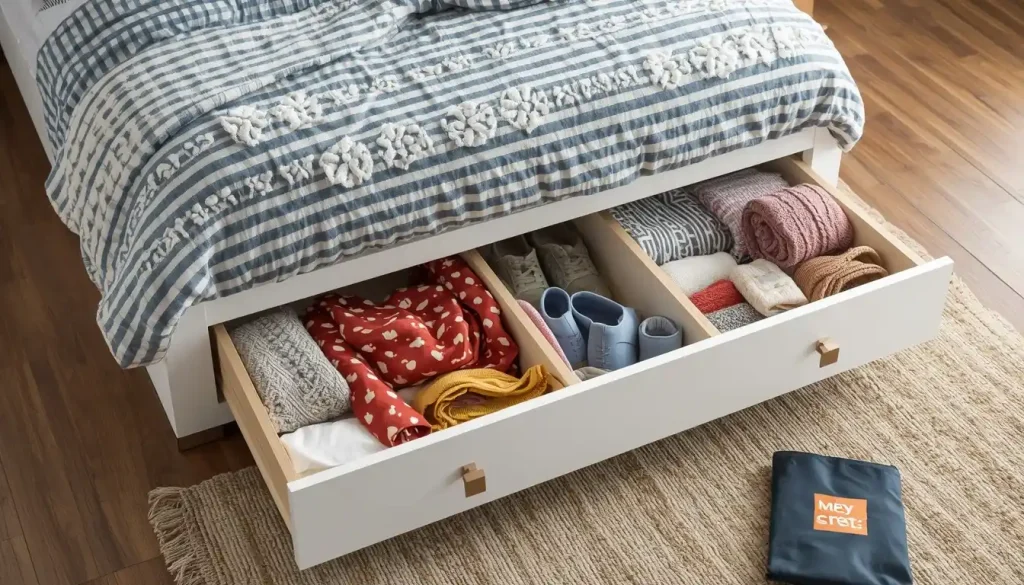
Before buying a drawer bed, check that there is enough space beside the bed to pull the drawers out completely.
Consider an Ottoman or Lift-Up Storage Bed
An ottoman bed, also called a lift-up storage bed, uses the entire space beneath the mattress. The mattress platform lifts to reveal a large storage compartment.
This type of bed is particularly useful for storing bulky items such as:
- Duvets and comforters
- Extra pillows
- Winter coats
- Suitcases
- Seasonal clothing
- Spare blankets
Ottoman beds are helpful in bedrooms where side-opening drawers would be blocked by walls, bedside tables, or other furniture.
Use Wheeled Under-Bed Storage Boxes
Wheeled boxes are a practical and affordable option if you do not want to replace your bed.
Choose low-profile containers that slide easily beneath the frame. Clear boxes allow you to see the contents, while fabric boxes may look softer and reduce noise on hard flooring.
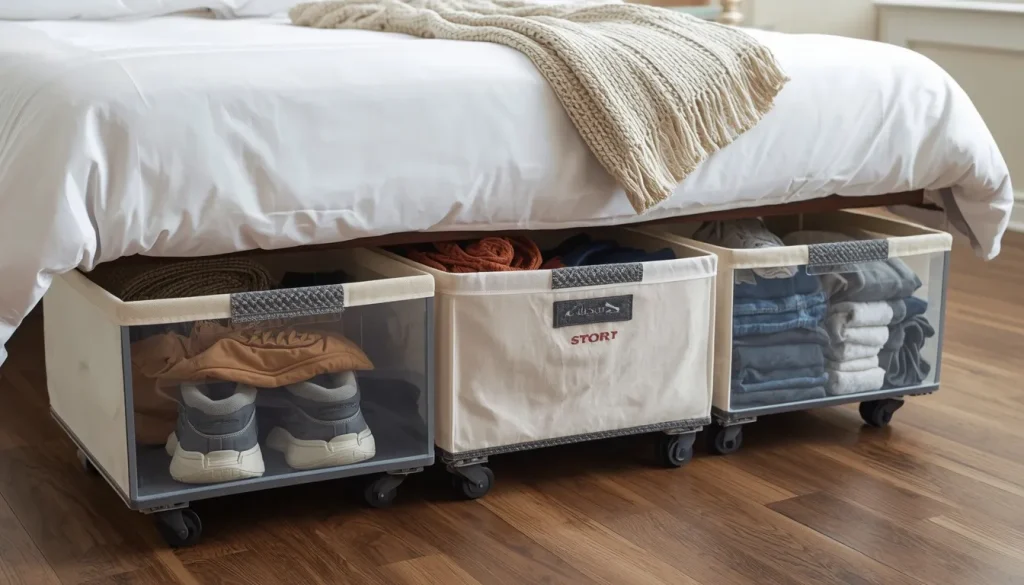
Use separate boxes for different categories, such as:
- Shoes
- Bedding
- Seasonal clothes
- Handbags
- Sportswear
Store Seasonal Clothes in Vacuum Bags
Vacuum storage bags reduce the amount of space needed for bulky clothing and bedding. They work well for:
- Coats
- Jumpers and sweaters
- Thick blankets
- Winter bedding
- Ski clothing
Make sure all items are completely clean and dry before sealing them. Moisture trapped inside the bag may cause odours or fabric damage.
Label Every Under-Bed Container
Under-bed storage becomes difficult to manage when every box looks the same. Add clear labels to the front or top of each container.
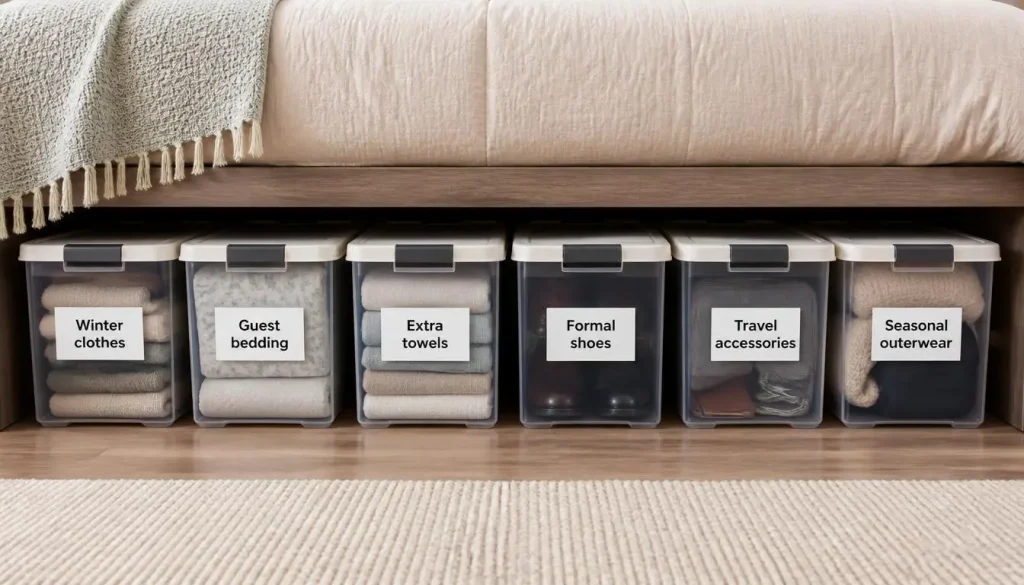
Useful labels may include:
- Winter clothes
- Guest bedding
- Extra towels
- Formal shoes
- Travel accessories
Labelling prevents you from pulling out several containers whenever you need one item.
Avoid Storing Certain Items Under the Bed
Do not use the space beneath the bed for food, damp fabrics, important documents, valuable jewellery, medication, or anything that needs frequent access.
You should also avoid overfilling the area. A small amount of open space makes cleaning easier and improves airflow.
Take Advantage of Vertical Wall Space
When floor space is limited, the walls can provide valuable storage. Vertical storage is especially useful in small bedrooms and apartments.
Install Floating Shelves
Floating shelves provide storage without using floor space. They can hold:
- Books
- Small baskets
- Framed photographs
- Jewellery boxes
- Decorative objects
- Folded accessories
Install shelves above a desk, dresser, bedside table, or unused wall section.
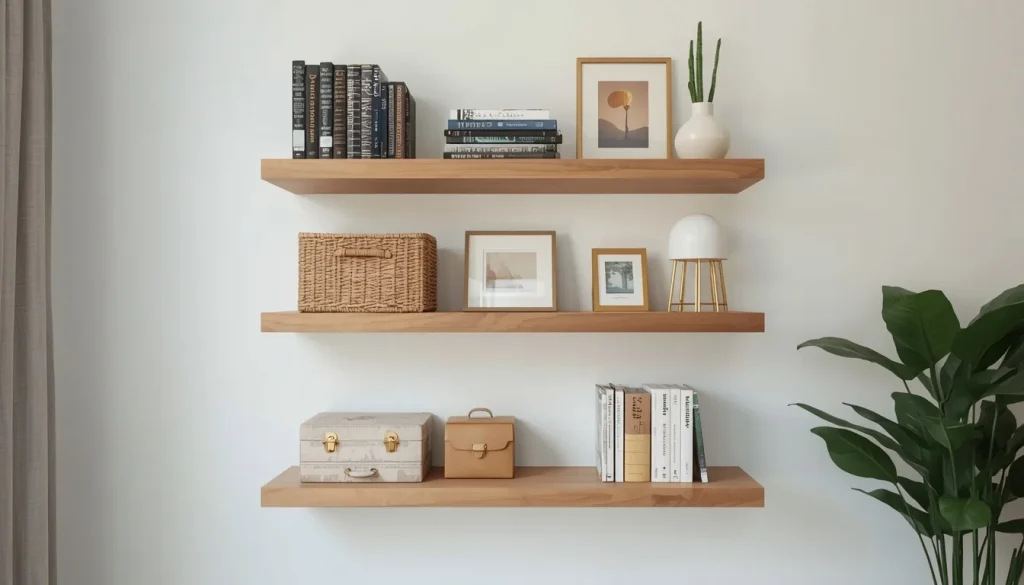
Do not place heavy objects on a shelf unless it is properly fixed to a wall stud or suitable wall anchor.
Add Floor-to-Ceiling Storage
Tall wardrobes, bookcases, and cabinets use the full height of the room. They provide more storage than short, wide furniture while using less floor space.
Place frequently used items on lower and middle shelves. Reserve the highest sections for seasonal items, spare bedding, and travel bags.
Use a stable step stool when accessing high storage.
Use the Space Above Doors and Windows
The wall above a bedroom door is often unused. A shelf in this area can hold:
- Storage baskets
- Books
- Luggage
- Seasonal decorations
- Spare linens
You can also install narrow cabinets above windows, provided they do not block curtains, blinds, ventilation, or natural light.
Install Corner Shelves
Corners are often too narrow for standard furniture but can still provide useful storage.
Corner shelves are suitable for small items such as books, plants, alarm clocks, or baskets. A tall corner shelving unit can also make use of an awkward space without making the room feel crowded.
Use a Wall-Mounted Pegboard
A pegboard offers flexible storage because hooks, baskets, and small shelves can be moved whenever your needs change.

It works particularly well near:
- A study desk
- A dressing table
- A craft area
- A child’s homework station
Use it to store headphones, jewellery, stationery, small bags, scarves, or beauty products.
Add High Shelves for Seasonal Items
A continuous shelf placed near the ceiling can create storage around the room without affecting the main living area.
Use matching boxes or baskets to keep the shelf visually organised. Secure all items properly so they cannot fall.
Choose Multifunctional Bedroom Furniture
Furniture that performs more than one function is one of the best ways to save space. Instead of adding several separate pieces, choose items that combine seating, storage, sleeping, or working functions.
Use a Storage Bed
A storage bed combines the largest piece of bedroom furniture with a large storage area. It is often the most effective upgrade for a room with limited closet or wardrobe space.
Choose drawers for easy daily access or a lift-up design for bulky seasonal belongings.
Add a Storage Ottoman or Bench
A storage ottoman can provide:
- Hidden storage
- Extra seating
- A place to put on shoes
- A surface for folded clothes
Place it at the foot of the bed or beneath a window. Use it for spare bedding, cushions, bags, or rarely worn clothes.
A narrow bench is usually better for a small bedroom, while a wider upholstered bench may suit a master bedroom.
Choose Nightstands With Drawers
Open bedside tables can quickly look cluttered. A nightstand with drawers keeps everyday items hidden but easy to reach.
Store items such as:
- Charging cables
- Medication
- Reading glasses
- Notebooks
- Hand cream
- Sleep masks
Choose a narrow nightstand if space is limited. A small chest of drawers can also work as a bedside table while offering more storage.
Use a Storage Headboard
A storage headboard can replace bedside shelves and reduce the need for extra furniture.
Depending on the design, it may include:
- Open shelves
- Hidden compartments
- Built-in lighting
- Charging points
- Small cabinets
Use it to store books, glasses, phones, alarm clocks, and decorative items.
Make sure the headboard is securely fixed and does not feel too deep for the room.
Turn a Dresser Into a Bedside Table
In a small bedroom, one piece of furniture should ideally perform more than one job. A dresser placed beside the bed can replace a traditional nightstand.
The top can hold a lamp and daily essentials, while the drawers provide storage for clothes, bedding, or accessories.
Check that the height is comfortable compared with the mattress.
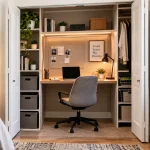
Choose a Desk That Doubles as a Dressing Table
A compact desk can function as both a workspace and a dressing table. Add a wall-mounted mirror and use drawer organisers to separate work supplies from beauty products.
This solution is ideal for:
- Teen bedrooms
- Student rooms
- Guest bedrooms
- Small apartments
- Work-from-home spaces
Keep the top surface as clear as possible so the desk can switch between uses easily.
Use a Full-Length Mirror With Hidden Storage
Some full-length mirrors open to reveal storage for jewellery, watches, makeup, or small accessories.
This allows you to combine a mirror and storage cabinet in one narrow piece of furniture.
Wall-mounted designs save floor space, while freestanding versions can be moved when needed.
Maximise Wardrobe or Closet Storage
Many bedrooms do not need a larger wardrobe. They need a better internal organisation system.
A poorly arranged closet may waste space between shelves, beneath hanging clothes, or above the main rail.
Install a Second Hanging Rail
If most of your clothes are shirts, skirts, trousers, or short jackets, a second rail can double the amount of hanging space.
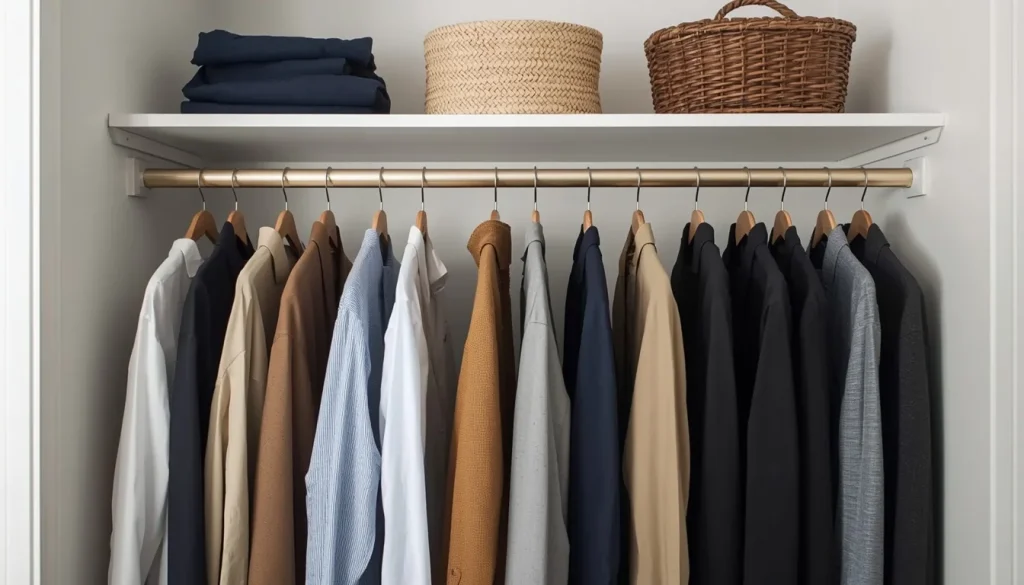
Place one rail above the other, leaving enough room for clothes to hang without touching the floor or lower rail.
Keep one full-length section for dresses, coats, and long garments.
Use Slim, Non-Slip Hangers
Bulky hangers take up more wardrobe space than many people realise. Slim hangers allow more clothes to fit on the same rail.
Choose non-slip designs to prevent clothing from falling. Using matching hangers also makes the wardrobe look more organised.
Do not overcrowd the rail. Clothes should move easily enough for you to see and remove each item.
Add Hanging Shelf Organisers
Fabric hanging organisers create shelves inside a wardrobe without permanent installation.
They work well for:
- Jumpers and sweaters
- Jeans
- T-shirts
- Handbags
- Hats
- Children’s clothes
Choose a strong organiser and avoid placing heavy objects in unsupported compartments.
Install Shelf Dividers
Shelf dividers prevent folded clothes, towels, and bags from falling into untidy piles.
Use one section for each category, such as:
- T-shirts
- Knitwear
- Jeans
- Gym clothes
- Sleepwear
Dividers are especially useful on wide shelves where several stacks of clothes sit side by side.
Use Drawer Organisers
Drawer organisers make it easier to store small items and prevent them from becoming mixed together.
Use separate compartments for:
- Socks
- Underwear
- Belts
- Ties
- Jewellery
- Hair accessories
- Charging cables
Arrange items vertically when possible so you can see everything without lifting a stack.
Store Shoes Vertically
Shoe racks, stackable boxes, and hanging organisers can reduce the amount of wardrobe floor space used by footwear.
Keep frequently worn shoes at eye level or near the wardrobe entrance. Store formal and seasonal shoes in labelled boxes.
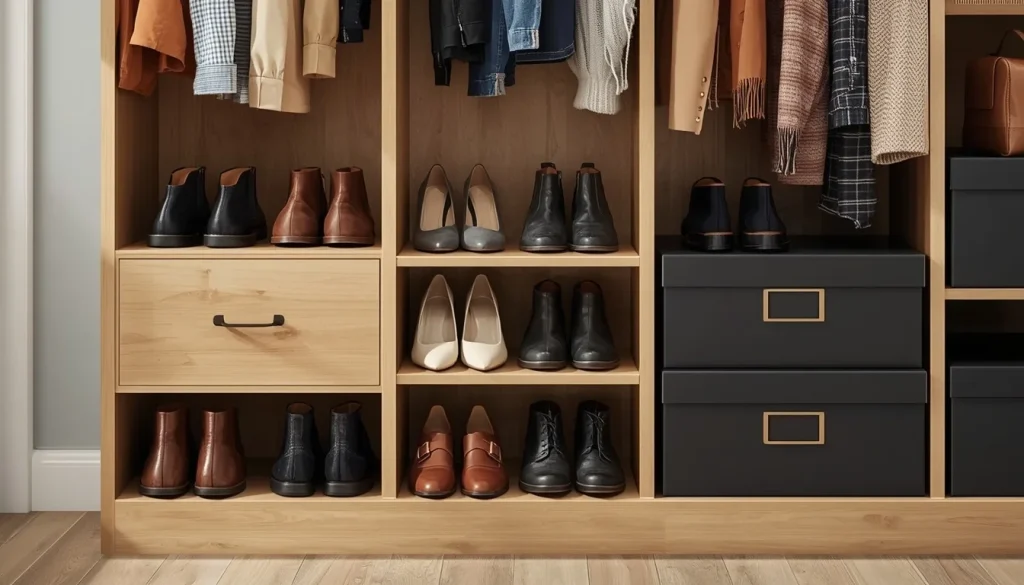
Allow damp shoes to dry before placing them inside closed storage.
Use Hooks Inside the Wardrobe Door
The inside of a wardrobe door can hold lightweight items such as:
- Belts
- Scarves
- Necklaces
- Small handbags
- Hats
Make sure the hooks do not stop the door from closing properly or damage the clothes inside.
Rotate Seasonal Clothing
Keeping every season’s clothing in the main wardrobe can make it difficult to find what you need.
At the beginning of each season, move unsuitable clothing into:
- Under-bed boxes
- Vacuum bags
- Top wardrobe shelves
- Storage suitcases
This keeps the main wardrobe easier to use and reduces visual clutter.
Small Bedroom Storage Ideas to Maximise Every Inch
A small bedroom needs carefully chosen storage. Bulky furniture, too many open shelves, and poorly positioned items can make the room feel even smaller.
The most effective small bedroom storage ideas use height, hidden areas, and multifunctional furniture.
Replace a Bulky Nightstand With a Floating Shelf
A floating shelf can hold a lamp, phone, book, and glass of water while leaving the floor visible.
Visible floor space helps a small room feel more open. It also makes vacuuming and cleaning easier.
For additional storage, install a small wall-mounted drawer or basket beneath the shelf.
Choose a Tall, Narrow Chest of Drawers
A tall chest provides several drawers while using less floor space than a wide dresser.
Place it in a narrow gap beside a wardrobe, desk, or door. Secure tall furniture to the wall to prevent tipping.
Install Sliding Wardrobe Doors
Traditional wardrobe doors need open floor space to swing outward. Sliding doors are more suitable for compact rooms because they remain within the wardrobe frame.
Mirrored sliding doors can also reflect light and make the room appear larger.
Use Wall-Mounted Bedside Lighting
Table lamps take up valuable space on small bedside surfaces. Wall-mounted lights or pendant lights leave the nightstand free for other essentials.
Choose adjustable lights that allow comfortable reading without lighting the entire room.
Build Storage Around the Bed
Fitted or modular cabinets can be installed around the headboard and above the bed.
This creates a large amount of storage without using additional floor space. Keep overhead cabinets shallow and properly secured.
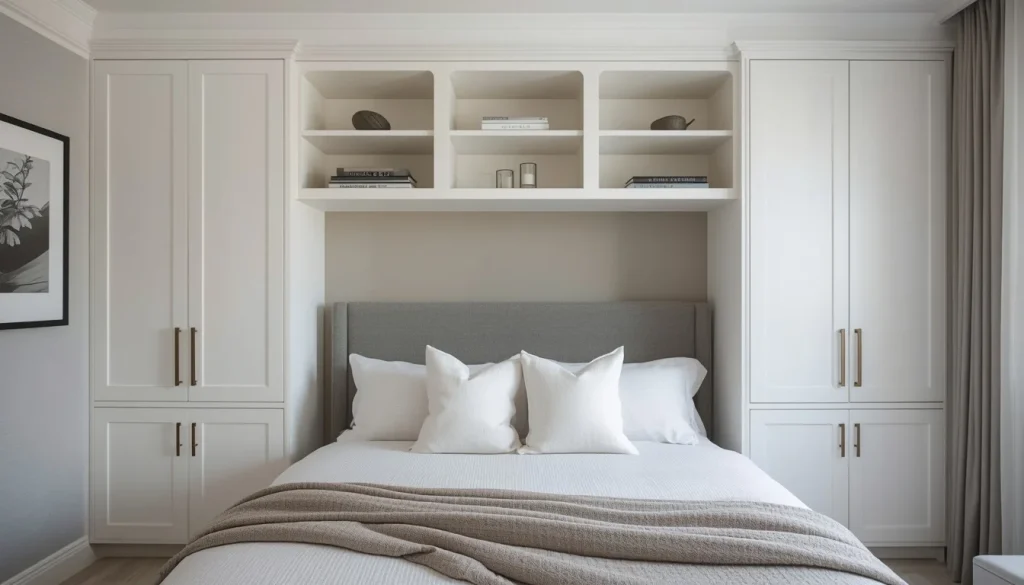
Avoid installing heavy open shelves directly above your head.
Use Closed Storage to Reduce Visual Clutter
Too many visible items can make a small room feel crowded, even when everything is organised.
Use drawers, doors, boxes, and matching baskets to hide smaller belongings. Keep a limited number of decorative objects on display.
A balance of closed and open storage usually creates the best result.
Bedroom Storage Ideas Without a Closet
A bedroom without a closet can still be organised effectively. The key is to create clear zones for hanging clothes, folded clothes, shoes, and accessories.
Add a Freestanding Wardrobe
A freestanding wardrobe provides enclosed storage without requiring building work.
Choose a wardrobe with a combination of:
- Hanging space
- Shelves
- Drawers
- Top compartments
A tall wardrobe makes better use of vertical space. Sliding doors are useful in narrow rooms.
Use a Garment Rack
A garment rack is an affordable solution for frequently worn clothes.
To prevent it from looking messy:
- Use matching hangers
- Limit the number of displayed clothes
- Arrange items by colour or type
- Use the lower shelf for shoes or baskets
Avoid overloading lightweight rails.
Hide Open Clothing Storage Behind a Curtain
A ceiling-mounted or wall-mounted curtain can hide a garment rail, shelving system, or open wardrobe.
This creates a cleaner appearance without the cost of installing cabinet doors.
Choose a fabric that matches the walls or bedding so the storage area blends into the room.
Combine Modular Cubes and Hanging Rails
A modular system can be adapted to the available wall space.
Use cube shelves for folded clothes, shoes, baskets, and bags. Add a hanging rail beside or above the cubes for shirts, dresses, and jackets.
This is particularly useful in awkward rooms where standard wardrobes do not fit.
Use a Dresser for Folded Clothes
A dresser can hold most everyday clothes when the drawers are organised properly.
Use the top drawer for small items, middle drawers for daily clothing, and lower drawers for heavier or less frequently used pieces.
Place a mirror above the dresser so it also functions as a dressing area.
Create a Mini Dressing Zone
Group clothing storage, a mirror, shoe storage, and accessories in one part of the room.
Creating a dedicated dressing zone makes the bedroom feel more organised and prevents clothing from spreading across several areas.
Bedroom Storage Ideas Without Buying New Furniture
You do not always need new furniture to create more storage. Reorganising what you already own may provide enough space.
Rearrange Existing Furniture
Move furniture away from awkward gaps and test different layouts. A bed placed against a different wall may create space for a dresser, rack, or storage boxes.
Avoid blocking windows, radiators, heating vents, or doorways.
Add Organisers Inside Existing Drawers
Drawer dividers, small boxes, and folded fabric organisers can increase the usable space inside dressers and bedside tables.
Group similar items together and remove anything that belongs in another room.
Use the Back of the Door
Install an over-the-door organiser for shoes, accessories, toiletries, or folded clothing.
Hooks can also hold dressing gowns, bags, hats, or tomorrow’s outfit.
Check that the organiser does not scratch the door frame or prevent the door from closing.
Repurpose Baskets and Boxes
Baskets, gift boxes, shoe boxes, and unused containers can organise shelves and wardrobes.
Cover mismatched boxes with paper or fabric for a more consistent appearance. Add labels so you can find items quickly.
Add Removable Hooks
Adhesive hooks can hold lightweight bags, jewellery, headphones, scarves, or clothing.
Follow the manufacturer’s weight limits and installation instructions. Test adhesive products carefully on painted or wallpapered walls.
Hidden Bedroom Storage Ideas for a Cleaner Look
Hidden storage keeps everyday clutter out of sight and helps the bedroom feel calmer.
Use Furniture With Concealed Compartments
Beds, benches, headboards, mirrors, and ottomans may include hidden storage that is not visible when closed.
These compartments work well for items that need to remain nearby but do not need to be displayed.
Add Toe-Kick Drawers
The narrow space beneath built-in wardrobes or cabinets can sometimes be converted into shallow drawers.
Toe-kick drawers are suitable for flat or small items such as shoes, gift wrap, accessories, and spare linens.
Installation may require a professional, especially if the existing cabinetry needs modification.
Install Recessed Wall Storage
A recessed cabinet uses the space inside a wall cavity rather than extending far into the room.
This can work well for jewellery, beauty products, books, or small accessories. A qualified professional should check the wall before cutting into it to avoid electrical wiring, plumbing, or structural components.
Hide Storage Behind a Mirror
A mirror-front cabinet provides storage while maintaining a simple appearance.
It can be installed above a dresser or dressing table and used for jewellery, accessories, skincare, or small personal items.
Use Matching Closed Containers
Storage does not need to be built into the room to feel hidden. Matching boxes and baskets create a tidy, unified appearance and conceal visual clutter.
Choose containers that fit shelves closely without making them difficult to remove.
Modern Bedroom Storage Ideas That Look Stylish
Modern bedroom storage should combine function with a clean, uncluttered appearance. Simple lines, neutral finishes, hidden handles, and built-in solutions can provide storage without making the room feel heavy.
Choose Handleless Wardrobes
Handleless wardrobes create a smooth, streamlined appearance. Push-to-open doors or recessed handles reduce visual clutter and work particularly well in minimalist and contemporary bedrooms.
Choose light-coloured finishes for a small room or darker wood tones for a larger bedroom with plenty of natural light.
Install Floating Cabinets
Wall-mounted cabinets provide closed storage while keeping the floor visible. This can make a bedroom feel more spacious and easier to clean.
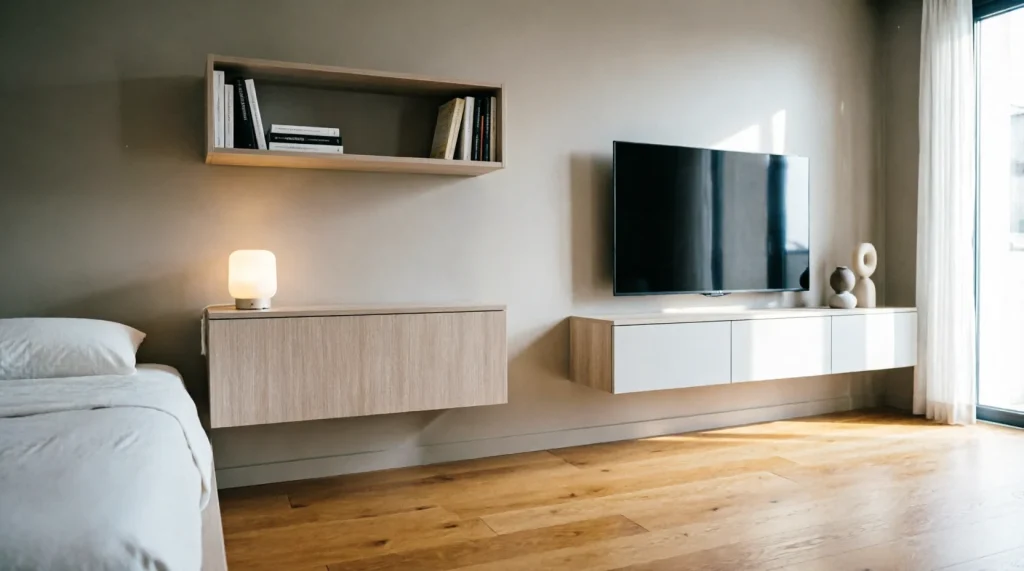
Floating cabinets can be used as:
- Bedside storage
- A dressing table
- A media unit
- A shallow bookcase
- Additional clothing storage
Make sure the cabinets are installed with fixings suitable for the wall type and expected weight.
Create a Built-In Storage Wall
A full storage wall can combine wardrobes, drawers, shelves, a desk, and even a television area within one organised structure.
Using the same finish across the entire wall helps the storage blend into the room. This is a useful option for master bedrooms, studio apartments, and rooms with limited floor space.
Use Neutral Storage Containers
White, grey, beige, cream, black, and natural woven baskets can make open shelving appear more organised.
Choose two or three complementary colours rather than mixing many different finishes. Consistent containers help create a calm, intentional look.
Try Scandinavian-Style Storage
Scandinavian bedroom storage often combines light wood, simple furniture, hidden compartments, and practical open shelving.
Useful elements include:
- Pale wood wardrobes
- Low-profile storage beds
- Simple wall hooks
- Woven baskets
- Compact bedside drawers
- Minimal floating shelves
Keep decorative items limited so the storage remains functional.
Luxury Bedroom Storage Ideas for Master Bedrooms
A larger bedroom may allow for more customised and premium storage solutions. Luxury storage should improve convenience, appearance, and organisation rather than simply filling the room with large furniture.
Install Custom Built-In Wardrobes
Custom wardrobes can be designed around the exact height, width, and shape of the room.
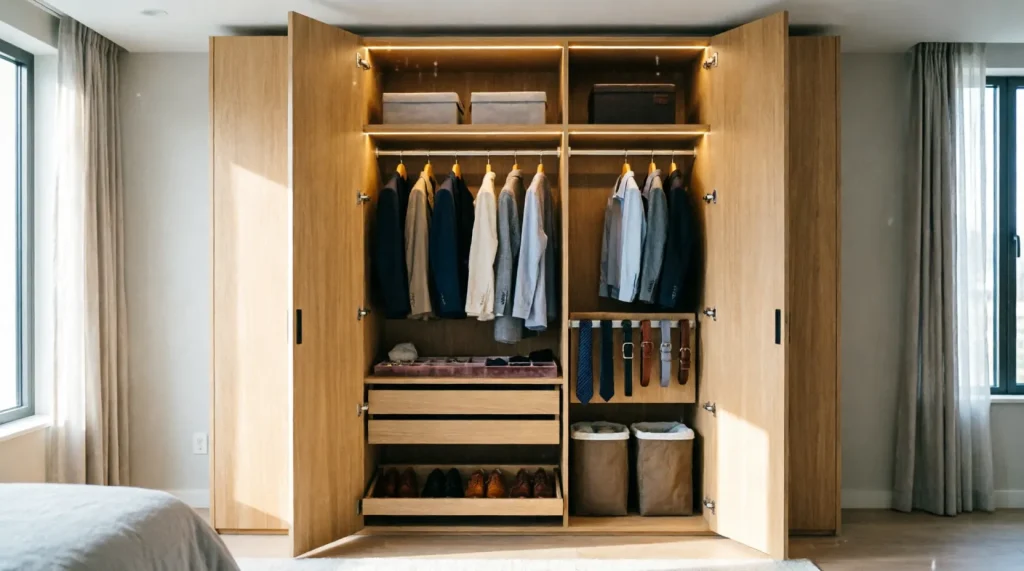
They may include:
- Adjustable shelves
- Double hanging rails
- Shoe drawers
- Jewellery trays
- Integrated lighting
- Pull-out accessory racks
- Luggage compartments
- Laundry storage
Floor-to-ceiling designs prevent unused gaps from collecting dust and provide space for seasonal items.
Create a Walk-In Wardrobe
A walk-in wardrobe provides a dedicated area for clothes, shoes, bags, and accessories.
For the best layout, include a combination of hanging sections, drawers, open shelves, and closed cabinets. A full-length mirror and small bench can improve comfort and usability.
Good lighting is essential. Use even lighting that allows clothing colours and details to remain visible.
Add an Upholstered Storage Bench
An upholstered bench at the foot of the bed can provide comfortable seating and hidden storage.
Use it for extra bedding, cushions, throws, or less frequently used clothing. Choose a design that is narrower than the bed so the room remains easy to move through.
Include a Dressing Island
In a large walk-in wardrobe, a central dressing island can provide drawers for jewellery, watches, accessories, and folded items.
The top can be used for preparing outfits or displaying a small selection of frequently used accessories.
Leave enough walking space on every side so doors and drawers can open comfortably.
Add Integrated Wardrobe Lighting
LED strips or sensor lights make deep wardrobe compartments easier to use.
Automatic lighting can illuminate hanging rails, shelves, and drawers when a door opens. Choose low-heat lighting designed for enclosed furniture.
Bedroom Storage Ideas for Clothes and Accessories
Clothing storage is one of the biggest bedroom challenges. A practical system should make daily clothes easy to access while keeping seasonal and occasional items out of the way.
Separate Hanging and Folded Clothes
Hang items that crease easily, including shirts, dresses, jackets, and formal trousers.

Fold items such as:
- T-shirts
- Knitwear
- Jeans
- Sportswear
- Sleepwear
- Casual clothing
Using the correct storage method helps clothes remain in better condition and prevents wardrobe overcrowding.
Use Vertical Folding in Drawers
Vertical folding allows each item to remain visible rather than being hidden at the bottom of a pile.
Arrange clothes side by side in rows. This works particularly well for T-shirts, leggings, underwear, and children’s clothing.
Store Seasonal Clothes Separately
Move heavy winter clothing out of the main wardrobe during warmer months. Do the same with lightweight summer clothing during winter.
Before storage:
- Wash or dry-clean the items
- Repair loose buttons or damaged seams
- Make sure everything is completely dry
- Use breathable garment bags when needed
- Add clear labels
Avoid storing delicate fabrics in direct sunlight or damp areas.
Create a Handbag Storage Zone
Store handbags upright on a shelf with enough space to prevent crushing.
Use shelf dividers to keep bags separated. Stuff soft bags with clean tissue paper or fabric to help maintain their shape.
Small bags and clutches can be stored in labelled baskets or drawer compartments.
Organise Jewellery and Accessories
Use shallow trays, small boxes, hooks, or wall-mounted organisers for jewellery and accessories.
Separate necklaces to prevent tangling. Store delicate or valuable items in lined compartments and keep them away from moisture and direct sunlight.
Create a Dedicated Shoe Area
Store everyday shoes in an accessible rack or lower wardrobe shelf. Keep seasonal and formal shoes in labelled boxes.
A narrow vertical shoe cabinet can work well in a small bedroom. Clear boxes make it easier to identify pairs without opening every container.
Apartment Bedroom Storage Ideas
Apartment bedrooms often have limited floor space, smaller closets, and restrictions on permanent changes. The best solutions are compact, flexible, and easy to move.
Choose Furniture With a Small Footprint
Use tall rather than wide furniture whenever possible.

Suitable options include:
- Narrow chests of drawers
- Ladder shelves
- Slim wardrobes
- Compact storage beds
- Floating nightstands
Measure lifts, stairs, hallways, and doorways before buying large furniture for an apartment.
Use Modular Storage
Modular units can be rearranged as your needs change. They are especially useful for renters who may move to a different room or property.
Combine cubes, shelves, rails, and drawers to create a personalised storage system.
Add a Rolling Storage Cart
A narrow rolling cart can fit beside a desk, dresser, wardrobe, or bed.
Use it for:
- Beauty products
- Books
- Craft supplies
- Work materials
- Accessories
- Charging equipment
Move it out of sight when it is not needed.
Use Luggage as Storage
Suitcases take up significant space when empty. Use them to hold seasonal clothes, spare bedding, travel accessories, or rarely used items.
Add a label or written inventory so you can remember what is inside.
Use Room Dividers With Shelves
In a studio apartment, an open shelving unit can separate the sleeping area while also providing storage.
Do not overcrowd the shelves. Leaving some sections open allows light to pass through and keeps the room from feeling enclosed.
Renter-Friendly Bedroom Storage Ideas
Renter-friendly storage should add useful space without damaging walls, doors, or floors.
Use Over-the-Door Organisers
Over-the-door organisers can store shoes, accessories, beauty products, small clothing items, or cleaning supplies.
Choose a slim design that allows the door to open and close properly.
Add Tension Rods
A tension rod can create temporary hanging space inside a wardrobe, alcove, or shelving unit.
It can be used for lightweight clothes, scarves, accessories, or a small curtain that hides open storage.
Do not overload the rod, and check it regularly to make sure it remains secure.
Choose Freestanding Shelving
Freestanding shelves require no drilling and can move with you to a new home.
Use baskets and boxes to make the shelves look organised. Secure tall units when possible, especially in homes with children or pets.
Raise the Bed
Bed risers can increase the clearance beneath a standard bed frame.
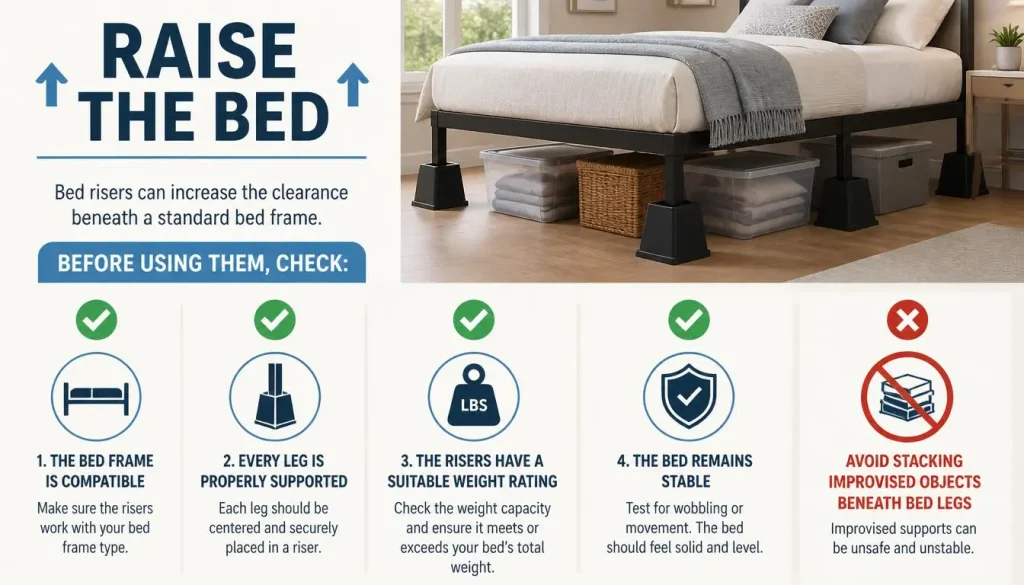
Before using them, check:
- The bed frame is compatible
- Every leg is properly supported
- The risers have a suitable weight rating
- The bed remains stable
Avoid stacking improvised objects beneath bed legs.
Use Removable Adhesive Products Carefully
Removable hooks and strips can hold lightweight items, but they may still damage some paint, plaster, or wallpaper.
Clean the surface, follow the instructions, observe the weight limit, and test the product in a hidden area when possible.
Bedroom Storage Ideas for Kids and Teenagers
Children’s storage should be safe, easy to reach, and simple to maintain. Teen bedrooms need flexible systems for clothes, schoolwork, hobbies, and technology.
Use Low Storage for Young Children
Low shelves, cubbies, and drawers allow children to put away toys, books, and clothes without assistance.
Avoid heavy lids that could close on small fingers. Secure tall furniture to the wall.
Add Labelled Toy Bins
Use separate bins for categories such as:
- Building toys
- Soft toys
- Art supplies
- Puzzles
- Vehicles
- Dress-up items
Picture labels can help younger children identify where each item belongs.
Choose a Bed With Drawers
Under-bed drawers are useful for toys, clothes, spare bedding, and sports equipment.
They keep items within easy reach while leaving more floor space for play or study.
Add a Pegboard Above the Desk
A pegboard can organise stationery, headphones, craft supplies, notes, and school accessories.
Keep frequently used items within reach and place sharp or heavy objects elsewhere.
Create a Homework Storage Zone
Keep books, notebooks, chargers, and stationery near the desk.
Use:
- Drawer organisers
- Magazine files
- Small desktop containers
- Wall pockets
- Cable clips
A dedicated study zone makes it easier to keep school materials away from the bed and floor.
Provide a Laundry Basket
Place a laundry basket where it is easy to use. A divided hamper can separate light and dark clothing or clean and worn sportswear.
Choose a ventilated design to reduce trapped odours.
IKEA Bedroom Storage Ideas
IKEA-style modular furniture is popular because it can be combined in different ways and adapted to small or large bedrooms.
Availability, names, dimensions, and finishes can vary by country, so always check local measurements before purchasing.
Use a Modular Wardrobe System
A modular wardrobe can be customised with shelves, rails, drawers, baskets, and internal organisers.
Plan the interior around the type of clothes you own instead of selecting a standard layout without measuring your belongings.
Use Cube Shelving
Cube shelves can hold baskets, folded clothes, shoes, books, and accessories.
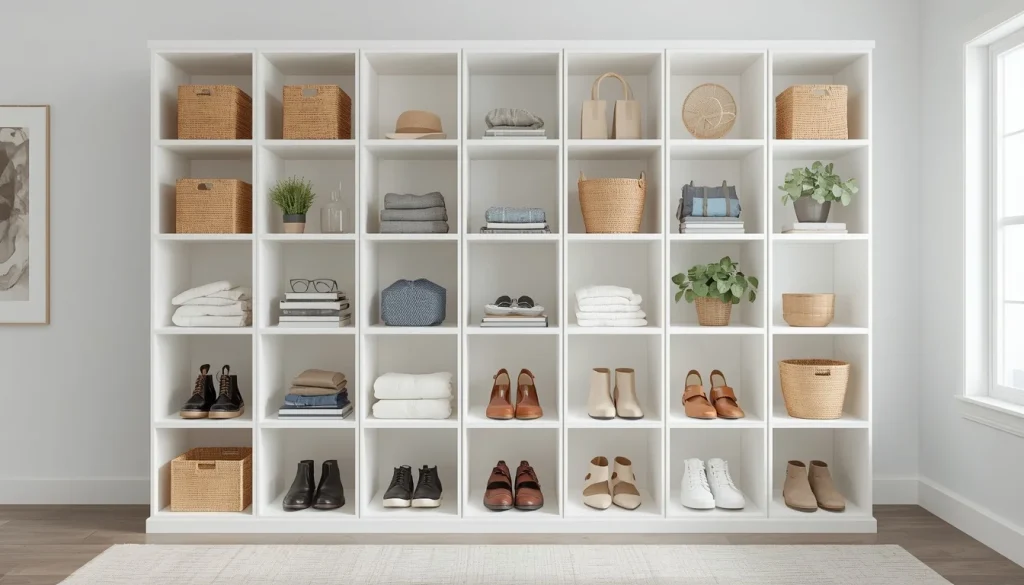
They may also work as:
- A bedside table
- A room divider
- A bench base
- A low storage unit
Do not use a shelving unit as seating unless the manufacturer confirms that it is designed to support that use.
Combine Drawer Units and Wall Shelves
A simple drawer unit can store clothing while shelves above it hold books, baskets, or decorative items.
Keeping the same finish across the storage pieces can create a built-in appearance without the cost of custom cabinetry.
Upgrade Basic Furniture With Organisers
Internal trays, shelf inserts, boxes, dividers, and hanging organisers can make basic furniture more efficient.
Measure the inside of drawers and cabinets before buying accessories.
Make Use of Awkward and Forgotten Spaces
Many bedrooms contain small gaps that are not large enough for standard furniture but can still provide storage.
Use the Space Behind the Door
Install hooks, a hanging organiser, or a narrow rack behind the bedroom door.
Use this area for lightweight items that will not stop the door from opening fully.
Add Storage at the Foot of the Bed
A bench, trunk, basket, or low shelving unit can use the space at the end of the bed.
Maintain a clear walkway and avoid placing furniture where it could create a tripping hazard.
Fill an Alcove
An alcove can hold fitted shelves, a desk, a narrow wardrobe, or a combination of rails and drawers.
Even a shallow alcove may provide useful space for books, accessories, shoes, or folded clothing.
Use Narrow Gaps
A slim rolling cart, vertical shelf, or custom pull-out unit can fit between a wardrobe and wall.
Do not force storage into a gap that blocks ventilation or access to electrical sockets.
Use Space Beneath Sloped Ceilings
Low drawers, fitted cupboards, and open shelves can turn the space beneath a sloped ceiling into useful storage.
Custom designs may be worthwhile because standard tall furniture often cannot fit these areas.
Protect Radiators and Air Vents
Do not place boxes, clothes, shelves, or cabinets directly against radiators, heaters, or ventilation openings.
Blocked airflow can reduce heating or cooling performance and may create a safety risk.
Storage Ideas for Different Bedroom Items
Different belongings require different types of storage. Organising by category makes the room easier to maintain.
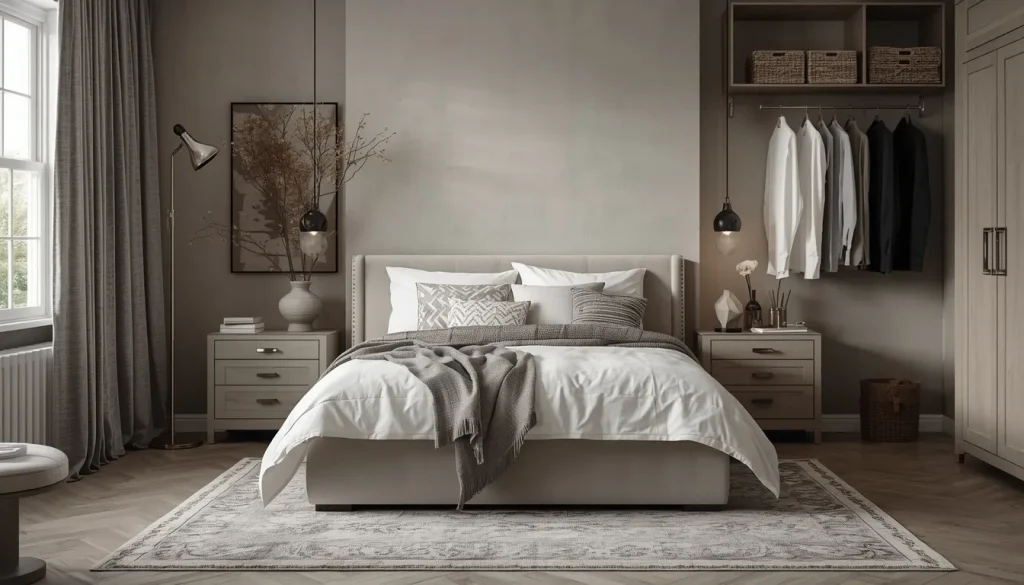
Bedding and Linen Storage
Store bedding inside:
- Ottoman beds
- Storage benches
- Large wardrobe shelves
- Vacuum bags
- Under-bed containers
Keep complete bedding sets together. One useful method is to place folded sheets inside a matching pillowcase.
Book Storage
Use floating shelves, a narrow bookcase, bedside shelves, or a headboard with built-in compartments.
Avoid placing too many heavy books on poorly supported shelves. Keep books away from damp walls and direct sunlight.
Laundry Storage
Choose a slim hamper for a small bedroom or a divided hamper for sorting clothes.
A hamper with a lid can hide laundry, while a ventilated basket may help reduce moisture and odour.
Cable and Electronics Storage
Use cable clips, charging trays, labelled pouches, or a bedside drawer to organise electronic accessories.
Avoid tightly coiling cables while they are connected to power. Do not cover chargers or devices that need ventilation.
Beauty Product Storage
Keep daily products in a shallow drawer, small basket, or organiser near a mirror.
Store backup products separately so the main surface does not become crowded. Check expiry dates regularly and discard empty packaging.
Exercise Equipment Storage
Small weights, yoga mats, resistance bands, and other equipment can be stored in tall baskets, under-bed boxes, wall racks, or a bench compartment.
Keep heavy items close to the floor to reduce the risk of falling.
Budget-Friendly and DIY Bedroom Storage Ideas
Improving bedroom storage does not require a large renovation budget. Many inexpensive changes can create noticeable results.
Repurpose Wooden Crates
Clean wooden crates can be stacked or wall-mounted to create shelves, bedside storage, or shoe compartments.
Sand rough surfaces and secure stacked crates so they cannot move.
Reuse Shoe Boxes
Shoe boxes are useful for accessories, cables, photographs, documents, and seasonal items.
Cover them with matching paper or fabric and add clear labels.
Add Hooks to Empty Walls
Hooks can store hats, bags, scarves, jewellery, or tomorrow’s clothes.
Arrange several hooks in a neat row rather than spreading them randomly across the room.
Make a Simple Storage Headboard
A DIY storage headboard can be created from secured shelving or shallow cabinets.
Make sure the structure is firmly attached and contains no sharp edges. Avoid placing loose heavy items above the bed.
Use Decorative Baskets
Baskets can hide small items while adding texture to the room.
Use them on shelves, beneath benches, inside wardrobes, or beside the bed. Assign each basket a clear purpose.
Upgrade Existing Furniture
Instead of replacing a wardrobe or dresser, add:
- Drawer dividers
- Extra shelves
- Shelf risers
- Hooks
- Small containers
- A second hanging rail
Small internal changes may create more usable storage than buying another large piece of furniture.
Stylish Bedroom Storage Ideas That Do Not Look Cluttered
Storage should make the bedroom feel calmer, not busier.
Combine Open and Closed Storage
Use closed storage for everyday clutter and open storage for a limited number of attractive or frequently used items.
For example, store clothes and cables behind doors while displaying a few books, plants, or decorative objects on shelves.
Use Matching Containers
Matching boxes and baskets create visual consistency, even when they hold different categories of items.
Labels can be placed on the front, underside, or inside if you prefer a cleaner appearance.
Leave Some Empty Space
Every shelf and surface does not need to be filled. Empty space makes storage easier to use and prevents the bedroom from feeling overcrowded.
Choose Furniture in Proportion to the Room
Large storage furniture may offer more capacity, but it can overwhelm a small bedroom.
Measure the room and mark the furniture footprint on the floor with removable tape before buying.
Keep Daily Surfaces Clear
Try to keep the top of the dresser, desk, and bedside table mostly clear.
Use trays or drawers for small daily items. A clear surface immediately makes the room look more organised.
Best Storage Solutions by Bedroom Type
| Bedroom type | Recommended storage solutions |
|---|---|
| Small bedroom | Under-bed storage, floating shelves, tall drawers, sliding wardrobe doors |
| Master bedroom | Built-in wardrobes, storage bed, upholstered bench, dressing island |
| Rental bedroom | Over-the-door organisers, tension rods, freestanding shelves, removable hooks |
| Bedroom without a closet | Garment rack, dresser, modular wardrobe, curtain-covered storage |
| Apartment bedroom | Compact furniture, vertical storage, rolling carts, modular units |
| Guest bedroom | Storage bed, bedside drawers, luggage storage, limited hanging space |
| Teen bedroom | Desk storage, pegboard, laundry hamper, under-bed drawers |
| Children’s bedroom | Low cubbies, labelled toy bins, secured shelving, storage bench |
| Attic bedroom | Low cabinets, custom eaves storage, shallow shelves, fitted drawers |
| Luxury bedroom | Custom wardrobes, integrated lighting, dressing island, upholstered storage |
Common Bedroom Storage Mistakes to Avoid
Even a good storage product can create problems when it is used without planning.
Buying Storage Before Decluttering
Buying more containers may only hide belongings you no longer need.
Declutter first, group the remaining items, and then measure what type of storage is required.
Adding Too Much Furniture
Extra wardrobes, chests, and shelves can reduce walking space and make the room feel smaller.
Use existing storage more efficiently before adding another large item.
Ignoring Vertical Space
A bedroom may have limited floor space but plenty of unused wall height.
Tall cabinets and high shelves can provide storage without narrowing the room.
Using Storage That Is Difficult to Access
Deep boxes, heavy lids, and tightly packed shelves often become inconvenient.
Daily items should be easy to reach. Use difficult areas only for seasonal or rarely needed belongings.
Overusing Open Shelves
Open shelves can be attractive, but too many visible items create visual clutter.
Use baskets, boxes, or cabinets for smaller belongings.
Keeping Items Without a Permanent Place
Every item should have a designated storage location.
When an object does not have a home, it usually ends up on the bed, floor, chair, or dresser.
Overloading Shelves and Rails
Always check weight limits and use suitable wall fixings.
A shelf, rail, or hook may fail when it carries more weight than intended.
Blocking Light, Airflow, or Movement
Do not place storage where it blocks windows, doors, heaters, radiators, vents, or essential walkways.
The bedroom should remain safe and comfortable to use.
How to Organise Bedroom Storage Step by Step
A simple process can make bedroom organisation feel more manageable.
Step 1: Work on One Area at a Time
Start with one drawer, one shelf, the wardrobe, or the space under the bed.
Trying to organise the entire bedroom at once can become overwhelming.
Step 2: Empty the Storage Area
Remove everything so you can see the available space and clean the surface properly.
Do not reorganise items while they remain inside an overcrowded drawer or cabinet.
Step 3: Group Similar Items
Place clothes, shoes, accessories, books, electronics, and personal items into separate groups.
This helps you identify duplicates and decide how much storage each category needs.
Step 4: Remove Unwanted Belongings
Donate, sell, recycle, or discard items you no longer use.
Avoid keeping an item only because you feel guilty about the original cost. The money has already been spent, and unused belongings continue to take up space.
Step 5: Assign a Permanent Home
Choose a practical location for every category.
Keep daily items close to where they are used. Place seasonal belongings in higher, lower, or hidden storage.
Step 6: Use Containers and Dividers
Add boxes, baskets, trays, and dividers only after you know what needs to be stored.
Choose containers that fit the available space and are easy to remove.
Step 7: Add Labels
Labels are particularly helpful for closed boxes, seasonal clothes, spare bedding, paperwork, and rarely used belongings.
Use specific labels rather than broad terms. “Winter scarves” is more useful than “Miscellaneous.”
Step 8: Maintain the System
Spend five minutes each day returning items to their proper places.
Once a week, clear the bedside table, dresser, chair, and floor. Small resets prevent clutter from building up again.
Frequently Asked Questions About Smart Bedroom Storage Ideas
How can I create more storage in my bedroom?
Start by decluttering and measuring unused areas. Use under-bed containers, tall furniture, floating shelves, wardrobe organisers, hooks, and multifunctional furniture. Prioritise vertical and hidden storage before adding bulky cabinets that reduce walking space.
How do I organise a small bedroom with too much stuff?
Remove items that do not need to remain in the bedroom, then organise the rest by frequency of use. Keep daily belongings within easy reach and move seasonal items under the bed or onto high shelves. Use closed storage to reduce visual clutter.
What is the best furniture for bedroom storage?
Storage beds, tall chests of drawers, wardrobes with adjustable interiors, nightstands with drawers, storage benches, and headboards with shelves are among the most useful options. The best choice depends on the room size and the type of items you need to store.
How can I store clothes without a closet?
Use a freestanding wardrobe, garment rack, dresser, modular cube unit, or wall-mounted rail. Combine hanging space with drawers or baskets for folded clothes. A curtain can hide open clothing storage and make the room look tidier.
Is storing items under the bed a good idea?
Yes, under-bed storage is useful for seasonal clothing, shoes, spare bedding, bags, and rarely used items. Use clean, dry, labelled containers. Avoid storing food, medication, damp fabrics, important documents, or anything that needs daily access.
How can I add bedroom storage without drilling?
Use freestanding shelves, over-the-door organisers, rolling carts, tension rods, under-bed containers, storage furniture, and removable hooks. Check product instructions carefully because some adhesive products may still damage delicate paint or wallpaper.
How do I maximise storage in a tiny bedroom?
Use tall furniture, floating bedside shelves, wall-mounted lighting, under-bed storage, sliding wardrobe doors, and closed containers. Choose furniture that performs more than one function and keep the floor and main surfaces as clear as possible.
What is the best way to store clothes in a small bedroom?
Separate hanging and folded clothes, use slim hangers, add a second wardrobe rail, organise drawers vertically, and rotate seasonal clothing. Store bulky or out-of-season items in vacuum bags, under-bed boxes, or high wardrobe compartments.
How can storage make a bedroom look bigger?
Choose furniture with a small footprint, keep the floor visible, use light finishes, reduce visual clutter, and store small items behind doors or inside drawers. Mirrored wardrobes and consistent storage containers can also make the room feel more open.
Where should storage be placed in a bedroom?
Start with unused areas beneath the bed, above doors, inside wardrobes, behind doors, and on empty walls. Keep storage away from walkways, windows, heaters, vents, and door-opening areas.
What bedroom furniture provides the most storage?
A lift-up storage bed can provide one of the largest hidden storage areas. Floor-to-ceiling wardrobes also offer excellent capacity. For smaller additions, tall drawer units and storage benches provide useful space without requiring major renovation.
How do I organise a bedroom with limited closet space?
Maximise the existing closet with slim hangers, shelf dividers, hanging organisers, extra rails, hooks, and labelled boxes. Move seasonal items elsewhere and use a dresser, garment rack, or under-bed storage for overflow.
Final Thoughts on Bedroom Storage Ideas
A well-organised bedroom does not necessarily need more furniture. In many cases, the best results come from decluttering, improving the storage you already have, and using overlooked areas more effectively.
Begin with the space under the bed, empty walls, wardrobe interiors, doors, and awkward corners. Choose furniture that performs more than one function, and keep daily items easy to reach while moving seasonal belongings into less accessible storage.
The most useful bedroom storage ideas are the ones that match your room size, lifestyle, budget, and housing situation. Start with one problem area, create a clear system, and maintain it with a short weekly reset. Over time, the bedroom will become easier to use, easier to clean, and far more relaxing.

“A comfortable home and a healthy lifestyle go hand in hand.”
Hi, I’m Ethan Carter, the founder and lead editor of TheBestHomeFit. I’m passionate about helping people create beautiful, functional living spaces while building healthier lifestyles at home. Over the years, I’ve spent countless hours researching home decor trends, testing home gym equipment, and reviewing products to help readers make smarter buying decisions.
Through TheBestHomeFit, I share practical home improvement ideas, honest product reviews, buying guides, and fitness tips designed for everyday homeowners. My goal is to make it easier for you to create a home that looks great, feels comfortable, and supports your well-being.
When I’m not researching the latest products or writing in-depth guides, you’ll usually find me redesigning a room, trying new home workout routines, or enjoying quality time with my family.


2 thoughts on “35 Smart Bedroom Storage Ideas to Maximize Space and Reduce Clutter”