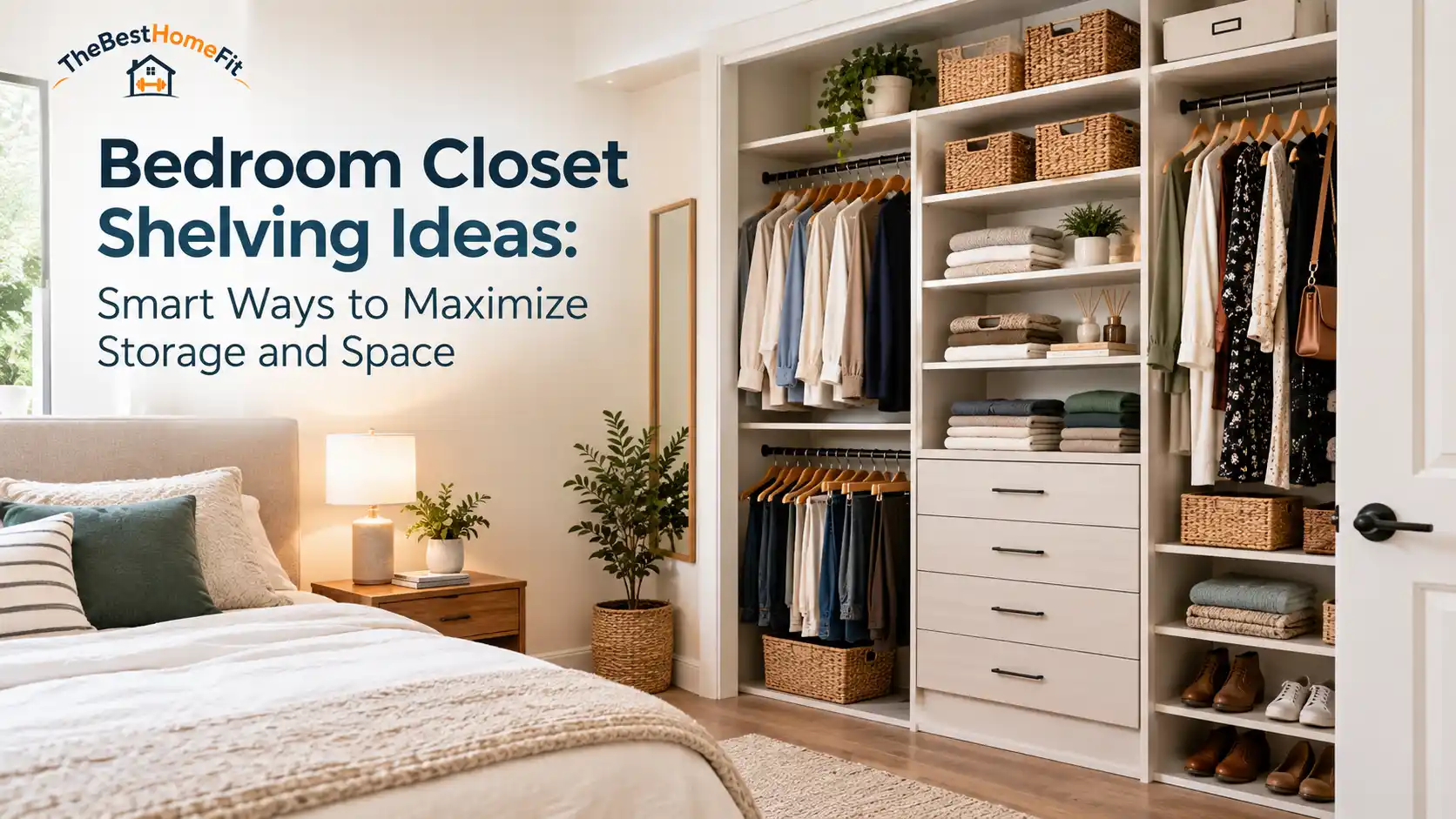
A bedroom closet can look surprisingly small when shelves are poorly placed. Clothes pile up, shoes disappear under hanging items, and the top of the closet often becomes wasted space.
The right shelving setup can completely change how your closet works. You do not always need a large walk-in closet or an expensive custom system. A few well-planned shelves can create more room for folded clothes, shoes, bags, bedding, accessories, and seasonal items.
The best bedroom closet shelving ideas focus on one simple goal: use every part of the closet without making it difficult to reach your belongings. Whether you have a small reach-in closet, a deep wardrobe, a shared closet, or a large walk-in space, the ideas below can help you create a cleaner and more practical layout.
Best Space-Saving Bedroom Closet Shelving Ideas
Good closet shelving should give you more storage without making the closet feel crowded.
Install Adjustable Closet Shelves
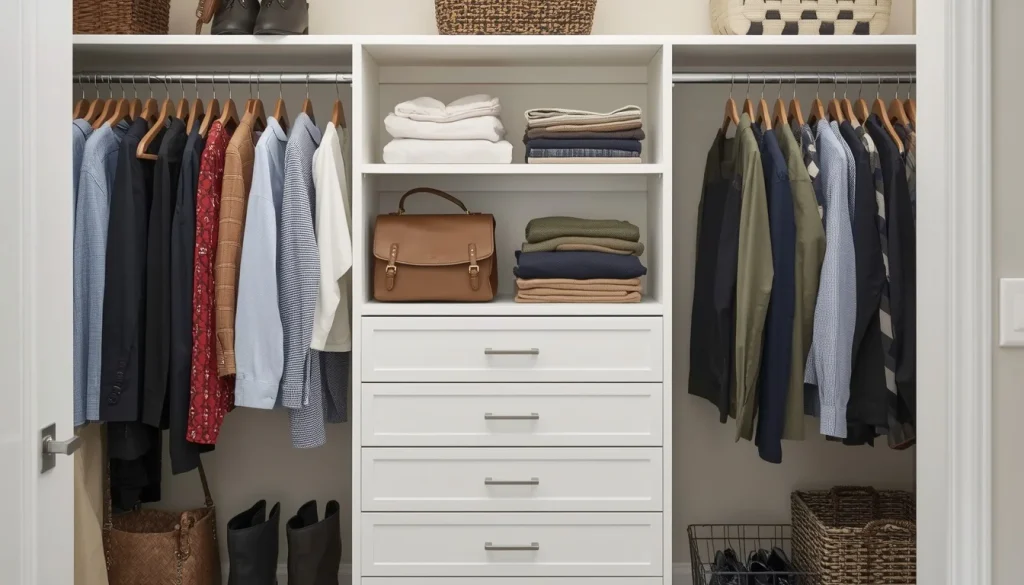
Adjustable shelves give you flexibility as your storage needs change.
You may need taller spaces for handbags today and shorter spaces for folded shirts later. Adjustable tracks or shelf-pin systems let you move shelves without rebuilding the entire closet.
They work especially well in children’s rooms, guest bedrooms, and shared closets where storage needs often change.
Use Floor-to-Ceiling Shelving
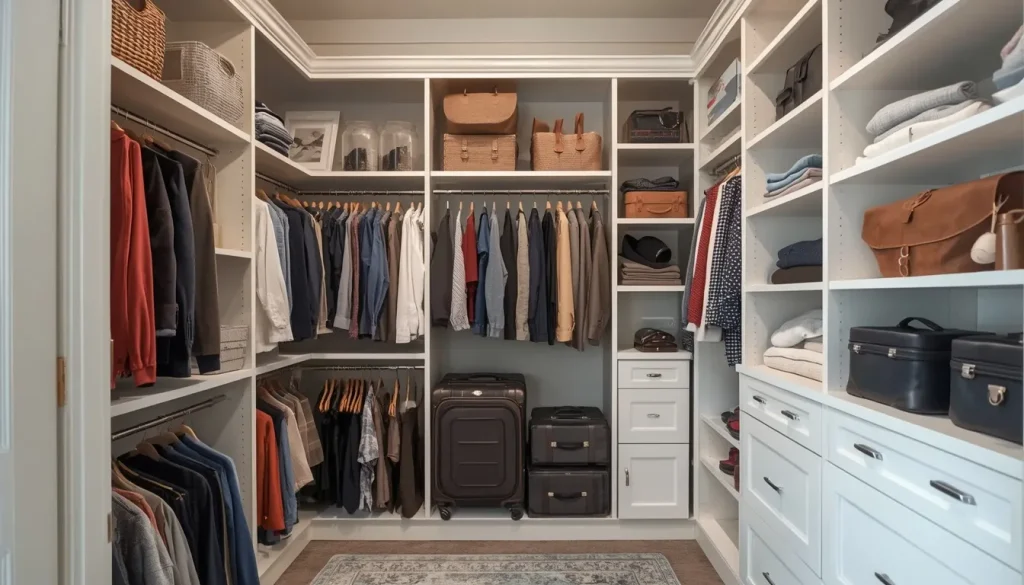
Many closets waste the area between the top shelf and ceiling.
Floor-to-ceiling shelving makes better use of that vertical space. Keep everyday items around eye level and place less-used items higher up.
Upper shelves can hold:
- Seasonal clothing
- Suitcases
- Extra bedding
- Storage boxes
- Holiday accessories
- Travel bags
Use labeled bins on high shelves so you can quickly identify what is stored there.
Add a Long Shelf Above the Hanging Rod
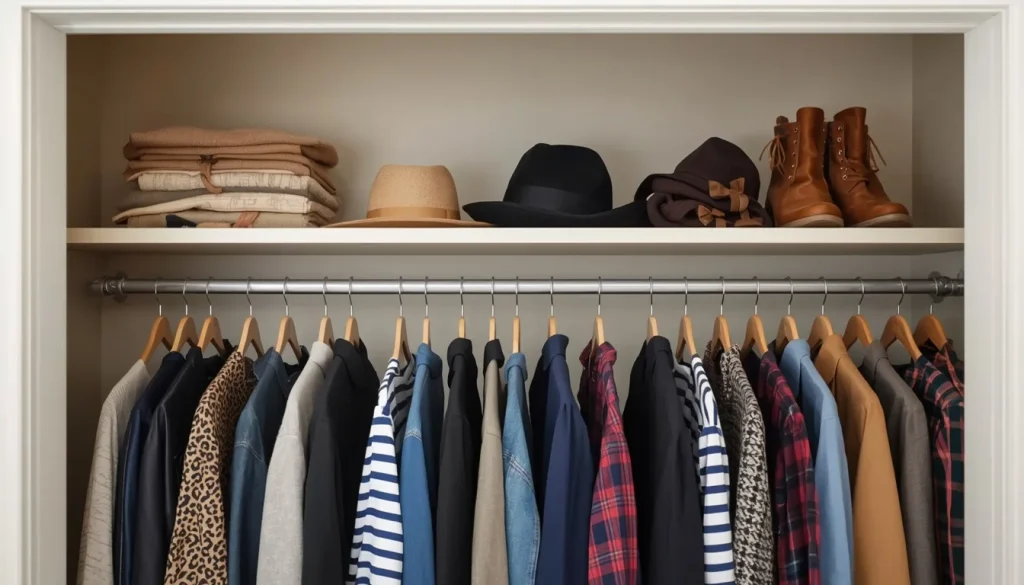
One of the simplest closet upgrades is a shelf running above the clothes rod.
This space is ideal for folded sweaters, hats, bags, storage boxes, or shoes you do not wear every day.
If your closet already has a top shelf, check whether there is unused space above it. In some closets, adding a second upper shelf can make the area much more useful.
Create Narrow Side Shelves
A wide shelf is not always better.
Narrow shelving along one side of the closet can create storage for shoes, handbags, folded jeans, accessories, or small baskets without taking away too much hanging space.
This works particularly well in small reach-in closets.
Use Corner Closet Shelves
Closet corners often become dead space.
Corner shelves can turn these difficult areas into practical storage. L-shaped shelving works well in walk-in closets, while small triangular or curved shelves may suit tighter spaces.
Use corner shelves for items that do not need daily access, such as special-occasion shoes or extra bags.
Add Shelving at the Bottom of the Closet
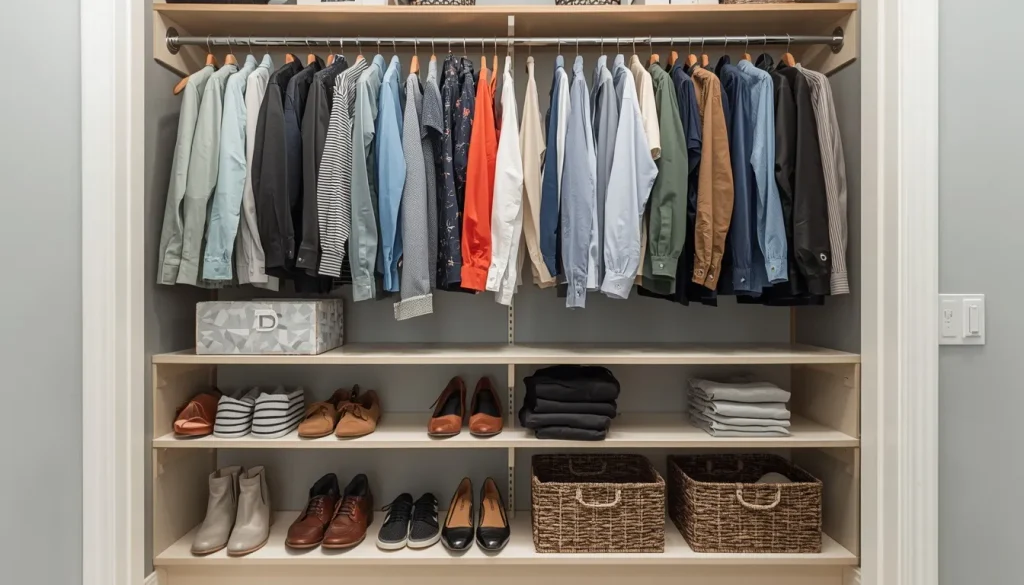
The space below hanging shirts and jackets is often underused.
Low shelves can provide organized storage for shoes, boxes, folded clothes, or baskets.
If you hang shorter clothing, you may have enough room for two or three shelves underneath.
Use Under-Shelf Baskets
Sometimes the problem is not a lack of shelves. It is the empty space between them.
Under-shelf baskets slide or attach beneath an existing shelf and create an extra storage layer. They work well for scarves, belts, small purses, socks, and lightweight accessories.
This is also a useful renter-friendly option because some designs require little or no permanent installation.
Built-In and Custom Bedroom Closet Shelving Ideas
Built-in shelving can make a closet feel more organized and intentional.
Build a Floor-to-Ceiling Shelf Tower
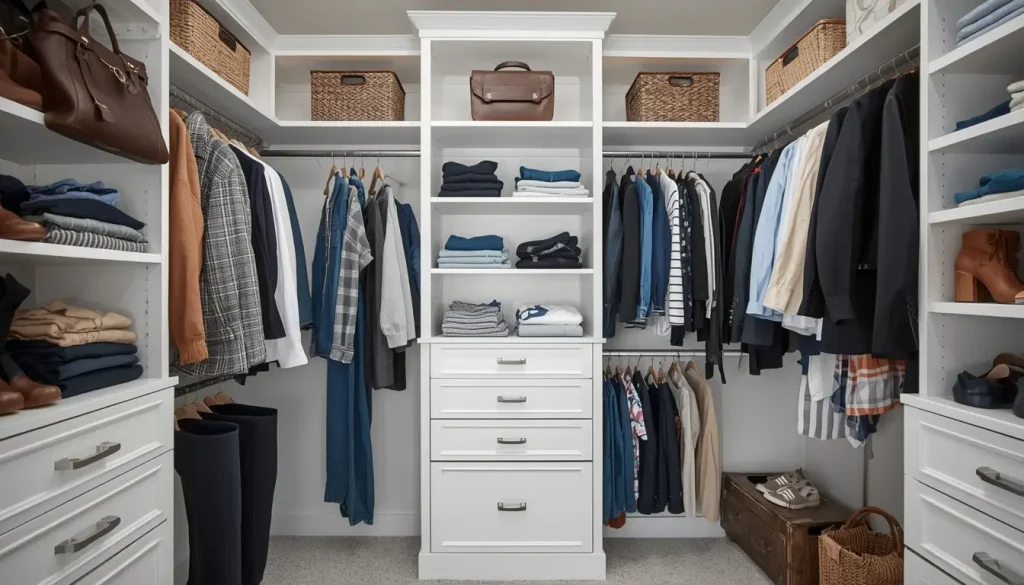
A vertical shelving tower is one of the most practical closet layouts.
Install the tower in the center or along one side. You can then place hanging rods beside it.
A center tower works especially well in a wide reach-in closet because it naturally divides the storage area.
Use the shelves for:
- Folded shirts
- Sweaters
- Jeans
- Shoes
- Handbags
- Storage baskets
Combine Shelves With Drawers
Open shelves are useful, but not everything needs to be visible.
Adding drawers underneath shelves gives you a place for socks, underwear, accessories, sleepwear, or smaller clothing items.
A combination of shelves, drawers, and hanging rods usually works better than filling the entire closet with only one type of storage.
Add Closet Cubbies
Cubbies create separate spaces for specific items.
They are especially useful for shoes, handbags, folded clothing, hats, or children’s belongings.
Cubbies also prevent stacks of clothes from spreading across a long shelf.
Install Dedicated Shoe Shelves
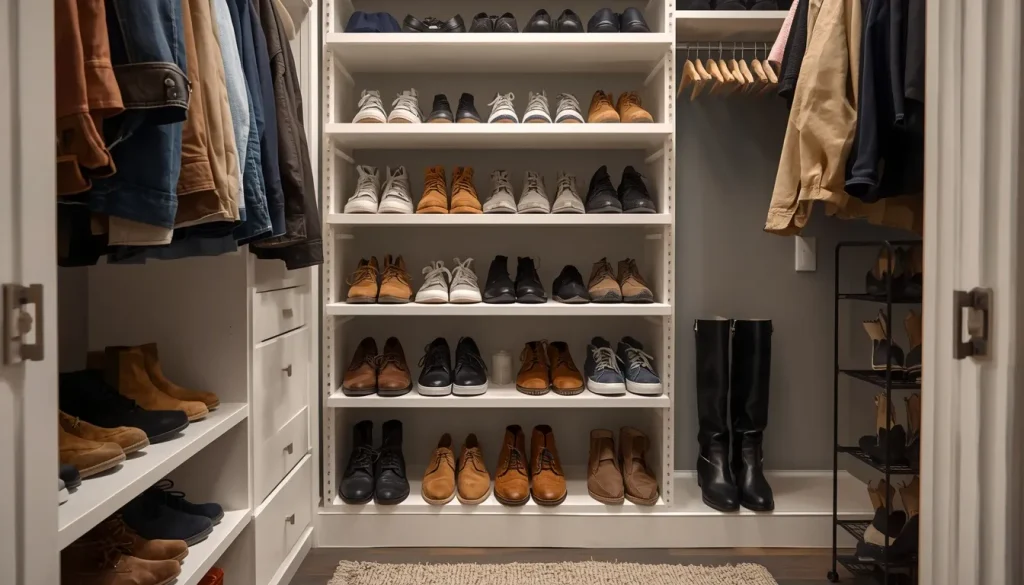
Shoes can quickly take over a closet floor.
Dedicated shoe shelving keeps pairs together and makes them easier to see.
Flat shelves work well for sneakers and everyday shoes. Angled shelves can create a more showroom-style appearance, while adjustable shelving provides flexibility for boots and taller footwear.
Create Handbag Shelves
Handbags can lose their shape when stacked or squeezed together.
Give frequently used bags their own shelf space. Shelf dividers can keep bags upright and separated.
Use higher shelves for bags you use less often.
Add Built-In Wardrobe Shelving
In the UK and Australia, built-in wardrobes are common in bedrooms.
A fitted wardrobe can include a mix of shelves, rails, drawers, cubbies, and upper storage. Instead of filling the wardrobe with one long hanging rail, divide it into different storage zones.
This makes the interior easier to organize and helps you use the full height of the wardrobe.
Bedroom Closet Shelving and Hanging Rod Ideas
Shelves work best when they are planned together with hanging space.
Use a Shelf Above a Single Hanging Rod
This classic setup works well for dresses, coats, long shirts, and other clothing that needs full-length hanging space.
Place one shelf above the rod for bags, boxes, or seasonal items.
Install Double Hanging Rods With a Top Shelf
If most of your wardrobe includes shirts, jackets, skirts, and folded pants, double hanging rods can create much more usable space.
Use one rod above the other, then add a shelf near the ceiling.
This layout is especially useful in small closets because it makes better use of vertical space.
Add a Center Shelf Tower With Rods on Both Sides
A vertical shelf tower in the center creates a balanced closet layout.
Use one side for double hanging and the other side for longer clothing. The center shelves can hold folded clothes, shoes, or accessories.
This arrangement works particularly well in wide reach-in closets.
Use Shelves on One Side and Hanging Space on the Other
Not everyone needs equal amounts of shelf and hanging storage.
If you fold most of your clothing, dedicate one side of the closet to shelving. Keep the opposite side open for dresses, jackets, and shirts.
Design the closet around what you actually own rather than following a standard layout.
Small Bedroom Closet Shelving Ideas
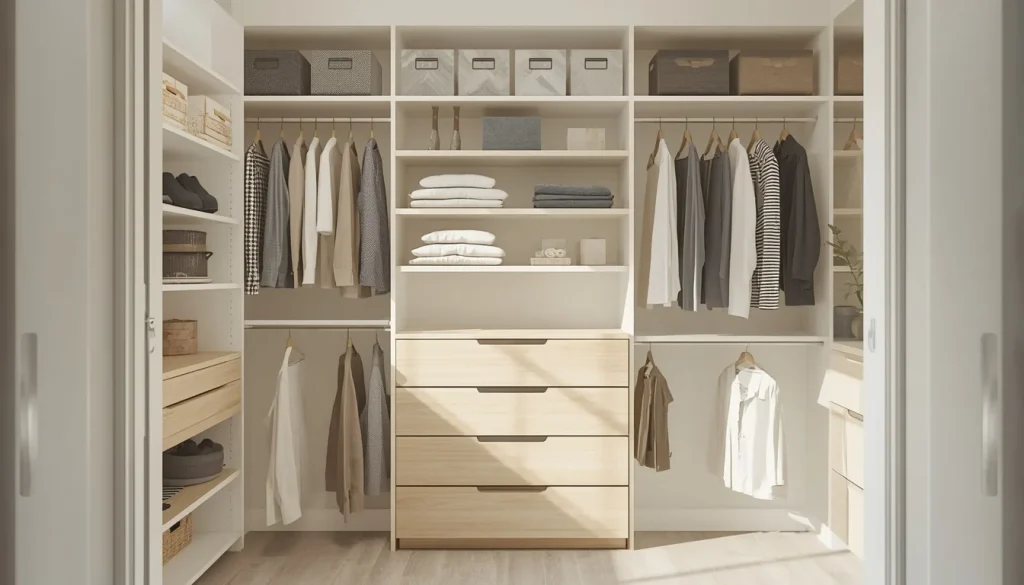
Small closets need careful planning because every inch matters.
Use the Full Height of the Closet
Do not stop storage at eye level.
Add upper shelves for items you use occasionally. Just make sure the shelves remain accessible with a safe step stool.
Choose Narrow Shelves
Deep shelves may look spacious, but items often get lost at the back.
Narrow shelves make it easier to see folded clothing, shoes, and accessories.
They can also leave more room for hanging garments.
Use Stackable Shelf Organizers
Stackable organizers can divide one large shelf into several smaller storage areas.
They work well when you cannot install permanent shelving.
Use them for shoes, folded clothes, handbags, and storage baskets.
Add Storage to the Closet Door
The inside of the closet door can hold lightweight items.
Over-the-door organizers are useful for shoes, scarves, belts, small bags, accessories, or everyday essentials.
This frees up valuable shelf space for larger items.
Keep the Layout Simple
A small closet does not need dozens of organizers.
Too many shelves, boxes, baskets, and hanging accessories can make the space harder to use.
Start with the items you need to store. Then choose only the storage pieces that solve those specific problems.
Reach-In Closet Shelving Ideas
Reach-in closets are common in bedrooms, but their depth and width can make organization difficult.
A practical reach-in closet might include:
- One upper shelf across the full width
- A vertical shelving tower
- Double hanging rods for shorter clothes
- One section for long garments
- Shoe shelves along the bottom
- Storage baskets for accessories
Keep everyday clothing near the center where it is easiest to reach.
Avoid placing frequently used items in deep corners.
Walk-In Closet Shelving Ideas
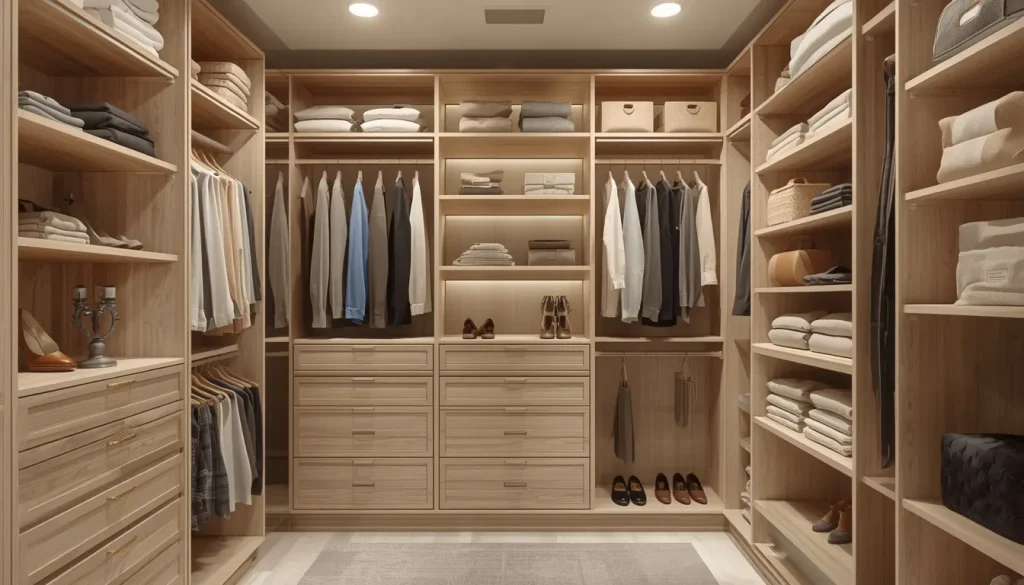
A walk-in closet gives you more room, but poor planning can still waste space.
Use Shelving on More Than One Wall
Instead of using only the back wall, consider shelving along the sides as well.
An L-shaped or U-shaped layout can make excellent use of the available floor area.
Mix Open and Closed Storage
Open shelves make everyday clothing easy to see.
Drawers and cabinets hide smaller items and reduce visual clutter.
Using both creates a cleaner and more functional space.
Add Floor-to-Ceiling Storage
Large closets often have more unused vertical space than small closets.
Use upper shelving for luggage, seasonal clothing, spare bedding, and storage boxes.
Create Dedicated Zones
You can divide a walk-in closet into areas for:
- Work clothes
- Casual wear
- Shoes
- Bags
- Accessories
- Seasonal items
Zones help prevent different categories from becoming mixed together.
Primary Bedroom Closet Shelving Ideas
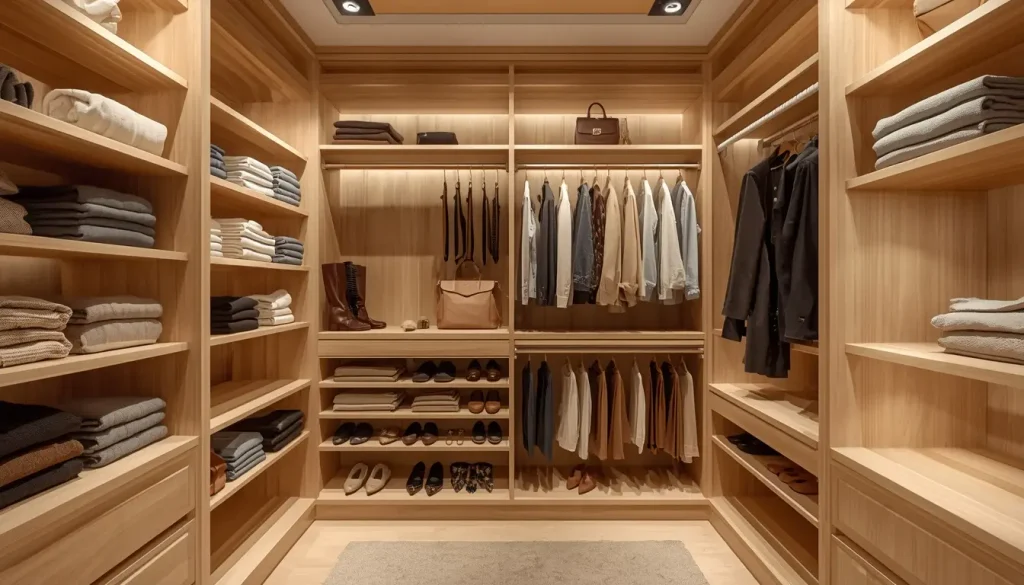
A primary bedroom closet usually needs to store more items than a guest or children’s closet.
If two people share the space, separate the closet into personal zones.
One side can hold one person’s clothing while the other side holds the second person’s belongings. Shared upper shelves can store luggage, bedding, or seasonal items.
Consider combining:
- Hanging rods
- Shoe shelves
- Drawer units
- Shelf towers
- Accessory trays
- Upper storage
A balanced mix usually works better than relying only on hanging rails.
Deep Bedroom Closet Shelving Ideas
Deep closets can offer plenty of storage, but items often disappear at the back.
Avoid placing small everyday items on very deep shelves.
Instead, use:
- Pull-out baskets
- Large labeled bins
- Sliding trays
- L-shaped shelving
- Shelf dividers
- Storage boxes with handles
Store less-used items toward the back and keep daily essentials closer to the front.
If possible, avoid stacking several rows of clothing on the same deep shelf.
Awkward and Sloped-Ceiling Closet Shelving Ideas
Not every closet has straight walls and a standard ceiling.
Custom shelving can help you use unusual spaces.
Use Low Shelves Under Sloped Ceilings
Areas with limited headroom may still be useful for shoes, boxes, bags, or folded clothes.
Add Custom Corner Shelves
Small corner shelves can fit spaces where standard shelving systems cannot.
Use Short Shelf Sections
Instead of forcing one long shelf across an irregular wall, install shorter shelf sections that follow the shape of the room.
Consider Freestanding Units
If permanent construction is difficult, slim freestanding shelving may fit awkward areas more easily.
Open Closet Shelving Ideas
An open closet can work well in bedrooms without a traditional built-in closet.
Combine open shelves with a clothing rail to create a simple wardrobe zone.
To keep the area looking tidy:
- Use matching baskets
- Fold clothing neatly
- Limit visible clutter
- Keep similar items together
- Choose consistent hangers
- Use boxes for smaller items
Open shelving works best when everything has a clear place.
Modular Closet Shelving Systems
A modular closet system can be a good choice if you expect your storage needs to change.
These systems often combine adjustable shelves, rails, towers, baskets, drawers, and shoe storage.
The biggest benefit is flexibility.
You can move shelves higher or lower, add a second hanging rail, or change a clothing section into shoe storage later.
Modular systems are particularly practical for children’s rooms, rental homes, and growing wardrobes.
DIY Bedroom Closet Shelving Ideas
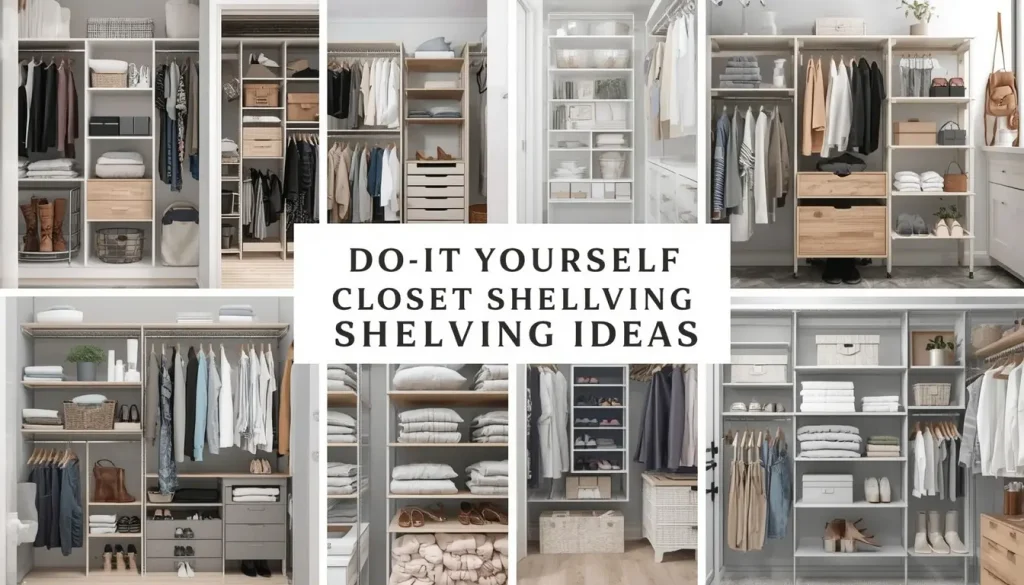
You do not need a professionally installed closet system to improve your storage.
Build Simple Wood Shelves
Basic wood shelving can create a clean and sturdy closet setup.
Use wall cleats or suitable shelf supports, and make sure the shelves are properly secured.
Create a DIY Shelf Tower
A simple vertical tower can divide the closet and create several useful storage levels.
Place hanging rods beside it to create a complete system.
Use Plywood Shelving
Plywood can be a practical material for DIY closet shelves.
It can be cut to fit unusual closet dimensions and finished with paint, trim, or edge banding for a cleaner appearance.
Repurpose Cube Storage
Cube organizers can work surprisingly well inside closets.
Use them for shoes, folded clothing, bags, or storage bins.
Make sure the unit fits safely and does not block closet doors.
Add Shelves Gradually
You do not need to rebuild the entire closet at once.
Start with the biggest problem area.
For example, add shoe shelving first. Then add a top shelf, side shelves, or baskets later.
This approach can keep costs under control.
Renter-Friendly Bedroom Closet Shelving Ideas
Renters often need storage solutions that do not involve major drilling or construction.
Useful options include:
Freestanding Shelf Units
A slim shelving unit can fit inside many closets without permanent installation.
Stackable Shelves
Stackable organizers can create extra levels on existing shelves or closet floors.
Hanging Fabric Shelves
Fabric shelf organizers hang from the clothing rod and create temporary storage for folded clothes, shoes, or accessories.
Over-the-Door Storage
Door organizers can hold small items without using shelf space.
Tension-Based Storage
Some lightweight storage systems use tension rather than screws.
Always follow the product’s installation instructions and weight limits.
Bedroom Closet Shelving Materials: Which Is Best?
Different shelf materials suit different budgets and styles.
Solid Wood
Solid wood provides a high-quality appearance and can be very durable when installed correctly.
It often costs more than other materials.
Plywood
Plywood is a popular option for custom and DIY shelving.
It offers good strength and can be painted or finished to match the bedroom.
MDF
MDF has a smooth surface and works well for painted shelving.
Long unsupported shelves may require additional support, especially when storing heavy items.
Wire Shelving
Wire shelves are lightweight and usually budget-friendly.
They allow airflow and are widely used in closets, although small items may need baskets or shelf liners.
Melamine Shelving
Melamine has a smooth, easy-to-clean surface and is commonly used in modular closet systems.
It can create a clean built-in appearance without the cost of solid wood.
How to Plan Your Bedroom Closet Shelving Layout
Good closet design starts before you buy shelving.
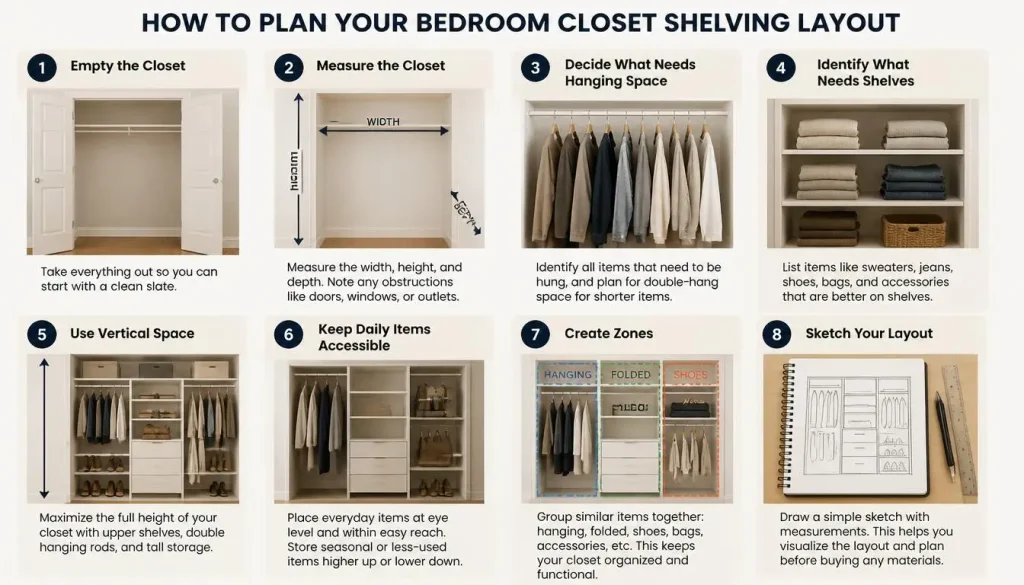
Step 1: Empty the Closet
Remove everything so you can see the actual space.
This also gives you a chance to remove clothing and items you no longer use.
Step 2: Measure the Closet
Measure the width, depth, and height.
Also note:
- Door openings
- Baseboards
- Electrical outlets
- Sloped ceilings
- Corners
- Existing rods
- Fixed obstructions
Measure more than once before cutting or ordering shelves.
Step 3: Decide What Needs Hanging Space
Separate long garments from shorter clothing.
Long dresses and coats require more vertical hanging space. Shirts and jackets can often use double hanging rods.
Step 4: Identify What Needs Shelves
Count the types of items you plan to fold or display.
This may include sweaters, jeans, shoes, handbags, hats, or storage bins.
Step 5: Use Vertical Space
Look above hanging rods and below shorter clothing.
These areas often provide the easiest opportunities to add storage.
Step 6: Keep Daily Items Accessible
Items used every day should be easy to see and reach.
Reserve very high and very low shelves for less frequently used belongings.
Bedroom Closet Shelf Dimensions and Spacing
There is no single perfect shelf size for every closet.
The right dimensions depend on what you plan to store and the shape of the closet.
How Deep Should Bedroom Closet Shelves Be?
Shelves should be deep enough to hold your belongings without making items difficult to reach.
Folded clothing generally works better on moderately deep shelves rather than very deep ones.
Shoes may need less depth, while large storage bins can need more.
Always measure the items you plan to store before choosing shelf depth.
How Much Space Should Be Between Closet Shelves?
Shelf spacing should match the height of your items.
Shorter spacing works well for shoes and folded shirts. More space may be necessary for handbags, baskets, boots, or bulky sweaters.
Adjustable shelves are useful because you can change the spacing later.
How High Should the Top Closet Shelf Be?
The top shelf should use available vertical space while still remaining practical.
If the shelf is very high, reserve it for lightweight or rarely used items.
Avoid storing heavy objects overhead where retrieving them could be unsafe.
What Should You Store on Bedroom Closet Shelves?
Shelves are best for items that are easier to fold, stack, or display than hang.
Folded Clothes
T-shirts, jeans, sweaters, and casual clothing can stay organized on open shelves.
Keep stacks short so clothing is easier to remove without disturbing everything else.
Shoes
Store everyday shoes on easy-to-reach lower shelves.
Keep occasional or seasonal footwear higher up.
Handbags
Give bags enough space to stand upright when possible.
Shelf dividers can stop them from falling into each other.
Bedding and Linens
Extra sheets, blankets, and pillowcases can go on upper shelves.
Store complete bedding sets together to make them easier to find.
Seasonal Clothing
Use labeled bins for clothing you only wear during part of the year.
Place these on higher shelves when they are out of season.
Luggage
Suitcases and travel bags are good candidates for high shelving because they are not used every day.
Smaller bags can sometimes be stored inside larger luggage to save space.
How to Organize Bedroom Closet Shelves
Adding shelves helps, but organization determines whether they remain useful.
Keep Everyday Items Near Eye Level
Frequently worn clothes should be the easiest items to reach.
Avoid making daily routines harder by putting regular clothing on the highest shelves.
Group Similar Items Together
Keep sweaters with sweaters, jeans with jeans, and handbags together.
Clear categories make it easier to find items and return them to the correct place.
Use Shelf Dividers
Dividers help stop folded clothing and handbags from leaning into each other.
They are especially useful on long open shelves.
Use Baskets for Small Items
Small accessories can make open shelves look messy.
Use baskets or bins for:
- Belts
- Scarves
- Hats
- Gloves
- Small bags
- Other accessories
Label Storage Bins
Labels reduce the need to open every box when searching for seasonal items.
This is particularly useful on upper shelves.
Leave Some Empty Space
Do not fill every inch of shelving.
A little open space makes the closet easier to use and gives you room when new items are added.
How to Make Closet Shelves Look Better
Functional storage can still look attractive.
Use Matching Baskets
Matching baskets or bins create a cleaner appearance.
You do not need every container to be identical, but keeping similar colors and materials helps create visual consistency.
Use Consistent Hangers
Uniform hangers can make a closet look much more organized without changing the shelves.
Limit Visible Clutter
Store small or visually messy items inside baskets or boxes.
Keep open shelving for items that are easy to arrange neatly.
Add Lighting
Good lighting makes shelves easier to use.
Battery-powered or properly installed closet lighting can help illuminate dark corners and upper storage areas.
Keep the Color Palette Simple
White, natural wood, black, or neutral shelving can make a closet feel calmer.
Choose a finish that works with the bedroom rather than following a short-lived trend.
Budget Bedroom Closet Shelving Ideas
A useful closet does not have to be expensive.
Use Ready-Made Shelf Boards
Precut shelf boards can simplify a DIY project.
Choose a size that fits your closet and install proper supports.
Repurpose Existing Furniture
A small bookshelf, cube organizer, or narrow storage tower may work inside a closet.
Measure carefully before moving furniture into the space.
Choose Baskets Instead of Drawers
Drawers can increase the cost of a closet system.
Baskets placed on shelves can provide similar storage for many items at a lower cost.
Upgrade One Zone at a Time
Start with the area causing the biggest problem.
You may only need better shoe storage, an extra upper shelf, or a vertical clothing tower.
Improving one section can sometimes make the entire closet work better.
How to Build Closet Shelves That Stay Strong
A beautiful shelf is not useful if it bends or becomes unstable.
Secure Shelves Properly
Shelves should be installed using suitable supports for the wall type and expected load.
Whenever appropriate, supports should be fixed into structural framing or installed with hardware designed for the wall.
Add Support to Long Shelves
Long shelves may need additional brackets or center supports to prevent sagging.
The required support depends on shelf material, thickness, span, and what you plan to store.
Do Not Overload Shelves
Shoes and folded clothes may be relatively light, while books, large boxes, and packed storage bins can become heavy.
Follow the shelving system or hardware manufacturer’s load guidance.
Choose Materials for the Job
The best shelf material depends on shelf length, expected weight, budget, and appearance.
Avoid choosing materials based on looks alone.
Bedroom Closet Shelving Mistakes to Avoid
A few common mistakes can reduce usable storage.
Buying Organizers Before Measuring
A storage system may look perfect online but still be too wide, deep, or tall for your closet.
Measure first.
Making Every Shelf Too Deep
Deep shelves often create hidden piles.
Use deeper shelves only when the stored items actually require them.
Ignoring Vertical Space
Look above rods, doors, and lower storage before deciding that the closet is full.
Using the Same Shelf Spacing Everywhere
Shoes, sweaters, handbags, and storage bins do not need the same amount of height.
Vary the spacing based on what each section will hold.
Overloading the Closet
More shelves do not automatically create better organization.
If every shelf is packed tightly, items will still be difficult to reach.
Ignoring Corners
Corners can hold useful shelving, especially in walk-in closets.
Forgetting Future Needs
A fixed closet may work today but become inconvenient later.
Adjustable shelving provides more flexibility when wardrobes change.
Bedroom Closet Shelving Ideas by Storage Need
Different wardrobes need different layouts.
Best Shelving for Lots of Folded Clothes
Use a vertical shelf tower with moderately spaced shelves.
Avoid creating tall stacks because they become unstable.
Best Shelving for Shoes
Use low shelves, adjustable cubbies, or dedicated shoe racks.
Keep frequently worn shoes where they are easy to reach.
Best Shelving for Handbags
Open shelving with dividers works well.
Give structured bags enough room to keep their shape.
Best Shelving for Couples
Separate the closet into zones.
Give each person their own hanging area and shelf section.
Shared upper shelves can hold household or seasonal items.
Best Shelving for Kids
Use lower shelves for items children need regularly.
Adjustable shelving is useful because storage requirements change as children grow.
Best Shelving for Seasonal Clothing
Use upper shelves with labeled bins or boxes.
Rotate seasonal clothing when the weather changes.
Quick Bedroom Closet Shelving Layout Ideas
| Closet Type | Recommended Shelving Layout |
|---|---|
| Small reach-in closet | Center shelf tower, double rods, top shelf |
| Wide reach-in closet | Shelves in the middle, hanging zones on both sides |
| Deep closet | Pull-out bins, shorter shelves, front-access storage |
| Walk-in closet | Floor-to-ceiling shelves with mixed hanging areas |
| Rental bedroom | Freestanding shelves and removable organizers |
| Shared closet | Separate shelving zones for each person |
| Shoe-heavy closet | Adjustable lower shelves or shoe cubbies |
| Open wardrobe | Shelves, clothing rail, matching baskets |
| Sloped-ceiling closet | Low custom shelves and short storage units |
Frequently Asked Questions About Bedroom Closet Shelving
What Is the Best Shelving for a Bedroom Closet?
The best shelving depends on your closet size and wardrobe. Adjustable shelves are one of the most flexible options because you can change their position as your storage needs change.
A combination of shelves, hanging rods, and lower shoe storage usually works well for most bedrooms.
How Deep Should Bedroom Closet Shelves Be?
Shelf depth should match what you plan to store.
Folded clothing needs enough depth to sit comfortably without getting lost at the back. Shoes often need less depth, while bins and luggage may need more.
Measure your belongings before choosing a final depth.
How Far Apart Should Closet Shelves Be?
There is no universal spacing that works for every item.
Shoes and folded shirts can use smaller gaps. Handbags, baskets, boots, and bulky sweaters need more room.
Adjustable shelves make it easier to customize the spacing.
Is Wood or Wire Shelving Better for Closets?
Both can work well.
Wood and wood-based shelves usually provide a more finished appearance and a flat surface. Wire shelving is often lighter, affordable, and easy to adapt.
Your choice should depend on budget, style, installation method, and what you plan to store.
How Can I Add Shelves to a Small Bedroom Closet?
Start by using unused vertical space.
Add an upper shelf, a narrow vertical tower, stackable organizers, or shelving below short hanging clothes.
Avoid filling the closet with bulky organizers that reduce movement.
How Can I Maximize Shelf Space in a Bedroom Closet?
Use adjustable shelving, shelf dividers, under-shelf baskets, labeled bins, and vertical shelf towers.
Keep everyday items easy to reach and move seasonal belongings to higher shelves.
What Should I Put on the Top Shelf of My Bedroom Closet?
The top shelf is best for items you use less frequently.
Good options include seasonal clothing, luggage, spare bedding, storage boxes, and special-occasion accessories.
Avoid placing very heavy items overhead.
Are Adjustable Closet Shelves Worth It?
Adjustable shelves are useful if your storage needs may change.
They allow you to create taller or shorter storage areas without replacing the entire closet system.
How Do I Organize a Closet Without Built-In Shelves?
Use freestanding shelf units, hanging fabric organizers, cube storage, stackable shelves, or over-the-door storage.
These options can create useful storage without installing permanent built-ins.
How Can I Make Cheap Closet Shelves Look Better?
Paint or finish the shelves, use matching baskets, keep stacks neat, choose consistent hangers, and hide smaller items inside bins.
A clean layout usually makes more difference than expensive materials.
Final Thoughts
The best bedroom closet shelving ideas are not necessarily the most expensive or complicated.
A good closet should match the clothes, shoes, bags, and accessories you actually own. Start by measuring the space, deciding what needs to hang, and identifying where shelves will solve real storage problems.
Use vertical space whenever possible. Keep everyday items within easy reach. Save upper shelves for seasonal or occasional belongings. Combine shelves with rods, baskets, drawers, or cubbies when needed.
Most importantly, avoid filling the closet with storage products just because they fit.
A simple, well-planned shelving layout will usually give you more useful storage than a crowded closet full of organizers.

“A comfortable home and a healthy lifestyle go hand in hand.”
Hi, I’m Ethan Carter, the founder and lead editor of TheBestHomeFit. I’m passionate about helping people create beautiful, functional living spaces while building healthier lifestyles at home. Over the years, I’ve spent countless hours researching home decor trends, testing home gym equipment, and reviewing products to help readers make smarter buying decisions.
Through TheBestHomeFit, I share practical home improvement ideas, honest product reviews, buying guides, and fitness tips designed for everyday homeowners. My goal is to make it easier for you to create a home that looks great, feels comfortable, and supports your well-being.
When I’m not researching the latest products or writing in-depth guides, you’ll usually find me redesigning a room, trying new home workout routines, or enjoying quality time with my family.