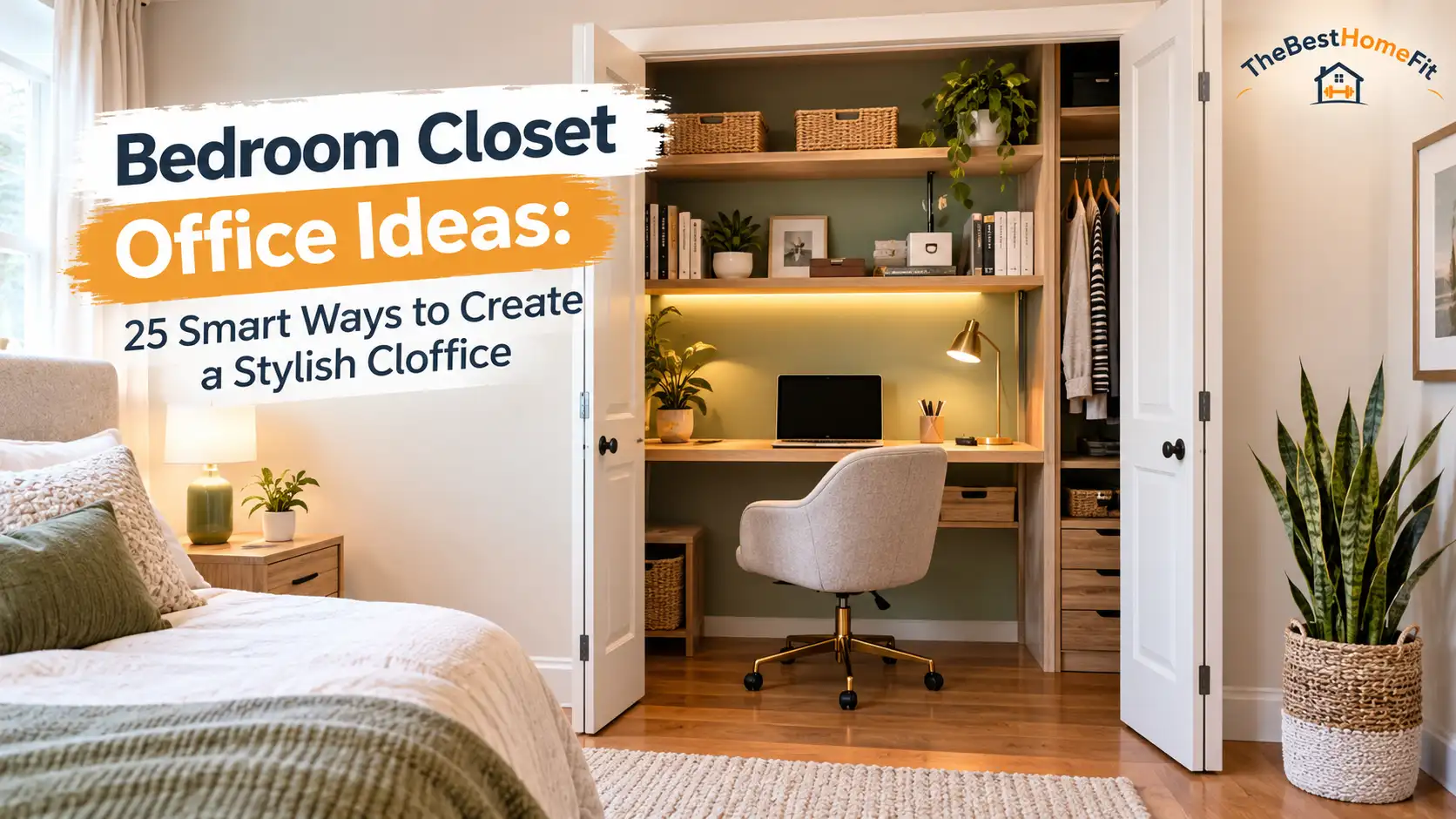
Finding room for a home office is not always easy, especially when your bedroom already feels full. A desk squeezed beside the bed can make the room look crowded, while working from the bed is rarely comfortable for long.
That is where bedroom closet office ideas can make a surprisingly big difference.
By turning part or all of a closet into a compact workspace, you can create a dedicated place for work without giving up much bedroom floor space. Better still, many closet offices can be hidden behind doors or curtains when the workday is over.
Whether you have a narrow reach-in closet, a spacious walk-in, a guest bedroom wardrobe, or a rental where permanent changes are not possible, there is usually a way to create a practical cloffice.
Below are 25 ideas, followed by layout tips, desk dimensions, lighting advice, storage solutions, and a simple step-by-step conversion guide.
What Is a Bedroom Closet Office?
A bedroom closet office is simply a workspace created inside an existing closet. You may also hear it called a cloffice, a combination of the words “closet” and “office.”
The setup can be as simple as placing a small desk inside an empty wardrobe or as detailed as installing a wall-to-wall desktop, shelves, drawers, lighting, and built-in cabinetry.
Some people convert an entire closet. Others use only one side so they can continue storing clothes beside the desk.
The main benefit is separation. Instead of seeing your laptop and paperwork every time you get into bed, you may be able to close the closet doors and visually switch off from work.
Is a Closet Office Right for Your Bedroom?
A closet office can work particularly well in:
- Small bedrooms
- Apartments and condos
- Guest bedrooms
- Studio apartments
- Rental homes
- Bedrooms without enough floor space for a full desk
- Homes where a separate office is not available
- Rooms that need to serve more than one purpose
The idea is especially useful if your closet contains unused or poorly organized space.
However, converting a closet is not automatically the right choice. Think about how much clothing storage you need, whether the closet has a power outlet, how much ventilation is available, and whether your chair can move comfortably.
If you work from home eight hours a day, comfort matters just as much as appearance.
Things to Check Before Turning a Bedroom Closet Into an Office
Before buying a desk or removing shelves, take a few measurements.
Measure the Closet Carefully
Record the closet’s:
- Interior width
- Interior depth
- Floor-to-ceiling height
- Door opening width
- Available chair space
- Existing shelf positions
Measure twice before ordering a desktop. Even a difference of an inch or two can matter in a narrow reach-in closet.
Check the Door Clearance
If you want to keep the closet doors, make sure the desk, monitor, chair, and shelves will not stop them from closing.
Bifold and sliding doors generally require different clearance than traditional hinged doors.
Find the Nearest Electrical Outlet
Your workspace may need power for:
- Laptop chargers
- Monitors
- Desk lamps
- Phone chargers
- Printers
- Speakers
- Docking stations
Avoid building a setup that depends on loose extension cords running across the bedroom floor.
For new outlets or permanent electrical work, use a qualified electrician and follow local electrical codes.
Test the Wi-Fi Signal
A closet can sometimes have weaker Wi-Fi reception, particularly if it is surrounded by thick walls or located far from the router.
Before building the office, sit inside the closet with your laptop and test the connection.
Think About Airflow
Closets are designed for storage, not for someone to sit inside for hours.
An open reach-in closet usually has few airflow problems, but an enclosed walk-in closet may feel warm or stuffy.
Keeping doors open while working, using a small quiet fan, or improving ventilation can make the space much more comfortable.
Consider Noise
A closet may feel private, but it is not necessarily soundproof.
If you regularly join calls or record audio, soft materials such as rugs, curtains, upholstered furniture, and fabric storage boxes can reduce harsh echoes.
25 Bedroom Closet Office Ideas
You do not need a huge closet or a large renovation budget. The best setup is usually the one that matches how you actually work.
1. Install a Simple Floating Desk
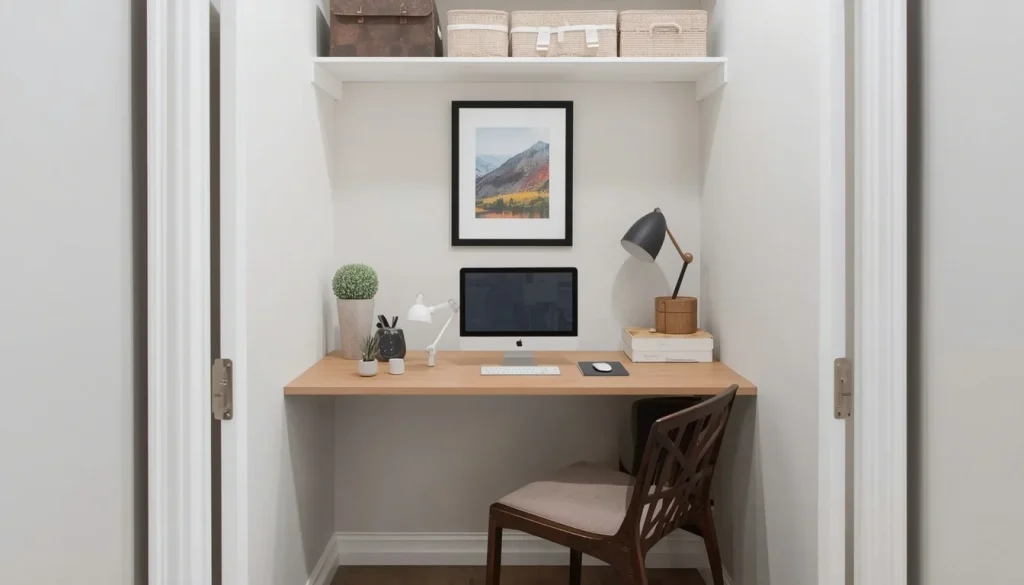
A floating desktop is one of the easiest ways to turn a small closet into an office.
Because there are no desk legs or bulky side panels, the area underneath stays open for your chair, drawers, or storage baskets.
Choose a desktop that fits closely between the closet walls for a clean built-in appearance.
2. Remove the Closet Doors
Removing the doors can instantly make a narrow closet feel larger.
It also gives your chair more room and prevents doors from interfering with the desk.
This works especially well when the finished office looks attractive enough to become part of the bedroom design.
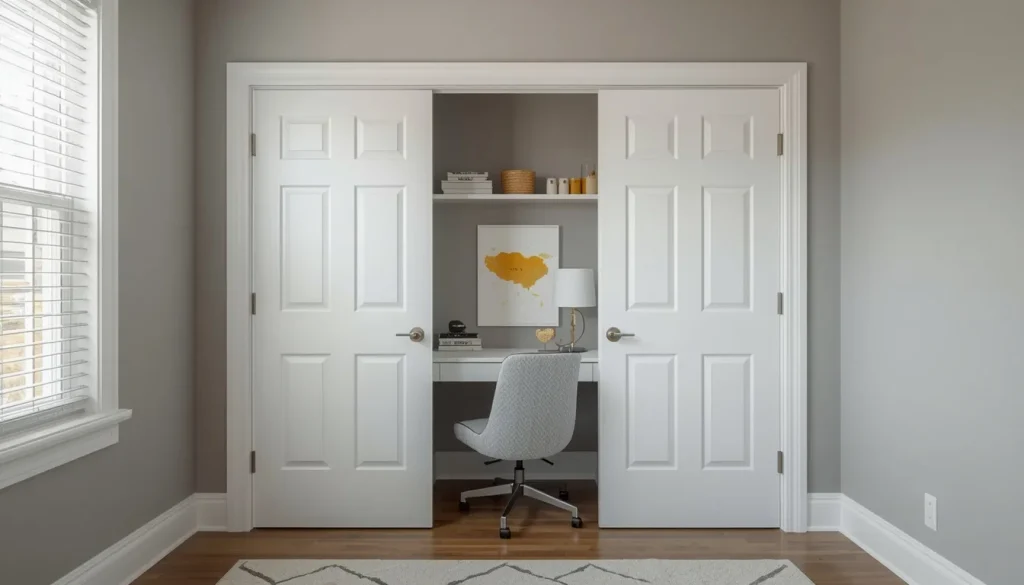
3. Keep the Doors for a Hidden Office
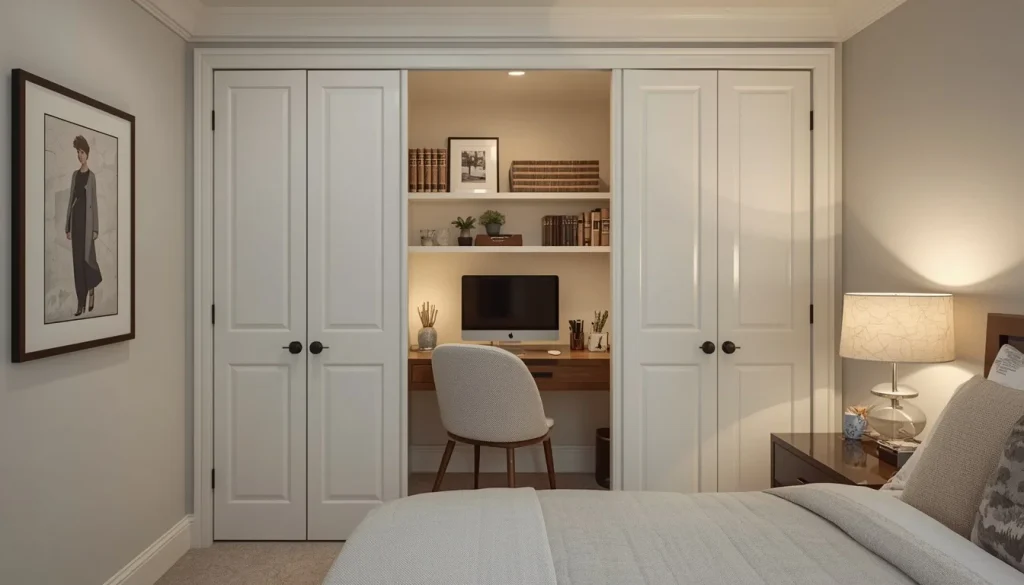
If you want work to disappear at the end of the day, keep the doors.
A hidden closet office is particularly useful in bedrooms because you can shut away your monitor, paperwork, and office supplies before going to sleep.
It helps the bedroom feel like a bedroom again rather than a permanent workstation.
4. Keep Bifold Doors for a Compact Cloffice
Bifold doors can be convenient because they take up less outward space than traditional hinged doors.
Before installing your desk, check how far the folded doors project into the opening.
A slightly shallower desktop may allow everything to close neatly.
5. Replace Swing Doors With Sliding Doors
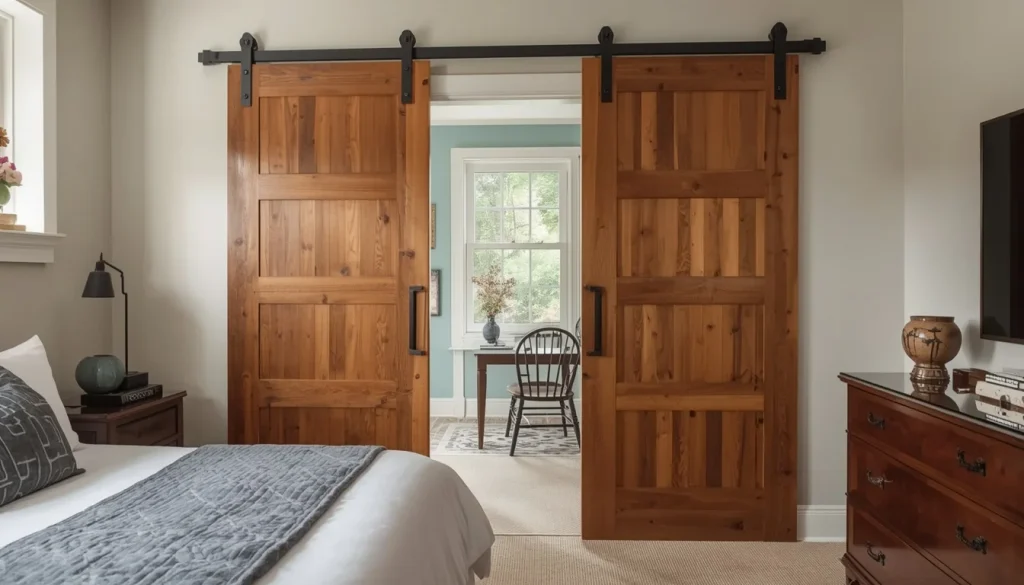
Traditional doors that swing into the bedroom can make a tight space even harder to use.
Sliding or barn-style doors can free up floor space while still allowing you to hide the office.
Just make sure there is enough wall space for the door system before making the change.
6. Hide the Office Behind a Curtain
A curtain is a simple alternative when closet doors have already been removed.
It is inexpensive, easy to change, and renter-friendly.
Choose fabric that complements your bedding or curtains so the cloffice feels connected to the rest of the bedroom.
7. Use a Fold-Down Desk in a Tiny Closet
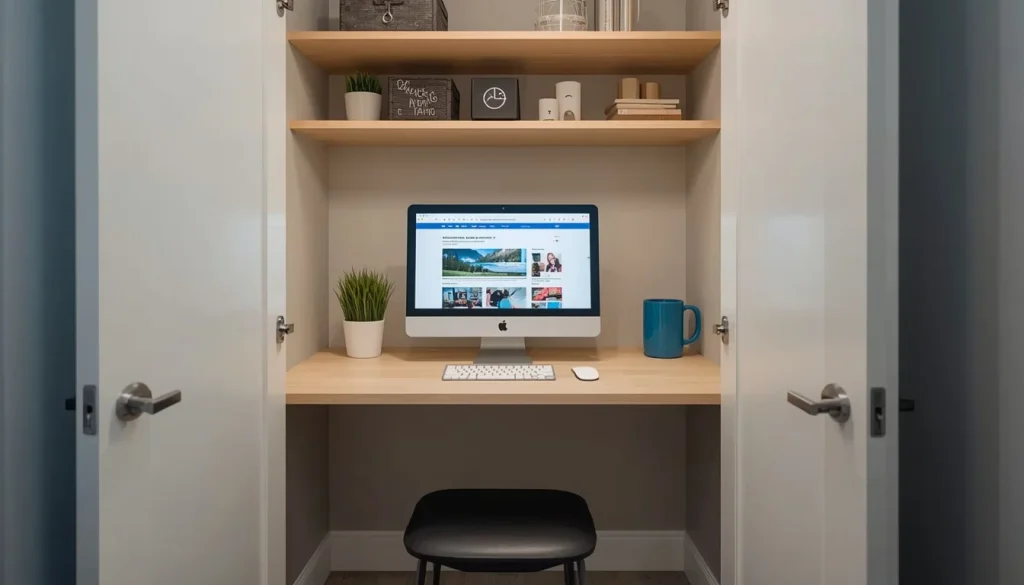
A fold-down desktop can work where a permanent desk would take up too much space.
Fold it down while working and close it when you need access to storage.
This is especially practical for students, occasional remote workers, or anyone using a very small bedroom.
8. Build a Wall-to-Wall Closet Desk
If the closet is wide enough, a wall-to-wall desktop creates maximum usable work surface.
It also looks more intentional than placing a small freestanding desk inside a large opening.
Add drawers underneath and shelves above to create a compact built-in workstation.
9. Turn a Reach-In Closet Into a Mini Office
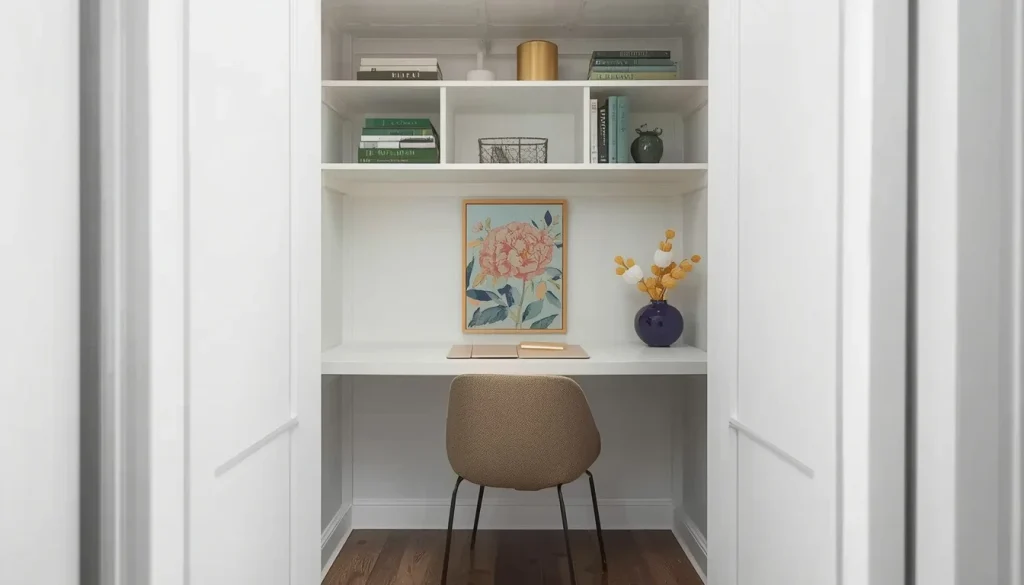
A standard reach-in closet is one of the easiest spaces to convert.
Use the back wall for the desk, install shallow shelving above it, and leave enough space underneath for your legs.
A reach-in cloffice works especially well for laptop-based work.
10. Create an Office Zone Inside a Walk-In Closet
You do not necessarily have to sacrifice your entire walk-in closet.
Use one wall for clothing and another for a desk.
A walk-in closet can often accommodate a deeper desktop, larger monitor, filing drawers, and better storage than a standard reach-in closet.
11. Combine Clothes and Office Storage
If wardrobe space is limited, create a split-purpose closet.
One side can hold hanging clothes while the other becomes your workstation.
Upper shelves can also serve double duty, with clothing storage on one side and office supplies on the other.
Keeping both functions organized is the key to making this layout feel intentional rather than crowded.
12. Add Floating Shelves Above the Desk
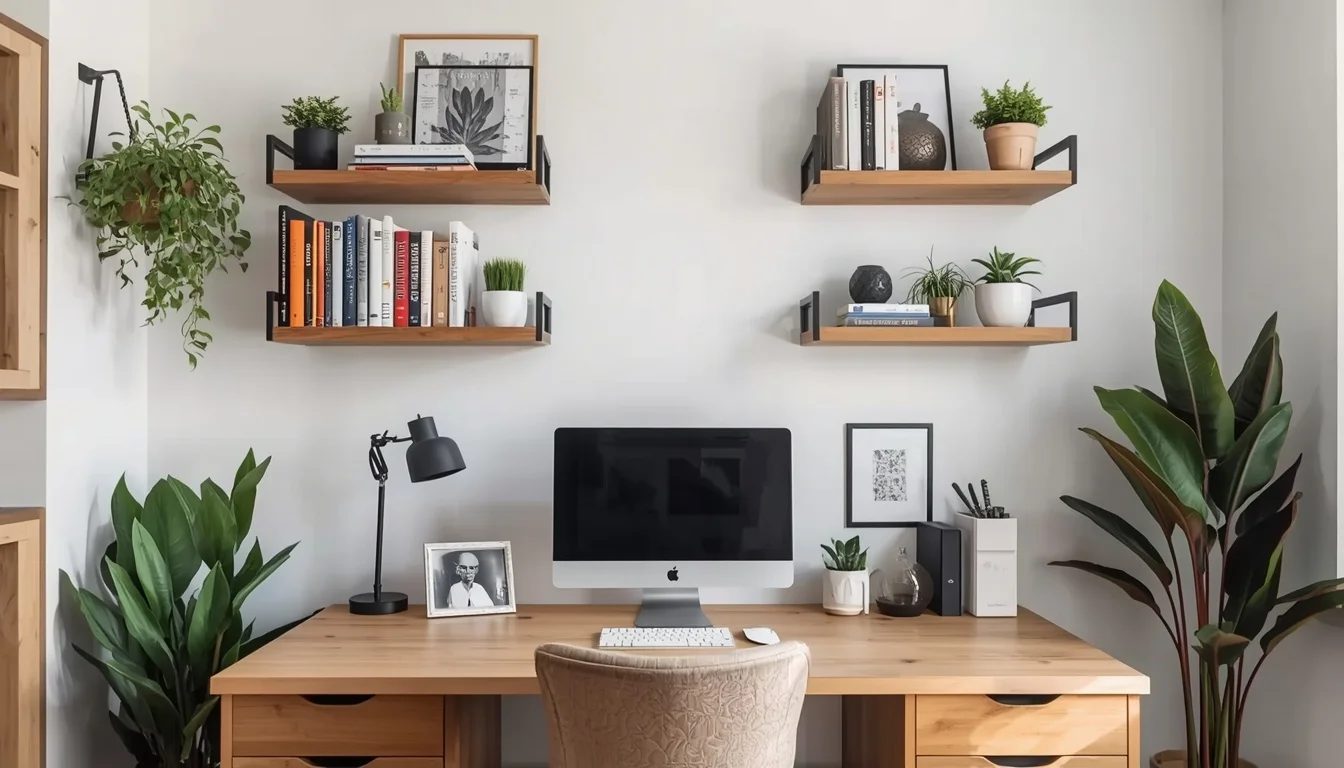
The wall above a closet desk is valuable storage space.
Use floating shelves for:
- Books
- Storage boxes
- Notebooks
- Small plants
- Office supplies
- Decorative pieces
Avoid making the shelves excessively deep, especially if you are tall. You do not want to bump your head every time you stand up.
13. Use Vertical Storage
When floor space is limited, go upward.
Tall shelving, pegboards, wall pockets, magnetic organizers, and narrow cabinets can store a surprising amount without making your desk feel cramped.
Vertical storage is one of the most effective tricks for small closet office ideas.
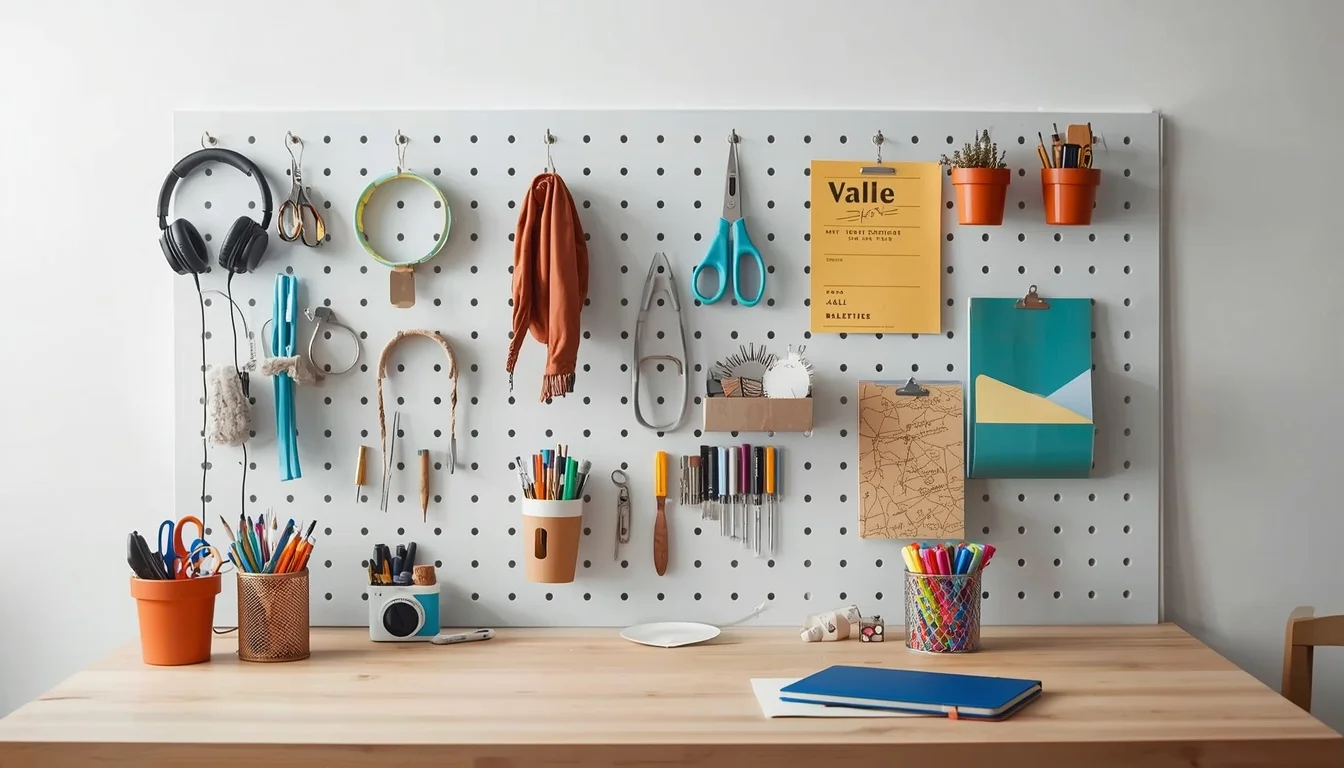
14. Install a Pegboard
A pegboard keeps frequently used items visible without covering the desktop.
Use hooks and small containers for headphones, cables, scissors, notebooks, pens, or craft supplies.
The arrangement can also be changed later without rebuilding the office.
15. Add Drawers Under the Desk
A clean desktop makes a tiny workspace feel much larger.
Slim drawers or a compact mobile drawer unit can hold paperwork, chargers, stationery, and other items that would otherwise create clutter.
Measure your legroom before buying anything that sits underneath the desk.
16. Add Closed Cabinets for a Cleaner Look
Open shelves are useful, but they are not always visually calm.
If your bedroom already contains plenty of visible objects, closed cabinets can make the closet office look more polished.
They are also useful for hiding printers, paperwork, cables, and less attractive office supplies.
17. Add Proper Task Lighting
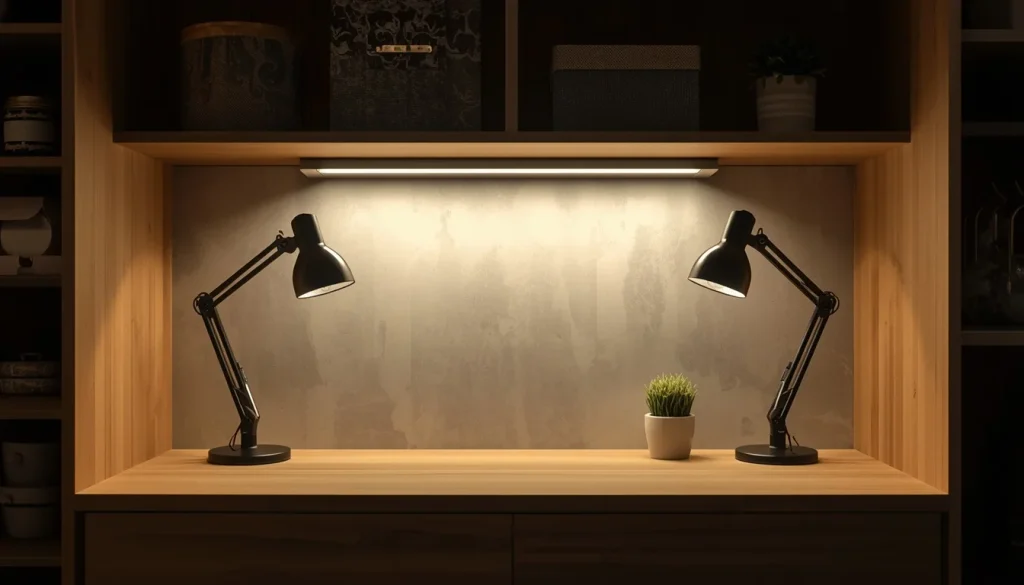
Many closets have poor lighting, so this should be one of your first priorities.
Possible options include:
- Under-shelf LED lighting
- Wall-mounted sconces
- Adjustable desk lamps
- LED light bars
- Rechargeable lights for rentals
Place the light so it illuminates your work area without reflecting directly off your monitor.
18. Brighten the Closet With Light Colors
A dark closet can feel smaller than it really is.
White, warm cream, pale gray, beige, or other light finishes can reflect more light and make the office feel open.
If you prefer darker colors, balance them with strong task lighting.
19. Use Wallpaper as a Feature
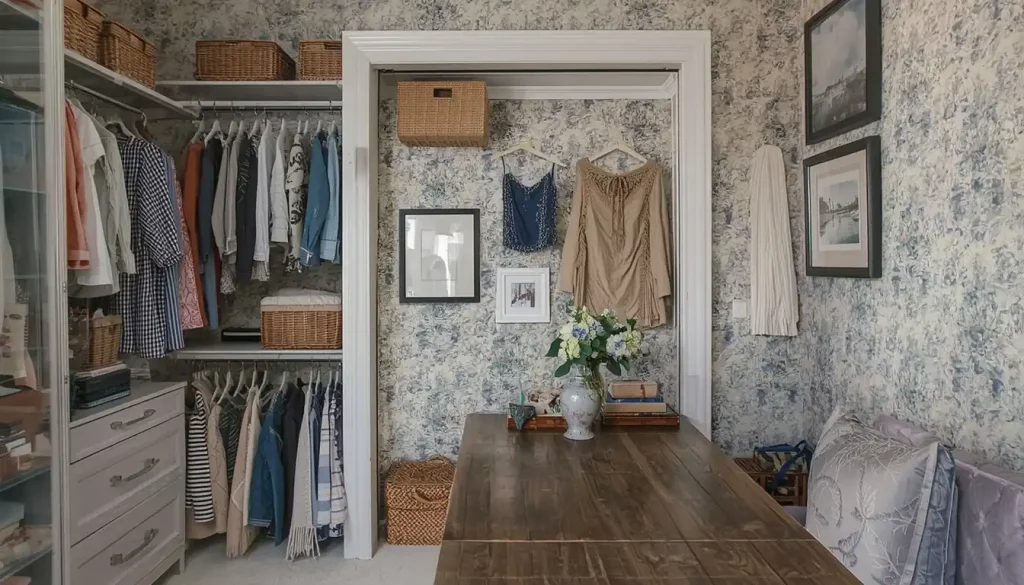
A closet office gives you a chance to experiment without decorating an entire bedroom.
Wallpaper on the back wall can turn a plain closet into a focal point.
For renters, peel-and-stick wallpaper provides a less permanent option.
20. Create a Minimalist Cloffice
Small workspaces often benefit from restraint.
Try using:
- One slim desk
- One comfortable chair
- A monitor or laptop
- One shelf
- A small lamp
- Hidden cable management
You do not need to fill every wall simply because storage space is available.
21. Wall-Mount the Monitor
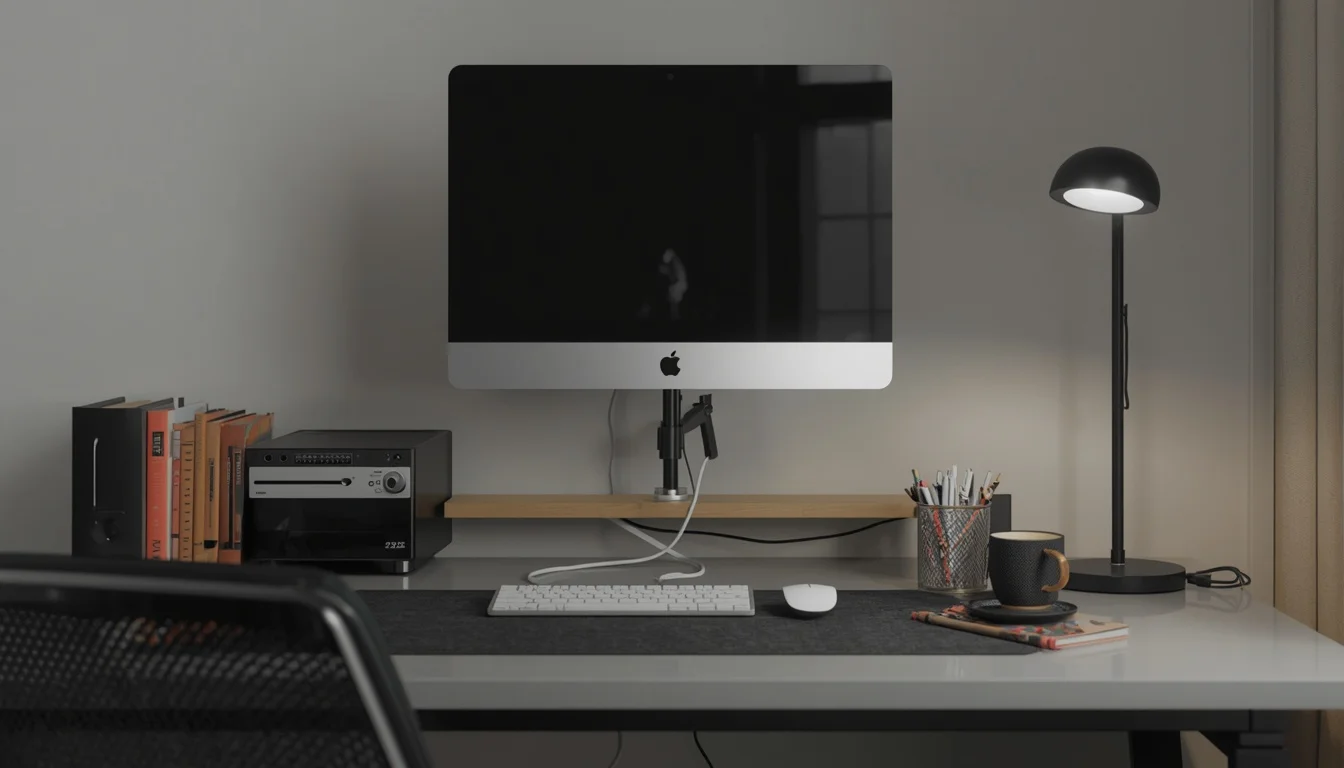
A monitor stand can take up valuable desk depth.
Mounting the screen on the wall or using an adjustable monitor arm can create more space for your keyboard, notebook, and other essentials.
This is particularly helpful when your closet desk is shallow.
22. Build a Dual-Monitor Closet Office
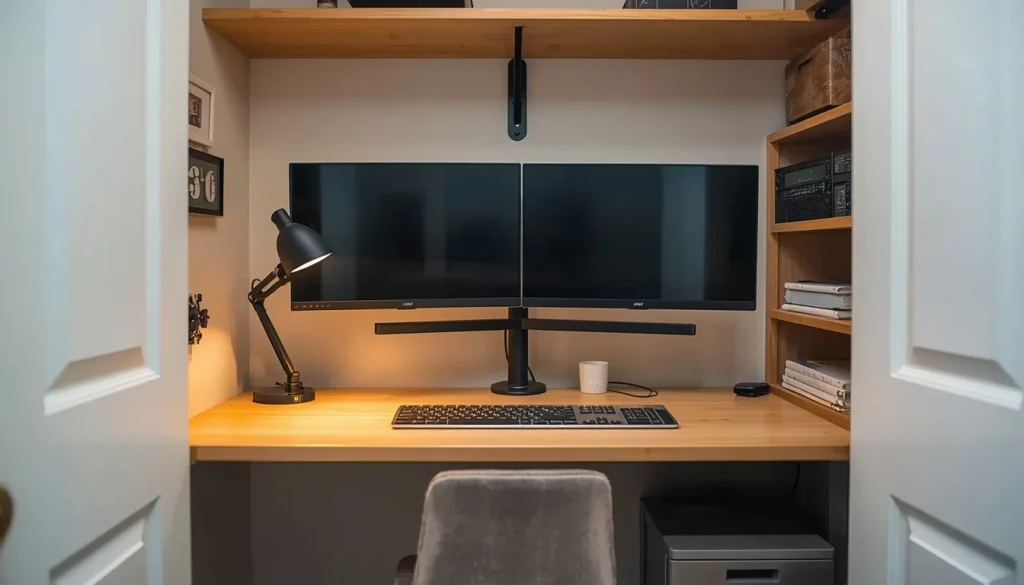
A closet office can still support two monitors if it is wide enough.
Monitor arms can help because they use less desk space than two traditional stands.
Before committing to the setup, make sure you can sit far enough from the screens for comfortable viewing.
23. Add a Compact Standing Desk
A walk-in closet or wide wardrobe may have enough room for a compact sit-stand desk.
This gives you more flexibility during long workdays.
Measure carefully first, as adjustable desks need enough vertical and horizontal clearance to move freely.
24. Make the Office Renter-Friendly
You can create a useful cloffice without permanent construction.
Try:
- A freestanding desk
- Removable wallpaper
- Tension-rod storage
- Over-the-door organizers
- Rechargeable lighting
- Freestanding shelves
- Adhesive cable clips where appropriate
Keep the original closet hardware safely stored so the area can be restored before moving.
25. Design a Luxury-Looking Cloffice on a Small Budget
A polished office does not always require expensive cabinetry.
A simple desktop, matching storage boxes, warm lighting, tidy cables, coordinated hardware, and one attractive wall treatment can dramatically improve the space.
Spend first on the things you touch every day: the chair, desk height, lighting, and computer setup.
Decoration should come after comfort.
Bedroom Closet Office Ideas for Different Types of Bedrooms
Your bedroom layout should influence the type of cloffice you build.
Small Bedroom Closet Office
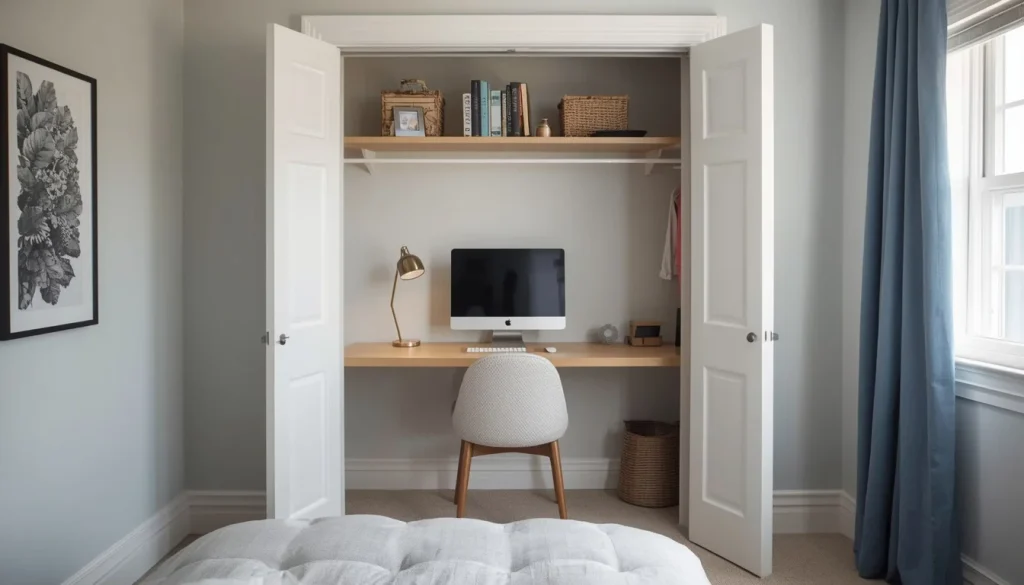
In a small bedroom, preserving floor space is the priority.
A shallow floating desk, wall-mounted monitor, slim chair, and vertical shelving usually work better than bulky furniture.
If possible, keep the workspace entirely inside the closet opening.
Primary Bedroom Closet Office
A primary bedroom office should feel calm enough that work does not dominate the room.
Hidden storage and doors are especially valuable here.
Choose finishes that match the bedroom so the cloffice looks like part of the original design rather than an afterthought.
Guest Bedroom Closet Office
A guest bedroom closet can become an excellent office because the room often has more than one purpose already.
Consider a setup that can be hidden when visitors arrive.
If guests still need wardrobe space, keep part of the closet available for hanging clothes and luggage.
Apartment Bedroom Cloffice
Apartment layouts demand flexibility.
Focus on compact furniture, reversible changes, removable finishes, and multifunctional storage.
A freestanding desk inside the closet may be smarter than a permanent built-in.
Bedroom Closet Office That Disappears After Work
For people who struggle to separate work from rest, this may be the best arrangement.
Keep the computer, stationery, chargers, and paperwork inside the closet. When work is finished, push in the chair and close the doors or curtain.
That small routine can make the bedroom feel noticeably more relaxing.
Best Desk Size for a Bedroom Closet Office
There is no single perfect desk size because closets vary significantly.
A practical desk should give you enough work surface without making the closet feel difficult to enter or use.
| Closet Setup | Practical Desk Approach | Best For |
|---|---|---|
| Narrow reach-in closet | Shallow floating desk | Laptop work |
| Wide reach-in closet | Wall-to-wall desktop | Laptop or monitor |
| Walk-in closet | Standard or adjustable desk | Full workstation |
| Very small closet | Fold-down desktop | Occasional work |
| Shared clothes/office closet | Narrow custom desk | Multipurpose storage |
How Deep Should a Closet Office Desk Be?
For a laptop-only setup, a desk around 18 to 24 inches deep (46 to 61 cm) can often work.
If you use a large monitor, deeper work surfaces are usually more comfortable when space allows.
Do not automatically choose the deepest desktop that fits. You still need room for your chair and movement.
How Wide Should the Desk Be?
Use as much width as the closet comfortably allows.
A wider desk gives you more flexibility for monitors and storage, but even a compact workstation can work well if your main tools are a laptop, keyboard, and notebook.
What Desk Height Works Best?
Standard desks are commonly around 29 to 30 inches high (74 to 76 cm).
However, your own height and chair adjustment matter more than following one number exactly.
When seated, your shoulders should feel relaxed and your forearms should rest comfortably while typing.
How Much Chair Clearance Do You Need?
Try to leave enough room to pull the chair out without hitting the bed or another piece of furniture.
In a tight bedroom, measure the area in front of the closet with the doors open before deciding on the desk depth.
Will the Closet Doors Still Close?
This is easy to forget.
Check the position of:
- Monitor
- Desk lamp
- Chair
- Shelves
- Computer
- Drawer handles
Then test the full door movement before permanently installing the desk.
Small Bedroom Closet Office
If you are ready to build your own cloffice, keep the process simple.
Step 1: Empty the Closet
Remove clothes, boxes, shelves, and anything else that makes it difficult to see the available space.
Decide what will return after the office is complete.
Step 2: Measure Everything
Measure the width, depth, height, door clearance, electrical outlet position, and available floor space for your chair.
Write the measurements down instead of relying on memory.
Step 3: Decide Whether the Doors Stay
Keep them if you want a hidden office.
Remove them if they restrict chair movement or make the workspace feel too narrow.
A curtain can provide a middle ground.
Step 4: Prepare the Walls
Patch unwanted holes and add paint or wallpaper before installing furniture.
Doing this now is far easier than decorating around a finished desk.
Step 5: Install the Desk
Depending on the closet, you could use:
- A floating desktop
- A wall-to-wall worktop
- A freestanding desk
- A fold-down desk
- A compact standing desk
If you are mounting a heavy desktop or shelving to the wall, use suitable fixings for the wall construction and expected load.
Step 6: Add Storage
Install only the storage you genuinely need.
A few well-positioned shelves often work better than covering the entire closet with cabinetry.
Step 7: Set Up Lighting
Make sure your keyboard and work surface are clearly illuminated.
Test the lighting at the time of day when you usually work.
Step 8: Plan Power and Cables
Use cable trays, clips, sleeves, or grommets to keep wires away from your feet.
If the office needs additional permanent outlets, have them professionally installed.
Step 9: Add Your Chair and Equipment
Set up the monitor, keyboard, laptop, and chair before adding decorative accessories.
Make sure the workspace is comfortable first.
Step 10: Work in the Space for a Few Days
Do not rush to fill every shelf.
Use the office for several days and notice what you actually need nearby.
Then add storage or accessories based on real use.
Basic Tools and Materials You May Need
A simple DIY closet office may require:
- Tape measure
- Level
- Drill
- Appropriate screws and wall fixings
- Stud finder where suitable
- Desktop or worktop
- Wall brackets or support cleats
- Shelving
- Cable clips or cable tray
- Desk lighting
- Paint or removable wallpaper
The exact materials depend on your closet construction.
If you are unsure whether a wall can safely support a floating desk or heavy shelving, get professional advice rather than guessing.
How to Make a Bedroom Cloffice Comfortable for Daily Work
A beautiful office is not much use if your back hurts after 30 minutes.
Choose a Supportive Chair
Look for a chair that supports your posture but still fits under the desk.
In very small bedrooms, avoid oversized executive chairs that dominate the available floor space.
Position the Monitor Properly
Your screen should be comfortable to view without repeatedly bending your neck.
Monitor arms are useful because they allow you to adjust both height and distance while freeing desk space.
Improve Airflow
If the closet becomes warm, open the doors while working or use a quiet fan where appropriate.
Do not block existing ventilation.
Reduce Screen Glare
Avoid placing bright lights directly behind your monitor or where they reflect on the screen.
Adjustable lighting is especially useful because bedroom lighting is often designed for relaxation rather than detailed work.
Keep Frequently Used Items Close
Store everyday items within easy reach.
Rarely used paperwork and supplies can go on higher shelves.
This keeps you from constantly standing up or twisting around in a narrow workspace.
Keep the Design Simple
Too many decorations can make a tiny office feel smaller.
Leave some visual breathing room around your desk and shelves.
How to Keep a Bedroom Closet Office Organized
Organization matters more in a cloffice because clutter has nowhere to hide while you are working.
Useful solutions include:
- Floating shelves
- Drawer dividers
- Pegboards
- Labelled storage boxes
- File holders
- Cable trays
- Wall-mounted pockets
- Headphone hooks
- Monitor arms
- Closed cabinets
- Vertical document holders
For a printer, consider a pull-out shelf, lower cabinet, or nearby bedroom storage instead of permanently sacrificing a large section of the desktop.
At the end of the workday, spend a minute putting loose items away. That small habit makes it much easier to keep a compact office usable.
Bedroom Closet Office Ideas by Budget
You can create a cloffice at several price levels.
Low-Cost Setup
Start with:
- Existing desk or tabletop
- Second-hand chair
- Simple lamp
- Storage boxes
- Removable wall hooks
- Basic cable management
If the closet already has shelves and power nearby, the conversion may require very little construction.
Mid-Range Setup
A larger budget could include:
- Custom-cut desktop
- Better ergonomic chair
- Floating shelves
- Monitor arm
- Upgraded task lighting
- Drawer storage
- Wallpaper or paint
This level often gives the best balance between appearance and practicality.
Built-In Setup
A higher-end bedroom closet office may include:
- Custom cabinetry
- Integrated drawers
- Built-in lighting
- New electrical outlets
- Bespoke desktop
- Hidden cable channels
- Custom doors
Built-ins can look excellent, but make sure the layout works ergonomically before investing heavily in cabinetry.
Common Bedroom Closet Office Mistakes to Avoid
A few planning mistakes can turn a clever idea into an uncomfortable workspace.
Choosing a Desk That Is Too Deep
A huge desktop may sound useful until there is no room left for the chair.
Measure the whole working area, not just the closet.
Ignoring Door Movement
Always test doors, drawers, and chair clearance together.
Depending on One Ceiling Light
Closet lighting is rarely positioned specifically for desk work.
Add task lighting.
Forgetting About Airflow
An enclosed closet can become uncomfortable surprisingly quickly.
Ignoring Wi-Fi Until the Office Is Finished
Test your connection before installing permanent furniture.
Leaving Cables Everywhere
Loose cables make a small office look cluttered and can create a trip hazard.
Plan cable routes before mounting the desk.
Installing Too Much Storage
More shelving is not always better.
Deep shelves can make a closet feel cramped and may interfere with your head or monitor.
Sacrificing All Your Clothing Storage
Think about where clothes, shoes, and seasonal items will go before emptying the entire closet.
A half-office, half-wardrobe layout may be more practical.
Choosing Style Over Ergonomics
A beautiful chair that hurts your back is a bad investment.
Comfort should come before decorative details.
Frequently Asked Questions
Can You Turn a Bedroom Closet Into an Office?
Yes. Reach-in closets, walk-in closets, wardrobes, and even small closet openings can often be converted into compact workspaces. The most important factors are desk depth, chair clearance, lighting, power, ventilation, and storage.
What Is an Office Inside a Closet Called?
An office built inside a closet is commonly called a cloffice, short for closet office.
How Do You Make a Small Closet Into an Office?
Start by emptying and measuring the closet. Add a shallow desk, useful task lighting, vertical storage, cable management, and a compact chair. Wall-mounted equipment can help preserve valuable desk space.
How Deep Should a Closet Office Desk Be?
A depth of roughly 18 to 24 inches can work for many compact laptop setups, although monitor-based workstations may benefit from more depth when the closet allows it.
Can You Make a Closet Office Without Removing the Doors?
Absolutely. Keeping the doors is one of the best ways to create a hidden bedroom office. Just make sure the desk, chair, monitor, and shelves do not interfere with the doors when they close.
Are Bifold Doors Good for a Closet Office?
They can be. Bifold doors usually require less outward swing space than traditional doors, which is useful in small bedrooms. Measure the folded door clearance before installing the desktop.
How Do You Light an Office Inside a Closet?
Combine general room lighting with dedicated task lighting. Under-shelf LEDs, adjustable desk lamps, wall lights, or rechargeable fixtures can all work depending on the space.
Can a Closet Still Store Clothes and Work as an Office?
Yes. Use one section for the desk and another for hanging clothes, drawers, or shelves. Vertical storage can help preserve more wardrobe space.
How Do You Make a Closet Office Renter-Friendly?
Use freestanding furniture, removable wallpaper, rechargeable lighting, portable shelves, and non-permanent organizers. Avoid drilling or removing permanent fixtures unless your rental agreement allows it.
Can You Use Two Monitors in a Closet Office?
Yes, provided the closet is wide and deep enough. Monitor arms can save desk space, but make sure the screens are positioned at a comfortable viewing distance.
How Do You Hide a Bedroom Office?
Keep the original closet doors, install sliding doors, or hang a curtain across the opening. Store loose paperwork and equipment inside so the entire workspace can disappear when it is not being used.
How Much Does It Cost to Turn a Closet Into an Office?
The cost varies widely. A basic DIY setup using existing furniture may be inexpensive, while custom cabinets, electrical work, built-in lighting, and a bespoke desktop can increase the cost significantly.
Final Thoughts
The best bedroom closet office ideas are not necessarily the most elaborate ones.
A useful cloffice starts with good measurements and a realistic understanding of how you work. Once the desk fits comfortably, focus on lighting, chair support, storage, airflow, power, and cable management.
From there, you can make the space as simple or stylish as you want.
A narrow reach-in closet can become a clean laptop station. A guest bedroom wardrobe can double as a hidden office. A walk-in closet can support a much larger workstation without taking over the bedroom.
The goal is not simply to squeeze a desk into a closet. It is to create a workspace that feels comfortable while you are working and easy to forget about when the workday ends.

“A comfortable home and a healthy lifestyle go hand in hand.”
Hi, I’m Ethan Carter, the founder and lead editor of TheBestHomeFit. I’m passionate about helping people create beautiful, functional living spaces while building healthier lifestyles at home. Over the years, I’ve spent countless hours researching home decor trends, testing home gym equipment, and reviewing products to help readers make smarter buying decisions.
Through TheBestHomeFit, I share practical home improvement ideas, honest product reviews, buying guides, and fitness tips designed for everyday homeowners. My goal is to make it easier for you to create a home that looks great, feels comfortable, and supports your well-being.
When I’m not researching the latest products or writing in-depth guides, you’ll usually find me redesigning a room, trying new home workout routines, or enjoying quality time with my family.