
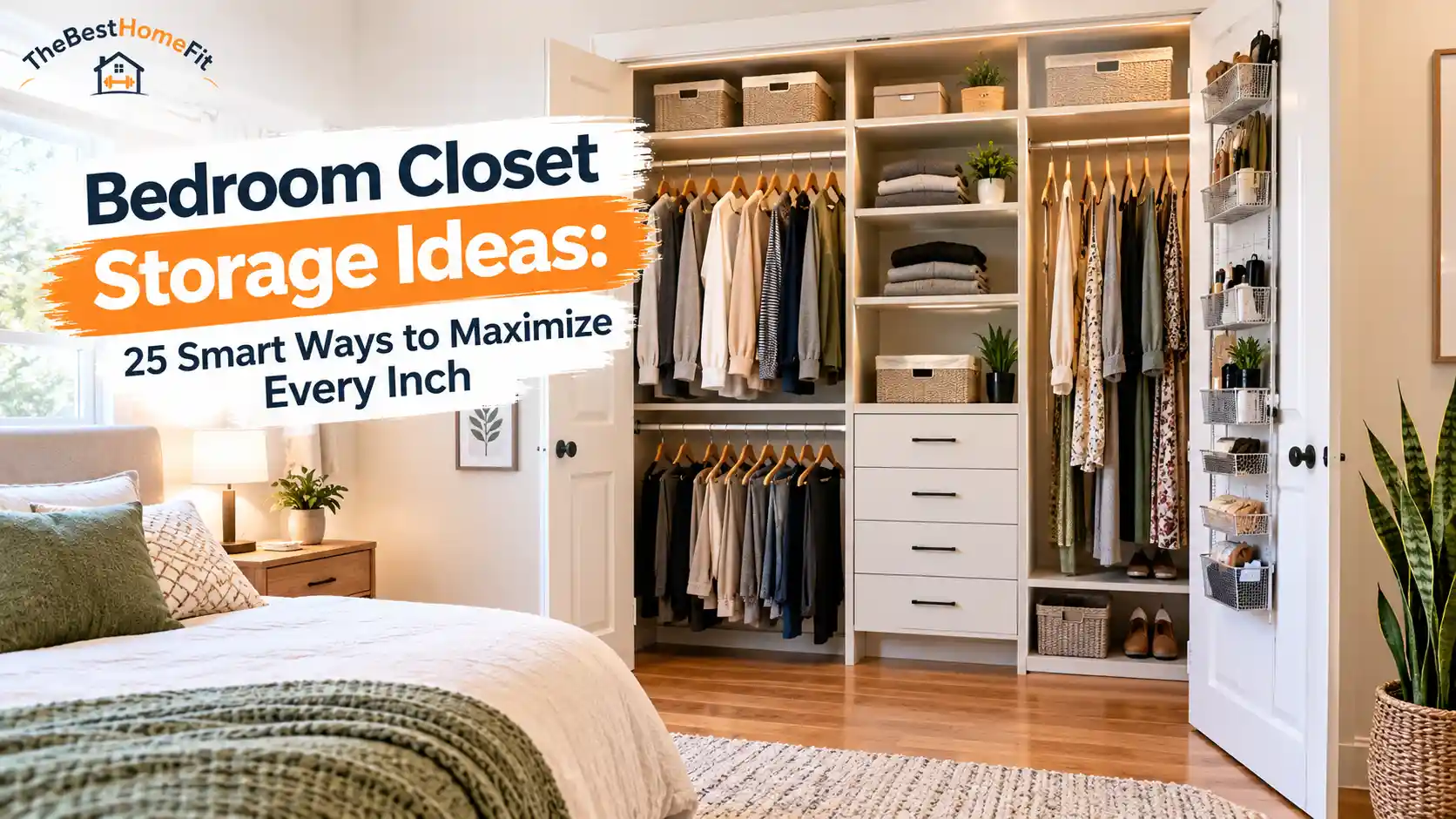
A bedroom closet can feel surprisingly small once clothes, shoes, bags, bedding, and accessories start competing for the same space. The good news is that you usually do not need a bigger closet. You need to make better use of the space you already have.
The best bedroom closet storage ideas focus on three things: using vertical space, keeping frequently used items easy to reach, and giving everything a clear home. That approach works whether you have a compact reach-in closet, a large walk-in wardrobe, or a rental where permanent changes are not possible.
Below, you will find practical ways to organize your closet, create more usable storage, and make it easier to keep everything tidy long after the initial cleanup.
Before You Organize Your Bedroom Closet
Buying baskets, shelves, and organizers before looking closely at your closet can leave you with more clutter instead of less. Start with the space itself.
Measure the Closet Before Buying Organizers
Measure the width, depth, and height of your closet. Check the distance between the hanging rod and the floor, the amount of room above the rod, and the depth of existing shelves.
Do not forget less obvious areas such as:
- The back of the closet door
- Empty side walls
- Space below shorter hanging clothes
- Corners
- The top shelf
- Space above existing shelving
A few measurements can prevent you from buying organizers that are too deep, too wide, or simply unnecessary.
Declutter Clothes You No Longer Wear
Storage works better when you are not trying to organize things you no longer need.
Take everything out section by section and separate items into clothes you wear, seasonal pieces, things that need repair, and items you are ready to donate or remove.
Be realistic. If a shirt has been sitting untouched for several years, giving it a new storage container probably will not make you wear it again.
Decide What Should Hang, Fold, or Go Into Storage
Not every garment needs a hanger.
Shirts, dresses, jackets, trousers, and wrinkle-prone clothing usually benefit from hanging. Sweaters, jeans, activewear, and casual clothes can often be folded.
Bulky seasonal pieces that will not be used for months can move to higher shelves, under-bed storage, or another low-priority storage area.
Divide the Closet Into Zones
A simple zoning system makes a closet much easier to maintain.
Keep everyday clothes within easy reach. Put shoes together, create one place for bags, reserve a shelf or drawer for accessories, and move occasional items higher up.
Once every category has a home, putting things away takes far less effort.
25 Bedroom Closet Storage Ideas That Actually Save Space
You do not need to use all 25 ideas. Choose the ones that solve the specific problems in your closet.
1. Install a Second Hanging Rod
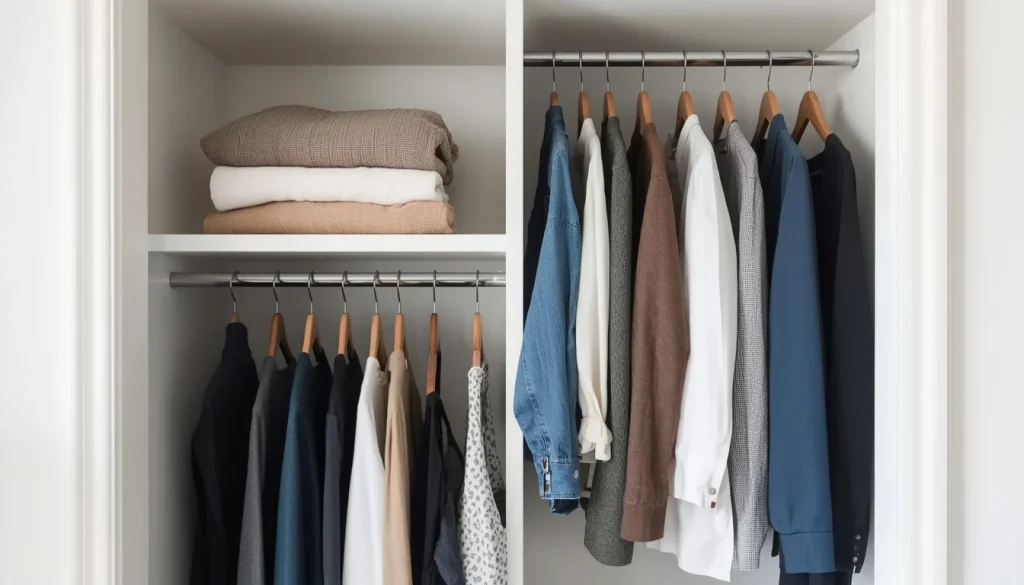
If most of your clothes are shirts, skirts, folded trousers, or other short garments, a single hanging rod may waste half the vertical space below them.
Adding a second rod can create two levels of hanging storage. Keep tops on the upper level and shorter bottoms underneath.
Leave one full-height section available for dresses, coats, and other long garments.
2. Use Floor-to-Ceiling Vertical Space
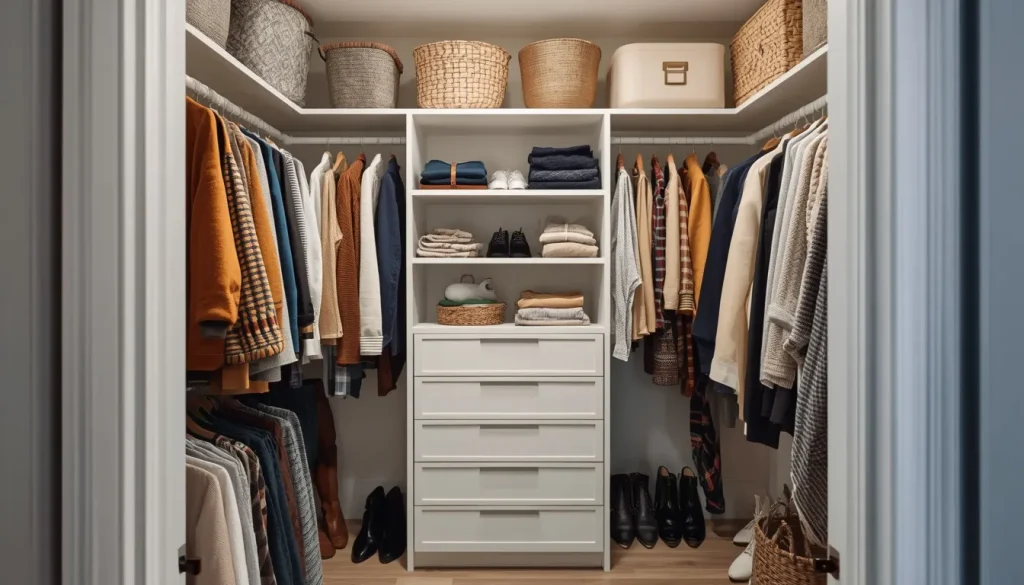
Look upward before deciding your closet is full.
Many closets have a large unused area between the top shelf and ceiling. Add another shelf or use sturdy containers for seasonal clothes, spare bedding, keepsakes, or rarely used accessories.
Items stored this high should be things you do not need every morning.
3. Add Adjustable Closet Shelves
Fixed shelves do not always match what you actually own. Adjustable shelving gives you more control.
You can create narrow spaces for folded shirts, taller sections for storage baskets, and lower shelves for shoes.
Adjustable shelves are particularly helpful when your storage needs change over time.
4. Add Shelves Above the Hanging Rod
If your closet has only a rod and nothing above it, you may be wasting valuable storage.
A shelf above the rod can hold bags, hats, folded sweaters, boxes, spare linens, or seasonal items.
Keep heavier belongings closer to a comfortable reaching height and lighter items higher up.
5. Use Under-Shelf Storage Baskets
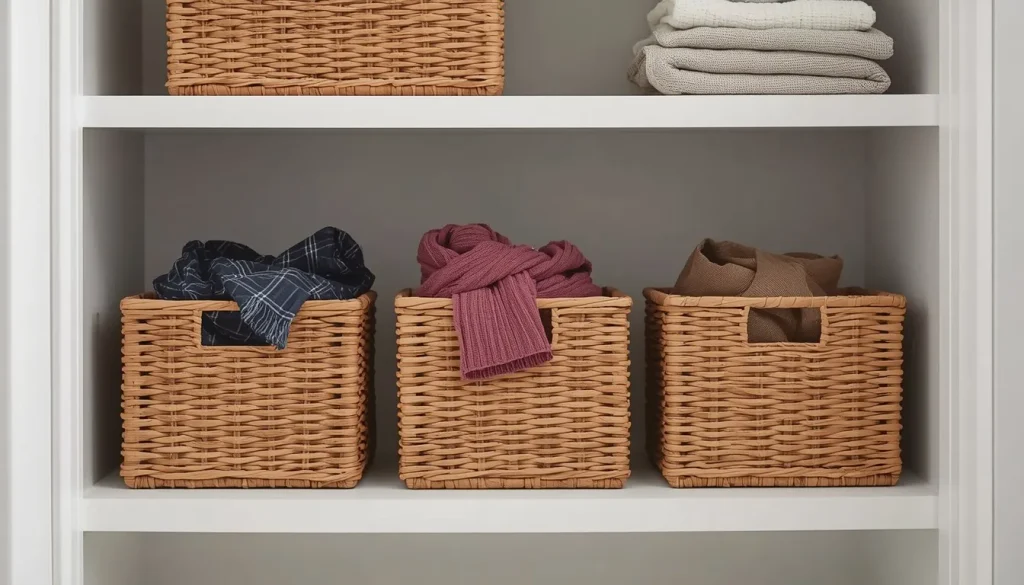
Sometimes the shelf is not the problem. The empty space directly underneath it is.
Under-shelf baskets attach or slide beneath an existing shelf and can create a useful spot for small clothes, scarves, accessories, or lightweight items.
This is an easy way to gain storage without installing another permanent shelf.
6. Install Shelf Dividers
Stacks of sweaters and shirts can quickly lean into each other and turn into one untidy pile.
Shelf dividers create clear boundaries between categories. You might keep jeans in one section, sweaters in another, and handbags in a third.
They are especially useful on long closet shelves that have no built-in compartments.
7. Add Stackable Storage Bins
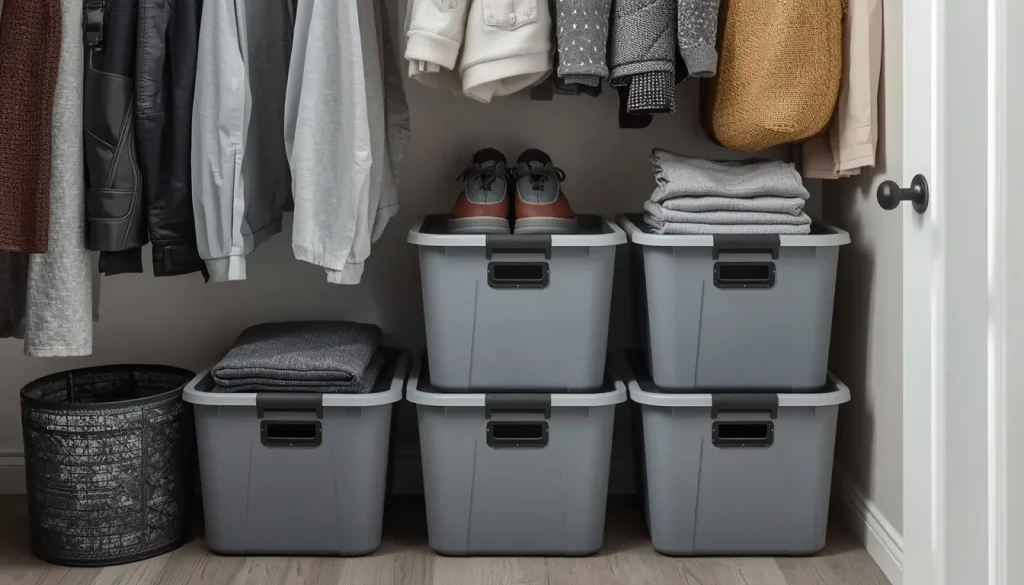
Stackable bins make better use of height than placing several containers side by side.
Use them for seasonal accessories, workout gear, occasional clothing, or other items that do not need to hang.
Avoid creating towers that are difficult to access. Storage is only useful when you can reach what is inside.
8. Use Clear Storage Containers
Clear containers are useful for items you tend to forget about.
You can see what is inside without opening every box, which works well for shoes, scarves, seasonal accessories, and occasional clothing.
If you prefer opaque containers for a cleaner appearance, add clear labels instead.
9. Add Drawers Inside the Closet
A small drawer unit can turn unused floor space beneath hanging clothes into practical storage.
Use drawers for underwear, socks, sleepwear, gym clothes, T-shirts, or accessories.
Before buying one, measure the hanging length of your clothes so the drawers do not crush garments above them.
10. Organize Drawers With Dividers
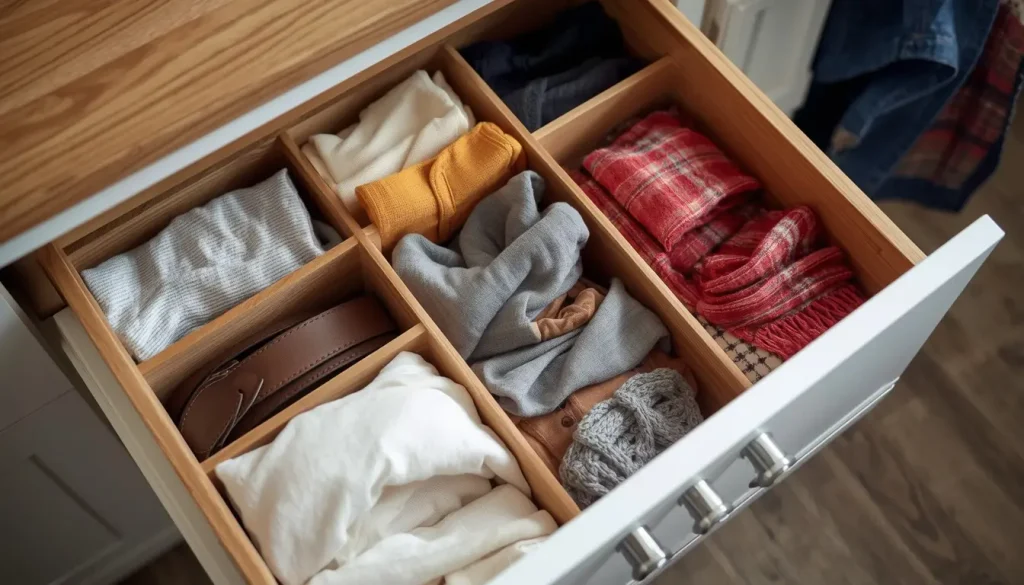
A drawer provides storage, but dividers make that storage easier to use.
Separate socks, underwear, belts, scarves, and other small items so they do not mix together.
Try not to create too many tiny categories. Your system should make putting laundry away easier, not turn it into another job.
11. Switch to Slim Space-Saving Hangers
Bulky hangers can consume more rail space than you realize.
Slim hangers allow clothes to sit closer together while still keeping individual garments separated. Using one consistent hanger style can also make the rail feel calmer and easier to scan.
You do not need to replace every hanger immediately. Change them gradually as needed.
12. Use Cascading Hangers
Cascading hangers allow several garments to hang vertically rather than taking up space across the entire rail.
They can work particularly well for lightweight shirts, skirts, trousers, or outfits you like to keep together.
Avoid overloading them, since a storage solution that becomes too heavy can be frustrating to use.
13. Add a Hanging Shelf Organizer
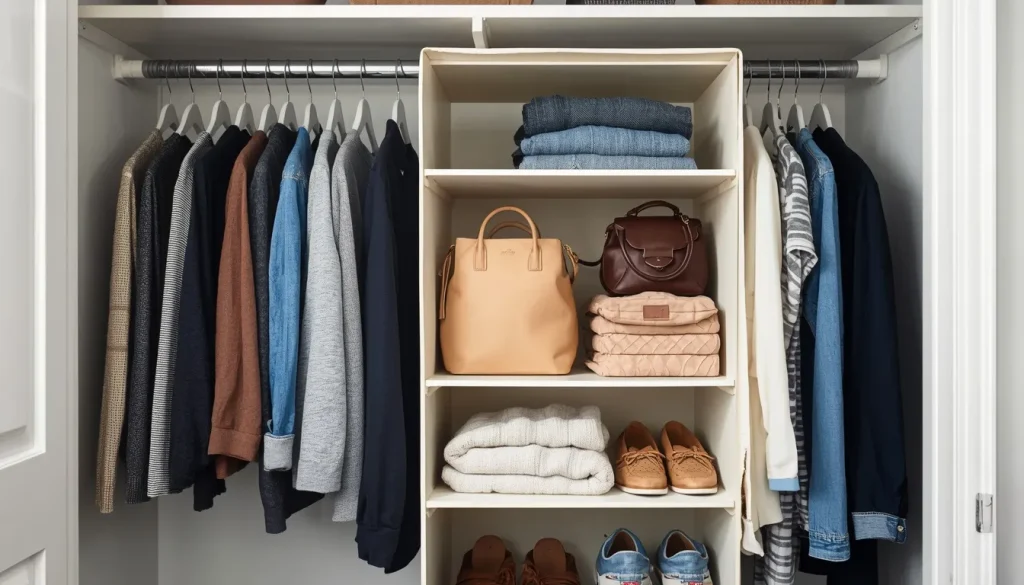
A fabric hanging organizer can turn part of your rail into shelves without construction.
Use the compartments for sweaters, jeans, bags, shoes, or folded casual clothes.
This can be especially helpful in a bedroom closet without drawers or built-in shelving.
14. Use the Back of the Closet Door
The door is one of the most frequently wasted storage areas.
An over-the-door organizer can hold shoes, accessories, hair tools, small bags, scarves, or everyday items.
For a cleaner look, use hooks or a narrow door-mounted rack instead of a full pocket organizer.
15. Add Hooks to Empty Side Walls
A few hooks can make awkward strips of wall surprisingly useful.
They work well for:
- Belts
- Scarves
- Hats
- Handbags
- Robes
- Necklaces
- Tomorrow’s outfit
Place hooks where hanging items will not interfere with drawers, doors, or clothing on the main rail.
16. Create Vertical Shoe Storage
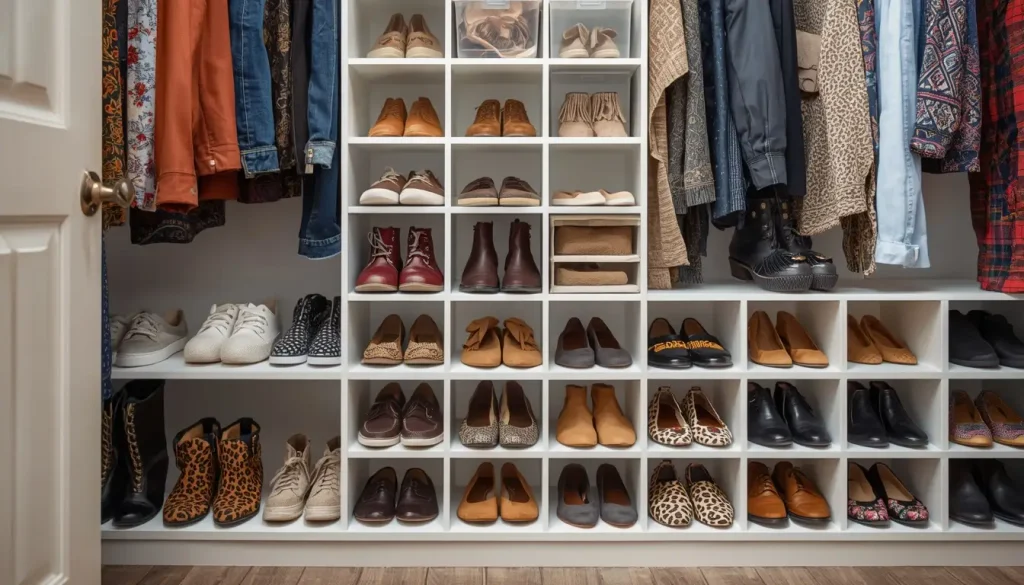
Shoes can quickly take over the closet floor.
Depending on your space, use a narrow shoe rack, stackable shoe shelves, hanging compartments, clear shoe boxes, or cubbies.
Keep frequently worn shoes near the bottom and occasional pairs higher up.
The goal is not to display every shoe. It is to stop pairs from becoming an untidy pile.
17. Store Handbags Upright
Instead of stacking bags on top of one another, store them upright when possible.
Shelf dividers, cubbies, or individual compartments help bags stay visible and easier to remove without disturbing the entire shelf.
For softer bags that lose their shape, lightly filling the interior can help them stand more neatly.
18. Create Storage for Belts, Ties, Scarves, and Jewelry
Small accessories often create big clutter because they do not have an obvious home.
Use a dedicated hanger, shallow drawer, hooks, small bins, or a wall-mounted organizer.
Keeping accessories visible can also make them easier to use instead of forgetting about them in the back of a drawer.
19. Use Baskets for Loose Items
Baskets are helpful for items that do not need precise organization.
One could hold hats, another casual accessories, and another items waiting to be repaired or returned.
Choose baskets that fit the shelf rather than buying large containers and trying to make the closet fit around them.
20. Add a Slim Laundry Hamper
Dirty clothes often end up on the floor when the hamper is somewhere inconvenient.
A narrow hamper inside or beside the closet can make laundry easier to manage without using much space.
If you sort laundry before washing, consider a divided hamper only if your closet has enough room.
21. Store Seasonal Clothes Separately
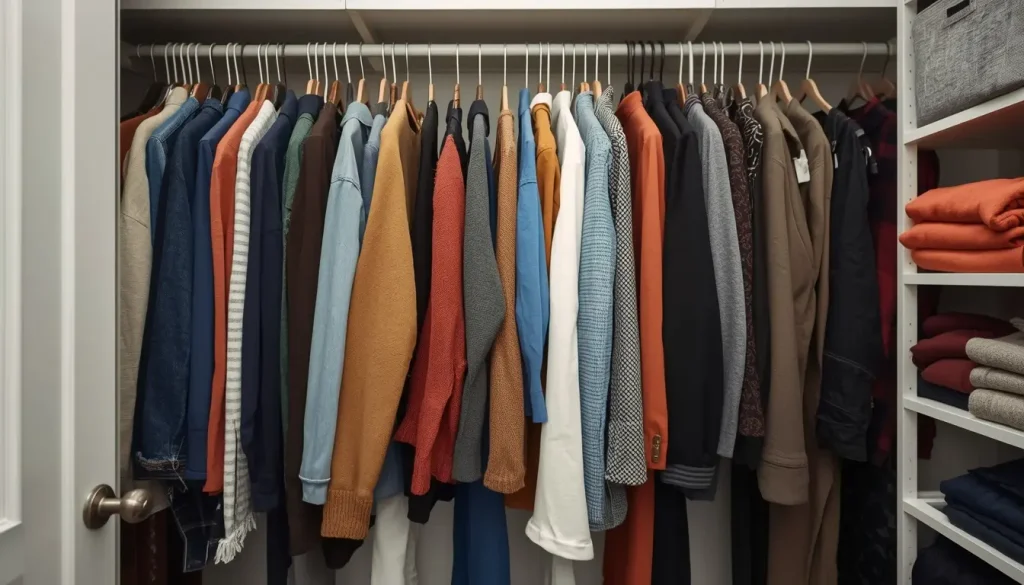
Your everyday closet does not need to hold every piece of clothing all year.
Move heavy winter items away during warmer months and do the same with rarely used summer clothes during colder seasons.
Use labeled boxes, storage bags, high shelves, or under-bed containers. This keeps the main part of the closet focused on what you actually wear now.
22. Use High Shelves for Luggage and Bedding
Suitcases and spare bedding are bulky but usually not needed every day.
The upper part of a closet is a sensible place for them if the shelf can safely support the weight.
You can also store smaller travel bags inside larger suitcases rather than giving each bag a separate footprint.
23. Add a Pull-Down Rod to High Closet Space
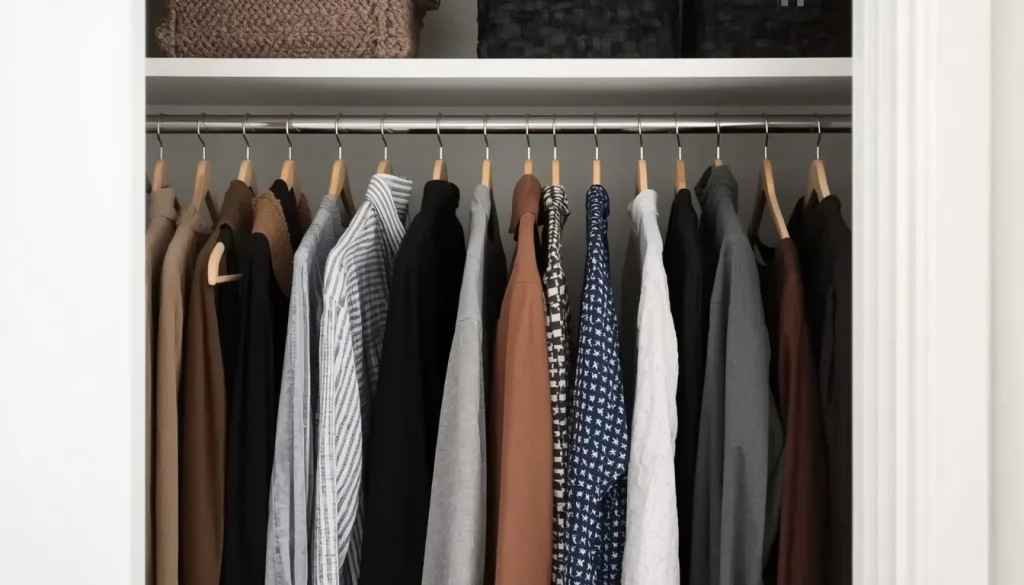
A tall closet may have useful hanging space that is simply too difficult to reach.
A pull-down hanging rail allows clothing to be stored higher while still remaining accessible.
This solution is more involved than adding bins or hooks, but it can be useful in tall wardrobes where vertical space would otherwise remain empty.
24. Use Under-Bed Storage for Closet Overflow
Not everything needs to stay inside the closet.
Under-bed containers are useful for off-season clothes, extra linens, shoes, and occasional items.
Keep everyday belongings in the closet and use under-bed space for things you need less frequently. This prevents the main closet from becoming overloaded.
25. Add Closet Lighting
Good storage is less useful when you cannot see what you own.
A dark closet can hide items in corners and on deep shelves. Simple battery-powered or rechargeable lighting can make clothes and accessories easier to find.
Place lights where they illuminate shelves and hanging areas without getting blocked by clothing.
Small Bedroom Closet Storage Ideas
Small closets require priorities. Trying to fit every possible organizer inside can make the space feel even tighter.
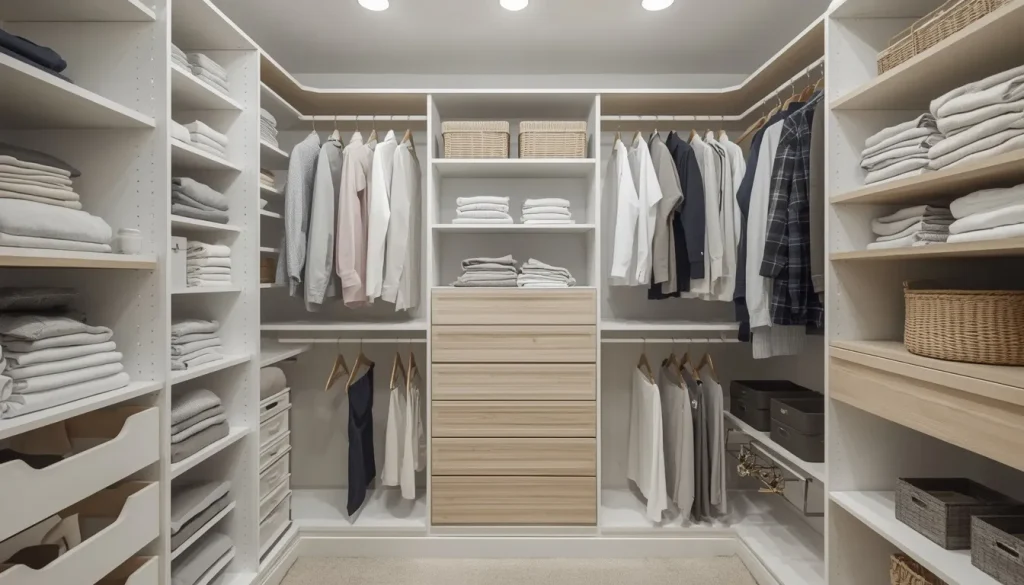
Double Your Hanging Space
If you own many shirts, blouses, skirts, or folded trousers, double hanging rods can make a noticeable difference.
Keep long clothing in a separate section instead of allowing a few dresses to determine the height of the entire rail.
Keep the Closet Floor Working
Do not automatically treat the closet floor as empty space.
A compact shoe rack, low drawers, baskets, or a small storage unit can fit below shorter hanging garments.
At the same time, avoid covering every inch. You still need enough room to access and clean the closet comfortably.
Use Narrow Drawers and Vertical Organizers
In a small closet, tall and narrow usually works better than short and wide.
Look for organizers that use height without blocking clothes or preventing the door from closing.
Use Door and Side-Wall Storage
When shelf and rail space are limited, doors and walls become valuable.
Use these areas for lighter items such as belts, scarves, hats, jewelry, bags, or shoes.
Keep Daily Clothes at Eye Level
The easiest storage areas should hold the things you use most.
If you wear something several times a week, do not hide it in a box on the highest shelf. Reserve hard-to-reach areas for seasonal and occasional items.
Move Rarely Used Items Out of Prime Storage
A small closet cannot treat every possession as equally important.
Formalwear, seasonal clothes, extra bedding, luggage, and sentimental items can often move to higher shelves or another storage area.
This gives everyday clothes room to breathe.
Bedroom Closet Storage Ideas for Lots of Clothes
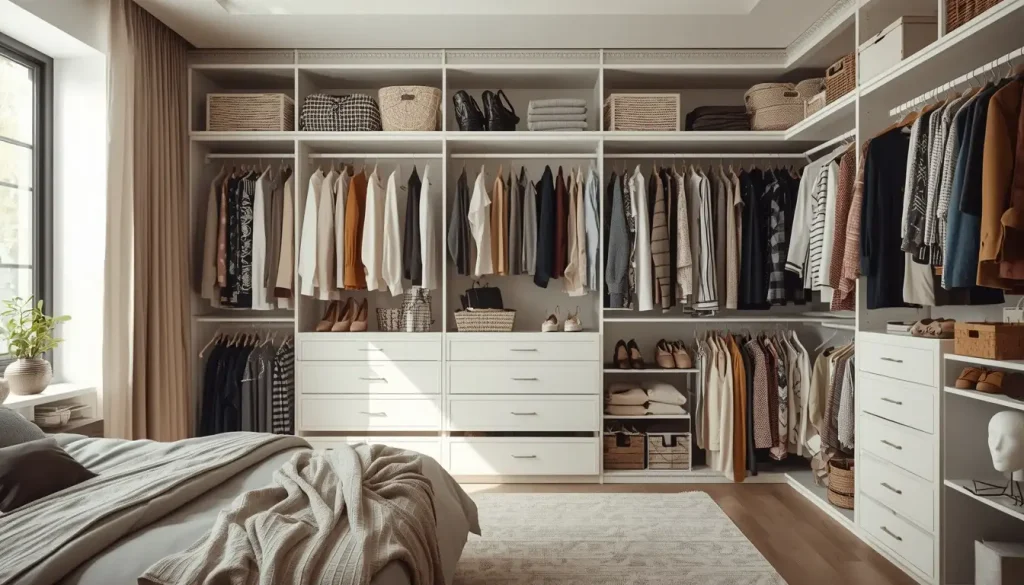
Having a lot of clothes does not necessarily mean you need a huge closet. It does mean your organization system needs to be deliberate.
Start by grouping similar garments and deciding which ones deserve the easiest access.
Double short-hanging sections wherever possible. Fold sweaters, jeans, and casual items that do not need to hang. Use shelf dividers so stacks stay under control.
Seasonal rotation can also make a big difference. Keeping summer and winter wardrobes in the same prime storage space all year wastes valuable room.
If the closet still feels crowded after organizing, look at the quantity rather than the storage system. There is a point where adding another organizer simply creates more places to keep things you rarely use.
Storage Ideas for Different Bedroom Closet Types
Different closets have different problems. The best solution for a walk-in closet may be unnecessary in a narrow reach-in wardrobe.
Reach-In Bedroom Closet Storage Ideas
Reach-in closets benefit from making the front view as useful as possible.
Try double rods, upper shelves, a narrow drawer unit, door storage, and clearly divided sections. Avoid placing frequently used items deep in corners where they are difficult to see.
Walk-In Closet Storage Ideas
A walk-in closet offers more room, but that does not automatically make it organized.
Create zones for hanging clothes, folded items, shoes, bags, accessories, and seasonal storage.
Keep enough open space to move comfortably. Filling every wall with deep cabinets can make a walk-in closet feel smaller than it needs to.
Deep Closet Storage Ideas
Deep closets often look spacious but can be surprisingly difficult to organize because items disappear behind one another.
Use handled bins or pull-out containers so you can reach the back without emptying the entire shelf.
Place less frequently used belongings behind or above everyday items. Avoid loose piles on deep shelves.
Narrow and Awkward Closet Storage Ideas
Corners, sloped ceilings, narrow walls, and unusual closet dimensions call for flexible storage.
Adjustable shelves, small hooks, tension rods, shallow baskets, and modular pieces are often more practical than forcing a standard closet system into the space.
Work with the shape of the closet rather than against it.
Master Bedroom Closet Storage Ideas
A larger bedroom closet gives you an opportunity to separate categories more clearly.
Consider dedicated sections for each person, drawers for smaller garments, shoe shelving, bag storage, and a defined area for long clothing.
The extra room should make your routine simpler, not encourage you to keep more clutter.
Shared Closet Storage Ideas for Couples
Divide the closet based on how much space each person actually needs rather than automatically splitting everything in half.
One person may require more hanging room while the other needs more shelves or drawers.
Shared storage works best when the boundaries are obvious and both people can put things away without moving the other’s belongings.
How to Store Different Items in a Bedroom Closet
A closet becomes easier to maintain when storage matches the item.
Shirts and Tops
Hang wrinkle-prone shirts and fold casual T-shirts. If hanging space is limited, use a double rod or slim hangers.
Pants and Jeans
Jeans can be folded on shelves or stored in drawers. Dress trousers can be hung using trouser hangers or folded over a hanger bar.
Dresses and Long Clothes
Reserve one full-height section for dresses, coats, jumpsuits, and other long garments.
Avoid placing drawers or shoe racks directly beneath them if the clothes will bunch up.
Sweaters
Fold sweaters rather than forcing too many onto hangers. Shelf dividers can keep stacks from collapsing.
Keep your most frequently worn pieces at an easy-to-reach height.
Shoes
Store everyday pairs low and easy to reach. Use vertical racks, shelves, cubbies, or boxes for the rest.
Keeping pairs together is more important than creating a showroom-style display.
Handbags
Store bags upright on shelves or in cubbies. Keep everyday bags closer to eye level and special-occasion pieces higher up.
Jewelry, Belts, Ties, and Scarves
Use hooks, dedicated hangers, drawer compartments, or shallow containers.
The best system is one that keeps small accessories from becoming tangled or forgotten.
Seasonal Clothing
Store out-of-season clothes in clearly labeled containers and move them away from prime closet space.
When the weather changes, rotate the wardrobe instead of trying to keep everything equally accessible.
Extra Bedding
Fold spare sheets and bedding together by set if possible. Upper shelves are usually a good home for items that are used occasionally.
Avoid allowing linens to take over the shelves you need for everyday clothing.
Suitcases and Travel Bags
Use high shelves for luggage if it can be stored safely. Nest smaller travel bags inside larger suitcases to save room.
DIY Bedroom Closet Storage Ideas
You do not need a professionally installed system to make a closet more functional.
DIY Extra Hanging Rod
A simple second rod can turn unused space beneath short clothes into another hanging zone.
Measure carefully so the lower clothes do not drag on the floor.
DIY Closet Shelves
Basic shelves can transform an empty wall or the space above a rod.
Build around the items you plan to store rather than choosing shelf spacing at random.
DIY Shoe Storage
Simple cubbies, small shelves, or repurposed shelving can keep shoes off the floor.
Choose a design that allows you to see and remove pairs easily.
DIY Crate or Cube Organizer
Stackable cubes or secure crates can create flexible compartments for folded clothes, shoes, bags, or baskets.
Make sure stacked units are stable and appropriately secured where necessary.
DIY Closet Hooks and Accessory Storage
A small rail, hook board, or row of removable hooks can create a dedicated accessories zone without occupying shelf space.
This is one of the easiest closet upgrades to customize around what you own.
Budget-Friendly Bedroom Closet Storage Ideas
You do not need to rebuild the closet to improve it.
Start with what you already have. Repurpose baskets, small boxes, hooks, and unused containers before buying new organizers.
Affordable additions such as shelf risers, tension rods, dividers, and slim hangers can solve specific problems without changing the entire closet.
Most importantly, improve one zone at a time.
If shoes are the biggest problem, fix the shoe storage first. If clothes are packed too tightly on the rail, focus on hangers and hanging space.
A few targeted changes are often more useful than buying a complete set of organizers.
Renter-Friendly Closet Storage Ideas Without Drilling
Renters can gain more storage without making permanent changes.
Tension rods can add temporary hanging space. Over-the-door organizers make use of the door, while removable hooks can hold accessories and lightweight bags.
Freestanding drawer units, stackable cubes, shoe racks, and hanging shelf organizers can also be removed easily when you move.
Before using adhesives, check that they are appropriate for the surface and follow removal instructions carefully.
Modular vs. Custom Closet Storage Systems
Sometimes smaller organizers are enough. In other cases, a complete closet system makes more sense.
When a Modular Closet System Makes Sense
Modular systems are useful when you want more structure but still need flexibility.
Look for systems with adjustable shelves, movable rods, drawers, and components that can be changed later.
They can work well when your wardrobe or storage needs are likely to change.
When Custom Built-In Storage May Be Worth It
Custom storage may make sense when you own your home, plan to stay long term, and have an unusual closet shape or specific storage requirements.
A custom layout can make better use of corners, ceiling height, narrow sections, and other areas standard organizers may not fit.
However, do not assume custom automatically means better. A simple layout designed around your actual wardrobe is often more useful than a complicated system with features you never use.
Features That Matter Most
Whether you choose modular or custom storage, prioritize function:
- Adjustable shelves
- Enough hanging space
- Dedicated long-hanging space
- Drawers for smaller clothes
- Accessible shoe storage
- Accessory storage
- Easy-to-reach everyday zones
- Flexibility for future changes
How to Organize Deep Bedroom Closet Shelves
Deep shelves need a different strategy from shallow shelves.
Avoid placing lots of small loose items at the back. You will eventually forget they are there.
Instead, use containers with handles that can be pulled forward. Keep everyday items near the front and occasional belongings farther back.
Labels are helpful when you have several similar boxes.
You can also divide a deep shelf into clear categories. For example, keep sweaters at the front, seasonal accessories in a labeled container behind them, and rarely used items on the highest shelf.
The goal is to make the depth useful without turning it into hidden storage you never access.
How to Keep Your Bedroom Closet Organized Long Term
A beautifully organized closet will not stay that way if the system is difficult to maintain.
Give Every Item a Permanent Home
When everything has a place, you do not need to decide where it belongs every time you put it away.
Keep Frequently Used Items Within Reach
Daily clothes, shoes, and accessories should be easy to grab and return.
Hard-to-reach storage should be reserved for less frequently used belongings.
Rotate Seasonal Clothes
Review your closet when seasons change. Move unused clothing out of prime storage and bring current items forward.
Follow a One-In, One-Out Rule
If your closet is already near capacity, consider removing an older or unused item when you bring in something new.
This keeps your collection from slowly expanding beyond the available space.
Reset the Closet Regularly
You do not need to reorganize everything every weekend.
A quick monthly reset is usually enough to return shoes, bags, folded clothes, and accessories to their proper zones before small messes become big ones.
Bedroom Closet Storage Mistakes to Avoid
Even good organizers cannot compensate for a storage system that does not fit your needs.
Avoid these common mistakes:
- Buying organizers before measuring the closet
- Keeping clothes you never wear in prime storage areas
- Ignoring unused vertical space
- Using bulky hangers in an already crowded closet
- Stacking items so high that they are difficult to access
- Filling shelves with containers that are too large
- Ignoring the back of the door and side walls
- Leaving useful space below short hanging clothes empty
- Storing everyday items on hard-to-reach shelves
- Creating too many complicated categories
- Allowing shoes to spread across the closet floor
- Adding more storage products instead of addressing excess clutter
The simplest storage system is often the easiest one to maintain.
Frequently Asked Questions About Bedroom Closet Storage
How can I maximize storage in a bedroom closet?
Use the full height of the closet, add a second hanging rod where appropriate, use shelves above the rail, store shoes vertically, and take advantage of the door and side walls. Keep everyday belongings accessible and move seasonal items to less convenient storage areas.
How do I organize a small bedroom closet with lots of clothes?
Start by removing clothes you no longer wear. Then separate long and short garments, double the hanging space for shorter clothes, fold items that do not need hangers, use slim hangers, and rotate seasonal clothing out of the main closet.
How can I add more closet storage without remodeling?
Use hanging shelves, freestanding drawers, stackable bins, over-the-door organizers, tension rods, hooks, shelf dividers, and shoe racks. These can add useful storage without changing the closet structure.
What should I store on the top shelf of a bedroom closet?
The top shelf is best for items you do not need every day, such as seasonal clothes, spare bedding, luggage, keepsakes, and occasional accessories. Use labeled containers so you know what is stored above eye level.
How do I organize a bedroom closet without drawers?
Use hanging shelf organizers, baskets, bins, stackable cubes, or a small freestanding drawer unit. Folded clothes can also be stored on shelves with dividers to keep stacks separated.
How do I organize a deep bedroom closet?
Keep everyday items near the front and use pull-out bins or handled baskets for items stored farther back. Avoid loose piles in deep areas because they make belongings difficult to see and reach.
What is the cheapest way to add closet storage?
Decluttering is free and often creates the most immediate space. After that, inexpensive options include hooks, tension rods, repurposed baskets, shelf risers, slim hangers, and simple shoe organizers.
How can renters add closet storage without drilling?
Use removable hooks, tension rods, hanging organizers, over-the-door storage, freestanding drawers, and stackable shelving. Choose products that can be removed without permanently altering the closet.
Is it better to hang or fold clothes to save space?
It depends on the garment and the layout of your closet. Fold bulky sweaters, jeans, activewear, and casual clothing when shelf or drawer space is available. Hang wrinkle-prone shirts, dresses, jackets, and trousers. Using both methods usually makes better use of the available space.
How do I store seasonal clothes in a small closet?
Remove off-season items from the most accessible part of the closet. Store them in labeled containers on high shelves, under the bed, or in another suitable storage area. Rotate them back into the closet when the season changes.
Final Thoughts
The most useful bedroom closet storage ideas are not necessarily the ones that add the most containers. They are the ones that make your closet easier to use every day.
Start by removing what you no longer need. Then look for wasted space above the hanging rod, below shorter clothes, behind the door, on side walls, and on deep shelves.
A second rod may solve a crowded hanging area. A few dividers may fix messy shelves. Better shoe storage may free the entire floor. For a small bedroom closet, even one thoughtful change can make a noticeable difference.
Build the storage system around your clothes and your routine rather than trying to copy a picture-perfect closet. When frequently used items are easy to see, easy to reach, and easy to put away, staying organized becomes much simpler.

“A comfortable home and a healthy lifestyle go hand in hand.”
Hi, I’m Ethan Carter, the founder and lead editor of TheBestHomeFit. I’m passionate about helping people create beautiful, functional living spaces while building healthier lifestyles at home. Over the years, I’ve spent countless hours researching home decor trends, testing home gym equipment, and reviewing products to help readers make smarter buying decisions.
Through TheBestHomeFit, I share practical home improvement ideas, honest product reviews, buying guides, and fitness tips designed for everyday homeowners. My goal is to make it easier for you to create a home that looks great, feels comfortable, and supports your well-being.
When I’m not researching the latest products or writing in-depth guides, you’ll usually find me redesigning a room, trying new home workout routines, or enjoying quality time with my family.