

Choosing the right colours for a bedroom can completely change how the room looks and feels. A good palette can make a small bedroom appear brighter, give a large room a cosier atmosphere, or turn a plain space into a calm and stylish retreat.
However, finding practical ideas for colour schemes for bedrooms is not always easy. A colour may look beautiful on a paint sample but feel very different once it is used across an entire wall. Natural light, furniture, flooring, bedding, curtains, and even the colour of the ceiling can affect the final result.
This guide covers calming, neutral, modern, warm, bold, and two-colour bedroom combinations. You will also learn how to choose colours based on room size, natural light, furniture, flooring, and interior style.
How to Choose the Right Bedroom Colour Scheme
Before selecting paint, bedding, or accessories, decide what you want the bedroom to feel like. The best bedroom colour scheme is not simply the most fashionable palette. It should suit the room, your furniture, and the atmosphere you want to create.
Choose the Mood You Want
Start by deciding how you want to feel when you enter the bedroom.
For a calm and relaxing room, consider:
- Soft blue
- Sage green
- Warm white
- Lavender
- Blue-grey
For a warm and cosy bedroom, consider:
- Terracotta
- Caramel
- Chocolate brown
- Rust
- Deep beige
For a fresh and airy room, consider:
- Crisp white
- Pale blue
- Soft cream
- Light grey
- Muted green
For a dramatic and luxurious bedroom, consider:
- Navy blue
- Charcoal
- Forest green
- Burgundy
- Deep brown
For a cheerful and energetic room, consider:
- Mustard yellow
- Coral
- Peach
- Teal
- Blush pink
Your preferred mood should guide every other colour decision.
Consider the Size of the Bedroom
Light colours can help a small bedroom feel more open, especially when the walls, ceiling, curtains, and bedding have a similar level of brightness.

Useful colours for small bedrooms include:
- Warm white
- Soft beige
- Pale sage
- Light blue
- Misty grey
- Cream
Dark colours can also work in small bedrooms. A deep navy, green, or charcoal palette may create a comfortable cocooning effect. The key is to use enough lighting and avoid filling the room with too many contrasting objects.
Large bedrooms can handle stronger contrasts, darker feature walls, oversized patterns, and multiple shades. However, a large room may feel cold if the palette is too pale and the furniture is widely spaced.
Check the Natural and Artificial Light
Paint colours change throughout the day.
A bedroom with strong natural light may make warm colours appear more intense. A room with limited daylight may make cool grey or blue feel darker and less welcoming.
Also consider the light bulbs used at night. Warm bulbs can make beige, cream, brown, and terracotta feel richer. Cool bulbs may make blue, grey, and white appear sharper.
Always test paint samples during the morning, afternoon, and evening before making a final decision.
Identify Existing Fixed Colours
Look at the colours that are difficult or expensive to replace, including:
- Flooring
- Carpet
- Built-in wardrobes
- Bed frame
- Large furniture
- Window frames
- Fireplace materials
- Permanent wall features
Your new colour scheme should work with these existing elements rather than compete with them.
Understand Warm and Cool Undertones
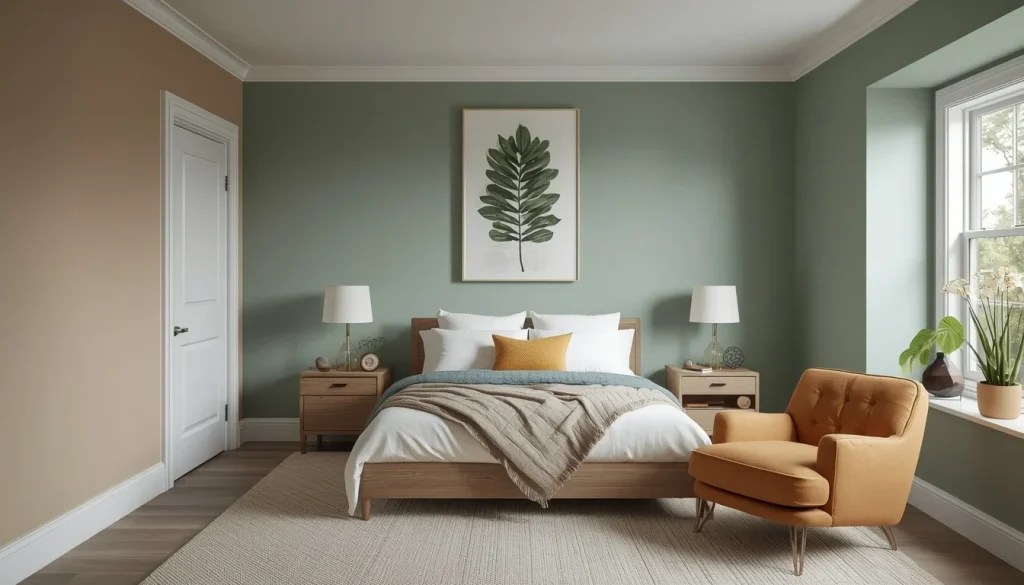
Two colours can both be described as beige, grey, or white but still look completely different.
Warm undertones may include:
- Yellow
- Red
- Peach
- Brown
- Gold
Cool undertones may include:
- Blue
- Green
- Violet
- Silver
A warm cream wall may clash with a very cool grey carpet. A blue-grey wall may feel disconnected from orange-toned wooden furniture. Matching undertones helps the bedroom feel more balanced.
Test Large Samples Before Painting
Small paint chips do not show how a colour will look across a large wall.
Paint a large sample board or apply the colour to a section of the wall. Place it near the bed, window, flooring, and furniture. View it at different times of day and under artificial light.
This simple step can prevent an expensive decorating mistake.
Types of Bedroom Colour Schemes Explained
Understanding basic colour relationships makes it easier to create a balanced bedroom.
Monochromatic Colour Scheme
A monochromatic palette uses several shades of the same colour.
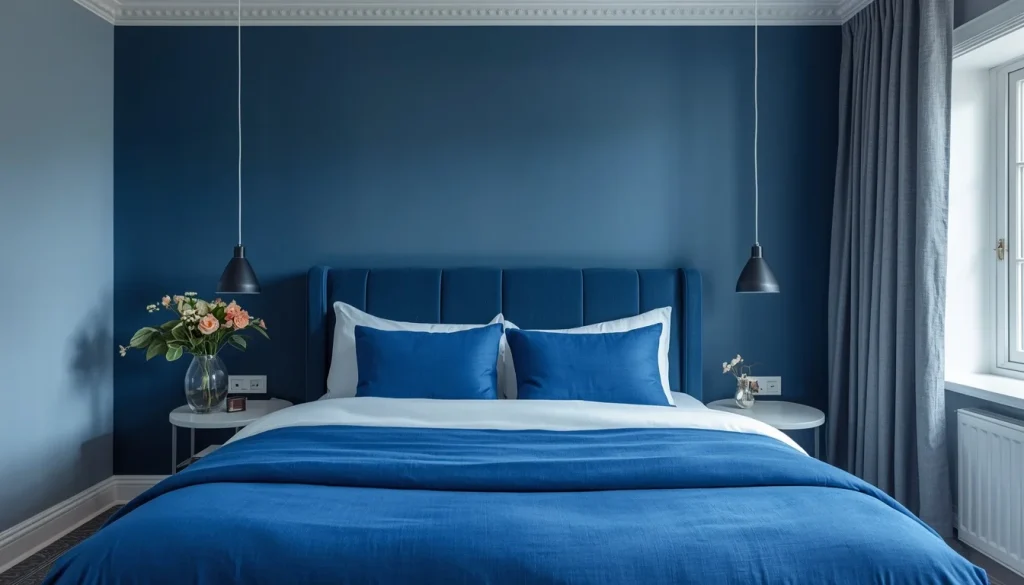
For example:
- Pale blue walls
- Medium blue bedding
- Navy cushions
- Blue-grey curtains
This approach feels coordinated and is easy to style. It is especially useful in small bedrooms because it reduces strong visual breaks.
Analogous Colour Scheme
An analogous palette uses colours that sit next to each other on the colour wheel.

Examples include:
- Blue, blue-green, and green
- Red, terracotta, and orange
- Lavender, blue, and violet
These combinations usually feel harmonious because the colours are closely related.
Complementary Colour Scheme
Complementary colours sit opposite each other on the colour wheel.
Examples include:
- Blue and orange
- Green and pink
- Purple and yellow
These combinations create strong contrast. In a bedroom, it is usually better to use one colour as the main shade and the other as a smaller accent.
Tonal Colour Scheme
A tonal palette combines colours with similar depth, softness, or undertones.
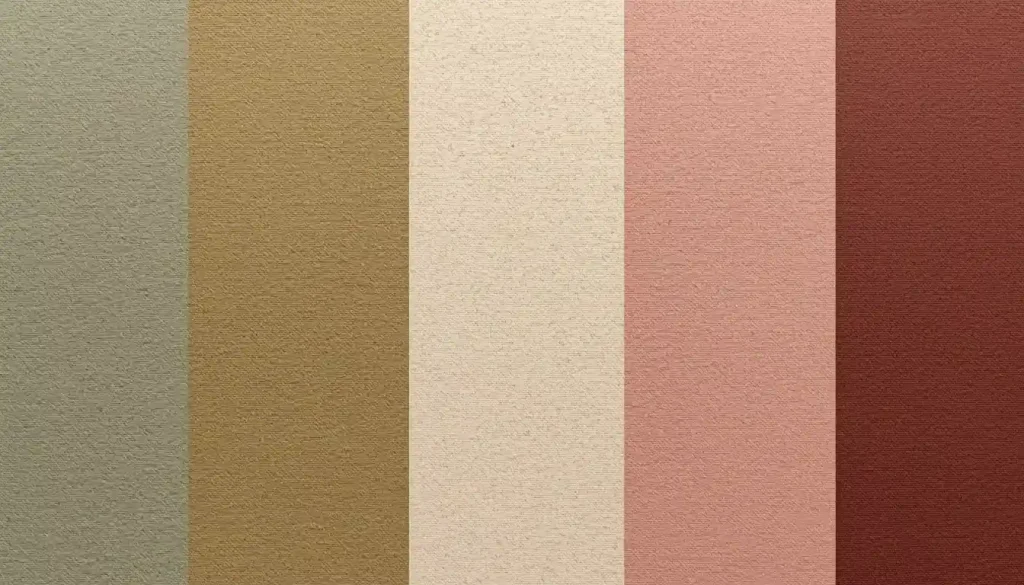
Examples include:
- Sage, olive, and muted beige
- Cream, taupe, and warm grey
- Dusty pink, mauve, and soft brown
Tonal schemes often feel elegant and calm.
Neutral-Plus-Accent Scheme
This is one of the easiest bedroom colour schemes to create.
Use a neutral base such as white, beige, grey, or cream, then add one stronger accent colour.
For example:
- Warm white walls
- Beige furniture
- Navy bedding
- Brass accessories
The neutral foundation keeps the room balanced while the accent adds personality.
Warm Versus Cool Colour Schemes
Warm colours include red, orange, yellow, terracotta, brown, and warm beige. They can make a bedroom feel welcoming and cosy.
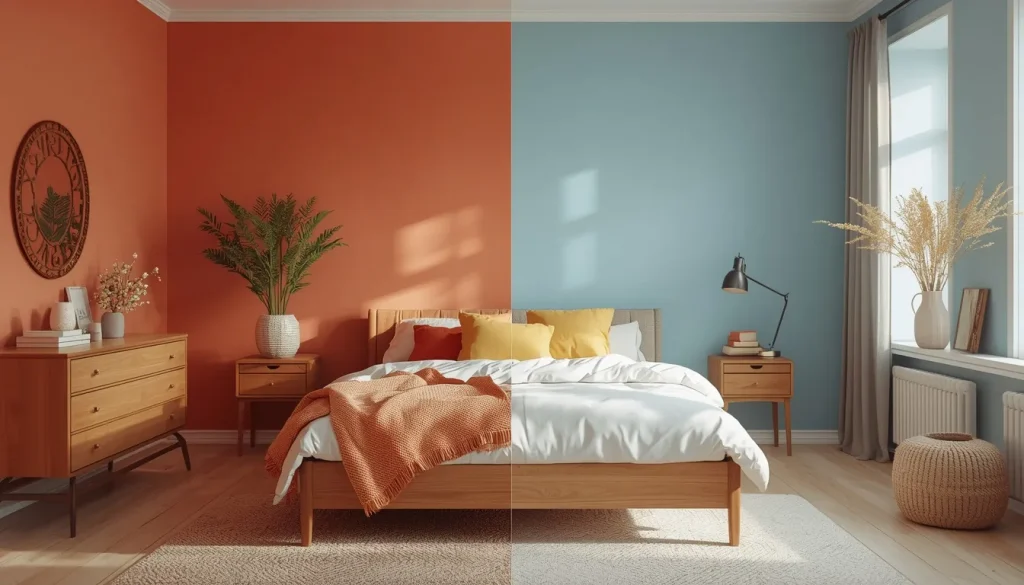
Cool colours include blue, green, violet, blue-grey, and cool white. They often create a fresh, quiet, and spacious feeling.
You can also mix warm and cool shades. For example, pale blue walls can be paired with warm wood furniture to prevent the room from feeling too cold.
How to Use the 60-30-10 Colour Rule
The 60-30-10 rule is a simple way to divide colour in a bedroom.
60% Dominant Colour
The main colour usually appears on:
- Walls
- Large rugs
- Major furniture
- Large areas of bedding
30% Secondary Colour
The supporting colour may appear on:
- Curtains
- Headboard
- Bed linen
- Accent furniture
- Upholstery
10% Accent Colour
The smallest colour portion may appear on:
- Cushions
- Throws
- Lamps
- Artwork
- Decorative objects
For example, a bedroom could use 60% warm white, 30% sage green, and 10% black or brass.
The rule does not need to be mathematically exact. Its purpose is to stop every colour from competing for equal attention.
Calming Bedroom Colour Scheme Ideas
1. Soft Blue, White, and Natural Wood
Soft blue walls create a fresh and peaceful backdrop. Pair them with white bedding and light wood furniture for a balanced, uncluttered look.
Best for:
- Small bedrooms
- Coastal interiors
- Guest rooms
- Bright rooms
Use warm white rather than a very cold white if you want the space to feel softer.
2. Sage Green, Cream, and Warm Beige
Sage green works beautifully with cream bedding, beige curtains, and natural materials.
Best for:
- Relaxing primary bedrooms
- Modern farmhouse interiors
- Japandi rooms
- Bedrooms with wooden furniture
Add brass, black, or dark brown in small amounts for contrast.
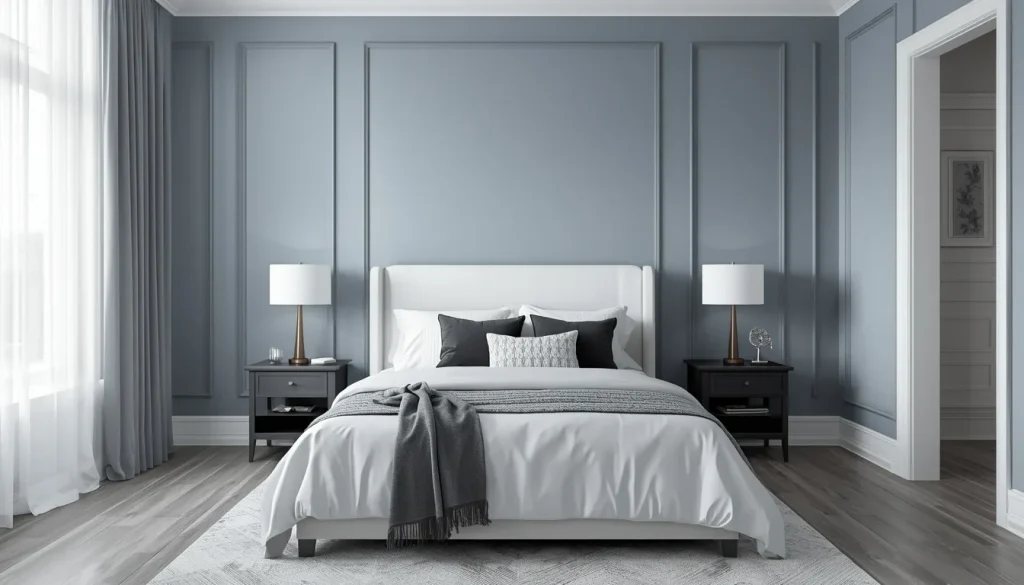
3. Blue-Grey, White, and Charcoal
Blue-grey offers more depth than pale blue while still feeling calm. White trim keeps the room fresh, while charcoal cushions or lamps add definition.
Best for:
- Contemporary bedrooms
- Rooms with grey flooring
- Minimalist interiors
Avoid combining too many different grey undertones.
4. Lavender, Warm White, and Soft Grey
Muted lavender can feel sophisticated rather than overly sweet when combined with warm white and light grey.
Best for:
- Guest bedrooms
- Soft modern interiors
- Bedrooms with limited space
Use lavender as a wall colour or through bedding and curtains.
5. Seafoam Green, Pale Blue, and Cream
This light combination feels fresh and gentle. It works especially well in bedrooms with plenty of daylight.
Best for:
- Coastal rooms
- Small bedrooms
- Airy interiors
Add woven baskets, linen curtains, and pale wood to create a natural finish.
Neutral Bedroom Colour Scheme Ideas
6. Warm White, Beige, and Light Wood
This simple scheme creates a bright and timeless bedroom.

Use:
- Warm white walls
- Beige bedding
- Light oak furniture
- Cream curtains
The room will need texture to avoid looking flat. Add linen, wool, woven materials, and layered bedding.
7. Cream, Taupe, and Chocolate Brown
Cream provides lightness, taupe adds depth, and chocolate brown brings warmth.
Best for:
- Cosy bedrooms
- Traditional interiors
- Rooms with dark wood furniture
Use chocolate brown in smaller amounts through the headboard, cushions, or bedside tables.
8. Greige, White, and Black
Greige combines the softness of beige with the modern appearance of grey.
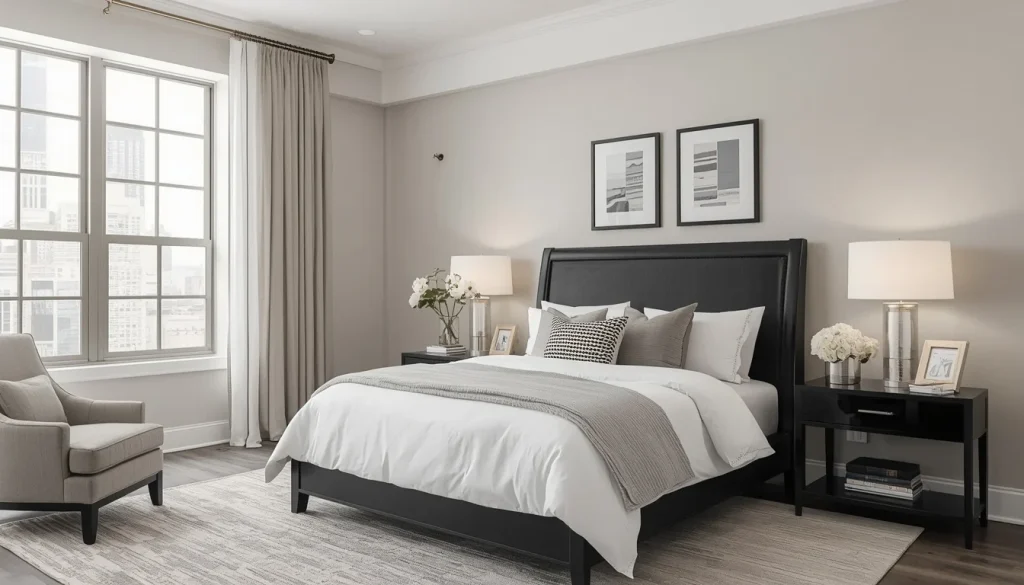
Use:
- Greige walls
- White bedding
- Black lighting
- Dark picture frames
This palette works well in modern bedrooms and is easy to update with seasonal accent colours.
9. Oatmeal, Ivory, and Caramel
Oatmeal and ivory create a gentle neutral base, while caramel adds warmth.

Best for:
- Minimalist bedrooms
- Boho interiors
- Natural decorating styles
Choose a caramel leather chair, wood furniture, or warm-toned cushions as the accent.
10. Stone Grey, Linen, and Walnut
Stone grey feels softer than dark charcoal. Pair it with linen textiles and rich walnut furniture.
Best for:
- Modern bedrooms
- Masculine interiors
- Rooms with good natural light
Add cream bedding to prevent the palette from becoming too dark.
Modern Bedroom Colour Schemes
11. Charcoal, White, and Warm Wood
Charcoal creates drama, white adds contrast, and warm wood prevents the room from feeling cold.
Try a charcoal feature wall behind the bed, white bedding, and walnut bedside tables.
Best for:
- Contemporary bedrooms
- Industrial interiors
- Large bedrooms
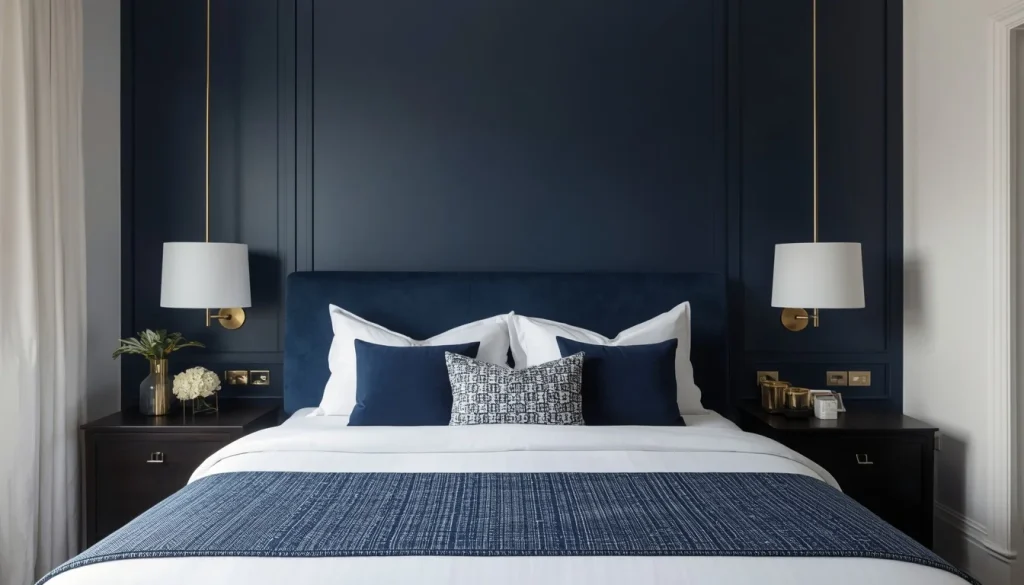
12. Navy Blue, White, and Brass
Navy blue creates a smart and luxurious look. White keeps the scheme clean, while brass adds warmth.
Use navy on the wall behind the bed or across all walls for a cocooning effect.
Best for:
- Hotel-style bedrooms
- Traditional-modern interiors
- Rooms with high ceilings
13. Black, Grey, and Soft Green
Black and grey can look strong, but soft green makes the palette more comfortable.
Use:
- Light grey walls
- Black furniture
- Sage bedding
- White ceiling
This combination works well in modern and minimalist bedrooms.
14. Forest Green, Cream, and Gold
Forest green adds depth and works beautifully with cream and gold.
Best for:
- Luxury bedrooms
- Larger spaces
- Rooms with natural wood flooring
Use cream bedding and curtains to balance the dark green.
15. Terracotta, Beige, and Matte Black
Terracotta adds warmth, beige softens the look, and matte black creates a modern edge.

Best for:
- Contemporary bedrooms
- Mediterranean-inspired interiors
- Warm, earthy decorating styles
Use terracotta on one wall or through bedding if you do not want a strong paint colour.
Warm and Cosy Bedroom Colour Schemes
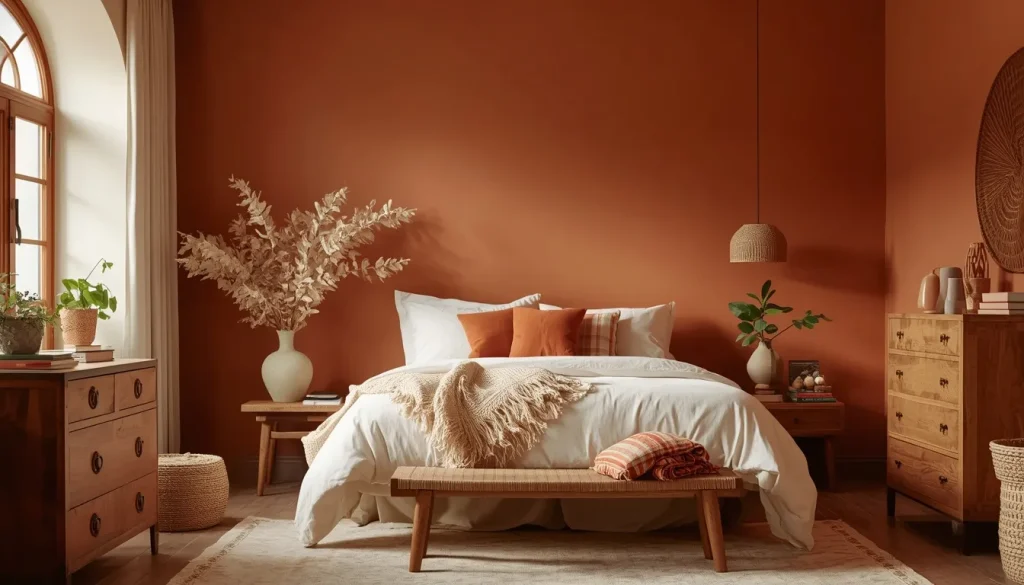
16. Terracotta, Cream, and Natural Wood
Terracotta works well with cream walls or bedding and medium-toned wood furniture.
Best for:
- North-facing bedrooms
- Boho interiors
- Bedrooms that feel cold
Add woven textures and soft lighting for extra warmth.
17. Dusty Rose, Taupe, and Burgundy
Dusty rose creates softness, taupe keeps the palette mature, and burgundy adds depth.
Best for:
- Elegant bedrooms
- Romantic interiors
- Guest rooms
Use burgundy sparingly through cushions, artwork, or a throw.
18. Mustard Yellow, Warm White, and Brown
Mustard yellow brings energy without being as bright as lemon yellow.
Use it through a headboard, bedding, chair, or feature wall. Warm white and brown keep the room balanced.
Best for:
- Mid-century modern bedrooms
- Rooms with wooden furniture
- Spaces needing warmth
19. Rust, Olive Green, and Beige
Rust and olive create an earthy, autumn-inspired palette.

Best for:
- Boho bedrooms
- Rustic interiors
- Rooms with natural materials
Use beige as the main colour so the stronger shades do not overwhelm the space.
20. Mocha Brown, Caramel, and Ivory
Mocha brown creates a rich and comfortable look. Caramel adds warmth, while ivory keeps the bedroom from becoming too dark.
Best for:
- Luxury bedrooms
- Large rooms
- Bedrooms with warm lighting
Fresh and Colourful Bedroom Schemes
21. Blush Pink, Sage Green, and Cream
Pink and green are complementary, but muted versions create a soft and balanced bedroom.
Use:
- Cream walls
- Sage headboard
- Blush bedding
- Natural wood furniture
This palette works well in both modern and traditional interiors.
22. Navy Blue, Mustard Yellow, and White
Navy and mustard create strong contrast. White provides breathing space.

Best for:
- Modern bedrooms
- Teen rooms
- Guest bedrooms
Use navy as the dominant colour and mustard as the smaller accent.
23. Teal, Coral, and Warm Neutral
Teal and coral create a lively palette. Use warm beige or cream as the main base.
Best for:
- Eclectic bedrooms
- Creative spaces
- Rooms with strong natural light
Keep large surfaces neutral and use teal and coral through textiles and artwork.
24. Emerald Green, Pink, and Gold
Emerald green feels luxurious, while soft pink and gold make the scheme feel warmer.
Best for:
- Glamorous bedrooms
- Art Deco-inspired rooms
- Larger spaces
Avoid using equal amounts of green and pink. Let one colour dominate.
25. Sky Blue, Peach, and White
This fresh palette is light, cheerful, and easy to live with.

Best for:
- Small bedrooms
- Guest rooms
- Bright interiors
Choose a pale peach rather than a very bright orange to maintain a restful atmosphere.
Best Two-Colour Combinations for Bedroom Walls
Two-colour bedroom walls can create interest without requiring a complicated palette.
Blue and Warm White
Use warm white on most walls and blue behind the bed. This combination feels calm and clean.
Sage Green and Cream
Sage and cream create a soft, natural bedroom. They work especially well with light or medium wood furniture.
Grey and Soft Yellow
Grey provides a neutral base, while soft yellow adds warmth.
Use yellow on a painted arch, feature wall, or lower wall section.
Dusty Pink and Olive Green
This combination feels elegant when both colours are muted.
Use dusty pink as the lighter shade and olive green as the stronger accent.
Navy and Beige
Navy adds depth, while beige prevents the room from feeling too dark.
This combination is ideal for modern and hotel-style bedrooms.
Terracotta and Cream
Terracotta creates warmth, while cream keeps the palette light.
Use terracotta behind the bed and cream on the remaining walls.
Lavender and Light Grey
Lavender and grey work well in soft modern or contemporary bedrooms.
Choose a warm grey to avoid making the room feel too cold.
Two Shades of the Same Colour
Using two shades from one colour family creates a subtle, coordinated look.
Examples include:
- Pale blue and navy
- Soft sage and forest green
- Light beige and chocolate brown
- Blush pink and burgundy
Use the darker shade on the lower wall, behind the bed, or around an architectural feature.
Best Bedroom Colours for Different Lighting Conditions
North-Facing Bedrooms
North-facing rooms often receive cooler, softer light.
Good options include:
- Warm cream
- Soft beige
- Terracotta
- Warm taupe
- Muted peach
- Olive green
Avoid relying only on cold grey or icy white unless you deliberately want a cool atmosphere.
South-Facing Bedrooms
South-facing bedrooms usually receive stronger, warmer light.
They can handle:
- Blue-grey
- Sage green
- Navy
- Cool white
- Lavender
- Charcoal
The natural warmth can prevent cool colours from feeling too harsh.
East-Facing Bedrooms
East-facing rooms are brighter in the morning and cooler later in the day.
Consider:
- Soft blue
- Pale green
- Warm white
- Blush
- Light beige
Test colours in the evening, especially if that is when you use the room most.
West-Facing Bedrooms
West-facing rooms may appear cooler in the morning and warmer in the afternoon.
Useful colours include:
- Warm grey
- Cream
- Dusty blue
- Muted green
- Taupe
Avoid colours that become uncomfortably intense in strong evening light.
Bedrooms With Limited Natural Light
A dark room does not always need pure white paint. In some cases, white may look dull or grey.
Try:
- Warm cream
- Pale beige
- Soft taupe
- Muted terracotta
- Warm sage
- Deep navy for a cocooning effect
Use layered lighting, including ceiling lights, bedside lamps, and wall lights.
Best Colour Schemes for Small Bedrooms
Light and Airy Palettes
Warm white, pale blue, soft sage, cream, and light beige can make a small room feel brighter.
Use similar colours on the walls, curtains, and bedding to reduce visual interruptions.
Low-Contrast Tonal Palettes
A tonal scheme helps the room feel more continuous.
For example:
- Cream walls
- Beige curtains
- Oatmeal bedding
- Light wood furniture
The colours do not need to match exactly, but they should feel closely related.
Colours for Narrow Bedrooms
Use a slightly darker shade on the shorter wall to visually reduce the length of the room.
Keep the longer walls lighter to maintain brightness.
Colours for Low Ceilings
Use a light ceiling colour and avoid a strong horizontal contrast between the wall and ceiling.
Painting the walls and ceiling in similar shades can also make the boundaries feel less obvious.
Using Dark Colours in a Small Bedroom
Dark colours can create a stylish, intimate room.
To make them work:
- Use good lighting
- Keep furniture simple
- Limit clutter
- Add lighter bedding
- Use mirrors carefully
- Repeat the wall colour in textiles
A dark room can feel intentional and cosy rather than cramped.
Bedroom Colour Schemes to Match Furniture and Flooring
Colours That Work With White Furniture
White furniture works with almost every palette.
Good choices include:
- Sage green
- Navy blue
- Soft grey
- Blush pink
- Pale blue
- Terracotta
Use warm walls if the white furniture has a creamy undertone.
Colours That Work With Dark Furniture
Dark furniture pairs well with:
- Warm white
- Cream
- Light beige
- Soft green
- Blue-grey
- Dusty pink
Lighter wall colours create contrast and keep the room balanced.
Colours That Work With Light Wood
Light wood works beautifully with:
- Sage
- White
- Pale blue
- Soft grey
- Beige
- Lavender
This combination is especially suitable for Scandinavian and Japandi bedrooms.
Colours That Work With Dark Wood
Dark wood pairs well with:
- Cream
- Warm beige
- Olive green
- Deep blue
- Terracotta
- Taupe
Avoid combining dark wood with too many other very dark surfaces unless the room has excellent lighting.
Colours That Work With Grey Furniture
Grey furniture can be paired with:
- Blush pink
- Mustard yellow
- Navy
- Sage green
- White
- Warm beige
Use warm accents if the room feels too cool.
Colours for Carpeted Bedrooms
Grey carpet works well with blue, green, blush, white, and warm beige.
Beige carpet pairs well with cream, brown, terracotta, olive, navy, and warm grey.
Always compare the wall sample directly with the carpet because undertones can clash.
Colours for Hardwood Floors
Warm wood floors work well with:
- Cream
- Sage
- Dusty blue
- Warm white
- Charcoal
- Terracotta
Cooler wood floors may suit blue-grey, soft white, green, and cool beige.
How to Coordinate Bedroom Walls, Bedding, and Curtains
Should Bedding Match the Walls?
Bedding does not need to match the walls exactly. In fact, slight variation often looks more interesting.
Try one of these approaches:
- Use lighter bedding with dark walls
- Use darker bedding with pale walls
- Repeat the wall colour in one cushion or throw
- Choose patterned bedding that includes the wall colour
- Use neutral bedding with a bold feature wall
How to Choose Curtain Colours
Curtains can either blend with the walls or create contrast.
To make a small bedroom feel larger, choose curtains close to the wall colour.
To create more impact, use a contrasting but related colour.
Examples include:
- Blue walls with cream curtains
- Sage walls with beige curtains
- Grey walls with blush curtains
- White walls with navy curtains
How to Pull Colours From a Rug or Artwork
A rug, painting, or patterned fabric can provide an instant colour palette.
Choose:
- One main colour for the walls
- One supporting colour for bedding
- One smaller accent for accessories
This method helps the room feel connected.
How to Mix Patterns Without Clashing
When mixing patterns:
- Repeat at least one colour
- Combine large and small patterns
- Use plain fabrics between patterned items
- Avoid using too many equally bold designs
- Keep the background colour consistent
How to Use Texture in a Neutral Bedroom
Neutral rooms need texture to avoid looking flat.
Add:
- Linen bedding
- Wool throws
- Bouclé chairs
- Woven baskets
- Timber furniture
- Textured cushions
- Natural rugs
Texture creates depth without adding more colours.
Bedroom Ceiling, Trim, and Door Colour Ideas
Classic White Ceiling and Trim
White trim creates a clean border and works well with most wall colours.
Choose warm white for beige, terracotta, cream, or brown walls. Choose a cooler white for blue, green, or grey walls.
A Lighter Version of the Wall Colour
Using a lighter version of the wall colour on the ceiling creates a softer transition than bright white.
This works well in tonal bedrooms.
Walls and Ceiling in the Same Colour
Painting the walls, ceiling, and trim in one colour is often called colour drenching.
It can:
- Create a cocooning effect
- Reduce visual interruptions
- Highlight furniture and artwork
- Make awkward angles less noticeable
Dark or Contrasting Ceiling
A dark ceiling can create drama in a bedroom with good height.
Try:
- Navy ceiling with white walls
- Deep green ceiling with cream walls
- Terracotta ceiling with beige walls
Use this technique carefully in rooms with very low ceilings.
Matching Wardrobes and Built-In Storage
Painting built-in wardrobes in the wall colour helps them blend into the room.
Painting them in a contrasting shade can turn them into a design feature.
Bedroom Feature Wall, Two-Tone, and Colour-Drenching Ideas
A feature wall is usually placed behind the bed because it creates a natural focal point.
Popular options include:
- Solid dark paint
- Wallpaper
- Painted arch
- Vertical colour blocking
- Horizontal two-tone walls
- Stripes
- Geometric shapes
- Painted headboard effect
Colour drenching is a stronger alternative. It uses one colour, or closely related shades, across walls, trim, doors, and sometimes the ceiling.
Choose a feature wall if you want limited contrast. Choose colour drenching if you want a more immersive result.
Bedroom Colour Schemes by Interior Style
Minimalist Bedroom
Use:
- Warm white
- Beige
- Soft grey
- Black accents
Keep the palette limited and focus on clean lines.
Scandinavian Bedroom
Use:
- White
- Pale grey
- Soft blue
- Light wood
- Muted green
Add cosy textiles to prevent the room from feeling too plain.
Japandi Bedroom
Use:
- Warm beige
- Taupe
- Olive
- Cream
- Dark wood
Choose natural materials and simple furniture.
Boho Bedroom
Use:
- Terracotta
- Mustard
- Cream
- Olive
- Rust
Layer patterns and textures while keeping one neutral colour dominant.
Coastal Bedroom
Use:
- White
- Sand
- Pale blue
- Blue-grey
- Navy
Avoid overusing obvious nautical decorations. Let the colours create the coastal feeling.
Farmhouse Bedroom
Use:
- Cream
- Sage
- Warm grey
- White
- Natural wood
Add simple patterns, vintage furniture, and soft textiles.
Luxury Hotel-Style Bedroom
Use:
- Navy
- Charcoal
- Mocha
- Cream
- Brass
Include a large headboard, layered lighting, and high-quality bedding.
Bedroom Colour Schemes by Room Type
Primary Bedroom
Choose a palette you will enjoy for years.
Good options include:
- Sage and cream
- Navy and beige
- Mocha and ivory
- Blue-grey and white
Guest Bedroom
Guest rooms should feel welcoming and flexible.
Consider:
- Soft green
- Pale blue
- Warm white
- Beige
- Dusty pink
Avoid very personal or extremely intense colour combinations.
Bedroom Colour Schemes for Couples
Start with a neutral or natural foundation, then add two accent colours both people enjoy.
Examples include:
- Charcoal, cream, and sage
- Navy, beige, and brass
- Taupe, white, and terracotta
Gender-Neutral Bedroom Palettes
Useful gender-neutral combinations include:
- Olive and cream
- Navy and beige
- Blue-grey and white
- Terracotta and taupe
- Sage and natural wood
Rental Bedroom Colour Ideas
When painting is not allowed, use colour through:
- Bedding
- Curtains
- Rugs
- Cushions
- Artwork
- Removable wallpaper
- Lamps
- Upholstered headboards
Choose one main accent colour and repeat it in several areas.
How to Add Bedroom Colour Without Painting
You can transform a bedroom without changing the walls.
Try:
- New bedding
- Coloured curtains
- A statement headboard
- A large rug
- Decorative cushions
- Throws
- Artwork
- Lampshades
- Painted furniture
- Removable wallpaper
- Indoor plants
Bedding is usually the easiest place to begin because it covers a large visible area and can be changed seasonally.
How Bedroom Colours Influence Mood and Rest
Colour can influence how a bedroom is perceived, although personal preference matters more than any universal rule.
Soft blues, greens, muted violets, and warm neutrals are often associated with calm interiors.
Warm shades such as terracotta, brown, and caramel can create a cosy atmosphere.
Dark navy, charcoal, and forest green may create a cocooning feeling.
Bright red, neon yellow, or intense orange may feel too energetic when used across large areas, but they can still work as small accents.
Choose colours that make you feel comfortable rather than selecting a shade only because it is considered relaxing or fashionable.
Common Bedroom Colour Scheme Mistakes
Choosing Paint Before Checking Furniture
Wall colour should work with flooring, furniture, carpet, and large textiles.
Ignoring Undertones
Warm and cool versions of the same colour can clash.
Using Too Many Competing Colours
Limit the main palette to two or three colours, then use smaller variations.
Selecting Stark White for a Dark Room
Bright white can sometimes appear dull in a low-light room. Warm cream or pale beige may work better.
Following Trends Without Considering Personal Taste
Trends change. Choose colours you genuinely enjoy.
Forgetting Bedding and Curtains
Walls are only one part of the scheme. Bedding, curtains, rugs, and furniture have a major visual impact.
Not Testing Paint Samples
Always test a large sample in the actual room.
Using Equal Amounts of Every Colour
Choose one dominant colour and allow the others to support it.
Bedroom Colour Scheme Comparison Chart
| Colour Scheme | Mood | Best Room Type | Recommended Accent |
|---|---|---|---|
| Soft blue and white | Calm and fresh | Small or bright bedroom | Natural wood |
| Sage and cream | Relaxing and earthy | Most bedroom sizes | Brass or brown |
| Beige and chocolate | Warm and cosy | Low-light bedroom | Ivory |
| Navy and mustard | Bold and modern | Medium or large bedroom | White |
| Blush and green | Soft and stylish | Guest or primary bedroom | Gold |
| Charcoal and wood | Dramatic and contemporary | Bright bedroom | Cream |
| Terracotta and beige | Warm and natural | North-facing bedroom | Black |
| Lavender and grey | Gentle and elegant | Small or guest bedroom | White |
| Mocha and ivory | Luxurious and cosy | Large bedroom | Caramel |
| Teal and coral | Energetic and creative | Bright bedroom | Warm neutral |
How to Build Your Own Bedroom Colour Palette
Start With One Colour You Love
This could come from:
- A rug
- Bedding
- Artwork
- Furniture
- A favourite paint shade
- A natural material
Choose a Supporting Neutral
Good supporting neutrals include:
- Warm white
- Cream
- Beige
- Greige
- Soft grey
- Taupe
Add One Accent Colour
The accent should appear in smaller amounts through cushions, lamps, artwork, or decorative objects.
Match Undertones Carefully
Warm colours generally work best with other warm tones. Cool colours usually look more coordinated with cool neutrals.
Mixed palettes can work, but one side should dominate.
Test the Full Palette Together
Place samples of the paint, curtain fabric, bedding, flooring, and furniture materials together before buying.
A simple formula is:
Main wall colour + supporting neutral + natural material + small accent colour
Frequently Asked Questions About 25 Bedroom Colour Scheme Ideas
What are the best colour schemes for bedrooms?
Popular bedroom colour schemes include soft blue and white, sage and cream, navy and beige, warm white and natural wood, terracotta and cream, and charcoal with light bedding. The best choice depends on room size, natural light, furniture, and personal preference.
Which bedroom colours are most relaxing?
Soft blue, sage green, muted lavender, blue-grey, warm white, and gentle beige are commonly used to create calm-looking bedrooms. Choose a shade that feels comfortable under both daylight and artificial light.
What two colours work best together in a bedroom?
Useful two-colour combinations include blue and white, sage and cream, navy and beige, terracotta and cream, dusty pink and olive, lavender and grey, and charcoal with warm white.
What colours make a small bedroom appear bigger?
Warm white, pale blue, soft green, light beige, cream, and low-contrast tonal palettes can make a small bedroom feel more open. Matching curtains closely to the wall colour can also reduce visual breaks.
Should bedroom walls be light or dark?
Light walls can make a room feel airy, while dark walls can create a cosy and dramatic atmosphere. The right choice depends on the room’s natural light, size, furniture, and desired mood.
Should bedroom walls and ceilings be the same colour?
They can be. Using the same colour on the walls and ceiling creates a seamless, cocooning effect. A lighter ceiling can feel more traditional and may make a low room appear more open.
What bedroom colours work with wooden furniture?
Light wood works well with white, sage, pale blue, beige, and soft grey. Dark wood pairs well with cream, taupe, olive, terracotta, deep blue, and warm white.
What wall colours work with grey furniture?
Grey furniture works with white, blush, sage, navy, mustard, beige, and blue. Add warm accents if the room feels too cool.
Should bedding match the wall colour?
Bedding does not need to match the walls exactly. It can repeat the wall colour in a lighter or darker shade, introduce a complementary accent, or remain neutral.
How do I match bedroom curtains with the walls?
Choose curtains close to the wall colour for a seamless look. Use a contrasting but related colour for more impact. Always compare fabric and paint samples in the actual room.
What paint finish is best for bedroom walls?
Matte or low-sheen finishes are popular because they create a soft appearance and hide minor wall imperfections. A more washable finish may be useful in children’s bedrooms or high-contact areas.
How many colours should a bedroom scheme include?
Most bedrooms work well with two or three main colours. Additional shades can be introduced through small accessories, patterns, wood, metal, and natural materials.
Final Thoughts
The best bedroom colour scheme should suit your room and make you feel comfortable. Begin with the mood you want to create, then consider natural light, room size, furniture, flooring, bedding, and curtains.
You do not need a complicated palette. One main colour, one supporting neutral, and one smaller accent are often enough to create a stylish and balanced bedroom.
Before painting the entire room, test large samples in different lighting conditions. When you choose colours based on the room itself rather than trends alone, the finished bedroom is more likely to feel comfortable, coordinated, and personal.

“A comfortable home and a healthy lifestyle go hand in hand.”
Hi, I’m Ethan Carter, the founder and lead editor of TheBestHomeFit. I’m passionate about helping people create beautiful, functional living spaces while building healthier lifestyles at home. Over the years, I’ve spent countless hours researching home decor trends, testing home gym equipment, and reviewing products to help readers make smarter buying decisions.
Through TheBestHomeFit, I share practical home improvement ideas, honest product reviews, buying guides, and fitness tips designed for everyday homeowners. My goal is to make it easier for you to create a home that looks great, feels comfortable, and supports your well-being.
When I’m not researching the latest products or writing in-depth guides, you’ll usually find me redesigning a room, trying new home workout routines, or enjoying quality time with my family.



1 thought on “25 Bedroom Colour Scheme Ideas for a Stylish and Relaxing Space”