A bedroom without a closet can feel difficult to organize, especially when clothes, shoes, bags, and everyday items start taking over the room. The good news is that you do not need a built-in closet to create practical storage.
A freestanding clothes rack, wardrobe, wall-mounted rail, under-bed bins, shelves, drawers, and hidden storage furniture can give you plenty of space without making the bedroom feel crowded.
The best setup depends on your room size, how many clothes you own, your budget, and whether you rent or own your home.
Below, you will find practical bedroom without closet ideas for small rooms, rental homes, apartments, guest bedrooms, and larger spaces.
What to Do If Your Bedroom Has No Closet
Start by thinking about what a closet normally does.
It provides space for:
- Hanging clothes
- Folded clothes
- Shoes
- Bags
- Accessories
- Seasonal items
- Everyday essentials
Instead of trying to replace a closet with one large piece of furniture, create several smaller storage zones around the bedroom.
Sort What Needs Hanging, Folding, or Hidden Storage
Separate your clothes into three groups before buying storage.
Hanging clothes: Dresses, jackets, shirts, suits, and wrinkle-prone clothing.
Folded clothes: T-shirts, jeans, sweaters, pajamas, underwear, and activewear.
Hidden or seasonal storage: Winter coats, extra bedding, holiday clothing, luggage, and items you rarely use.
Once you know what you need to store, choosing the right furniture becomes much easier.
Use Vertical Space Before Floor Space
Empty walls are valuable in a bedroom without a closet.
Tall shelving, wall hooks, clothes rails, floating shelves, and floor-to-ceiling storage let you add capacity without filling the room with bulky furniture.
This is especially useful in a small bedroom where every inch of floor space matters.
Build a Storage System Around Your Room and Lifestyle
There is no single storage solution that works for everyone.
Someone with ten dresses may need more hanging space. Someone who mostly wears T-shirts and jeans may benefit from drawers and shelves instead.
Choose your storage based on what you actually own rather than trying to copy a picture-perfect bedroom.
25 Best Bedroom Without Closet Ideas
Here are 25 practical ways to store clothes and keep a bedroom organized when there is no built-in closet.
1. Use a Freestanding Clothing Rack
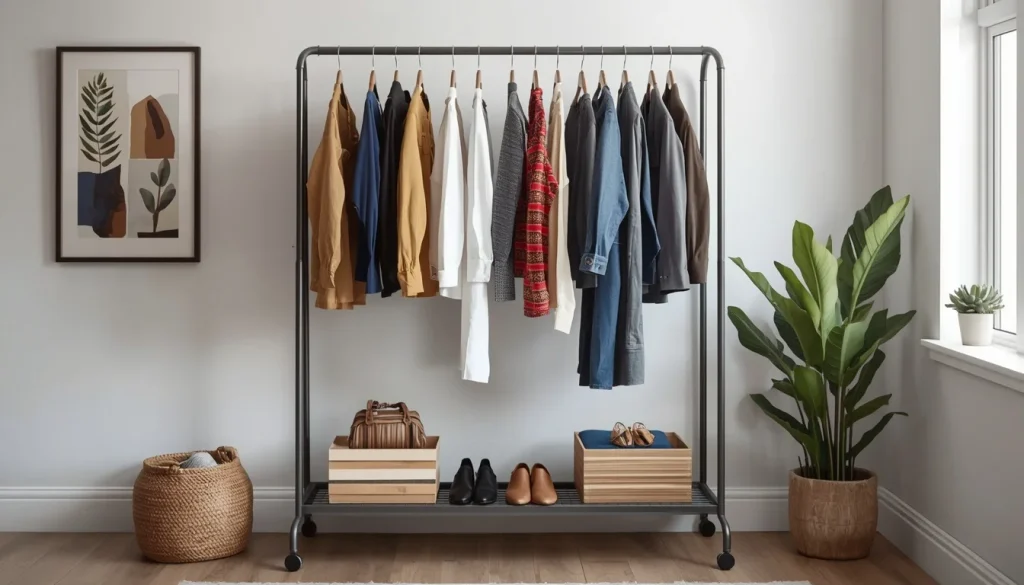
A freestanding clothing rack is one of the easiest closet alternatives.
It gives you instant hanging space without installation, making it useful for renters, students, apartments, and temporary bedrooms.
Choose a rack with a lower shelf if you also need room for shoes, boxes, or folded items.
Try not to overload it. Keeping some breathing room between clothes makes an open rack look more intentional and less cluttered.
2. Create an Open Closet on an Empty Wall
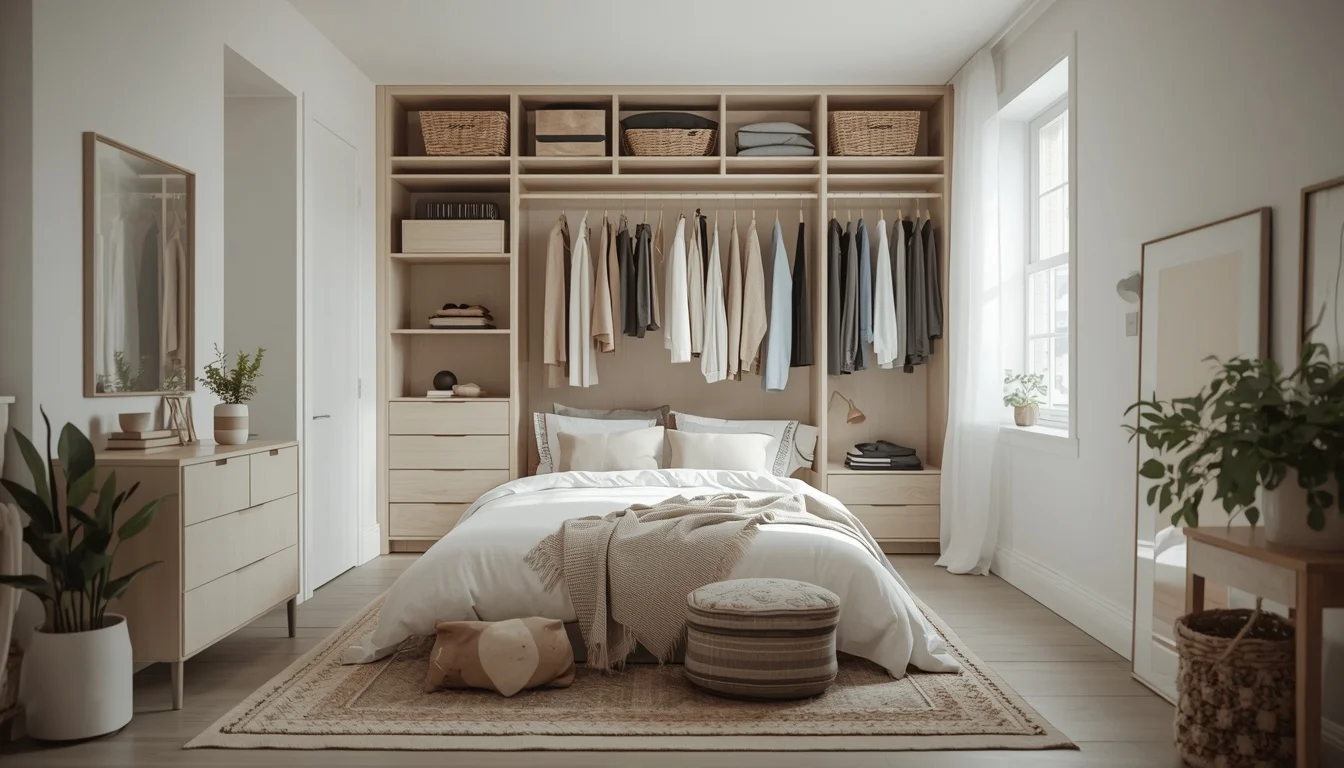
Turn an unused wall into a simple open closet.
You can combine:
- A clothes rail
- Floating shelves
- Storage cubes
- Baskets
- Hooks
- Shoe storage
This setup gives you much of the function of a traditional closet without building an enclosed structure.
Use matching hangers and storage boxes to make the wall look organized.
3. Add a Freestanding Wardrobe or Armoire
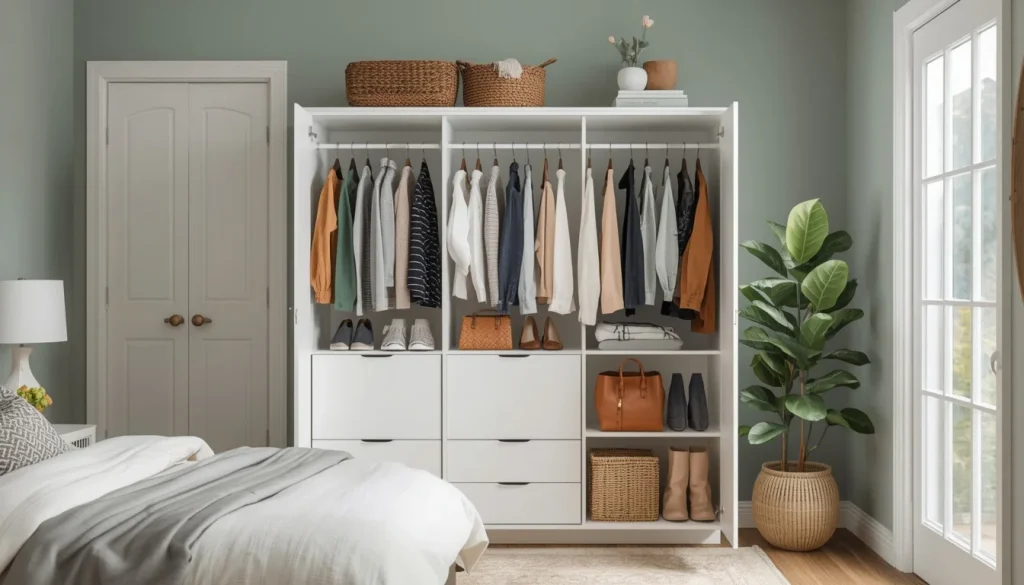
A wardrobe or armoire is one of the best choices if you want your clothes hidden.
It can provide hanging space, shelves, drawers, or all three.
This option works particularly well when you have plenty of clothes but do not want everything visible.
Measure your bedroom carefully before buying one. A wardrobe that is too deep or wide can make a small room feel cramped.
4. Install a Wall-Mounted Clothes Rail
A wall-mounted clothes rail uses very little floor space.
It works well above:
- A dresser
- Shoe storage
- A low cabinet
- Storage baskets
For a small bedroom, this can be more efficient than a traditional garment rack.
In the UK and Australia, you may also see this type of storage described as a clothes rail rather than a clothing rack.
5. Use Under-Bed Storage
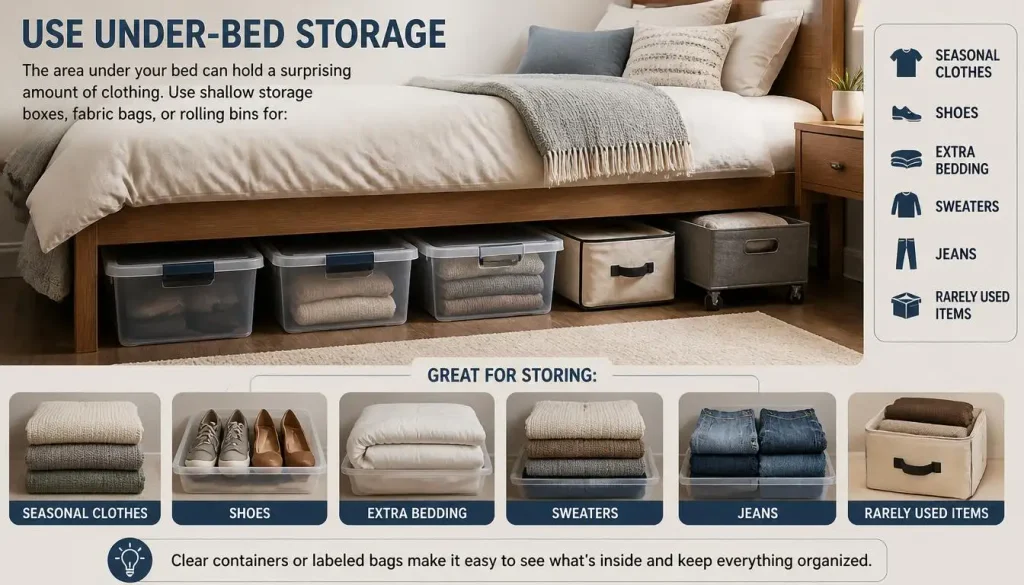
The area under your bed can hold a surprising amount of clothing.
Use shallow storage boxes, fabric bags, or rolling bins for:
- Seasonal clothes
- Shoes
- Extra bedding
- Sweaters
- Jeans
- Rarely used items
Clear containers make it easier to see what is inside.
If your bed sits too close to the floor, bed risers may create additional storage space.
6. Choose a Bed With Built-In Storage
If you are replacing your bed, consider a model with built-in drawers or lift-up storage.
A storage bed can reduce the amount of extra furniture you need.
It is especially useful in small bedrooms where adding another dresser or cabinet would take up too much floor space.
Use the drawers for everyday clothing and the deeper areas for seasonal items or bedding.
7. Add Floating Shelves
Floating shelves make use of empty wall space while keeping the floor clear.
Use them for:
- Folded sweaters
- Jeans
- Storage baskets
- Hats
- Handbags
- Decorative boxes
Avoid filling every shelf completely. Leaving some open space helps the bedroom feel calmer.
8. Turn a Bookshelf Into Clothing Storage
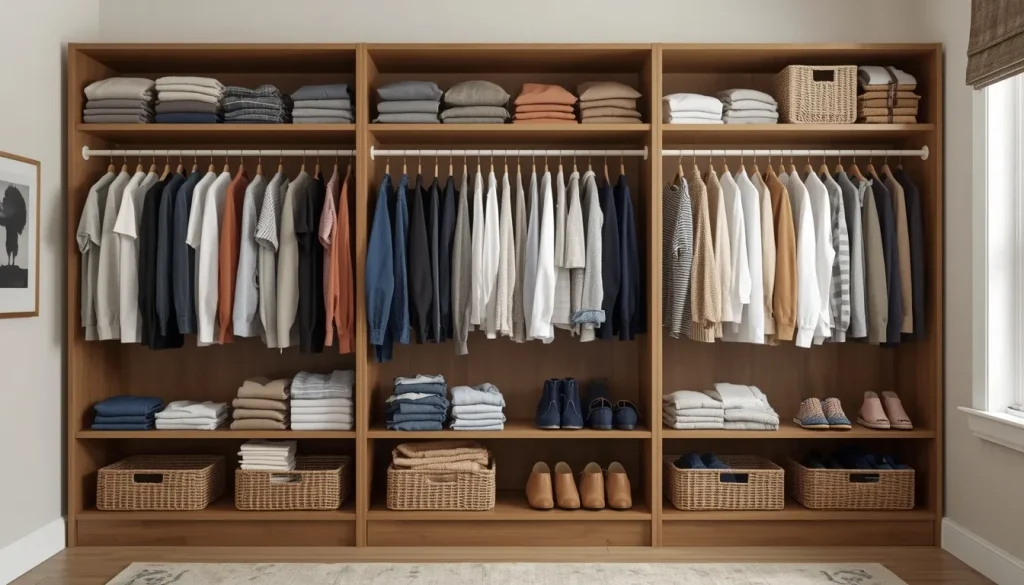
A bookshelf does not have to hold books.
It can become an inexpensive open wardrobe for folded clothing.
Use different shelves for different categories:
- T-shirts
- Jeans
- Sweaters
- Bags
- Shoes
Add matching baskets to hide underwear, socks, sleepwear, and smaller items.
This is also a useful option if you already own a bookcase and do not want to buy new furniture.
9. Use Storage Baskets and Fabric Bins
Baskets and fabric bins are useful for items that quickly become messy on open shelves.
They work well for:
- Socks
- Underwear
- Scarves
- Gym clothing
- Sleepwear
- Accessories
Labeling the containers can make your system easier to maintain.
For an open storage setup, matching baskets can also make the room look more cohesive.
10. Add a Tall Chest of Drawers
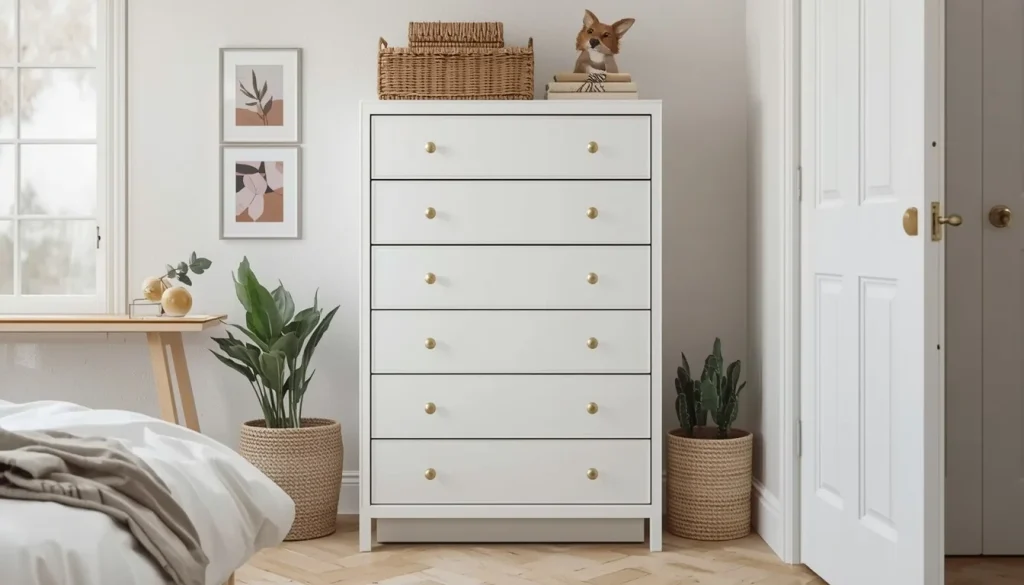
When floor space is limited, look upward.
A tall chest of drawers provides more storage while using less floor area than a long, wide dresser.
It is ideal for folded clothing.
Use the top drawers for smaller everyday items and the lower drawers for jeans, sweaters, or less frequently used clothing.
11. Place a Storage Bench at the End of the Bed
A storage bench can serve several purposes at once.
It gives you:
- Hidden storage
- A place to sit
- Extra bedroom furniture
- Space for bedding or seasonal clothes
Choose one with a lift-up lid or built-in drawers.
It can be particularly useful in a larger bedroom where there is unused space at the foot of the bed.
12. Add Wall Hooks
Wall hooks are simple but extremely useful.
Use them for:
- Jackets
- Bags
- Robes
- Hats
- Belts
- Tomorrow’s outfit
Hooks are best for everyday items rather than your entire wardrobe.
Keep the number of visible items limited so the wall does not start looking cluttered.
13. Use an Over-the-Door Organizer
The back of the bedroom door is often unused.
An over-the-door organizer can hold:
- Shoes
- Accessories
- Scarves
- Belts
- Bags
- Small clothing items
It is particularly helpful for renters because many designs require no permanent installation.
14. Create a Closet in an Empty Corner
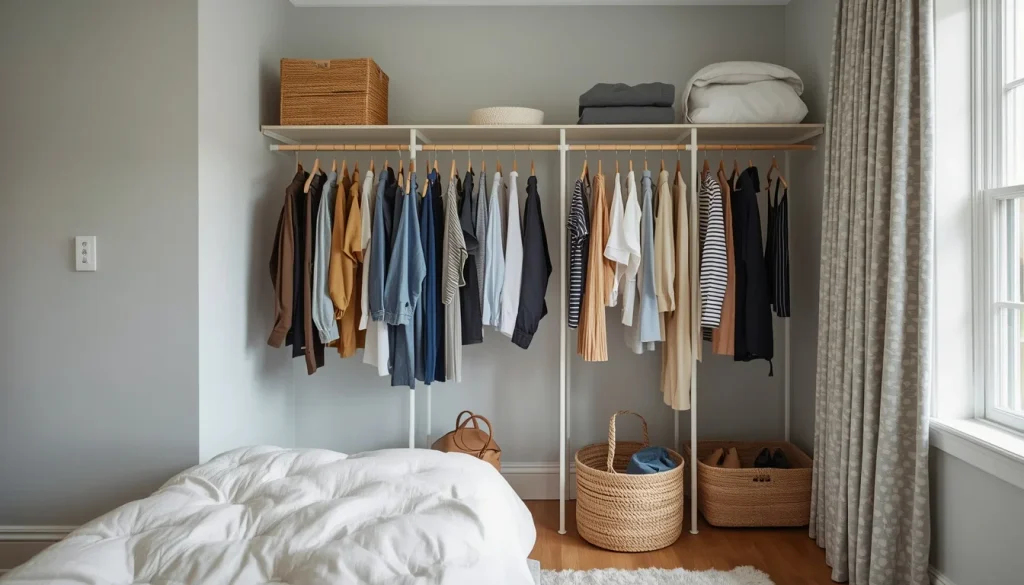
An awkward bedroom corner can become useful storage.
Add:
- A corner clothes rack
- Wall-mounted rails
- Shelving
- Hooks
- A curtain
A corner setup allows you to create a small closet zone without taking over an entire wall.
15. Hide an Open Closet Behind Curtains
Open storage is practical, but not everyone wants to look at their clothes all day.
A curtain can hide an open wardrobe or clothes rack when you want the room to look cleaner.
Mount a curtain rod in front of your storage area and choose fabric that matches the bedroom.
This is often much cheaper and easier than installing doors.
16. Build a Floor-to-Ceiling Storage Wall
If you have one completely empty wall, use its full height.
Combine lower drawers, hanging space, upper shelves, and closed cabinets to create a storage wall.
Keep everyday items within easy reach and store seasonal clothes near the ceiling.
This works especially well in bedrooms where you need a lot of storage but have limited floor space.
17. Use a Pegboard for Accessories
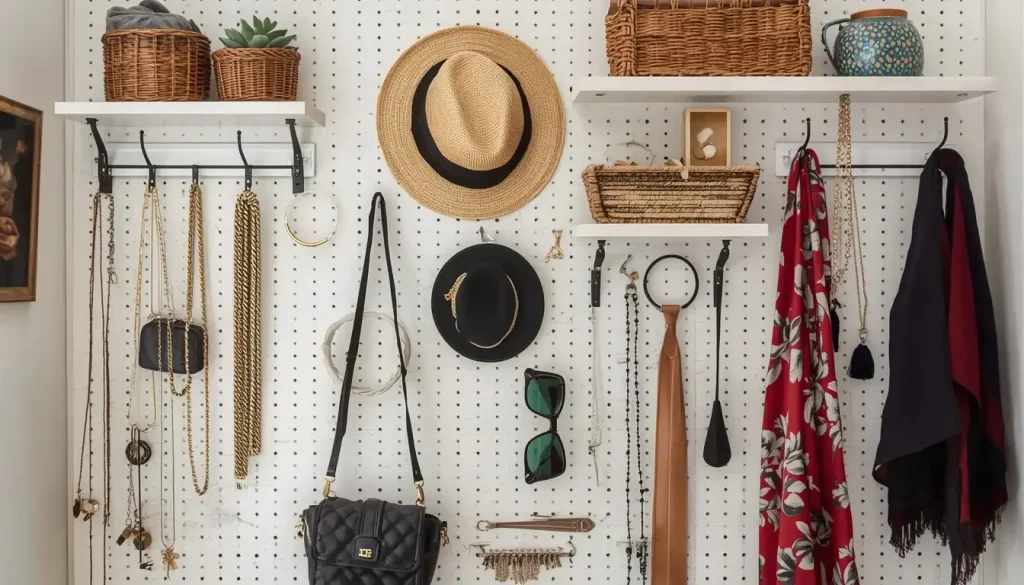
A pegboard can turn a small section of wall into flexible storage.
Use hooks, baskets, and small shelves for:
- Jewelry
- Hats
- Bags
- Belts
- Sunglasses
- Scarves
The layout can be changed whenever your needs change.
It works best for smaller items rather than heavy clothing.
18. Store Seasonal Clothes in Suitcases
If your suitcases usually sit empty, use the space inside them.
Store off-season clothes, extra bedding, or rarely used items inside your luggage.
Then place the suitcases:
- Under the bed
- On top of a wardrobe
- Under a bench
- On a high shelf
This gives an item you already own a second purpose.
19. Use a Rolling Clothing Rack
A rolling garment rack gives you flexible storage.
Move it while cleaning, rearranging the bedroom, or preparing outfits.
Some models include:
- Shoe shelves
- Side hooks
- Double rails
- Lower baskets
It is a practical choice for renters, students, and anyone who expects to move.
20. Choose Multi-Purpose Furniture
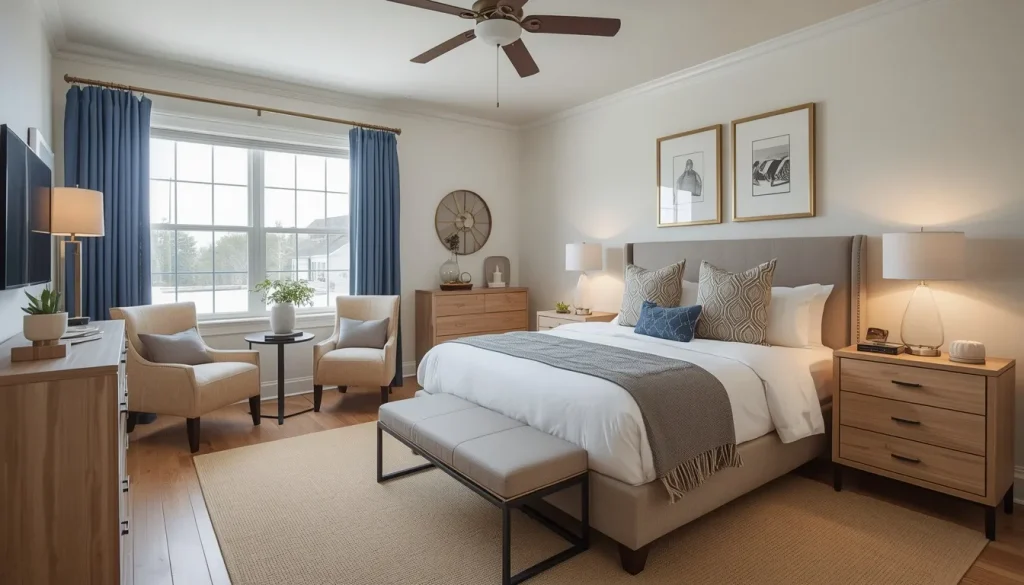
In a bedroom without a closet, furniture should work harder.
Look for pieces such as:
- Storage ottomans
- Drawer nightstands
- Beds with drawers
- Storage benches
- Headboards with shelves
- Cabinets that double as bedside tables
Multi-purpose furniture reduces the number of separate storage pieces you need.
21. Create a Capsule Wardrobe
Sometimes the storage problem is partly caused by having more clothes than the room can comfortably hold.
A capsule wardrobe focuses on keeping a smaller collection of clothing that works well together.
You do not have to become a strict minimalist.
Simply removing clothes you never wear can make your existing storage much easier to manage.
22. Install a Ceiling-Mounted Clothing Rack
When both wall and floor space are limited, look at the ceiling.
A ceiling-mounted hanging rail can create clothing storage while leaving the floor open.
This can work well in modern or industrial-style bedrooms.
Because the rack carries weight, it needs to be installed securely into an appropriate ceiling structure.
If you rent, a freestanding rack may be a safer option.
23. Use Modular Storage Cubes
Modular cubes are flexible because you can arrange them around the room.
Use individual compartments for:
- Folded clothes
- Shoes
- Bags
- Baskets
- Accessories
If you move or rearrange your bedroom later, the cubes can be reconfigured.
They are also useful for children’s rooms, dorms, and small apartments.
24. Use Vacuum Storage Bags
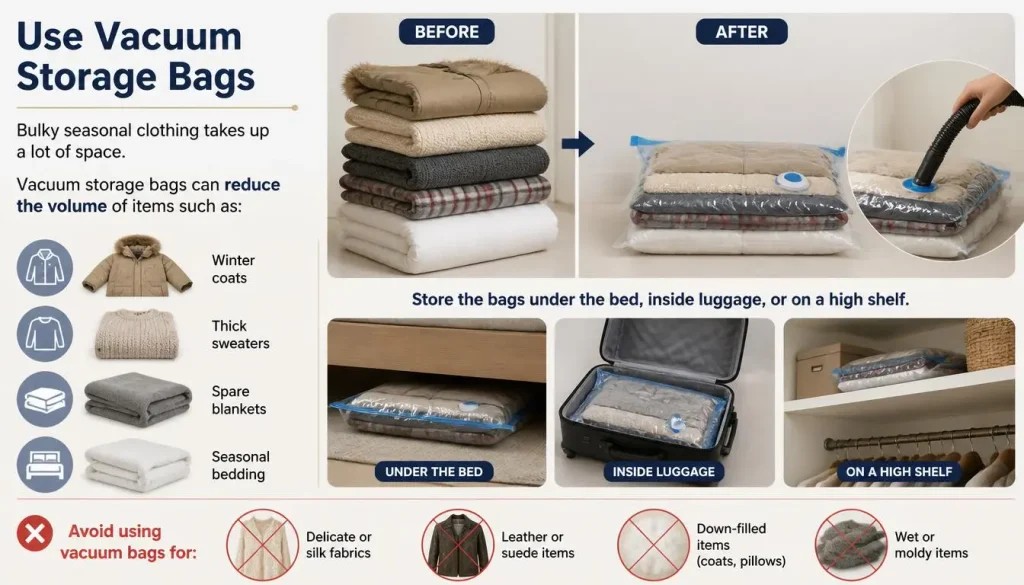
Bulky seasonal clothing takes up a lot of space.
Vacuum storage bags can reduce the volume of items such as:
- Winter coats
- Thick sweaters
- Spare blankets
- Seasonal bedding
Store the bags under the bed, inside luggage, or on a high shelf.
Avoid using vacuum bags for delicate items that should not remain compressed for long periods.
25. Add Over-Bed Storage
The wall above a bed is often one of the largest unused areas in a bedroom.
You can add:
- High shelves
- Wall cabinets
- Storage cubes
- Built-in units
Keep heavier or frequently used items in safer, easier-to-reach locations.
Use over-bed storage mainly for lightweight or less frequently used belongings, and make sure anything mounted above the bed is properly secured.
Which No-Closet Bedroom Storage Idea Is Best for You?
The right solution depends on your space and lifestyle.
| Situation | Best Storage Option | Floor Space Needed | Renter-Friendly | Typical Cost Level |
|---|---|---|---|---|
| Very small bedroom | Wall-mounted rail + shelves | Very low | Sometimes | Low to medium |
| Rental bedroom | Freestanding clothing rack | Low | Yes | Low |
| Lots of hanging clothes | Wardrobe or armoire | Medium | Yes | Medium to high |
| Mostly folded clothes | Tall chest of drawers | Low | Yes | Medium |
| Seasonal clothing | Under-bed bins | Very low | Yes | Low |
| Shoes and accessories | Vertical rack + hooks | Low | Yes | Low |
| Stylish open storage | Open closet wall | Low to medium | Sometimes | Medium |
| Need hidden storage | Wardrobe + storage bed | Medium | Yes | Medium to high |
| Temporary setup | Portable or rolling rack | Low | Yes | Low |
| Minimal floor space | Vertical wall storage | Very low | Sometimes | Medium |
If your room is small, start with vertical storage and the space under your bed.
If you have lots of clothes, a wardrobe combined with drawers will usually be easier to maintain than several small storage pieces.
How to Hang Clothes Without a Closet
Not having a closet does not mean every piece of clothing has to be folded.
There are several ways to create hanging storage.
Use a Freestanding Clothing Rack
This is the simplest solution because no installation is required.
Choose a sturdy rack that matches the amount of clothing you plan to hang.
Install a Wall-Mounted Clothes Rail
A wall rail keeps the floor open and can be installed above drawers or shoe storage.
It works especially well in narrow bedrooms.
Try a Ceiling-Mounted Clothing Rack
A ceiling-mounted rail can create hanging storage when wall space is already occupied.
This option works best in owned homes or spaces where secure installation is possible.
Use a Tension Rod for a No-Drill Option
A heavy-duty tension rod may work between two sturdy walls, inside an alcove, or in another suitable recessed space.
Always stay within the manufacturer’s weight limits.
Do not rely on a light shower-style tension rod for a large wardrobe.
Create Hanging Space in an Empty Corner
Place a small garment rack in a corner or install short rails on adjacent walls.
This creates a compact dressing area without sacrificing an entire wall.
How to Store Clothes Without a Closet or Dresser
If your bedroom has neither a closet nor a dresser, focus on combining hanging, shelf, basket, and under-bed storage.
Create Hanging Storage for Wrinkle-Prone Clothes
Use a garment rack or wall rail for dresses, shirts, jackets, and other clothes that should not be heavily folded.
Use Shelves for Folded Clothes
Open shelves can replace dresser drawers for jeans, sweaters, T-shirts, and other folded items.
Keep stacks short so they are easy to maintain.
Use Baskets and Storage Cubes for Small Items
Underwear, socks, sleepwear, and gym clothing can quickly make open shelves look messy.
Keep them inside baskets or fabric cubes.
Use the Space Under Your Bed
Under-bed storage can act like a hidden dresser.
Separate clothing into individual containers so you do not have to search through one large box every morning.
Rotate Seasonal Clothes
Do not keep winter coats beside summer clothing if you will not need them for months.
Move out-of-season items to:
- High shelves
- Vacuum bags
- Suitcases
- Under-bed containers
This keeps your everyday storage easier to use.
Bedroom Without Closet Ideas for Small Spaces
A small bedroom needs a different approach.
Adding several large pieces of furniture can solve the storage problem but create a new space problem.
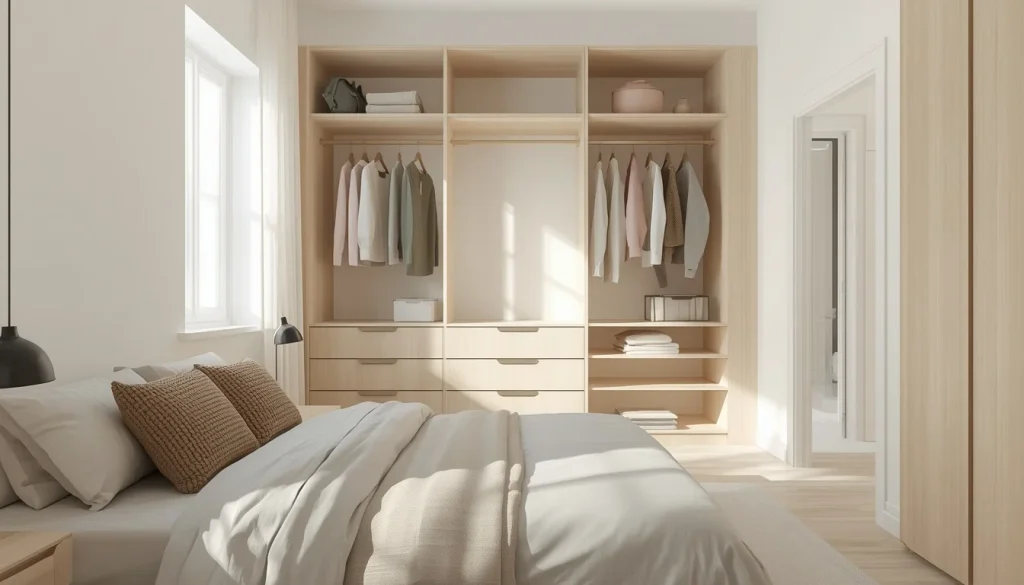
Use Vertical Space
Choose tall shelves, high cabinets, wall-mounted rails, and hooks instead of wide furniture.
Keep the Floor as Clear as Possible
Too many furniture legs and storage units make a small room feel crowded.
Wall storage and under-bed storage leave more visible floor space.
Choose Narrow and Tall Storage
A tall chest, narrow wardrobe, or vertical shoe rack usually works better than a wide cabinet.
Always measure doors, windows, and walkways before choosing furniture.
Use Hidden Storage
Visual clutter makes a small bedroom feel even smaller.
Storage beds, closed baskets, wardrobes, curtains, and cabinets help keep everyday items out of sight.
Combine Multiple Storage Zones
You do not need one huge closet replacement.
A better small-room system may be:
- One wall rail
- Two floating shelves
- Under-bed boxes
- A narrow drawer unit
- Hooks behind the door
Small storage zones can work together without overwhelming the room.
Renter-Friendly and Temporary Closet Ideas
Renters often need storage that can be removed without major wall repairs.
These options provide flexibility.
Portable Closet
A portable fabric wardrobe gives you enclosed clothing storage without permanent construction.
Choose a stable frame and avoid overloading lightweight models.
Rolling Clothing Rack
A rack with wheels can move with you and requires no installation.
It is useful in apartments, dorm rooms, and temporary accommodation.
Tension-Rod Closet
If your room has a suitable alcove, a heavy-duty tension rod may create temporary hanging space without screws.
Check the weight capacity before using it.
Removable Hooks
Removable adhesive hooks can hold lightweight items such as hats, small bags, scarves, and jewelry.
Follow the manufacturer’s surface and weight recommendations.
Freestanding Shelves
Freestanding bookcases, ladder shelves, and storage cubes are easy to take with you when you move.
They can also be used in another room later.
Cheap Bedroom Without Closet Ideas
You do not need a custom wardrobe to organize a bedroom.
Start with affordable options that solve your biggest storage problem first.
Use Furniture You Already Own
Look around your home before buying new storage.
A bookshelf, side table, suitcase, basket, or bench may already be able to hold clothing.
Repurpose a Bookcase
Add baskets to a basic bookcase and use it for folded clothes, shoes, or accessories.
Add Affordable Baskets and Bins
Simple fabric bins can make open shelves more organized without the cost of extra drawers.
Make a Simple DIY Clothes Rack
A basic rail can sometimes be built from suitable pipe or timber components.
Make sure any DIY rack is strong enough for the weight it will carry.
Use Suitcases for Seasonal Clothes
Instead of buying another storage box, use empty luggage for items you do not need every day.
Declutter Before Buying More Storage
The cheapest storage solution may be reducing what needs to be stored.
Donate, sell, recycle, or discard items you no longer use before spending money on new furniture.
Where to Store Shoes and Accessories Without a Closet
A no-closet bedroom needs a plan for more than clothes.
Shoes, bags, belts, scarves, and jewelry also need dedicated spaces.
Use a Vertical Shoe Rack
A tall, narrow shoe rack makes good use of vertical space.
Place it:
- Beside a wardrobe
- Near the bedroom door
- Under a clothes rail
- In an empty corner
Try an Over-the-Door Shoe Organizer
This keeps shoes off the floor while using space that might otherwise be wasted.
Some organizers can also hold accessories instead of shoes.
Store Bags and Hats on Wall Hooks
Place hooks at different heights to create a simple accessory wall.
Avoid hanging too many bulky bags in one place.
Use Baskets for Belts and Scarves
Small baskets prevent accessories from disappearing inside larger storage containers.
Separate different categories if possible.
Add Small Storage for Jewelry
Use a jewelry box, small tray, pegboard, drawer organizer, or wall-mounted jewelry holder.
Keep frequently used pieces somewhere easy to reach.
How to Hide Clothes and Keep a No-Closet Bedroom Looking Good
Open clothing storage can look stylish, but it needs more attention than a closed closet.
The goal is to make the storage feel intentional.
Hide an Open Rack Behind Curtains
A simple curtain can instantly reduce visual clutter.
It also lets you hide the storage area when guests visit or when the room feels busy.
Use Matching Storage Bins
Different colors, shapes, and packaging can make open shelving look messy.
Matching baskets or boxes create a cleaner visual rhythm.
Choose Closed Storage for Messy Categories
Some things are difficult to display neatly.
Keep underwear, socks, laundry, and miscellaneous accessories inside drawers, baskets, or closed cabinets.
Use Hidden Storage Furniture
Storage beds, benches, ottomans, and drawer nightstands allow you to keep clothing nearby without leaving it visible.
Keep Visible Clothes Curated
You do not have to display your entire wardrobe on an open rack.
Keep your most-used or best-looking pieces visible and store seasonal items elsewhere.
Use Matching Hangers
Matching hangers are a small detail, but they can make an open clothing rack look much more organized.
They also help clothes sit at a similar height.
How to Organize a Bedroom Without a Closet
Once you have enough storage, the next challenge is keeping it organized.
A simple system works better than a complicated one.
Step 1: Declutter Your Clothes
Remove everything you no longer wear, need, or enjoy.
Do not waste your limited storage space on items you have not used in years.
Step 2: Separate Hanging and Folded Clothes
Put wrinkle-prone pieces on a rail.
Fold items such as T-shirts, jeans, sweaters, and activewear.
Step 3: Create Everyday Storage
Keep the clothing you wear most often easiest to reach.
Do not place daily items in high cabinets or under several storage boxes.
Step 4: Create Dedicated Shoe and Accessory Storage
Give shoes, bags, jewelry, belts, and scarves their own locations.
Small categories become clutter quickly when they do not have a home.
Step 5: Store Seasonal Clothes Separately
Move off-season clothing away from your main wardrobe area.
This makes your everyday clothes easier to see and access.
Step 6: Reset the Room Regularly
Put clothes back after wearing or washing them.
A quick weekly reset can prevent an open storage system from becoming messy.
Best No-Closet Setup Based on Your Bedroom
Different rooms need different solutions.
Here are a few simple combinations.
For a Tiny Bedroom
Try:
- Wall-mounted clothes rail
- Under-bed boxes
- Floating shelf
- Hooks behind the door
This setup keeps most storage off the floor.
For a Rental Bedroom
Try:
- Freestanding garment rack
- Small chest of drawers
- Baskets
- Over-the-door organizer
Everything can move with you later.
For a Large Bedroom
Try:
- Freestanding wardrobe
- Wide dresser
- Storage bench
- Additional shoe rack
A larger room gives you more freedom to combine closed and open storage.
For a Minimalist Bedroom
Try:
- Simple open clothes rack
- Small drawer unit
- Hidden under-bed storage
- Limited visible clothing
Keeping fewer items on display will help maintain the clean look.
For Someone With Lots of Clothes
Try:
- Large wardrobe
- Separate drawer storage
- Shoe organizer
- Upper seasonal storage
- Wall hooks for accessories
Do not force everything onto one garment rack. Multiple storage zones will usually be easier to maintain.
Open Clothes Rack vs. Wardrobe: Which Is Better?
Both options can work well, but they solve different problems.
| Feature | Open Clothes Rack | Wardrobe |
|---|---|---|
| Takes up less visual space | Usually | Sometimes |
| Hides clothes | No | Yes |
| Easy to move | Yes | Depends on size |
| Good for renters | Excellent | Good |
| Storage capacity | Low to medium | Medium to high |
| Easy access | Excellent | Good |
| Requires organization | High | Moderate |
| Works in tiny rooms | Often | Depends on size |
| Protects clothes from dust | Limited | Better |
| Typical price | Lower | Higher |
Choose a clothing rack if you want an affordable, flexible solution and have a relatively small wardrobe.
Choose a wardrobe if you own more clothes, prefer hidden storage, or want the bedroom to look calmer.
Some bedrooms work best with both: a small wardrobe for most clothing and an open rack for everyday pieces.
Mistakes to Avoid When Organizing a Bedroom Without a Closet
Good storage is not only about adding more furniture.
Avoid these common mistakes.
Buying Too Much Storage Before Decluttering
More containers do not automatically make a room organized.
Reduce unnecessary items first.
Ignoring Vertical Space
Leaving walls empty while filling the floor with furniture wastes valuable space.
Leaving Everything Visible
Open storage works best when some items are hidden.
Use baskets, drawers, curtains, or cabinets for visually messy categories.
Overloading Clothing Racks
A rack packed from one end to the other is harder to use and may become unstable.
Keep within the manufacturer’s recommended weight capacity.
Forgetting Shoes
Shoes often end up scattered around a room if you do not plan storage for them from the beginning.
Choosing Oversized Furniture
A large wardrobe may give you more storage but make a small bedroom uncomfortable to move through.
Measure before buying.
Creating Storage That Is Hard to Reach
If everyday clothing is stored too high, too low, or behind several other items, the system will become frustrating.
Keep daily essentials accessible.
Mixing Too Many Storage Styles
A random combination of plastic boxes, baskets, shelves, racks, and furniture can create visual clutter.
Try to repeat similar materials, finishes, or shapes.
Frequently Asked Questions About 25 Bedroom Without Closet Ideas
What can I use instead of a closet in a bedroom?
You can use a freestanding wardrobe, clothing rack, wall-mounted clothes rail, dresser, shelves, storage bed, baskets, hooks, or modular storage system.
The best closet alternative depends on how much clothing you own and how much floor space is available.
Where do I put clothes if my bedroom has no closet?
Hang wrinkle-prone clothing on a garment rack or wall rail. Fold other clothes into drawers, shelves, baskets, or under-bed containers. Store seasonal clothing in high shelves, luggage, or vacuum bags.
How do I hang clothes without a closet?
The easiest options are a freestanding garment rack, wall-mounted clothes rail, ceiling-mounted rail, or sturdy tension rod in a suitable alcove.
A freestanding rack is usually the simplest choice for renters.
How do I store clothes without a closet or dresser?
Combine open shelves, storage cubes, baskets, under-bed containers, hanging rails, and multi-purpose furniture.
Use baskets for small items and shelves for folded clothes.
How do I organize a tiny bedroom with no closet?
Use vertical storage first.
A wall-mounted rail, tall narrow drawers, floating shelves, under-bed boxes, and an over-the-door organizer can add storage without taking up much floor space.
What is the cheapest alternative to a closet?
A basic clothing rack is usually one of the simplest low-cost alternatives.
You can also repurpose an existing bookshelf, use baskets, add hooks, or store seasonal clothes inside suitcases you already own.
How can I hide clothes without a closet?
Place a curtain in front of an open clothing rack or storage wall.
You can also use a wardrobe, fabric closet, storage bed, closed baskets, cabinets, or a folding screen.
Can I create a closet in a room that does not have one?
Yes.
You can create an open closet using a clothes rail, shelves, drawers, hooks, and a curtain.
A more permanent built-in closet may also be possible, but it usually requires more space, construction, and planning.
What is the best renter-friendly closet alternative?
A freestanding clothing rack or portable wardrobe is usually one of the most practical renter-friendly choices because it does not require permanent installation.
Freestanding shelves and over-the-door organizers are also useful.
Where do I store shoes without a closet?
Use a vertical shoe rack, under-bed shoe organizer, over-the-door organizer, storage bench, cubbies, or the lower shelf of a garment rack.
Keep frequently worn shoes easy to reach.
Is a wardrobe better than a clothing rack?
A wardrobe is better if you need more capacity and want your clothes hidden.
A clothing rack is better if you want something affordable, lightweight, easy to move, and suitable for a small or temporary space.
Final Thoughts
A bedroom without a closet does not have to feel cluttered or unfinished.
The key is to stop looking for one piece of furniture that replaces an entire closet. Instead, create a system that gives hanging clothes, folded items, shoes, accessories, and seasonal belongings their own places.
For a small bedroom, focus on vertical and under-bed storage. For a rental, use freestanding and removable solutions. If you own a large wardrobe, choose closed storage that can handle more clothing.
Even a simple combination of a clothes rack, drawers, shelves, baskets, and under-bed boxes can turn a bedroom with no closet into a practical, organized space.

“A comfortable home and a healthy lifestyle go hand in hand.”
Hi, I’m Ethan Carter, the founder and lead editor of TheBestHomeFit. I’m passionate about helping people create beautiful, functional living spaces while building healthier lifestyles at home. Over the years, I’ve spent countless hours researching home decor trends, testing home gym equipment, and reviewing products to help readers make smarter buying decisions.
Through TheBestHomeFit, I share practical home improvement ideas, honest product reviews, buying guides, and fitness tips designed for everyday homeowners. My goal is to make it easier for you to create a home that looks great, feels comfortable, and supports your well-being.
When I’m not researching the latest products or writing in-depth guides, you’ll usually find me redesigning a room, trying new home workout routines, or enjoying quality time with my family.