

A well-designed coastal bedroom should feel calm, comfortable, bright, and naturally connected to the sea. However, creating this look does not mean filling the room with anchors, seashells, ropes, and beach signs. The most appealing coastal bedrooms use soft colours, breathable fabrics, natural materials, uncluttered layouts, and carefully selected decorative details.
These coastal bedroom design ideas will help you create a relaxing retreat whether you live beside the ocean, in a busy city, or in a colder inland climate. You will find practical guidance for choosing colours, furniture, bedding, lighting, flooring, storage, and accessories. The guide also includes ideas for small rooms, rental properties, guest bedrooms, children’s rooms, and homes exposed to real coastal weather.
How Do You Design a Coastal Bedroom?
Start with a light neutral colour palette, introduce soft blue, green, or sandy accents, and use natural materials such as linen, cotton, rattan, jute, and light wood. Keep the layout open, reduce visual clutter, and choose comfortable furniture. Coastal references should be subtle so the room feels relaxed and sophisticated rather than heavily themed.
What Is Coastal Bedroom Design?
Coastal bedroom design is inspired by the colours, textures, light, and relaxed atmosphere of the shoreline. It usually combines warm whites, sandy neutrals, ocean blues, natural wood, woven fibres, and lightweight fabrics.
The purpose is not to recreate a beach inside the bedroom. Instead, the design should capture the peaceful feeling of being near the water.
Common features include:
- A light and calming colour palette
- Natural or weathered materials
- Soft, breathable bedding
- Comfortable and functional furniture
- Plenty of natural light
- Simple, uncluttered decoration
- Subtle references to the sea or landscape
Coastal vs Beach-Themed vs Nautical Bedrooms
| Style | Main Characteristics | Typical Colours | Common Decorative Details |
|---|---|---|---|
| Coastal | Relaxed, natural, sophisticated | White, sand, blue, green | Linen, rattan, timber, landscape art |
| Beach-themed | Casual, colourful, playful | Aqua, coral, turquoise | Shells, surfboards, beach signs |
| Nautical | Structured and maritime-inspired | Navy, white, red | Anchors, rope, stripes, ship details |
A modern coastal bedroom normally feels softer and more refined than a nautical or heavily beach-themed room.
Essential Elements of a Coastal Bedroom
Before choosing accessories, establish the main design elements that will make the room feel balanced and cohesive.
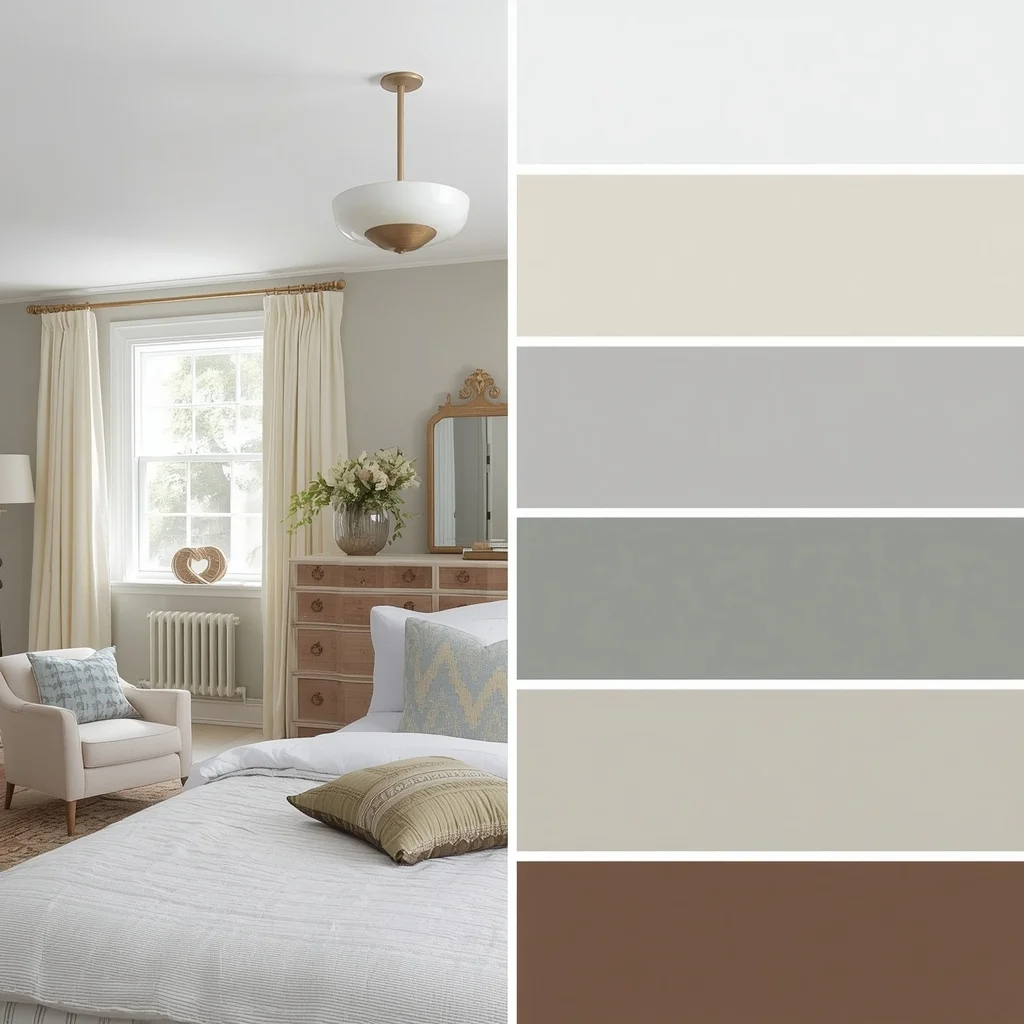
A Light and Airy Colour Palette
Warm white, cream, beige, pale grey, soft blue, muted green, and sandy brown work especially well in coastal bedrooms.
Pure white can sometimes feel cold or clinical. A warmer white with subtle cream, beige, or grey undertones usually creates a more comfortable atmosphere.
Natural Materials
Natural materials make a coastal bedroom feel more authentic. Consider using:
- Light oak
- Whitewashed wood
- Rattan
- Cane
- Bamboo
- Jute
- Seagrass
- Linen
- Cotton
- Woven wool
You do not need to use every material. Two or three natural textures are usually enough to create depth.
Comfortable Layered Textures
Coastal bedrooms should look inviting rather than overly perfect. Layer smooth cotton sheets with a linen duvet, a lightweight quilt, a woven throw, and a few textured cushions.
The contrast between soft fabrics, natural wood, and woven fibres creates visual interest without relying on bright colours.

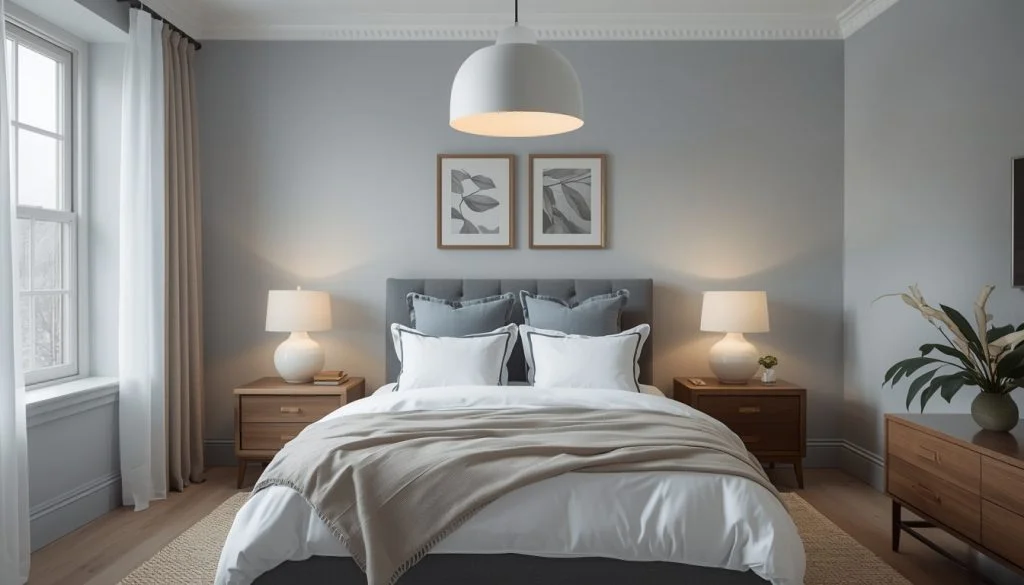
Soft, Practical Lighting
Use several sources of light instead of depending on one ceiling fixture.
A balanced lighting plan may include:
- Natural daylight
- A central pendant light
- Bedside lamps or wall sconces
- A reading lamp
- Soft accent lighting
Warm bulbs usually feel more relaxing than very cool white bulbs, especially in bedrooms with grey, blue, or white walls.
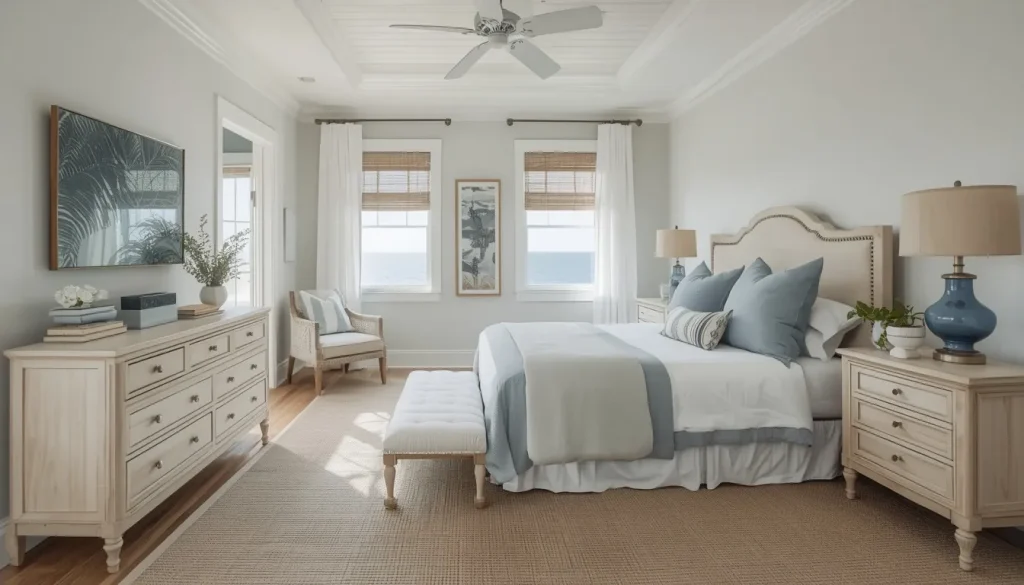
Relaxed, Functional Furniture
Choose furniture that suits the size of the room. A coastal bedroom should feel open, so avoid oversized beds, bulky dressers, and unnecessary accent pieces.
Light wood, painted timber, upholstered headboards, cane panels, and simple furniture silhouettes all work well.
25 Coastal Bedroom Design Ideas
1. Start With Warm White Walls
Warm white walls create a bright and flexible foundation. They reflect natural light and allow blue, green, timber, and woven textures to stand out.
Choose a white with cream, beige, or soft grey undertones. Avoid extremely bright white if the room receives limited daylight, as it may appear cold.
2. Build a Sand-Inspired Neutral Base
Use cream, tan, beige, taupe, and light brown to recreate the quiet warmth of sand and natural stone.
A sand-inspired palette works particularly well for people who want a neutral coastal bedroom without relying heavily on blue.
3. Add Soft Ocean-Blue Accents
Introduce pale blue through cushions, bedding, artwork, lamps, or a small chair. You do not need to paint the entire room blue.
Soft blue works best when balanced with warm white, natural timber, and beige textiles.
4. Use Navy for Sophisticated Contrast
Navy can add depth to an otherwise light room. Use it on a headboard, feature wall, throw blanket, bedside cabinet, or patterned rug.
Because navy is visually strong, keep the surrounding colours light and warm.
5. Introduce Muted Sea-Green Tones
Sage, eucalyptus, seafoam, and muted olive offer an alternative to traditional coastal blue.
These colours pair beautifully with cream, linen, pale wood, and woven materials. They are especially suitable for earthy, contemporary coastal interiors.
6. Choose a Light-Wood Bed Frame
A bed made from light oak, ash, pine, or whitewashed timber helps establish a natural coastal look.
Choose a simple design with clean lines rather than a heavy, highly decorative frame. The bed should feel relaxed and visually light.
7. Add a Rattan or Cane Headboard
A rattan or cane headboard creates a strong focal point while introducing natural texture.
To prevent the room from feeling too rustic, combine the headboard with crisp bedding, simple bedside tables, and modern lighting.
8. Layer White and Neutral Bedding
Begin with white or cream sheets, add a neutral duvet, and finish with a lightweight quilt or throw.
Use only a few decorative cushions. Too many pillows can make the bed look crowded and reduce everyday practicality.
9. Select Breathable Linen and Cotton Fabrics
Linen and cotton are ideal for coastal bedrooms because they feel natural, relaxed, and breathable.
In warmer climates, use lightweight linen and cotton percale. In cooler climates, add a quilt, wool throw, or brushed cotton layer without changing the overall coastal palette.
10. Anchor the Room With a Woven Rug
A jute, sisal, wool, or flatwoven rug can add warmth and texture.
In bedrooms, comfort matters. If rough natural fibre feels uncomfortable underfoot, choose a softer wool-blend or washable woven rug with a similar appearance.
11. Hang Light, Flowing Curtains
Sheer or lightweight curtains soften the room and allow filtered daylight to enter.
For privacy and better sleep, layer them with blackout curtains, lined panels, roller blinds, or shutters.
12. Create a Shiplap Feature Wall
White or pale-painted shiplap can add architectural character behind the bed.
Use it on one wall rather than every surface unless the room is large. Too much panelling may make a small bedroom feel busy.
13. Try Subtle Coastal Wallpaper
Choose wallpaper with delicate waves, botanical patterns, soft stripes, grasscloth texture, or abstract natural forms.
Avoid overly literal prints featuring repeated anchors, boats, or seashells unless you are decorating a playful children’s room.
14. Add One Large Piece of Artwork
An oversized landscape, abstract seascape, coastal photograph, or textured canvas can create a more sophisticated result than several small decorative signs.
Choose artwork that complements the room’s colours rather than matching every item exactly.
15. Use Woven Pendant Lighting
Rattan, bamboo, cane, and woven-fibre pendants add warmth and create attractive patterns when illuminated.
Keep the scale proportional to the room. A very large pendant may overwhelm a small bedroom.
16. Bring in Greenery
Indoor plants add freshness and help connect the room to nature.
Choose plants that suit the available light and humidity. A simple ceramic pot, woven basket, or terracotta planter will complement the coastal style.
17. Use Mirrors to Reflect Natural Light
Place a mirror opposite or beside a window to increase brightness.
In a small coastal bedroom, one large mirror usually looks cleaner than several small mirrors. Avoid positioning it where it reflects clutter.
18. Create a Relaxed Reading Corner
If space allows, add a comfortable chair, compact side table, and reading lamp.
A linen armchair, woven lounge chair, or small upholstered bench can create a useful retreat without dominating the room.
19. Keep Storage Closed and Organised
Use bedside drawers, under-bed storage, baskets, and wardrobes to reduce visual clutter.
Open shelving can work, but display only a few attractive objects. A calm room depends as much on organisation as it does on colour.
20. Mix Stripes With Organic Patterns
Classic stripes can work well in coastal bedrooms, particularly on cushions, throws, or upholstered benches.
Balance them with softer patterns inspired by plants, waves, or natural textures. Avoid using several bold patterns in the same area.
21. Combine Coastal Style With Minimalism
A modern coastal bedroom often uses clean lines, limited accessories, neutral colours, and carefully selected natural materials.
Instead of decorating every surface, leave some walls, tables, and corners visually open.
22. Add Vintage or Collected Pieces
A vintage timber chest, old ceramic lamp, framed map, or handcrafted stool can give the room personality.
Collected objects often feel more authentic than buying a complete matching furniture set.
23. Style a Coastal Guest Bedroom
Focus on comfort and convenience. Provide supportive pillows, accessible lighting, luggage space, a small mirror, and a clear bedside surface.
Keep the palette neutral so the room appeals to different guests.
24. Personalise the Room With Meaningful Memories
Use framed travel photography, locally made artwork, handmade ceramics, or objects connected to a favourite coastal destination.
Personal items create character without making the room feel commercially themed.
25. Leave Space for the Room to Breathe
One of the most important coastal bedroom design ideas is restraint.
You do not need to fill every wall, table, or shelf. Empty space allows natural materials, light, and carefully chosen furniture to have greater visual impact.
Neutral Coastal Bedroom Ideas Without Blue
A coastal bedroom can feel connected to the sea without using blue. Neutral coastal rooms often look warmer, calmer, and more timeless.

Use Warm White, Sand, and Beige
Combine warm white walls with beige bedding, a sand-coloured rug, and light timber furniture.
This palette creates a soft, sun-washed appearance that works in both traditional and modern homes.
Combine Cream With Natural Wood
Cream textiles can soften the appearance of wooden furniture and create a relaxed, organic atmosphere.
Use different shades of cream to prevent the room from appearing flat.
Try Grey and Weathered Timber
Warm grey can work well with reclaimed wood, white bedding, and black or aged-brass accents.
Avoid using too many cool grey tones, especially in rooms with limited sunlight.
Add Chocolate Brown for Warmth
Dark brown can create contrast through a timber bed, leather bench, bedside cabinet, or picture frame.
Keep the walls and bedding light so the room remains open and balanced.
Use Sage or Olive Instead of Blue
Muted green connects the bedroom to coastal vegetation and natural landscapes.
Pair sage with warm white, tan, cream, and woven textures for a calm, earthy result.
Cozy and Moody Coastal Bedroom Ideas
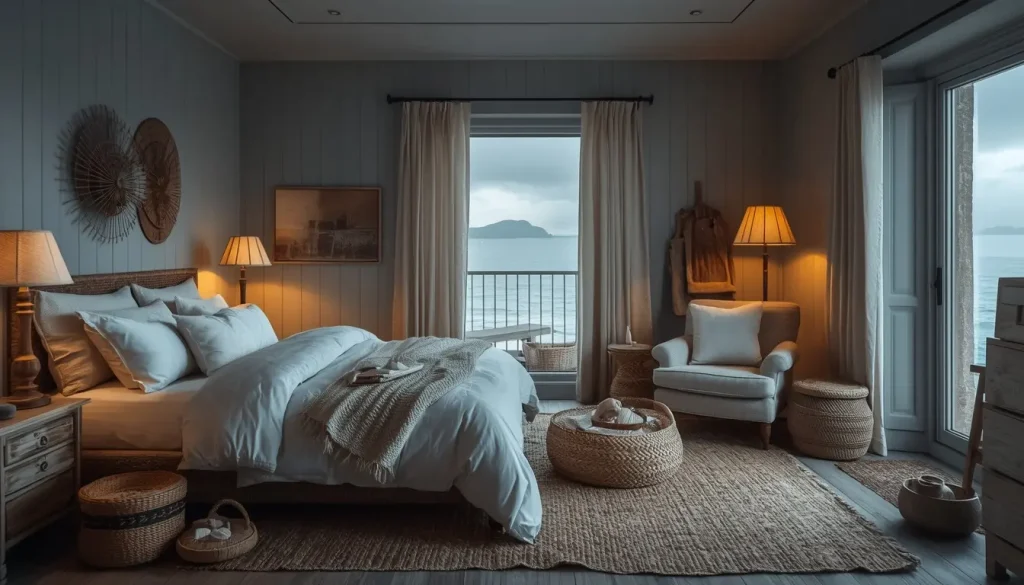
Coastal design does not always need to be bright white. A deeper palette can create a comfortable and dramatic retreat.
Use Deep Navy Carefully
A navy feature wall can make a bed feel more grounded. Balance it with light bedding, pale flooring, and warm lighting.
Add Dark Timber
Dark wood adds depth and can make a coastal bedroom feel more mature. Use it selectively so the room does not become visually heavy.
Layer Soft Textiles
Combine a thick throw, upholstered headboard, soft rug, and heavier curtains for additional warmth.
This approach is particularly useful in colder regions of the USA, UK, and Canada.
Introduce Warm Metal Finishes
Aged brass, antique bronze, and brushed gold can warm up blue, grey, or green coastal palettes.
Use them on lamps, handles, frames, or small furniture details.
Coastal Bedroom Ideas for Different Rooms
Coastal Primary Bedroom
A primary bedroom should feel calm and personal. Use a comfortable bed, quality bedding, layered lighting, and enough concealed storage to maintain a peaceful environment.
A bench or small seating area can be added if the room has sufficient space.
Coastal Guest Bedroom
Choose a welcoming neutral palette and provide practical features such as bedside lighting, accessible power outlets, luggage storage, and extra blankets.
Avoid overly personal decoration so guests can feel comfortable.
Coastal Kids’ Bedroom
Use washable fabrics, durable furniture, soft colour, and playful coastal references.
A few fish, wave, surf, or marine-life details can work well without overwhelming the room.
Coastal Teen Bedroom
Combine natural materials with a more mature colour palette. Navy, sage, warm white, and timber can create a stylish room that does not feel childish.
Include functional storage, a desk, and flexible lighting.
Coastal Twin or Bunk Bedroom
Twin and bunk rooms benefit from symmetrical bedding, wall-mounted lights, and built-in storage.
Use matching colours but vary the cushions or throws slightly to give each sleeping area personality.
Coastal Nursery
Choose soft, calming colours and safe, practical materials.
Muted blue, pale green, beige, and warm white can create a soothing nursery without depending on strong nautical themes.
Popular Coastal Bedroom Styles
Modern Coastal Bedroom
Modern coastal style combines clean lines, warm neutral colours, large-scale artwork, natural materials, and minimal decoration.
Black, brass, or dark timber accents can provide contrast.
Hamptons-Style Coastal Bedroom
Hamptons interiors often use white, navy, tailored furniture, upholstered headboards, symmetrical lighting, and elegant panelling.
The result feels polished rather than casual.
Cape Cod Coastal Bedroom
Cape Cod style may include shiplap, traditional furniture, striped textiles, weathered timber, and classic blue-and-white details.
California Coastal Bedroom
California coastal design tends to feel light, relaxed, and contemporary. It frequently combines cream, pale timber, linen, sculptural furniture, and earthy textures.
Coastal Grandmother Bedroom
This style blends classic coastal elements with traditional comfort. Think floral fabrics, vintage furniture, soft blue, warm white, wicker, books, and collected artwork.
English Seaside Cottage Bedroom
An English coastal bedroom may use painted furniture, small-scale patterns, warm white walls, antique pieces, and slightly weathered materials.
Australian Coastal Bedroom
Australian coastal style often focuses on sunlight, indoor-outdoor connection, linen, pale timber, warm white, woven furniture, and uncluttered layouts.
Boho Coastal Bedroom
Boho coastal bedrooms combine rattan, plants, relaxed textiles, handcrafted objects, and layered patterns.
Keep the palette controlled to prevent the space from becoming visually busy.
Luxury Coastal Bedroom
Luxury coastal design depends on material quality rather than excessive decoration.
Use custom curtains, layered lighting, premium bedding, an upholstered bed, large artwork, and carefully finished timber or metal details.
Coastal Bedroom Colour Schemes
| Colour Scheme | Best Use | Suggested Combination |
|---|---|---|
| White and sand | Small or neutral bedrooms | Warm white, beige, oak |
| White and pale blue | Classic coastal spaces | White, sky blue, natural timber |
| Cream and sage | Calm, earthy rooms | Cream, sage, tan |
| Navy and tan | Sophisticated bedrooms | Navy, tan, white, brass |
| Grey and dusty blue | Cooler or contemporary rooms | Warm grey, dusty blue, timber |
| Aqua and coral | Playful rooms | Soft aqua, muted coral, white |
| Brown and cream | Neutral coastal rooms | Chocolate brown, cream, jute |
Choose one dominant colour, one supporting colour, and one accent colour. This keeps the room cohesive and prevents the palette from becoming complicated.
Small Coastal Bedroom Design Ideas
Small bedrooms benefit from a light palette and carefully scaled furniture.
Use warm white walls, one or two accent colours, and furniture with visible legs. Floating bedside tables can create more floor space, while wall-mounted sconces free the top of the nightstand.
Choose one large artwork instead of several small pieces. Use mirrors strategically, but avoid placing them where they reflect clutter.
Under-bed storage, fitted wardrobes, and storage benches can help keep the room organised. Avoid adding a reading chair or large dresser unless there is enough walking space.
Renter-Friendly Coastal Bedroom Ideas
You can create a coastal bedroom without painting walls or making permanent changes.
Start with bedding, curtains, cushions, rugs, lampshades, and artwork. These items can transform the room and move with you later.
Consider using:
- Peel-and-stick wallpaper
- Removable wall hooks
- Freestanding rattan furniture
- Lightweight fabric wall hangings
- Washable rugs
- Temporary headboards
- Removable cabinet handles
Focus on portable pieces rather than permanent architectural changes.
Coastal Bedroom Ideas on a Budget
A coastal bedroom makeover does not require replacing everything.
Paint an existing bedside table, change the cushion covers, update the lampshades, or add a new throw. Second-hand timber furniture can often be refinished or whitewashed.
Affordable changes include:
- Neutral bedding
- A simple woven basket
- DIY wall art
- Thrifted frames
- New curtain panels
- A natural-fibre-look rug
- One statement lamp
- Fresh greenery
Spend more on items that affect comfort, such as the mattress, pillows, curtains, and everyday bedding.
Easy DIY Coastal Bedroom Ideas
Paint Existing Furniture
Use warm white, pale grey, sage, or muted blue to update an old cabinet or bedside table.
Make Simple Coastal Artwork
Create an abstract painting using colours inspired by sand, sky, water, and stone. The artwork does not need literal beach imagery.
Create a Fabric Headboard
A simple upholstered headboard can be made using plywood, padding, and durable linen-look fabric.
Update a Lamp
Replace a dated shade with a woven, linen, or neutral fabric option.
Whitewash Timber
A light whitewash can soften dark or orange-toned wood while allowing the natural grain to remain visible.
How to Choose Coastal Bedroom Bedding
Bedding is one of the easiest ways to establish a coastal look.

Choose a Calm Base Colour
White, cream, beige, pale blue, grey, or sage works well for the main duvet or quilt.
Use Breathable Materials
Cotton and linen are suitable for warm conditions. In colder climates, layer them with wool, flannel, or a heavier quilt.
Layer Without Overcrowding
Use sheets, a duvet, one folded quilt or throw, and a few cushions. Too many decorative pillows can make the bed inconvenient.
Keep Patterns Controlled
Stripes, checks, botanical prints, and subtle wave-inspired patterns can work well. Use one main pattern and support it with solid colours.
Coastal Bedroom Walls, Floors, and Ceilings
Best Flooring for a Coastal Bedroom
Suitable options include:
- Light hardwood
- White oak
- Engineered timber
- Luxury vinyl plank
- Neutral carpet
- Sisal-look flooring
- Washable woven rugs
For homes near the sea, choose flooring that can tolerate moisture, sand, and regular cleaning.
Coastal Bedroom Ceiling Ideas
A simple white ceiling is often enough. For more character, consider exposed beams, pale timber, shiplap, or a subtle blue-grey paint.
Ceiling details should support the room rather than compete with the bed.
Doors, Trim, and Panelling
Board-and-batten, tongue-and-groove panelling, painted trim, and simple timber doors can add architectural interest.
Pale blue or sage trim can create a distinctive look, but use it consistently throughout the room.
How to Plan a Coastal Bedroom Layout
A beautiful room must also be easy to use.
Position the Bed First
The bed is usually the main focal point. Place it where it does not block windows, doors, wardrobes, or natural walking routes.
Maintain Comfortable Clearance
Leave enough space to walk around the bed and open drawers or wardrobe doors.
Choose the Correct Rug Size
The rug should visually connect the bed and surrounding furniture. A rug that is too small may make the room feel disconnected.
Match Nightstand Height
A nightstand should be close to the height of the mattress so lamps, phones, books, and water are easy to reach.
Plan Lighting Around Daily Use
Bedside lights should support reading without shining directly into the eyes. Place switches and charging points where they are accessible from the bed.
| Bedroom Element | What to Consider |
|---|---|
| Bed | Door swing, windows, room proportions |
| Nightstands | Mattress height and available width |
| Rug | Bed size and visible floor coverage |
| Dresser | Drawer clearance and walking space |
| Lighting | Reading needs and power outlets |
| Seating | Add only when space allows |
How to Make a Coastal Bedroom Look Sophisticated
The easiest way to make coastal décor look refined is to focus on atmosphere instead of literal beach symbols.
Use Texture Instead of Themes
Linen, timber, woven fibres, ceramic, and natural stone communicate coastal style without needing anchor or shell decorations.
Limit Literal Coastal Accessories
One collected shell, framed photograph, or handmade ceramic object may be enough. Avoid covering several surfaces with similar themed pieces.
Mix Old and New Furniture
A vintage timber chest beside a modern bed can make the room feel collected and personal.
Avoid Matching Sets
Furniture does not need to match perfectly. Choose pieces with similar tones, proportions, or materials instead.
Select Art That Suggests the Coast
Abstract colour, landscape photography, or natural textures often look more sophisticated than signs containing beach-related phrases.
Designing a Bedroom in a Real Coastal Home
A bedroom located near the ocean has different practical needs from a room that only uses coastal-inspired decoration.
Choose Moisture-Resistant Materials
Use sealed timber, suitable flooring, washable fabrics, and furniture finishes designed to tolerate humidity.
Protect Metal From Salt-Air Corrosion
Salt air can affect metal hardware, frames, lamps, and furniture details. Choose corrosion-resistant finishes and clean exposed metal regularly.
Improve Airflow
Leave some space between large furniture and exterior walls. This can improve ventilation and reduce trapped moisture.
Use Washable Textiles
Choose removable cushion covers, washable rugs, and bedding that can be cleaned easily.
Protect Fabrics From Strong Sunlight
Use lined curtains, blinds, or UV-filtering window treatments to reduce fading.
Select Practical Rugs
In homes where sand is regularly carried indoors, choose low-pile, flatwoven, or washable rugs that are easy to maintain.
How to Design a Coastal Bedroom Step by Step
Step 1: Choose Your Coastal Style
Decide whether you prefer modern coastal, Hamptons, boho coastal, Australian coastal, traditional seaside, or another variation.
Step 2: Select Three Main Colours
Choose one base colour, one supporting colour, and one accent colour.
For example:
- Warm white
- Sand
- Pale blue
Step 3: Measure the Room
Measure the walls, doors, windows, bed, and main furniture before purchasing anything new.
Step 4: Position the Bed
Choose the strongest wall and make sure the bed does not interfere with circulation.
Step 5: Add Bedding and Textures
Layer breathable fabric, a rug, curtains, and one or two woven elements.
Step 6: Plan the Lighting
Combine overhead, bedside, and task lighting.
Step 7: Add Artwork and Accessories
Choose a few meaningful decorative items rather than filling every available surface.
Step 8: Remove Unnecessary Objects
Edit the room after styling. Removing one or two items can often improve the final result.
Coastal Bedroom Design Mistakes to Avoid
Using Too Many Beach Symbols
Anchors, boats, ropes, seashells, signs, and fish motifs can quickly become overwhelming.
Choosing Cold White Everywhere
Pure white walls, furniture, and bedding may make the room feel flat or clinical. Add warm undertones and natural textures.
Mixing Too Many Blues
Several unrelated shades of blue can make the palette feel disorganised. Choose one or two compatible tones.
Ignoring Comfort
A stylish room still needs supportive bedding, practical lighting, privacy, and enough storage.
Selecting Oversized Furniture
Large beds, dressers, and chairs can make the room feel cramped.
Adding Too Many Patterns
Mix patterns carefully and keep the colour palette consistent.
Creating Visual Clutter
Too many decorative objects weaken the calm atmosphere associated with coastal style.
Forgetting Blackout Solutions
Sheer curtains look attractive but may not provide enough privacy or darkness for sleep.
Copying a Showroom Exactly
A coastal bedroom should reflect your home, climate, routines, and personality.
Coastal Bedroom Shopping Checklist
Use this checklist before buying new items:
- Warm neutral wall colour
- Bed or headboard
- Breathable sheets
- Duvet or quilt
- Lightweight throw
- Two or three accent cushions
- Woven or washable rug
- Curtains or blinds
- Bedside lighting
- Functional nightstands
- Closed storage
- Laundry basket
- One large artwork
- Mirror
- Plant or greenery
- One or two meaningful decorative objects
You may already own many of these items. Review what can be repurposed before replacing furniture or accessories.
Frequently Asked Questions
What Colours Are Best for a Coastal Bedroom?
Warm white, cream, beige, pale blue, muted green, sandy brown, and soft grey are popular coastal bedroom colours. Choose a limited palette with one dominant colour, one supporting shade, and one accent colour.
Can You Create a Coastal Bedroom Without Blue?
Yes. Use warm white, beige, cream, tan, sage, olive, light wood, and chocolate brown. Natural materials and breathable textiles can create a coastal feeling without any blue.
How Do You Make a Bedroom Look Coastal?
Use light colours, natural materials, layered bedding, woven textures, soft lighting, and uncluttered furniture. Add one or two subtle references to the sea through artwork or colour.
How Do You Avoid Making Coastal Décor Look Tacky?
Avoid excessive anchors, shells, signs, rope, and matching themed accessories. Focus on natural materials, quality textiles, restrained colour, and meaningful artwork.
What Furniture Works Best in a Coastal Bedroom?
Light or weathered timber, cane, rattan, upholstered beds, simple nightstands, and functional storage work well. Choose furniture that fits the size and layout of the room.
What Bedding Is Best for a Coastal Bedroom?
Cotton and linen bedding in white, cream, beige, pale blue, sage, or soft grey creates a relaxed coastal appearance. Add a quilt or throw for texture.
How Can I Decorate a Small Coastal Bedroom?
Use a light colour palette, compact furniture, wall-mounted lights, floating nightstands, under-bed storage, one large artwork, and carefully positioned mirrors.
Can Renters Create a Coastal Bedroom?
Yes. Use removable wallpaper, bedding, rugs, curtains, lamps, artwork, plants, and freestanding furniture. These changes do not require permanent renovation.
Can Dark Wood Work in a Coastal Bedroom?
Dark wood can add warmth and contrast. Balance it with light walls, pale bedding, natural fibres, and good lighting.
How Can I Create a Coastal Bedroom on a Budget?
Update bedding, repaint existing furniture, change lampshades, use second-hand timber pieces, create DIY artwork, and reduce unnecessary decoration.
What Is the Difference Between Coastal and Nautical Style?
Coastal style is relaxed, natural, and inspired by shoreline colours and textures. Nautical style uses more direct maritime references such as anchors, rope, navy stripes, and ship-related décor.
Are Coastal Bedrooms Still in Style?
Coastal bedrooms remain appealing because they focus on comfort, natural light, breathable materials, and calming colours. The most timeless versions avoid excessive themes and use subtle, flexible design choices.
Final Thoughts on Coastal Bedroom Design Ideas
The best coastal bedrooms are not defined by how many beach-related accessories they contain. They succeed because they feel calm, bright, comfortable, and connected to nature.
Begin with a warm neutral foundation, choose a few natural materials, and add colour carefully. Prioritise comfortable bedding, functional storage, suitable lighting, and furniture that fits the room.
Whether you prefer a modern, neutral, moody, traditional, or luxury look, these coastal bedroom design ideas can help you create a space that feels personal, relaxing, and easy to live in. The goal is not to copy a beach house. It is to capture the comfort, openness, and quiet beauty associated with the coast.

“A comfortable home and a healthy lifestyle go hand in hand.”
Hi, I’m Ethan Carter, the founder and lead editor of TheBestHomeFit. I’m passionate about helping people create beautiful, functional living spaces while building healthier lifestyles at home. Over the years, I’ve spent countless hours researching home decor trends, testing home gym equipment, and reviewing products to help readers make smarter buying decisions.
Through TheBestHomeFit, I share practical home improvement ideas, honest product reviews, buying guides, and fitness tips designed for everyday homeowners. My goal is to make it easier for you to create a home that looks great, feels comfortable, and supports your well-being.
When I’m not researching the latest products or writing in-depth guides, you’ll usually find me redesigning a room, trying new home workout routines, or enjoying quality time with my family.



2 thoughts on “Coastal Bedroom Design Ideas: 25 Relaxing Ways to Create a Breezy Retreat”