

The right bedroom furniture can transform an ordinary room into a comfortable, organized, and visually appealing retreat. A well-furnished bedroom should support restful sleep, provide practical storage, and make everyday routines easier without making the space feel crowded.
Whether you are furnishing a small apartment bedroom, a large primary suite, a guest room, or a shared bedroom, the best results come from choosing pieces that fit both the room and your lifestyle.
These bedroom furniture ideas cover beds, nightstands, dressers, wardrobes, storage solutions, layouts, materials, styles, and budget-friendly upgrades. You will also learn how to measure your room, pair different furniture pieces, avoid common layout mistakes, and create a bedroom that feels balanced and functional.
Best Bedroom Furniture Ideas at a Glance
A bedroom does not need to contain a large number of furniture pieces. It needs the right combination of essential, storage, and comfort-focused items.
Some of the most useful bedroom furniture ideas include:
- A bed with built-in drawers
- Floating or wall-mounted nightstands
- A tall dresser for vertical storage
- A bench at the foot of the bed
- A freestanding wardrobe
- A compact reading chair
- A storage ottoman
- A small vanity table
- A desk that doubles as a nightstand
- Wall-mounted shelves
- A narrow console table
- Modular storage cabinets
- A daybed for a guest room
- A Murphy bed for a multipurpose room
- A storage headboard
The best combination depends on the size of the room, the amount of storage you need, and how you use the space.
What Furniture Does a Bedroom Really Need?
Before adding decorative pieces, start with the furniture that supports your daily needs.
A Comfortable Bed
The bed is the most important piece of furniture in the room. It should be comfortable, appropriately sized, and positioned so that you can move around it easily.
A larger bed is not always the better choice. A queen bed may provide more usable floor space than a king bed, especially in a medium-sized bedroom. In a very small room, a full or twin bed may leave enough space for storage and walking paths.
One or Two Nightstands
Nightstands provide convenient space for lamps, phones, books, glasses, and other bedside essentials.
In a shared bedroom, two nightstands create balance and give each person individual storage. In a smaller room, one compact nightstand, floating shelf, or narrow wall-mounted table may be enough.
A Dresser or Chest of Drawers
A dresser is useful for folded clothing, accessories, linens, and personal items.
Wide dressers provide a large top surface, while tall chests use less floor space. Choose the shape that best fits your room and storage requirements.
A Wardrobe or Clothing Storage Unit
A wardrobe can add valuable hanging storage when a bedroom has a small closet or no built-in closet.
Freestanding wardrobes are especially useful in rental properties because they can be moved to another room or home.
A Chair, Bench, or Ottoman
A seating piece gives you a place to put on shoes, read, or temporarily place clothing.
A storage bench or ottoman is particularly useful because it combines seating with hidden storage.

Optional Lifestyle Furniture
Depending on your routine, you may also need:
- A vanity table
- A compact desk
- A bookshelf
- A TV console
- A full-length mirror
- A blanket chest
- A small sofa or chaise lounge
Only add these pieces when the room has enough space to accommodate them comfortably.
How to Choose the Right Bedroom Furniture
Good bedroom furniture should look attractive, function well, and fit the available space.
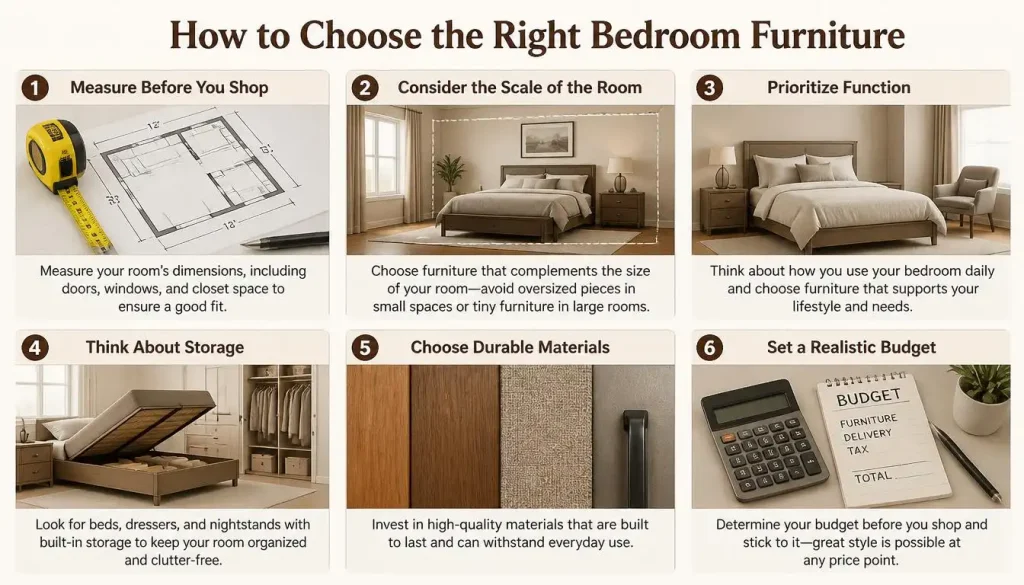
Measure Before You Shop
Measure the room before purchasing any furniture. Record the length and width of each wall, as well as the location of:
- Doors
- Windows
- Closets
- Electrical outlets
- Radiators
- Air vents
- Sloped ceilings
Measure doorways, hallways, and staircases as well. A piece may fit inside the bedroom but still be too large to move through the house.
Consider the Scale of the Room
Furniture should feel proportional to the bedroom.
Large, heavy furniture can overwhelm a small room. Very small furniture can look lost in a large primary bedroom.
Choose pieces that leave enough open floor space to make the room feel comfortable rather than crowded.
Prioritize Function
A beautiful dresser is not useful when its drawers are too shallow. A stylish nightstand may become frustrating when it does not have enough surface space for a lamp and phone.
Before buying a piece, decide what it needs to hold and how often you will use it.
Think About Storage
Consider what you need to store before choosing bedroom furniture.
Someone with a large clothing collection may need a wardrobe and two dressers. Someone with a minimalist wardrobe may only need a compact chest of drawers.
Furniture with drawers, shelves, and hidden compartments can reduce clutter without requiring additional pieces.
Choose Durable Materials
Solid wood furniture is often durable and repairable, although it can be expensive and heavy. Engineered wood is generally more affordable and available in many finishes.
Metal frames can work well in modern, industrial, and minimalist bedrooms. Upholstered pieces add comfort and softness but may require more maintenance.
Set a Realistic Budget
Decide how much you can spend before shopping.
Prioritize the bed frame, mattress, and frequently used storage pieces. Accent furniture can often be purchased secondhand, repurposed, or upgraded later.
Bedroom Furniture Size and Spacing Guide
Correct spacing makes a bedroom easier to use and more visually balanced.
How to Measure the Room Correctly
Create a simple floor plan using the room’s measurements. Include doors, windows, closets, and fixed features.
Then add the dimensions of each furniture piece before purchasing it. This helps you see whether drawers can open fully and whether walking paths will remain clear.
Space Around the Bed
Try to leave approximately 24 to 30 inches of walking space around the accessible sides of the bed.
A smaller clearance may work in a compact bedroom, but the room should still be easy to navigate.
Furniture for Different Bed Sizes
A twin bed works well in children’s rooms, dorm rooms, and very small bedrooms.
A full bed can suit one adult or a compact guest room.
A queen bed is a practical choice for many couples because it provides comfort without taking up as much room as a king bed.
A king bed works best in a large bedroom with enough space for nightstands and clear pathways.
Nightstand Height
The top of the nightstand should usually be close to the height of the mattress.
A nightstand that is much lower or higher can be inconvenient when reaching for a lamp, phone, or glass of water.
Dresser Size
A low, wide dresser works well on a long wall and can support a mirror or television.
A tall chest is a better choice when floor space is limited. Make sure the drawers can open without blocking a walkway or hitting another furniture piece.
Clearance Around Doors and Closets
Do not place furniture where it prevents a door, wardrobe, or closet from opening completely.
Leave enough space in front of storage furniture to stand comfortably while opening drawers or doors.
Bed and Headboard Ideas for Every Bedroom
The bed creates the visual foundation of the room, so its design can influence every other furniture choice.
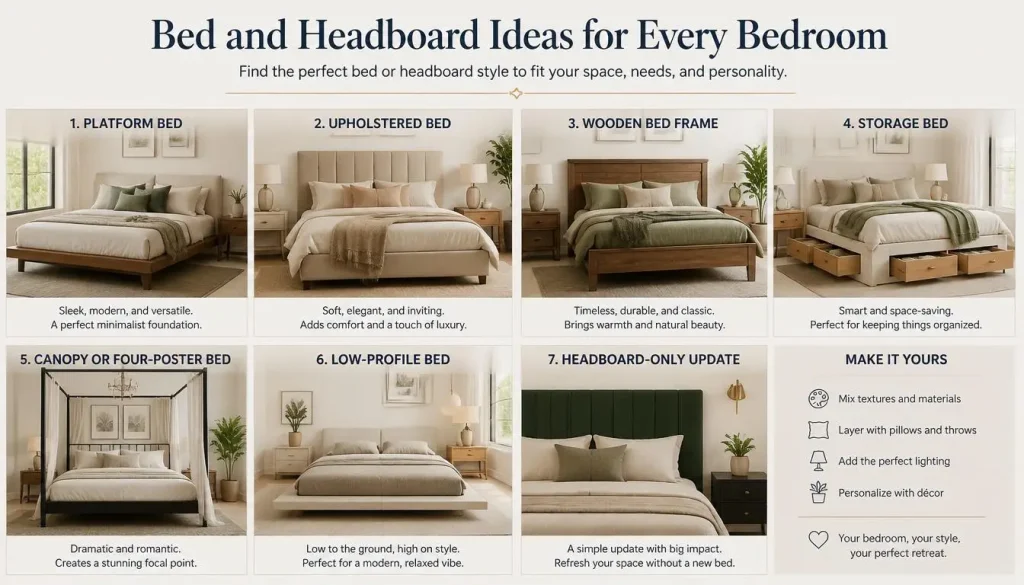
Platform Bed
A platform bed has a clean, simple appearance and does not usually require a box spring.
It works especially well in modern, Scandinavian, minimalist, and contemporary bedrooms.
Upholstered Bed
An upholstered bed adds softness and comfort. It is a good choice for people who enjoy sitting upright in bed to read or watch television.
Neutral fabrics create a timeless look, while velvet or textured materials can make the bed more dramatic.
Wooden Bed Frame
Wooden beds are versatile and available in traditional, rustic, coastal, farmhouse, and modern styles.
Light wood can make a room feel brighter, while dark wood creates a warmer and more formal atmosphere.
Storage Bed
A storage bed includes drawers, shelves, or a lift-up compartment beneath the mattress.
It is one of the most practical furniture ideas for a bedroom with limited closet space.
Canopy or Four-Poster Bed
A canopy bed can create a strong focal point in a large bedroom.
Choose a simple, streamlined frame for a modern room or a detailed wooden frame for a traditional interior.
Low-Profile Bed
A low bed can make a ceiling appear higher and create a relaxed, minimalist look.
However, it may be less comfortable for people who have difficulty sitting down or standing up.
Headboard-Only Update
You do not need to replace the entire bed to change the room’s appearance.
A new upholstered, wooden, rattan, or wall-mounted headboard can refresh the bedroom at a lower cost.
Stylish Bedroom Furniture Ideas
The following ideas can improve both the appearance and function of your bedroom.
1. Make the Bed the Main Focal Point
Position the bed on the room’s most suitable wall and use a distinctive headboard, frame, or surrounding furniture arrangement to draw attention to it.
2. Use Matching Nightstands
Matching nightstands create symmetry and work especially well in traditional, transitional, and hotel-inspired bedrooms.
3. Choose Mismatched Nightstands
Mismatched nightstands can make a bedroom feel more personal and collected.
Keep them visually connected by repeating a material, color, shape, or hardware finish.
4. Add a Bench at the Foot of the Bed
A bench provides seating and visually finishes the bed area.
Choose a storage bench when you need space for blankets, pillows, or seasonal clothing.
5. Create a Reading Corner
Place a comfortable chair near a window or lamp. Add a small side table when space allows.
In a small room, choose a compact chair with a light visual profile.
6. Add a Vanity Area
A small table, mirror, and stool can create a practical dressing area.
A wall-mounted mirror and narrow console can work as a space-saving alternative to a traditional vanity.
7. Use a Dresser as a TV Console
A dresser can support a television while providing clothing storage underneath.
This eliminates the need for a separate media cabinet.
8. Add a Freestanding Wardrobe
A freestanding wardrobe provides extra hanging space and can become an attractive focal point.
Choose a design that complements the bed and dresser without matching them exactly.
9. Place a Small Desk in an Empty Corner
A compact desk can turn an unused corner into a workspace.
Select a desk with drawers so it can also store stationery, documents, or personal items.
10. Use a Storage Ottoman
A storage ottoman can function as seating, a footrest, and hidden storage.
It works well at the foot of the bed or beside a reading chair.
11. Add an Accent Cabinet
A decorative cabinet can store linens, books, or accessories while adding character to the room.
12. Place a Slim Console Under a Window
A narrow console can provide a display surface without blocking too much light.
It can also function as a vanity or temporary workspace.
13. Choose Furniture with Rounded Edges
Curved furniture can soften the appearance of the room and make narrow pathways safer.
14. Use a Statement Dresser
A dresser in a contrasting finish, interesting shape, or vintage style can become a secondary focal point.
15. Add a Blanket Chest
A blanket chest provides storage and can double as a bench.
It works particularly well in traditional, cottage, farmhouse, and vintage bedrooms.
Small Bedroom Furniture Ideas That Save Space
Small bedrooms require careful furniture selection. Every piece should provide a clear benefit.

Choose a Bed with Built-In Storage
Under-bed drawers can store clothing, shoes, linens, and blankets without using additional floor space.
Install Floating Nightstands
Floating nightstands keep the floor visible, which can make the room appear more open.
They also allow you to adjust the height to match the mattress.
Use a Tall Chest Instead of a Wide Dresser
Vertical furniture provides more storage while occupying less floor space.
Secure tall furniture properly to prevent tipping.
Add Wall-Mounted Shelves
Wall shelves can replace a bookcase or display cabinet.
Install them above a desk, dresser, or headboard rather than using a separate floor-standing unit.
Choose a Fold-Down Desk
A wall-mounted desk can be folded away when it is not in use.
This is useful in a small bedroom that also functions as a home office.
Use Furniture with Exposed Legs
Furniture raised off the floor allows more of the floor to remain visible, making the room feel less heavy.
Place a Storage Bench Under a Window
A bench under a window can create seating and storage without interfering with the main layout.
Consider a Murphy Bed
A Murphy bed folds into a wall cabinet when it is not needed.
It can be a practical choice for a studio apartment, home office, or occasional guest room.
Use a Daybed
A daybed functions as both a bed and a sofa.
It works well in guest rooms, children’s rooms, and multipurpose spaces.
Choose Bunk or Loft Beds
Bunk beds save space in shared bedrooms.
A loft bed can create room underneath for a desk, dresser, reading area, or storage unit.
Bedroom Storage Furniture Ideas
Good storage furniture keeps the room organized without making it feel crowded.
Storage Beds and Under-Bed Drawers
Use under-bed storage for items that are not needed every day, such as seasonal clothing, extra linens, and luggage.
Tall Dressers
Tall dressers are ideal for narrow walls and small bedrooms.
Choose models with a stable base and secure them to the wall when necessary.
Wardrobes for Rooms Without Closets
A wardrobe can combine hanging rails, drawers, shelves, and shoe storage in one unit.
Storage Benches
Place a storage bench at the foot of the bed, under a window, or against an empty wall.
Nightstands with Drawers
A nightstandwith drawers hides small items that might otherwise create visual clutter.
Wall-Mounted Cabinets
Wall cabinets can provide additional storage above a desk, dresser, or vanity.
Avoid installing deep cabinets where they could make the room feel enclosed.
Built-In Storage Around the Bed
Built-in cabinets and shelves can frame the bed and use wall space efficiently.
This solution works particularly well when custom storage is needed.
Bedroom Furniture Ideas by Interior Style
Furniture should support the overall design style of the room.
Modern Bedroom Furniture
Choose clean lines, smooth finishes, platform beds, simple dressers, and minimal hardware.
Avoid excessive ornamentation and focus on practical forms.
Minimalist Bedroom Furniture
Use only essential pieces and prioritize hidden storage.
Low-profile beds, floating nightstands, and simple wardrobes work well in minimalist rooms.
Scandinavian Bedroom Furniture
Select light wood, functional shapes, raised legs, and soft neutral finishes.
Scandinavian bedrooms should feel bright, comfortable, and uncluttered.
Japandi Bedroom Furniture
Combine Japanese simplicity with Scandinavian warmth.
Choose low furniture, natural materials, restrained colors, and carefully selected storage pieces.
Rustic Bedroom Furniture
Use reclaimed wood, textured finishes, substantial bed frames, and vintage storage chests.
Luxury Bedroom Furniture
Consider an upholstered bed, elegant nightstands, a bench, a chaise lounge, and high-quality materials.
Luxury comes from proportion, comfort, and craftsmanship rather than simply adding more furniture.
Bohemian Bedroom Furniture
Mix rattan, cane, vintage wood, carved details, and relaxed shapes.
Keep the layout functional so the room does not become visually cluttered.
Coastal Bedroom Furniture
Choose light wood, white finishes, woven materials, and simple silhouettes.
Vintage Bedroom Furniture
Use an antique dresser, curved nightstand, brass accents, or a traditional wooden bed.
A few vintage pieces can add character without making the entire room feel dated.
Industrial Bedroom Furniture
Combine metal frames, dark wood, simple shelving, and practical storage.
Furniture Ideas for Different Types of Bedrooms
Different bedrooms require different furniture combinations.
Primary Bedroom
A primary bedroom may include:
- A queen or king bed
- Two nightstands
- A large dresser
- A wardrobe
- A bench
- A reading chair
- A vanity
Create separate sleeping, dressing, and seating zones when space allows.
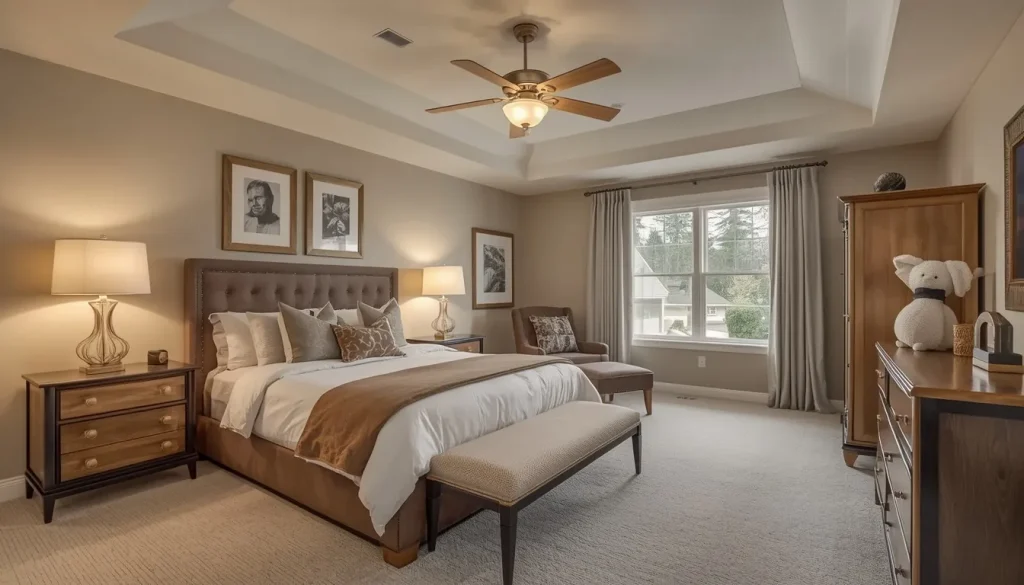
Guest Bedroom
Use flexible furniture that makes visitors comfortable without filling the room.
A bed, two small nightstands, a luggage bench, a mirror, and an empty drawer or clothing rail may be enough.
Kids’ Bedroom
Choose durable, easy-to-clean furniture with rounded edges.
Include accessible storage so children can put away toys, books, and clothing independently.
Teen Bedroom
Teen bedrooms often need furniture for sleeping, studying, storage, and socializing.
A bed with drawers, compact desk, bookshelf, and comfortable chair can support these needs.
Shared Bedroom
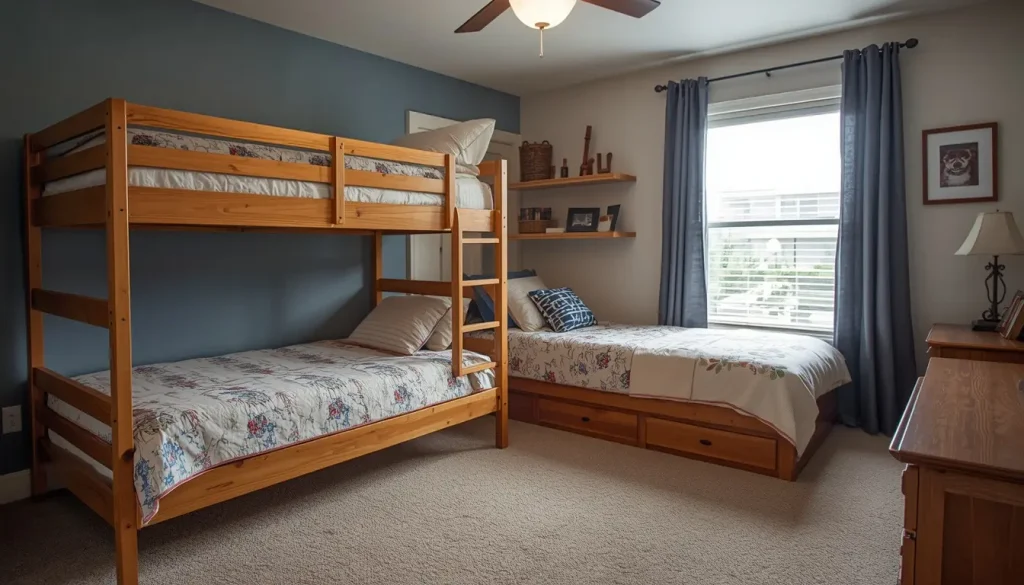
Use bunk beds, matching single beds, or loft beds depending on the room.
Give each person separate drawers, shelves, and bedside storage to reduce conflict.
Bedroom for Couples
Provide equal bedside space whenever possible.
Two nightstands, balanced lighting, and shared storage make the room more functional for both people.
Studio Apartment Bedroom
Use furniture to define the sleeping area.
A wardrobe, open shelving unit, folding screen, or storage headboard can create separation without building a wall.
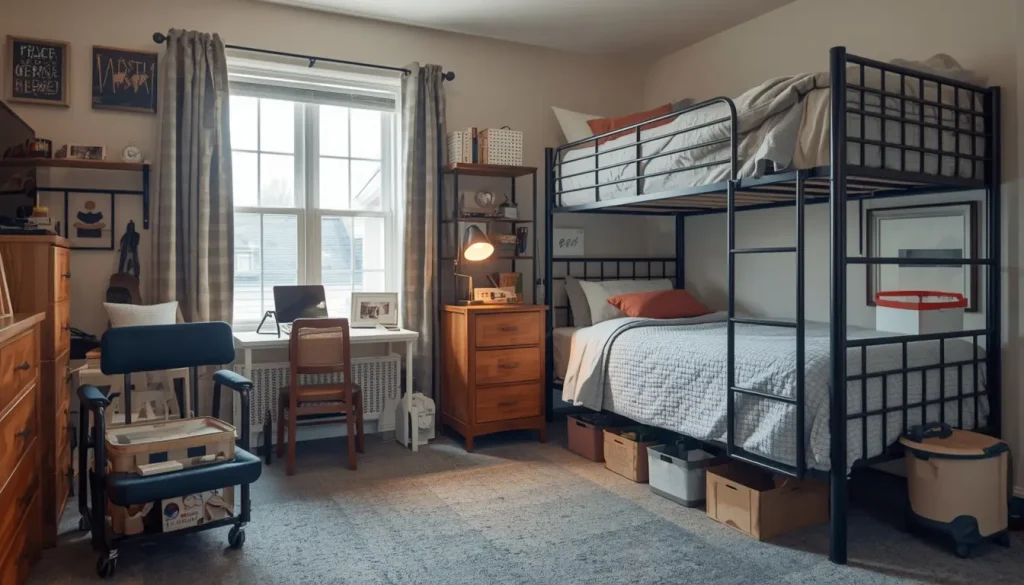
Dorm Room
Choose lightweight, portable, and multifunctional furniture.
A rolling cart, under-bed boxes, bedside caddy, and compact shelving unit can provide useful storage without permanent installation.
Bedroom Furniture Layout Ideas
The layout should support movement, comfort, and access to storage.
Position the Bed First
The bed is usually the largest piece, so place it before arranging anything else.
A solid wall opposite or diagonal from the entrance often works well, but the room’s architecture should guide the decision.
Keep Openings Accessible
Do not block doors, closets, windows, vents, or radiators.
Maintain Clear Walking Paths
Avoid placing furniture where people must squeeze between pieces.
Clear paths are especially important at night.
Place Storage Near the Dressing Area
Position dressers and wardrobes near the closet when possible. This keeps clothing storage in one part of the room.
Use Symmetry in Large Bedrooms
Two nightstands, matching lamps, and balanced storage can make a large room feel organized.
Create Functional Zones
In a large bedroom, use furniture placement to create separate areas for sleeping, dressing, reading, and working.
Protect Natural Light
Avoid placing tall wardrobes directly in front of windows.
Use lower furniture beneath windows to preserve light and views.
Furniture Layout Ideas by Bedroom Size
Small Bedroom Layout
Use a bed, one or two compact nightstands, and a tall dresser.
Add wall storage instead of another floor-standing cabinet.
Medium Bedroom Layout
A medium bedroom may fit a queen bed, two nightstands, a dresser, and a small chair or bench.
Large Bedroom Layout
A large bedroom can support additional zones, but avoid filling every wall.
Use rugs, seating, and furniture placement to create structure.
Narrow Bedroom Layout
Position the bed where it leaves the clearest walking path.
Use slim nightstands, shallow dressers, and vertical storage.
Awkward-Shaped Bedroom Layout
Use alcoves for desks, wardrobes, or built-in storage.
Low furniture can fit beneath sloped ceilings, while custom shelving can use irregular corners.
How to Pair a Bed, Nightstands, and Dresser
Bedroom furniture does not need to come from one matching set.

Start with an Anchor Piece
Choose one main piece, such as the bed or dresser, and build the room around it.
Match by Shape
Furniture with similar lines can look coordinated even when the colors are different.
For example, a curved headboard can pair well with rounded nightstands.
Coordinate Nightstand Height
Select nightstands that sit close to the height of the mattress.
They do not need to be identical, but their visual weight should feel balanced.
Mix Wood Tones Carefully
Use one dominant wood tone and one or two supporting tones.
Repeat each tone at least once so the combination looks intentional.
Repeat Hardware Finishes
Similar handles, knobs, lamp finishes, or metal accents can connect different furniture pieces.
Combine Modern and Vintage Furniture
A modern bed can work with a vintage dresser when the proportions, colors, or materials relate to each other.
Use Matching Sets Selectively
A matching set can be practical when you prefer a formal or highly coordinated look.
Add personality through lighting, textiles, art, and one contrasting furniture piece.
Bedroom Furniture Colors and Materials
Light Wood
Light wood makes a bedroom feel natural, relaxed, and bright.
It works well in Scandinavian, coastal, modern, and Japandi rooms.
Dark Wood
Dark wood creates warmth and visual weight.
Use it in larger or well-lit bedrooms, or balance it with lighter walls and bedding.
White Furniture
White furniture can make a small bedroom feel brighter.
Choose durable, easy-to-clean finishes in children’s rooms or high-use spaces.
Black Furniture
Black furniture creates strong contrast and works well in modern, industrial, and dramatic interiors.
Use it selectively in smaller rooms to avoid making the space feel heavy.
Upholstered Furniture
Upholstered beds, benches, and chairs add comfort and softness.
Choose stain-resistant fabric when maintenance is a concern.
Metal Furniture
Metal frames are durable and visually lighter than many solid wooden designs.
They work well in small, industrial, modern, and vintage-inspired bedrooms.
Rattan and Cane
Rattan and cane add texture without feeling visually heavy.
They work particularly well in coastal, bohemian, tropical, and relaxed modern bedrooms.
Glass and Acrylic
Transparent furniture can reduce visual clutter in a compact room.
Use it for small desks, side tables, or chairs rather than large storage pieces.
Built-In vs Freestanding Bedroom Furniture
Both options have advantages.
Benefits of Built-In Furniture
Built-in furniture can:
- Fit awkward spaces
- Maximize wall-to-wall storage
- Create a streamlined appearance
- Work around sloped ceilings
- Combine wardrobes, shelves, and drawers
It is a good option for homeowners who plan to stay in the property for a long time.
Benefits of Freestanding Furniture
Freestanding furniture can:
- Be moved easily
- Work well in rental homes
- Cost less than custom installations
- Be replaced one piece at a time
- Move to another room or property
Modular Furniture
Modular systems can be expanded, rearranged, or separated as your needs change.
They are useful for growing families, rental properties, and multipurpose bedrooms.
Renter-Friendly Bedroom Furniture Ideas
Renters need flexible furniture that does not require permanent changes.
Use Freestanding Storage
Choose wardrobes, bookcases, clothing racks, and drawer units that do not need to be built into the wall.
Choose Modular Pieces
Modular furniture can adapt to different room sizes when you move.
Add Storage Without Drilling
Use over-door organizers, freestanding shelves, under-bed boxes, and tension-based systems.
Use a Portable Clothing Rack
A clothing rack can supplement a small closet and provide accessible hanging space.
Select Lightweight Furniture
Lightweight nightstands, desks, and shelves are easier to move between homes.
Buy Furniture with Multiple Uses
A desk that can become a console or a bench that can move to an entryway provides better long-term value.
Bedroom and Home Office Furniture Ideas
A bedroom-office combination should support productivity without making it difficult to relax.
Use a Desk as a Nightstand
A small desk beside the bed can replace a traditional nightstand.
Keep the surface organized so work items do not dominate the sleeping area.
Position the Desk Near Natural Light
Place the desk near a window when possible, but avoid blocking access or creating glare on the screen.
Choose a Fold-Down Desk
A fold-down desk can be closed at the end of the workday, helping the bedroom feel calmer.
Combine a Desk and Vanity
A table with drawers can function as both a workspace and dressing table.
Separate Work and Sleep Zones
Use a rug, open shelf, screen, or furniture arrangement to visually separate the desk from the bed.
Create a Guest Room Office
Use a daybed, sofa bed, or Murphy bed so the room can function as an office most of the time and a bedroom when guests visit.
Budget-Friendly Bedroom Furniture Ideas
A stylish bedroom does not require an expensive matching set.
Paint Existing Furniture
Paint can update an old dresser, nightstand, or headboard.
Prepare the surface properly and use a finish suitable for the material.
Replace Handles and Knobs
New hardware can quickly modernize furniture at a low cost.
Buy Secondhand
Quality wooden furniture can often be found in thrift stores, resale marketplaces, estate sales, and charity shops.
Inspect each piece for damage, odors, pests, and structural problems before buying.
Repurpose Other Furniture
A small table can become a nightstand. A console can become a vanity. A trunk can become a bench.
Buy in Stages
Start with the bed and essential storage. Add decorative or optional pieces over time.
Invest in High-Use Pieces
Spend more on the bed, mattress, and frequently used drawers.
Save money on accent tables, benches, and decorative storage.
How to Update Old Bedroom Furniture
Older furniture can often be refreshed rather than replaced.
Paint It
Use a neutral color for a timeless update or a bold color for a statement piece.
Replace the Hardware
Modern knobs and handles can change the appearance of a dresser or nightstand.
Add Decorative Texture
Cane panels, fluted trim, molding, or wallpaper-lined drawers can make basic furniture feel more customized.
Refinish Wooden Surfaces
Sand and refinish scratched furniture when the underlying wood is still in good condition.
Convert a Dresser into a Vanity
Add a mirror and stool to turn a small dresser into a dressing area.
Mix Old and New Pieces
Pairing an older dresser with a modern bed can create a more layered and personal bedroom.
Bedroom Furniture Buying Guide
A careful buying process can prevent expensive mistakes.
Decide What You Need
List the essential pieces before shopping.
Avoid buying furniture simply because it looks attractive in a showroom.
Set a Total Budget
Include delivery, assembly, taxes, and possible return costs.
Compare Materials
Solid wood is durable but often expensive.
Engineered wood is affordable and widely available, but quality varies.
Metal is durable and often visually light.
Upholstered furniture is comfortable but may require more cleaning.
Inspect Construction
Check whether drawers open smoothly, joints feel stable, and hardware is securely attached.
Read weight limits for beds, shelves, benches, and storage furniture.
Consider Delivery
Confirm that the furniture can pass through the entrance, hallways, staircase, and bedroom doorway.
Review Assembly Requirements
Some large furniture pieces require two people or professional assembly.
Check the Warranty and Return Policy
Understand whether returns are allowed after assembly and who pays for return shipping.
Decide Where to Save and Invest
Invest in pieces that affect comfort, safety, and daily use.
Spend less on furniture that is mainly decorative or easy to replace.
Bedroom Furniture Safety and Accessibility
Furniture should be safe for everyone using the room.
Secure Tall Furniture
Anchor tall dressers, wardrobes, and shelving units to the wall whenever possible.
This is especially important in homes with children.
Choose Rounded Edges
Rounded furniture reduces the risk of injury in small rooms, children’s bedrooms, and narrow pathways.
Keep Exits Clear
Do not place furniture where it blocks a doorway or makes it difficult to leave the room.
Avoid Unstable Pieces
Do not overload shelves or drawers. Replace damaged hardware and repair loose joints.
Choose an Accessible Bed Height
The bed should be easy to sit on and stand up from.
A very low bed may not be suitable for older adults or people with limited mobility.
Maintain Clear Pathways
Leave enough space for comfortable movement, mobility aids, and nighttime access to the door or bathroom.
Common Bedroom Furniture Mistakes to Avoid
Choosing a Bed That Is Too Large
An oversized bed can leave no space for storage or movement.
Filling Every Empty Corner
Open space is an important part of good design.
A room does not need furniture against every wall.
Blocking Windows
Tall furniture can reduce natural light and make the room feel smaller.
Ignoring Measurements
Always check furniture dimensions before ordering.
Using Too Many Unrelated Finishes
A room can feel chaotic when every piece has a different wood tone, color, and style.
Choosing Appearance Over Function
Furniture should support everyday routines, not create inconvenience.
Forgetting Storage Needs
Insufficient storage can quickly lead to clutter.
Pushing Everything Against the Walls
In a large room, placing every piece against a wall can make the center feel empty and disconnected.
Buying an Entire Matching Set Automatically
Matching sets are convenient, but they can make the bedroom feel generic.
Consider adding at least one contrasting or vintage piece.
Ignoring Door and Drawer Clearance
Make sure every drawer, wardrobe door, and closet door can open fully.
Bedroom Furniture Planning Checklist
Before purchasing bedroom furniture, complete the following steps:
- Measure the room
- Record door and window locations
- Measure access points
- Select the correct bed size
- Identify storage needs
- Plan clear walking paths
- Choose an overall style
- Select a limited color and material palette
- Set a realistic budget
- Buy essential pieces first
- Check delivery and assembly requirements
- Secure tall furniture
- Add optional pieces only when space allows
Frequently Asked Questions About 35 Bedroom Furniture Ideas
What furniture should every bedroom have?
Most bedrooms need a bed, at least one bedside surface, and some form of clothing storage.
Additional furniture depends on the room size and the user’s lifestyle.
How many pieces of furniture should be in a bedroom?
There is no ideal number.
A bedroom should contain enough furniture to support sleeping, storage, and daily routines without blocking movement or making the room feel crowded.
How do I arrange furniture in a small bedroom?
Place the bed first, maintain the clearest possible walking path, and use vertical or multifunctional storage.
Choose floating nightstands, a tall dresser, under-bed drawers, and wall-mounted shelves when appropriate.
Should bedroom furniture match?
Bedroom furniture does not need to match exactly.
Different pieces can look cohesive when they share similar shapes, colors, wood tones, hardware, or proportions.
What furniture makes a bedroom look bigger?
Furniture with exposed legs, light finishes, slim profiles, and transparent elements can make a room appear more open.
Floating furniture and tall vertical storage can also help.
Should nightstands be taller than the bed?
Nightstands should generally be close to the height of the mattress.
A small difference is acceptable, but a very high or low nightstand may be uncomfortable to use.
How much space should be left around a bed?
Approximately 24 to 30 inches of clearance is comfortable for many bedrooms.
Smaller spaces may require less, but pathways should remain usable.
Where should a dresser be placed?
A dresser can be placed opposite the bed, beside the closet, under a window, or on an empty wall.
Choose a location that allows the drawers to open fully.
What can I use instead of a dresser?
Alternatives include a wardrobe, tall chest, under-bed drawers, wall-mounted cabinets, modular storage, or closet organizers.
How do I furnish a bedroom without a closet?
Use a freestanding wardrobe, clothing rack, dresser, under-bed storage, and wall-mounted shelves.
Select furniture that combines hanging, folded, and accessory storage.
Is dark or light furniture better for a small bedroom?
Light furniture often makes a small bedroom feel brighter and more open.
Dark furniture can still work when used selectively and balanced with light walls, bedding, and adequate lighting.
How can I make old bedroom furniture look modern?
Paint the furniture, replace the hardware, remove dated decorative details, or pair it with modern lighting and accessories.
What bedroom furniture is worth investing in?
Invest in a strong bed frame, supportive mattress, durable dresser, and any furniture you use every day.
Decorative pieces can usually be purchased at a lower price or added later.
Final Thoughts
The best bedroom furniture ideas combine comfort, storage, proportion, and personal style. Start by measuring the room and identifying the pieces you genuinely need. Position the bed first, maintain clear walking paths, and choose storage furniture that reduces clutter without overwhelming the space.
You do not need to purchase a complete matching furniture set. A carefully chosen mix of beds, nightstands, dressers, wardrobes, benches, and accent pieces can create a more personal and visually interesting room.
Whether you are furnishing a compact apartment bedroom or a large primary suite, prioritize function before decoration. When every piece has a clear purpose and fits the available space, the bedroom will feel more comfortable, organized, and inviting.

“A comfortable home and a healthy lifestyle go hand in hand.”
Hi, I’m Ethan Carter, the founder and lead editor of TheBestHomeFit. I’m passionate about helping people create beautiful, functional living spaces while building healthier lifestyles at home. Over the years, I’ve spent countless hours researching home decor trends, testing home gym equipment, and reviewing products to help readers make smarter buying decisions.
Through TheBestHomeFit, I share practical home improvement ideas, honest product reviews, buying guides, and fitness tips designed for everyday homeowners. My goal is to make it easier for you to create a home that looks great, feels comfortable, and supports your well-being.
When I’m not researching the latest products or writing in-depth guides, you’ll usually find me redesigning a room, trying new home workout routines, or enjoying quality time with my family.


2 thoughts on “35 Bedroom Furniture Ideas for a Stylish and Functional Space”