
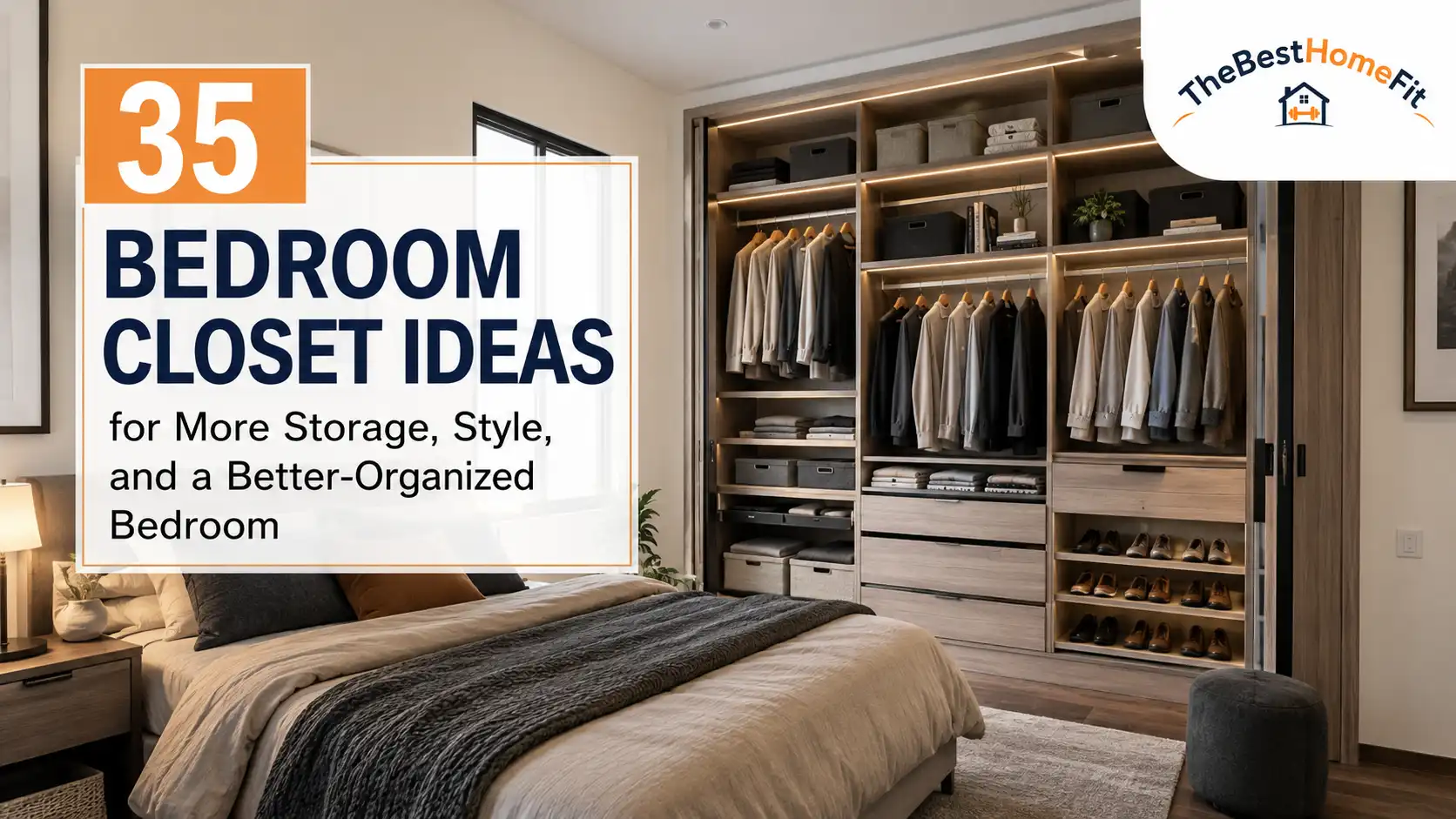
A bedroom closet should do more than hide clothes behind a door. The right closet can make your bedroom feel calmer, give every item a proper place, and save valuable floor space. Whether you have a tiny reach-in closet, a spacious walk-in, a fitted wardrobe, or no closet at all, a few thoughtful changes can make a noticeable difference.
The best bedroom closet ideas balance storage, accessibility, and style. That may mean adding a second hanging rail, using the full height of the wall, installing built-in drawers, changing the doors, or creating a custom layout around your daily routine.
This guide covers practical ideas for small and large bedrooms, primary bedrooms, shared closets, walk-ins, fitted wardrobes, rentals, and budget-friendly makeovers. Use the sections that match your space rather than trying to fit every idea into one closet.
How to Choose the Right Bedroom Closet Idea
Before buying shelves or planning a full renovation, think about how you actually use your closet.
Consider Your Bedroom Size
A large walk-in closet may look impressive, but it is not always the best use of space. Smaller bedrooms usually benefit from reach-in closets, sliding doors, floor-to-ceiling wardrobes, or open storage systems that use wall height instead of valuable floor area.
Larger bedrooms give you more freedom to add walk-in storage, dressing areas, islands, seating, and custom cabinetry.
Decide What You Need to Store
Make a quick inventory of:
- Hanging clothes
- Folded clothes
- Shoes
- Bags
- Accessories
- Bedding
- Seasonal items
- Laundry
Someone with a large shoe collection needs a different layout from someone who owns mostly dresses or suits.
Choose the Right Closet Type
Common options include:
- Reach-in closets
- Walk-in closets
- Built-in wardrobes
- Fitted wardrobes
- Freestanding wardrobes
- Open closet systems
- Modular closet systems
In the USA and Canada, “closet” is the most common term. In the UK and Australia, you may also hear “fitted wardrobe,” “built-in wardrobe,” or “built-in robe.”
Set a Realistic Budget
You do not need custom cabinetry to improve a bedroom closet. Basic rods, shelf dividers, storage boxes, hooks, and lighting can make a surprisingly large difference.
Start with the problems that affect you every day, then spend more only where it adds real value.
35 Bedroom Closet Ideas for Different Spaces and Styles
1. Build a Floor-to-Ceiling Closet
One of the easiest ways to gain storage is to use the full height of the wall.
Store everyday clothing at eye level and use the upper shelves for suitcases, spare bedding, seasonal clothes, or items you rarely need.
Floor-to-ceiling storage works particularly well in small bedrooms because it adds capacity without taking up extra floor space.
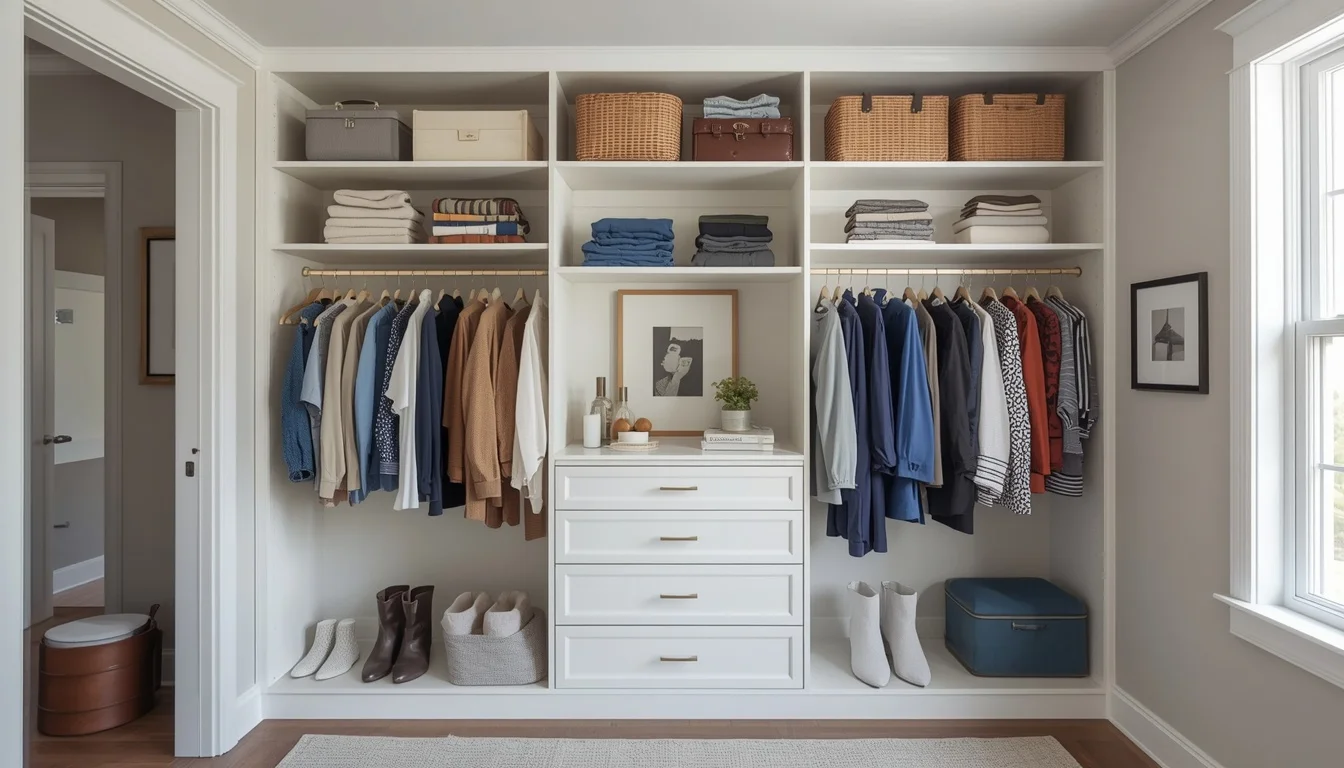
2. Add a Built-In Bedroom Closet
A built-in closet can make awkward walls, alcoves, and unused corners more functional.
Because it is designed for the room, it can fit around windows, sloped ceilings, fireplaces, or structural features that standard furniture cannot accommodate.
For a clean look, match the doors and finishes to the rest of the bedroom.
3. Use Double Hanging Rods
If your closet has one long rail and a large amount of unused space underneath, add a second rod.
Use the upper rod for shirts, blouses, and jackets and the lower rod for trousers or shorter garments.
This simple change can nearly double hanging capacity in the right closet.
4. Create a Small Walk-In Closet
A walk-in closet does not need to be enormous.
A compact walk-in can work well with shallow shelving, a combination of short and long hanging areas, vertical shoe storage, and good lighting.
Avoid filling every wall with deep cabinets. Leaving enough room to move comfortably is just as important as adding storage.
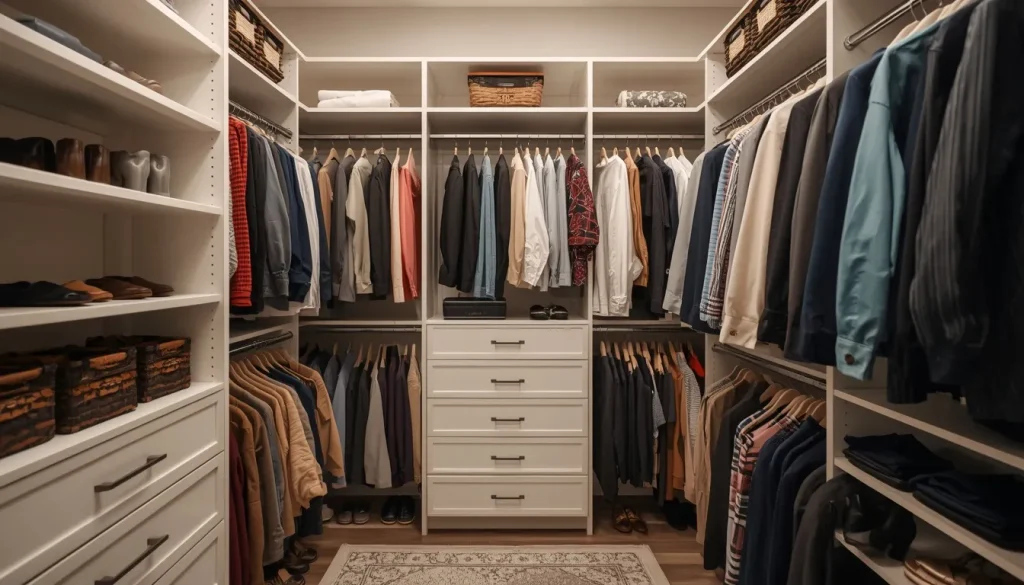
5. Try a U-Shaped Walk-In Closet
If you have enough room, a U-shaped layout uses three walls for storage.
You can dedicate one side to hanging clothes, another to drawers and shelves, and the third to shoes, bags, or accessories.
This layout is especially useful when two people share the closet.
6. Use an L-Shaped Closet Layout
An L-shaped layout works well in medium-size walk-ins and awkward corners.
Using two adjoining walls creates useful storage while leaving more open floor space than a fully enclosed U-shaped design.
7. Install Sliding Closet Doors
Sliding doors are useful when there is not enough room for hinged doors to open comfortably.
They work particularly well in smaller bedrooms, narrow layouts, and rooms where the bed sits close to the closet.
Choose simple panels for a minimal look or mirrored panels if you also need a full-length mirror.
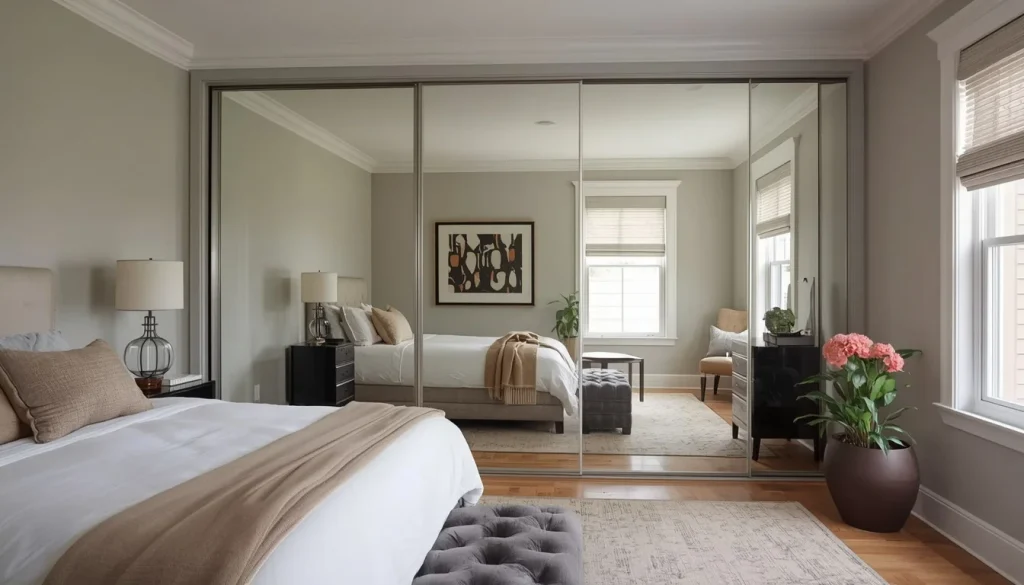
8. Add Mirrored Closet Doors
Mirrored doors serve two purposes: they hide storage and provide a practical dressing mirror.
They can also help distribute light around a bedroom.
For a more modern look, consider framed mirror panels or a combination of mirror and solid materials rather than covering an entire wall in plain mirror.
9. Use Glass Closet Doors
Glass doors can make a closet feel lighter and more decorative.
Clear glass works best for neatly arranged wardrobes, while frosted, fluted, or tinted glass offers more privacy and hides visual clutter.
10. Create an Open Bedroom Closet
An open closet is a practical option for renters, small bedrooms, or rooms without built-in storage.
Combine:
- A clothing rail
- Open shelves
- Baskets
- A small dresser
- Shoe storage
Because everything is visible, keep frequently used items organized and avoid overcrowding the rail.
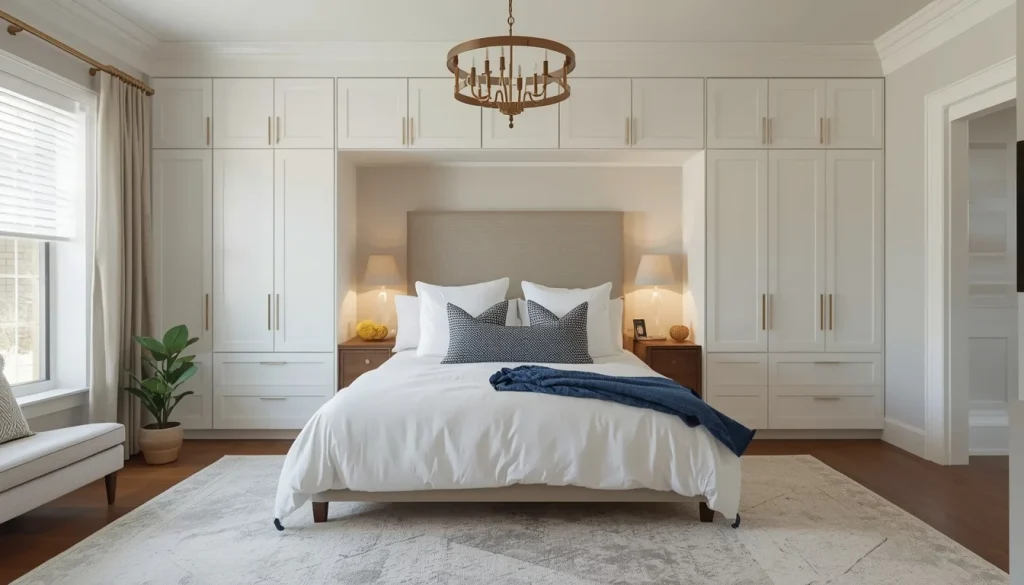
11. Build Storage Around the Bed
If your bedroom has very little free wall space, use the wall around the headboard.
Wardrobes on both sides of the bed with overhead cabinets can create a large amount of storage without needing a separate closet wall.
Keep the design visually light so the bed does not feel boxed in.
12. Use an Empty Corner
Corners often become wasted space.
A corner wardrobe, angled shelving, or custom hanging rail can turn that area into useful clothing storage.
This is particularly helpful in bedrooms with unusual floor plans.
13. Add Built-In Drawers
Not everything needs to hang.
Built-in drawers are useful for underwear, T-shirts, activewear, accessories, and other smaller items.
They also reduce the need for a separate dresser in the bedroom.
14. Install Adjustable Shelving
Your storage needs can change over time.
Adjustable shelves let you increase or reduce the distance between shelves depending on what you are storing.
They work especially well for shoes, bags, folded clothes, boxes, and seasonal items.
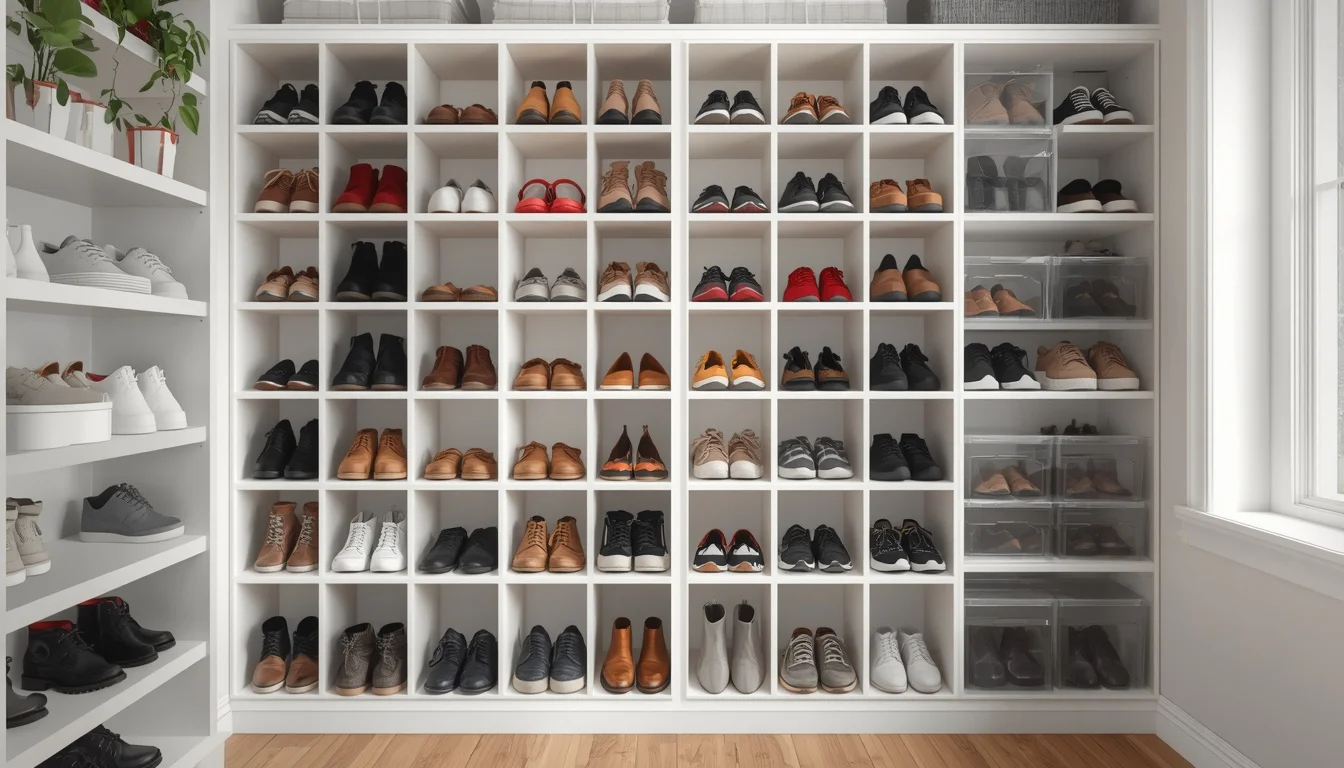
15. Create Dedicated Shoe Storage
Shoes quickly consume floor space when they do not have a designated home.
Options include:
- Angled shoe shelves
- Adjustable shelves
- Shoe cubbies
- Pull-out shoe racks
- Clear shoe boxes
- Vertical shoe towers
Keep everyday shoes at an easy-to-reach height and move occasional pairs higher or lower.
16. Add Handbag Storage
Bags can lose their shape when stacked or squeezed together.
Use shelf dividers, cubbies, or open shelves to keep handbags upright.
For smaller bags, hooks or narrow shelves can prevent them from getting lost behind larger items.
17. Install Pull-Out Accessory Storage
Pull-out racks are helpful for belts, scarves, ties, jewelry, and small accessories.
They use narrow gaps efficiently and keep items visible rather than buried inside drawers.
18. Include a Hidden Laundry Hamper
A pull-out or built-in laundry hamper keeps dirty clothes contained without adding another basket to the bedroom.
If several people use the closet, consider separate compartments for lights, darks, or delicate clothing.
19. Use the Space Above the Main Closet
The area above your everyday hanging zone is valuable.
Use it for:
- Luggage
- Seasonal bedding
- Storage boxes
- Out-of-season clothes
- Special-occasion items
Label boxes so you do not need to open everything when looking for one item.
20. Add Integrated Closet Lighting
Good lighting makes a closet easier to use.
LED strips under shelves, motion-sensor lights, recessed ceiling lights, or small spotlights can brighten dark corners and make colors easier to distinguish.
21. Keep the Design Minimal
A minimalist closet does not mean owning almost nothing.
It means keeping the layout visually simple and giving each category a defined place.
Closed cabinets, matching hangers, simple handles, and a limited material palette can make even a busy wardrobe feel more organized.
22. Use Warm Wood Finishes
Wood can make a bedroom closet feel warmer and more connected to the rest of the room.
Oak, walnut, ash, and wood-look laminates work particularly well with neutral bedrooms.
Use lighter finishes in small spaces if you want the closet to feel more open.
23. Choose a White Closet for a Bright Look
White wardrobes reflect light and visually recede into pale bedroom walls.
They are a practical choice for small spaces and work with almost any interior style.
Add texture through handles, panel details, baskets, or contrasting shelves if an all-white design feels too plain.
24. Create a Luxury Walk-In Closet
Luxury is not only about expensive materials.
A well-designed luxury closet usually combines:
- Thoughtful lighting
- Custom drawers
- Display shelving
- Full-length mirrors
- Integrated shoe storage
- Quality hardware
- Seating
- Consistent finishes
Focus on convenience before decoration.
25. Add a Dressing Table or Vanity
If your walk-in closet has enough room, add a compact vanity.
This creates one place for clothing, accessories, makeup, and getting ready.
Choose a shallow unit so it does not block circulation.
26. Include a Full-Length Mirror
A full-length mirror is one of the most useful additions to any bedroom closet.
Mount it on a door, side panel, empty wall, or inside a walk-in closet.
Position it where you can stand far enough away to see your full outfit.
27. Use Baskets and Storage Bins
Baskets are useful for items that are difficult to stack neatly, such as:
- Scarves
- Swimwear
- Small bags
- Seasonal accessories
- Workout clothes
- Spare linens
Matching containers create visual order, but labels are more important than appearance.
28. Choose a Modular Closet System
Modular systems are ideal when you want flexibility without paying for fully custom cabinetry.
You can combine shelves, drawers, hanging rails, baskets, and shoe storage based on your current needs and adjust them later.
29. Build a DIY Bedroom Closet
A DIY closet can be simple.
Start with a sturdy rail, shelves, hooks, and a small drawer unit.
Paint or finish the components in a consistent style so the result feels intentional rather than temporary.
30. Improve a Closet on a Budget
Low-cost changes can have a big impact.
Try:
- Slim hangers
- Shelf dividers
- Hooks
- Storage boxes
- An extra hanging rod
- Battery-powered lights
- Over-door organizers
Decluttering before buying organizers will also stop you from paying to store things you no longer use.
31. Design Around a Sloped Ceiling
Sloped ceilings are often difficult to furnish with standard wardrobes.
Use the lower section for drawers, shoes, or short hanging garments and reserve the taller area for full-length clothes.
Custom or semi-custom cabinets can help you use otherwise wasted space.
32. Create an Attic Bedroom Closet
Attic bedrooms often have low walls and awkward corners.
Low drawers, open shelving, rails under the highest point, and made-to-measure cabinets can create useful storage without fighting the architecture.
33. Use Rental-Friendly Closet Solutions
If you rent, avoid permanent changes unless your landlord allows them.
Freestanding wardrobes, tension rods, modular shelves, rolling racks, and removable hooks can improve storage while remaining easy to take with you.
34. Create Clothing Storage Without a Closet
A bedroom does not need a built-in closet to stay organized.
Combine a freestanding wardrobe with a clothing rail, dresser, wall hooks, and under-bed storage.
A curtain can hide an open storage wall if you prefer a cleaner look.
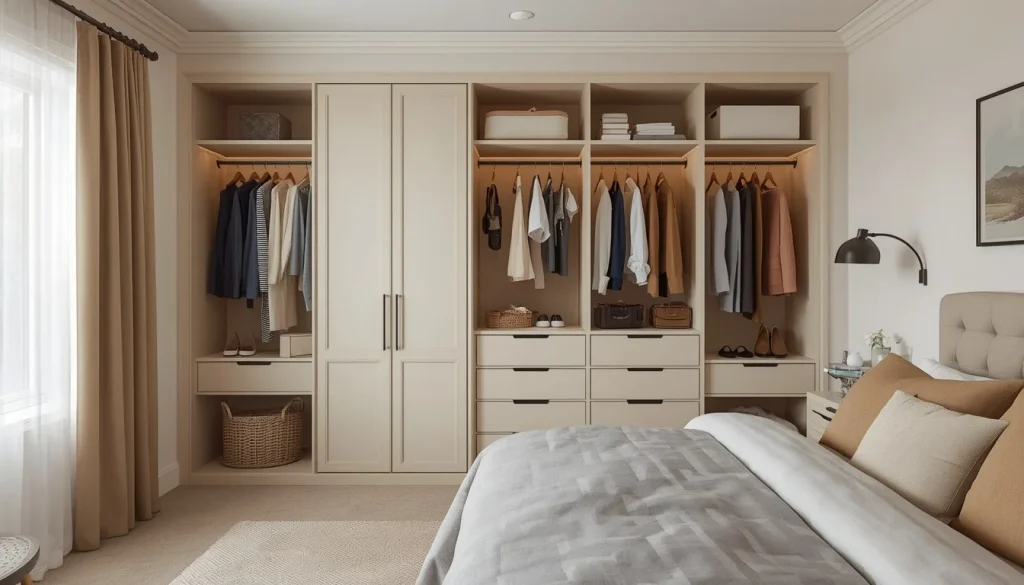
35. Design the Closet Around Your Wardrobe
The best closet is not the one with the most features. It is the one that matches what you own.
If you wear mostly dresses, prioritize long hanging space. If you fold most clothes, add drawers and shelves. If you collect shoes, dedicate more vertical space to them.
Design around your habits rather than copying a showroom layout.
Small Bedroom Closet Ideas That Save the Most Space
Small closets need careful planning because every inch matters.
Use the Full Height
Extend shelves as close to the ceiling as practical.
Items you use rarely can live higher up, leaving prime storage space available for everyday clothing.
Add a Second Hanging Rail
Two shorter hanging levels often provide more usable storage than one long rail.
Keep one section of full-height hanging space for dresses, coats, or long garments.
Use the Back of the Door
An over-door organizer can hold shoes, accessories, scarves, or small bags.
Hooks can also work well for robes, hats, and frequently used items.
Install Corner Shelves
Even shallow corner shelves can hold handbags, folded clothes, or storage boxes.
Use Pull-Out Storage
Pull-out baskets and narrow racks give you access to deep or tight spaces that would otherwise be difficult to use.
Rotate Seasonal Clothing
You do not need winter coats taking up prime closet space throughout summer.
Move off-season items to higher shelves, under-bed containers, or another storage area.
Use Slim Hangers
Bulky hangers consume surprising amounts of space.
A consistent set of slim hangers can make a crowded rail noticeably easier to use.
Bedroom Closet Shelving Ideas
Shelving is one of the most flexible ways to organize a closet because it can hold almost anything.
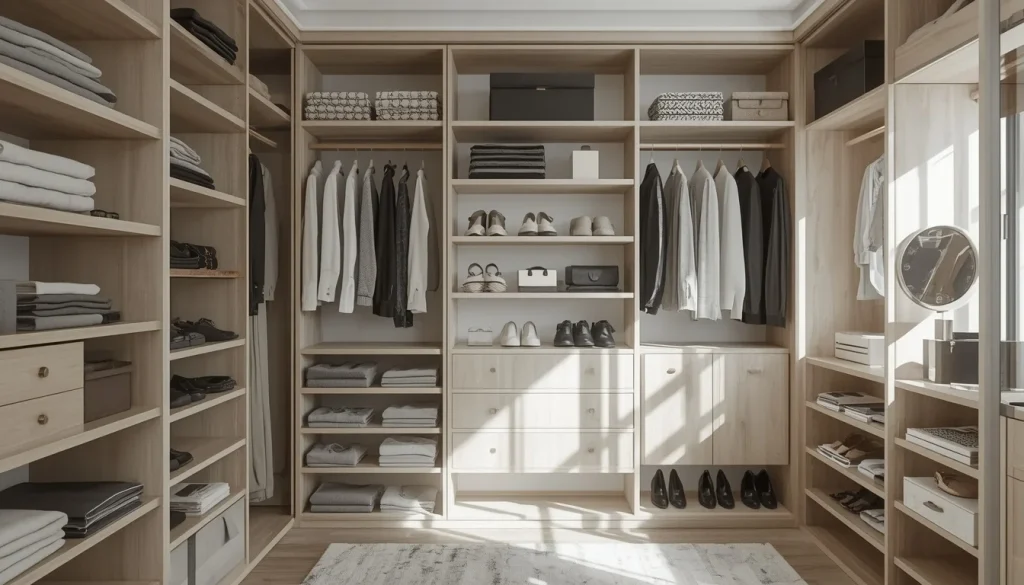
Floor-to-Ceiling Shelves
Tall shelving works well for bags, shoes, folded clothing, and storage boxes.
Put everyday items between waist and eye level, and use the highest shelves for occasional storage.
Adjustable Shelves
Adjustable shelving lets your closet change with your wardrobe.
You can create short spaces for shoes or larger openings for bags and storage baskets.
Floating Closet Shelves
Floating shelves are useful in open closets or small dressing areas where heavy cabinetry might make the space feel crowded.
Corner Shelves
Corner shelves make awkward spaces useful and work particularly well for handbags or folded knitwear.
Shoe Shelves
If shoes are a priority, design shelf spacing around the height of your footwear instead of using identical gaps everywhere.
Boots will need more height than sneakers or flats.
Closet Cubbies
Cubbies are helpful for keeping categories separate.
Use them for bags, folded clothing, hats, or shoes.
Shelves Above Hanging Rods
A shelf above the main hanging rail is one of the most practical closet additions.
Use baskets or boxes to prevent smaller items from becoming cluttered.
Bedroom Closet Door Ideas
Closet doors influence both the appearance and usability of a bedroom.
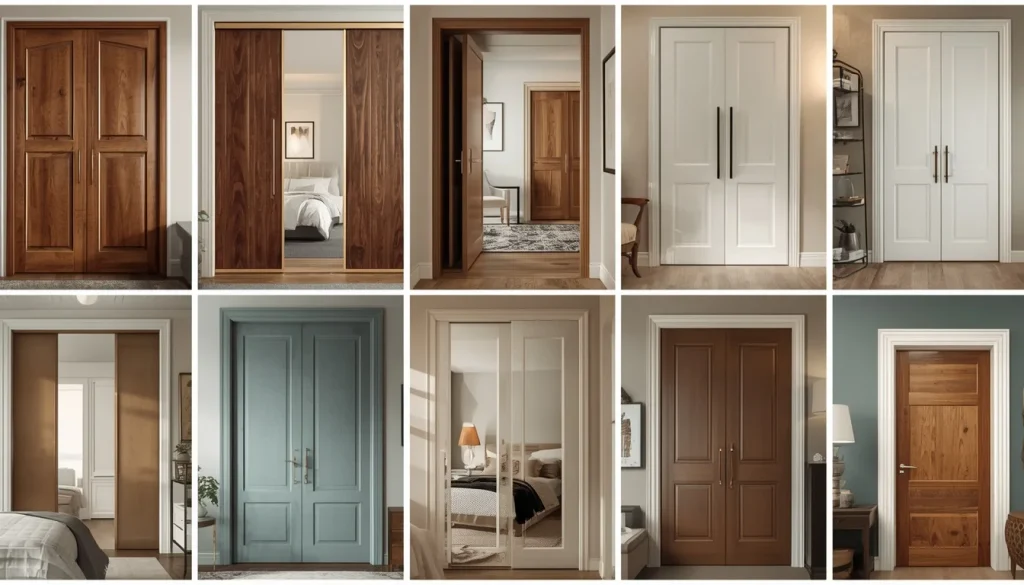
Sliding Doors
Best for bedrooms where swing space is limited.
Mirrored Doors
Useful when you need a dressing mirror and want to reflect more light around the room.
Glass Doors
Ideal for creating a lighter, more decorative wardrobe.
Frosted or fluted glass can hide clutter better than clear glass.
Pocket Doors
Pocket doors disappear into the wall when open, making them useful for compact walk-in closets.
They require more construction work, so they are easier to include during a renovation.
Bifold Doors
Bifold doors provide wider access than standard sliding doors while using less floor space than full hinged doors.
Hinged Doors
Traditional hinged doors give full access to the closet and provide an extra surface for hooks or mirrors.
Barn-Style Doors
Barn doors can add character but need clear wall space beside the opening so the door can slide.
Closet Curtains
Curtains are inexpensive, soft, and renter-friendly.
They are also easy to replace when you change the bedroom decor.
Doorless Closets
An open closet can make a small room feel less boxed in, but it works best when the storage stays relatively tidy.
Primary Bedroom Closet Ideas
A primary bedroom closet usually needs to handle more clothing and, in many homes, storage for two people.
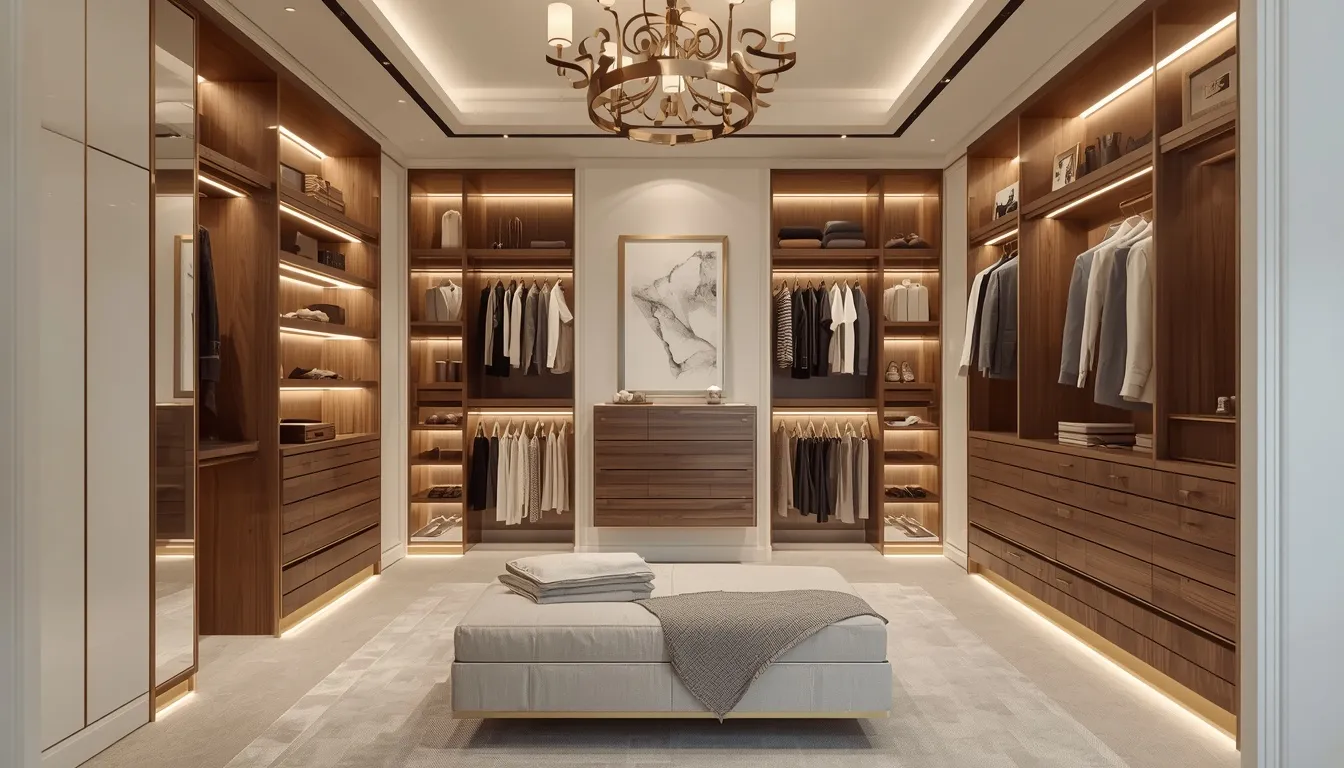
Create Separate Zones
Give each person a defined section instead of mixing everything together.
This makes clothing easier to find and simplifies daily organization.
Add Long and Short Hanging Areas
Combine full-height hanging space with double rails so dresses and coats do not compete with shirts and trousers.
Include a Shoe Wall
If space allows, dedicate one narrow wall to shoes.
Adjustable shelves make the area more flexible.
Add a Vanity
A compact vanity turns a walk-in closet into a more complete dressing space.
Use Built-In Drawers
Drawers can reduce the need for bedroom furniture and keep small items out of sight.
Add Display Shelves
Use a few open shelves for frequently used bags, shoes, or accessories.
Avoid treating the whole closet like a display area. Practical storage should still come first.
Shared Bedroom Closet Ideas for Couples
Shared closets work best when each person knows where their items belong.
Divide the Closet Into Two Sides
A clear left-and-right division is simple and effective.
If one person owns more clothing, divide the space according to actual need rather than forcing a perfect 50/50 split.
Give Each Person Separate Drawers
Separate drawers reduce confusion and make laundry easier to put away.
Use Different Hanging Heights
One person may need more long hanging space while the other may need more shelves or double rods.
Customize each side accordingly.
Create Shared Shoe Storage
A central shoe wall or lower shelving section can work well for shared footwear storage.
Leave Some Adjustable Space
Wardrobes change over time.
A few adjustable shelves or rails will make the closet easier to adapt later.
Bedroom Closet Organization Ideas
A beautiful closet is not useful if you cannot find anything.
Group Similar Items Together
Keep shirts with shirts, trousers with trousers, and dresses with dresses.
This sounds simple, but it makes choosing outfits much faster.
Organize by Frequency of Use
Store everyday items in the easiest-to-reach areas.
Rarely used items can go higher, lower, or deeper inside the closet.
Use Shelf Dividers
Dividers stop stacks of clothes, towels, or bags from leaning into each other.
Add Drawer Organizers
Small compartments work well for underwear, jewelry, socks, watches, and accessories.
Install Hooks
Hooks are ideal for belts, hats, robes, scarves, and bags you use frequently.
Label Storage Boxes
Labels are particularly helpful for seasonal items and high shelves.
Avoid Overfilling
A closet filled to maximum capacity is difficult to maintain.
Leave a little breathing room so you can remove and return items easily.
Easy Bedroom Closet Makeover Ideas
You do not need to rebuild a closet to make it feel new.
Paint the Interior
A fresh coat of paint can make a dark or tired closet feel cleaner.
Light colors work well in small spaces, while deeper colors can add drama to larger walk-ins.
Add Wallpaper
Wallpaper can bring pattern and personality to the back of open shelving or a walk-in closet wall.
Replace Old Hardware
New handles, knobs, and hooks can change the look of basic cabinetry without replacing it.
Change the Closet Doors
Old bifold or damaged doors can make the whole bedroom look dated.
Replacing or repainting them may be enough to refresh the space.
Improve the Lighting
Adding better lighting can make an old closet immediately feel more practical.
Replace Mismatched Hangers
Consistent hangers create a cleaner appearance and often save rail space.
Add Coordinated Baskets
Use baskets to hide small items and reduce visual clutter.
Bedroom Closet Decor Ideas
Once the storage works properly, small decorative details can make the closet feel connected to the rest of the bedroom.
Choose a Simple Color Palette
Repeating bedroom colors inside the closet creates visual continuity.
Add Wallpaper or a Feature Wall
A small area of pattern can add personality without overwhelming the space.
Use a Rug in a Walk-In Closet
A small rug can make a walk-in closet feel warmer and more comfortable.
Choose a low-pile design that will not interfere with doors or drawers.
Upgrade Handles and Hardware
Hardware is a small detail that can make basic wardrobes feel more considered.
Add a Mirror
Mirrors are both decorative and practical.
Include a Bench or Ottoman
If space allows, a small seat makes putting on shoes easier.
Choose one with hidden storage for even more functionality.
Style Open Shelving Carefully
Leave a little empty space around displayed bags, shoes, or accessories.
Trying to display everything usually creates clutter rather than style.
Bedroom Closet Lighting Ideas
Lighting deserves more attention than it usually gets.
LED Strip Lighting
Install LED strips under shelves or inside cabinets to illuminate darker storage areas.
Motion-Sensor Lights
These are useful in closets where you do not want to search for a light switch.
Recessed Lighting
Recessed ceiling lights provide clean, even illumination in walk-in closets.
Shelf Lighting
Integrated shelf lighting works well for shoes, bags, and display areas.
Pendant Lights
A pendant or small chandelier can create a focal point in a larger dressing room or walk-in closet.
Make sure it does not interfere with doors, tall people, or upper storage.
Make Use of Natural Light
If your closet has a window, avoid blocking it with tall cabinets.
Natural light can make a small dressing area feel much more comfortable.
Bedroom Closet Ideas When You Don’t Have a Closet
Some bedrooms simply do not have built-in storage.
Fortunately, there are several workable alternatives.
Use a Freestanding Wardrobe
A wardrobe provides enclosed storage and can move with you if you relocate.
Install a Clothing Rail
A simple rail works well for frequently worn clothing.
Add a shelf above it to increase storage.
Build an Open Storage Wall
Combine rails, shelves, hooks, and drawers across one wall to create a complete closet system.
Add a Curtain
A ceiling-mounted curtain can hide open clothing storage without the cost of installing doors.
Use Storage Around the Bed
Wardrobes beside the bed and cabinets above the headboard can replace a separate closet in a small room.
Use Under-Bed Storage
Seasonal clothing, spare bedding, and occasional items can move under the bed to free up everyday storage.
Bedroom Closet Layout Ideas by Closet Type
Choosing a layout is easier when you start with the shape of the available space.
Reach-In Closet Layout
For a standard reach-in closet, try:
- One long hanging section
- One double-rod section
- Upper shelf
- Narrow shoe tower
- Small drawer unit
Keep the center easy to access.
Small Walk-In Closet Layout
Use shallow shelves and rails on two or three walls.
Avoid deep cabinets on both sides if they make the walkway too narrow.
Large Walk-In Closet Layout
A larger room may accommodate:
- U-shaped storage
- Central island
- Vanity
- Seating
- Shoe wall
- Full-length mirror
Keep at least one clear route through the room.
Built-In Wardrobe Layout
Divide the wardrobe into modules based on what you own.
For example:
- Long hanging
- Double hanging
- Drawers
- Shelves
- Shoe storage
- Overhead storage
Corner Closet Layout
Use the corner for shelving rather than trying to push two hanging rails into the same tight area.
This makes the corner easier to access.
Walk-In Closet Ideas With an Island, Vanity, and Dressing Area
If you have a large walk-in closet, you can add features beyond basic storage.
Add a Closet Island
An island can provide drawers, a surface for folding clothes, and extra accessory storage.
Do not add one if it makes circulation uncomfortable.
Include a Vanity
A vanity can create a dedicated dressing and grooming area.
Add Seating
A bench, stool, or ottoman makes putting on shoes easier and can add hidden storage.
Create a Dressing Room Feel
A full-length mirror, good lighting, a rug, and a small amount of decorative styling can make a walk-in closet feel like a dedicated dressing room rather than a storage room.
Bedroom Closet Ideas by Budget
A useful closet can be created at almost any budget.
Bedroom Closet Ideas Under $100 or £100
Focus on simple additions:
- Slim hangers
- Hooks
- Shelf dividers
- Boxes
- Baskets
- Over-door organizers
- An extra rail
- Battery-powered lights
Mid-Range Closet Improvements
A larger budget may cover:
- Modular shelving
- Drawers
- Better doors
- Integrated lighting
- Shoe storage
- Higher-quality hardware
Custom Bedroom Closets
Custom cabinetry makes the most sense when:
- The room has awkward dimensions
- You want floor-to-ceiling storage
- Two people have very different storage needs
- You plan to stay in the home long term
Custom does not automatically mean better. A well-planned modular system can be more practical than expensive cabinetry with the wrong layout.
What Should You Store in a Bedroom Closet?
Bedroom closets are best used for items related to dressing, sleeping, and personal storage.
Typical items include:
- Everyday clothing
- Shoes
- Bags
- Accessories
- Seasonal clothing
- Spare bedding
- Small luggage
- Personal items
Keep the most frequently used belongings in the easiest-to-reach areas.
What Should You Avoid Storing in a Bedroom Closet?
A bedroom closet becomes harder to use when it turns into general household storage.
Try to avoid filling it with:
- Broken or unused items
- Empty packaging
- Unrelated paperwork
- Cleaning supplies that belong elsewhere
- Items waiting indefinitely to be donated
- Dirty laundry without a proper hamper
- Things you have not used in years
The more unrelated clutter you remove, the easier it becomes to organize clothing properly.
How to Organize a Bedroom Closet Step by Step
Step 1: Empty the Closet
Take everything out so you can see how much storage space you actually have.
Step 2: Declutter
Separate items into categories such as keep, donate, repair, relocate, and discard.
Be realistic about clothing that no longer fits your lifestyle.
Step 3: Group Similar Items
Organize what remains into categories.
Step 4: Measure the Closet
Measure width, height, depth, door openings, and any awkward corners before buying storage products.
Step 5: Plan Storage Zones
Decide where hanging clothes, folded clothes, shoes, bags, and accessories should live.
Step 6: Use Vertical Space
Add upper shelves, stacked storage, or taller cabinets where possible.
Step 7: Add Organizers Only Where Needed
Do not buy boxes and baskets simply because they look attractive.
Choose organizers that solve a specific storage problem.
Step 8: Maintain the System
Spend a few minutes each week returning items to the correct place.
A simple system that you can maintain is better than an elaborate one you stop using.
Common Bedroom Closet Design Mistakes to Avoid
Not Measuring First
Closet systems, drawers, and doors need accurate measurements.
Small errors can prevent drawers from opening or doors from closing properly.
Ignoring Vertical Space
Leaving the upper third of a closet unused is a common waste of storage.
Creating Too Much Hanging Space
Some wardrobes need more folded storage than hanging space.
Plan around your clothing, not a standard showroom design.
Forgetting Shoes
Without dedicated shoe storage, the floor quickly becomes cluttered.
Using Shelves That Are Too Deep
Deep shelves can cause smaller items to disappear behind one another.
Ignoring Lighting
A dark closet is harder to use and maintain.
Overfilling Every Section
Good organization needs some empty space.
Designing for Appearance Instead of Routine
A closet should make everyday dressing easier.
Function should come before decorative details.
Closet vs Wardrobe: Which Is Better for a Bedroom?
The answer depends partly on where you live and how your room is built.
In the USA and Canada, bedrooms commonly use the terms closet, reach-in closet, and walk-in closet.
In the UK, fitted wardrobe and built-in wardrobe are common terms for permanent bedroom storage.
In Australia, built-in wardrobe and built-in robe are also widely used.
Functionally, they solve the same problem: storing clothing and personal items.
Choose based on available space, budget, whether you own or rent the property, and how much customization you need.
Quick Bedroom Closet Ideas for Common Problems
| Your Problem | Try This |
|---|---|
| Small closet | Add double rods and upper shelves |
| Too many shoes | Install vertical shoe shelving |
| Dark closet | Add LED or motion-sensor lighting |
| No built-in closet | Use a wardrobe or open clothing system |
| Small bedroom | Choose sliding closet doors |
| Too many clothes | Use floor-to-ceiling storage |
| Rental property | Choose modular or freestanding storage |
| Awkward corner | Add custom or corner shelving |
| Low budget | Start with hooks, bins, and an extra rail |
| Shared closet | Divide storage into separate zones |
| Too many folded clothes | Add drawers and adjustable shelves |
| Closet looks dated | Replace hardware, lighting, or doors |
Frequently Asked Questions About Bedroom Closet Ideas
What is the best closet design for a small bedroom?
A reach-in closet, floor-to-ceiling built-in wardrobe, or shallow modular closet usually works well in a small bedroom. Sliding doors can also save space because they do not need room to swing open.
How can I maximize space in my bedroom closet?
Use the full height of the closet, add a second hanging rail, install adjustable shelves, use the back of the door, and move seasonal items to less accessible areas.
How do I organize a small bedroom closet?
Start by decluttering. Then divide the closet into hanging, folding, shoe, and accessory zones. Keep everyday items at eye level and use upper shelves for less frequently used belongings.
What can I use if my bedroom has no closet?
A freestanding wardrobe, clothing rail, dresser, open closet system, or wall-mounted storage can replace a traditional built-in closet.
Are built-in closets worth it?
Built-in closets can be worthwhile when you want to use an awkward wall, maximize floor-to-ceiling storage, or create a fitted look. They are generally a better investment for homeowners than renters.
Is a walk-in closet better than a reach-in closet?
Not always. A walk-in provides more storage and room to move, but a well-designed reach-in closet can be more efficient in a smaller bedroom.
How deep should a bedroom closet be?
The required depth depends on the storage system and clothing orientation. Hanging clothes need enough room to sit comfortably without being crushed by the doors, so always measure your garments and closet fittings before installation.
How do I make a bedroom closet look more expensive?
Use consistent hangers, quality handles, warm lighting, matching storage containers, built-in-looking shelves, a simple color palette, and a full-length mirror. Good organization often makes a bigger visual difference than expensive materials.
How can I organize a bedroom closet on a budget?
Declutter first, then add only what you need. Hooks, slim hangers, boxes, shelf dividers, an extra hanging rod, and inexpensive lighting can dramatically improve a closet without a full renovation.
Should a bedroom closet have doors?
Not necessarily. Doors hide visual clutter and protect clothing from dust, while open closets provide easier access and can make a small space feel less enclosed. Choose the option that works best with your bedroom layout and how tidy you prefer your storage to look.
What is the best way to organize a shared bedroom closet?
Give each person a defined storage zone, separate drawers, and enough hanging or shelving space for their actual wardrobe. Shared shoe storage and adjustable shelves can be used for items that do not need individual sections.
What type of closet door is best for a small bedroom?
Sliding doors are usually one of the most space-efficient choices because they do not swing into the room. Curtains and bifold doors can also work well where floor space is limited.
Final Thoughts
The best bedroom closet ideas are not necessarily the largest or most expensive. A successful closet makes your daily routine easier, uses available space efficiently, and gives different types of clothing a logical place to live.
For a small bedroom, focus on vertical storage, double hanging rails, sliding doors, and adjustable shelves. For a medium-size room, built-in or modular storage can provide a good balance of flexibility and capacity. A larger primary bedroom may have enough space for a walk-in closet, vanity, shoe wall, island, or dressing area.
If you are working with a limited budget, start with organization before renovation. Remove what you no longer use, improve the layout, and add storage only where a real problem exists.
A closet that fits your wardrobe, your bedroom, and your everyday habits will always be more useful than one designed simply to look impressive.

“A comfortable home and a healthy lifestyle go hand in hand.”
Hi, I’m Ethan Carter, the founder and lead editor of TheBestHomeFit. I’m passionate about helping people create beautiful, functional living spaces while building healthier lifestyles at home. Over the years, I’ve spent countless hours researching home decor trends, testing home gym equipment, and reviewing products to help readers make smarter buying decisions.
Through TheBestHomeFit, I share practical home improvement ideas, honest product reviews, buying guides, and fitness tips designed for everyday homeowners. My goal is to make it easier for you to create a home that looks great, feels comfortable, and supports your well-being.
When I’m not researching the latest products or writing in-depth guides, you’ll usually find me redesigning a room, trying new home workout routines, or enjoying quality time with my family.


1 thought on “35 Bedroom Closet Ideas for More Storage, Style, and a Better-Organized Bedroom”