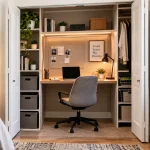

A minimalist bedroom should feel calm, comfortable, and easy to live in. It is not about removing everything you own or turning your bedroom into an empty white box. Good minimalist design is about choosing what matters, giving every item a purpose, and creating enough visual breathing room for the space to feel restful.
The best minimalist bedroom ideas combine simple furniture, practical storage, soft colors, natural materials, and thoughtful lighting. Whether you are decorating a small apartment bedroom, redesigning a primary bedroom, or simply trying to reduce clutter, the goal is the same: create a room that feels peaceful without losing warmth or personality.
Below, you will find practical ideas for planning, decorating, organizing, and maintaining a minimalist bedroom that works in real life.
What Is a Minimalist Bedroom?
A minimalist bedroom uses fewer, better-chosen elements to create a simple and functional space. Furniture usually has clean lines, surfaces stay relatively clear, and decorative pieces are selected with intention rather than added simply to fill empty areas.
Minimalist bedroom design also focuses heavily on comfort. Your bed, lighting, storage, and layout still need to support the way you use the room every day. A beautiful room is not truly successful if you constantly struggle to find storage or move around the furniture.
The Core Principles of Minimalist Bedroom Design
Most successful minimalist bedrooms share a few basic ideas:
- Keep only furniture that serves a clear purpose.
- Leave enough open space around larger pieces.
- Use a restrained color palette.
- Choose simple shapes and clean lines.
- Reduce visible clutter.
- Focus on texture rather than excessive decoration.
- Give everyday items a proper storage place.
- Prioritize comfort over trends.
Minimalism works best when the room feels intentional rather than unfinished.
Minimalist vs. Modern Bedroom: What Is the Difference?
Minimalist and modern bedrooms often look similar, but they are not exactly the same.
Minimalist design focuses on reducing unnecessary objects and visual noise. Modern design is more closely connected with contemporary materials, streamlined furniture, simple geometry, and current design styles.
A room can easily be both modern and minimalist. For example, a low platform bed, slim nightstands, warm wood finishes, and simple lighting can create a modern minimalist bedroom without making the space feel cold.
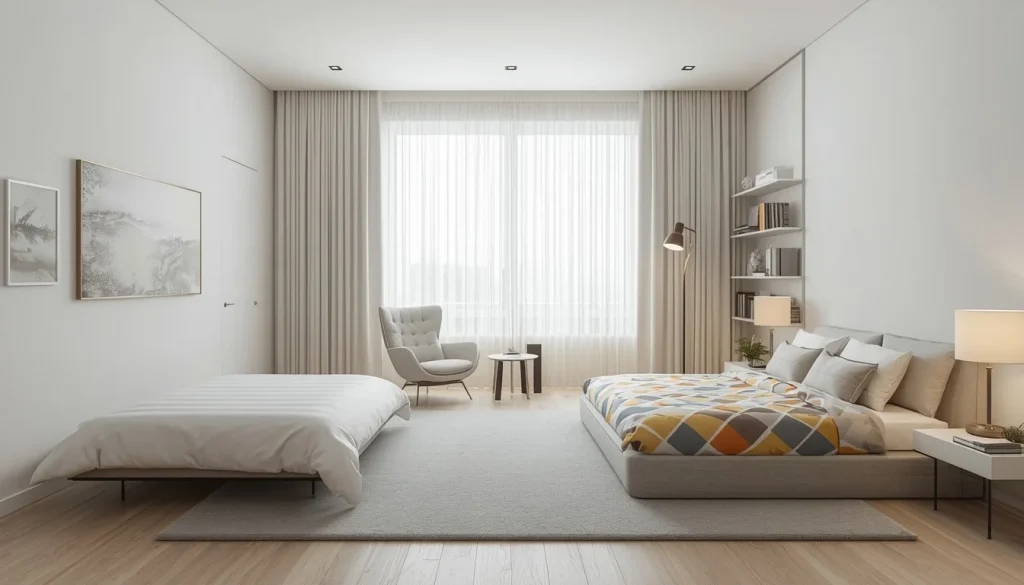
20 Minimalist Bedroom Ideas for a Calm and Stylish Space
1. Start With a Warm Neutral Color Palette
White is popular in minimalist bedrooms, but it is not your only choice. Cream, warm beige, greige, taupe, soft brown, and muted gray can make a bedroom feel softer and more inviting.
Choose one main color, one supporting neutral, and perhaps one subtle accent shade. Limiting the palette helps the room feel connected without becoming visually flat.
2. Choose a Simple Low-Profile Bed
The bed is normally the largest piece of furniture in the room, so its design has a major impact.
A simple upholstered bed, wooden platform bed, or low-profile frame works well because it does not overwhelm the space. Avoid unnecessarily bulky frames if your bedroom is small.
3. Keep Bedside Tables Clutter-Free
You do not need to keep every nighttime item visible.
A lamp, book, water glass, and perhaps one small personal object are usually enough. Store chargers, medication, glasses, or other small items inside a drawer when they are not being used.
A cleaner nightstand immediately makes the bedroom feel more organized.
4. Use Natural Wood for Warmth
Natural wood is one of the easiest ways to prevent a minimalist bedroom from feeling sterile.
A wooden bed frame, bedside table, dresser, bench, or picture frame can add warmth without introducing unnecessary color or decoration.
Light oak works well in Scandinavian-inspired spaces, while walnut and darker woods can create a richer, more sophisticated appearance.
5. Layer Neutral Bedding
Minimalist bedding does not have to look flat.
Start with simple sheets and a duvet, then add interest through texture. A linen duvet cover, cotton quilt, knitted throw, or a few well-chosen pillows can make the bed look inviting while keeping the overall design restrained.
6. Add Texture Instead of More Decor
When a minimalist room feels boring, the solution is not always more accessories.
Try adding texture through:
- Linen
- Cotton
- Wool
- Bouclé
- Wood
- Woven baskets
- Textured rugs
- Plaster or limewash walls
Texture creates depth while preserving the clean look of the room.
7. Let Natural Light Become Part of the Design
Keep windows as open and unobstructed as possible.
Sheer curtains, light-filtering blinds, or simple full-length drapes allow daylight to soften the room. Natural light can make pale walls, wood tones, and textured fabrics look much more interesting.
8. Use Soft Layered Lighting
One harsh ceiling light rarely creates a relaxing bedroom.
A better approach is to combine general lighting with bedside lamps, wall sconces, or a subtle floor lamp. Warm light can make neutral colors feel more comfortable in the evening.
9. Choose One Statement Artwork
Instead of covering a wall with many small decorative pieces, consider one larger artwork.
A simple abstract print, landscape, black-and-white photograph, or textured piece can create a focal point without making the wall feel crowded.
10. Keep the Floor Visually Clear
The more visible floor area you have, the larger and calmer the bedroom often feels.
Avoid placing small tables, baskets, stools, and decorative objects in every available corner. Floating furniture and raised-leg pieces can also create a lighter visual effect.
11. Use Hidden Storage
Closed storage is extremely useful in minimalist bedroom design.
Drawers, wardrobes, storage beds, cabinets, and lidded baskets keep practical items nearby without leaving everything on display.
Minimalism becomes much easier to maintain when clutter has somewhere to go.
12. Add Under-Bed Storage
Under-bed storage is especially useful in small minimalist bedrooms.
Use it for seasonal clothing, spare bedding, shoes, or items you do not need every day. If possible, choose matching storage boxes so the area still looks neat when visible.
13. Install Floating Nightstands
Floating nightstands save floor space and create a lighter appearance.
They are particularly effective in narrow bedrooms where traditional bedside tables may make the room feel cramped.
14. Use Floor-to-Ceiling Curtains
Hanging curtains close to the ceiling can make walls appear taller and windows feel larger.
Choose simple fabrics without heavy patterns. Soft white, beige, oatmeal, or gray curtains work well with most minimalist bedroom color schemes.
15. Bring in One or Two Plants
A small amount of greenery can add life to an otherwise neutral room.
You do not need to turn the bedroom into an indoor garden. One larger floor plant or a small plant on a dresser may be enough.
16. Choose Furniture With Clean Lines
Minimalist bedroom furniture usually works best when the shape is simple.
Look for beds, dressers, and nightstands with balanced proportions and limited decorative detailing. This allows the materials and craftsmanship to stand out.
17. Add a Simple Area Rug
A rug can make a minimalist bedroom feel more comfortable, especially if you have wood, laminate, or tile flooring.
Choose a simple solid color, subtle pattern, or natural texture that supports the existing palette rather than competing with it.
18. Use Mirrors Strategically
A mirror can reflect natural light and make a smaller bedroom feel more open.
A large leaning mirror, round wall mirror, or simple full-length mirror is usually enough. Avoid adding several mirrors purely for decoration.
19. Keep Technology Out of Sight
Visible wires, charging cables, game controllers, and electronics can quickly make a bedroom feel cluttered.
Use cable organizers, drawers, boxes, or bedside furniture with built-in charging options. If you have a television in the bedroom, keep the surrounding area simple.
20. Leave Some Empty Space Intentionally
Not every wall, shelf, and corner needs something in it.
Negative space is an important part of minimalist interior design. Empty areas help your eyes rest and make the items you do keep feel more meaningful.
Modern Minimalist Bedroom Ideas
Modern minimalism combines simplicity with clean contemporary design. It is a good choice if you want your bedroom to feel polished but still comfortable.
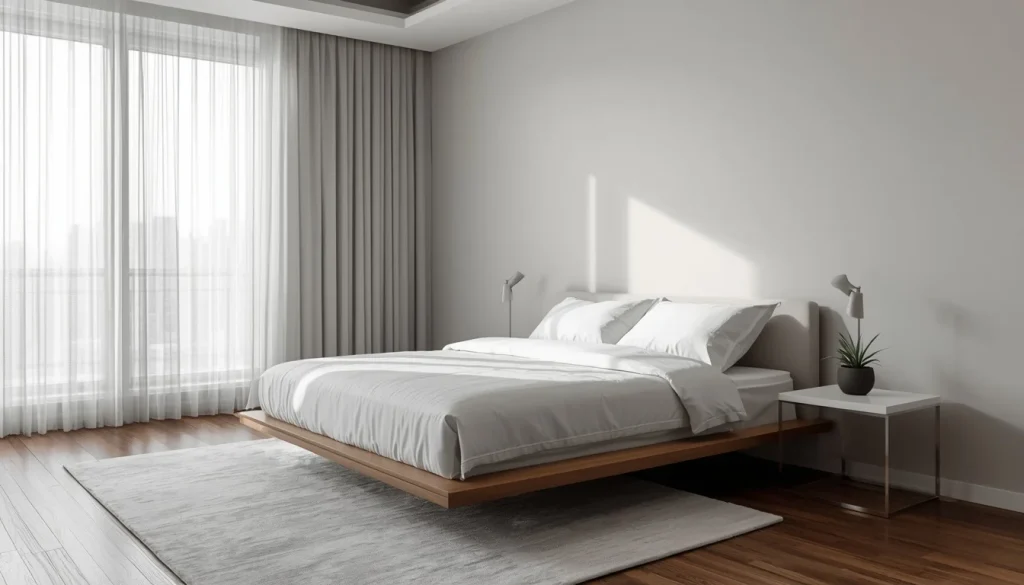
Choose Clean-Lined Contemporary Furniture
Look for simple silhouettes, slim profiles, and furniture without heavy ornamentation.
A streamlined bed combined with two simple nightstands can be enough to establish the entire style.
Combine White, Wood, and Warm Neutrals
White and wood remain a reliable combination, but warmer shades can make the room feel more current.
Try warm white walls, natural oak, beige bedding, and small black or bronze accents.
Use a Low Platform Bed
Low beds create a relaxed, modern appearance and can visually increase the amount of open wall space.
They work particularly well in rooms with large windows or low-profile furniture.
Add Modern Statement Lighting
A sculptural pendant light, simple globe lamp, or slim wall sconce can add personality without requiring extra decor.
One strong lighting choice is often more effective than several smaller decorative objects.
Hide Technology and Cables
Modern rooms usually look cleaner when electronics are integrated into the design.
Choose furniture with cable management, place chargers inside drawers, and avoid leaving multiple cords hanging beside the bed.
Minimalist Bedroom Ideas for Small Bedrooms
Small rooms benefit greatly from minimalist design because every object has a stronger visual impact.
The goal is not necessarily to own less for the sake of it. The goal is to use the available space more efficiently.
Choose Furniture That Fits the Room
Oversized furniture can make a small bedroom difficult to use.
Measure the room before buying anything and leave enough space to comfortably open doors, drawers, and wardrobes.
Make Use of Vertical Space
When floor space is limited, look upward.
Wall-mounted shelves, tall wardrobes, and hooks can provide useful storage without taking up much floor area.
Use Multifunctional Furniture
Choose furniture that can do more than one job.
A storage bed, bench with hidden storage, bedside table with drawers, or compact desk that doubles as a vanity can reduce the number of pieces you need.
Choose a Storage Bed
A storage bed is one of the most practical options for a small minimalist bedroom.
It gives you a large hidden storage area without requiring another cabinet or chest.
Use Wall-Mounted Lighting
Wall sconces free up bedside surfaces and can eliminate the need for wide nightstands.
This is particularly helpful in narrow rooms.
Keep a Clear Walking Path
Avoid squeezing unnecessary furniture between the bed and door.
A simple, uninterrupted route through the bedroom makes the space feel more comfortable and less crowded.
Use Light Colors to Increase the Sense of Space
Light walls and bedding can reflect more light and create a more open feeling.
You can still introduce darker tones through wood, lamps, cushions, or artwork.
Minimalist Master Bedroom Ideas
A larger bedroom can present a different problem: too much empty space can make the room feel unfinished.
The solution is not to fill every corner. Instead, create balance using appropriately scaled furniture and a few intentional zones.
Create Balance Around a Larger Bed
If you have a queen or king bed, choose bedside furniture that feels proportional.
Very small nightstands beside a large bed can make the room look visually unbalanced.
Keep Nightstands Simple and Symmetrical
Matching nightstands and lamps can create an immediate sense of calm.
They do not need to be identical, but similar heights and visual weights often work best.
Use Closed Storage for Clothing
Large bedrooms often collect more visible clutter simply because there is more room.
Use wardrobes, dressers, and closed cabinetry to keep clothing and accessories organized.
Create a Calm Seating Area
If you have enough space, one chair and a small side table can create a useful reading corner.
Avoid adding a full seating arrangement if it will rarely be used.
Make a Large Bedroom Feel Intentional, Not Empty
Use scale rather than quantity.
A larger rug, wider artwork, substantial bedside tables, and full-length curtains can fill visual space without adding clutter.
How to Plan a Minimalist Bedroom Layout
A strong bedroom layout should make moving, sleeping, dressing, and storing items easy.
Make the Bed the Main Focal Point
In most bedrooms, the bed should visually anchor the room.
Place it on the most suitable uninterrupted wall whenever possible, while considering windows, doors, heating units, and built-in storage.
Maintain Clear Walking Space
Leave enough room around the bed and storage furniture to move comfortably.
A minimalist bedroom should feel easy to navigate, not tightly packed.
Choose Furniture in Proportion to the Room
A small bedroom needs smaller furniture, while a large bedroom can handle wider and heavier pieces.
Proportion often matters more than the number of items in the room.
Avoid Filling Every Empty Corner
An empty corner is not automatically a design problem.
Leaving some areas open can improve the room’s visual balance.
Plan Around Natural Light
Avoid blocking windows with tall furniture when possible.
Position mirrors or lighter surfaces where they can help distribute daylight through the room.
How to Make a Minimalist Bedroom Feel Cozy, Not Cold
One of the most common concerns about minimalist design is that it may feel sterile.
The easiest way to prevent this is to focus on warmth, texture, and comfort.
Use Warm Whites Instead of Stark White
Creamy whites, ivory, and soft off-whites often feel more relaxing than bright blue-toned whites.
They also work beautifully with natural wood and beige fabrics.
Mix Natural Materials
Combining linen, cotton, wood, wool, and woven materials creates depth without introducing visual clutter.
The materials themselves become part of the decoration.
Layer Your Bedding
Use a fitted sheet, duvet, light blanket, and perhaps one or two cushions.
You can create a cozy bed without using a large number of decorative pillows.
Add Warm Ambient Lighting
Warm bulbs, lampshades, and dimmable fixtures help create a softer nighttime atmosphere.
Avoid relying only on bright overhead lighting.
Introduce Soft Curves
Minimalist furniture does not need to be completely angular.
A curved headboard, round mirror, soft lamp shape, or rounded bedside table can make the room feel more relaxed.
Keep a Few Meaningful Personal Objects
Minimalism does not mean removing your personality.
A framed photograph, handmade object, favorite book, or travel souvenir can make the room feel personal. The key is to display a few items intentionally.
Best Colors for a Minimalist Bedroom
Color strongly affects how minimalist design feels.
White and Off-White
White creates a clean base and reflects light well.
Off-white is often easier to live with because it feels warmer and less clinical.
Beige and Cream
These colors work well in warm minimalist bedrooms and pair naturally with wood, stone, linen, and woven materials.
Greige and Warm Gray
Greige combines gray and beige, making it a flexible neutral for modern interiors.
It works especially well when you want something slightly deeper than white.
Taupe and Soft Brown
Earthy neutrals can make minimalist bedrooms feel grounded and sophisticated.
They also pair well with cream bedding and darker wood.
Sage Green
Muted green adds gentle color while maintaining a calm atmosphere.
Use it on walls, bedding, or a small accent rather than introducing several competing shades.
Muted Blue
Soft blue-gray tones can create a quiet, restful feel.
They work especially well with pale wood and warm white textiles.
Dark Minimalist Bedroom Ideas
A minimalist bedroom can absolutely use dark colors.
Charcoal, deep brown, black, dark olive, and muted navy can create a dramatic room when used carefully.
Balance darker surfaces with soft fabrics, warm lighting, and enough contrast so the room still feels comfortable.
Minimalist Bedroom Styles to Consider
Minimalism can be interpreted in several ways, so you do not have to follow one strict look.
Modern Minimalist Bedroom
Choose streamlined furniture, smooth surfaces, limited colors, and simple lighting.
This style works well in city apartments and contemporary homes.
Warm Minimalist Bedroom
Warm minimalism uses cream, beige, natural wood, soft textiles, and comfortable furniture.
It is ideal if you like minimal spaces but do not want your bedroom to feel too formal.
Japandi Minimalist Bedroom
Japandi combines Japanese simplicity with Scandinavian warmth.
Think low furniture, natural wood, soft neutrals, simple craftsmanship, and plenty of open space.
Scandinavian Minimalist Bedroom
Scandinavian bedrooms typically use light woods, white or pale walls, practical furniture, and cozy textiles.
The overall look is simple but comfortable.
Organic Minimalist Bedroom
Organic minimalism focuses on natural materials, earthy colors, curved shapes, and texture.
Wood, stone, linen, clay, and woven materials all work well within this style.
Minimalist Bedroom Furniture: What Do You Actually Need?
One of the easiest ways to create a minimalist bedroom is to question every furniture purchase.
Bed
A comfortable bed is the first priority.
Choose the right size for the room rather than automatically buying the largest option.
Nightstand
One or two nightstands are useful if you regularly need bedside storage.
In very small bedrooms, a wall-mounted shelf may work just as well.
Dresser or Wardrobe
Your clothing storage should match the amount of clothing you actually own.
Closed storage usually creates a cleaner appearance than open racks.
Chair or Bench
Only add one if you will genuinely use it.
Otherwise, chairs can quickly become places where clothes collect.
Storage Furniture
Additional storage can be useful, but avoid buying cabinets before decluttering.
You may find that you need less storage once unnecessary items are removed.
Minimalist Bedroom Storage Ideas
Good storage is what makes minimalism practical.
Use Under-Bed Storage
Keep seasonal clothing, extra blankets, or less frequently used items beneath the bed.
Choose Built-In Wardrobes
Built-in storage can create a clean wall-to-wall appearance while using awkward spaces efficiently.
Prefer Closed Storage
Open shelves can look beautiful, but they require constant styling.
Closed cabinets and drawers are easier for hiding everyday items.
Install Floating Shelves
Use one or two floating shelves when you need a little display or book storage.
Avoid covering every wall with shelving.
Improve Bedside Storage
Choose nightstands with at least one drawer if you use several small items before bed.
Keeping those items hidden reduces visual clutter.
Use a Storage Bench
A bench at the end of the bed can provide seating and hidden storage in one piece.
Just make sure there is enough room to walk around it comfortably.
Give Everyday Clutter a Home
Think about the objects that normally create mess: chargers, laundry, jewelry, bags, books, paperwork, and skincare products.
Create a specific storage place for each category.
Minimalist Bedroom Lighting Ideas
Lighting affects both function and atmosphere.
Maximize Natural Light
Keep window coverings simple and avoid placing bulky furniture directly in front of windows.
Use Warm Bedside Lamps
Soft bedside lighting makes the bedroom feel more relaxing in the evening.
Install Wall Sconces in Small Bedrooms
Wall-mounted lights reduce the amount of furniture and surface space needed beside the bed.
Choose Dimmable Lighting
Dimmers let you adjust the room from bright and practical to soft and relaxing.
Avoid Too Many Decorative Fixtures
You do not need several statement lights.
Choose one or two fixtures that fit the room and let their design stand out.
Minimalist Bedroom Wall Decor Ideas
Walls play an important role in minimalist rooms because empty space is part of the design.
Choose One Oversized Artwork
One larger piece can create more impact than a wall filled with small frames.
Add a Simple Mirror
A mirror is both decorative and functional, which makes it ideal for minimalist interiors.
Try a Subtle Accent Wall
A minimalist bedroom accent wall does not need a bold pattern.
Consider muted paint, wood paneling, limewash, plaster, or a slightly deeper version of the room’s main color.
Use Texture Instead of Busy Patterns
Textured paint, natural wood, simple paneling, or fabric wall features can add interest without creating excessive visual noise.
Leave Some Walls Bare
Bare walls can make the bedroom feel calmer and allow other elements to stand out.
Minimalist Bedroom Ideas on a Budget
You do not need expensive furniture to create a minimalist bedroom.
In many cases, the best place to start costs nothing.
Declutter Before Buying Anything
Remove items you no longer use before shopping for storage or furniture.
You may already have enough space once unnecessary belongings are gone.
Rearrange the Furniture You Own
Moving the bed, dresser, or nightstand can dramatically improve the room’s flow.
Try several layouts before buying anything new.
Change the Bedding
Simple bedding can transform the bedroom quickly.
Choose solid colors or subtle patterns and focus on fabrics that feel comfortable.
Paint Existing Furniture
A dated dresser or nightstand may work perfectly after a simple repaint or hardware change.
Shop Secondhand
Secondhand stores, local marketplaces, and vintage shops can be excellent sources for solid wood furniture and simple decor.
Create Simple DIY Storage
Hooks, baskets, drawer organizers, and basic shelving can improve organization without requiring a major renovation.
How to Make a Minimalist Bedroom Look More Luxurious
Luxury does not have to mean adding more.
A minimalist bedroom often looks more expensive when the materials, proportions, and details feel considered.
Choose good-quality bedding, full-length curtains, matching bedside lighting, a properly sized rug, and one or two substantial pieces instead of several small accessories.
Keeping surfaces organized also makes inexpensive furniture look more polished.
How to Create a Minimalist Bedroom Step by Step
Step 1: Remove What You Do Not Use
Start with clothes, decor, paperwork, furniture, and miscellaneous items.
Donate, sell, recycle, or relocate anything that does not belong in the bedroom.
Step 2: Decide What the Bedroom Needs to Do
Is the room only for sleeping, or do you also work, read, dress, or exercise there?
Your needs should determine the furniture.
Step 3: Choose a Simple Color Palette
Select two or three main colors and repeat them throughout the room.
This creates visual consistency.
Step 4: Keep Essential Furniture
Remove pieces that do not serve a meaningful function.
Do not keep furniture simply because there is space for it.
Step 5: Create Hidden Storage
Give clothing, electronics, personal items, and everyday clutter dedicated storage.
Step 6: Simplify Bedding and Decor
Use fewer decorative items and focus on comfort, texture, and quality.
Step 7: Improve the Lighting
Combine natural light with soft artificial lighting for different times of day.
Step 8: Create a Simple Maintenance Routine
Spend a few minutes each day returning items to their proper places.
Minimalist bedrooms stay calm when clutter is managed regularly rather than waiting for a major cleanup.
Common Minimalist Bedroom Mistakes to Avoid
Making the Room Too Empty
Minimalism does not require removing useful or meaningful items.
A bedroom should still feel lived in.
Using Too Much Stark White
An all-white room can feel cold if it lacks texture, natural materials, or warm lighting.
Removing Useful Furniture
Do not remove a dresser or nightstand simply because you think minimalist rooms should contain fewer pieces.
Function comes first.
Ignoring Storage
Without proper storage, clutter will eventually return.
Plan storage before focusing on decorative details.
Buying Too Much “Minimalist” Decor
Buying new objects to make your room look minimalist can defeat the purpose.
Use what you already own whenever possible.
Choosing Style Over Comfort
Your mattress, pillows, bedding, lighting, and room temperature have a much bigger impact on daily life than a perfectly styled shelf.
Forgetting Texture
A neutral room needs variation.
Use fabrics, wood, rugs, and other natural materials to prevent the space from looking flat.
Minimalist Bedroom Checklist
Before you consider your bedroom finished, check whether it includes the basics:
- A simple, comfortable bed
- Furniture that fits the room
- Enough closed storage
- Clear walking paths
- Mostly clutter-free surfaces
- A restrained color palette
- Soft, layered lighting
- Comfortable bedding
- Natural or textured materials
- Limited but meaningful decor
- Organized cables and electronics
- Enough empty visual space
You do not need to meet every point perfectly. The goal is to create a bedroom that feels easier to use and easier to maintain.
Frequently Asked Questions About Minimalist Bedroom Ideas
How Do I Make My Bedroom Look Minimalist?
Start by removing unnecessary items, clearing visible surfaces, and keeping only furniture you regularly use. Choose a simple color palette, improve hidden storage, and limit decorative pieces.
What Colors Are Best for a Minimalist Bedroom?
White, cream, beige, greige, warm gray, taupe, muted green, and soft blue all work well. Dark colors can also suit minimalist bedrooms when balanced with warm lighting and lighter materials.
How Do You Make a Minimalist Bedroom Cozy?
Add soft bedding, natural wood, warm lighting, textured fabrics, a comfortable rug, and a few meaningful personal items. Cozy minimalism depends more on texture and warmth than on adding extra decor.
What Furniture Should a Minimalist Bedroom Have?
Most bedrooms need a bed, appropriate clothing storage, and some form of bedside surface. Additional furniture should be based on how you actually use the room.
Can a Small Bedroom Have a Minimalist Design?
Yes. Minimalist design is especially useful in small bedrooms because it encourages better furniture choices, efficient storage, and less visual clutter.
How Do I Create a Minimalist Bedroom on a Budget?
Start by decluttering and rearranging what you already own. Simple bedding, paint, secondhand furniture, baskets, and inexpensive organizers can make a major difference without a large budget.
Can Minimalist Bedrooms Have Color?
Absolutely. Minimalism is not limited to white and beige. Muted blue, sage green, terracotta, charcoal, brown, and other controlled colors can work beautifully when the overall palette remains simple.
Is Japandi Good for a Minimalist Bedroom?
Yes. Japandi combines clean lines, natural materials, simple furniture, and warm neutral colors, making it a natural fit for minimalist bedroom design.
How Do You Keep a Minimalist Bedroom Clutter-Free?
Give every everyday item a specific storage place and avoid leaving temporary clutter on beds, chairs, and nightstands. A short daily reset is usually easier than a large weekly cleanup.
Final Thoughts
The best minimalist bedroom ideas are not about following strict design rules. They are about creating a room that supports rest, organization, and everyday comfort.
Start with the essentials. Remove what you do not use, choose furniture that suits the size of the room, improve your storage, and build a calm color palette around materials and textures you genuinely enjoy.
Most importantly, do not try to make your bedroom look empty. A successful minimalist bedroom should still feel warm, personal, and comfortable. When every item has a purpose and the room is easy to maintain, minimalism becomes more than a decorating style. It becomes a practical way to create a calmer place to live.

“A comfortable home and a healthy lifestyle go hand in hand.”
Hi, I’m Ethan Carter, the founder and lead editor of TheBestHomeFit. I’m passionate about helping people create beautiful, functional living spaces while building healthier lifestyles at home. Over the years, I’ve spent countless hours researching home decor trends, testing home gym equipment, and reviewing products to help readers make smarter buying decisions.
Through TheBestHomeFit, I share practical home improvement ideas, honest product reviews, buying guides, and fitness tips designed for everyday homeowners. My goal is to make it easier for you to create a home that looks great, feels comfortable, and supports your well-being.
When I’m not researching the latest products or writing in-depth guides, you’ll usually find me redesigning a room, trying new home workout routines, or enjoying quality time with my family.