
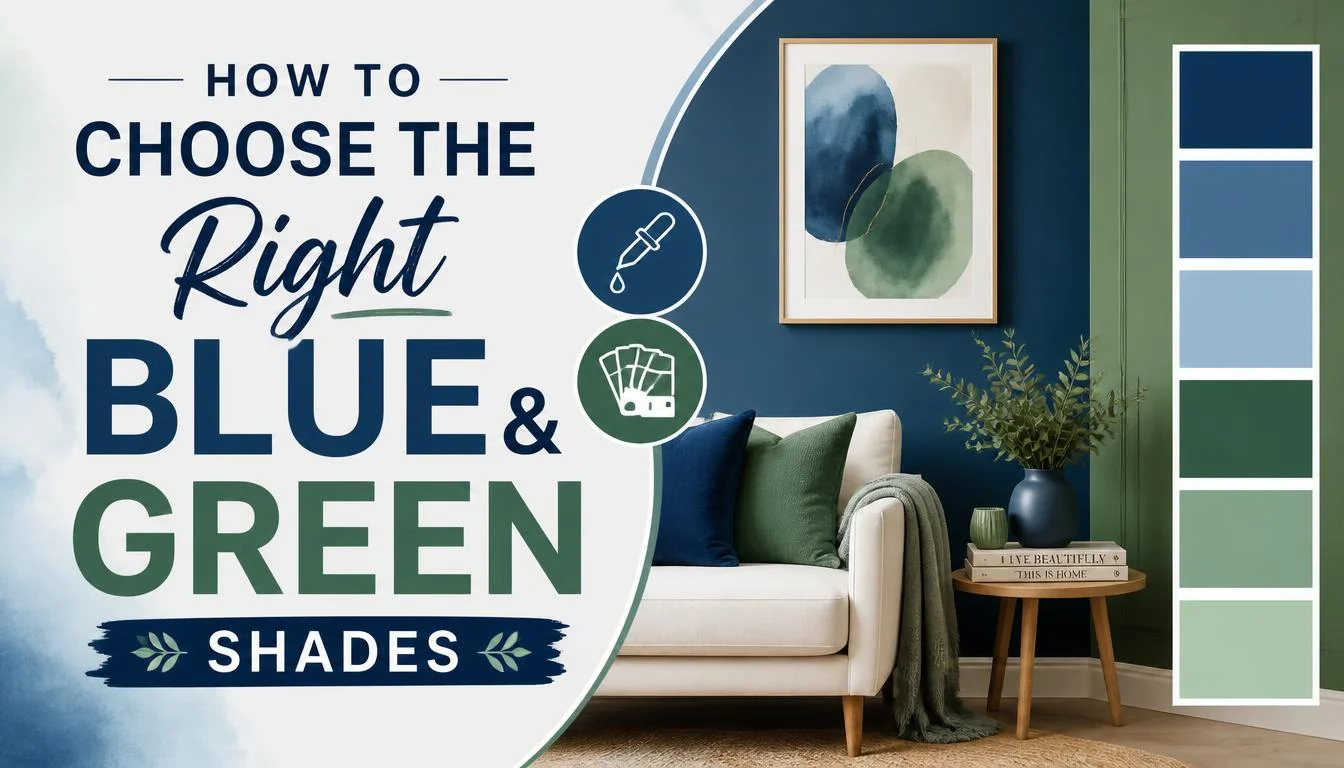
Finding the right blue green bedroom ideas can be surprisingly tricky. Blue and green naturally look good together, but the wrong shades can make a bedroom feel cold, dark, or overly busy. The key is choosing tones that suit your room’s light, size, furniture, and the mood you want to create.
You might love the softness of sage with dusty blue, the richness of navy with forest green, or the fresh feel of aqua and seafoam. You can also treat blue-green as a color family of its own, using shades such as teal and turquoise instead of combining two separate colors.
This guide covers both approaches. You’ll find practical color combinations, wall ideas, bedding choices, furniture tips, small-room solutions, renter-friendly updates, and ways to make blue and green feel warm rather than chilly.
Do Blue and Green Go Together in a Bedroom?
Yes. Blue and green can work beautifully together because both colors appear frequently in nature. Think of green leaves against a blue sky, a wooded shoreline beside the ocean, or muted eucalyptus beside stormy blue-gray.
The combination can feel peaceful, fresh, cozy, dramatic, or luxurious depending on the shades you choose.
The easiest way to make it work is to avoid giving every shade equal visual weight. Pick one main color, then let the second color support it through bedding, furniture, curtains, artwork, or smaller details.
For example:
- Sage green walls with navy bedding
- Soft blue walls with olive cushions
- White walls with a teal headboard and green throw
- Forest green walls with dusty blue textiles
If green is likely to be the stronger color in your room, these green bedroom ideas can also help you compare different shades before decorating.
How to Choose the Right Blue and Green Shades
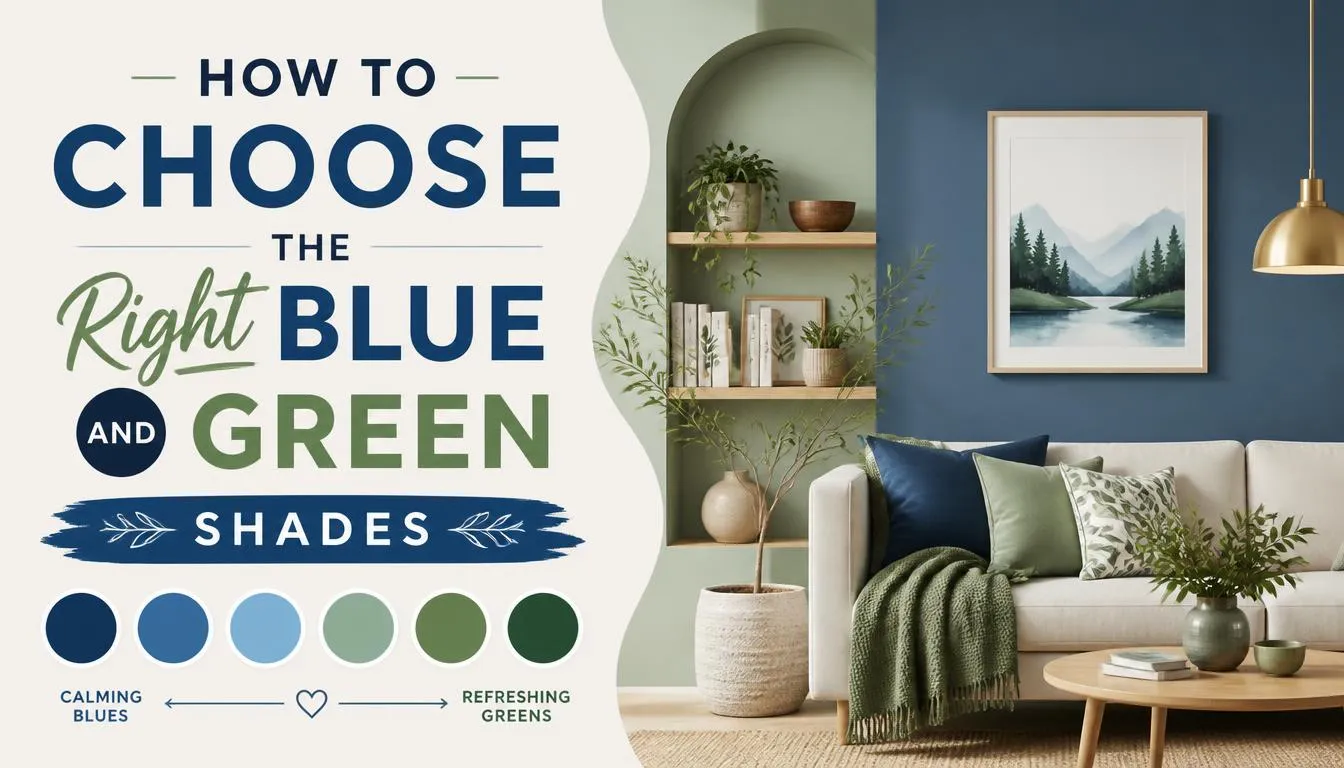
Before buying paint or replacing your bedding, look at the room you actually have rather than the inspiration photo you want to copy.
Consider the Size of the Bedroom
Light blue, seafoam, sage, mint, and other muted colors are usually easier to use across large surfaces in small bedrooms.
That does not mean dark colors are forbidden.
Navy, deep teal, bottle green, and forest green can make a small bedroom feel wonderfully cozy, but you may want to balance them with lighter bedding, curtains, flooring, and furniture.
If floor space is already limited, our guide to small bedroom ideas covers additional ways to make a compact bedroom feel less crowded.
Pay Attention to Natural Light
Never choose a blue or green paint color based only on a small online swatch.
Natural and artificial light can noticeably change how a paint color appears. A muted green may look warmer in bright afternoon sun and grayer under cooler light. Dark blue can appear rich in one room but nearly black in another.
Sherwin-Williams recommends considering both room orientation and changing daylight when selecting paint colors because the same color can look different as lighting changes through the day. Read Sherwin-Williams’ guide to light and paint color
Always test your shortlisted colors on the wall and check them in the morning, afternoon, and evening before committing.
Choose One Dominant Color
A room often feels more polished when either blue or green leads the palette.
You might use:
- 60% sage green
- 30% navy or dusty blue
- 10% cream, tan, brass, or another accent
You do not have to measure these proportions precisely. The point is simply to avoid making every color compete for attention.
Match the Undertones
Not every blue works with every green.
A grayish sage often pairs naturally with slate blue, navy, or dusty blue. A warmer olive green may look better beside petrol blue, deep teal, or muted blue-gray than a bright icy blue.
Place fabric and paint samples beside each other before buying larger pieces.
For more help with paint selection, see these bedroom paint ideas before deciding on your final wall color.
25 Blue Green Bedroom Ideas
1. Pair Sage Green Walls With Navy Bedding
Sage and navy are one of the safest places to start.
Sage gives the room a soft, natural background, while navy brings enough depth to stop the scheme from feeling washed out.
Try sage walls with a navy duvet or quilt, cream sheets, light oak nightstands, and a warm beige rug. A few brass or black details can give the room definition.
2. Use Navy Walls With Soft Green Accents
If you want a more dramatic bedroom, reverse the previous idea.
Paint the wall behind the bed navy and bring green into the room through sage cushions, eucalyptus-colored bedding, artwork, or a small upholstered chair.
Keep the ceiling and some textiles light so the navy does not overpower the room.
3. Combine Dusty Blue With Sage Green
Dusty blue and sage are ideal when you want color without strong contrast.
Both shades are muted, so the bedroom can still feel calm even when you use them across several surfaces.
Try dusty blue bedding against sage walls, then add ivory curtains and pale wood furniture.
4. Try Sky Blue and Soft Green
Sky blue and gentle green can make a bedroom feel bright and fresh.
This combination suits rooms where you want an open, relaxed atmosphere rather than a moody look.
Use plenty of white, cream, pale oak, or woven texture to keep the palette light.
5. Mix Teal With Olive Green
Teal and olive create a warmer, earthier version of a blue-green bedroom.
Because both colors have depth, they work especially well with walnut furniture, tan leather, antique brass, cream textiles, and natural linen.
Try olive bedding with a teal headboard rather than putting both strong colors on the walls.
6. Go Bold With Emerald Green and Midnight Blue
Emerald and midnight blue can create a rich jewel-toned bedroom.
The trick is giving the dark colors enough contrast.
Use warm white bedding, reflective mirrors, brass lamps, or lighter flooring to stop the room from becoming visually heavy.
Velvet also works particularly well with these deeper colors.
7. Create a Seafoam and Coastal Blue Bedroom
Seafoam sits somewhere between blue and green, making it an easy bridge between the two colors.
Pair seafoam bedding or walls with pale ocean blue, warm white, light wood, linen, cane, and jute.
If you like this relaxed look, explore these coastal blue bedroom ideas for more ways to combine soft blue with natural materials.
8. Use Powder Blue With Mint Green
Powder blue and mint work well when you want a softer bedroom.
Because both are pale colors, introduce some contrast through medium-toned wood, muted navy details, patterned cushions, or darker artwork.
Otherwise, the room may begin to look overly pale.
9. Bring In Blue and Green Botanical Wallpaper
Wallpaper is an easy way to introduce both colors without trying to match separate paint shades.
Choose a botanical, floral, or subtle geometric pattern containing blue and green.
Use it on the wall behind the bed and pull two or three colors from the pattern for your bedding and accessories.
Keep the remaining walls quieter if the wallpaper is detailed.
10. Create a Forest Green and Dark Blue Bedroom
Forest green and deep blue are perfect for a cozy, cocoon-like bedroom.
Instead of fighting the darkness, make it intentional.
Use warm bedside lamps, cream bedding, walnut furniture, velvet cushions, and a textured rug. These elements soften the darker palette and make it feel comfortable instead of gloomy.
11. Use Light Blue Walls With Green Bedding
You do not have to use green paint.
Soft blue walls can create the main background while sage, olive, or muted emerald bedding adds the green.
This approach is especially practical if you enjoy changing your decor because bedding is much easier to replace than wall paint.
12. Use Green Walls With a Blue Headboard
A blue upholstered headboard creates a clear focal point against green walls.
Against sage, try navy, dusty blue, or teal.
Against a deeper green, a lighter blue can create more separation.
Repeat the headboard color once or twice through cushions or artwork so it feels connected to the room.
13. Add Green Curtains to a Blue Bedroom
Curtains provide a large block of color without requiring permanent changes.
If your walls are blue, try muted sage, olive, or eucalyptus curtains.
Choose a simple fabric such as linen or cotton if the room already contains several patterns.
14. Ground the Room With a Blue and Green Rug
A patterned rug can tie separate blue and green elements together.
This works particularly well when your walls are neutral.
Look for a rug containing blue, green, cream, or beige, then repeat two of those shades through the bed and window treatments.
15. Mix Blue and Green With Natural Wood
Wood is one of the easiest ways to warm a cool palette.
Light oak works beautifully with sage, seafoam, powder blue, and coastal shades. Walnut and darker timber can complement navy, emerald, forest green, and teal.
You do not need every wood finish to match exactly. Keeping their undertones reasonably compatible is usually enough.
16. Use Blue, Green, and Warm White
If you are worried that two colors will feel too busy, add plenty of breathing space.
Warm white walls, bedding, curtains, or furniture can separate blue and green and make the palette easier on the eye.
This is also a flexible choice if you like to change accent colors seasonally.
17. Combine Blue, Green, and Beige
Beige can take the chill out of blue and green without introducing another strong color.
Try a beige rug, oatmeal curtains, natural linen sheets, or a cream upholstered bed.
The result feels warmer and often more relaxed than using crisp white everywhere.
18. Add Brass or Gold Details
A few warm metallic details can bring deeper blue-green palettes to life.
Consider brass bedside lamps, drawer handles, mirror frames, or a small pendant light.
You do not need much. A handful of repeated metallic accents is usually more effective than covering the room in gold.
19. Design a Small Blue and Green Bedroom
For a compact bedroom, keep the number of competing elements under control.
You might use pale blue walls, sage bedding, one patterned cushion, and warm white curtains.
Another option is to keep most walls light and use navy or dark green only behind the bed.
Wall-mounted lights and simple furniture can help preserve visual space.
20. Create a Modern Blue and Green Bedroom
Modern bedrooms often look best when the palette is clean and intentional.
Try blue-gray walls, an olive upholstered bed, simple oak furniture, black lighting, and plain cream bedding.
Keep decorative accessories limited and let color, shape, and texture create the interest.
For more layout and furniture inspiration, see these modern bedroom ideas.
21. Make a Cozy Blue and Green Bedroom
A cozy bedroom depends as much on texture and lighting as it does on color.
Layer a deep blue quilt with green cushions, a chunky throw, an upholstered headboard, thick curtains, and a soft rug.
Add several smaller light sources rather than relying only on a bright ceiling fixture.
22. Try Blue and Green Two-Tone Walls
If choosing one wall color feels impossible, use both.
Paint the lower section green and the upper section blue, or divide the wall with molding or a chair rail.
Keep the tones related in softness and saturation so the wall does not look too busy.
23. Use Green Paneling With Blue Walls
Wall paneling adds architectural detail before you even begin decorating.
Try dark green board-and-batten or wainscoting beneath lighter blue walls.
Alternatively, use muted sage paneling behind the bed with dusty blue on the remaining walls.
Keep bedding relatively simple so the wall treatment remains the focal point.
24. Paint the Ceiling a Soft Blue
The ceiling does not always have to be white.
A pale blue ceiling over muted green walls can create a subtle sky-and-land effect without looking themed.
Choose a restrained blue rather than a highly saturated shade if you want the bedroom to remain restful.
25. Create a Blue-Green Reading Corner
If you are not ready to redesign the whole bedroom, start in one corner.
Add an olive or teal chair, a blue cushion, a small wood table, and a floor lamp.
This gives you a chance to test the color combination before repeating it elsewhere.
Blue-Green Bedroom Ideas Using Teal, Aqua, and Seafoam
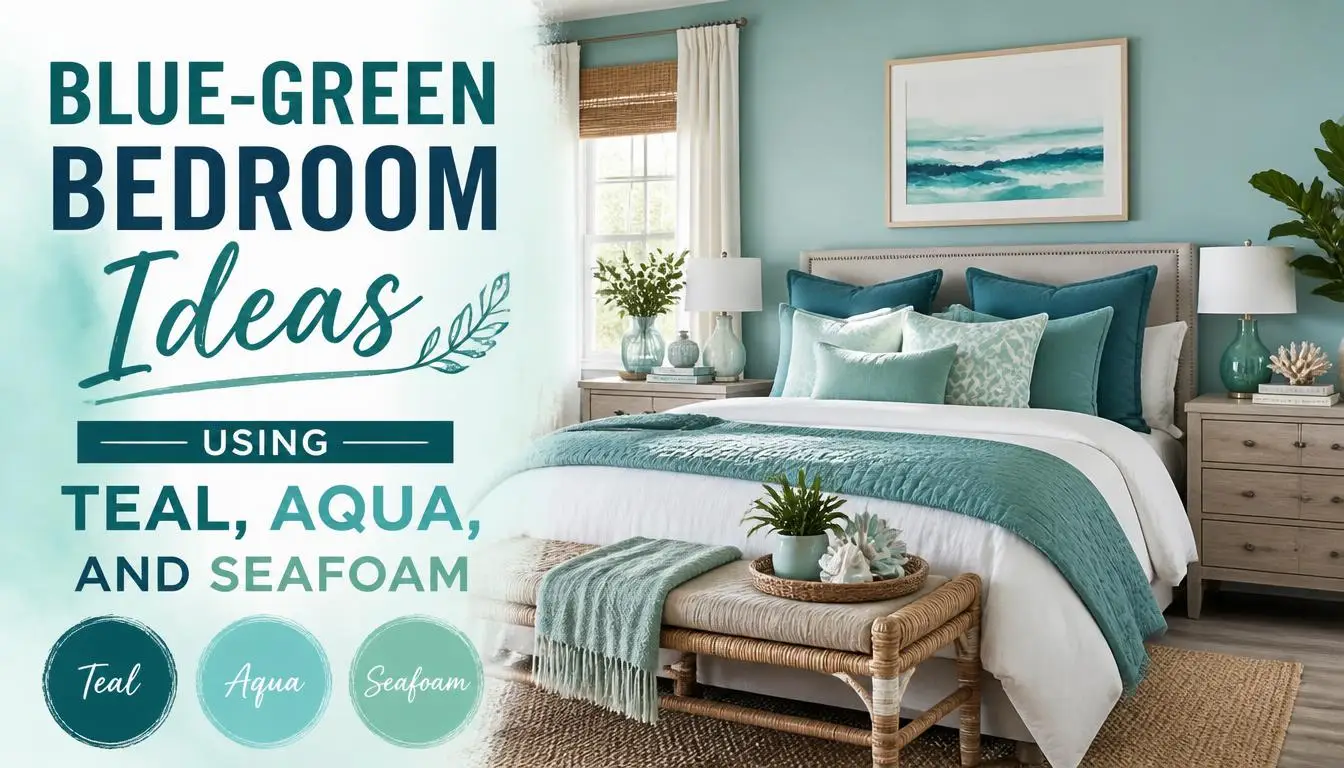
There is another way to interpret a blue green bedroom: instead of combining separate blue and green pieces, choose a color that sits between them.
Teal, aqua, turquoise, and seafoam all belong somewhere within this broad blue-green family.
Architectural Digest has also featured aqua and other blue-green shades in bedrooms, pairing softer versions with white linens and warm wood to stop the space from feeling overly cool. See Architectural Digest’s bedroom color examples
Teal Accent Wall
A teal feature wall behind the bed gives the room plenty of personality without requiring four dark walls.
Pair it with off-white bedding, warm wood, and muted green accessories.
Soft Seafoam Bedroom
Seafoam is ideal when you want something gentler.
Use it on the walls and add white, sandy beige, pale blue, woven baskets, and light wood.
Aqua Bedroom
Aqua can feel energetic if it is too saturated, so balance it with quiet neutrals.
Soft aqua walls, white linen, cane furniture, and subtle green accessories can feel fresh rather than overly tropical.
Dark Teal Bedroom
Dark teal can create a dramatic bedroom while feeling slightly softer than pure navy.
Warm wood furniture, cream upholstery, and brass lighting keep the color from feeling too cool.
Blue-Green Ombré or Color-Blocked Wall
For something more creative, transition from blue into green across a feature wall or use simple geometric color blocking.
Keep the rest of the room restrained. When the wall itself is highly decorative, plain bedding and simple furniture usually work best.
Best Blue and Green Color Combinations for Bedrooms
If you are still choosing your palette, use this as a starting point.
| Blue Shade | Green Shade | Best For |
|---|---|---|
| Navy | Sage | Calm, sophisticated bedrooms |
| Dusty blue | Sage | Soft, muted interiors |
| Sky blue | Soft green | Bright, airy bedrooms |
| Teal | Olive | Warm modern spaces |
| Midnight blue | Emerald | Moody, luxurious rooms |
| Powder blue | Mint | Small or light bedrooms |
| Aqua | Seafoam | Coastal interiors |
| Slate blue | Olive | Earthy contemporary rooms |
| Cobalt | Emerald | Bold statement spaces |
| Navy | Forest green | Dark, cozy bedrooms |
Do not treat the table as a strict rule. The exact undertone and intensity matter more than the color name printed on a paint card.
How to Balance Blue and Green Without Overdoing It
The most successful rooms rarely repeat the exact same blue and green on every surface.
Instead, spread the colors around the space.
For example:
- Green walls
- Blue bedding
- Cream curtains
- Wood nightstands
- A rug containing both colors
- One or two neutral cushions
This gives the eye somewhere to rest.
Another option is to keep expensive items neutral and use blue and green on things that are easier to replace. A cream bed, natural wood dresser, neutral rug, and white curtains can stay for years while bedding and artwork change around them.
Blue and Green Bedroom Ideas for Different Interior Styles

Modern
Use blue-gray, sage, olive, or deep teal with clean-lined furniture, simple bedding, oak, black details, and uncluttered surfaces.
Coastal
Combine seafoam, sky blue, aqua, sage, warm white, pale timber, linen, jute, and cane.
Avoid filling the bedroom with obvious beach-themed accessories. Color and texture can create the coastal feeling on their own.
Traditional
Try navy, muted green, dark wood, patterned curtains, floral textiles, classic bedside lamps, and framed artwork.
Boho
Mix teal and green with rattan, natural fibers, patterned rugs, plants, layered bedding, handmade decor, and warm wood.
Cottage
Soft blue and sage work beautifully with painted furniture, florals, checks, quilts, vintage-style pieces, and warm white.
Minimalist
Choose one muted blue-green shade and repeat it sparingly.
Sage bedding, one dusty blue artwork, warm white walls, and light wood furniture may be all you need.
Luxury
Use deeper shades such as navy, emerald, petrol blue, or dark teal with velvet, upholstered furniture, brass, statement lighting, and high-quality layered bedding.
Small Blue and Green Bedroom Ideas
Blue and green can work in a small bedroom, but avoid introducing too many visual breaks.
Start with two main colors and one neutral.
Pale blue and sage with warm white is an easy combination. If you prefer darker shades, consider one deep feature wall behind the bed rather than painting every surface.
Mirrors can help bounce light around, while furniture with simple proportions keeps the room from feeling crowded.
Avoid making every accessory a different shade of blue or green. In a small space, editing usually makes a bigger difference than adding more decoration.
Budget-Friendly and Renter-Friendly Blue Green Bedroom Ideas
You do not need new furniture or a full repaint to change the palette.
Start With Bedding
A new duvet cover, quilt, throw, or set of cushion covers can establish most of your color scheme immediately.
Add a Rug
A rug containing blue and green can connect mismatched furniture and make an unfinished room feel more intentional.
Use Removable Wallpaper
Peel-and-stick wallpaper can create a feature wall without the commitment of traditional wallpaper.
Check your wall type and the manufacturer’s removal instructions before installing it in a rental.
Change Artwork
Botanical prints, abstract blue-green artwork, or landscape photography can introduce both colors cheaply.
Add Plants
Real greenery can become part of the color palette.
Plants look especially good against blue walls because the contrast already feels familiar from nature.
Refresh Existing Furniture
Instead of replacing a dresser or nightstand, consider changing the hardware or repainting a suitable piece.
If you are planning a larger low-cost refresh, these bedroom makeover ideas offer more changes you can make without rebuilding the room.
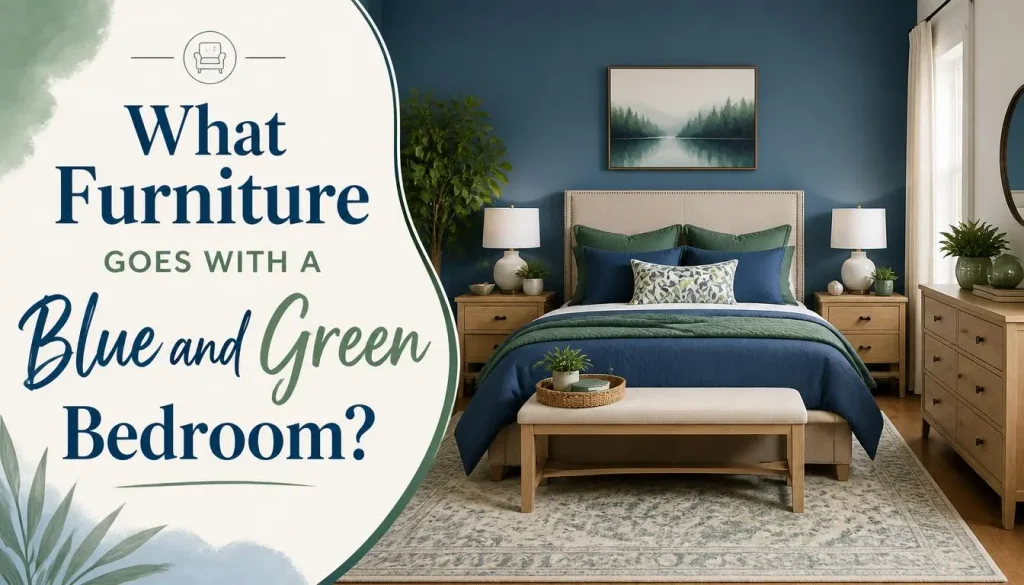
What Furniture Goes With a Blue and Green Bedroom?
Light Wood
Oak, ash, pine, and other pale woods work especially well with sage, seafoam, sky blue, and dusty blue.
They keep the palette warm and casual.
Dark Wood
Walnut and other deeper wood tones pair well with teal, emerald, navy, olive, and forest green.
Dark wood can give the bedroom a richer, more traditional or luxurious character.
White or Cream Furniture
This is one of the easiest choices when blue and green are already strong.
Light furniture visually separates the colors and prevents the room from becoming too dark.
Black Furniture
Black can sharpen a modern blue-green palette.
Use it selectively through slim bed frames, lamps, handles, or small tables rather than filling the entire room with heavy black pieces.
Upholstered Furniture
A fabric bed or headboard is an excellent place to introduce color.
If your walls are green, try a blue headboard. If the walls are blue, muted green, cream, or beige upholstery can provide contrast.
What Accent Colors Work With Blue and Green?
Blue and green do not have to stand alone.
Several supporting colors can change the mood dramatically.
Warm White
Keeps the room clean and bright without the harshness of stark white.
Cream and Beige
Add warmth and soften cool blue-green palettes.
Tan and Brown
Work naturally with olive, teal, navy, forest green, and other earthy shades.
Terracotta
Adds warm contrast and works particularly well with teal, sage, and dusty blue.
Blush Pink
Can soften sage, navy, or muted teal, especially in bedrooms where you want a gentler look.
Mustard
A small amount of mustard can add energy to darker blue-green rooms.
Brass or Gold
Adds warmth and subtle shine to rich colors such as emerald, navy, and deep teal.
Black
Provides definition in modern or contemporary bedrooms.
How to Add Texture to a Blue and Green Bedroom
Color alone does not make a bedroom feel finished.
Texture is often what turns a nice palette into a room that feels comfortable and lived in.
Layer Linen and Cotton
Use linen curtains, cotton sheets, quilted bedding, and slightly textured cushions rather than choosing every fabric in the same smooth finish.
Introduce Velvet
Velvet works especially well with jewel tones.
A teal headboard, navy cushion, or emerald bench can add richness without requiring another pattern.
Add Rattan and Cane
These warmer natural materials can soften pale blue and green rooms and fit particularly well with coastal, boho, or relaxed modern styles.
Use Jute or Wool Underfoot
A rug prevents a cool palette from feeling visually hard.
Natural fibers can add warmth, while wool provides a softer and more substantial finish.
Bring In Natural Wood
Even one wood nightstand or bench can make blue and green feel more balanced.
How Lighting Changes a Blue and Green Bedroom
Lighting deserves attention because blue and green are both strongly affected by their surroundings.
Benjamin Moore recommends assessing samples at different times of the day because a color’s appearance shifts as daylight and artificial light change. See Benjamin Moore’s color testing advice
North-Facing Rooms
These rooms can receive cooler-looking daylight.
A very cool blue paired with gray-green may therefore feel colder than expected. Consider warmer greens, creamy neutrals, natural wood, and warm lighting to create balance.
Bright, Sunny Rooms
Strong natural light can support deeper colors such as navy, teal, or forest green more easily.
You may also find that very pale colors look lighter than expected, so test them before committing.
Artificial Light Matters Too
Your wall color is only part of the picture.
Bedside lamps, ceiling lights, sconces, and bulb temperature can all change how the bedroom feels at night.
A well-designed bedroom usually benefits from more than one light source. For practical examples, see these bedroom lighting ideas.
Common Blue and Green Bedroom Decorating Mistakes
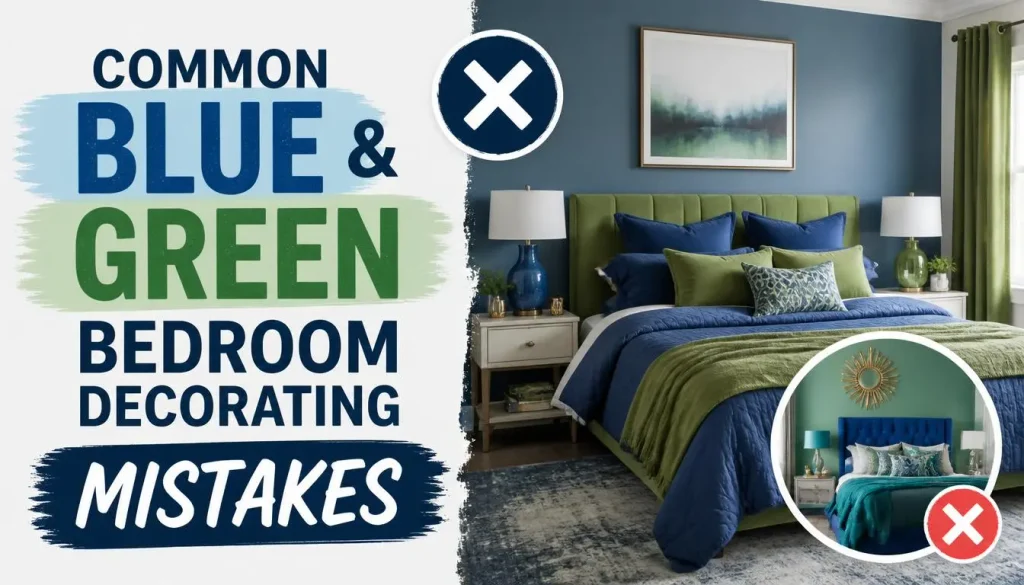
Using Too Many Saturated Colors
Bright blue plus bright green plus several competing accent colors can quickly become tiring.
If one color is vivid, allow the others to be quieter.
Ignoring Undertones
A warm olive and icy blue may look disconnected even though they are technically blue and green.
Compare your samples side by side.
Matching Everything Exactly
Your curtains, bedding, rug, and artwork do not need to be the same shade.
Slight variations make a bedroom feel layered and natural.
Forgetting Warm Elements
Blue and green are both cool color families. Without warm wood, beige, cream, brass, natural fibers, or warmer lighting, some rooms can feel chilly.
Choosing Paint From a Screen
Screens cannot show exactly how a paint color will react to your home’s light, flooring, and furniture.
Always test real samples.
Adding Too Many Patterns
Floral wallpaper, patterned bedding, a patterned rug, and patterned curtains can compete with one another.
Choose one main pattern and let the others play a quieter role.
Ignoring the Existing Floor
Flooring takes up a large amount of visual space.
Warm wood, cool gray carpet, terracotta tile, and beige carpet can each change how your blue and green palette looks.
Frequently Asked Questions About Blue Green Bedroom Ideas
Is blue and green a good combination for a bedroom?
Yes. Blue and green can create a calm, nature-inspired bedroom when their undertones and intensity work together. Muted combinations such as navy and sage or dusty blue and soft green are particularly easy to decorate around.
What shade of green goes with navy blue?
Sage, olive, eucalyptus, emerald, and forest green can all work with navy. Sage creates softer contrast, while emerald and forest green produce a richer and more dramatic palette.
Does sage green go with blue?
Yes. Sage works especially well with navy, dusty blue, slate blue, denim blue, and soft sky blue. Because sage is muted, it can often support both light and dark blue shades.
What colors go with a blue and green bedroom?
Warm white, cream, beige, tan, natural wood, brown, terracotta, blush pink, mustard, brass, gold, and black can all complement blue and green. The best choice depends on whether you want the room to feel light, cozy, modern, or dramatic.
Can I use blue and green in a small bedroom?
Yes. You can use pale blue and sage for an airy look or darker colors in smaller amounts for a cozy effect. Keeping furniture and accessories simple can prevent a compact room from feeling overcrowded.
How do you make a blue and green bedroom feel warm?
Add warm wood, cream or beige textiles, layered fabrics, woven materials, soft rugs, and warm lighting. Brass, tan, terracotta, and brown can also counterbalance the cooler palette.
Should blue or green be the dominant bedroom color?
Either can work. Choose the one you love most as the main color, then use the other in smaller areas. Giving one shade a stronger role usually creates a more cohesive room than splitting them evenly across every surface.
Is teal blue or green?
Teal sits between blue and green. Some teal shades appear noticeably bluer, while others lean greener. That flexibility is one reason teal works so well in blue-green bedroom schemes.
What color furniture works with blue and green walls?
Natural wood, white, cream, black, and upholstered neutral furniture are all reliable options. Light woods tend to suit softer blue-green schemes, while walnut and deeper finishes work well with navy, teal, emerald, and forest green.
Final Thoughts
The best blue green bedroom ideas are not about finding one perfect shade combination. They are about building a palette that works with your particular room.
For a soft, easy look, start with sage and dusty blue or sage and navy. For something light and coastal, try seafoam with sky blue. If you want a richer bedroom, combine midnight blue with emerald, navy with forest green, or teal with olive.
Then bring in warm white, natural wood, textured fabrics, and good lighting to keep the space balanced.
Most importantly, test colors in your own bedroom before committing. A shade that looks perfect in a photograph can feel completely different beside your flooring, furniture, windows, and evening lighting. When the colors suit the room rather than simply following a trend, the finished bedroom will feel far more personal and comfortable.

“A comfortable home and a healthy lifestyle go hand in hand.”
Hi, I’m Ethan Carter, the founder and lead editor of TheBestHomeFit. I’m passionate about helping people create beautiful, functional living spaces while building healthier lifestyles at home. Over the years, I’ve spent countless hours researching home decor trends, testing home gym equipment, and reviewing products to help readers make smarter buying decisions.
Through TheBestHomeFit, I share practical home improvement ideas, honest product reviews, buying guides, and fitness tips designed for everyday homeowners. My goal is to make it easier for you to create a home that looks great, feels comfortable, and supports your well-being.
When I’m not researching the latest products or writing in-depth guides, you’ll usually find me redesigning a room, trying new home workout routines, or enjoying quality time with my family.