

Blue and green are two colors that feel naturally at home together. Think of a coastline, a leafy garden under a blue sky, or the mix of water and greenery around a quiet lake. Bring those same colors into a bedroom and you can create a space that feels fresh, calm, cozy, or dramatic depending on the shades you choose.
The tricky part is getting the balance right.
A navy wall with dark green furniture can look rich in one bedroom but heavy in another. Pale blue and sage can feel airy and relaxed, yet they may look washed out without enough contrast. Room size, natural light, furniture, flooring, bedding, and even your light bulbs can change how the finished palette feels.
These blue and green bedroom ideas will help you choose combinations that work in real rooms, whether you are decorating a small apartment, refreshing a primary bedroom, working on a rental, or planning a complete makeover.
Do Blue and Green Work Together in a Bedroom?
Yes. Blue and green can work beautifully together because they sit close to one another on the color wheel and are both strongly associated with nature.
The easiest approach is to let one color lead while the other plays a supporting role. For example, use sage green across the walls and bring in navy through the bed, curtains, or cushions. Or make blue the main color and use green through an upholstered headboard, throw, artwork, and plants.
If you want more inspiration focused specifically on green, our guide to green bedroom ideas explores sage, olive, forest green, and several complementary color combinations.
One thing to watch is temperature. Because many blues and greens lean cool, an all-cool palette can sometimes feel flat. Warm white, cream, wood, rattan, tan, terracotta, aged brass, and soft warm lighting can bring the room back into balance.
Designers also regularly use blue and green together in bedrooms, particularly combinations such as navy and sage or pale blue and soft green.
Best Blue and Green Color Combinations for Bedrooms
There is no single blue-green combination that works in every room. Start with the mood you want, then consider the size and light level of your bedroom.
| Blue Shade | Green Shade | Best For | Overall Feel |
|---|---|---|---|
| Navy | Sage | Most bedroom styles | Calm and sophisticated |
| Pale blue | Sage | Small or bright rooms | Soft and airy |
| Navy | Emerald | Larger bedrooms | Rich and luxurious |
| Dusty blue | Olive | Warm, natural interiors | Earthy and relaxed |
| Teal | Forest green | Statement bedrooms | Deep and moody |
| Aqua | Mint | Coastal spaces | Fresh and breezy |
| Slate blue | Moss green | Rustic or traditional rooms | Cozy and grounded |
If you are unsure where to start, navy and sage are particularly easy to work with because the muted green softens the depth of navy without making the room feel overly colorful.
21 Blue and Green Bedroom Ideas You’ll Want to Try
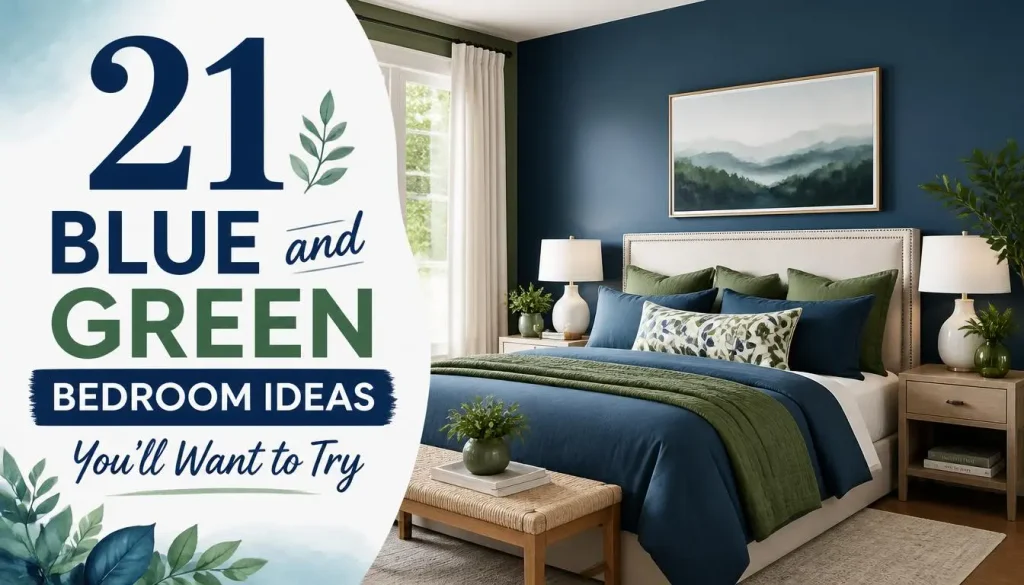
1. Pair Sage Green Walls With Navy Blue Bedding
Sage walls create a gentle backdrop, while navy bedding gives the room enough contrast to stop it from looking faded.
Keep the sheets or duvet partly white or cream rather than making every layer navy. Then add a natural oak nightstand, warm bedside lamp, and perhaps one patterned cushion that contains both colors.
This is one of the safest blue and green bedroom color schemes if you want something stylish without making a bold design commitment.
2. Try Navy Walls With Soft Green Accents
For a more dramatic bedroom, reverse the combination.
Use navy on the walls and introduce green through cushions, a throw, artwork, an accent chair, or a sage upholstered headboard. Pale bedding helps break up the darker surfaces.
Navy can feel surprisingly cozy in a bedroom when it is balanced with lighter textiles and warm materials.
If choosing the wall color feels intimidating, the bedroom paint ideas guide explains how lighting, room size, flooring, and furniture can influence the final result.
3. Combine Light Blue and Sage for an Airy Bedroom
Pale blue and sage green are ideal when you want color without strong contrast.
Try soft blue walls, a sage quilt, warm white bedding, and pale wood furniture. Keep patterns subtle so the room maintains its relaxed character.
This combination works particularly well in smaller rooms and bedrooms that receive plenty of daylight.
4. Create a Luxe Navy and Emerald Green Bedroom
Navy and emerald make a richer statement.
Instead of spreading both colors everywhere, use one on a large surface and the other on a single focal piece. Navy walls with an emerald velvet headboard, for example, can feel elegant without becoming excessive.
Add cream bedding, walnut furniture, and aged brass details to introduce warmth.
5. Mix Dusty Blue With Olive Green
Dusty blue and olive are softer than navy and emerald, making them easier to use in casual bedrooms.
Olive has an earthy quality that works especially well with brown, tan, linen, jute, leather, and medium-toned wood. Dusty blue keeps the palette from becoming too warm or rustic.
The result can suit modern, farmhouse, cottage, or relaxed traditional interiors.
6. Use a Blue and Green Accent Wall
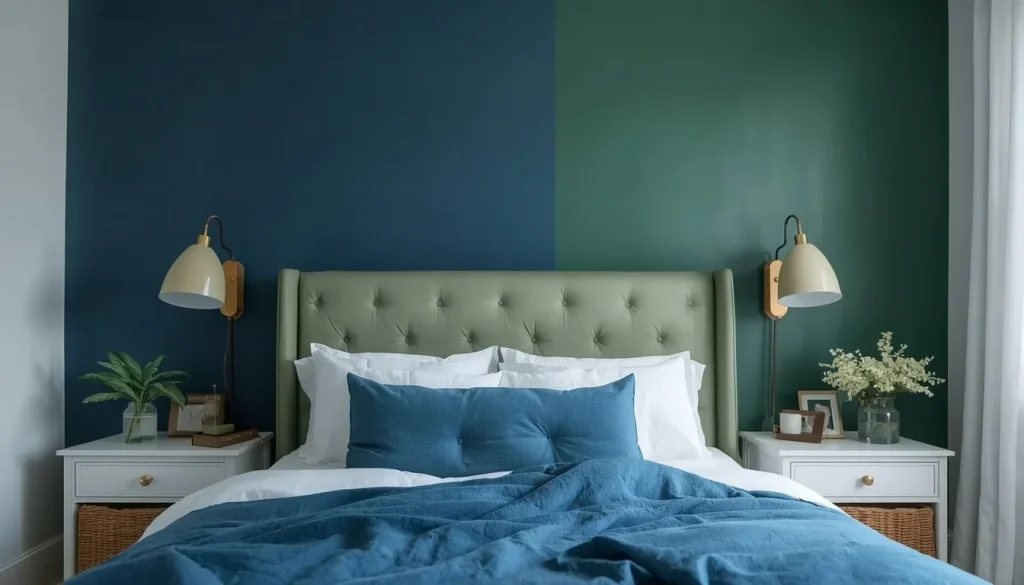
You do not need to repaint the entire room.
Create a feature behind the bed using blue or green, then repeat the second color through bedding and accessories. A muted navy wall behind a sage headboard is one option; a deep green wall behind a blue upholstered bed is another.
Keeping the remaining walls light gives the focal wall room to stand out.
7. Add Blue and Green Wallpaper
Wallpaper is an easy way to connect both colors without trying to match separate paint shades.
Botanical prints are a natural choice, but they are not your only option. Florals, stripes, geometric patterns, watercolor designs, grasscloth, and scenic murals can all work.
If the wallpaper is visually busy, keep the bedding simpler. Pull one blue and one green directly from the pattern and repeat them in small doses around the room.
8. Keep the Walls Neutral and Layer Blue and Green Bedding
Painting is not always necessary.
Warm white, ivory, beige, or soft greige walls can become a neutral backdrop for navy pillowcases, a sage quilt, blue patterned cushions, and a green throw.
This approach is particularly useful if you rent or like changing your color palette every few years.
It also makes a good starting point for an affordable bedroom makeover because textiles can create a noticeable change without a full renovation.
9. Pair a Green Headboard With Blue Walls
An upholstered headboard can carry a surprising amount of color.
Try a muted green linen or velvet headboard against soft blue walls. The green becomes the focal point without requiring several other green furniture pieces.
Finish the bed with white or cream sheets and repeat the green once more through a cushion or throw.
10. Create a Coastal Blue and Green Bedroom
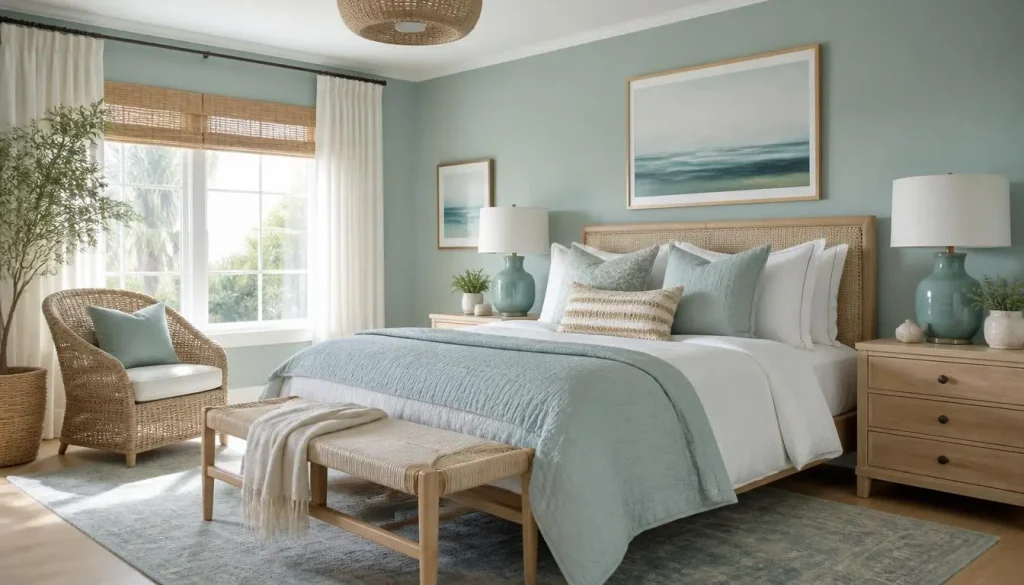
Blue and green fit naturally into coastal interiors, but the room does not need shells, anchors, or beach signs.
Choose seafoam, aqua, dusty blue, sage, or muted navy, then combine them with warm white, sandy beige, pale oak, rattan, linen, cane, and woven textures.
For a deeper look at this style, see our coastal blue bedroom ideas, which covers colors, furniture, wall treatments, lighting, and small-space solutions.
11. Build a Modern Blue and Green Bedroom With Clean Lines
For a modern look, simplify the palette.
Choose one dominant shade, one supporting color, and a quiet neutral. A navy upholstered bed, muted green artwork, warm gray walls, and black bedside lamps can be enough.
Avoid filling every surface with decorative items. Modern rooms usually benefit from fewer, more intentional elements.
You can also explore our broader collection of modern bedroom ideas for layout, furniture, and contemporary styling inspiration.
12. Go Moody With Dark Blue and Forest Green
Dark blue and forest green can create a cocooning bedroom when the room has enough visual relief.
Instead of pairing dark walls with dark flooring, dark bedding, and dark furniture all at once, introduce cream sheets, a pale rug, warm lamps, natural wood, or a light ceiling.
Texture matters here. Velvet, wool, linen, timber, and woven details stop deep colors from looking flat.
13. Use Pastel Blue and Mint Green for a Soft Look
For something lighter, pair powder blue with mint or a very pale sage.
Keep the larger furniture white, cream, pale oak, or natural wood. A few touches of blush, soft yellow, or warm beige can keep the pastel palette from feeling too cool.
This works especially well when you want an understated bedroom rather than a dramatic one.
14. Warm Blue and Green With Natural Wood
Wood is one of the simplest ways to make a blue and green bedroom feel warmer.
Light oak keeps pale schemes fresh, while walnut or medium brown wood creates richer contrast with navy, teal, forest green, and olive.
You do not need a matching furniture set. Repeating similar wood undertones across the bed, nightstands, dresser, or picture frames is usually enough to make the room feel connected.
15. Add Brass or Gold Accents
Blue and green both pair comfortably with warm metallic finishes.
Try aged brass wall lights, drawer handles, a slim mirror frame, or a bedside lamp. Small metallic details are usually more effective than covering the room in gold.
They are particularly useful in navy, emerald, teal, and forest-green bedrooms where a little warmth can lift the darker palette.
16. Mix Blue and Green Patterns Carefully
Patterns can make this color scheme much more interesting, but they need some breathing room.
You might combine a botanical cushion with a striped throw, or floral curtains with mostly plain bedding. The key is changing the scale. If one pattern is large and expressive, make the second smaller and quieter.
Repeat similar shades across the patterns so they feel related rather than random.
17. Make a Small Blue and Green Bedroom Feel More Open
A compact bedroom does not mean you have to avoid blue or green.
Use lighter shades on larger surfaces and save navy, teal, or forest green for a headboard, bedside lamp, cushion, artwork, or throw. Keep bulky furniture to a minimum and avoid covering every wall with small decorative pieces.
Our guide to small bedroom ideas covers layout, storage, furniture, color, curtains, and other ways to make limited space work harder.
Interestingly, dark blue can also work in small rooms when used deliberately; some designers use deep matte colors to create depth rather than relying only on pale shades.
18. Try a Renter-Friendly Blue and Green Bedroom
Renters can build the entire scheme without permanent changes.
Start with bedding, curtains, artwork, a rug, lamps, and removable cushion covers. Add peel-and-stick wallpaper behind the bed if your lease allows it, or use a large fabric wall hanging for color without paint.
A navy or green removable headboard cover can also create a focal point with almost no installation.
19. Use Curtains, Rugs, and Artwork to Connect the Palette
When a room contains blue and green but still feels disconnected, textiles can help bridge the gap.
A patterned rug containing both colors can visually link green walls to blue bedding. Curtains can repeat the wall color at a slightly different depth, while artwork can introduce both shades above the bed.
You do not need every accessory to contain both colors. Two or three strategic repeats are usually enough.
20. Layer Several Shades of Blue and Green
Matching everything exactly can make a bedroom feel staged.
Instead, try several related shades: navy, dusty blue, pale blue, sage, olive, and moss. Keep their saturation relatively similar so the palette feels layered instead of chaotic.
Use neutrals between the colors to give the eye somewhere to rest.
21. Keep It Simple With Blue, Green, and Warm White
If you are worried about choosing too many colors, use a three-color foundation.
Warm white can be the backdrop, blue the dominant accent, and green the secondary accent. Or reverse the blue and green depending on which color you prefer.
This simple palette gives you enough contrast while remaining easy to update later.
How to Choose the Right Blue and Green Shades for Your Bedroom
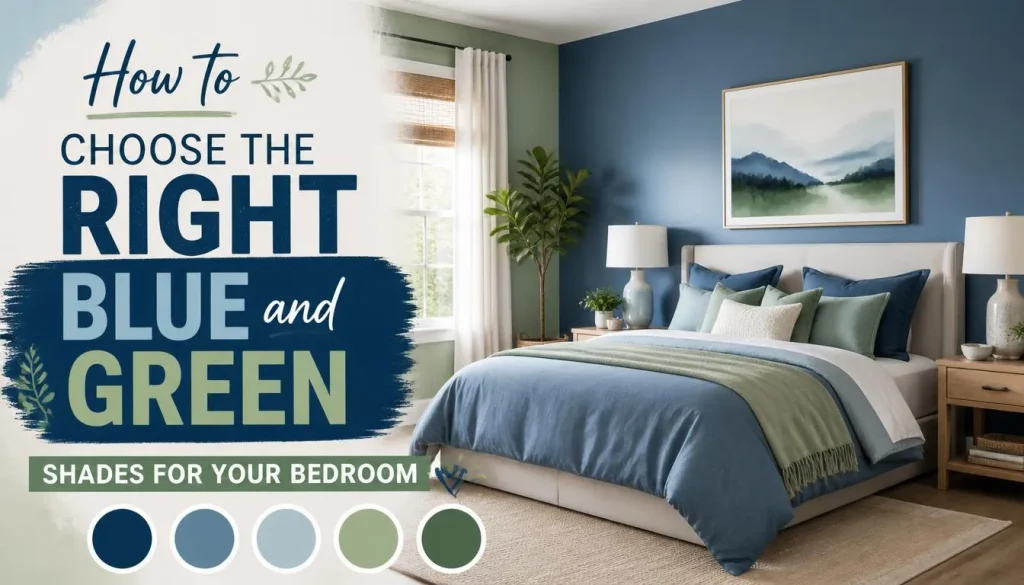
Color samples can look very different once they are surrounded by your furniture, flooring, curtains, and actual bedroom lighting.
That is why choosing paint from a screen or small sample card alone can be risky.
For Small Bedrooms
Start with pale or muted blue, sage, seafoam, or another medium-light shade if you want the room to feel open.
You can still use navy or deep green, but give them a clear job rather than scattering dark color everywhere.
For Large Bedrooms
Larger rooms give you more freedom to use navy, teal, emerald, bottle green, forest green, or deeper olive.
If the room feels too open or impersonal, deeper colors can make the sleeping area feel more defined.
For Bedrooms With Little Natural Light
Do not automatically choose the palest blue you can find.
A weak, cool shade in a dim room may appear dull rather than bright. Consider warmer greens, slightly muted blues, cream, warm white, natural wood, and multiple light sources instead.
Sherwin-Williams recommends considering both bedroom size and available natural light when choosing color, because the same shade can appear quite different under different conditions. Read Sherwin-Williams’ bedroom color guidance.
For Bright, Sunny Bedrooms
Strong natural light gives you room to experiment with deeper shades.
You can use navy or richer green across a larger surface, then soften the result with linen, pale flooring, woven materials, and warm neutrals.
Still, do not choose the final paint color based only on how it looks at midday. Morning and evening light may change it considerably.
Match the Undertones, Not Just the Color Names
Two shades can both be labeled “sage” or “blue” and still look wrong together.
One may have a warm yellow undertone while another leans cool and gray. Compare samples next to one another as well as beside your floor, headboard, curtains, and existing furniture.
Natural and artificial light can make paint undertones shift throughout the day. Both Benjamin Moore and Sherwin-Williams recommend evaluating colors in the actual room and observing them under different lighting conditions before making a final decision. Benjamin Moore explains how warm and cool colors react to light.
Blue and Green Bedroom Paint Ideas
Paint gives you more options than simply choosing one wall color.
Try Two-Tone Walls
Paint the lower portion sage and the upper section pale blue, or use navy below with warm white above.
A chair rail or simple molding can make the transition feel intentional.
Add Green Paneling Behind the Bed
Sage, olive, or forest-green paneling creates texture as well as color. Pair it with blue bedding or an upholstered blue bed.
Use Blue Trim With Green Walls
Painted trim can add personality without requiring another large block of color.
Soft green walls with muted blue trim can feel playful but still sophisticated when the shades are restrained.
Experiment With Color Blocking
Instead of painting an entire wall, create a large painted rectangle, arch, or headboard-shaped block behind the bed.
Use blue for the feature and repeat green through textiles, or switch the colors.
Consider the Ceiling
A pale blue ceiling can add subtle color to a mostly green and neutral bedroom. A darker blue or green ceiling works best when you intentionally want a cocooning effect.
Whatever treatment you choose, test it first. Light direction and artificial lighting can change how paint looks from morning to night.
Blue and Green Bedroom Decor Ideas for Bedding and Textiles
Paint sets the foundation, but fabric often determines whether the bedroom feels comfortable.
Layer Blue and Green Bedding
Avoid buying an entire matching bedding set in one pattern.
Start with a neutral base, then add a blue quilt, green throw, or a few patterned cushions. Changing textures between linen, cotton, velvet, wool, and woven fabrics creates more depth than simply adding more colors.
Choose Curtains That Balance the Walls
If your walls are dark, light curtains can provide relief.
If your walls are pale, navy or muted green curtains can frame the windows and add weight. Patterned curtains are another way to introduce both colors without changing the walls.
Use a Rug to Tie Everything Together
A rug can connect furniture, walls, and bedding when they feel visually separate.
Look for a design containing a small amount of both blue and green along with cream, beige, rust, or tan. The additional neutral or warm color helps stop the room from looking overly coordinated.
Mix Texture as Well as Color
A flat color palette can feel unfinished even when the shades are right.
Try linen curtains, cotton sheets, a velvet cushion, a knitted throw, woven basket, wool rug, or upholstered headboard. You do not need all of them. A few contrasting surfaces can make the room feel much more layered.
What Colors Go With a Blue and Green Bedroom?
Blue and green do not have to carry the whole room themselves.
Warm White and Cream
Warm white is one of the easiest supporting colors because it adds breathing room between stronger shades.
Use it for ceilings, sheets, walls, lampshades, or large furniture.
Beige, Tan, and Greige
These neutrals soften blue and green while adding subtle warmth.
They are particularly effective with sage, olive, slate blue, and navy.
Natural Wood
Wood adds warmth without introducing another obvious accent color.
Pale oak works beautifully with lighter blue-green palettes, while walnut and darker woods suit navy, forest green, olive, and teal.
Terracotta and Burnt Orange
Blue and green are both cool-leaning colors, so a small amount of earthy orange can make the palette feel warmer.
Try terracotta pottery, a rust cushion, or artwork containing burnt orange rather than introducing another large block of color.
Blush and Soft Pink
Muted pink can soften sage, teal, or darker green while adding a warmer contrast to blue.
Keep the pink dusty rather than very bright if you want the bedroom to remain calm.
Mustard and Muted Yellow
Mustard works especially well in earthy blue-green rooms.
One small throw or cushion is usually enough to add energy without distracting from the main palette.
Brass, Gold, Black, and Charcoal
Warm metals add polish. Black and charcoal add definition.
Use these colors through small details such as picture frames, handles, lamps, or furniture legs rather than making them compete with the blue and green.
What Furniture Looks Best in a Blue and Green Bedroom?

The best furniture depends on how light, dark, formal, or relaxed you want the bedroom to feel.
Light oak is an excellent option for airy bedrooms built around sage, pale blue, seafoam, or mint. Walnut creates richer contrast with navy and forest green. Cream upholstered furniture can soften bold walls, while black furniture brings a sharper modern edge.
You do not need every piece to match.
A blue upholstered bed can sit comfortably beside natural wood nightstands and a painted green dresser if the finishes are repeated elsewhere in small ways.
How to Balance Blue and Green Without Overdoing It
A useful starting point is to give each color a clear role.
You might use a neutral across the largest surfaces, blue as the dominant decorative color, and green as a smaller accent. In another room, green walls may become the dominant feature while navy appears only through the bed and curtains.
Do not worry about following a design ratio perfectly. The goal is visual hierarchy, not mathematics.
When you walk into the room, one color should generally read first. The second should support it rather than compete for equal attention everywhere.
Blue and Green Bedroom Ideas by Interior Style
Modern
Use clean-lined furniture, muted green, navy or slate blue, simple bedding, and a restrained mix of black, wood, or brass accents.
Coastal
Choose seafoam, pale blue, sage, warm white, sandy beige, pale timber, linen, jute, cane, and rattan.
Traditional
Combine navy or blue-gray with moss, olive, or muted green. Add dark wood, patterned fabric, classic lamps, and framed artwork.
Boho
Use dusty blue and olive or teal and sage alongside plants, woven baskets, natural fibers, textured cushions, and collected artwork.
Cottage
Soft blue, sage, botanical patterns, painted furniture, checks, stripes, and floral fabrics create a relaxed cottage feel.
Minimalist
Keep the palette narrow. Warm white walls, pale oak furniture, sage bedding, and one muted blue feature may be enough.
For more ideas on creating a restrained space without making it feel empty, see our minimalist bedroom guide.
Luxury
Deep navy, emerald, forest green, velvet, walnut, oversized lighting, layered curtains, and aged brass can create a richer look without relying on excessive decoration.
Blue and Green Ideas for Small, Apartment, and Rental Bedrooms
In a compact room, color needs to work with the layout rather than against it.
Use one larger area of calm color and avoid breaking every surface into a different shade. A pale sage wall with blue bedding often works better than several separate blue and green furniture pieces competing for attention.
Renters can keep walls neutral and create the same effect through a rug, curtains, removable wallpaper, art, bedding, and lamps.
If the room feels dark, lighting deserves as much attention as paint. Our guide to bedroom lighting ideas explains how to layer different light sources instead of relying on a single ceiling fixture.
Budget-Friendly Blue and Green Bedroom Ideas
A blue and green bedroom does not require a full renovation.
Start with the item that occupies the most visual space after the walls: usually the bed. Changing a duvet cover, quilt, or large throw can shift the room’s palette immediately.
Next, replace a few cushion covers rather than buying new cushions. Reuse furniture by painting a nightstand or dresser. Frame inexpensive prints containing both colors. Add plants or branches for natural green. If you want paint, update one wall instead of the entire room.
The best budget strategy is to choose the palette first and shop second. Otherwise, inexpensive purchases can quickly become expensive when none of them work together.
Common Blue and Green Bedroom Mistakes to Avoid
One common mistake is choosing every item in the same two exact shades. The room can look more natural when blue and green vary slightly in depth while staying within a related palette.
Another problem is using too many dark colors at once. Navy walls, forest-green bedding, dark flooring, black furniture, and heavy curtains may create more visual weight than you intended.
Also watch for cool overload. Blue, green, gray, cool white, and silver can look sharp together, but a bedroom often feels more welcoming once you introduce wood, cream, tan, warm metal, or soft warm light.
Do not ignore undertones, and do not judge paint from a small chip under store lighting. Test it in the room.
Finally, resist filling every surface with accessories just because they match the palette. A well-designed blue and green bedroom still needs empty space.
How to Try Blue and Green Without Repainting the Whole Bedroom
Start with the easiest elements to change.
Choose one blue textile and one green textile, such as a navy quilt and sage throw. Add artwork containing both colors. Repeat one shade through curtains or a rug, then introduce natural wood or warm white to keep the palette grounded.
Live with the combination for a week or two.
If you still enjoy it in morning light, evening light, and under your bedroom lamps, you can decide whether adding paint or wallpaper is worth the extra commitment.
A Simple Blue and Green Bedroom Makeover Plan
First decide how you want the room to feel: airy, cozy, dramatic, coastal, modern, earthy, or luxurious. Then choose either blue or green as the dominant color.
Pick the supporting shade next, followed by a warm or neutral bridge color such as cream, beige, tan, or wood.
After that, build the room from the largest elements down. Walls and the bed matter more than small accessories. Once those pieces work together, add curtains, rugs, lighting, artwork, and decorative details.
This order helps you avoid buying ten small items only to discover that the overall room still feels disconnected.
Frequently Asked Questions About Blue and Green Bedrooms
Is blue and green a good combination for a bedroom?
Yes. Blue and green can create a calm, nature-inspired bedroom and work across modern, coastal, traditional, boho, cottage, and luxury styles. The key is choosing compatible undertones and letting one shade take the lead.
What shade of blue goes best with sage green?
Navy, dusty blue, pale blue, slate blue, and muted blue-gray all pair well with sage. Navy provides stronger contrast, while pale or dusty blue creates a softer look.
Do navy blue and green go together in a bedroom?
Yes. Navy works particularly well with sage, olive, emerald, and forest green. Add cream, warm white, natural wood, or another light element if both main shades are dark.
What accent color goes with a blue and green bedroom?
Warm white, cream, beige, tan, terracotta, burnt orange, blush, muted yellow, brass, and natural wood can all complement blue and green. Choose one or two rather than trying to use every option.
What color furniture goes with a blue and green bedroom?
Natural oak, walnut, white, cream, black, and upholstered neutral furniture can all work. Light wood generally creates an airier result, while dark wood makes the room feel richer and more traditional.
Can you use blue and green in a small bedroom?
Absolutely. Pale blue, sage, seafoam, and muted green work particularly well, but darker shades can also be used strategically through an accent wall, headboard, bedding, or artwork.
How do you make a blue and green bedroom feel warm?
Add warm white or cream, wood furniture, woven textures, beige or tan textiles, aged brass, terracotta, and comfortable layered lighting.
Should blue or green be the dominant bedroom color?
Either can lead. Choose the one you want to notice first and use the second in a supporting role. This usually creates a more cohesive result than giving both colors equal visual weight across every surface.
What color bedding goes with a blue and green bedroom?
White, cream, beige, sage, navy, dusty blue, or bedding that combines several of these shades can work. If your walls are already colorful, simpler bedding usually creates better balance.
What is the easiest way to add blue and green without painting?
Start with bedding, cushions, curtains, a rug, artwork, lamps, or a removable headboard cover. These elements let you test the palette before committing to paint.
Final Thoughts on Blue and Green Bedroom Ideas
The best blue and green bedroom ideas are not about finding two perfect paint colors and matching everything to them. They are about creating a palette that works with your room’s light, size, furniture, and the mood you want to create.
For an easy starting point, try navy with sage for a balanced, sophisticated look, or dusty blue with muted green if you prefer something lighter and softer.
Then add warmth through cream, natural wood, woven textures, or a small earthy accent.
Most importantly, test your colors in the actual bedroom before making expensive changes. A combination that looks beautiful online still needs to work with your own daylight, flooring, furniture, and evening lighting.
Once those pieces feel right, blue and green can turn an ordinary bedroom into a space that feels calm, layered, and genuinely comfortable to live in.

“A comfortable home and a healthy lifestyle go hand in hand.”
Hi, I’m Ethan Carter, the founder and lead editor of TheBestHomeFit. I’m passionate about helping people create beautiful, functional living spaces while building healthier lifestyles at home. Over the years, I’ve spent countless hours researching home decor trends, testing home gym equipment, and reviewing products to help readers make smarter buying decisions.
Through TheBestHomeFit, I share practical home improvement ideas, honest product reviews, buying guides, and fitness tips designed for everyday homeowners. My goal is to make it easier for you to create a home that looks great, feels comfortable, and supports your well-being.
When I’m not researching the latest products or writing in-depth guides, you’ll usually find me redesigning a room, trying new home workout routines, or enjoying quality time with my family.