
Modern green bedroom ideas offer a practical way to create a bedroom that feels fresh, comfortable, and thoughtfully designed without making the space look overly decorated. Whether you prefer soft sage walls, rich forest green accents, or a simple neutral bedroom with green bedding, the right combination can transform the way your room looks and feels.
The challenge is choosing a shade of green that works with your room’s natural light, existing furniture, flooring, and budget. A beautiful green bedroom in a photograph might look completely different in a small room with limited daylight. You also need to consider how much green to use, which materials complement it, and how to keep the design modern rather than cluttered.
The good news is that you do not need a complete renovation to achieve the look. A carefully chosen accent wall, streamlined furniture, layered lighting, or a few well-coordinated accessories can make a noticeable difference.
In this guide, you will discover 25 modern green bedroom ideas, practical color combinations, furniture suggestions, renter-friendly decorating options, and simple ways to avoid common design mistakes. The goal is to help you create a stylish bedroom that works in your actual home, not just in an inspiration photo.
What Makes a Modern Green Bedroom Look Stylish?
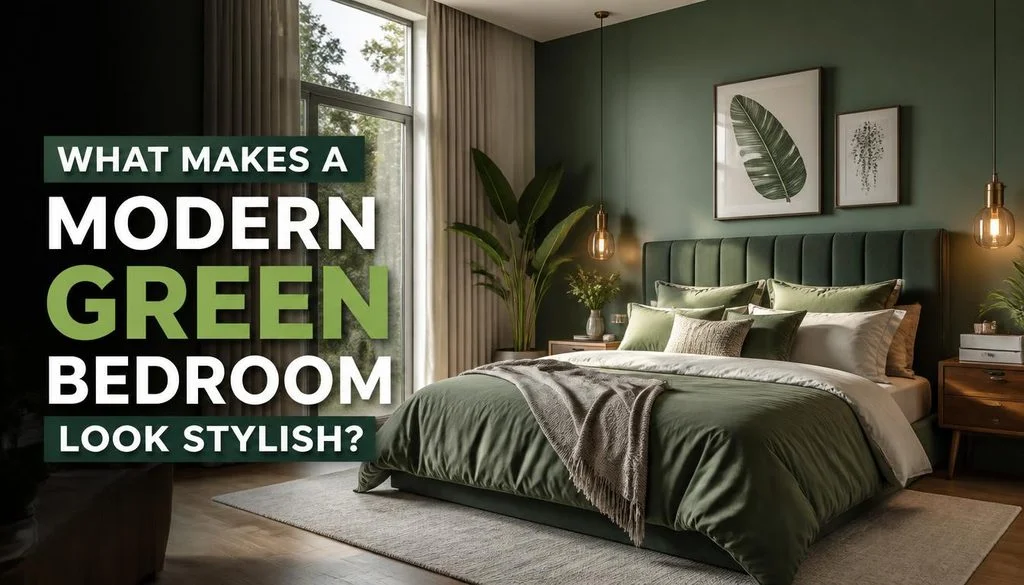
A modern green bedroom is about more than choosing a fashionable paint color. It combines a balanced color palette with functional furniture, clean shapes, natural textures, and thoughtful lighting.
The following elements help bring the look together.
Clean-lined furniture: Platform beds, simple bedside tables, streamlined dressers, and uncluttered wardrobes help the room feel contemporary.
A controlled color palette: Choose one dominant green, one or two complementary colors, and a neutral background. This creates consistency without making everything look identical.
Natural materials: Oak, walnut, linen, cotton, wool, stone, and woven accessories add warmth and texture to green interiors.
Practical lighting: A ceiling fixture alone may leave dark corners or create harsh shadows. Bedside lamps, wall lights, and carefully positioned accent lighting make the room more flexible.
Functional simplicity: Each item should have a purpose or contribute meaningfully to the design. Keeping surfaces relatively clear allows the green color and furniture to stand out.
If you are planning a broader bedroom refresh, our guide to modern bedroom ideas offers additional inspiration for furniture, lighting, storage, and contemporary styling.
25 Modern Green Bedroom Ideas to Inspire Your Space
These ideas cover different green shades, decorating styles, room sizes, and budgets. You can recreate one look exactly or combine elements from several designs to suit your home.
1. Pair Sage Green Walls With Light Oak Furniture
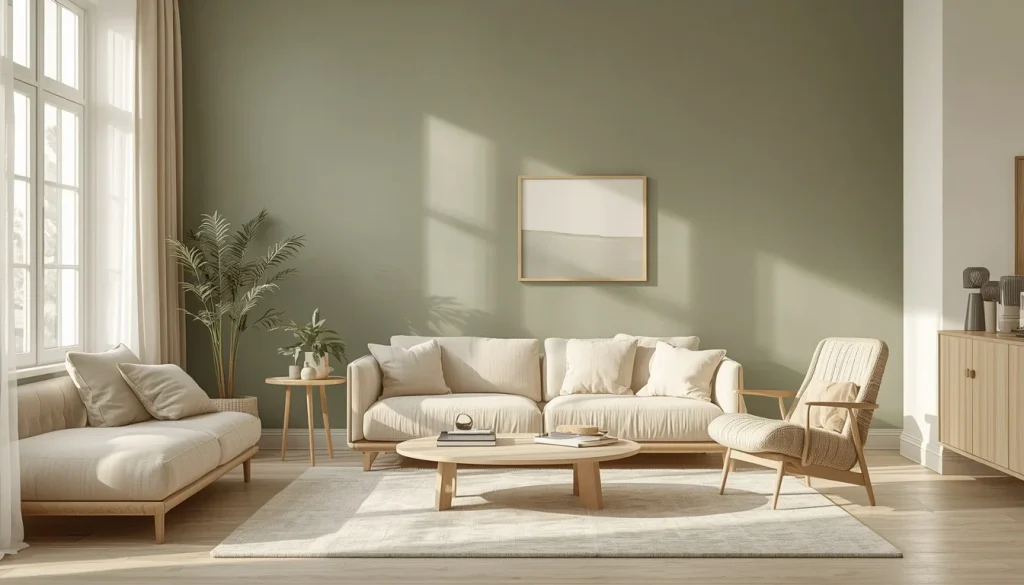
Sage green and light oak make an excellent starting point for a modern bedroom. Sage provides subtle color without dominating the room, while pale wood introduces warmth and a natural finish.
Paint the walls a muted sage, then add a simple oak platform bed, matching bedside tables, cream bedding, and linen curtains. Keep accessories minimal so the natural materials remain noticeable.
This combination works particularly well in Scandinavian-inspired and contemporary bedrooms. It is also a sensible choice if you want a colored room that will be easy to update in the future.
Best for: Small and medium bedrooms, minimalist interiors, and anyone who prefers understated color.
2. Create a Forest Green Accent Wall Behind the Bed
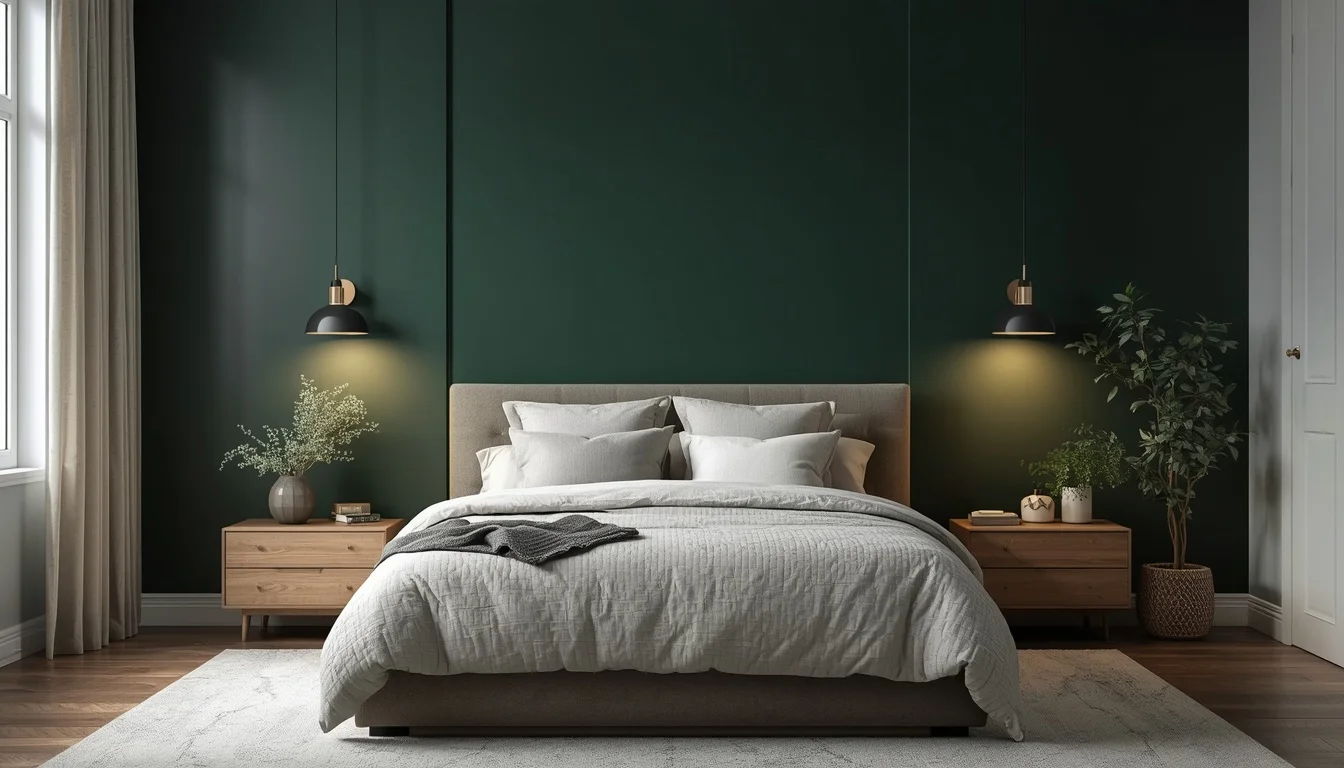
A forest green accent wall creates a strong focal point without requiring every wall to be dark. The wall behind the headboard is usually a natural place to introduce this deeper shade.
Keep the other walls warm white, soft beige, or a light neutral. Add cream bedding, walnut furniture, and simple black or brass bedside lamps.
The contrast gives the bedroom depth while preventing the color from spreading across every surface. If you have limited natural light, begin with one accent wall rather than painting the entire room.
Best for: Bedrooms that need a focal point or a more dramatic contemporary look.
3. Choose an Emerald Green Upholstered Bed
An emerald green upholstered bed can become the main feature of the bedroom without changing the wall color.
Choose a clean-lined headboard rather than one with elaborate curves or heavy ornamentation. Pair it with warm white walls, neutral bedding, and a simple wood or black bedside table.
Velvet creates a rich, decorative finish, while textured woven fabric gives the bed a quieter appearance. Repeat emerald in one or two small accessories to connect the design without making the entire room feel overly coordinated.
Best for: Neutral bedrooms that need a stronger focal point or a touch of visual richness.
4. Combine Green and Warm White for a Fresh Modern Look
Green and warm white are useful when you want the bedroom to feel clean but not stark.
Try sage or eucalyptus green walls with an off-white duvet, white curtains, pale wood furniture, and a simple rug. Warm white usually feels softer alongside muted green than a very bright, cool white.
You can also reverse the arrangement by keeping the walls white and introducing green through the bed linen, headboard, and artwork.
For more inspiration on choosing different shades and decorating styles, explore our broader green bedroom ideas guide.
Best for: Bright, simple bedrooms and spaces where flexibility matters.
5. Style Olive Green With Beige and Natural Wood
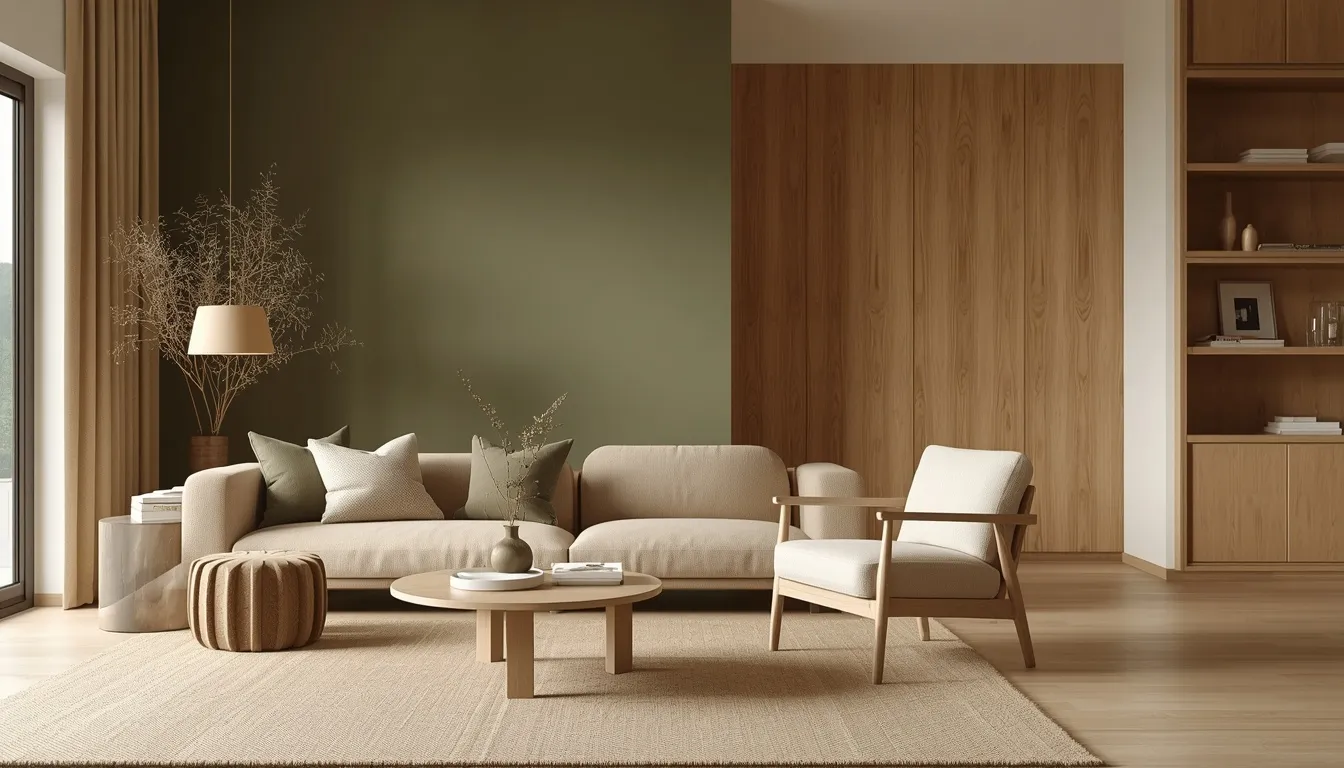
Olive green has earthy undertones that work beautifully with beige, tan, and natural wood.
Use olive on the walls, curtains, or upholstered headboard. Add oatmeal bedding, a warm beige rug, walnut or medium-oak furniture, and a few woven accessories.
This combination is especially useful if you find cooler greens too crisp or gray. The warmer palette creates a grounded appearance without relying on many decorative objects.
Avoid adding too many brown shades at once. A few different textures and wood finishes usually provide enough variety.
Best for: Warm, contemporary interiors and bedrooms that need a comfortable, grounded appearance.
6. Use Dark Green and Matte Black for a Bold Finish
Dark green and matte black create a strong, modern combination. The key is to give each color enough space rather than covering the whole room in dark finishes.
Try a deep green feature wall with black wall lights, picture frames, curtain hardware, or bedside tables. Use cream bedding and a lighter rug to create contrast.
This approach works particularly well when the bed and furniture have simple silhouettes. Decorative details can remain minimal because the color combination already provides plenty of visual interest.
Best for: Contemporary bedrooms, dramatic accent walls, and people who prefer darker interiors.
7. Combine Green and Warm Grey for a Subtle Contemporary Palette
Green and grey can work together when their undertones complement one another.
Sage green pairs naturally with warm grey, while olive often suits greige or taupe. For a cohesive look, repeat the selected grey in the curtains, bedding, rug, or upholstered furniture.
Be careful with very cool, blue-grey finishes beside a yellow-toned olive. The colors may look disconnected rather than coordinated.
If you enjoy this combination, our grey and green bedroom ideas topic is another relevant direction to explore.
Best for: Understated bedrooms that need color without strong contrast.
8. Try Two-Tone Green Walls
Two-tone walls introduce color variation without requiring complicated decoration.
One option is to paint the lower portion of the wall olive green and the upper section warm white. Another is to combine a darker green behind the bed with a lighter green on the remaining walls.
Use a straight, carefully measured paint line for a clean modern result. If you have existing wall molding, you can use it to define the transition.
Keep furniture and bedding relatively simple so the walls remain the main feature.
Best for: Bedrooms that feel plain but do not need wallpaper or elaborate architectural details.
9. Add Modern Green Wall Panelling
Wall panelling can make a bedroom feel more finished by adding architectural detail behind the bed.
Paint simple vertical panels in sage, olive, or forest green. Pair them with a low-profile bed and understated bedside tables to preserve a contemporary feel.
If you are working with a tight budget, a carefully painted panel effect may provide the appearance of a feature wall without a complete renovation.
Avoid combining elaborate paneling with too many competing patterns. Let the wall’s texture provide most of the visual interest.
Best for: Bedrooms that need more character or a defined headboard wall.
10. Use Subtle Botanical Wallpaper With Sleek Furniture
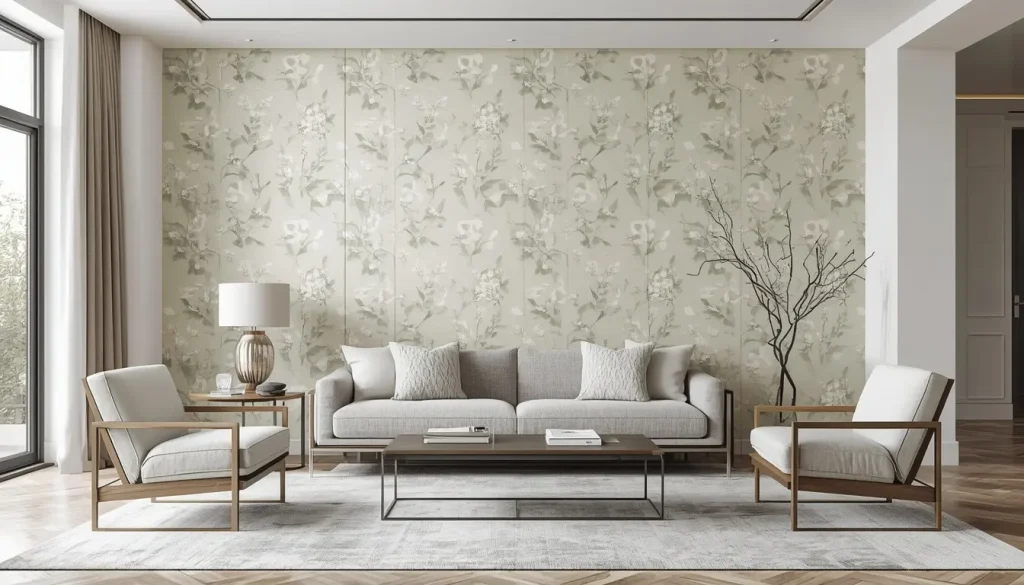
Botanical wallpaper can introduce natural patterns while keeping green at the center of the design.
Choose a subdued leaf pattern, a delicate botanical illustration, or a contemporary design with a restrained background color. Use it behind the bed or on one smaller wall if the pattern is strong.
Pair it with plain bedding, streamlined furniture, and simple lighting. This prevents the room from feeling busy.
For a more minimalist result, select wallpaper in which the pattern and background have similar tones.
Best for: Bedrooms that need pattern and personality without numerous decorative accessories.
11. Introduce Green Through Bedding
You do not need to paint your bedroom to enjoy a modern green color scheme.
A sage duvet cover, olive quilt, or forest green throw can transform a neutral bedroom quickly. Add cream sheets, textured pillowcases, and one or two cushions in related shades.
This is also a practical way to test whether you enjoy living with green before committing to permanent changes.
For the most balanced effect, let the bedding provide the main color and keep the walls and larger furniture pieces neutral.
Best for: Renters, budget makeovers, and people who prefer to change their decor seasonally.
12. Make a Green Upholstered Headboard the Focal Point
A green headboard creates a clear focal point while leaving the rest of the bedroom flexible.
Choose a simple rectangular or gently curved design in sage, olive, or deeper green. Against cream or warm white walls, it creates enough contrast without requiring additional wall decoration.
A pair of matching bedside tables can add symmetry. If floor space is limited, floating nightstands provide a lighter visual effect.
Choose fabric based on both appearance and maintenance requirements. A textured fabric can conceal minor marks better than a very smooth, delicate material, depending on its construction.
Best for: Neutral bedrooms that need a noticeable but controlled change.
13. Use Floating Nightstands and Streamlined Furniture
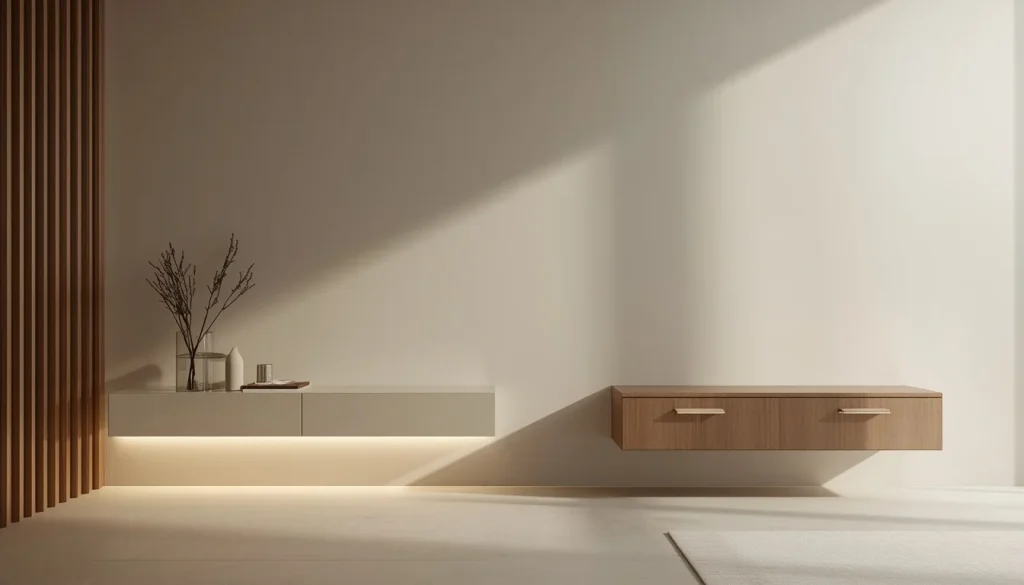
Modern bedrooms benefit from furniture that looks simple and makes the room easy to use.
Floating nightstands are especially helpful because they keep more floor visible and can free up space in compact rooms. Pair them with a platform bed, a narrow dresser, and unobtrusive handles.
If your walls are green, white or natural wood furniture provides contrast. If your walls are neutral, a green bedside table can become a smaller accent.
Measure the available space before buying furniture. A stylish nightstand is not useful if it blocks a walkway or makes opening drawers difficult.
Best for: Small bedrooms, apartments, and minimalist interiors.
For more help choosing furniture that suits your layout, see our practical guide to bedroom furnishings ideas.
14. Add Warm Brass Lighting Against Green Walls
Warm brass or brushed gold details can complement forest, emerald, olive, and sage green.
Try brass bedside lamps, wall sconces, drawer handles, or a simple pendant light. Repeating the finish in two or three places helps the room feel coordinated.
Avoid using metallic finishes on every object. Too much shine can compete with the calm, clean character of a modern bedroom.
For functionality, include a bedside light suitable for reading and a softer source for evenings. Decorative lighting should improve the room’s use, not just its appearance.
Best for: Bedrooms that need a refined finish without extensive decoration.
15. Create a Japandi-Inspired Green Bedroom
Japandi styling combines restrained decoration, natural materials, and simple forms. Green fits naturally into this approach.
Start with sage or muted olive, then add pale wood, linen bedding, a low-profile bed, and simple ceramic accessories. Storage should be functional, with unnecessary objects kept out of sight.
Rather than filling the room with plants and natural accessories, choose a few carefully placed pieces. Negative space is part of the design, not an area that needs filling.
Best for: Calm, minimalist bedrooms where comfort and functionality matter equally.
16. Build a Scandinavian Green Bedroom With Light Wood
For a Scandinavian-inspired bedroom, choose pale sage, eucalyptus green, or soft grey-green with light oak and warm white.
Use practical furniture, simple bedding, and natural textures such as cotton, wool, and linen. Keep the window area relatively open to make the most of available daylight.
A small number of accessories can make the room feel complete: perhaps one piece of artwork, a bedside lamp, and a plant.
This style works particularly well when you want a light interior but do not want an entirely white bedroom.
Best for: Small rooms, simple layouts, and people who prefer bright, natural interiors.
17. Try a Mid-Century Modern Green Bedroom
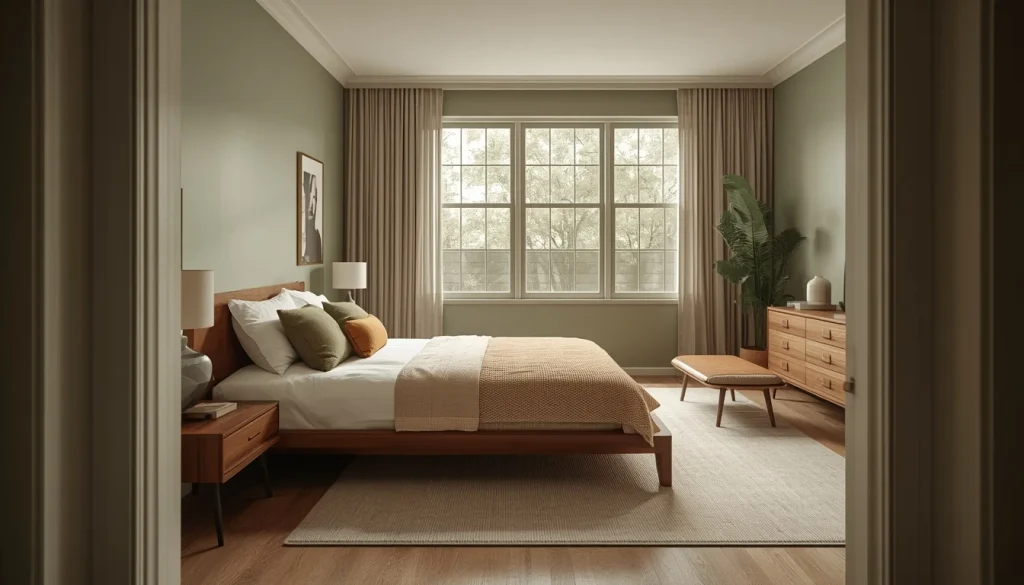
Mid-century modern design is a good option if you prefer warm wood and distinctive furniture shapes.
Pair olive or forest green with walnut furniture, tapered legs, a simple upholstered headboard, and understated geometric artwork. A rounded mirror or sculptural lamp can introduce character without cluttering the space.
Keep patterns controlled and allow the furniture’s shape and material to stand out.
Best for: Bedrooms where green needs to complement existing walnut furniture or vintage-inspired pieces.
18. Combine Deep Green and Cream for a Modern Luxury Look
Deep green and cream can create an elegant bedroom without requiring a large collection of expensive accessories.
Use forest green behind the bed or in the upholstery, then layer cream bedding, full-length curtains, and a textured rug. Walnut furniture and a few brass details can complete the look.
The contrast between the darker green and lighter fabrics creates depth. Quality-looking materials and careful proportions will generally matter more than the number of decorative objects.
Best for: Larger bedrooms or anyone who wants a sophisticated, hotel-inspired appearance.
19. Add Terracotta to a Green Bedroom
Terracotta introduces warmth and contrast to green without relying on black or metallic finishes.
Pair olive or sage with terracotta cushions, pottery, a throw, or a piece of abstract artwork. Cream and natural wood help connect the two colors.
If you are uncertain about the combination, keep terracotta to smaller accessories first. You can increase its presence later if the palette feels balanced.
This color pairing is particularly effective in organic modern and earthy contemporary interiors.
Best for: Bedrooms that feel too cool or need a warmer accent color.
20. Use Light Green to Make a Small Bedroom Feel More Open
Small bedrooms need a balance between color, furniture size, storage, and movement.
Pale sage, muted mint, or soft eucalyptus green can provide color without creating as much visual weight as a deep shade. Combine them with warm white bedding, light wood, and simple curtains.
Avoid choosing a large bed and several extra furniture pieces if they leave little room to move. A clear layout can make a greater difference than wall color alone.
Best for: Compact bedrooms, studio apartments, and rooms with limited storage.
For additional layout strategies, see our small bedroom ideas guide.
21. Use Dark Green With Carefully Layered Lighting
Dark green can look rich and inviting, but it may feel flat in a room with poor lighting.
Instead of depending on one ceiling fixture, combine general room lighting with bedside lamps and a focused accent light. Dimmable fixtures are useful when you want brighter light for practical tasks and a softer atmosphere in the evening.
Cream bedding, lighter curtains, and natural wood help balance the darker walls.
Best for: Forest green or hunter green bedrooms, particularly when the space needs to feel cozy rather than stark.
22. Introduce Green Through Floor-Length Curtains and Rugs
Green curtains and a coordinating rug can create a strong color scheme without painting the walls.
For example, pair warm white walls with olive curtains, a neutral rug with a subtle green pattern, and cream bedding. Alternatively, use sage curtains and a slightly darker throw to create a softer palette.
Curtains should be the correct length and width for the window. A rug should be large enough to relate visually to the bed rather than appearing like a small mat floating in the room.
This approach is easy to change if your tastes shift.
Best for: Renters, neutral bedrooms, and low-commitment decorating projects.
23. Try a Green Ceiling or Color-Drenched Bedroom
Painting the ceiling green can make a bedroom feel more enveloping. For a bolder look, color drenching carries the same or a closely related green across walls, trim, doors, and sometimes the ceiling.
The effect is most successful when the furniture and textiles provide variation. Think of cream bedding, walnut furniture, contrasting lamps, and different fabric textures.
If you prefer a subtle result, paint the ceiling a lighter green while keeping the walls neutral. You can introduce a similar color through smaller architectural details.
Best for: Bedrooms with interesting architectural features or people who want a more immersive color scheme.
24. Make a Modern Green Guest Bedroom Feel Welcoming
A green guest bedroom should look considered but remain practical for different visitors.
Sage walls, white bedding, light wood furniture, and a simple bedside lamp offer a flexible starting point. Add a small amount of storage, a mirror, and space for guests to place their belongings.
Avoid filling the room with decorative furniture that leaves little usable space. A comfortable bed, accessible lighting, and clear surfaces make the room more useful than elaborate styling alone.
Best for: Guest rooms, spare bedrooms, and multipurpose spaces.
25. Create a Budget-Friendly Modern Green Bedroom Makeover
You can create a fresh green bedroom without replacing every major item.
Start by choosing one dominant green and deciding where it will appear. You might repaint one wall, replace the duvet cover, update the curtains, or repaint an existing bedside table.
Then review what you already own. A neutral rug, wood furniture, simple artwork, and a new lampshade may work perfectly with the updated palette.
Spend first on changes that solve an actual problem or have the greatest visual impact. There is no need to buy matching accessories simply to complete a trend.
Best for: Budget-conscious homeowners, renters, and anyone refreshing a bedroom gradually.
How to Choose the Best Green Shade for a Modern Bedroom
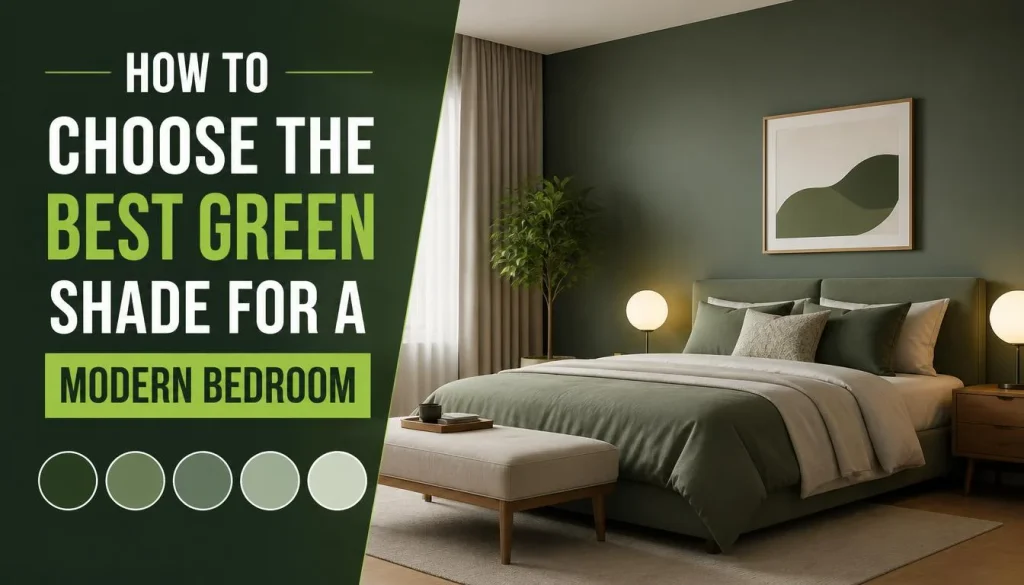
Choosing the right shade is one of the most important decisions in a green bedroom makeover. The color needs to work with the room’s light, existing finishes, and overall design.
Sage Green for a Soft, Modern Look
Sage green is a muted shade that often contains grey undertones. It works well with warm white, cream, pale oak, linen, and understated black accents.
Use it on the walls if you want a noticeable color without making the room feel overly dramatic. Sage also works well on wardrobes, bedside tables, and upholstered furniture.
Olive Green for a Warm, Earthy Bedroom
Olive green has a warmer character and pairs naturally with beige, walnut, tan, cream, and terracotta.
It is a strong option if your bedroom already has warm wood flooring or furniture. In a dark room, test the shade carefully before using it across every wall.
Forest Green for Depth and Contrast
Forest green creates a rich backdrop for cream bedding, walnut furniture, brass lighting, and simple artwork.
It can be particularly effective behind a bed, where it establishes a clear focal point. If you prefer the color on all four walls, make sure the lighting and contrasting textiles are sufficient for the room.
Emerald Green for a Refined Accent
Emerald is more saturated than sage, olive, or forest green. It can bring energy and visual richness to a bedroom, particularly through an upholstered headboard, a chair, curtains, or one statement wall.
Because emerald is noticeable, it usually works best when the surrounding colors are restrained.
Pale Green for a Small or Low-Light Bedroom
Light green can help maintain an open, airy appearance, but no paint color can compensate fully for poor lighting or an overcrowded layout.
For a compact room, consider muted mint, pale sage, or eucalyptus with light-colored bedding and furniture. If the room receives little daylight, compare several samples before deciding whether a warmer or cooler green looks better.
Test the Paint Before Committing
Do not select paint based only on a photograph or a small color card. The surrounding floor, furniture, window direction, and artificial lighting can affect how the shade appears.
Paint sample boards or test patches and look at them at different times of day. The Sherwin-Williams guide to choosing paint colors also recommends assessing color in the actual space and under different lighting conditions.
If your room faces a direction that receives cooler or warmer daylight, compare the samples in that room rather than relying on a universal rule about which green is best.
Best Modern Green Bedroom Color Combinations
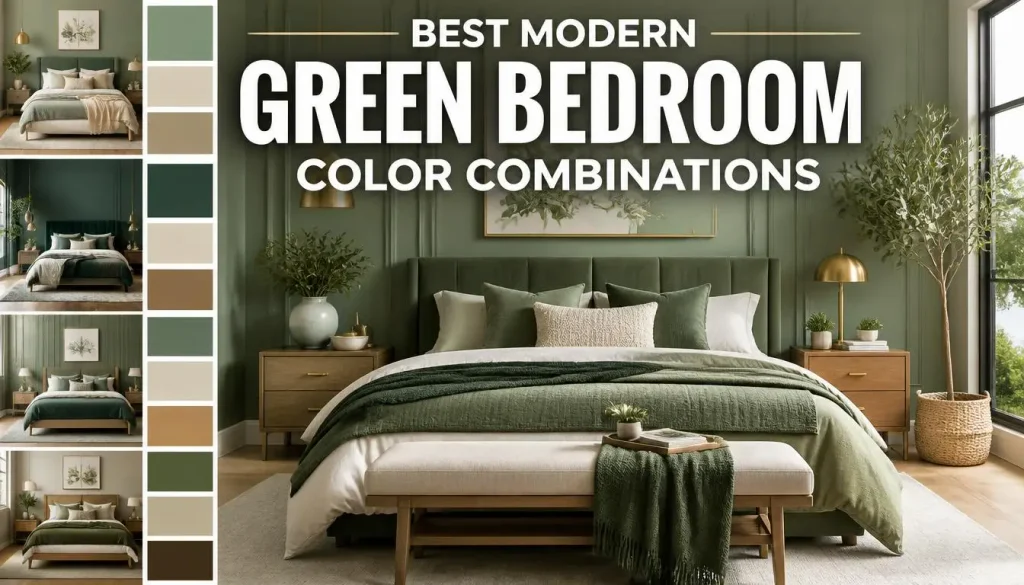
You do not need a complicated palette to make green look modern. Start with one main green, choose a supporting neutral, and introduce a contrasting color only where it adds something to the design.
Green and White
White provides a clean background for nearly every shade of green. Warm white is especially useful with sage, olive, and forest green because it creates contrast without looking overly sharp.
Try green walls, white bedding, pale wood furniture, and simple artwork.
For more contrast, use a deep green headboard against white walls rather than painting the entire room.
Green and Cream
Cream is slightly warmer than pure white and often creates a softer appearance.
It works particularly well with forest green, olive, and emerald. Use cream bedding, curtains, an area rug, or an upholstered bed to balance the dominant green.
This combination is also practical because cream can be repeated throughout the bedroom without making the color scheme look busy.
Green and Light Oak
Light oak adds warmth while keeping the overall appearance bright.
Pair it with sage or eucalyptus walls, a simple platform bed, neutral bedding, and understated accessories. This combination is particularly suited to Scandinavian and organic modern interiors.
If your existing furniture is a darker wood, you do not necessarily need to replace it. A coordinated palette can include different wood finishes as long as their undertones work together.
Green and Walnut
Walnut creates a richer appearance than pale oak. It pairs especially well with olive, forest, and emerald green.
Use walnut for the bed frame, dresser, or bedside tables, then introduce cream or oatmeal through larger textile surfaces.
Because both colors can feel visually heavy, make sure the room has enough contrasting light-colored elements.
Green and Black
Black provides strong contrast and helps create a contemporary look.
Use it for lighting, picture frames, cabinet handles, curtain rods, or a simple bed frame. If your walls are already dark green, avoid adding too many other large dark surfaces.
A little black can define the design without making the whole bedroom feel gloomy.
Green and Warm Grey
Warm grey and greige work well when you want a muted, restrained color scheme.
Combine sage with warm-grey bedding or pair olive with taupe upholstery. Keep an eye on undertones, especially if your flooring already has a strong grey or brown cast.
Green and Brass
Brass adds warmth to both light and dark greens. Use it in bedside lights, mirror frames, cabinet handles, or a pendant fixture.
Repeating the same metal finish in a few places creates cohesion. You do not need to coordinate every accessory perfectly.
Green and Terracotta
Terracotta can bring warmth to sage and olive green. Use it in a throw, cushion covers, pottery, artwork, or a small upholstered piece.
A neutral base helps the colors feel connected rather than competing for attention.
Green and Muted Pink
Muted pink can soften green without making the bedroom feel overly sweet. Sage and blush offer a gentle combination, while forest green and dusty rose produce a stronger contrast.
Keep the larger furniture pieces neutral if you are using both colors in noticeable amounts. You can find more combinations in our guide to pink and green bedroom ideas.
Green and Blue-Green
Blue-green shades, including some teal and eucalyptus tones, offer a way to create a layered palette without introducing a completely different color family.
The easiest approach is to let one shade dominate and use the second in bedding, artwork, or a smaller accent. Too many equally strong shades can make a compact bedroom feel visually busy.
Our blue and green bedroom ideas guide explores more ways to balance these colors.
Modern Green Bedroom Decor Without Painting the Walls
Painting can make a big difference, but it is not the only way to introduce green. This is particularly helpful if you rent your home, have recently painted the walls, or want to test a new color scheme gradually.
Use Green Bedding and Throws
A green duvet cover, comforter, quilt, or throw is one of the easiest ways to change the room’s appearance.
Start with a solid color and add cream, beige, or neutral patterned pillows. If you already own green bedding, use a different shade in a smaller accessory to add depth.
Add Green Curtains
Curtains create a substantial area of color without requiring permanent changes.
Sage and eucalyptus offer a softer appearance, while olive and forest green make a stronger statement. Make sure the fabric works with your window size and the amount of daylight you want to preserve.
Introduce a Green Rug
A green rug can connect the bed, curtains, and accessories. Look for a pattern that includes another color already used in the room so the rug does not appear disconnected from the rest of the design.
Choose the size according to the bed and available floor space rather than buying a rug that is too small for the room.
Choose Green Artwork
Botanical illustrations, landscapes, abstract prints, and photography can bring green into a neutral bedroom.
A larger piece above the headboard often looks more contemporary than a collection of many small frames. Choose artwork that repeats the room’s main green and at least one supporting color.
Use Plants Selectively
Plants can complement a green bedroom by introducing different leaf shapes and natural textures.
Place them where the available light suits the particular plant. Do not add plants simply to fill every empty surface; one or two well-positioned plants can look more considered than an overcrowded collection.
Update Existing Furniture
Painting a bedside table or dresser green can be more economical than buying new furniture. It also allows you to introduce the color in a controlled way.
Before painting, check that the surface and finish are suitable for the product you intend to use. Follow the manufacturer’s preparation and ventilation instructions, and consult the U.S. Environmental Protection Agency’s guidance on VOCs and indoor air quality when using paints or related products indoors.
How to Style a Modern Green Bedroom
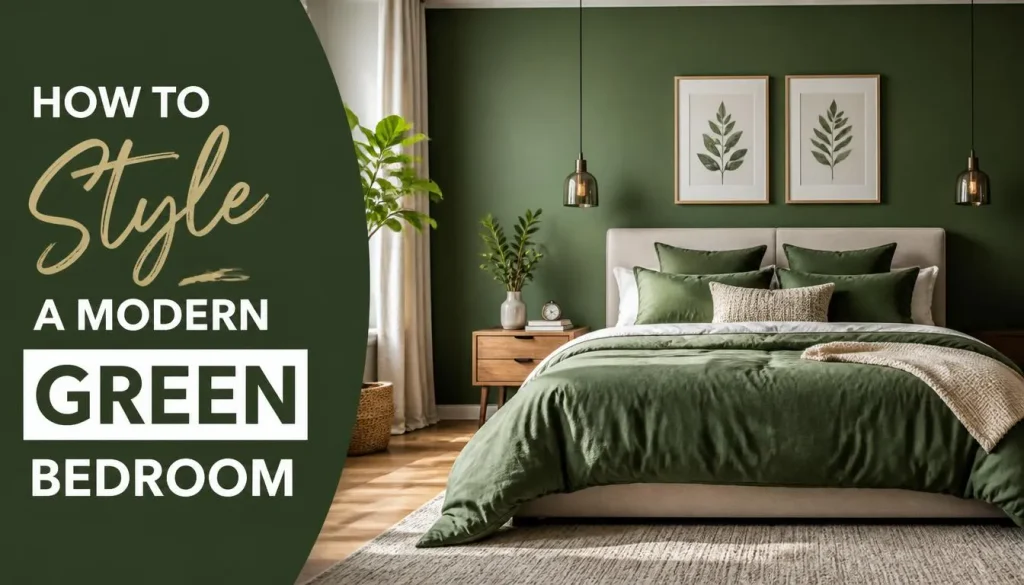
Once you have chosen the color palette, arrange the main pieces so the room remains comfortable and practical.
Choose Furniture That Fits the Room
Start with the bed because it usually occupies the largest amount of floor space. Position it so you can move around comfortably and access doors, wardrobes, and windows.
Add bedside tables and storage only where they are useful. If the room is small, consider wall-mounted lights, floating nightstands, or furniture with built-in drawers.
Layer Ambient, Task, and Accent Lighting
Ambient lighting provides general illumination, task lighting supports activities such as reading, and accent lighting highlights selected features.
For a green bedroom, this might mean a ceiling fixture, a bedside reading lamp, and a wall light that brings attention to the headboard or paneling.
A range of light sources gives you more flexibility than one bright ceiling light. Check bulb color appearance as well, because different lighting can change the way green walls and fabrics look.
Combine Textures Rather Than Too Many Colors
A modern bedroom can use a relatively small palette and still feel interesting.
Combine cotton bedding, linen curtains, a wool or textured rug, wood furniture, and perhaps a woven accessory. The different surfaces add depth without requiring more colors.
Keep Storage Visually Calm
Clothing, chargers, books, and everyday accessories can quickly make a bedroom look cluttered. Use closed drawers, baskets, or under-bed storage to keep necessary items organized.
Leave some surfaces clear so the most important design elements remain visible.
Use Artwork and Accessories With Intention
Choose a few items that suit the room’s color scheme and your personal taste.
A large print, one decorative vase, a mirror, or a small plant may be all you need. Avoid buying accessories simply because they are green; their size, texture, and style should also fit the room.
Modern Green Bedroom Ideas for Small Rooms and Rentals
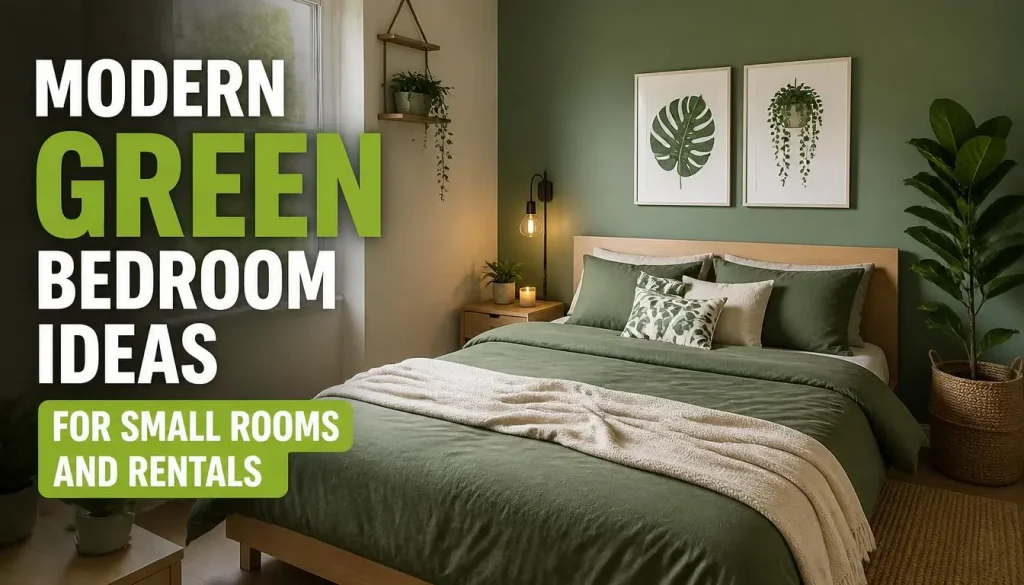
A small bedroom or rented home may limit what you can change, but it does not prevent you from creating a modern green interior.
Choose a Light Green for a Compact Room
Pale sage and muted eucalyptus can help maintain a light appearance. Combine them with simple furniture, neutral bedding, and curtains that do not overwhelm the window.
If you prefer a darker green, consider using it behind the bed while keeping the remaining walls lighter.
Use Removable Decorating Options
Removable wallpaper, green bedding, curtains, artwork, and cushion covers allow you to experiment without permanently altering the room.
Check the terms of your rental agreement before making changes to walls, fixtures, or built-in furniture.
Make Storage Part of the Design
A compact bedroom benefits from furniture that performs more than one function. Consider a storage bed, floating shelves, a narrow dresser, or a bedside table with drawers.
Choose furniture according to the room’s measurements, not simply its appearance in a photograph. Our small bedroom ideas guide offers further ways to make limited space more functional.
Common Modern Green Bedroom Mistakes to Avoid
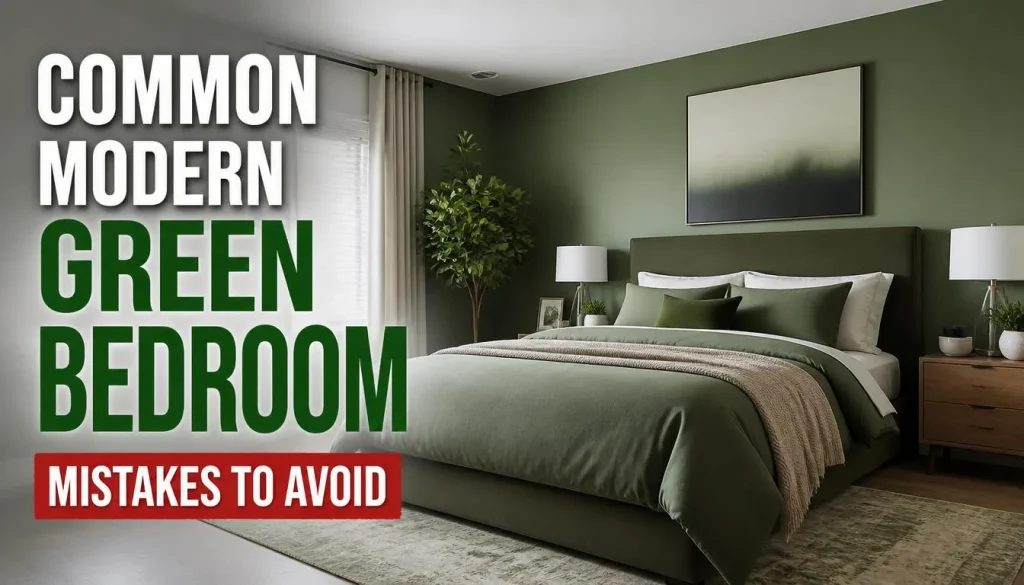
Even a good color scheme can fall short if the room’s layout, lighting, or finishes are poorly planned.
Choosing Paint Without Testing It
Green can look warmer, cooler, lighter, or darker depending on the surroundings. Test samples against the floor, furniture, and curtains before painting the whole room.
Making Every Surface Dark
Dark green walls, dark furniture, dark flooring, and heavy curtains can leave a bedroom feeling visually dense.
You do not need to avoid dark colors completely. Balance them with lighter bedding, warm neutrals, mirrors, and sufficient lighting.
Mixing Too Many Shades
Using several unrelated greens, competing patterns, and multiple accent colors can make the design feel confused.
Choose a dominant green first. Add one related shade and a neutral, then introduce another color only if it improves the result.
Ignoring Furniture Proportions
A beautiful bed or dresser can still be the wrong choice if it blocks movement or leaves no usable storage space.
Measure the room, account for doors and drawers, and decide where the major pieces will go before spending money.
Forgetting About Lighting
A bedroom that looks inviting during the day may feel completely different at night. Make sure you have enough light for practical tasks, along with softer options for relaxing.
Buying Everything at Once
It is tempting to purchase matching bedding, curtains, lamps, cushions, and furniture immediately. However, you may discover that the color looks different in your room or that some items do not fit the space.
Start with the largest visual change, assess the result, and then add the remaining pieces gradually.
How to Create a Modern Green Bedroom on a Budget
A stylish bedroom makeover does not have to involve replacing all your furniture.
Begin by identifying what bothers you most about the current room. If the walls look plain, a feature wall or new bedding may be enough. If the room feels cluttered, improving the layout and storage may make a greater difference than buying new decor.
A practical order of work is:
- Rearrange existing furniture and remove unnecessary clutter.
- Choose one green shade and a supporting neutral.
- Update bedding, curtains, paint, or one statement piece.
- Improve the lighting where it is genuinely needed.
- Add a small number of coordinated accessories.
If you are painting, purchase only the quantity you reasonably need, follow the product instructions, and ventilate the room appropriately. In the United States, the EPA provides guidance on reducing exposure to volatile organic compounds. The same principle of following product labels and maintaining suitable ventilation is useful for home painting projects elsewhere.
Most importantly, set a budget before shopping. An intentionally designed room with a few well-chosen pieces will often look more cohesive than one filled with inexpensive accessories that do not work together.
Frequently Asked Questions About Modern Green Bedrooms
What shade of green looks most modern in a bedroom?
Sage, olive, eucalyptus, and forest green are all useful options. Sage and eucalyptus suit softer minimalist interiors, olive complements warm wood, and forest green creates a dramatic focal point. The best choice depends on your lighting, furniture, and preferred style.
What colors go with modern green bedroom walls?
Warm white, cream, beige, light oak, walnut, black, warm grey, and brass can all work with green. Muted pink and terracotta are useful accent options. Choose combinations according to the undertones of the green rather than relying on color names alone.
How can I decorate a green bedroom without painting?
Use green bedding, curtains, an upholstered headboard, rugs, artwork, cushions, or selected accessories. These changes are especially useful in rental properties or bedrooms where you want flexibility without repainting.
Does dark green make a bedroom look smaller?
Dark green can make walls appear closer and create a more enclosed atmosphere, especially in a compact room with limited light. However, it can also create a cozy, intentional look. Balance it with lighter textiles, suitable lighting, and a layout that preserves usable floor space.
Should bedroom walls and ceilings be the same green?
They can be. Painting the walls, ceiling, and trim in similar greens creates a color-drenched effect. It looks particularly effective when furniture, textiles, and lighting introduce contrast. If you prefer a lighter appearance, keep the ceiling a lighter shade or use green only on the walls.
How do you make a green bedroom look more expensive?
Use a restrained color palette, well-proportioned furniture, full-length curtains, textured bedding, layered lighting, and a few coordinated finishes. Deep green with cream and walnut or sage with light oak can both look polished when the design is balanced and uncluttered.
Is green a good choice for a modern bedroom?
Green is a versatile choice because it works with light and dark palettes, natural materials, minimalist furniture, and a wide range of decorating styles. Its success depends on choosing an appropriate shade and balancing it with the room’s lighting, finishes, and practical needs.
Final Thoughts on Modern Green Bedroom Ideas
The best modern green bedroom ideas combine a color you genuinely like with a layout and decorating choices that work for everyday life. You do not need dark walls, expensive furniture, or dozens of accessories to make the room feel stylish.
Start by considering your natural light, existing furniture, and the atmosphere you want to create. Sage and eucalyptus work well for softer interiors, olive brings warmth, and forest or emerald green can make a strong statement when balanced with lighter colors.
If you are unsure where to begin, try green bedding, a small accent wall, or a new upholstered headboard before committing to a complete makeover. Test paint samples in your actual room and make sure the furniture fits comfortably.
A successful bedroom is not simply one that looks attractive in photographs. It is a space that feels comfortable, functions well, and reflects your personal style. With a thoughtful color palette and a few practical changes, you can create a modern green bedroom that you will enjoy living in for years.
SEO Meta Description (for your WordPress SEO field):
Explore 25 modern green bedroom ideas with stylish color combinations, furniture tips, lighting advice, and budget-friendly decorating solutions.

“A comfortable home and a healthy lifestyle go hand in hand.”
Hi, I’m Ethan Carter, the founder and lead editor of TheBestHomeFit. I’m passionate about helping people create beautiful, functional living spaces while building healthier lifestyles at home. Over the years, I’ve spent countless hours researching home decor trends, testing home gym equipment, and reviewing products to help readers make smarter buying decisions.
Through TheBestHomeFit, I share practical home improvement ideas, honest product reviews, buying guides, and fitness tips designed for everyday homeowners. My goal is to make it easier for you to create a home that looks great, feels comfortable, and supports your well-being.
When I’m not researching the latest products or writing in-depth guides, you’ll usually find me redesigning a room, trying new home workout routines, or enjoying quality time with my family.