

The best sage green bedroom ideas do more than make a room look beautiful. They help you create a bedroom that feels calm, comfortable, and easy to live with. The challenge is that sage green can look completely different depending on natural light, flooring, furniture, and the colors around it.
In one bedroom, sage may appear soft and earthy. In another, the same type of shade can look gray, cool, or surprisingly dark.
That is why this guide goes beyond inspiration photos. You will learn how to choose the right sage, what colors and furniture work with it, how to decorate small or dark bedrooms, what bedding and curtains to choose, and how to fix common sage green decorating problems.
What Is Sage Green?
Sage green is a soft, muted green with gray, earthy, and sometimes slightly yellow or blue undertones.
Unlike brighter greens, sage rarely dominates a room. It can behave almost like a neutral, which makes it easier to combine with cream, white, beige, brown, blue, pink, black, and natural wood.
Sage is also a broad color family rather than one exact shade. Some versions are pale and silvery, while others feel warmer, muddier, or deeper.
That variation is exactly why testing the color inside your own bedroom matters.
If you want to compare sage with other shades before committing, these green bedroom ideas explore everything from pale green to olive, forest, and emerald.
Why Does Sage Green Work So Well in a Bedroom?
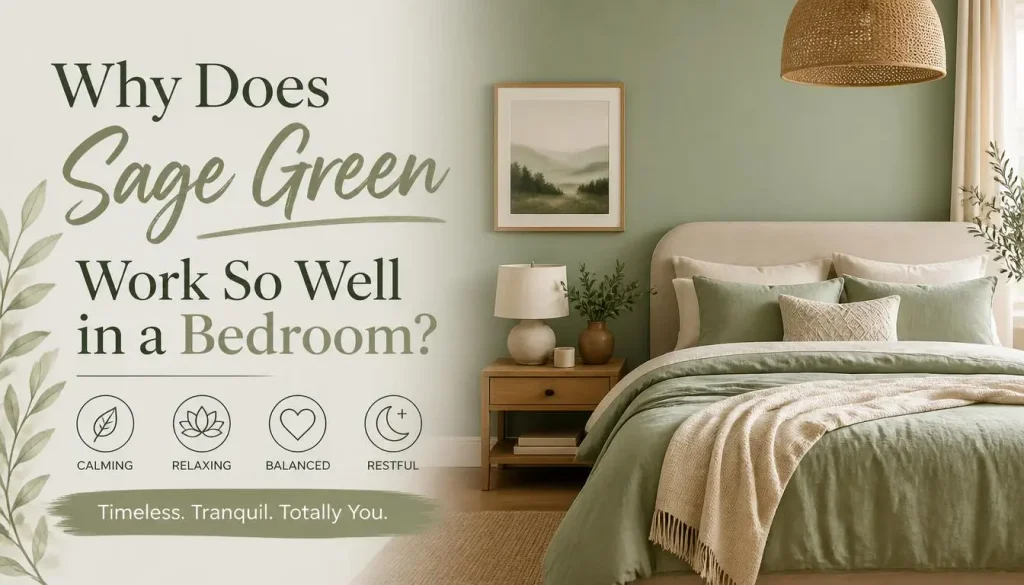
Sage works because it adds color without demanding too much attention.
A soft sage wall can provide more personality than beige or white while remaining understated enough to live with every day. It also works with a wide range of materials, including:
- Oak
- Walnut
- Linen
- Cotton
- Wool
- Rattan
- Cane
- Jute
- Brass
- Black metal
Paint companies also regularly include muted and sage-like greens among their bedroom selections. Benjamin Moore describes lighter greens as suitable for calm, restful bedrooms and recommends considering lighting, decor, and undertones when choosing a green.
Sage can also adapt to many decorating styles. It feels natural in modern, Scandinavian, farmhouse, cottage, coastal, traditional, minimalist, and boho bedrooms.
How to Choose the Right Sage Green for Your Bedroom
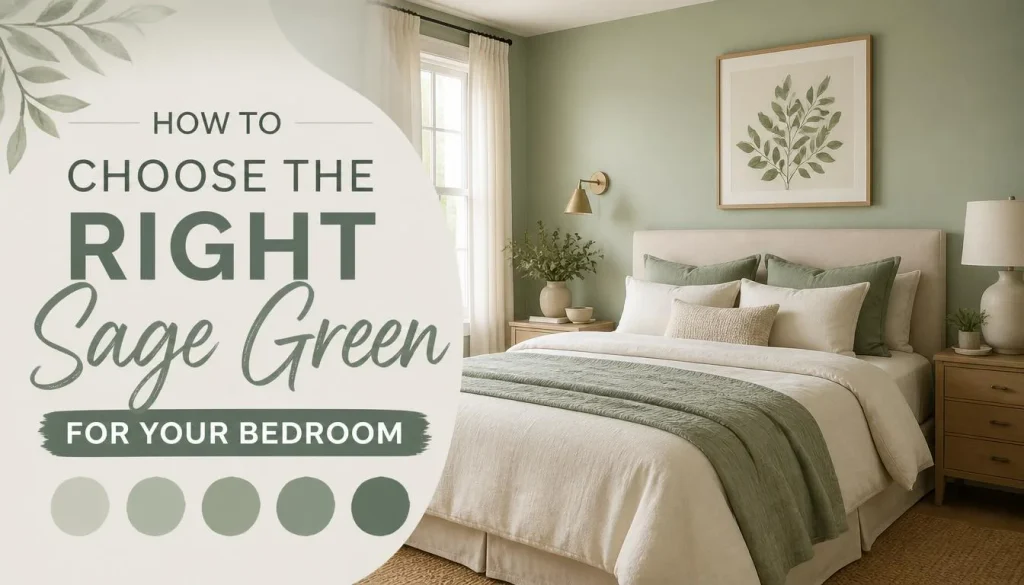
Choosing sage is less about finding the most popular paint online and more about understanding your room.
Light Sage vs. Dark Sage Green
Light sage is usually easier to use across all four walls.
It works especially well when you want the bedroom to feel:
- Fresh
- Soft
- Airy
- Relaxed
- Lightly colored rather than strongly decorated
Deeper sage makes more of a statement.
A darker sage can work beautifully behind the bed, across wall paneling, or throughout a cozy room with lighter bedding.
Do not automatically assume that a small bedroom requires the palest possible color. Dark sage can still work in a compact space if you deliberately want a more cocooning effect.
Warm Sage vs. Cool Sage
A warm sage usually contains more yellow, olive, beige, or brown.
It tends to pair well with:
- Cream
- Terracotta
- Tan
- Walnut
- Warm oak
- Antique brass
Cooler sage often contains more gray or blue.
It can look beautiful with:
- Dusty blue
- Soft gray
- Black
- Pale oak
- Warm white
- Charcoal
Benjamin Moore notes that gray undertones can make sage feel quieter, while yellow or brown undertones give it a more earthy character.
Consider the Natural Light
Natural light can shift sage significantly.
North-facing rooms often receive cooler light, which may make an already gray sage look even cooler. South-facing rooms generally receive warmer, stronger daylight and can support a wider range of muted greens.
Sherwin-Williams specifically recommends considering room orientation because natural light affects how paint appears throughout the day.
If you want a deeper explanation of choosing wall colors, these bedroom paint ideas cover natural light, room size, undertones, and different bedroom palettes.
Look at Your Flooring
Flooring is easy to forget because it may already be there, but it occupies a large visual area.
Warm timber floors usually work beautifully with earthy sage.
Cool gray carpet may bring out the gray in a muted sage.
Yellow-beige carpet may make a blue-based sage appear cooler by comparison.
Before buying paint, place your sample close to the floor as well as beside the bedding and furniture.
Test Paint Before Committing
Never judge sage from a phone screen or a tiny color card alone.
Paint a large sample board or test a generous area on the wall. Look at it:
- Early in the morning
- Around midday
- In late afternoon
- After sunset
- With your bedside lamps switched on
Benjamin Moore likewise recommends observing paint samples at different times because natural and artificial light can change how green appears.
Sage Green vs. Other Popular Greens
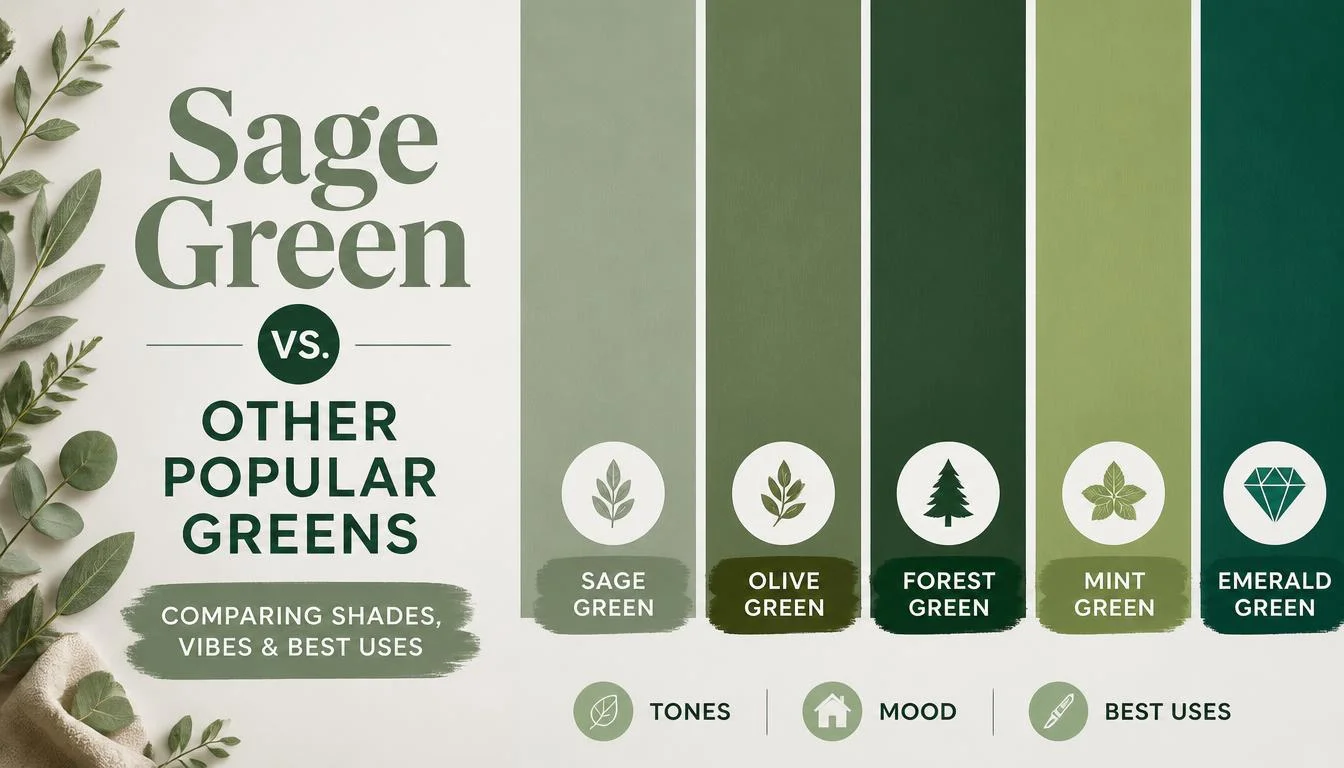
Several muted greens are regularly confused with sage.
Sage Green vs. Mint Green
Mint usually feels fresher, clearer, and slightly brighter.
Sage is more muted and earthy because of its gray influence.
Choose mint if you want a fresh, youthful look. Choose sage if you want something quieter and easier to combine with warm neutrals and wood.
Sage Green vs. Olive Green
Olive normally contains more yellow and brown.
It feels warmer and earthier than sage.
Olive works especially well with dark wood, leather, rust, tan, and cream, while sage often creates a softer overall look.
Sage Green vs. Eucalyptus Green
Eucalyptus colors can overlap heavily with sage.
In general, eucalyptus shades often lean slightly cooler or bluer, although paint brands use color names differently.
Do not choose by name alone. Compare the actual undertones.
Best Sage Green Paint Colors for Bedrooms
There is no universal “best” sage paint because light, room orientation, and surrounding finishes change the result.
Instead, narrow your search by depth and undertone.
Light Sage Green
A pale sage works well when you want the walls to remain subtle.
Use it with:
- Warm white bedding
- Pale oak furniture
- Linen curtains
- Beige rugs
- Small black or brass details
Mid-Tone Sage
Mid-tone sage provides enough color to make the room feel intentionally green without becoming overly dramatic.
It is one of the easiest choices for all-four-wall applications.
Dark Sage Green
Deeper sage is ideal when you want:
- A feature wall
- Paneled walls
- A cozy bedroom
- A dramatic headboard backdrop
- A more traditional interior
Use lighter bedding and warm lamps if the bedroom receives limited natural light.
Warm Sage
Choose an earthy sage when your bedroom already contains:
- Warm wood
- Beige flooring
- Cream textiles
- Terracotta
- Brown
- Brass
Cool Gray-Green Sage
Cool sage can work beautifully in contemporary, minimalist, or Scandinavian bedrooms.
Just be careful in rooms that already contain lots of cool gray, as the overall scheme can begin to feel flat.
Benjamin Moore’s current sage collection includes examples such as October Mist, Soft Fern, and Saybrook Sage, which illustrate how much variation exists within the sage family. Explore Benjamin Moore’s sage green paint colors
Matte vs. Eggshell
A flatter finish creates a soft appearance and can suit low-traffic bedroom walls.
Eggshell introduces slightly more sheen and is often easier to clean.
The exact finish should depend on the condition of the walls, the paint product, and how much durability you need.
27 Sage Green Bedroom Ideas
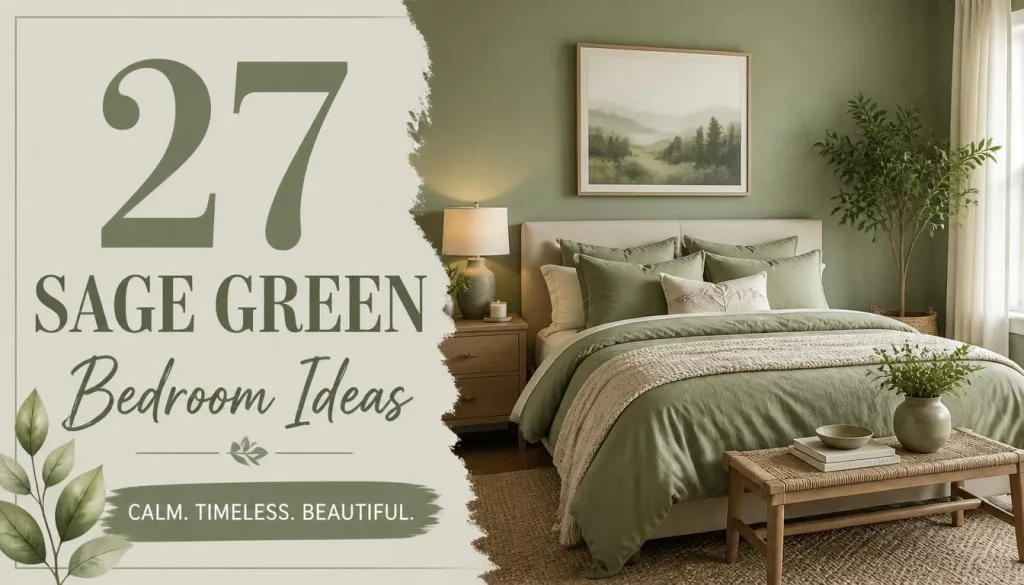
1. Paint All Four Walls Soft Sage Green
Painting the entire room sage creates an enveloping background without the intensity of forest or emerald green.
Pair it with cream bedding, an oatmeal rug, oak furniture, and simple curtains.
The result feels cohesive without requiring much additional decoration.
2. Create a Sage Green Accent Wall
Not ready for four green walls?
Paint the wall behind your headboard.
This naturally frames the bed and introduces color while leaving the remaining walls neutral.
Try a medium sage behind a cream upholstered bed with warm white surrounding walls.
3. Try Sage Green Color Drenching
Color drenching means extending one color, or closely related tones, beyond the walls.
You might paint:
- Walls
- Trim
- Doors
- Skirting boards or baseboards
- Molding
- Built-in storage
in sage.
The result can feel surprisingly sophisticated.
Use contrasting bedding, flooring, and furniture so the room still has visual separation.
4. Pair Sage With Warm White
Warm white is one of the easiest partners for sage.
Use sage on the walls and warm white on:
- Bedding
- Ceiling
- Curtains
- Trim
- Upholstery
The white provides breathing room while the warmer undertone prevents the bedroom from becoming cold.
5. Combine Sage Green With Cream and Beige
For a softer bedroom, skip bright white and layer sage with cream, oatmeal, beige, and natural tan.
A simple palette could include:
Sage walls + cream duvet + beige rug + oak nightstands + linen curtains.
Because the colors are quiet, use several textures to stop the room from looking flat.
6. Pair Sage Green With Natural Wood
Few combinations are easier to live with than sage and wood.
Light oak creates a bright Scandinavian or organic-modern feel.
Walnut produces a richer bedroom.
Rustic timber works well in cottage and farmhouse rooms.
Rather than matching every wooden piece, keep their undertones reasonably compatible.
7. Use Sage Green Bedding Instead of Paint
You can create a sage bedroom without touching the walls.
Start with white, cream, or beige walls, then introduce sage through:
- Duvet covers
- Quilts
- Throws
- Pillowcases
- Cushions
This works especially well for renters or anyone who enjoys changing color schemes.
8. Add a Sage Green Upholstered Headboard
An upholstered sage headboard provides a large block of color without dominating the room.
Pair it with white or cream walls and warm timber furniture.
Velvet creates a richer look, while linen or textured fabric feels more relaxed.
9. Hang Sage Green Curtains
Curtains can transform a bedroom because they cover a much larger area than cushions or accessories.
Sage curtains look particularly natural beside:
- Warm white walls
- Cream walls
- Pale wood
- Rattan
- White bedding
For more window-treatment inspiration, see these bedroom curtain ideas.
10. Add Sage Green Wall Paneling
Wall paneling gives sage more architectural presence.
Try:
- Board and batten
- Vertical paneling
- Traditional molding
- Wainscoting
- Slatted details
You can cover the whole wall or stop at half height and use a lighter color above it.
11. Paint the Ceiling Sage
The ceiling does not have to be white.
A soft sage ceiling with warm white walls creates a subtle layer of color.
Alternatively, continue the wall color across the ceiling for a more enveloping room.
Keep your lighting and bedding relatively light if you use a deeper sage overhead.
12. Use Sage Green Botanical Wallpaper
Botanical wallpaper can introduce sage alongside cream, olive, dusty pink, blue, or brown.
Use a patterned wallpaper behind the bed and keep the remaining room restrained.
If the wallpaper is detailed, plain bedding usually looks better than adding another bold pattern.
13. Pair Sage Green With Dusty Pink
Sage and dusty pink feel softer than green and bright pink.
Use one as the dominant color and the other sparingly.
For example:
- Sage walls
- Cream bedding
- Two dusty pink cushions
- Warm wood furniture
The pink brings warmth without taking over.
14. Combine Sage Green With Navy Blue
Navy gives sage more structure and contrast.
Try:
- Sage walls with navy bedding
- Navy headboard against sage paint
- Navy curtains in a lighter sage room
- Sage textiles in a navy-and-white bedroom
Use cream, warm white, or beige between large areas of both colors so the bedroom does not become too dark.
15. Mix Sage Green and Dusty Blue
Dusty blue creates a quieter contrast than navy.
This combination suits coastal, cottage, traditional, and soft contemporary bedrooms.
Pair muted sage walls with a dusty blue quilt, cream sheets, and pale timber furniture.
16. Warm Sage Up With Terracotta
Terracotta is useful when sage feels too cool.
You only need a small amount.
Try terracotta through:
- Cushions
- Pottery
- Artwork
- Throws
- Lamps
Add tan, cream, and timber to complete the earthy palette.
17. Add Brass or Gold Accents
Warm metals can give sage a polished finish.
Consider:
- Brass sconces
- Drawer handles
- Mirror frames
- Pendant lights
- Bedside lamps
Choose a few repeated metal details rather than filling the room with shiny gold accessories.
18. Pair Sage With Black Details
Black adds definition to a pale sage room.
Use it sparingly through:
- Picture frames
- Curtain rods
- Lighting
- Furniture legs
- Drawer handles
- A slim metal bed frame
This combination works especially well in modern interiors.
19. Create a Sage Green and Gray Bedroom
Sage and gray can work, but undertones matter.
A very cool blue-gray beside a warm sage may feel disconnected.
Warm gray, greige, and soft mushroom are often easier partners.
If your room already has gray carpet, bring in cream, wood, or beige so the whole space does not become too cool.
20. Layer Several Shades of Green
You do not have to match every green exactly.
Try combining:
- Pale sage walls
- Olive cushions
- Dark green artwork
- Eucalyptus textiles
The key is variation in depth rather than using four highly saturated greens.
21. Create a Dark and Moody Sage Bedroom
Choose a deeper, muddier sage and pair it with:
- Walnut
- Chocolate brown
- Dark olive
- Cream bedding
- Aged brass
- Warm bedside lamps
This creates a bedroom that feels intimate rather than gloomy.
22. Keep the Room Light and Airy
For a brighter look, combine pale sage with:
- Warm white
- Light oak
- Linen
- Cream
- Pale woven rugs
- Simple window treatments
Avoid filling every surface with green.
The quiet contrast is what makes this approach work.
23. Make Sage Feel Cozy
A cozy sage bedroom needs more than green paint.
Layer the room with:
- A thick rug
- Full-length curtains
- A quilt
- Extra pillows
- A textured throw
- Upholstered furniture
- Warm lamps
Texture makes a muted palette feel intentional instead of empty.
24. Use Sage in a Small Bedroom
In a compact room, keep the palette controlled.
Try pale sage walls, cream bedding, light furniture, and one darker accent.
Avoid introducing five different furniture finishes and several competing patterns.
For layout and storage solutions beyond color, these small bedroom ideas can help you make better use of limited space.
25. Create a Modern Sage Green Bedroom
Keep shapes simple and colors restrained.
Try:
- Sage walls
- A low upholstered bed
- Oak nightstands
- Cream bedding
- Black lamps
- One large artwork
If you prefer clean lines and practical furniture, these modern bedroom ideas offer more ways to develop the look.
26. Create a Boho Sage Green Bedroom
Sage naturally suits relaxed boho interiors.
Combine it with:
- Rattan
- Cane
- Linen
- Woven baskets
- Terracotta
- Natural wood
- Plants
- A patterned rug
Do not feel that every surface needs decoration. Leaving some visual space keeps boho from becoming cluttered.
27. Design a Luxury Sage Green Bedroom
For a more refined result, choose richer materials rather than adding more decor.
Consider:
- A large upholstered headboard
- Velvet cushions
- Full-length curtains
- Walnut furniture
- Brass sconces
- Layered bedding
- A substantial rug
- Statement lighting
The palette can remain simple while the materials add depth.
Best Colors That Go With Sage Green in a Bedroom
Sage is flexible, but each pairing creates a different mood.
| Color | Effect With Sage Green |
|---|---|
| Warm white | Fresh and balanced |
| Cream | Soft and cozy |
| Beige | Warm and understated |
| Taupe | Sophisticated and earthy |
| Gray/grey | Calm when undertones match |
| Dusty blue | Gentle and relaxed |
| Navy | Strong, elegant contrast |
| Blush pink | Soft and warm |
| Terracotta | Earthy and inviting |
| Brown | Natural and grounded |
| Black | Modern definition |
| Olive | Layered tonal look |
| Brass/gold | Warm and refined |
Benjamin Moore also recommends neutrals such as white, gray, beige, and black with green, while softer pinks can provide a gentle contrasting color.
What Bedding Goes With Sage Green Walls?
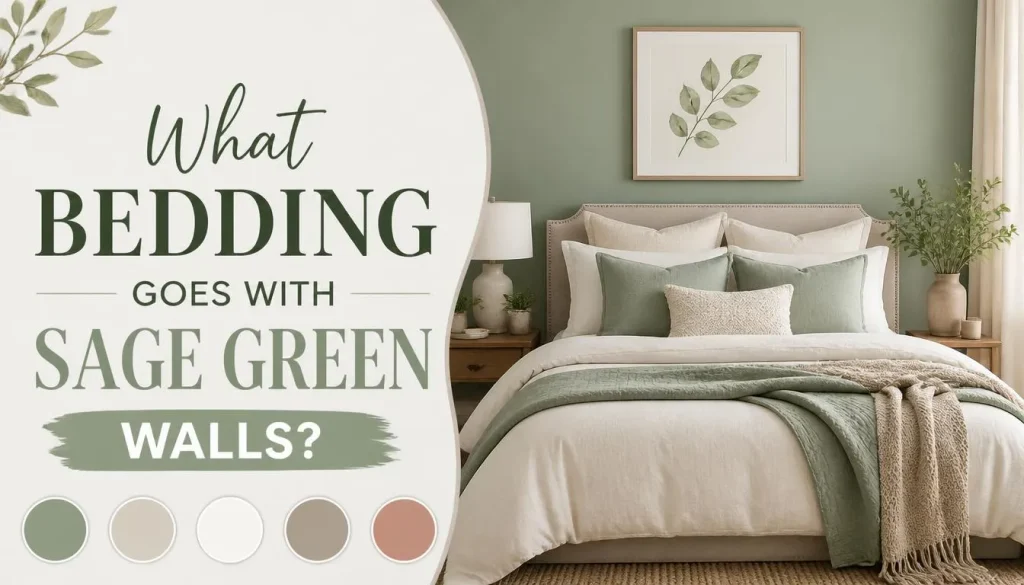
Bedding takes up a large portion of the bedroom, so it can change how sage walls feel.
White and Cream Bedding
This is the safest choice.
Cream creates less contrast than crisp white and often feels warmer.
Beige and Oatmeal Bedding
Use beige, oatmeal, flax, or natural linen if you want an earthy palette.
Vary the fabrics so the neutral bed still has depth.
Sage-on-Sage Bedding
You can use green bedding against green walls, but avoid matching the shade exactly.
Choose bedding slightly lighter or darker than the walls.
For example:
Mid-sage wall + pale sage duvet + cream sheets + olive cushion.
Dusty Pink Bedding
Dusty pink adds gentle warmth.
Keep the pink muted rather than bubblegum-bright if you want a sophisticated bedroom.
Dusty Blue Bedding
Blue and sage create a relaxed nature-inspired palette.
Choose denim, slate, dusty blue, or blue-gray instead of highly saturated royal blue.
Navy Bedding
Navy works especially well when you want more contrast.
Break up sage and navy with cream or white sheets.
Patterned Bedding
Patterns can work if the room itself is simple.
Look for bedding containing some combination of:
- Sage
- Cream
- Beige
- Blue
- Brown
- Muted pink
If the wallpaper is already patterned, plain bedding will usually create better balance.
What Curtains Go With a Sage Green Bedroom?
Curtains should support the wall color rather than compete with it.
Warm White Curtains
Best for a light, uncomplicated room.
Cream Curtains
A little warmer and softer than white.
Beige or Natural Linen
Ideal for organic, boho, Scandinavian, and coastal interiors.
Sage Curtains
Works particularly well if the walls are neutral.
If the walls are also sage, choose curtains that are noticeably lighter or darker.
Dusty Blue Curtains
A gentle option for cottage and coastal rooms.
Navy Curtains
Provides stronger contrast and works best when the bedroom has enough light.
Patterned Curtains
Use them when walls and bedding are relatively simple.
A botanical or understated stripe can add interest without overwhelming the room.
What Furniture Looks Best With Sage Green?

Light Oak
Light oak keeps sage fresh and relaxed.
It works particularly well in:
- Scandinavian
- Coastal
- Minimalist
- Organic modern rooms
Walnut
Walnut creates more contrast and makes sage feel richer.
Use cream textiles to keep the palette from becoming too heavy.
White or Cream Furniture
A safe option when you already have a lot of sage in the room.
Black Furniture
Black gives sage a contemporary edge.
Use slimmer furniture shapes when possible so the room does not feel heavy.
Rattan and Cane
These natural materials reinforce sage’s earthy character.
They work beautifully on:
- Headboards
- Chairs
- Nightstands
- Bench fronts
- Cabinet doors
What Color Trim and Ceiling Go With Sage Green Walls?
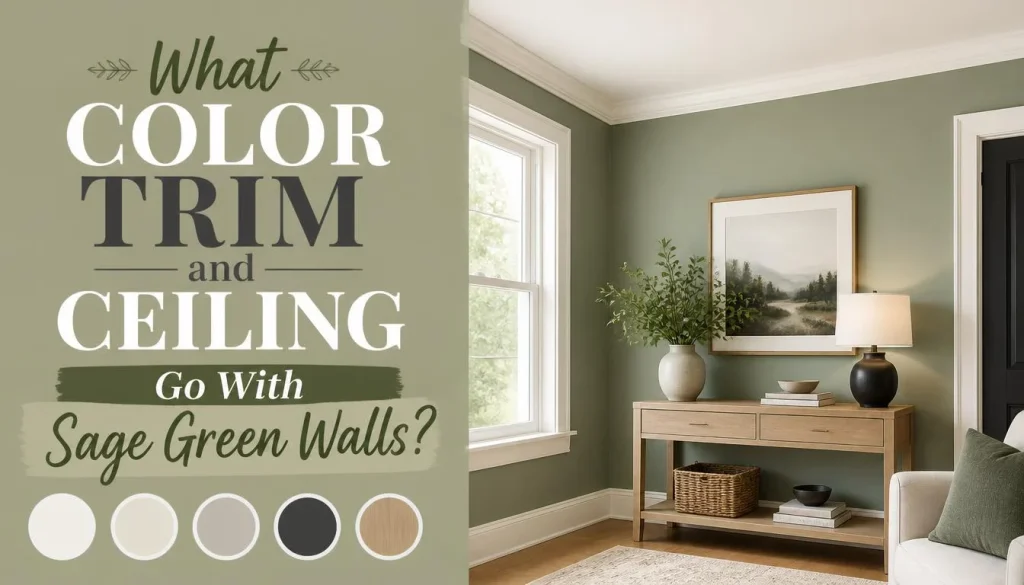
You do not automatically need pure white trim.
Warm White Trim
Probably the most versatile option.
A creamy white can make sage feel softer and less gray.
Cream Trim
Creates an even warmer, lower-contrast look.
Sage Trim
Painting the trim the same sage as the walls creates a more seamless, color-drenched effect.
Darker Green Trim
This can work in a characterful traditional or cottage-style bedroom.
Use it carefully because strong contrast will highlight every architectural edge.
Soft White Ceiling
A pale warm white ceiling is the safest choice when you want sage walls to remain the main feature.
Sage Ceiling
Continuing sage overhead can create a cozy, enveloping room.
A lighter sage ceiling provides a subtler version of the same idea.
Sage Green Bedroom Ideas for Small Rooms
Sage can work extremely well in a small bedroom.
The goal is not necessarily to make everything as pale as possible. It is to avoid too many competing visual elements.
Choose a Lighter Sage for an Airy Look
Soft sage can provide color while remaining visually quiet.
Pair it with warm white, cream, pale oak, and light fabrics.
Keep Large Textiles Simple
Use mostly plain bedding and curtains if your room already contains strong wall color.
Try One Sage Feature Wall
If all-over green feels too much, use sage behind the bed.
Use Light Wood Furniture
Light oak and pale timber usually appear less visually heavy than bulky dark furniture.
Reflect Natural Light
A well-placed mirror can bounce available light across the room.
Limit Dark Accents
A little black or navy adds definition. Too many dark pieces may make a compact room feel crowded.
Sage Green Bedroom Ideas for Different Interior Styles
Modern Sage Green Bedroom
Combine sage with cream, oak, black details, and simple furniture.
Keep accessories intentional.
Minimalist Sage Green Bedroom
Use sage as the main decorative element rather than filling the room with objects.
A sage wall, pale timber bed, cream textiles, and one artwork may be enough.
For a broader guide to reducing visual clutter, see these minimalist bedroom ideas.
Boho Sage Green Bedroom
Layer linen, rattan, wood, jute, plants, and earthy accents.
Farmhouse Sage Green Bedroom
Try sage with:
- Warm white
- Oak
- Black metal
- Linen
- Simple paneling
- Vintage-inspired furniture
You can find more material and furniture combinations in these farmhouse rustic bedroom ideas.
Cottage Sage Green Bedroom
Use florals, vintage timber, checks, quilts, traditional lamps, and softly painted furniture.
Coastal Sage Green Bedroom
Sage is a useful alternative to the usual coastal blue.
Pair it with:
- Warm white
- Sand
- Linen
- Pale oak
- Cane
- Jute
- Soft blue
For more examples of using muted greens in coastal rooms, explore these coastal chic bedroom ideas.
Traditional Sage Green Bedroom
Pair sage with dark wood, classic furniture, patterned curtains, brass, framed artwork, and warm cream.
Scandinavian Sage Green Bedroom
Keep the room simple with pale sage, light wood, warm white textiles, practical furniture, and minimal decor.
Luxury Sage Green Bedroom
Use deeper sage, walnut, velvet, brass, substantial bedding, tailored curtains, and layered lighting.
Sage Green Bedroom Wall Ideas
Plain painted walls are only one option.
Full Sage Walls
The simplest way to create a cohesive sage room.
Sage Accent Wall
A lower-commitment option that works particularly well behind the bed.
Sage Half-Wall
Paint the lower half sage and use cream or warm white above.
Sage Wainscoting
A beautiful choice in cottage, traditional, and transitional bedrooms.
Sage Wall Paneling
Adds architectural texture to otherwise simple rooms.
Sage Wallpaper
Choose botanical, floral, geometric, or textured patterns.
Sage Ceiling
Useful when you want color in an unexpected place.
Two-Tone Walls
Pair sage with cream, beige, soft white, dusty blue, or another green.
Color Drenching
Carry sage across walls, trim, doors, built-ins, and perhaps the ceiling for a more immersive effect.
How to Add Texture to a Sage Green Bedroom
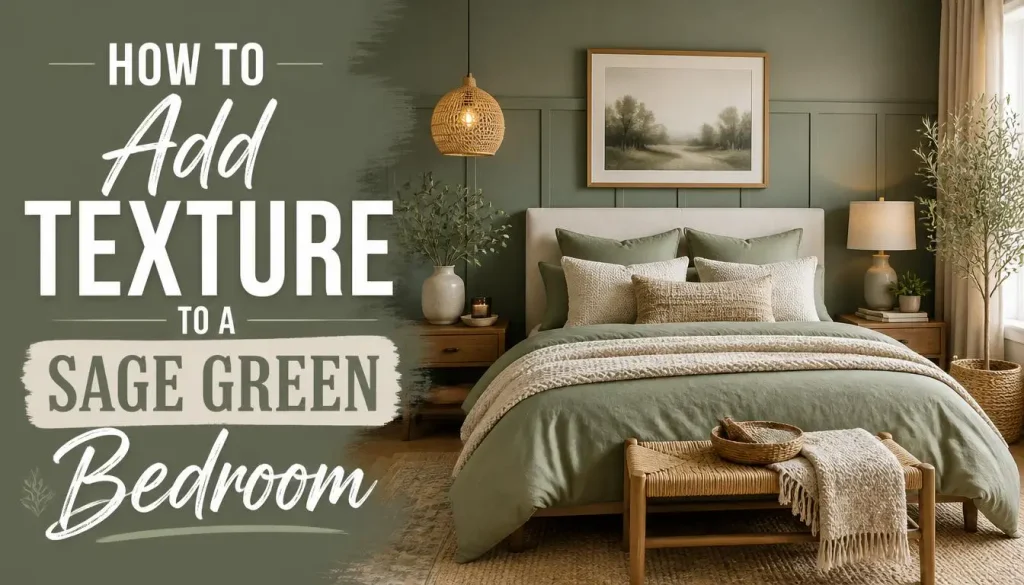
Muted rooms need texture.
Without it, sage and neutral color schemes can feel unfinished.
Linen
Ideal for bedding and curtains.
Its relaxed surface prevents a neutral palette from appearing too polished.
Velvet
Adds richness through a headboard, bench, or cushions.
Wool
A wool rug can make the bedroom feel significantly warmer and softer.
Rattan and Cane
Bring natural variation without adding another strong color.
Jute
Useful for rugs, baskets, and smaller woven pieces.
Bouclé
Works well on occasional chairs, benches, or headboards in modern rooms.
Wood
Perhaps the easiest source of natural warmth.
Use wood in furniture, frames, flooring, and smaller accessories.
How to Decorate With Sage Green Without Painting
You can build an entire sage bedroom while keeping neutral walls.
Start with one larger green item:
- Bedding
- Curtains
- Headboard
- Rug
- Armchair
Then repeat sage once or twice elsewhere.
For example:
Sage headboard + small sage artwork + green throw.
Do not feel you need ten matching accessories.
A few larger, deliberate pieces usually look more polished than lots of tiny green objects.
Budget-Friendly and Renter-Friendly Sage Green Bedroom Ideas

You do not need to replace your entire bedroom.
Change the Bedding First
It usually creates the biggest visual shift for relatively little effort.
Replace Cushion Covers
Use existing inserts and change only the covers.
Add a Throw
A sage throw across neutral bedding introduces color instantly.
Change the Curtains
This creates a much larger area of sage without painting.
Try Removable Wallpaper
Useful for renters, although you should always check manufacturer instructions and test the product on your wall finish first.
Paint a Suitable Secondhand Piece
A dresser or bedside table can introduce sage without changing the walls.
Update Hardware
New black or brass handles can improve an existing dresser or nightstand.
Rearrange Before Buying
Sometimes the room needs a better layout more than new decor.
These bedroom makeover ideas include additional low-cost ways to update the room without a major renovation.
How Lighting Affects Sage Green
Lighting is one of the biggest reasons a sage color looks wonderful online but disappointing at home.
Sage in North-Facing Bedrooms
Cooler daylight can emphasize gray or blue undertones.
If the sage feels lifeless, try:
- A slightly warmer sage
- Cream instead of cool white
- Natural timber
- Beige textiles
- Warmer artificial light
Sage in South-Facing Bedrooms
Stronger warm daylight can make sage appear softer or warmer.
These rooms often handle cooler or deeper versions of sage more easily.
Sage Under Artificial Light
Your color still needs to look good after sunset.
Check paint samples beside the lamps and bulbs you actually plan to use.
Instead of depending on one strong ceiling light, layer ambient, bedside, and accent lighting.
For help planning those layers, see these bedroom lighting ideas.
Why Does Sage Green Sometimes Look Gray or Muddy?
This is one of the most frustrating problems with sage.
You choose a beautiful muted green, paint the room, and suddenly it looks gray, dull, or brown.
Several things can cause this.
Your Sage Contains a Lot of Gray
Sage is naturally muted, but some shades sit much closer to gray than others.
If you want the room to read clearly green, choose a sample with slightly stronger green pigmentation.
The Room Receives Cool Light
Cool daylight can make gray-green paint feel even grayer.
The White Beside It Is Too Cool
A blue-white trim can exaggerate the warmth or muddiness of sage.
Try comparing the paint beside a creamier white.
Your Flooring Is Affecting It
Strong yellow, red, gray, or orange flooring undertones can change how wall colors appear.
The Room Contains Too Much Gray
Gray walls, gray carpet, gray bedding, and a gray-green sage can create a room with very little warmth or contrast.
Introduce wood, cream, tan, terracotta, or brass.
Artificial Lighting Is Changing the Color
Cool lamps can emphasize cool undertones.
Always judge the finished palette under both daylight and nighttime lighting.
How to Make a Sage Green Bedroom Feel Warmer
If your sage room feels a little cold, you probably do not need to repaint immediately.
Try adding warmth through the surrounding materials first.
Use:
- Cream rather than stark white
- Warm beige
- Oatmeal linen
- Oak or walnut
- Rattan
- Terracotta
- Tan
- Brown
- Brass
- Warm bedside lighting
One of the easiest fixes is wood.
Even a wooden bench, two bedside tables, or a timber picture frame can break up an overly cool color scheme.
Common Sage Green Bedroom Decorating Mistakes
Choosing Paint Without Testing It
A sample card cannot reproduce your room’s light.
Always test before buying the full amount.
Pairing Sage With the Wrong White
Cool white is not automatically wrong, but it may make some sages appear duller or yellower.
Compare several whites beside your sage sample.
Using Too Much Gray
Sage already contains muted undertones.
If every supporting color is gray, the bedroom may lose warmth.
Matching Every Green
A sage duvet, sage rug, sage curtains, sage cushions, and sage wall in exactly the same tone can look flat.
Use variation.
Forgetting Texture
Muted colors need material contrast.
Mix smooth cotton with linen, timber, woven fibers, wool, or velvet.
Overusing Botanical Decor
Green does not require leaves on every wall, cushion, and picture.
A sage room can look modern without a single botanical print.
Mixing Too Many Patterns
Choose one strong pattern and let the others stay quieter.
Ignoring the Floor
Your carpet or timber floor is already part of your color palette, whether you planned it or not.
Frequently Asked Questions About Sage Green Bedrooms
Is sage green a good color for a bedroom?
Yes. Sage is a muted green that can work as either a main wall color or a softer accent. It pairs easily with neutrals, wood, blue, pink, brown, and many natural materials.
What colors go best with sage green in a bedroom?
Warm white, cream, beige, taupe, dusty blue, navy, blush pink, terracotta, brown, black, olive, and brass all work well. The best combination depends on your sage’s undertone and the room’s light.
What color bedding goes with sage green walls?
Cream, white, beige, oatmeal, dusty blue, navy, muted pink, brown, and other green tones can all work. Cream or off-white is the easiest starting point.
What color curtains go with sage green walls?
Warm white, cream, beige, natural linen, dusty blue, navy, and even a lighter or darker sage can work.
Does gray go with sage green?
Yes, but match the undertones carefully. Warm gray or greige often feels softer beside sage than a very cool blue-gray.
Does navy go with sage green?
Yes. Navy provides strong contrast and makes sage feel more structured. Use cream or white between the two colors if the room begins to look too dark.
Does dusty blue go with sage green?
Yes. Dusty blue and sage create a soft, low-contrast palette that works especially well in coastal, cottage, and relaxed contemporary bedrooms.
Does pink go with sage green?
Yes. Blush, dusty rose, and other muted pinks can warm sage without overwhelming it.
What wood goes with sage green?
Light oak creates an airy look, while walnut and darker timber make sage feel richer. Rustic wood also works well in farmhouse and cottage bedrooms.
Is sage green suitable for a small bedroom?
Yes. Pale sage can create gentle color without feeling visually heavy. Dark sage can also work if you intentionally want a cozy effect and balance it with lighter elements.
Why does my sage green look gray?
The paint may contain strong gray undertones, or cool daylight and surrounding colors may be emphasizing the gray. Compare samples in different lighting before deciding.
How do I make sage green look warmer?
Add cream, beige, warm wood, terracotta, brown, woven fibers, brass, and warmer lighting.
Should I paint all four bedroom walls sage green?
You can. Soft and mid-tone sage shades often work well across all four walls. If you are uncertain, begin with the wall behind the bed.
What color trim goes with sage green walls?
Warm white and cream are reliable choices. You can also use the same sage for a color-drenched look or a darker green for stronger architectural contrast.
What is the difference between sage and olive green?
Sage generally looks softer and grayer, while olive contains more yellow or brown and tends to feel warmer and earthier.
Final Thoughts
Sage green works best when you treat it as part of the whole bedroom rather than as an isolated wall color.
If you want a light and airy bedroom, combine pale sage with warm white, cream, and light oak.
For a warm and earthy room, use sage with terracotta, beige, walnut, and woven materials.
For a modern bedroom, pair sage with cream, clean-lined furniture, oak, and small black accents.
If you prefer something elegant and sophisticated, combine sage with navy, walnut, brass, and layered neutral bedding.
And for a cozy bedroom, choose a slightly deeper sage, then add warm wood, a generous rug, full curtains, textured bedding, and several soft light sources.
Most importantly, do not choose sage because a particular paint looked perfect in someone else’s room. Test it beside your own floor, furniture, fabrics, windows, and evening lighting.
When the undertones work with the space you already have, sage green can feel less like a passing decorating trend and more like a calm, flexible background you can enjoy for years.

“A comfortable home and a healthy lifestyle go hand in hand.”
Hi, I’m Ethan Carter, the founder and lead editor of TheBestHomeFit. I’m passionate about helping people create beautiful, functional living spaces while building healthier lifestyles at home. Over the years, I’ve spent countless hours researching home decor trends, testing home gym equipment, and reviewing products to help readers make smarter buying decisions.
Through TheBestHomeFit, I share practical home improvement ideas, honest product reviews, buying guides, and fitness tips designed for everyday homeowners. My goal is to make it easier for you to create a home that looks great, feels comfortable, and supports your well-being.
When I’m not researching the latest products or writing in-depth guides, you’ll usually find me redesigning a room, trying new home workout routines, or enjoying quality time with my family.