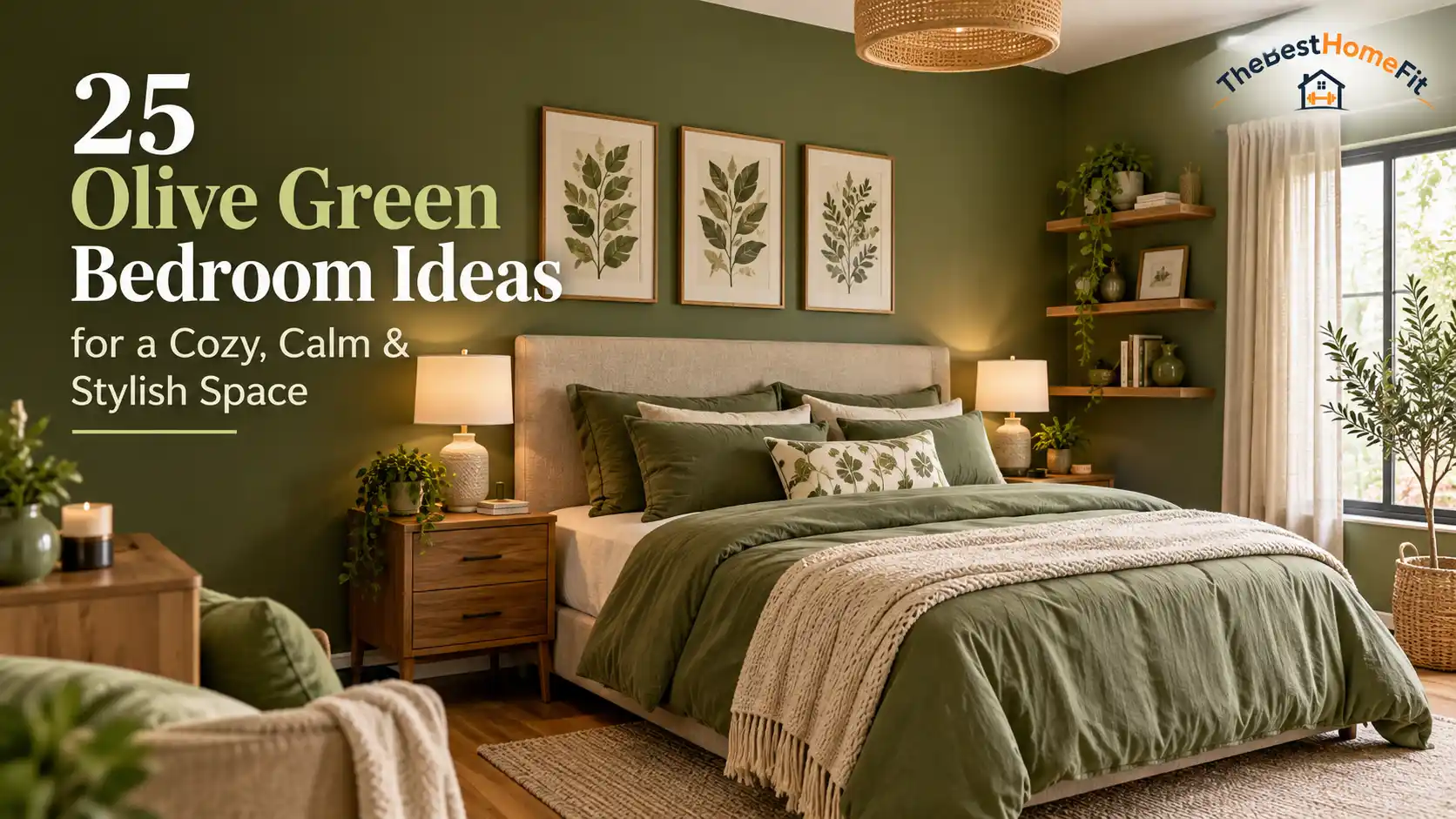
Olive green is one of those bedroom colors that can completely change the mood of a room without making it feel overly bold. It is warm, earthy, and easy to live with, sitting comfortably between deep forest green and soft, muted sage.
The real appeal of olive green is its flexibility. Pair it with cream and pale wood and the room feels light and relaxed. Add walnut, leather, and brass and it becomes richer and more sophisticated. Combine it with terracotta, linen, and natural textures and you get a warm, grounded bedroom that feels collected rather than overly designed.
However, olive green can also become heavy if the shade is too dark for the room, the lighting is poor, or every surface is given the same earthy tone.
That is why the best olive green bedroom ideas are not simply about choosing a fashionable paint color. They are about finding the right shade, creating contrast, choosing complementary materials, and deciding how much green the room actually needs.
Whether you are decorating a large master bedroom, updating a small apartment, refreshing a guest room, or looking for renter-friendly ideas, the following suggestions will help you create an olive green bedroom that feels comfortable, balanced, and personal.
Why Olive Green Works So Well in a Bedroom
Olive green has a naturally muted quality. Unlike brighter greens, it does not demand constant attention, which makes it especially suitable for a room designed for rest.
Its subtle brown and yellow undertones also make it easy to combine with many of the materials already found in bedrooms, including timber, linen, cotton, wool, leather, brass, stone, and woven textures.
Is Olive Green a Good Color for a Bedroom?
Yes. Olive green is particularly effective when you want a bedroom to feel warm, calm, and connected to natural materials.
It can work as a main wall color, but you do not need to paint the entire room.
Olive green can also be introduced through:
- Bedding
- Curtains
- Upholstered headboards
- Rugs
- Wallpaper
- Painted furniture
- Artwork
- Cushions and throws
- Decorative accessories
If you are unsure about committing to green walls, textiles are an easy place to start.
What Mood Does Olive Green Create?
Olive green usually creates an earthy, relaxed atmosphere.
The exact mood depends on the colors around it.
Olive with cream feels soft and welcoming.
Olive with walnut and brass feels richer.
Olive with terracotta feels warm and organic.
Olive with black creates a sharper, contemporary look.
Olive with sage produces a softer tonal green scheme.
This adaptability allows olive green to work in modern, rustic, traditional, Scandinavian, Japandi, boho, and mid-century-inspired bedrooms.
Olive Green vs Sage Green, Forest Green and Emerald Green
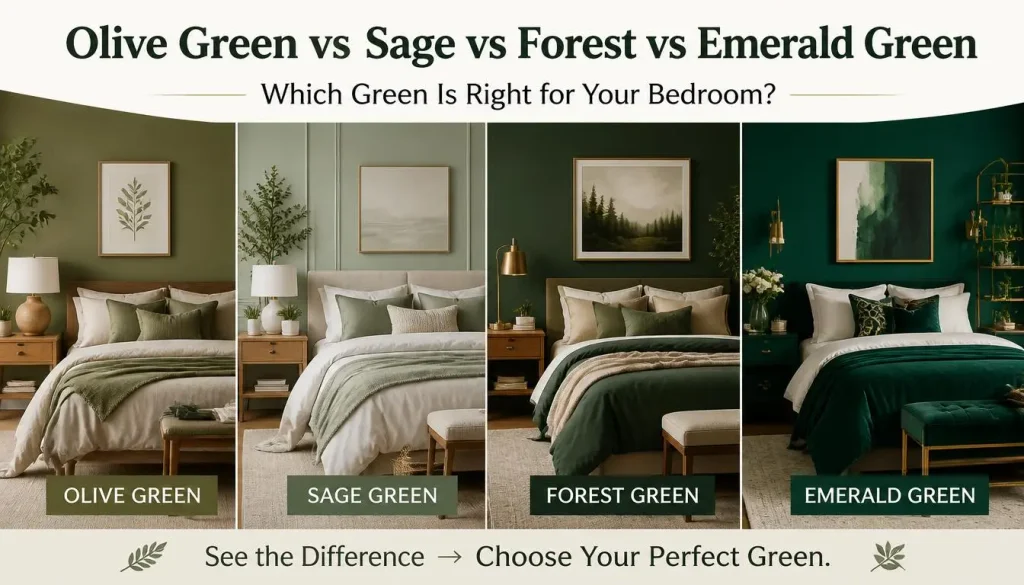
Although these colors belong to the same family, they create noticeably different effects.
Sage green is usually lighter, softer, and greyer.
Forest green is deeper and often cooler.
Emerald green has a brighter, more jewel-like appearance.
Olive green tends to feel warmer and earthier because of its yellow-brown undertones.
Choose sage if you want something pale and understated. Choose emerald for richness and drama. Choose forest green for depth. Choose olive when you want warmth, calm, and a natural feel.
What to Consider Before Decorating With Olive Green
A beautiful olive green bedroom starts with more than choosing a paint swatch.
Consider the size of the room, available daylight, furniture you already own, and how warm or cool the other finishes appear.
Choose the Right Olive Green Undertone
Not every olive green looks the same.
Some shades are close to moss or khaki. Others have more grey, yellow, or brown in them.
A warmer olive often works naturally with beige, tan, cream, terracotta, walnut, and brass.
A greyer olive may sit more comfortably beside black, charcoal, off-white, and cooler timber finishes.
Always compare the color with your existing flooring and furniture before making a final decision.
Consider Your Bedroom Size
A large bedroom gives you more freedom to use olive green across several surfaces.
In a smaller room, a dark olive shade can still work, but contrast becomes more important.
You may prefer one feature wall, half-height paint, olive bedding, or a painted headboard rather than covering every surface.
Check the Amount of Natural Light
Olive green changes throughout the day.
A paint color that looks soft and muted in strong daylight can become much deeper in a room with little natural light.
Test samples on more than one wall and observe them in the morning, afternoon, and evening.
Also look at the color with your lamps switched on.
Decide Between Light and Dark Olive Green
Light olive is easier to use when you want an airy, relaxed room.
Dark olive feels more dramatic and cocooning.
Neither is automatically better.
The right choice depends on your room and the atmosphere you want to create.
Decide How Much Olive Green You Want to Use
You do not need to make every item in the room green.
A balanced olive green bedroom might include one painted wall, neutral bedding, wooden furniture, and a few green details repeated in artwork or textiles.
Giving the eye a break makes the green elements feel more intentional.
Test Paint Samples in Different Lighting
Never judge olive green from a phone screen or a tiny color card alone.
Paint a generous sample or use a large removable swatch.
Look at it beside your flooring, wardrobe, curtains, bedding, and furniture.
This small step can prevent an expensive repaint later.
25 Olive Green Bedroom Ideas to Try
Here are practical ways to bring olive green into a bedroom without making the room feel repetitive or overly themed.
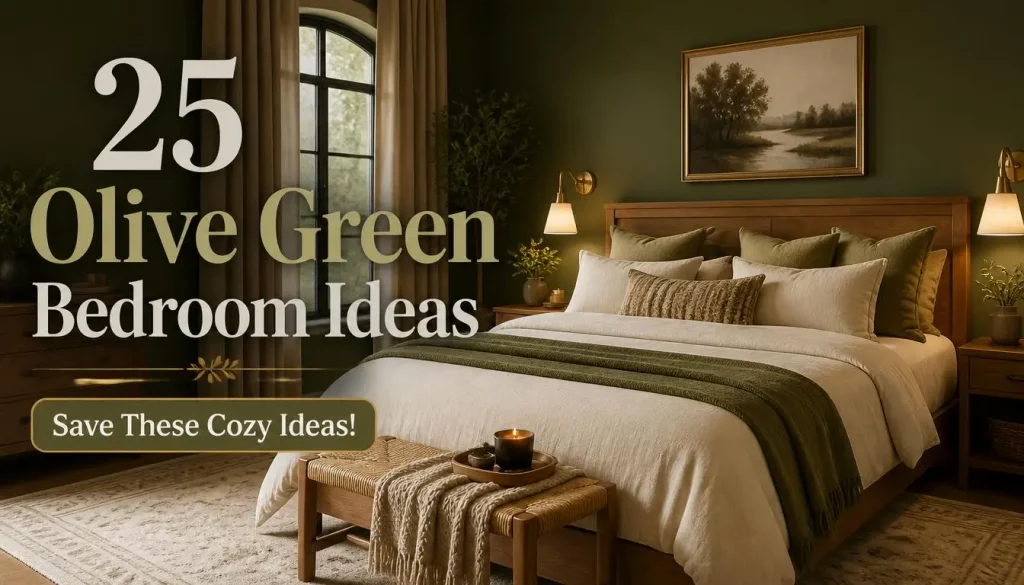
1. Create an Olive Green Accent Wall
A feature wall behind the bed is one of the easiest ways to introduce olive green.
It gives the bed a strong visual backdrop while allowing the other walls to remain light.
Warm white, cream, soft beige, or muted taupe walls can provide a calm contrast.
Complete the look with natural wood furniture and simple bedding.
2. Paint All Four Walls Olive Green
For a more immersive bedroom, take olive green across every wall.
This works particularly well if you enjoy warm, cocooning interiors.
Use lighter elements elsewhere to prevent the room from feeling too enclosed. Cream bedding, pale artwork, warm lamps, and natural textures can all provide contrast.
3. Try Olive Green Color Drenching
Color drenching takes a single color beyond the main walls.
You can continue olive green onto skirting boards, doors, trim, built-in storage, or even the ceiling.
The result feels more intentional and architectural than a standard painted room.
If you choose a dark olive, introduce softer bedding and warm lighting to keep the room comfortable.
4. Create an Olive Green Half-Wall
Painting the lower half of a wall olive green is a useful compromise when full-height color feels too strong.
Keep the upper half warm white, cream, or a soft neutral.
This treatment can add character without reducing the sense of light.
It also works well in small bedrooms.
5. Add Olive Green Wall Panelling or Wainscoting
Panelling gives olive green more depth because the shadows created by moulding or timber details naturally change the appearance of the paint.
Try board-and-batten, traditional wainscoting, or simple vertical wall panels.
Pair it with white or cream above for a classic look, or paint the entire wall for something more dramatic.
6. Paint the Ceiling Olive Green
If you want an unexpected design feature, consider the ceiling.
An olive green ceiling can make a bedroom feel more intimate while leaving the walls comparatively light.
Repeat small touches of olive elsewhere through cushions, artwork, or bedding so the ceiling feels connected rather than isolated.
7. Try an Olive Green Limewash Finish
Limewash-style walls have natural variations in tone rather than a completely uniform surface.
That textured look suits olive green particularly well because it reinforces the color’s earthy character.
Keep the surrounding decor simple and tactile with linen, timber, ceramics, and woven materials.
8. Pair Olive Green With Warm White
Warm white is one of the safest partners for olive green.
It creates enough contrast to keep the bedroom bright without feeling as sharp as brilliant white.
Try olive walls with warm white bedding, or reverse the combination with white walls and an olive upholstered headboard.
9. Combine Olive Green With Cream or Ivory
Cream softens olive green and makes the room feel warm and comfortable.
Use cream curtains, bedding, upholstered furniture, or rugs against darker olive walls.
This is particularly effective if you want a calm bedroom rather than a highly dramatic one.
10. Create an Olive Green and Beige Bedroom
Olive and beige belong naturally together.
Beige gives the room a warm neutral base while allowing green to provide the stronger color.
Add oak, linen, wool, and stone-colored accessories for an understated, earthy bedroom.
11. Pair Olive Green With Taupe or Greige
Taupe and greige are useful when beige feels too warm and grey feels too cool.
Both can create a sophisticated backdrop for olive green.
An olive headboard against a taupe wall, for example, can introduce color without creating a dramatic contrast.
12. Add Tan, Caramel, or Leather Accents
Tan and caramel bring warmth to olive green.
A leather bench, caramel cushion, tan headboard, or leather chair can create a mature, comfortable look.
You do not need many leather elements. One or two are usually enough to provide contrast.
13. Pair Olive Green With Natural Wood
Few combinations are easier than olive green and timber.
Light oak keeps the room fresh.
Medium woods provide warmth.
Walnut creates a richer and more sophisticated scheme.
Wooden bed frames, nightstands, dressers, flooring, and picture frames can all help soften painted green walls.
14. Use Walnut Furniture for a Richer Look
Walnut deserves particular attention because its deeper brown tones work beautifully with olive green.
Try a walnut bed, bedside tables, or dresser against olive walls.
Add cream bedding and brass lighting to prevent the room from becoming overly dark.
15. Try Olive Green and Black for Modern Contrast
Black introduces structure.
Use it through lamp bases, picture frames, furniture legs, curtain rods, or hardware.
Because black and dark olive are both visually strong, include light bedding or flooring to maintain balance.
16. Pair Olive Green With Terracotta, Rust or Burnt Orange
These colors bring warmth and energy to olive green without feeling disconnected from its earthy character.
You can introduce them through a throw, lumbar cushion, ceramic lamp, artwork, or patterned rug.
Natural wood helps tie the colors together.
17. Soften Olive Green With Blush Pink
Muted blush pink can make olive green feel softer and slightly more playful.
The key is choosing a dusty or subdued pink rather than a very bright shade.
Use it in small amounts through bedding, artwork, or a throw.
18. Add Mustard or Ochre Accents
Mustard and ochre sit comfortably beside olive because all three contain warm undertones.
A mustard cushion or upholstered chair can be enough to bring life to an otherwise quiet room.
This combination works especially well in mid-century and eclectic interiors.
19. Pair Olive Green With Navy or Muted Blue
Blue gives olive green a cooler counterpoint.
Navy creates a richer, deeper scheme, while muted blue feels more relaxed.
If both colors are dark, add cream, white, or pale timber to prevent the room from feeling visually heavy.
20. Layer Olive Green With Sage Green
You do not have to choose only one green.
Olive and sage can create a soft tonal palette that feels natural rather than overly coordinated.
Use olive as the deeper anchor and sage on bedding, artwork, cushions, or smaller furniture pieces.
21. Choose an Olive Green Upholstered Headboard
An upholstered headboard provides a large area of color without requiring paint.
Velvet gives olive a richer finish, while linen or woven fabrics make it feel softer and more relaxed.
Against a cream or warm white wall, an olive headboard can become the main focal point of the room.
22. Introduce Olive Green Bedding
Bedding is one of the simplest ways to try the color.
Use an olive duvet, quilt, coverlet, or throw and layer it with cream, white, tan, or patterned textiles.
Avoid making every pillow and sheet exactly the same green.
A mix of textures and shades looks more natural.
23. Hang Olive Green Curtains
Curtains cover a large amount of visual space, so they can change the character of a bedroom quickly.
Olive curtains look especially effective against warm white, cream, beige, or taupe walls.
Choose heavier fabric for a cozy, dramatic effect or lighter linen-look curtains for something more casual.
24. Use Olive Green Wallpaper
Wallpaper is a good option when flat paint feels too plain.
Botanical patterns naturally suit olive green, but geometric, stripe, abstract, and vintage-inspired designs can also work.
If the pattern is strong, use it on the wall behind the bed and keep surrounding surfaces quieter.
25. Add Plants and Natural Textures
Plants, woven baskets, rattan, timber, jute, linen, cotton, and wool all reinforce olive green’s connection to nature.
The room does not need to become a jungle.
Even one or two plants and a few tactile materials can make olive green walls feel more relaxed and lived-in.
Best Colors That Go With Olive Green in a Bedroom
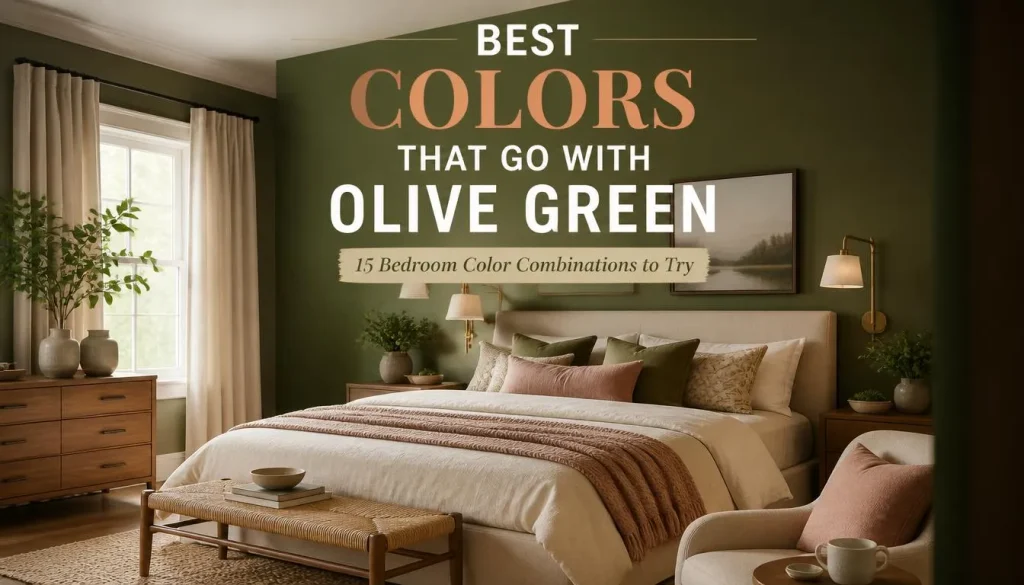
Olive green is surprisingly flexible.
Rather than searching for one perfect companion color, think about the atmosphere you want.
Olive Green and Warm White
Warm white creates clean contrast while preserving a comfortable feeling.
It is especially useful in small or darker bedrooms.
Olive Green and Cream or Ivory
Cream and ivory make olive green feel softer and warmer.
Use this combination when you want a relaxed bedroom with little visual tension.
Olive Green and Beige
Beige keeps the palette earthy.
It works particularly well with timber and natural fabrics.
Olive Green and Taupe or Greige
Taupe and greige give olive green a contemporary neutral backdrop.
They are useful when you want subtle contrast rather than a strong light-versus-dark scheme.
Olive Green and Tan or Caramel
These warm brown tones add depth without competing with green.
Leather and caramel-colored upholstery are especially effective.
Olive Green and Brown
Brown reinforces the earthy character of olive.
Use several shades rather than one flat brown across the room.
Olive Green and Natural Wood
Wood gives olive green texture and warmth.
Oak, walnut, ash, pine, and darker timbers can all work depending on the mood you want.
Olive Green and Grey
Grey can make olive green feel more contemporary.
Choose warmer greys if you want to preserve the comfortable earthy quality of the room.
Olive Green and Black
Black creates stronger contrast.
It works best as an accent through frames, lamps, hardware, or furniture details.
Olive Green and Terracotta, Rust or Burnt Orange
These warm shades provide contrast while remaining grounded.
They work especially well in boho, rustic, Mediterranean-inspired, and eclectic bedrooms.
Olive Green and Blush Pink
A muted pink softens olive without making the room overly sweet.
Keep the pink dusty and understated for a more grown-up result.
Olive Green and Mustard or Ochre
Mustard and ochre bring warmth to olive green.
Use them sparingly so they act as accents rather than competing main colors.
Olive Green and Navy Blue
Navy produces a deep, sophisticated palette.
Introduce cream or warm white somewhere in the room to provide breathing room.
Olive Green and Muted Blue
Muted blue creates a gentler contrast than navy and works well in relaxed contemporary spaces.
Olive Green and Lavender
Soft, greyed lavender can provide an unexpected contrast to olive.
Use it through bedding or small accessories rather than covering large areas if you want the room to remain understated.
Olive Green and Gold or Brass
Gold and brass add warmth and polish.
Small touches through lamps, handles, mirrors, and picture frames are usually enough.
Olive Green and Sage Green
This tonal combination feels soft and natural.
Use olive as the deeper shade and sage as the lighter supporting color.
How to Decorate a Bedroom With Olive Green Walls
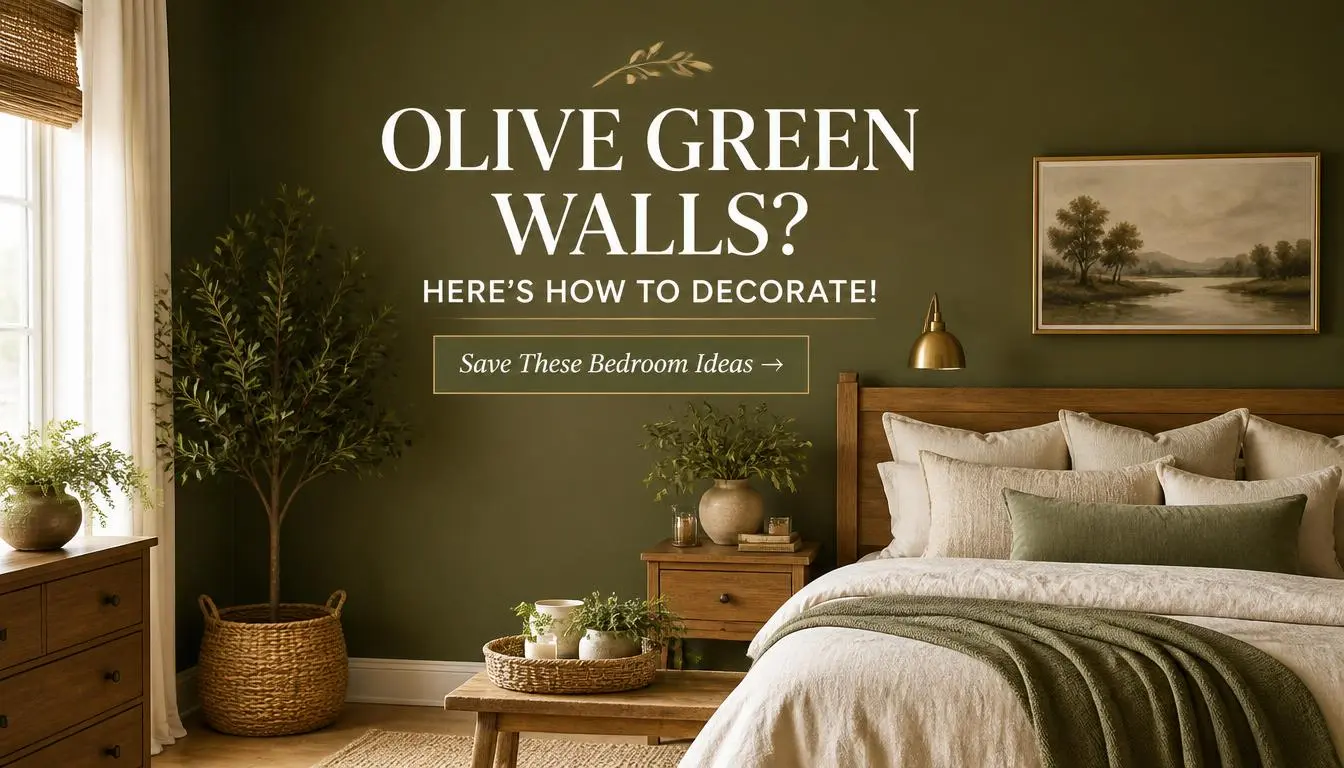
Painting the walls is only the beginning.
Your bedding, curtains, rugs, wardrobe, furniture, and lighting all affect whether the room feels balanced.
What Color Bedding Goes With Olive Green Walls?
Some of the easiest options include:
- Warm white
- Cream
- Ivory
- Beige
- Taupe
- Tan
- Soft grey
- Sage
- Terracotta
- Muted blue
For a simple scheme, keep the majority of the bedding neutral and repeat olive in only one or two smaller layers.
What Color Curtains Go With Olive Green Walls?
Light curtains can create useful contrast.
Consider cream, warm white, beige, oatmeal, natural linen, or soft taupe.
Matching olive curtains can also work when you deliberately want an enveloping look.
What Furniture Goes With Olive Green Walls?
Wood is one of the easiest choices.
Light oak creates a casual appearance, while walnut or dark wood gives the room more depth.
Cream upholstery can lighten the palette. Black furniture can sharpen it.
What Color Wardrobe Goes With Olive Green Walls?
For fitted wardrobes, consider warm white, cream, taupe, pale oak, walnut, or a matching olive finish.
In a small bedroom, lighter wardrobes can prevent a large bank of storage from feeling too dominant.
If the room is spacious, matching olive cabinetry can create a seamless built-in appearance.
Best Rug Colors for an Olive Green Bedroom
Cream, beige, natural jute, faded terracotta, muted vintage patterns, and soft geometric designs can all work.
If your walls and flooring are already dark, choose a lighter rug to create contrast.
Choosing Wall Art and Mirrors
Artwork does not need to match the wall color exactly.
Warm abstracts, botanical prints, landscapes, photography, and minimalist neutral artwork can all complement olive green.
Mirrors are particularly useful in darker bedrooms because they help reflect available light.
Best Wood Tones for Olive Green Walls
Light oak is ideal for a fresh and relaxed look.
Walnut gives the room more richness.
Medium warm woods create a traditional, earthy feeling.
Very dark timber can also work, but make sure the room has enough lighter surfaces.
Brass, Gold, Black or Silver Hardware?
Brass and aged gold bring out the warmth in olive.
Black creates a contemporary edge.
Silver, chrome, or nickel can work when the olive shade is cooler or greyer.
Instead of using every finish, choose one dominant metal and repeat it in a few places.
Light Olive Green Bedroom Ideas
Light olive is ideal when you like green but do not want the room to feel dark.
Pair Light Olive With Cream and White
This combination creates a clean, easy foundation.
Add one or two darker elements for contrast.
Add Pale Wood Furniture
Light oak, ash, or similar timber tones keep the room feeling fresh.
They are particularly effective in Scandinavian and Japandi-inspired spaces.
Use Linen and Natural Fabrics
Linen curtains, cotton bedding, wool throws, and woven rugs complement light olive without making the design feel overworked.
Keep the Room Soft and Airy
Avoid introducing too many dark colors.
Allow light olive to remain the strongest color while using neutrals around it.
Dark Olive Green Bedroom Ideas
Dark olive creates a completely different effect.
It feels more intimate, grounded, and dramatic.
Create a Moody Olive Green Feature Wall
Use a deep olive behind the bed and keep the remaining surfaces softer.
This gives you drama without surrounding the entire room in dark color.
Balance Dark Olive With Light Bedding
Cream, warm white, and ivory bedding can create strong contrast against dark olive walls.
Add Walnut or Dark Wood Furniture
Dark timber makes an olive bedroom feel sophisticated.
Balance it with lighter fabrics and good lighting.
Use Warm Layered Lighting
Dark olive needs more than one ceiling fixture.
Combine overhead lighting with bedside lamps, wall sconces, and softer accent lighting.
Introduce Brass for Contrast
Warm brass can stand out beautifully against dark olive walls.
Use it on light fittings, frames, handles, or small furniture details.
Olive Green Bedroom Ideas for Different Interior Styles
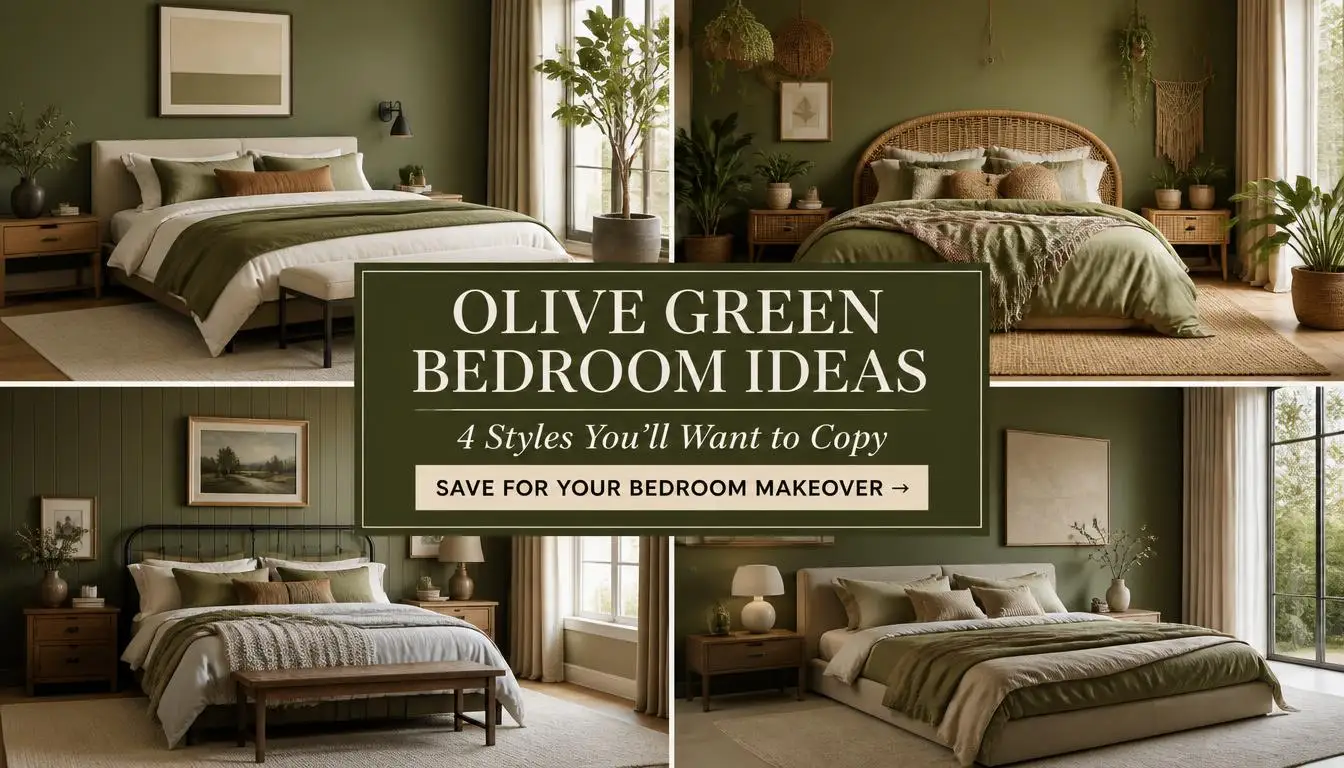
Olive green is versatile enough to work across very different design directions.
Modern Olive Green Bedroom
Keep furniture simple and use clean lines.
Combine olive with warm white, black details, and uncluttered surfaces.
Cozy Olive Green Bedroom
Layer blankets, cushions, curtains, rugs, warm lamps, and tactile materials.
The goal is comfort rather than perfect coordination.
Minimalist Olive Green Bedroom
Choose one strong olive element.
A painted wall or upholstered bed may be enough.
Keep everything else simple.
Boho Olive Green Bedroom
Mix olive with rattan, natural timber, plants, patterned rugs, terracotta, and handmade-looking accessories.
Rustic Olive Green Bedroom
Use aged wood, linen, wool, leather, vintage furniture, and warm lighting.
Avoid finishes that look too polished.
Scandinavian Olive Green Bedroom
Keep the majority of the room pale and introduce olive as a grounding accent.
Light wood and simple furniture work particularly well.
Mid-Century Modern Olive Green Bedroom
Combine olive with walnut, mustard, burnt orange, clean furniture lines, and simple geometric forms.
Luxury Olive Green Bedroom
Use richer fabrics such as velvet, layered bedding, large curtains, brass details, and well-planned lighting.
Luxury comes from materials and proportion, not from filling every surface with decoration.
Traditional Olive Green Bedroom
Wall panelling, patterned textiles, dark timber, classic furniture, and aged brass can create a timeless scheme.
Japandi Olive Green Bedroom
Use muted olive with pale wood, warm white, low-profile furniture, natural fabrics, and minimal decoration.
Keep the palette restrained.
Farmhouse Olive Green Bedroom
Pair olive with warm whites, aged timber, linen, simple stripes, woven baskets, and traditional furniture shapes.
Mediterranean-Inspired Olive Green Bedroom
Combine olive with warm plaster tones, terracotta, natural linen, aged wood, ceramic accessories, and small touches of black metal.
Olive Green Bedroom Ideas for Different Spaces
The same color should not necessarily be used the same way in every bedroom.
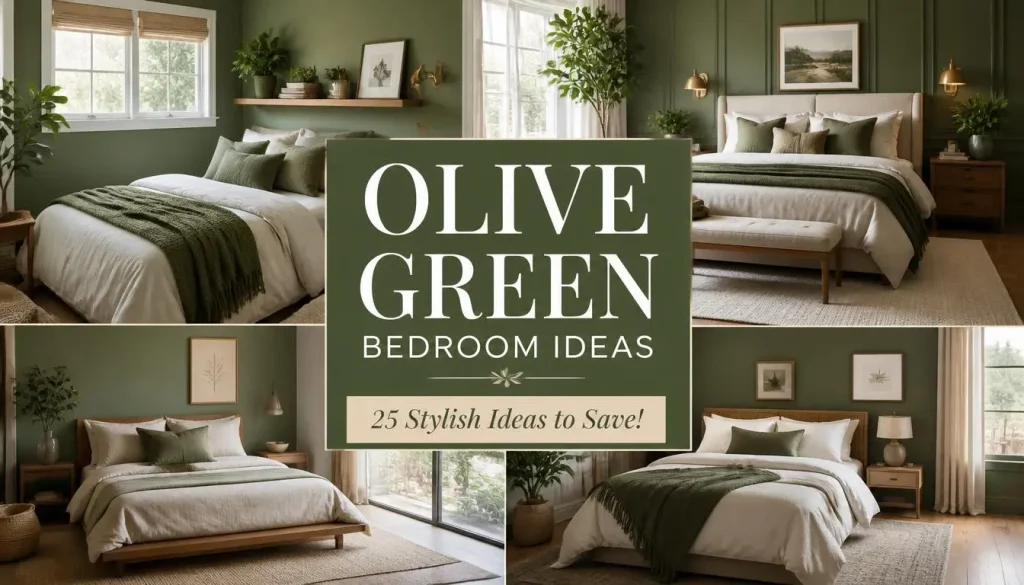
Small Olive Green Bedroom Ideas
Use olive on a feature wall, headboard, bedding, or lower section of the walls.
Keep some larger surfaces lighter to maintain contrast.
Olive Green Master Bedroom Ideas
A larger primary bedroom can handle more substantial green elements.
Consider olive walls, an upholstered bed, full-length curtains, layered lighting, and rich wood furniture.
Olive Green Guest Bedroom Ideas
Keep the palette welcoming and easy to live with.
Olive combined with cream, warm white, beige, and wood is a safe starting point.
Olive Green Bedroom Ideas for Apartments
If floor space is limited, concentrate color vertically rather than adding more furniture.
Paint, curtains, bedding, and wall art can transform the room without occupying additional space.
Renter-Friendly Olive Green Bedroom Ideas
You do not need permanent changes.
Try:
- Olive bedding
- Removable wallpaper
- Curtains
- Rugs
- Artwork
- Cushions
- Throws
- A freestanding upholstered headboard
- Painted furniture that belongs to you
These elements can move with you later.
How to Make Olive Green Work in a Small Bedroom
A small bedroom can absolutely handle olive green.
You simply need to decide where the visual weight should sit.
Use Olive Green on One Feature Area
The wall behind the bed is the most obvious choice.
You could also use olive only on panelling, built-in storage, or the headboard.
Combine Olive With Lighter Neutrals
Cream, warm white, pale beige, and light taupe can stop dark olive from dominating a compact space.
Keep the Ceiling Light
Unless you intentionally want a cocooning effect, keeping the ceiling pale can help maintain a greater sense of openness.
Use Mirrors to Reflect Light
Position mirrors where they can reflect natural light or a well-lit part of the room.
Choose Furniture With a Lighter Visual Weight
Beds and bedside tables with visible legs allow more of the floor to remain visible.
This can make a small bedroom feel less crowded.
Avoid Too Many Dark Elements
Dark olive walls, a black bed, dark flooring, brown wardrobes, and navy curtains may individually look attractive.
Together, they can remove too much contrast from a small room.
Choose your dark elements selectively.
How to Light an Olive Green Bedroom
Lighting deserves careful attention because olive green can change significantly between daylight and evening.
Warm vs Cool Lighting
Warm lighting usually complements olive green’s earthy undertones and creates a more restful atmosphere.
Cool lighting may make some olive shades appear greyer or flatter.
Best Bedside Lighting for Olive Walls
Table lamps and wall sconces create softer pools of light than relying only on a ceiling fixture.
Place them near textured or painted walls to emphasize depth.
How Natural Light Changes Olive Green
Strong daylight may reveal more yellow or green in the paint.
In a darker room, the same color may appear deeper and browner.
This is why testing samples is so important.
Use Mirrors to Increase Brightness
A large mirror can help spread available light.
It can also prevent a dark painted wall from feeling visually flat.
Layer Ambient, Task and Accent Lighting
Use more than one type of light.
Ambient lighting illuminates the room generally.
Task lighting helps with reading or dressing.
Accent lighting creates atmosphere.
Together, they make dark and muted colors easier to live with.
Best Materials and Textures for an Olive Green Bedroom
Olive green becomes much more interesting when combined with varied textures.
Natural Wood
Wood reinforces the warmth and organic quality of olive.
Linen
Linen gives the room an informal, relaxed character.
It works especially well for curtains and bedding.
Cotton
Cotton keeps bedding practical and comfortable while allowing you to layer different colors.
Wool
A wool rug or throw adds warmth and softness.
Jute and Rattan
These materials create texture without adding another strong color.
Use them through rugs, baskets, furniture, or light fittings.
Velvet
Velvet gives olive green a richer appearance.
It is particularly suitable for upholstered headboards, cushions, and occasional chairs.
Leather
Tan or caramel leather adds warm contrast.
A bench or chair is often enough.
Stone and Ceramic
Stone-look lamps, ceramic vases, and other matte accessories provide quieter texture.
Brass and Aged Metals
Brass and aged metal finishes introduce a subtle polished element without losing the earthy quality of the room.
Olive Green Bedroom Decor and Accessories
You can change the entire direction of a bedroom through accessories without replacing the major furniture.
Olive Green Cushions and Throws
Use a mix of fabrics rather than several identical cushions.
Velvet, linen, woven cotton, and patterned fabrics can all add depth.
Olive Green Curtains
Curtains create a large block of color and are particularly effective in neutral bedrooms.
Rugs
A rug can introduce olive indirectly through a pattern or serve as a solid grounding element.
Lamps and Lampshades
A ceramic olive lamp or fabric lampshade is an easy way to repeat the color at eye level.
Artwork
Choose artwork containing olive, warm neutrals, terracotta, blue, or natural subjects.
It only needs a small amount of green to connect visually with the room.
Mirrors
Mirrors can break up dark painted surfaces and increase the amount of reflected light.
Plants
Plants introduce natural variations of green, preventing a painted olive bedroom from looking too uniform.
Decorative Ceramics and Vases
Ceramics work especially well with olive because of their soft, earthy finishes.
A few carefully chosen objects are usually more effective than filling every surface.
Budget-Friendly Olive Green Bedroom Ideas
A good bedroom refresh does not require replacing your bed, wardrobe, flooring, and furniture.
Paint Only One Wall
An accent wall uses less paint while still creating a noticeable transformation.
Refresh the Room With Olive Bedding
Bedding can introduce the color immediately and can be changed later if your taste evolves.
Upcycle Existing Furniture
A bedside table, dresser, or bench can be painted, refinished, or given new hardware.
Add Affordable Curtains and Cushions
Textiles cover more visual space than small ornaments, so they often create a stronger impact for the money.
Try Peel-and-Stick Wallpaper
Removable wallpaper can introduce pattern without requiring permanent renovation.
Use Plants and Natural Accessories
Plants, woven baskets, ceramic pots, second-hand wooden pieces, and framed prints can complete an olive green scheme without a large budget.
Common Olive Green Bedroom Mistakes to Avoid
Olive green is easy to work with, but several decorating choices can make the room feel heavier than intended.
Choosing an Olive Shade Without Testing It
Always test the paint in your actual room.
Lighting and surrounding materials can completely alter its appearance.
Using Too Much Dark Olive in a Low-Light Room
This is not always wrong, particularly if you want a moody bedroom.
However, it should be a deliberate choice.
If you want a brighter result, keep some large surfaces light.
Choosing Colors With Clashing Undertones
A very yellow olive can look awkward beside certain cool greys or icy whites.
Compare your colors together before buying everything.
Making Everything the Same Shade of Green
Your walls, curtains, bed, rug, and cushions do not need to match perfectly.
Variation creates a more natural-looking room.
Using Too Many Earthy Colors Without Contrast
Olive, brown, beige, tan, and terracotta all work together, but a room made entirely from similar mid-tone colors can lose definition.
Add cream, black, warm white, or another contrasting element.
Forgetting Texture
Color alone does not create a finished room.
Use timber, fabric, metal, ceramics, and woven surfaces to create depth.
Ignoring Artificial Lighting
A bedroom that looks beautiful at midday may feel dull at night.
Plan evening lighting from the beginning.
Overmatching the Furniture
A matching bedroom suite can sometimes make the space feel more like a showroom than a personal room.
Mix complementary pieces rather than trying to make every item identical.
Olive Green Bedroom FAQs
What Colors Go Best With Olive Green in a Bedroom?
Warm white, cream, ivory, beige, taupe, brown, natural wood, black, terracotta, blush pink, mustard, navy blue, sage green, and brass all work well with olive green.
The best combination depends on the mood you want.
What Color Bedding Goes With Olive Green Walls?
Cream, warm white, ivory, beige, taupe, soft grey, sage, terracotta, and muted blue are all strong choices.
If the walls are dark, lighter bedding usually gives the room useful contrast.
What Color Curtains Go With Olive Green Walls?
Warm white, cream, oatmeal, beige, taupe, natural linen, and olive curtains can all work.
Choose light curtains for contrast or matching green curtains for a more immersive look.
What Color Carpet or Rug Goes With Olive Green Walls?
Cream, beige, oatmeal, natural jute, faded terracotta, and patterned rugs containing warm neutrals all complement olive green.
What Color Wardrobe Goes With Olive Green Walls?
Warm white, cream, pale oak, walnut, taupe, and matching olive can all work.
For a small room, a lighter wardrobe may help reduce visual weight.
What Wood Tone Looks Best With Olive Green?
There is no single best wood.
Light oak creates a fresh look, medium warm woods feel relaxed, and walnut provides greater richness.
Choose based on the overall style of the bedroom.
Does Navy Blue Go With Olive Green?
Yes.
Navy and olive create a deep, sophisticated palette.
Use cream, warm white, or pale timber somewhere in the room to provide contrast.
Does Sage Green Go With Olive Green?
Yes.
Sage is lighter and softer, so it can be layered with olive to create a natural tonal green bedroom.
Does Taupe Go With Olive Green?
Yes.
Taupe complements olive’s muted quality and works particularly well in contemporary, minimalist, and earthy bedrooms.
How Do You Make an Olive Green Bedroom Look Brighter?
Use lighter bedding, pale curtains, mirrors, warm layered lighting, light-colored rugs, and some warm white or cream surfaces.
Avoid making every large element dark.
How Do You Make an Olive Green Bedroom Feel Cozy?
Add soft bedding, warm lighting, curtains, rugs, timber, wool, linen, and layered textures.
The room will usually feel more comfortable when several materials are used rather than relying only on paint color.
Is Olive Green Too Dark for a Small Bedroom?
Not necessarily.
Dark olive can work in small rooms when used deliberately.
You can limit it to one wall or balance it with lighter surfaces if you want to preserve a more open feeling.
Is Olive Green Warm or Cool?
Olive green usually leans warm because it contains noticeable yellow or brown undertones.
However, individual paint shades vary, and some can appear greyer or cooler depending on the light.
What Is the Difference Between Sage and Olive Green?
Sage is generally lighter, softer, and greyer.
Olive is usually deeper, warmer, and more yellow-brown.
Both can create calm bedrooms, but olive tends to produce a richer, earthier result.
Final Thoughts on Decorating an Olive Green Bedroom
A successful olive green bedroom is less about following a rigid color formula and more about creating the right balance for your space.
You can make olive green the main event with painted walls, panelling, or color drenching. Or you can use it more quietly through bedding, curtains, a headboard, a rug, or a few accessories.
If you want the bedroom to feel light, combine olive with warm white, cream, pale wood, and natural fabrics.
For something richer, use walnut, leather, brass, and deeper olive tones.
If you prefer an earthy scheme, bring in terracotta, beige, tan, linen, jute, ceramics, and plants.
For a more modern room, introduce black, taupe, simple furniture, and clean lines.
Most importantly, do not try to make every green element match perfectly. A bedroom often feels more natural when different shades, materials, and textures have been collected gradually rather than selected as a matching set.
Olive green gives you plenty of room to experiment. Used thoughtfully, it can make a bedroom feel warm, grounded, stylish, and comfortable without losing the calm atmosphere you want from a space designed for rest.

“A comfortable home and a healthy lifestyle go hand in hand.”
Hi, I’m Ethan Carter, the founder and lead editor of TheBestHomeFit. I’m passionate about helping people create beautiful, functional living spaces while building healthier lifestyles at home. Over the years, I’ve spent countless hours researching home decor trends, testing home gym equipment, and reviewing products to help readers make smarter buying decisions.
Through TheBestHomeFit, I share practical home improvement ideas, honest product reviews, buying guides, and fitness tips designed for everyday homeowners. My goal is to make it easier for you to create a home that looks great, feels comfortable, and supports your well-being.
When I’m not researching the latest products or writing in-depth guides, you’ll usually find me redesigning a room, trying new home workout routines, or enjoying quality time with my family.