
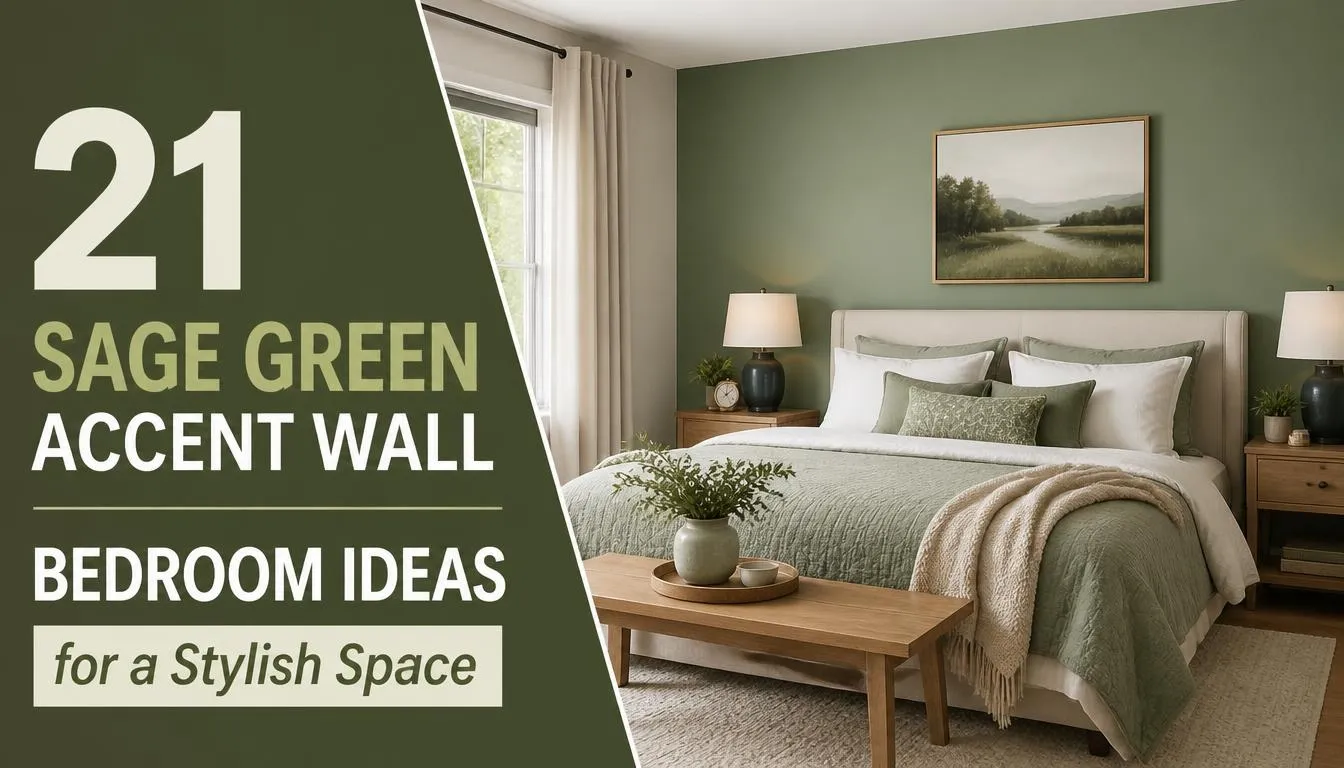
A bedroom does not need a complete makeover to feel fresh, inviting, and thoughtfully decorated. Sometimes, changing just one wall can make a noticeable difference. A sage green accent wall is a simple way to introduce color, create a focal point, and give your bedroom a more finished appearance without painting the entire room.
Sage green works particularly well because it sits between green and gray, creating a muted color that feels softer than brighter greens. Depending on the shade, it can look warm and earthy, light and airy, or deep and sophisticated. It also pairs naturally with cream bedding, beige fabrics, white trim, natural wood, and warm metallic details.
However, choosing the right sage green is only part of the process. You also need to decide which wall to paint, whether to use wallpaper or paneling, how much of the wall to cover, and which furniture and accessories will complement the finished design.
These sage green accent wall bedroom ideas will help you find a style that suits your space, budget, and decorating preferences. You will also learn how to select the right finish, plan the wall’s proportions, and create the look yourself.
Why Choose a Sage Green Accent Wall for Your Bedroom?
An accent wall gives you a way to introduce color without making every wall part of the same design. This can be especially useful when you like green but are unsure about committing to an entirely green bedroom.
Sage green is also relatively flexible. A light shade can work with a simple, bright interior, while a deeper version can create a stronger focal point behind the bed. You can pair it with modern furniture, traditional details, farmhouse finishes, or relaxed natural textures.
Another advantage is that an accent wall can be adapted to different budgets. A single painted wall is usually a simpler project than adding decorative paneling throughout a room. Wallpaper, picture-frame molding, and wooden details offer additional options when you want more texture.
If you are still deciding how much green to use throughout the room, explore these sage green bedroom ideas for broader decorating inspiration. This article focuses specifically on creating and styling one feature wall.
21 Sage Green Accent Wall Bedroom Ideas
The following designs offer different ways to use sage green, from simple painted walls to decorative finishes and renter-friendly alternatives. You do not need to copy any design exactly. Think about your existing furniture, wall dimensions, lighting, and budget before choosing one.
1. Create a Sage Green Accent Wall Behind the Bed
Painting the wall behind the bed is one of the easiest ways to introduce a sage green accent wall. The bed is naturally the main focal point in most bedrooms, so the color helps frame it and gives the room a clearer visual structure.
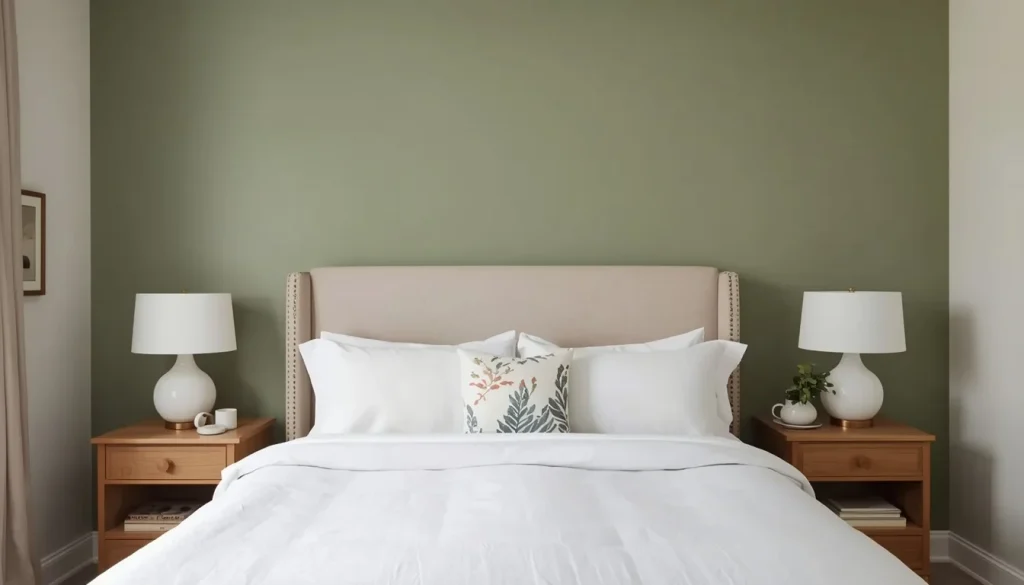
Choose a medium or muted sage if you want the wall to stand out without looking too dark. Keep the remaining walls warm white, soft cream, or a light neutral. A beige upholstered headboard, white bedding, and oak bedside tables can complete the look.
This arrangement works particularly well when the bed is positioned centrally against a simple wall. If the wall contains several doors or windows, consider another surface that offers a more uninterrupted background.
2. Add a Sage Green Board and Batten Accent Wall
Board and batten adds architectural interest through a combination of vertical battens and horizontal trim. Painting the entire installation sage green creates a feature wall that feels more detailed than a plain painted surface.
For a modern look, use evenly spaced vertical battens with a simple horizontal top rail. Traditional bedrooms can benefit from slightly more decorative molding, while contemporary rooms often look better with clean, uncomplicated lines.
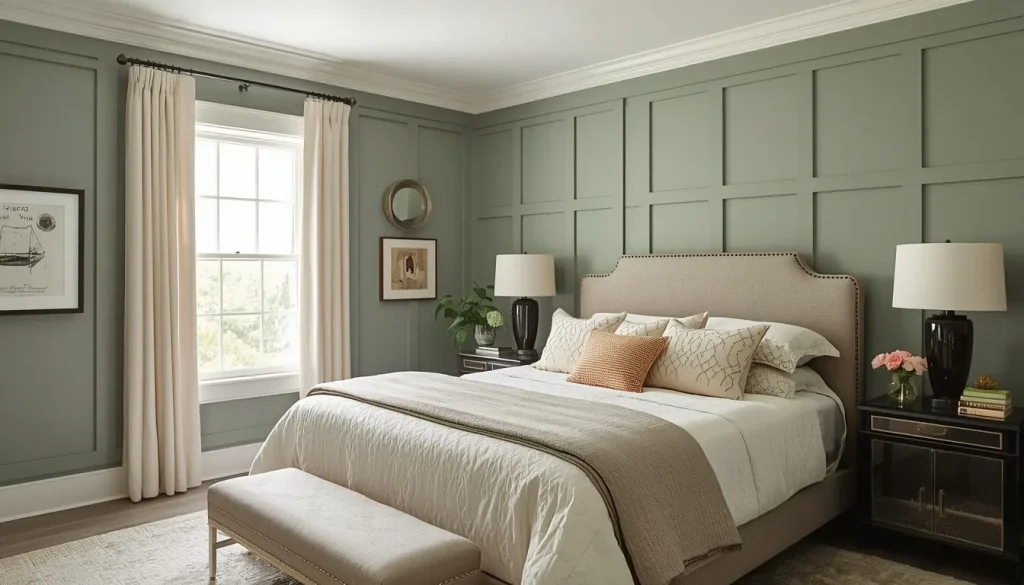
Pair the wall with cream bedding, a neutral upholstered bed, and understated lighting. Avoid adding too many competing patterns because the paneling already gives the wall texture.
Before installing anything, measure the wall carefully and plan the spacing around electrical outlets, switches, windows, and the bed. Lowe’s offers a useful DIY board and batten accent wall guide with preparation steps, tools, and installation instructions.
3. Try a Sage Green Vertical Slat Wall
Vertical slats can make a bedroom feel taller and introduce a contemporary architectural detail. When painted sage green, they combine the softness of a muted color with the structure of narrow vertical lines.
You can install individual wooden slats over a prepared wall or use a suitable decorative wall panel system. Keep the slat spacing consistent so the finished wall looks intentional rather than uneven.
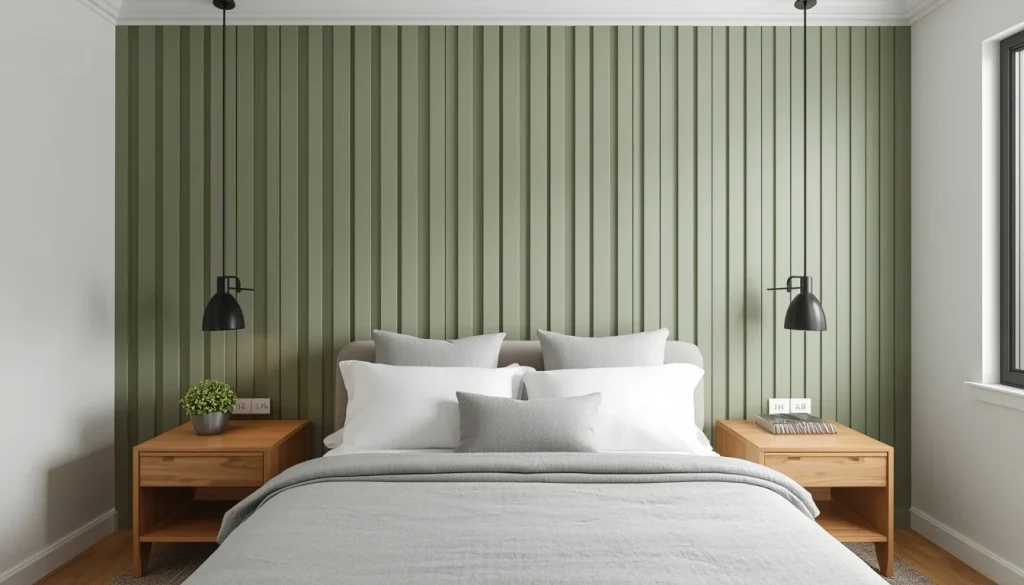
This design works nicely behind a low-profile bed with simple bedding. Light oak furniture can soften the green, while black bedside lighting creates a little contrast.
If you already have wood flooring or timber furniture, check the undertones before selecting the slat finish. Too many competing wood colors can make the design feel disconnected.
4. Paint a Sage Green Half-Wall
A half-wall is a good option when you want to introduce green without covering the entire surface. Paint the lower portion of the wall sage green and leave the upper section warm white or cream.
A straight horizontal line creates a simple contemporary appearance. You can also add a narrow molding strip where the two colors meet for a more finished look.
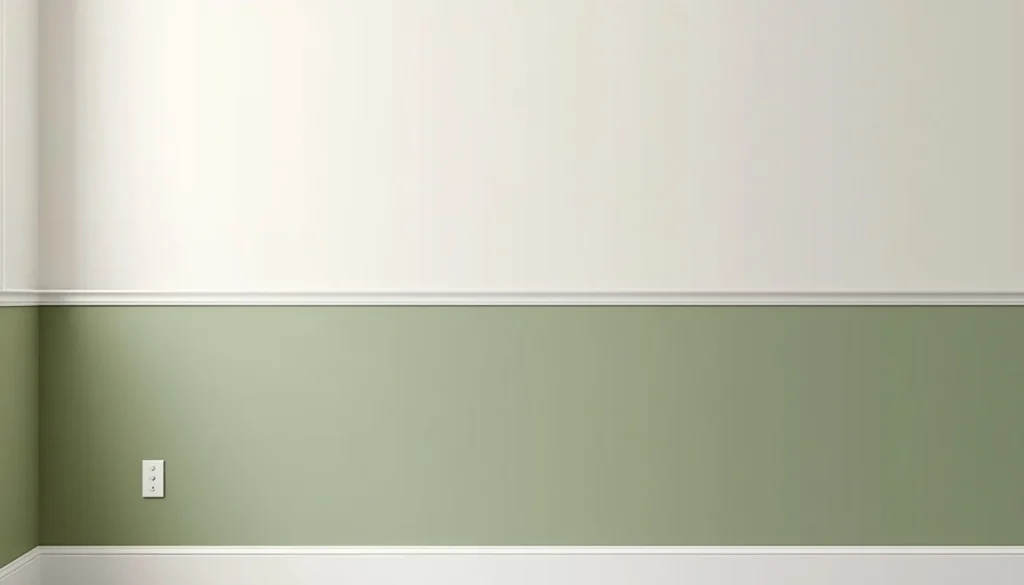
This design is useful in smaller bedrooms because it introduces color while keeping a large part of the wall light. It can also work behind the bed, especially when the headboard sits partly in front of the painted section.
For a balanced result, choose a half-wall height that relates to the bed, headboard, or nearby furniture. Avoid dividing the wall at an arbitrary point.
5. Use White Picture-Frame Molding on a Sage Green Wall
If you prefer a traditional or elegant bedroom, consider combining sage green paint with white picture-frame molding.
The molding creates rectangular shapes across the wall, adding detail without requiring wallpaper or complicated patterns. You can paint the entire wall sage and keep the molding white for a clear contrast.
This design looks particularly attractive behind a bed with a classic upholstered headboard. White bedding, cream curtains, and warm bedside lamps help keep the overall appearance soft.
Make sure the frames are proportionate to the wall. Large, widely spaced rectangles can look more relaxed, while smaller repeated frames create a more formal effect.
6. Combine a Sage Green Lower Wall With Beige or Cream Above
A two-tone wall can make a bedroom feel layered without introducing too many colors. Paint the lower half or lower two-thirds sage green and use beige, cream, or warm white above it.
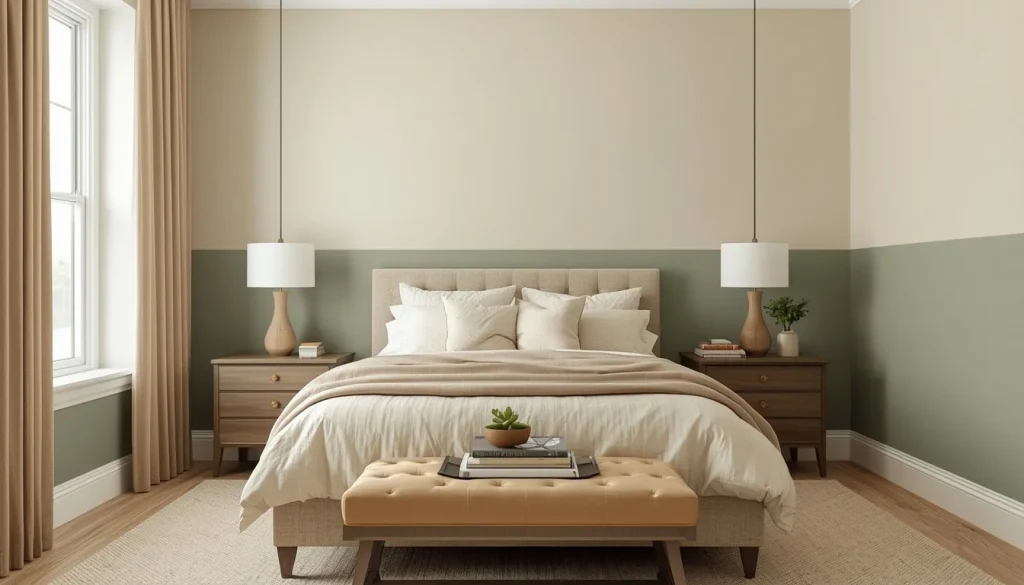
This combination is especially useful when the bedroom already contains beige curtains, a neutral carpet, or an upholstered bed. The two colors connect naturally without making the room look overly coordinated.
For a subtle finish, choose a muted sage with warm or neutral undertones. If the sage is noticeably cool while the beige is very yellow, the two shades may look less harmonious.
You can find more examples of this palette in these beige and green bedroom ideas.
7. Create a Sage Green Botanical Wallpaper Accent Wall
Paint is not the only way to introduce sage green. Botanical wallpaper can bring the color together with leaves, delicate flowers, branches, and natural patterns.
A sage green wallpaper with a cream background is a useful choice if you want a softer appearance. Larger botanical patterns can create a dramatic focal point, while small prints are often easier to incorporate into a traditional or cottage-style bedroom.
Use wallpaper behind the bed and keep the other walls relatively simple. If the pattern is detailed, choose plain bedding and restrained artwork so the room does not become visually busy.
Before buying, check the wallpaper’s pattern repeat, application requirements, and suitability for your wall surface. Order a sample where possible, because the pattern and background color may look different in your bedroom lighting.
8. Choose a Textured Sage Green Limewash-Style Wall
A limewash-style finish gives a wall a soft, uneven appearance rather than the uniform look of ordinary paint. Its subtle variations can make sage green feel more organic and give a bedroom additional depth.
This approach works well with natural materials such as linen, oak, stone, woven baskets, and wool. A simple wooden bed frame and cream bedding can help the texture stand out without competing with it.
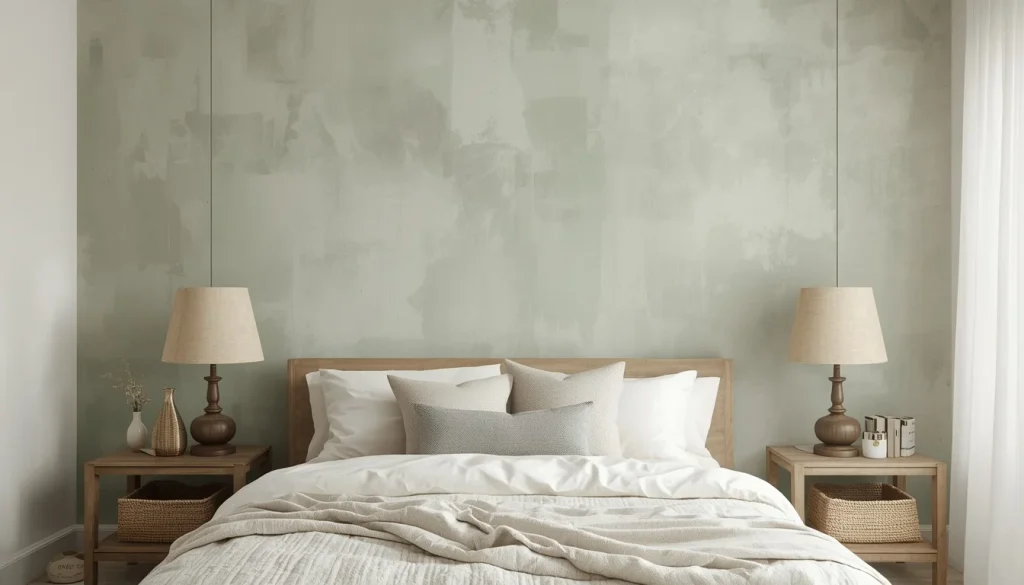
Remember that limewash products and decorative paint techniques vary. Some require a particular primer or application method, so follow the manufacturer’s instructions rather than treating every textured finish like standard wall paint.
If you prefer a consistent and easily repeatable appearance, ordinary matte wall paint may be a better choice.
9. Design a Sage Green Geometric Accent Wall
A geometric accent wall can add personality without requiring wallpaper or expensive materials. Use painter’s tape to create large rectangles, angled shapes, or simple color blocks on one bedroom wall.
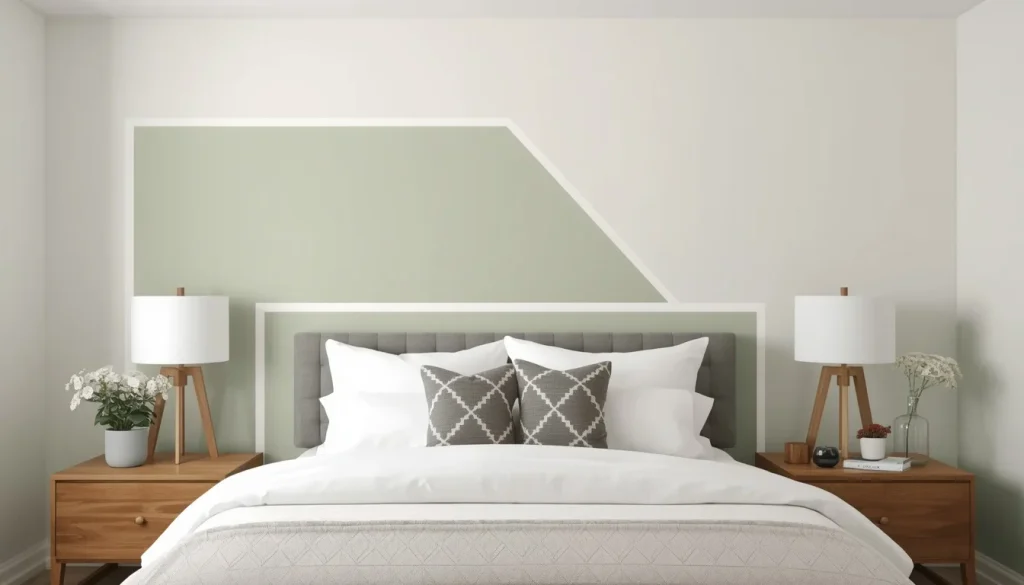
For a calm appearance, combine two closely related sage tones with warm white. One larger sage section behind the bed can act as the main feature, while a smaller contrasting shape adds visual interest.
Before painting, sketch the design and mark its dimensions. Use a level and measuring tape to keep the lines straight. Test the tape on an inconspicuous area first if you are concerned about the existing paint finish.
Keep the bedding and furniture simple so the geometric design remains the main attraction.
10. Combine Sage Green Paneling With Brass Wall Sconces
Sage green paneling and brass lighting can create a bedroom that feels polished without looking overly formal.
Use simple vertical or rectangular panels and paint them in a muted sage shade. Add brass wall sconces on either side of the bed to create a balanced arrangement and provide practical reading light.
Cream bedding, a neutral headboard, and warm wood furniture can soften the combination. Brushed brass usually gives a more understated appearance than highly reflective gold finishes.
When planning this design, consider the placement of the bed, switches, and electrical connections before installing the panels. Wall-mounted lights may require professional electrical work, depending on your existing setup.
11. Frame an Upholstered Headboard With a Sage Green Wall
An upholstered headboard can become more noticeable when placed against a sage green accent wall. The combination of soft fabric and painted color creates contrast without needing a complicated wall treatment.
A cream, oatmeal, beige, or light gray headboard works particularly well with muted sage. For a slightly richer appearance, consider a warm taupe or textured neutral fabric.
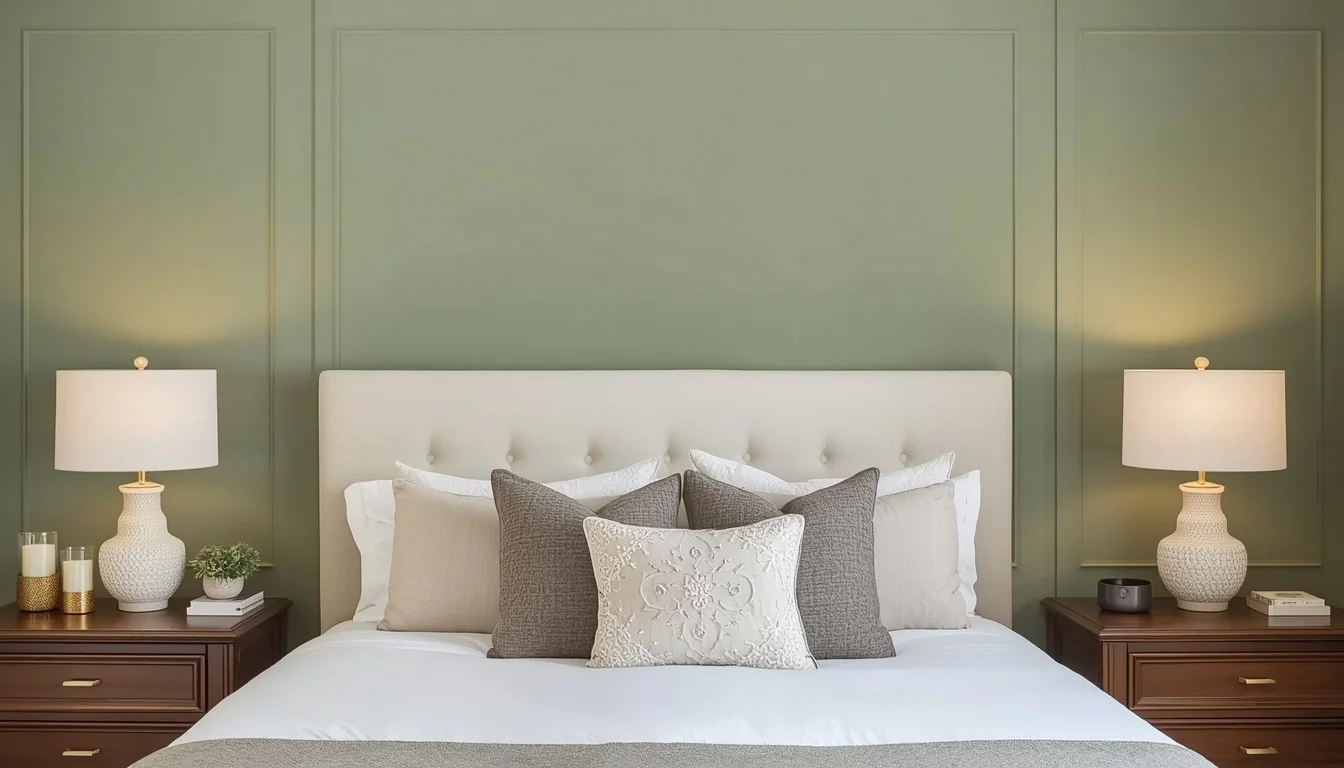
Keep the wall relatively simple so the headboard remains visible. You can add small bedside lamps or matching nightstands, but avoid placing large decorative pieces directly around the bed.
This is a practical option when you want a comfortable, finished bedroom without installing paneling or wallpaper.
12. Pair a Sage Green Accent Wall With Natural Oak Furniture
Natural oak and sage green are a natural combination. The wood introduces warmth, while the green adds color without making the bedroom feel too bold.
Try a matte sage wall behind the bed with an oak bed frame or matching bedside tables. Cream bedding, linen curtains, and a textured neutral rug can connect the different finishes.
If your existing furniture is already oak or light timber, you may not need to buy anything new. Instead, choose a sage shade that works with the wood’s undertone.
For darker wood furniture, test the color carefully. A slightly warmer sage can help the overall palette feel more connected.
13. Use Dark Sage Green for a Moody Accent Wall
A deeper sage green can create a richer and more dramatic bedroom. It works particularly well behind a bed with a light upholstered headboard, especially when the rest of the room uses warm neutral colors.
Combine dark sage with cream bedding, walnut furniture, and soft brass details. Add a bedside lamp with a warm light source so the room feels comfortable in the evening.
This look can work in a compact bedroom too, but the surrounding colors matter. Keep the ceiling and larger textiles lighter, and avoid using heavy dark curtains unless the room receives enough natural light.
A dark sage wall should feel intentional rather than simply looking like a darker version of the same room. Give it enough contrast through bedding, furniture, and lighting.
14. Style a Sage Green Accent Wall With Cream Bedding
Sometimes, the simplest design is the most effective. A sage green wall behind the bed paired with cream bedding creates a calm and understated bedroom.
Use different textures to prevent the palette from looking flat. Cotton sheets, a quilted duvet, linen cushions, and a knitted throw can add depth without introducing many additional colors.
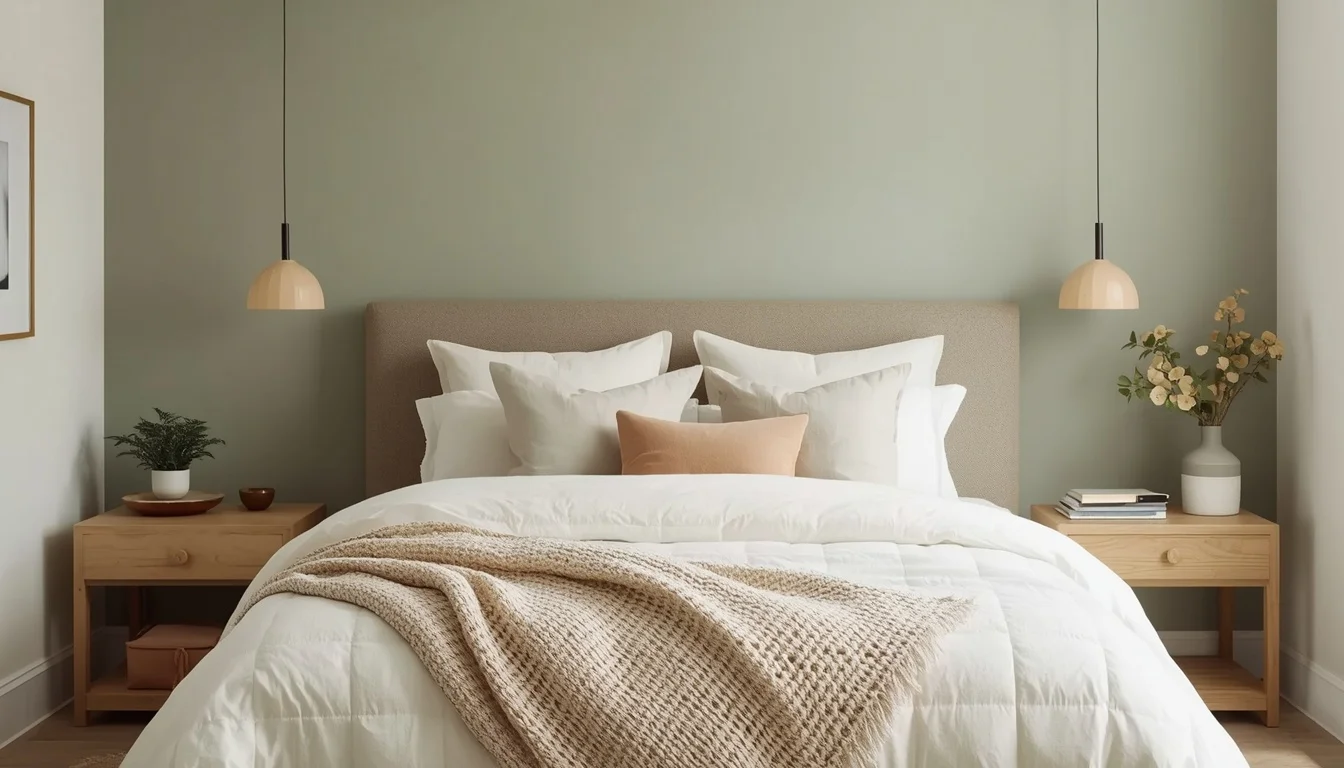
This arrangement is especially useful if you prefer a bedroom that feels comfortable rather than highly decorative. Add natural wood furniture and a simple piece of artwork to finish the space.
If you want to introduce another color, try a small amount of dusty pink, terracotta, or warm brown through cushions or accessories.
15. Add Floating Nightstands to a Minimal Sage Green Feature Wall
Floating nightstands create a cleaner appearance because they keep more of the floor visible. Against a plain sage green accent wall, they can make the bedroom feel modern and uncluttered.
Choose light oak, white, or natural wood shelves, depending on the rest of your furniture. Wall-mounted bedside lighting can help maintain the minimal appearance, while a small drawer provides practical storage.
This design is particularly useful in narrow bedrooms where traditional bedside tables make movement difficult.
Before installing floating nightstands, check the wall construction and use appropriate fixings. The wall must be able to support the weight of the shelf and the items placed on it.
16. Use Light Sage Green in a Small Bedroom
A small bedroom does not automatically need to avoid accent walls. The key is choosing a shade and design that suit the available light and furniture.
Light sage green can create a gentle focal point without making the wall feel too heavy. Keep the remaining walls warm white or pale cream, and use lighter bedding to maintain a balanced appearance.
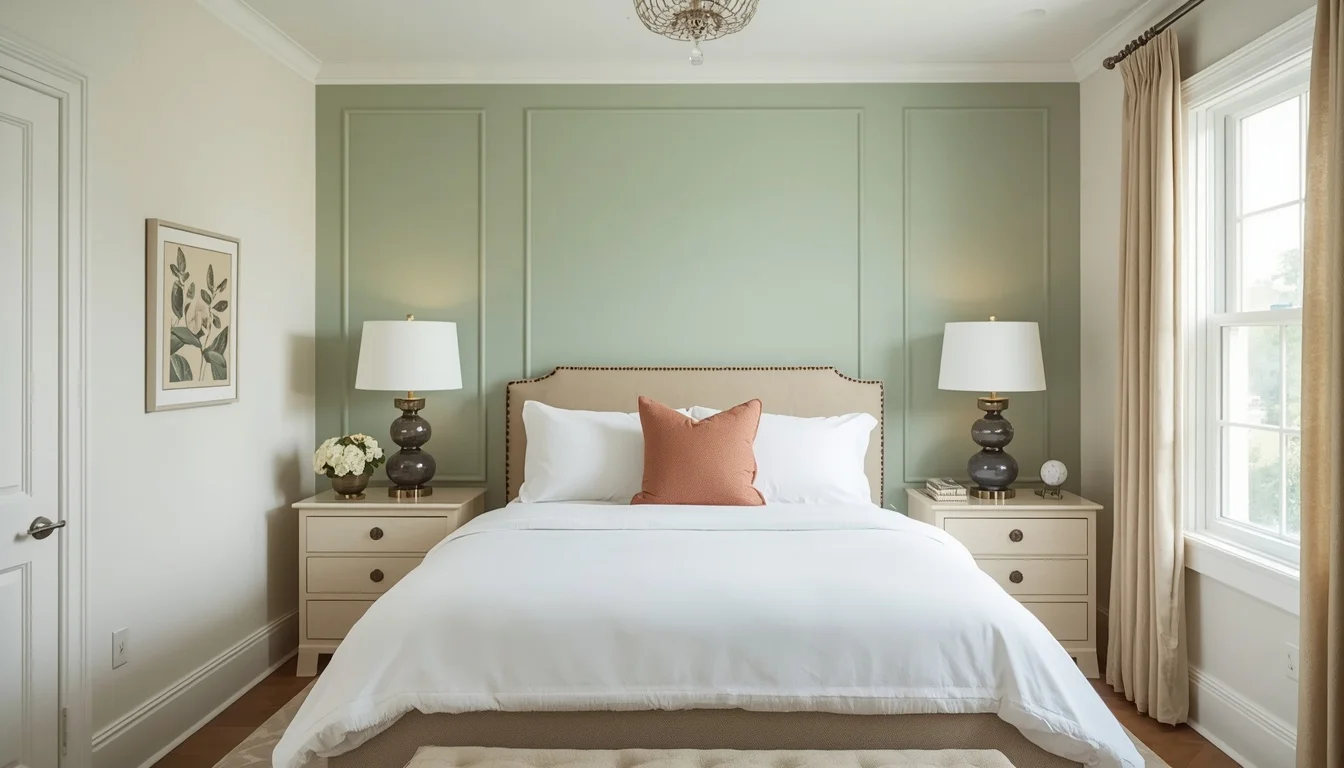
Avoid adding too many decorative panels or busy patterns if the wall is already visually close to the bed. A simple painted surface may work better than a complicated design.
For more practical advice on furniture placement and making limited space work, see these small bedroom ideas.
17. Try Removable Sage Green Wallpaper in a Rental Bedroom
Renters may not be able to repaint walls or install permanent decorative features. Peel-and-stick wallpaper offers another way to introduce sage green, although its suitability depends on the wall surface and the property’s rules.
Choose a simple sage green finish, subtle botanical print, or linen-inspired pattern. Use it on a single wall behind the bed to create a clear focal point.
Before applying it, check that the surface is clean, smooth, dry, and suitable for the product. Test a small area first and read the manufacturer’s removal instructions. Some adhesives may still affect existing paint, particularly on delicate or recently painted surfaces.
RONA’s guide to installing peel-and-stick wallpaper explains the measuring, preparation, application, and smoothing process.
Always check your rental agreement and obtain permission where required. A removable product should not be assumed to be completely damage-free.
18. Add Built-In Shelving to a Sage Green Accent Wall
A sage green wall with built-in shelving can turn a simple bedroom feature into something both attractive and useful.
You can place shelves on one or both sides of the bed, depending on the wall dimensions. Paint the shelving in the same sage green to create a built-in appearance, or use natural wood to introduce contrast.
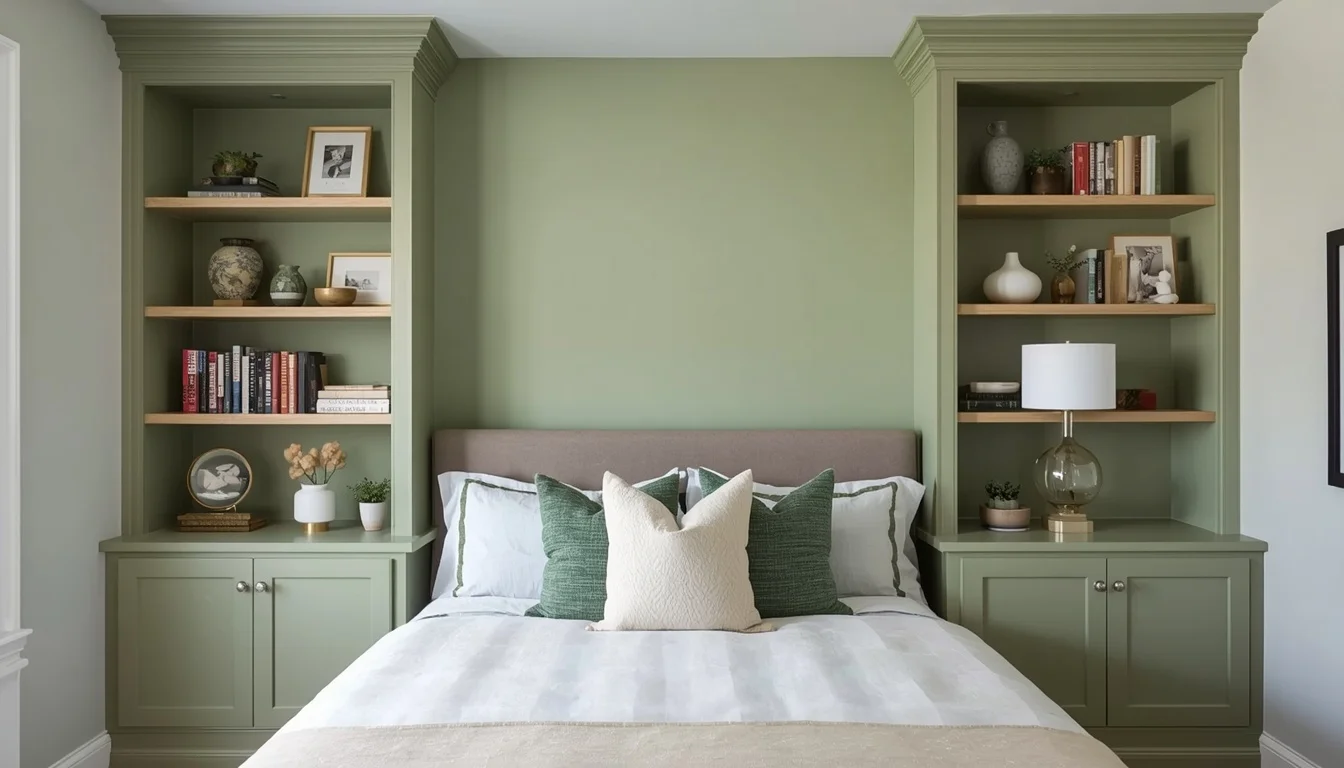
Keep the display relatively simple. A few books, framed photographs, small decorative objects, and a practical lamp are usually enough.
If the wall is narrow, avoid deep shelves that make the bed area feel crowded. Also check the required clearances around doors, windows, and the headboard before deciding on the layout.
19. Create a Sage Green Gallery Wall Behind the Bed
If you enjoy artwork and personal photographs, a sage green accent wall can provide a beautiful background for a gallery wall.
Use a soft sage shade and arrange frames in a balanced composition above the headboard. Black frames create a more modern appearance, while natural wood and white frames feel softer.
You can combine botanical prints, simple abstract artwork, landscape photographs, and a few personal pieces. Try to repeat one or two colors across the artwork so the arrangement feels connected.
Plan the layout on the floor before hanging anything. This makes it easier to adjust spacing and avoid creating an uneven arrangement.
20. Create a Sage Green Accent Wall With Natural Wood Trim
Natural wood trim can make a sage green wall feel warmer and more architectural. Rather than painting every detail, leave selected wooden elements in their natural finish.
For example, use a sage painted wall with a narrow oak border, simple timber battens, or a wooden frame around a decorative panel. The result can suit modern, Scandinavian, farmhouse, and nature-inspired bedrooms.
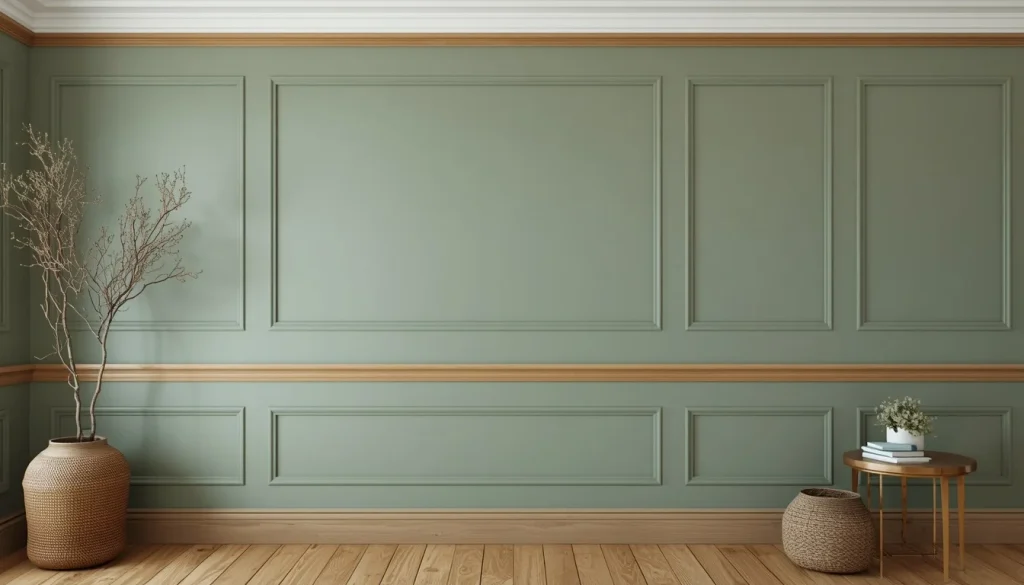
Choose a wood tone that works with your existing flooring and furniture. Repeating the same finish in a bedside table or picture frame can make the design feel more cohesive.
This option is particularly attractive when you want the wall to have texture but prefer not to use a full paneling system.
21. Paint a Sage Green Arch Behind the Bed
A painted arch is a creative way to create a focal point without covering the entire wall in green. It can frame the headboard and give the bedroom a softer appearance.
Choose a muted sage shade and mark the shape carefully before painting. The arch can extend just beyond the width of the bed or reach higher to create a stronger visual statement.
Pair it with a simple headboard, cream bedding, and natural wood furniture. Avoid adding several other large patterns or shapes nearby, as the arch should remain the main feature.
This is also a relatively budget-friendly option because it requires paint and basic measuring tools rather than a full wall installation.
Which Sage Green Accent Wall Finish Should You Choose?
The finish you choose will affect the appearance, cost, installation process, and maintenance of your accent wall. A painted wall is usually the simplest option, but wallpaper and paneling can add texture and detail.
| Finish | Overall Look | Installation | Best For |
|---|---|---|---|
| Painted wall | Smooth and simple | Beginner-friendly | Budget-friendly updates |
| Board and batten | Structured and traditional | Moderate DIY work | Architectural detail |
| Wood slat panels | Modern and textured | Moderate DIY work | Contemporary bedrooms |
| Wallpaper | Patterned or textured | Depends on product | Adding visual interest |
| Peel-and-stick wallpaper | Decorative and removable | Beginner to intermediate | Some rental situations |
| Limewash-style finish | Soft and textured | Depends on product | Organic, relaxed interiors |
| Decorative molding | Classic and detailed | Moderate DIY work | Traditional or elegant rooms |
Think about the condition of your wall and how permanent you want the change to be. A simple painted finish may be sufficient if the bedroom already has patterned bedding or detailed furniture. If the room is very plain, paneling or wallpaper may provide the extra interest you need.
How Big Should a Sage Green Bedroom Accent Wall Be?
An accent wall does not have to follow one fixed measurement. Its size should relate to the bed, the wall, and the overall layout of the bedroom.
If you are painting the wall behind the bed, covering the full wall width usually creates the most natural result. A narrow painted section may look disconnected unless it is deliberately designed as an arch, panel, or color block.
For a half-wall, choose a height that relates to the headboard or nearby furniture. You can use painter’s tape to mark a few possible heights before deciding which one looks best.
For paneling, measure the full wall and divide the available space into balanced sections. Account for windows, doors, outlets, and switches. Do not allow a decorative panel to interfere with electrical fittings or access to essential controls.
If the wall has several architectural features, a simpler painted finish may be more effective than trying to fit a complicated pattern around every opening.
How to Choose the Right Sage Green Shade for Your Accent Wall
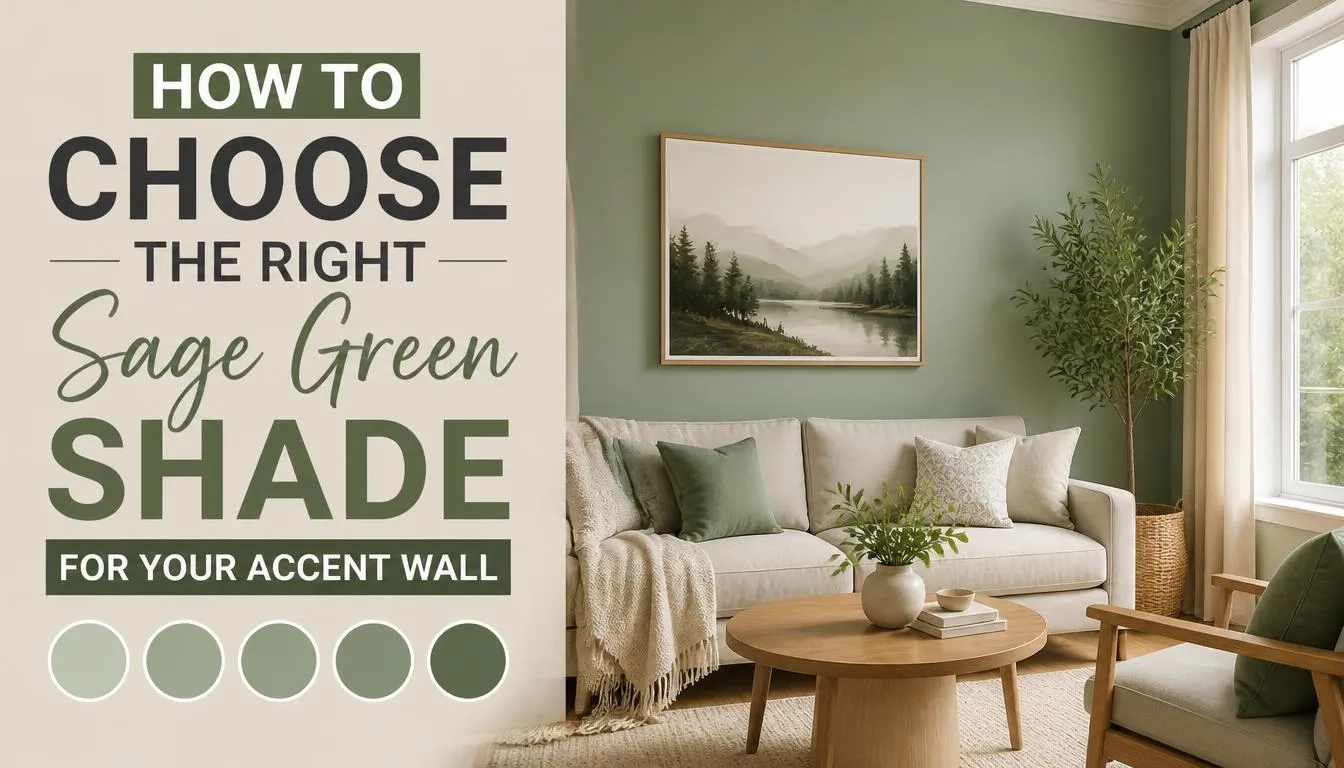
Sage green can look different from one bedroom to another. A shade that appears warm and muted in a well-lit room may look cooler or grayer in a space with limited daylight.
Before choosing paint, consider these options:
Light sage green: Suitable when you want a soft, subtle wall that works with cream, white, and pale wood. It is often a useful starting point for compact bedrooms.
Muted sage green: A balanced choice when you want the wall to stand out without becoming the strongest feature in the room.
Dark sage green: A richer option for a more noticeable focal point. It often works well with cream bedding, walnut furniture, and warm lighting.
Warm sage green: Can complement beige, oak, tan, and other earthy finishes.
Cool sage green: May work better with cooler neutrals, certain shades of gray, and crisp white.
Do not rely on a small color chip alone. Order sample paint or suitable sample boards and view them in the actual bedroom. Check the color in morning daylight, afternoon light, and under your regular evening lamps.
Benjamin Moore’s guide to paint color samples recommends comparing larger samples and observing them under different lighting conditions. The same principle is useful regardless of the paint brand you choose.
What Colors Go With a Sage Green Accent Wall?

Sage green is flexible, but the best combination depends on the mood you want to create and the colors already present in your bedroom.
Sage Green and Warm White
Warm white creates a gentle contrast and keeps the room feeling bright. Use it on surrounding walls, ceilings, bedding, or curtains.
This is a reliable choice when you want the sage accent wall to remain the main feature.
Sage Green and Beige
Beige adds warmth and works particularly well with earthy sage shades. Try beige upholstery, curtains, rugs, or bedding.
For more ways to combine these colors throughout a room, explore these beige and green bedroom ideas.
Sage Green and Cream
Cream is slightly warmer than many bright whites. It works beautifully with muted sage, especially when you use soft fabrics such as linen, cotton, or wool.
Sage Green and Blush Pink
Blush pink introduces a soft contrast without making the bedroom feel too colorful. Try blush cushions, bedding, a throw, or artwork against the green wall.
For more inspiration, see these sage green and blush pink bedroom ideas.
Sage Green and Charcoal Gray
Charcoal gray can give sage a more contemporary appearance. Use it in smaller areas, such as lighting, picture frames, or a headboard, particularly if the bedroom receives limited natural light.
Sage Green and Natural Wood
Oak, walnut, and other natural wood finishes help connect the wall color to the rest of the room. Choose a timber tone that complements your flooring and existing furniture.
Sage Green and Brass
Brass introduces warmth and a subtle decorative detail. It works well in bedside lamps, wall sconces, picture frames, and furniture hardware.
If you enjoy more color combinations, these modern green bedroom ideas and green, white, and black bedroom ideas offer additional inspiration.
How to Match Furniture and Decor With a Sage Green Accent Wall
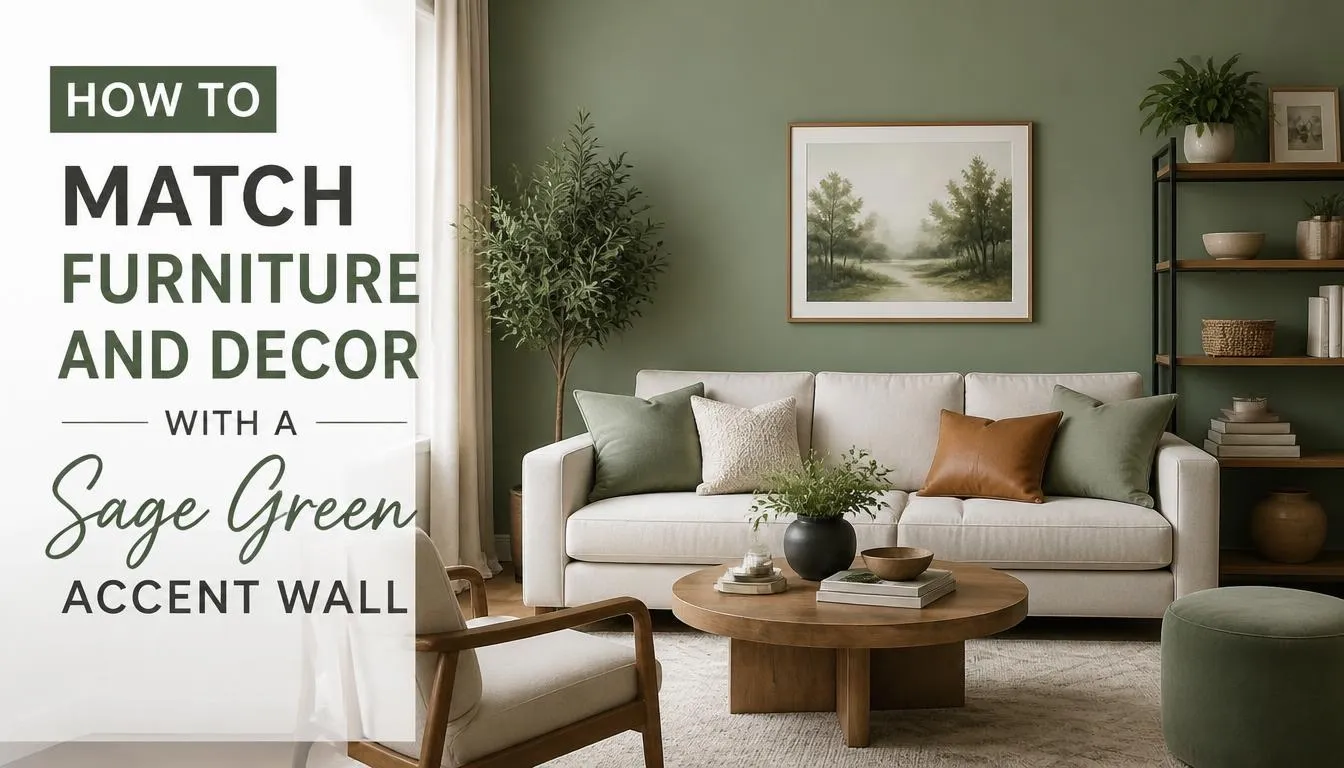
Once you have chosen the wall color, think about how the rest of the bedroom will support it. You do not need to buy matching furniture. In many cases, keeping your existing pieces and adjusting the accessories is a more practical approach.
Bed frames: Cream, beige, light gray, natural oak, walnut, and black can all work with sage. Choose a finish that complements the color temperature of your wall.
Nightstands: Light timber helps create a relaxed appearance, while white or black nightstands can make the room look more contemporary.
Bedding: White, ivory, oatmeal, beige, and soft blush are useful starting points. Layering different textures adds interest without introducing too many colors.
Curtains: Linen, cotton, and other soft neutral fabrics can balance the accent wall. Consider the amount of daylight you want to retain when choosing curtain thickness.
Rugs: A neutral rug can connect the bed and furniture to the wall color. Subtle patterns are often easier to coordinate than large, high-contrast designs.
Lighting: Use a combination of general lighting and bedside lighting. Warm-toned bulbs can make the room feel inviting, but check the actual light output before choosing a bulb.
You can also explore bedroom makeover ideas for additional ways to update the room without replacing all your furniture.
What Paint Finish Works Best for a Sage Green Accent Wall?
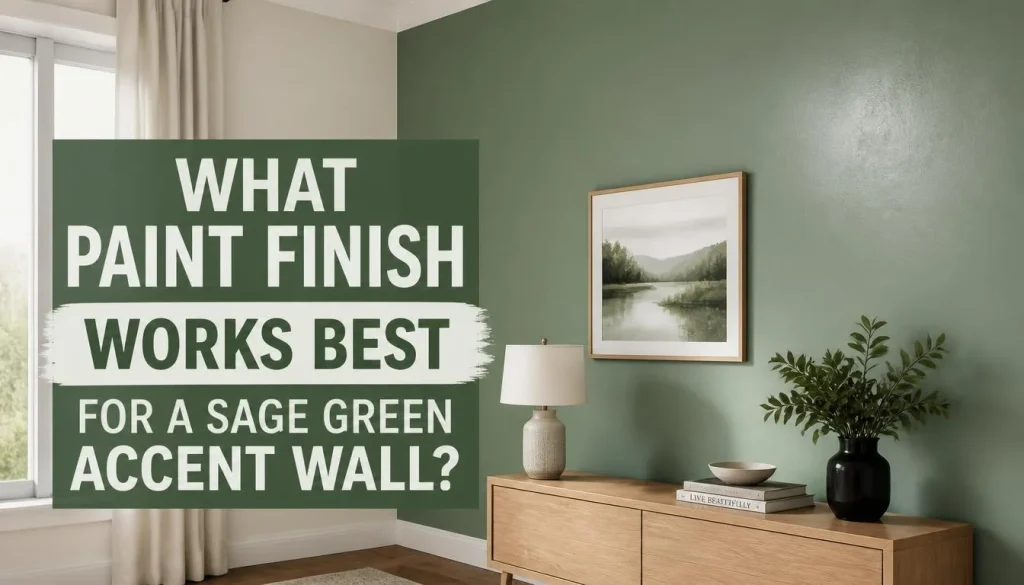
Paint finish affects how a wall looks and how easily it can be maintained.
Matte or flat: Creates a soft, low-reflective appearance and can help make minor surface imperfections less noticeable. However, some matte paints are less resistant to marks and cleaning.
Eggshell: Offers a subtle sheen and can be a practical middle ground for a bedroom. It is often easier to clean than a standard flat finish, although performance varies by product.
Satin: Has more visible sheen and may be easier to wipe clean, but it can highlight surface imperfections more than a flatter finish.
For most bedrooms, matte or eggshell is a sensible starting point. If the wall is likely to receive frequent contact, compare washable products and follow the manufacturer’s recommendations.
Sherwin-Williams’ paint sheen guide explains how sheen affects appearance, durability, and the visibility of wall imperfections.
How to Create a Sage Green Accent Wall Yourself
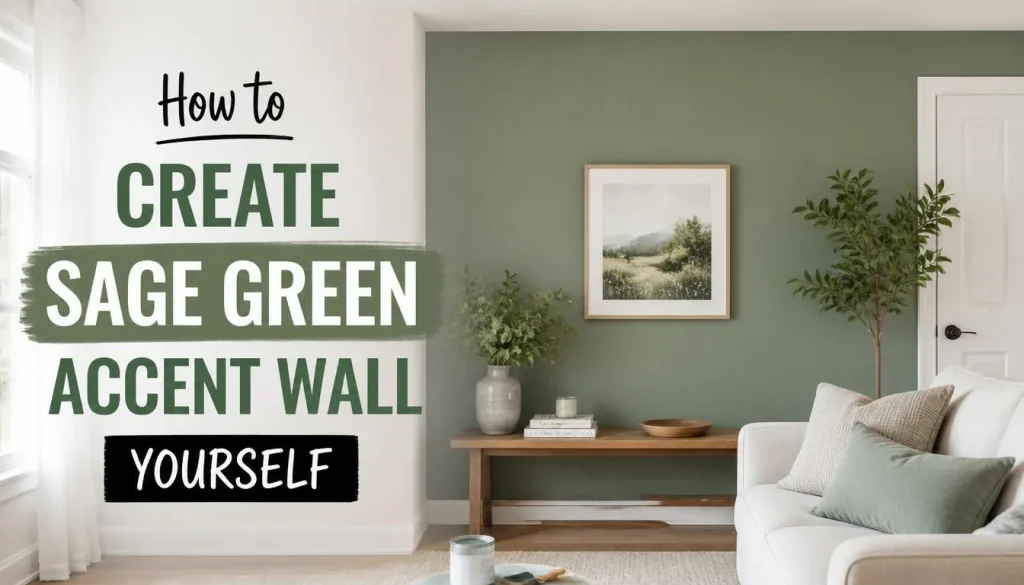
A straightforward painted accent wall is a manageable DIY project for many homeowners. More complicated work, such as electrical changes or wall-mounted heavy fixtures, may require a qualified professional.
Step 1: Choose the Wall
Decide where the accent wall will have the strongest effect. The wall behind the bed is often a natural choice, but consider the room layout, furniture, windows, and doors before making a final decision.
Step 2: Measure the Surface
Measure the wall’s height and width. Use those measurements to estimate the amount of paint, primer, wallpaper, or trim required.
For a panelled design, draw the planned layout before buying materials. Include the positions of electrical outlets, light switches, and other fittings.
Step 3: Test the Sage Green Paint
Apply sample paint to a large enough area to judge the color properly. Check it at different times of day and beside the furniture, flooring, and bedding that will remain in the room.
Do not choose a shade based only on a photograph or online color preview.
Step 4: Prepare the Wall
Remove dust and loose dirt. Repair small holes or cracks with an appropriate filler and allow the repaired areas to dry. Sand rough patches where necessary and clean away the dust.
If the wall has peeling paint, moisture damage, mold, or other problems, deal with those issues before applying a new finish. Painting over a damaged surface will not solve the underlying problem.
Step 5: Protect the Bedroom
Move furniture away from the working area or remove it from the room where possible. Cover the floor and nearby furniture with suitable protective material.
Use painter’s tape around edges, sockets, switches, and trim. Remove electrical cover plates only when safe to do so, and never work on live electrical fittings.
Step 6: Apply Primer if Needed
Some surfaces require a primer before painting, particularly when the existing color is very dark, the wall has repairs, or the paint manufacturer recommends one.
Follow the product instructions rather than assuming every wall needs the same preparation.
Step 7: Paint the Wall
Use a suitable brush for the edges and a roller for the larger surface. Apply paint evenly and allow the first coat to dry according to the product instructions before adding another coat.
Avoid overloading the roller or repeatedly working over paint that has begun to dry. These habits can create uneven coverage and visible marks.
Step 8: Finish and Inspect
Remove the painter’s tape at the appropriate stage recommended for the paint product. Check the wall in both natural and artificial light and touch up small uneven areas if needed.
Once the paint has cured according to the manufacturer’s instructions, move furniture back and finish styling the room.
When using paint or other decorating products, follow the label’s safety directions and provide fresh-air ventilation. The US Environmental Protection Agency’s indoor air quality guidance recommends ventilation when painting or using products that may release volatile organic compounds.
Renter-Friendly Sage Green Accent Wall Ideas Without Permanent Changes
If you cannot paint or install permanent wall features, you can still create a similar look.
Consider these alternatives:
- Use removable sage green wallpaper after checking the product’s suitability for your wall.
- Hang a large sage green fabric panel or textile behind the bed.
- Create a color theme with sage green bedding, cushions, and curtains.
- Use removable artwork or wall decals to introduce green without changing the entire wall.
- Choose a freestanding decorative screen in a suitable shade of green.
Before using adhesive products, check your rental agreement and test them carefully according to the manufacturer’s instructions. Even products described as removable can affect certain paint finishes.
How Much Does a Sage Green Bedroom Accent Wall Cost?
The cost depends on the wall dimensions, surface condition, material, and whether you do the work yourself or hire someone.
A simple painted wall generally requires fewer materials than a design involving board and batten, decorative molding, or built-in shelving. Wallpaper costs will also depend on the pattern, wall area, quality, and installation requirements.
For a more realistic estimate, separate the project into these categories:
| Cost Category | What to Include |
|---|---|
| Preparation | Filler, sanding supplies, cleaning materials |
| Painting | Primer, paint, brushes, rollers, painter’s tape |
| Wallpaper | Wallpaper rolls, adhesive if required, application tools |
| Paneling | Timber or MDF trim, fixings, filler, finishing materials |
| Extra details | Lighting, artwork, shelves, decorative accessories |
| Labor | Professional installation or electrical work, if needed |
Prices vary considerably across the USA, UK, Canada, and Australia. Local material prices, labor rates, taxes, and delivery costs can all affect the final budget.
If you want to keep spending under control, start with paint rather than paneling. You can always add decorative details later if the room needs more texture.
Common Mistakes to Avoid With a Sage Green Accent Wall
A well-chosen shade can still disappoint if the wall design does not suit the room. Keep these common mistakes in mind before starting.
Choosing a Sage Shade Without Testing It
Sage can appear more gray, yellow, blue, or dark depending on the lighting and surrounding colors. Always test the shade in the actual bedroom.
Painting Too Many Walls Without a Clear Plan
An accent wall is intended to create a focal point. Painting several walls in the same strong shade may remove the contrast you originally wanted.
That does not mean multiple sage walls are always wrong. It simply changes the design from an accent wall to a broader color scheme.
Ignoring Natural Light
A deep sage may look rich in a bright bedroom but feel much darker in a room with limited daylight. Check the color at different times before committing.
Choosing the Wrong Wall
A wall filled with doors, windows, and visual interruptions may not be the best surface for an elaborate design. Consider the wall that offers the clearest focal point.
Mixing Too Many Competing Colors
Sage green already provides color and character. Adding several unrelated accent shades, bold patterns, and different metallic finishes can make the room feel unsettled.
Choose one main neutral, one supporting color, and a small number of decorative accents.
Forgetting About Existing Flooring and Furniture
Your accent wall should work with what is already in the bedroom. Look at the floor, wardrobe, bed frame, curtains, and carpet before selecting a shade.
Ignoring Wall Preparation
Uneven surfaces, dust, old peeling paint, and visible repairs can affect the final finish. Prepare the wall properly instead of trying to hide every problem with another coat of paint.
Frequently Asked Questions About Sage Green Accent Wall Bedroom Ideas
Is Sage Green a Good Color for a Bedroom Accent Wall?
Yes. Sage green is a muted color that can create a soft focal point without the intensity of brighter greens. It works with neutral bedding, natural wood, cream, beige, and several different decorating styles.
The best shade depends on your bedroom lighting, furniture, and the overall appearance you want.
What Is the Best Wall for a Sage Green Accent Wall?
The wall behind the headboard is often the easiest choice because it naturally frames the bed. However, the best wall depends on the bedroom layout.
Choose a surface that is visible, relatively uninterrupted, and large enough to support the design you have in mind.
Does Sage Green Make a Small Bedroom Look Bigger?
Light sage green can help a small bedroom feel softer and more open, especially when paired with light surrounding walls and simple furniture. However, no paint color can compensate for a crowded layout or bulky furniture.
For a compact bedroom, choose the wall design carefully and avoid excessive decorative details.
What Color Goes Best With a Sage Green Accent Wall?
Warm white, cream, beige, natural wood, and soft gray are reliable combinations. Blush pink can introduce warmth, while charcoal or black adds stronger contrast.
The best choice depends on the undertone of your sage green and the finishes already in the room.
Should a Sage Green Accent Wall Be Lighter or Darker Than the Other Walls?
Either approach can work. A darker sage creates a stronger focal point, while a lighter sage offers a more subtle effect.
If the bedroom receives limited natural light, a muted or lighter shade may be easier to balance with the rest of the room.
Is Wallpaper or Paint Better for a Sage Green Bedroom Accent Wall?
Paint is usually simpler when you want a plain color and a straightforward installation. Wallpaper is useful when you want botanical patterns, texture, or a design that paint alone cannot easily create.
Consider the wall condition, installation process, budget, and how permanent you want the change to be.
What Paint Finish Is Best for a Sage Green Bedroom Accent Wall?
Matte and eggshell finishes are common choices for bedrooms. Matte creates a softer appearance, while eggshell offers a little more sheen and may be easier to clean depending on the product.
Always check the paint manufacturer’s recommendations for the intended surface and room.
Can You Create a Sage Green Accent Wall in a Rental Bedroom?
Yes, provided the property rules allow it. Removable wallpaper, fabric wall hangings, artwork, and green textiles can introduce the color without permanent changes.
Check the wall surface and test removable products carefully, as some adhesives can still affect paint.
Does Dark Sage Green Make a Bedroom Look Smaller?
A dark sage wall can feel visually heavier, especially in a small or poorly lit bedroom. However, it can still work when used on one wall with lighter bedding, surrounding walls, and suitable lighting.
The overall balance matters more than the room size alone.
Final Thoughts: Create a Sage Green Accent Wall That Works for Your Bedroom
A sage green accent wall can change the appearance of a bedroom without requiring a complete renovation. Whether you prefer a simple painted surface, decorative paneling, botanical wallpaper, or a textured finish, there are plenty of ways to make the color work with your existing space.
Start by considering the wall behind the bed, the amount of natural light, and the furniture you already own. Then test a few sage shades before choosing the final paint or material.
You do not need to spend a large amount to achieve a thoughtful result. A single painted wall, suitable bedding, and a few well-chosen accessories may be enough. If you want more architectural detail, consider adding paneling, molding, or a carefully planned decorative feature.
The most successful design is not necessarily the most elaborate one. It is the one that suits your bedroom, feels comfortable to live with, and brings together color, materials, and furniture in a way you genuinely enjoy.

“A comfortable home and a healthy lifestyle go hand in hand.”
Hi, I’m Ethan Carter, the founder and lead editor of TheBestHomeFit. I’m passionate about helping people create beautiful, functional living spaces while building healthier lifestyles at home. Over the years, I’ve spent countless hours researching home decor trends, testing home gym equipment, and reviewing products to help readers make smarter buying decisions.
Through TheBestHomeFit, I share practical home improvement ideas, honest product reviews, buying guides, and fitness tips designed for everyday homeowners. My goal is to make it easier for you to create a home that looks great, feels comfortable, and supports your well-being.
When I’m not researching the latest products or writing in-depth guides, you’ll usually find me redesigning a room, trying new home workout routines, or enjoying quality time with my family.