
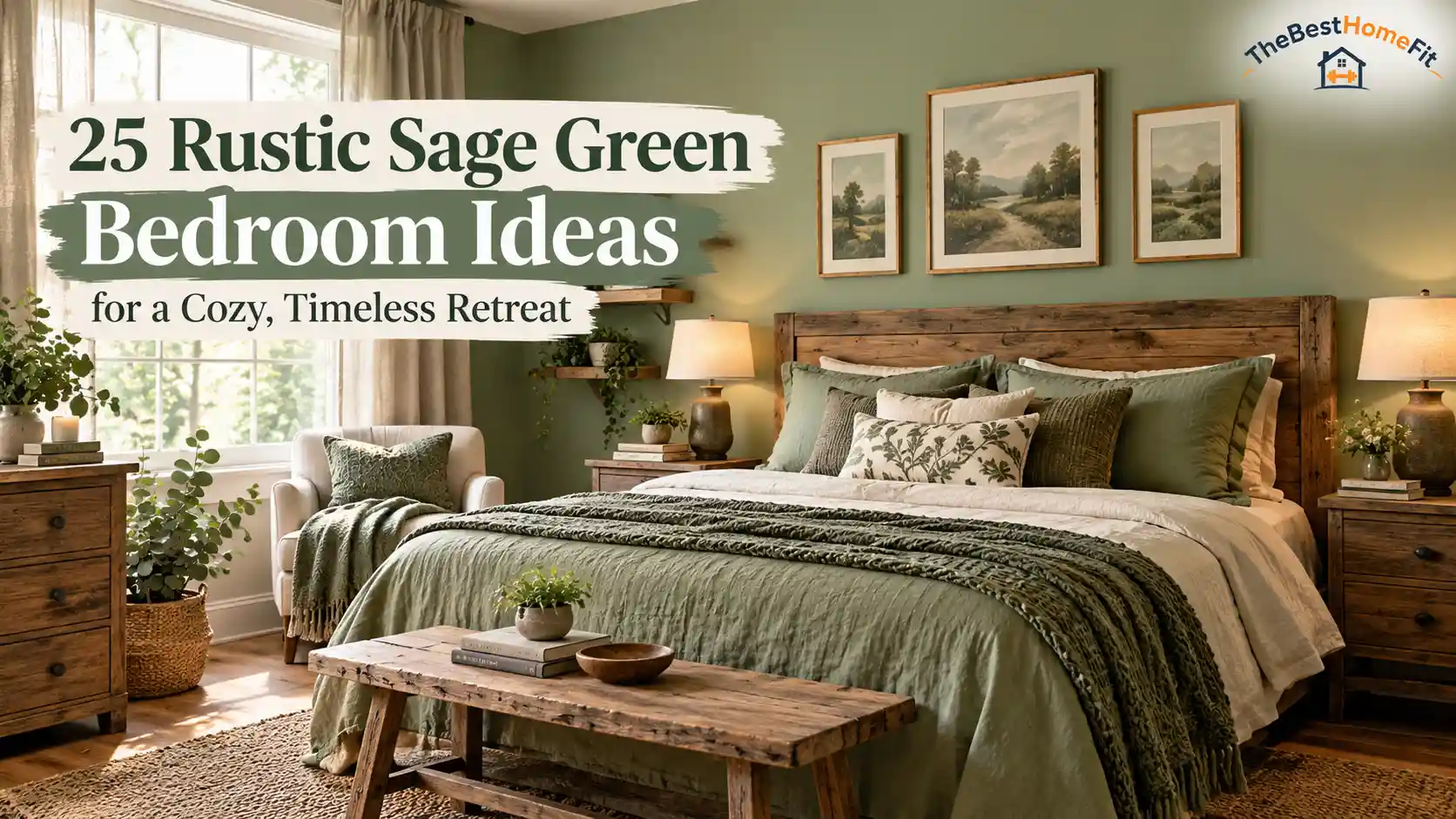
If you want a bedroom that feels warm, calm, and connected to nature, rustic sage green bedroom ideas are a great place to start. Sage green has enough color to give a room personality, but its muted character keeps it easy to live with. Add natural wood, soft linen, aged metal, woven textures, and a few vintage pieces, and the room begins to feel relaxed rather than overly decorated.
The challenge is getting the balance right. Too much distressed furniture can make the room feel themed, while the wrong sage undertone may clash with your flooring or existing wood furniture.
This guide goes beyond inspiration. You will learn how to choose the right shade of sage, pair it with wood and other colors, decorate small bedrooms, work around existing flooring, choose bedding and curtains, and create a rustic bedroom even if you cannot paint the walls.
For broader color inspiration before committing to sage, these green bedroom ideas can help you compare sage with olive, moss, forest green, and other bedroom-friendly shades.
What Makes a Sage Green Bedroom Look Rustic?
Sage green alone does not make a bedroom rustic. The rustic feeling comes from the materials, finishes, textures, and furniture around it.
A convincing rustic sage bedroom usually combines several of these elements:
- Natural or reclaimed wood
- Visible wood grain
- Linen and cotton fabrics
- Wool throws
- Woven baskets
- Jute or wool rugs
- Vintage or antique-style furniture
- Handmade ceramics
- Aged brass, bronze, or black metal
- Warm neutral colors
- Botanical or landscape artwork
- Slightly imperfect, lived-in finishes
The goal is not to make everything look old.
A room can have clean walls, a modern mattress, and simple lighting while still feeling rustic because the natural materials add warmth and character.
One of the easiest formulas is sage green + warm cream + natural wood. From there, you can add small amounts of brown, rust, terracotta, black, or aged brass.
How to Choose the Right Sage Green for Your Bedroom
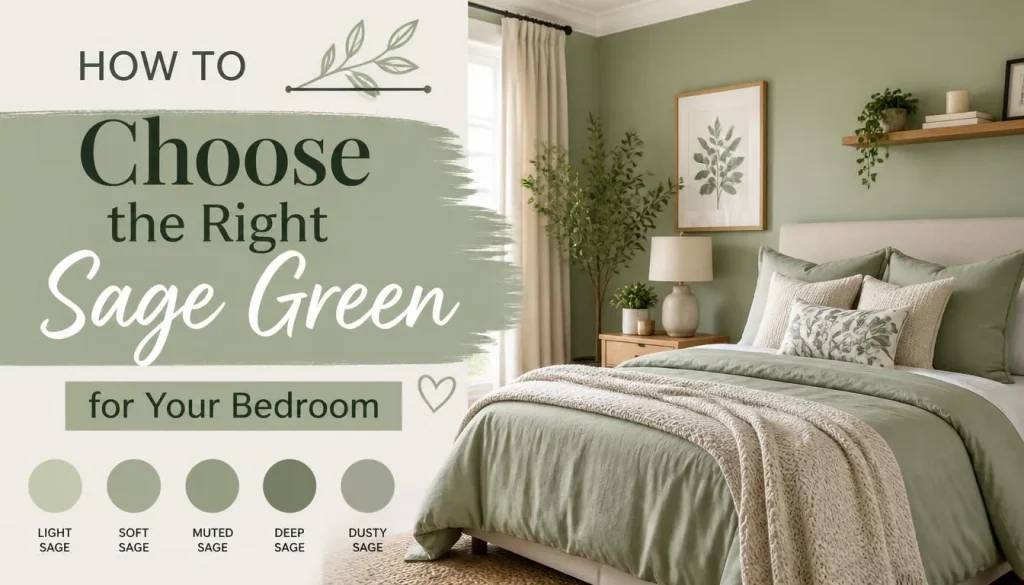
Sage green can lean gray, olive, yellow-green, blue-green, or even slightly taupe. That is why two paints both labeled “sage” can look completely different once they are on your wall.
Warm Sage vs Cool Sage
Warm sage has more yellow, olive, or earthy undertones.
It works particularly well with:
- Honey-colored oak
- Pine
- Terracotta
- Brown leather
- Cream
- Beige
- Warm brass
Cooler sage usually contains more gray or blue.
It works well with:
- Pale oak
- Soft gray
- Off-white
- Charcoal
- Black metal
- Cool stone finishes
Neither option is automatically better. The correct choice depends on what already exists in your room.
Consider the Direction of Natural Light
Paint changes considerably as daylight moves through a room.
North-facing rooms often receive cooler-looking light, so a very gray or blue sage can appear colder than expected.
Brighter rooms can usually handle deeper or cooler sage tones without feeling gloomy.
Sherwin-Williams recommends considering both room size and natural lighting when selecting bedroom colors because these factors change how a color appears in the finished space.
You can explore more practical paint combinations in these bedroom paint ideas before deciding whether sage should cover all four walls or only one feature area.
Compare Sage With Your Existing Furniture
Do not choose paint in isolation.
Place a large painted sample beside your:
- Bed frame
- Flooring
- Wardrobe
- Curtains
- Headboard
- Nightstands
A sage that looks beautiful beside white may look completely different next to golden oak or red-toned timber.
Benjamin Moore also recommends checking green paint in your actual room and observing samples under different natural and artificial lighting conditions before committing.
Best Sage Green Paint Colors for a Rustic Bedroom
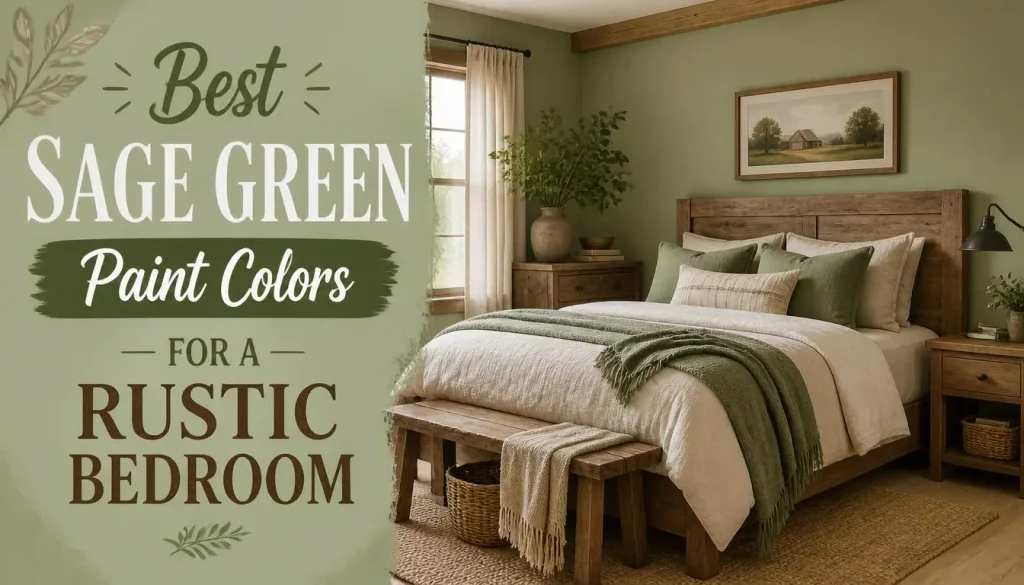
There is no single perfect rustic sage.
Instead, choose the depth and undertone that supports the mood you want.
Light Sage Green
Light sage works well when you want the rustic bedroom to feel soft, open, and relaxed.
Pair it with:
- Light oak
- Cream bedding
- Natural linen
- Wicker
- Soft brown
- Antique brass
It is also one of the easier sage options for compact bedrooms.
Warm Sage Green
A warmer sage creates an earthier result and sits naturally beside brown, honey-toned timber, rust, clay, and tan.
Choose this direction if your rustic style leans farmhouse, cottage, or country.
Gray-Green Sage
Gray-green sage feels quieter and slightly more contemporary.
It works especially well when you want rustic materials without making the bedroom feel traditionally farmhouse.
Add warm wood and cream textiles to stop the gray undertone from making the room feel flat.
Dark Sage Green
Dark sage can create a cocooning bedroom with more visual depth.
Use it on:
- A headboard wall
- Wall paneling
- Built-in cabinetry
- A dresser
- Lower-wall wainscoting
Then introduce lighter bedding and warm lighting to balance the darker surfaces.
Benjamin Moore’s sage green paint collection demonstrates just how widely sage can vary, from pale muted colors to much deeper greens.
Understand LRV, but Do Not Choose by Number Alone
LRV, or Light Reflectance Value, indicates how much visible light a paint color reflects.
A higher-LRV color generally appears lighter, while a lower-LRV color absorbs more light.
It is useful when comparing paints, but it should not replace testing. Flooring, window direction, furniture, bulb temperature, and surrounding colors can all change how the final shade feels.
25 Rustic Sage Green Bedroom Ideas
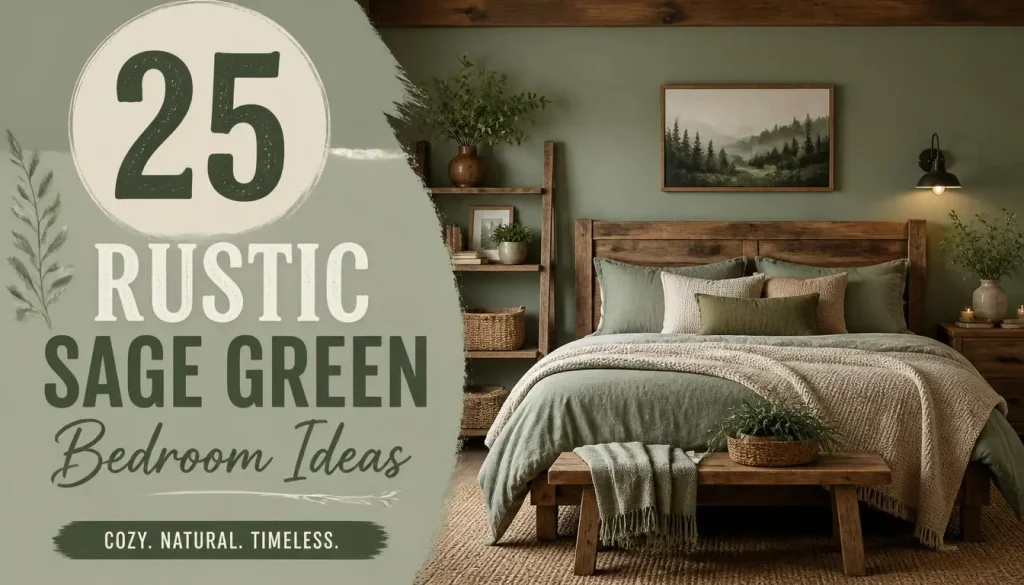
Now for the decorating part. You do not need to use every idea. Choose a few that suit your room and repeat materials intentionally.
1. Pair Sage Green Walls With Natural Wood Furniture
This is the simplest route to a rustic look.
Use sage walls behind an oak, pine, walnut, or reclaimed-wood bed. Let the wood grain remain visible instead of choosing furniture with a heavy painted finish.
Cream or oatmeal bedding helps bridge the green and brown tones.
2. Create a Sage Green Accent Wall Behind the Bed
If painting the entire bedroom feels like too much, focus on the wall behind the headboard.
A sage accent wall creates a clear focal point while allowing the remaining walls to stay warm white or cream.
It also works well in bedrooms with darker floors or furniture because there is still plenty of visual breathing room.
3. Introduce Reclaimed Wood
Reclaimed wood instantly adds texture and age.
Try:
- A reclaimed headboard
- A simple bench
- Floating shelves
- A vintage chest
- A small bedside table
One or two reclaimed pieces are usually enough. Using distressed timber everywhere can make the bedroom feel more staged than authentic.
4. Show Off Exposed Wooden Beams
If your bedroom already has beams, let them become part of the color scheme.
Muted sage creates a calm background that allows old timber to stand out naturally.
Avoid covering every remaining surface with additional rustic details. The architecture is already doing much of the work.
5. Choose a Simple Wooden Headboard
A headboard can establish the rustic look without replacing every piece of furniture.
Choose unfinished oak, reclaimed timber, pine, or a lightly weathered finish.
Keep the shape relatively simple so the wood grain becomes the feature.
6. Pair Sage Green With Cream
Cream is one of the safest partners for sage.
It feels softer than bright white and works especially well through:
- Bedding
- Curtains
- Rugs
- Lampshades
- Upholstery
Cream also prevents a heavily wood-furnished room from looking too dark.
7. Layer Linen and Cotton Bedding
Rustic rooms benefit more from texture than excessive decoration.
Start with cotton sheets, add relaxed linen or linen-look bedding, then finish with a textured throw.
Instead of matching every textile perfectly, use slightly different shades of cream, oatmeal, taupe, and sage.
8. Bring In Vintage Wooden Nightstands
Perfectly matching bedroom sets can sometimes make rustic spaces feel too polished.
Try a pair of vintage-style timber nightstands or two pieces that share a similar tone without being identical.
You can connect mismatched pieces through matching lamps.
9. Add a Distressed Sage Green Dresser
Rather than putting sage on the walls, use it on one piece of furniture.
A painted dresser works particularly well against cream or off-white walls.
Allow some natural timber, brass handles, or aged details to remain visible so the piece still feels rustic.
10. Use a Vintage-Style Iron Bed
A black or aged-metal bed adds definition against muted green walls.
Keep the bedding soft and light so the metal does not make the room feel harsh.
This combination suits farmhouse, cottage, vintage, and country bedrooms.
11. Add Woven Baskets
Wicker, rattan, seagrass, and other woven materials introduce natural variation and useful storage.
Use baskets for:
- Spare blankets
- Cushions
- Laundry
- Books
- Small accessories
They work especially well when the bedroom contains a lot of painted furniture and needs more visible natural texture.
12. Ground the Bed With a Rustic Rug
A rug softens the room and helps visually connect the furniture.
Good options include:
- Wool
- Jute
- Flatweave
- Muted vintage-inspired patterns
If your floor already has a strong wood grain, choose a relatively quiet rug so the two surfaces do not compete.
13. Combine Sage With Brown and Tan
Sage and brown naturally create an earthy bedroom palette.
Brown can appear through:
- Walnut furniture
- Tan leather
- Wooden picture frames
- Brown cushions
- A woven bench
Keep some cream or beige between the darker elements to stop the room from feeling heavy.
14. Add Terracotta or Rust Accents
Rust and terracotta add warmth to sage, particularly when the green has a cooler gray undertone.
You only need a little.
Try a terracotta cushion, ceramic vase, lampshade, blanket, or artwork.
15. Introduce Aged Brass
Highly polished gold can sometimes feel too formal for a rustic bedroom.
Aged or brushed brass feels softer.
Use it on:
- Lamps
- Drawer handles
- Curtain rods
- Picture frames
- Small mirrors
Repeat the finish two or three times rather than putting brass everywhere.
16. Paint Existing Shiplap Sage Green
If your bedroom already has shiplap or timber paneling, sage can emphasize the texture without adding another decorative layer.
Painting the boards and grooves in the same color creates subtle shadow and depth.
You can find more ways to use feature walls, paneling, and artwork in these master bedroom wall decor ideas.
17. Add Botanical Wall Art
Botanical prints fit naturally into the sage palette, but they do not need to cover the entire wall.
Try two or three framed vintage botanical prints above a dresser or nightstand.
Wood, antique brass, or simple black frames all work.
18. Decorate With Dried Flowers and Greenery
A few branches, dried grasses, olive stems, or real plants can make a rustic bedroom feel more organic.
The important word is “few.”
Too many plants may shift the room toward a jungle or bohemian style instead of rustic.
19. Use Sage Green Curtains
Curtains offer a large block of color without the permanence of paint.
Sage curtains work especially well with cream walls, warm wood furniture, rattan, and natural fabrics.
If you are unsure about fabric weight or curtain color, these bedroom curtain ideas cover practical options for different bedroom styles.
20. Put a Rustic Bench at the Foot of the Bed
A wooden or upholstered bench can make a larger bedroom feel complete.
Choose something slightly narrower than the bed and keep enough room to walk around it comfortably.
A simple oak bench with a folded sage or oatmeal blanket is often all you need.
21. Pair Light Sage With Dark Wood
Dark walnut, stained oak, or other deep woods look striking against light sage walls.
The contrast makes both colors easier to notice.
Use light bedding between them so the bed does not become one large dark mass.
22. Create a Light and Airy Rustic Bedroom
Rustic does not have to mean dark.
Try:
- Pale sage walls
- Light oak furniture
- Cream linen
- Woven accessories
- Soft beige flooring
- Minimal wall decor
This approach works particularly well in smaller or lower-light bedrooms.
23. Try Modern Rustic Sage
For a cleaner interpretation of rustic style, reduce the decorative accessories.
Use sage walls, a simple timber bed, linen bedding, one large rug, black or brass lighting, and a small amount of artwork.
The natural materials still provide rustic warmth, while the simpler layout feels current.
For a broader look at balancing clean lines with warmth, see these modern bedroom ideas.
24. Create a Cottage-Style Sage Bedroom
Cottage bedrooms can handle a little more pattern and personality.
Combine sage with:
- Floral textiles
- Painted furniture
- Small checks
- Pleated lampshades
- Vintage mirrors
- Quilts
- Warm wood
The key is to let the room feel collected rather than perfectly coordinated.
25. Use Sage Accessories Instead of Paint
You can achieve the look even in a rental.
Start with:
- Sage bedding
- Cushions
- Curtains
- A throw
- Artwork
- A removable headboard
- A small rug
Keep the walls cream, beige, or warm white and bring in natural wood furniture.
This is also an easy way to test whether you actually enjoy living with sage before committing to paint.
Rustic Sage Green Wall Ideas Beyond Plain Paint
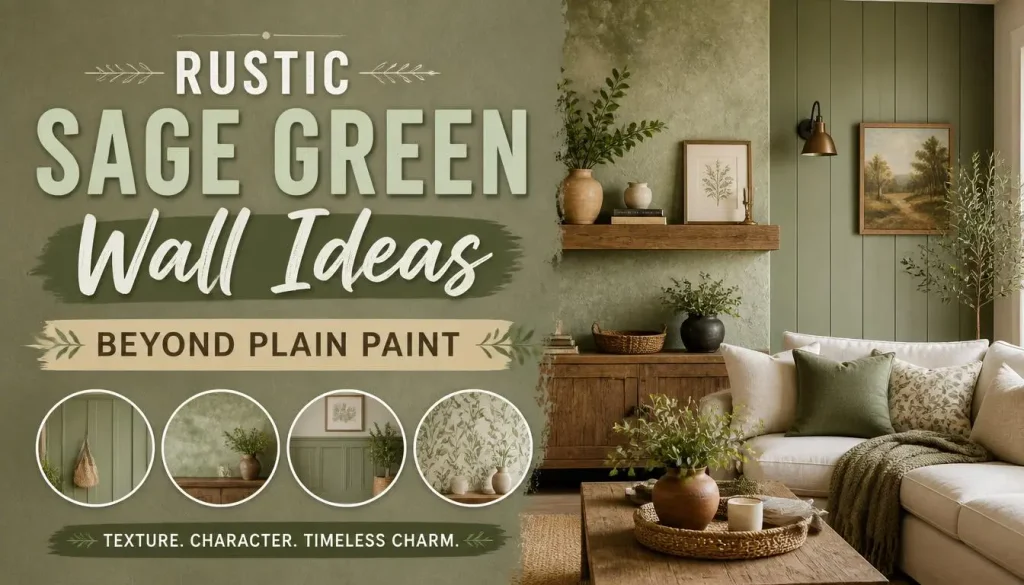
Painted drywall is only one option.
Sage Green Board and Batten
Board and batten creates architectural detail behind a bed without requiring artwork.
Painting the entire treatment sage gives it a cleaner appearance than using contrasting colors on every piece.
Sage Green Wainscoting
Try sage on the lower half of the wall and warm white or cream above.
This can work particularly well in cottage and traditional rustic bedrooms.
Sage Green Wall Paneling
Vertical paneling can visually increase the sense of height, while broader horizontal elements tend to emphasize width.
Keep surrounding decor simple if the wall already has plenty of texture.
Botanical Wallpaper
A muted botanical wallpaper can introduce both sage and pattern.
Use it behind the bed and keep the remaining walls calmer.
If the wallpaper is detailed, choose plain bedding rather than competing floral fabrics.
Paint the Ceiling Sage
This is a bolder option, but it can create a cozy feeling in bedrooms with enough light.
Try a softer sage on the ceiling with cream walls, or use the same sage across walls and ceiling for a cocooning effect.
Best Colors to Pair With Sage Green in a Rustic Bedroom
Sage is versatile, but some combinations suit rustic interiors particularly well.
| Color | Effect |
|---|---|
| Cream | Soft, warm, timeless |
| Warm white | Clean but not clinical |
| Beige | Relaxed and natural |
| Taupe | Quiet and sophisticated |
| Brown | Earthy and grounded |
| Terracotta | Warm and organic |
| Rust | Stronger vintage character |
| Dusty pink | Gentle and romantic |
| Black | Adds definition |
| Aged brass | Adds warmth and subtle elegance |
If you want sage to remain the star, keep one major neutral alongside it and use stronger accent colors more sparingly.
What Wood Tones Go Best With Sage Green?
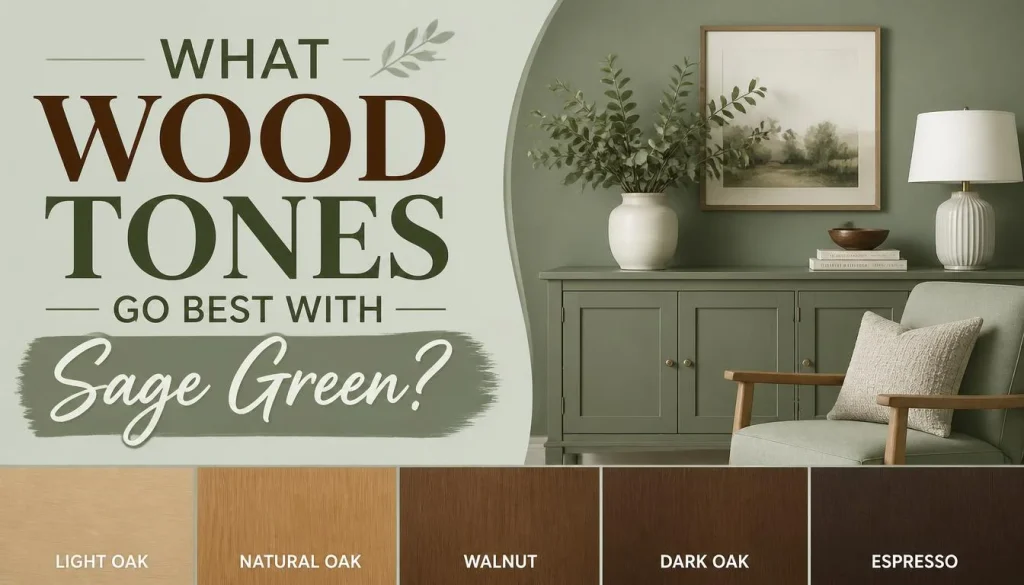
Almost any wood can work with sage, but each creates a different mood.
Light Oak
Light oak keeps sage looking fresh and airy.
It is particularly useful in small rooms or modern rustic bedrooms.
Pine
Pine tends to feel warmer and more casual.
It works naturally in cottage, farmhouse, cabin, and country bedrooms.
Medium Oak
Medium oak gives sage more warmth without creating strong contrast.
It is a safe choice if your flooring and furniture already have golden or honey tones.
Walnut
Walnut creates a richer, more refined rustic look.
Use it with lighter sage, cream bedding, and warm lighting.
Dark Wood
Dark-stained furniture creates a strong silhouette against pale sage.
Keep some lighter surfaces around it to maintain balance.
Reclaimed Wood
Reclaimed wood brings variation in grain and color.
Because the wood is already visually active, choose a simple sage wall and restrained bedding rather than adding several other patterns.
Best Materials and Textures for a Rustic Sage Bedroom
A rustic bedroom should feel tactile.
Try mixing:
- Linen
- Cotton
- Wool
- Jute
- Rattan
- Wicker
- Natural timber
- Aged metal
- Ceramic
- Stone
You do not need all of them.
Three or four contrasting textures are usually enough to give a simple palette depth.
If you want more inspiration for creating warmth through layers rather than clutter, explore these cozy bedroom ideas.
What Flooring Works With a Rustic Sage Green Bedroom?
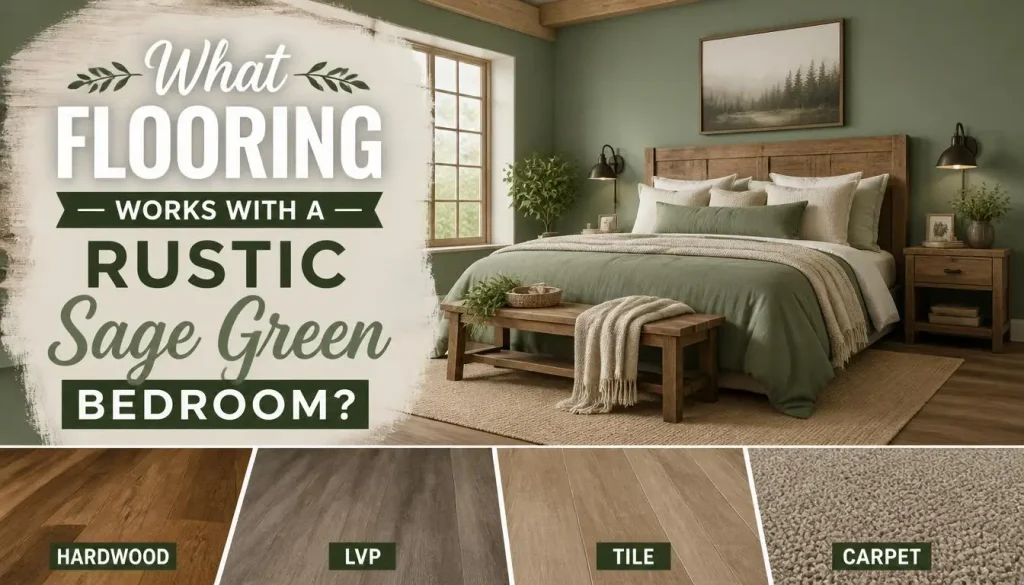
Flooring covers a large area, so do not ignore it when choosing sage.
Light Hardwood
Pale oak and similar light timbers keep the bedroom bright.
They pair particularly well with soft sage and cream.
Honey or Golden Oak
Warm wood floors can work beautifully with sage, especially warmer olive-leaning shades.
Repeat a similar warm tone in a bedside table or headboard to make the flooring feel intentional.
Dark Hardwood
Dark floors create more contrast.
Balance them with lighter walls, bedding, and a medium-to-light rug.
Neutral Carpet
Beige, oatmeal, taupe, and warm greige carpets generally work easily with muted sage.
If your carpet already has a noticeable undertone, compare paint samples directly beside it.
What If the Flooring Clashes With Sage?
You may not need to replace it.
A large rug can create a visual buffer between the flooring and the rest of the color scheme.
Choose a rug containing both a neutral that relates to the floor and a subtle green, brown, or rust tone that connects to the bedroom.
How to Choose Bedding, Curtains, and Rugs
These three elements cover a surprising amount of visual space, so treat them as part of the color plan rather than final accessories.
What Bedding Goes With Sage Green Walls?
Safe choices include:
- Cream
- Ivory
- Oatmeal
- Beige
- Taupe
- Warm white
- Rust
- Muted floral patterns
For a layered look, start with a light neutral base and introduce sage or rust through the throw and cushions.
What Curtains Go With Sage Green Walls?
Cream and natural linen curtains are difficult to get wrong.
For more color, try:
- Deeper sage
- Taupe
- Oatmeal
- Subtle stripe
- Small botanical patterns
Avoid choosing curtains that are almost—but not quite—the same sage as the wall unless you have compared them in person.
What Rug Works Best?
For rustic style, look for:
- Wool
- Jute
- Muted Persian-inspired patterns
- Faded vintage designs
- Simple stripes
- Warm neutral flatweaves
The rug should connect the furniture and floor rather than become a separate color story.
How to Mix Patterns Without Making the Room Busy
Vary the scale.
For example:
- Small floral pillow
- Medium stripe throw
- Mostly solid bedding
- Quiet textured rug
Do not use several dense small-scale patterns together.
How Lighting Changes Sage Green
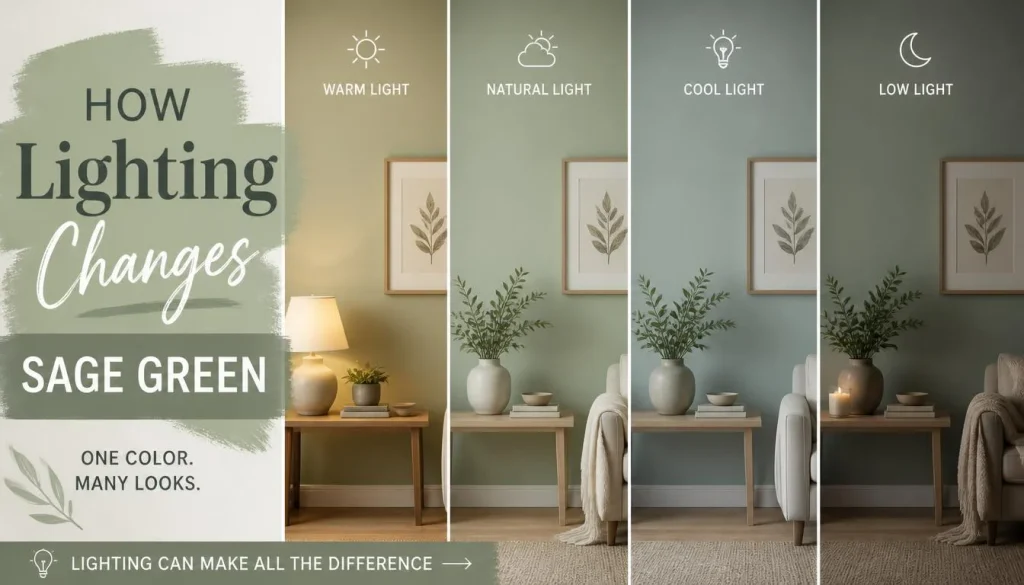
Lighting can make sage appear noticeably warmer, grayer, greener, or more olive.
North-Facing Bedrooms
Cooler natural light can emphasize the gray side of sage.
Test slightly warmer greens if your first sample feels too cold.
Bright or South-Facing Bedrooms
Stronger warm daylight may bring out yellow or olive undertones.
This can work beautifully with wood, but test before painting the entire room.
Sage Green at Night
A paint you love during the day may look different after sunset.
Turn on the actual lamps you plan to use while checking paint samples.
Layer Bedroom Lighting
A bedroom works better when it has more than one light source.
Consider:
- A main ceiling light
- Bedside lamps or sconces
- A reading lamp
- Soft accent lighting
IKEA’s bedroom lighting guidance also recommends combining general, task, and mood lighting rather than relying on a single fixture.
Warm light is particularly useful for rustic sage bedrooms because it complements wood, cream, brass, and earthy textiles.
Rustic Sage Green Bedroom Ideas for Small Bedrooms
A small room does not need to stay white.
Sage can work beautifully when the layout remains simple.
Try these strategies:
- Choose a light or medium sage
- Make the bed wall the main focal point
- Use furniture with visible floor space underneath
- Install wall-mounted bedside lights
- Limit decorative furniture
- Use one larger piece of art instead of several tiny frames
- Add a mirror where it can reflect useful light
- Keep the bedding relatively light
- Use vertical storage
- Choose fewer, larger accessories
The goal is not simply to use pale colors. It is to reduce visual competition.
For more space-saving wall treatments, these small bedroom wall decoration ideas include renter-friendly and compact-room solutions.
Rustic Sage Green Bedroom Ideas Without Painting
Renters and anyone who dislikes frequent repainting still have plenty of options.
Start with one large sage element.
For example:
Option 1: cream walls + sage curtains + timber furniture
Option 2: cream walls + sage bedding + jute rug
Option 3: neutral walls + sage upholstered headboard + botanical art
Option 4: warm white walls + painted sage dresser + wood bed
Once the main sage element is in place, repeat the color one or two more times in smaller objects.
That creates cohesion without making every item match.
Budget-Friendly Rustic Sage Green Bedroom Ideas
Rustic style can actually work well on a limited budget because slightly aged furniture often adds more character than brand-new matching sets.
Look for:
- Secondhand timber nightstands
- Old wooden benches
- Vintage picture frames
- Used mirrors
- Woven baskets
- Ceramic lamps
- Solid wood dressers
You can also make noticeable changes without replacing furniture.
Try:
- New bedding
- Different lamp shades
- Updated drawer hardware
- A painted dresser
- Thrifted artwork
- A rug
- New curtains
These bedroom makeover ideas provide more ways to change the room without starting from scratch.
An Easy Rustic Sage Green Color Formula
If choosing colors feels overwhelming, start with a simple 60-30-10 framework.
For example:
60% — Main base: sage or warm cream
30% — Secondary materials: natural wood, beige, oatmeal
10% — Accent: terracotta, rust, black, or aged brass
Do not treat the percentages as strict mathematics.
They simply help stop five or six colors from competing equally.
Another good option is:
60% warm neutral
30% sage green
10% warm rustic accent
This version works particularly well if you want sage decor without green walls.
How to Style a Rustic Sage Green Bedroom Step by Step
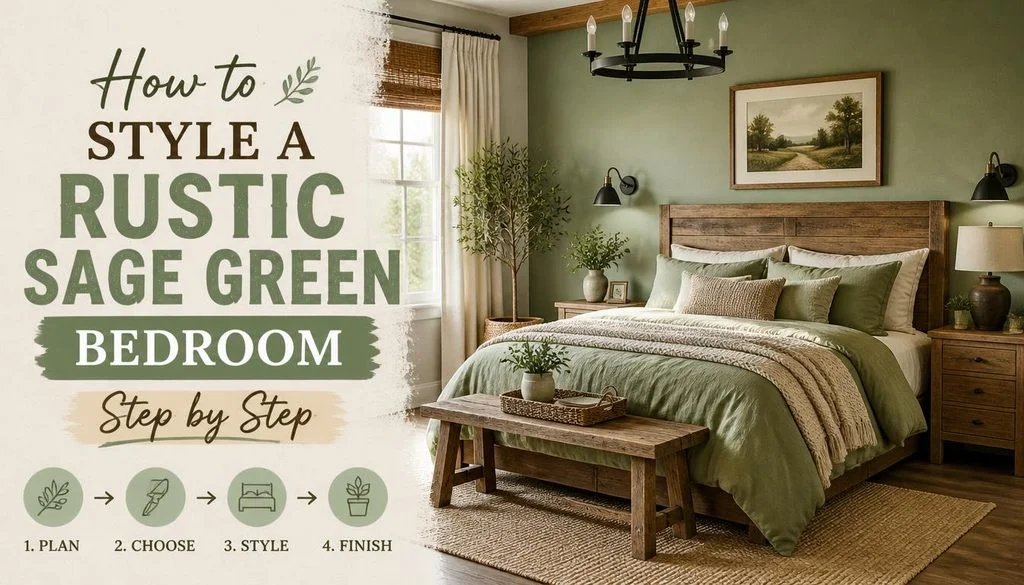
If you are starting from an empty room—or simply do not know what to change first—follow this order.
Step 1: Choose Where Sage Will Appear
Decide whether sage will be on:
- All walls
- One accent wall
- Paneling
- Bedding
- Curtains
- Furniture
Choose one dominant application first.
Step 2: Select Your Main Neutral
Cream, warm white, oatmeal, beige, and taupe are easy options.
Use this neutral to give the room breathing space.
Step 3: Choose a Wood Tone
Work with existing flooring or major furniture whenever possible.
There is no need to replace good furniture just because the wood is darker or lighter than an inspiration photo.
Step 4: Layer Natural Textures
Add linen, cotton, wool, jute, wicker, or ceramics.
Texture is what stops a quiet palette from looking flat.
Step 5: Introduce One Pattern Family
Choose botanical, floral, stripe, check, or faded vintage pattern.
One or two related patterns usually look more relaxed than many unrelated prints.
Step 6: Add Vintage or Rustic Details
Try one statement piece:
- Vintage dresser
- Antique mirror
- Timber bench
- Iron bed
- Old framed artwork
You do not need an entire room of vintage furniture.
Step 7: Finish With Lighting
Use warm layered lighting to soften the room at night.
Then check whether any corner still feels empty before buying more decor.
Often, the room needs less than you think.
Rustic Sage Green Bedroom Ideas by Style
Rustic Farmhouse
Use sage, warm white, oak or pine, linen, black metal, baskets, and restrained farmhouse details.
Avoid filling the room with signs, slogans, and heavily distressed accessories.
Modern Farmhouse
Keep the same warm materials but simplify the shapes.
Try clean-lined wood furniture, plain linen bedding, sage paneling, and simple black or brass lights.
Cottage
Add more softness through floral prints, painted furniture, quilts, pleated shades, and vintage mirrors.
Sage works beautifully with cream, dusty pink, pale blue, and warm wood.
Vintage Rustic
Use deeper timber, antique brass, muted artwork, traditional rugs, and slightly darker sage.
Let genuine vintage pieces provide character instead of artificially distressing everything.
Country Rustic
Warm sage, natural pine, checks, stripes, quilts, ceramics, and simple wooden furniture create an informal country feel.
Moody Rustic
Choose deeper sage or olive alongside walnut, dark oak, charcoal, aged brass, and warm cream.
Lighting becomes especially important in this style.
Common Rustic Sage Green Bedroom Mistakes
Choosing Paint From a Screen
Digital colors vary from screen to screen.
Always test a physical sample in your room.
Ignoring the Undertone
A blue-gray sage may clash with yellow-toned timber, while an olive sage may look unexpectedly warm beside cool gray flooring.
Compare fixed materials before deciding.
Using Too Much Green
Sage can behave almost like a neutral, but a bedroom can still become monotonous if the walls, duvet, curtains, rug, and furniture are all the same shade.
Give green something to contrast with.
Using Stark White Everywhere
Bright white can create more contrast than expected beside muted sage and aged timber.
Cream or warm white often gives rustic interiors a softer transition.
Overdoing Farmhouse Decor
You do not need decorative signs, faux weathering, shiplap, baskets, galvanized metal, checks, and reclaimed timber all in one room.
Choose a few authentic materials and stop there.
Matching Every Piece of Furniture
Slight variation gives rustic rooms personality.
Wood tones do not have to match exactly as long as they share a believable relationship.
Using Too Many Distressed Finishes
If everything looks worn, nothing feels special.
Mix aged furniture with some cleaner pieces.
Ignoring Lighting
A sage that looks soft in daylight may appear much cooler or muddier under artificial light.
Test it both day and night.
Forgetting Texture
When the entire room contains flat painted surfaces and smooth fabrics, rustic colors alone cannot provide enough warmth.
Wood, linen, wool, jute, wicker, and ceramics help finish the look.
Frequently Asked Questions
Is sage green good for a rustic bedroom?
Yes. Sage has a muted, nature-inspired character that pairs easily with natural wood, linen, wool, woven fibers, warm neutrals, and aged metals. The surrounding materials are what turn the color into a convincing rustic scheme.
What colors go with a rustic sage green bedroom?
Cream, warm white, beige, taupe, brown, rust, terracotta, dusty pink, black, and aged brass all work well. For the easiest palette, use sage with cream and natural wood, then introduce one smaller accent color.
What wood looks best with sage green?
Oak, pine, walnut, reclaimed timber, and darker stained woods can all work. Pale woods create an airy look, while walnut and dark wood add more contrast and depth.
Does sage green go with dark wood furniture?
Yes. Light or medium sage can create an attractive contrast with walnut, dark oak, and other deep wood finishes. Use lighter bedding or rugs to keep the overall room from becoming too heavy.
What bedding goes with sage green walls?
Cream, ivory, oatmeal, beige, taupe, warm white, and muted rust are dependable choices. Natural linen and cotton textures suit rustic bedrooms particularly well.
What curtains go with sage green walls?
Cream or natural linen curtains are easy options. Taupe, oatmeal, muted stripe, and deeper sage can also work, depending on how much contrast you want.
What flooring works with sage green?
Light oak, medium warm wood, dark timber, beige carpet, taupe carpet, and many rustic floorboards work with sage. If your floor feels slightly disconnected from the wall color, use a rug to create a visual transition.
Can sage green work in a small bedroom?
Yes. A soft sage paired with lighter bedding, simple furniture, and limited wall clutter can work well in a compact room. You can also use sage only on the headboard wall if you want less color.
Can I create a rustic sage green bedroom without painting?
Absolutely. Use sage through bedding, curtains, a headboard, artwork, rugs, or painted furniture. Keep the walls neutral and repeat sage in two or three places around the room.
Is sage green warm or cool?
It can be either. Some sage colors lean warm and olive, while others contain cooler gray or blue undertones. That is why testing the actual paint beside your flooring and furniture is important.
How do I make sage green look rustic instead of modern?
Introduce natural wood, visible grain, linen, wool, woven materials, aged brass, ceramics, vintage furniture, and warm neutral colors. Avoid relying only on sleek furniture and smooth surfaces.
Does sage green work with rust and terracotta?
Yes. Rust and terracotta introduce warmth and contrast, making them particularly useful beside muted gray-green sage. Use them in small amounts through cushions, ceramics, throws, or artwork.
Final Thoughts
The best rustic sage green bedroom ideas are not about covering every surface in green or buying an entire set of farmhouse furniture. The look works because muted green sits comfortably beside natural materials, warm neutrals, and pieces that have texture and character.
Start by deciding where sage should appear. Then work with the wood, flooring, and furniture you already own rather than trying to recreate an inspiration photo exactly.
For the easiest combination, pair sage with cream, natural timber, linen, and one warm accent such as terracotta or aged brass. If your bedroom is small, use lighter sage and fewer decorative pieces. If you prefer a moodier room, deeper sage with walnut and warm lighting can create a richer atmosphere.
Most importantly, test the color in your own bedroom before committing. Light changes throughout the day, timber has undertones of its own, and a sage that looks perfect online may behave differently in your home.
Once the main colors are right, keep the rest simple. Good wood, comfortable fabrics, layered lighting, and a few well-chosen vintage details will usually create a more convincing rustic bedroom than filling every corner with decor.

“A comfortable home and a healthy lifestyle go hand in hand.”
Hi, I’m Ethan Carter, the founder and lead editor of TheBestHomeFit. I’m passionate about helping people create beautiful, functional living spaces while building healthier lifestyles at home. Over the years, I’ve spent countless hours researching home decor trends, testing home gym equipment, and reviewing products to help readers make smarter buying decisions.
Through TheBestHomeFit, I share practical home improvement ideas, honest product reviews, buying guides, and fitness tips designed for everyday homeowners. My goal is to make it easier for you to create a home that looks great, feels comfortable, and supports your well-being.
When I’m not researching the latest products or writing in-depth guides, you’ll usually find me redesigning a room, trying new home workout routines, or enjoying quality time with my family.