

Pink and green can make a bedroom feel soft and peaceful, bold and dramatic, or warm and grown-up. The result depends less on the colors themselves and more on the shades you choose, how much of each color you use, and what you pair with them.
A room covered in bright pink and vivid green can quickly feel busy. But sage with blush, olive with dusty pink, or forest green with muted rose can feel completely different. Add cream, natural wood, linen, brass, or black, and the palette becomes much easier to live with.
These pink and green bedroom ideas cover everything from paint and bedding to furniture, lighting, small rooms, modern spaces, renter-friendly updates, and budget makeovers. The goal is not simply to show you pretty rooms. It is to help you decide which combination will actually work in your bedroom.
Pink and Green Bedroom Ideas at a Glance
Before choosing paint or buying new bedding, decide how you want the room to feel.
| If You Want… | Try This Green | Pair It With | Add |
|---|---|---|---|
| Calm and relaxing | Sage green | Blush pink | Cream and light oak |
| Warm and earthy | Olive green | Dusty pink | Beige and natural wood |
| Soft and airy | Mint green | Pale pink | White and light fabrics |
| Rich and dramatic | Forest green | Dusty rose | Walnut and warm lighting |
| Elegant and luxurious | Emerald green | Soft rose | Brass or gold |
| Bold and playful | Deep green | Hot pink | White or black |
| Natural and cozy | Moss green | Muted rose | Linen, wool, and rattan |
If green will be the main color in your room, you may also want to explore these green bedroom ideas for more ways to use sage, olive, forest, and other green shades.
Best Pink and Green Bedroom Color Combinations
Not every pink works with every green. Some combinations are gentle and muted, while others create strong contrast.
The easiest way to choose is to think about the mood first.
Blush Pink and Sage Green
Sage and blush are one of the easiest pink and green combinations to decorate with.
Both colors are soft enough to cover relatively large areas without making the room feel overwhelming. Sage works well on walls, wardrobes, headboards, or bedding, while blush can appear in cushions, sheets, curtains, or artwork.
Cream, ivory, warm white, and pale wood help the combination feel even calmer.
This palette is particularly useful when you want a bedroom that feels grown-up without becoming too dark or formal.
Dusty Pink and Olive Green
If blush and sage feel a little too delicate, try dusty pink with olive green.
Olive has a warmer, earthier character than sage, while dusty pink has enough grey or brown in it to avoid looking sugary.
Use olive on an accent wall, upholstered bed, curtains, or duvet. Bring dusty pink into the room through bedding, artwork, a chair, or a throw.
Then add walnut, oak, tan, cream, or woven textures.
The result feels grounded and comfortable rather than overly coordinated.
Pale Pink and Mint Green

Pale pink and mint green work well when you want the bedroom to feel light.
This pairing is useful in a small room or a space that already receives plenty of daylight. Keep the shades soft and use a generous amount of white or warm white around them.
For example, you might use pale pink bedding, a mint-painted bedside table, warm white walls, and one or two green accessories.
Avoid filling every surface with pastel colors. A few clean areas of white or cream prevent the room from feeling too sweet.
Dusty Rose and Forest Green
Forest green brings depth, while dusty rose softens it.
This pairing works especially well in a bedroom where you want a more dramatic atmosphere without using black or charcoal as the dominant color.
Try forest green behind the bed, then layer dusty rose bedding with cream sheets. Dark wood, aged brass, and warm bedside lamps suit the combination particularly well.
Hot Pink and Emerald Green
Pink and green do not always need to be quiet.
If you like stronger color, emerald and hot pink can create a bold bedroom with plenty of personality.
The trick is restraint.
Instead of painting half the room hot pink and the other half emerald, let one color lead. You could use an emerald upholstered bed with hot pink artwork and cushions, or deep green walls with one vivid pink chair.
Neutral flooring, white bedding, or black details can give the eyes somewhere to rest.
Moss Green and Muted Rose
Moss green and muted rose are useful if you like natural, slightly rustic interiors.
Pair them with linen, washed cotton, jute, rattan, unfinished wood, ceramics, and warm off-white walls.
This combination works especially well in cottage, boho, relaxed traditional, and nature-inspired bedrooms.
21 Pink and Green Bedroom Ideas
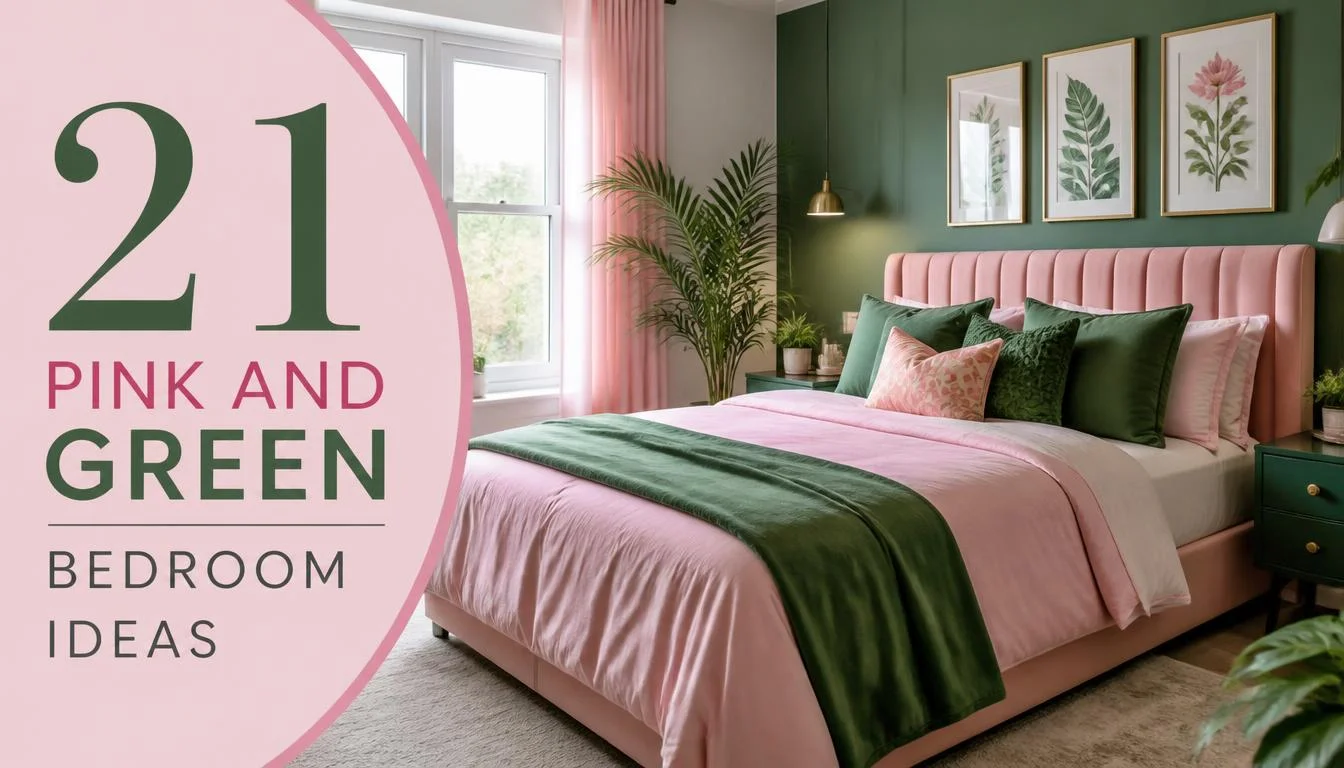
1. Pair Sage Green Walls With Blush Pink Bedding
One of the simplest approaches is to make green the background and let pink soften it.
Paint the walls sage, then use blush through the duvet, sheets, cushions, or a lightweight throw.
Keep larger furniture in cream, warm white, oak, or another neutral finish. This gives the room enough contrast without creating several competing focal points.
If the room already has a patterned floor or prominent furniture, choose plain bedding rather than another large pattern.
2. Try Pink Walls With Sage Green Accents
The same palette can work in reverse.
Soft pink walls create a warmer background, while sage green bedding, curtains, a chair, or artwork can introduce cooler contrast.
This is a useful option if you want pink to be noticeable without making everything in the bedroom pink.
Choose a muted or dusty wall color rather than a very saturated bubblegum pink if your goal is a calmer, more grown-up room.
If choosing wall color is the difficult part, this guide to bedroom paint ideas can help you compare softer neutrals, greens, pinks, and darker options before committing.
3. Use Dusty Pink and Olive Green for an Earthy Look
Olive and dusty pink feel especially comfortable alongside natural materials.
Start with olive bedding or an olive feature wall. Add muted pink through pillows, curtains, an upholstered bench, or artwork.
Then introduce wood.
Light oak keeps the combination relaxed, while walnut makes it richer and more traditional.
A woven rug or linen curtains can stop the room from looking too polished.
4. Create a Forest Green Accent Wall With Dusty Rose Bedding
If you like darker rooms but do not want to paint all four walls, use forest green behind the bed.
The dark wall will naturally draw attention to the sleeping area. Dusty rose bedding creates contrast without being as sharp as white.
Keep the remaining walls lighter if the room has limited natural light.
Warm lamps are also important here. Without enough layered lighting, deep green can lose some of its richness after sunset.
5. Go Bold With Hot Pink and Emerald Green
This is the combination for someone who wants the room to make a statement.
Choose one hero piece.
That might be an emerald velvet headboard, a hot pink lounge chair, dramatic curtains, or a painted wall.
Then repeat the second color two or three times in smaller details.
A bold palette often looks more intentional when the shapes around it are simple. Clean-lined furniture and plain bedding give strong colors room to work.
6. Create a Pastel Pink and Green Bedroom With Mint and Pale Pink
Pastels are easier to live with when they are supported by plenty of neutral space.
Try warm white walls, pale pink bedding, and mint green in a blanket, lamp, bedside table, or artwork.
Instead of buying a matching bedroom set, mix pieces carefully so the space feels collected rather than themed.
This approach is especially useful in compact bedrooms where darker colors might feel visually heavy.
7. Keep the Walls Neutral and Use Color Through Bedding
You do not have to paint anything to create a pink and green bedroom.
A warm white, cream, beige, or soft greige background gives you complete freedom to change the color scheme later.
Use a green duvet or quilt, pink cushions, a patterned throw, and perhaps one piece of artwork that includes both colors.
This is one of the easiest approaches for renters and anyone who changes decor often.
8. Make a Green Upholstered Bed the Focal Point
An upholstered green bed can carry most of the color scheme on its own.
Against cream, pale pink, or warm white walls, a sage, olive, forest, or emerald headboard immediately gives the room direction.
Add pink through smaller pieces instead of trying to match the visual weight of the bed.
For example, use dusty pink pillowcases, one blanket, artwork, or flowers.
The room will feel more balanced when there is a clear focal point.
9. Place a Pink Headboard Against a Green Wall
Reverse the previous idea for a stronger contrast.
A dusty rose or muted pink upholstered headboard can look striking against sage, olive, or forest green.
Keep the bedding relatively simple. Cream, white, beige, or a quiet pattern will allow the wall and headboard to remain the main feature.
Metal bedside lamps or dark wood nightstands can help ground the combination.
10. Bring in Floral or Botanical Wallpaper
Wallpaper is a natural way to combine pink and green because floral and botanical prints often contain both colors already.
Use it behind the bed rather than covering every wall if the pattern is large or detailed.
Then pull one pink and one green directly from the wallpaper for your bedding or accessories.
This makes the entire room feel connected without requiring perfectly matching pieces.
If the wallpaper is visually busy, keep curtains and large furniture relatively plain.
11. Try a Two-Tone Pink and Green Wall

A two-tone wall can add interest even when the rest of the room is simple.
You might paint the lower portion olive and the upper section blush, use sage below and warm white above, or create a painted headboard shape behind the bed.
Dulux has demonstrated a two-tone bedroom using blush pink with olive green, showing how both colors can share a wall without every part of the room needing additional color. See the Dulux two-tone bedroom example.
Use a clean horizontal line if you want a modern effect. Moulding or panelling can make the transition feel more traditional.
12. Balance Pink and Green With Cream
When a pink and green bedroom feels too busy, the answer is often not another color. It is more neutral space.
Cream is particularly useful because it softens the contrast without feeling stark.
Use it on:
- Walls
- Bedding
- Rugs
- Curtains
- Lampshades
- Larger furniture
Then allow green and pink to sit on top of that neutral base.
This is one of the safest ways to make the palette feel calm enough for a bedroom.
13. Add Natural Wood to Soften the Scheme
Wood gives pink and green something warmer to sit beside.
Oak works beautifully with sage, mint, blush, and dusty pink.
Walnut pairs naturally with forest green, emerald, olive, and deeper rose tones.
Rattan and cane can work in lighter boho or cottage-style rooms.
You do not need every piece of furniture to use the same wood finish. Repeating a similar warm or cool undertone is usually more important than finding an exact match.
For more help balancing beds, nightstands, seating, rugs, and other pieces, see these bedroom furnishings ideas.
14. Use Brass or Gold for a More Grown-Up Finish
Warm metals can make pink and green feel more refined.
Try brass or aged gold on:
- Bedside lamps
- Drawer pulls
- Picture frames
- Mirrors
- Curtain rods
- Pendant lights
You do not need much.
Three or four small repeated metal details are usually enough to make the room feel connected.
For a more contemporary look, black hardware can provide a similar grounding effect without adding warmth.
15. Layer Several Shades Instead of Matching Everything
A room often looks more natural when the greens and pinks are not identical.
You might combine sage walls with a darker olive cushion and botanical artwork. On the pink side, use blush bedding with one dusty rose throw.
The shades should feel related, but they do not need to match exactly.
What you want to avoid is introducing too many unrelated versions of each color. Lime, mint, sage, forest, neon pink, blush, coral, and burgundy in one small room can quickly become difficult to control.
Pick a family and stay reasonably close to it.
16. Build a Modern Pink and Green Bedroom
For a modern bedroom, simplify the shapes and let the palette do the decorating.
Use:
- Clean-lined furniture
- Plain or subtly textured bedding
- One large piece of artwork
- Simple bedside lighting
- A limited number of accessories
- Black, wood, or brass accents
Sage with muted pink works well for a softer modern room. Forest green with dusty rose feels stronger and more architectural.
If you are planning a larger redesign, these modern bedroom ideas cover furniture, layout, colors, and styling in more detail.
17. Create a Grown-Up Pink and Green Bedroom
Pink does not automatically make a room childish.
The easiest way to make the combination feel more mature is to choose complex, muted shades.
Instead of candy pink, consider blush, dusty rose, salmon, clay pink, or mauve.
Instead of bright grass green, try sage, olive, moss, eucalyptus, forest, or emerald.
Then introduce materials that add depth, such as linen, velvet, wool, dark wood, brushed metal, and stone.
Avoid making every object pink or green. A mature room needs enough neutral surfaces to give the stronger colors room to breathe.
18. Make Pink and Green Work in a Small Bedroom
Small bedrooms benefit from editing.
You can still use deep color, but decide where you want the visual weight to sit.
For a lighter approach, use warm white walls with sage and pink accents.
For a dramatic approach, paint the wall behind the bed deep green and keep the remaining walls light.
Avoid filling limited floor space with decorative furniture simply to introduce color. Bedding, curtains, paint, and wall art can do that job without taking up an inch of usable space.
You can find more layout and storage solutions in these small bedroom ideas.
19. Layer Textures for a Cozy Pink and Green Bedroom
Color alone does not make a bedroom feel cozy.
Texture does much of the work.
Try combining:
- Washed cotton bedding
- Linen curtains
- A wool or woven throw
- A soft rug
- Upholstered furniture
- Velvet cushions
- Warm wood
Olive, moss, dusty rose, and cream are especially suited to a layered, cozy room.
Lighting matters too. Instead of relying on one bright ceiling light, use bedside lamps and softer local lighting where practical.
For more ways to add warmth without overcrowding the room, explore these cozy bedroom ideas.
20. Create a Romantic Pink and Green Bedroom
A romantic bedroom does not need ruffles on every surface.
Use soft pink, sage, muted green, and cream, then bring in gentle shapes and tactile materials.
A curved upholstered headboard, full-length curtains, floral artwork, soft bedding, and warm bedside lighting can create the mood without making the space feel overly decorative.
If you use floral patterns, repeat them selectively. Floral wallpaper, floral curtains, floral bedding, and floral cushions together can become overwhelming.
Choose one main pattern and let the rest of the room support it.
21. Plan a Budget-Friendly, Renter-Friendly Makeover
If painting or replacing furniture is not an option, focus on items you can easily take with you.
Start with bedding because it covers a large visual area.
Then consider:
- Cushion covers
- A throw
- Curtains
- A rug
- Framed prints
- A removable wall treatment
- A lampshade
- Small second-hand furniture
- Decorative storage
For renters, always check your tenancy or rental agreement before painting, drilling, or applying adhesive products.
A room does not need to change all at once. If the color palette is clear, even three or four updates can make existing furniture feel more intentional.
For a broader room refresh, these bedroom makeover ideas offer more low-cost ways to transform a bedroom without a full renovation.
How to Decorate a Pink and Green Bedroom
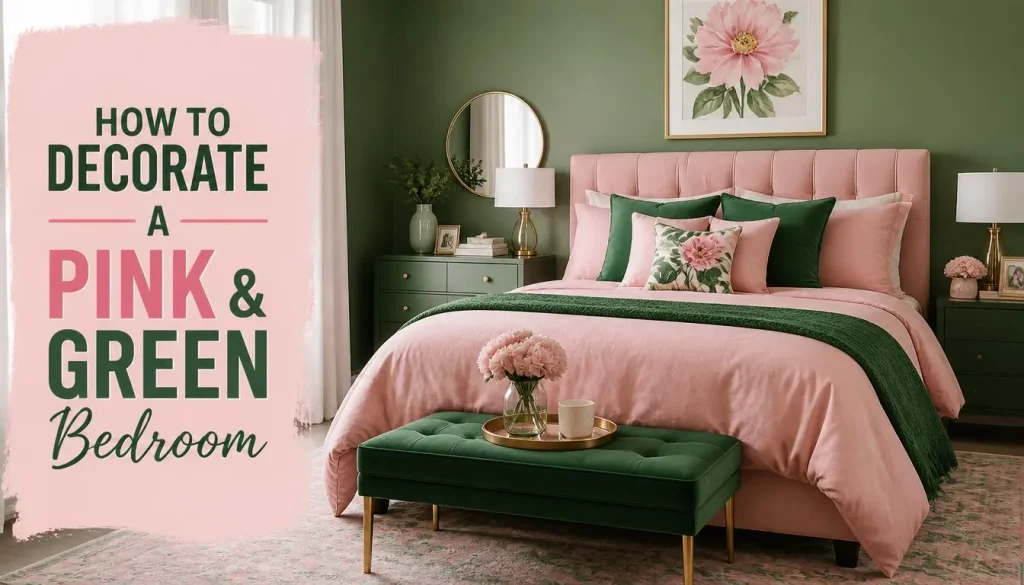
Once you have chosen your shades, the next challenge is deciding where the colors should go.
Walls
Walls have the biggest visual impact, so think carefully before using your strongest color there.
Sage, dusty pink, muted olive, and other softened shades can work across several walls.
Forest, emerald, or highly saturated pink often works better as a deliberate focal point, particularly in smaller or darker rooms.
Do not choose wall paint from a tiny digital swatch alone. Light can change how a color appears throughout the day.
Bedding
Bedding is the easiest large surface to change.
If the walls are green, try pink, cream, or patterned bedding.
If the walls are pink, sage or olive bedding can create contrast.
If both colors already appear strongly elsewhere, choose neutral bedding and repeat pink and green through smaller pillows or a throw.
Curtains
Curtains can either blend into the wall or become another color block.
For a quiet room, use cream, beige, warm white, or a shade close to the wall.
For more color, use sage curtains against pale pink walls or muted pink curtains in a neutral room with green bedding.
Full-length curtains generally create a cleaner visual line than curtains that stop awkwardly halfway down the wall.
Rugs
A rug can help connect furniture that otherwise feels unrelated.
In an already colorful room, a cream, beige, jute, or softly patterned rug is often enough.
If your walls and bedding are neutral, the rug can carry more of the pink and green palette.
Avoid adding a highly detailed rug beneath equally detailed floral bedding unless you intentionally want a maximalist look.
Furniture
You do not need pink and green furniture throughout the room.
One colored item can be enough.
Consider:
- A green headboard
- A dusty pink chair
- An olive bench
- A painted nightstand
- A sage wardrobe
Keep other large pieces neutral or wood-toned so the room does not turn into a collection of competing colored blocks.
Lighting
Bedroom lighting should support both function and atmosphere.
Use stronger task lighting where you read, dress, or work, then softer local lighting for winding down.
Also remember that bulbs can change how paint appears.
Benjamin Moore notes that both natural and artificial light affect color undertones, and warmer versus cooler bulbs can shift how a paint color reads. Read Benjamin Moore’s guide to warm and cool colors.
Artwork and Accessories
Accessories are where you can experiment.
Artwork can introduce both colors without requiring them to appear elsewhere in equal amounts.
Books, ceramics, cushions, vases, picture frames, and blankets are also useful, but do not fill every empty surface.
A few well-placed pieces usually make a bedroom feel more finished than dozens of small decorations.
Pink and Green Bedroom Aesthetics and Styles
The same colors can create completely different rooms depending on how they are styled.
Modern
Use sage, forest green, or olive with muted pink. Keep furniture simple and limit decorative accessories.
Add black, brass, or clean wood finishes.
Minimalist
Start with a neutral base and use pink and green selectively.
A sage headboard, one dusty pink throw, and understated artwork may be enough.
Minimalism works best when each item has a clear purpose. For more examples, see these minimalist bedroom ideas.
Boho
Choose earthy versions of the palette, such as olive, moss, terracotta pink, or muted rose.
Bring in rattan, natural wood, woven rugs, linen, ceramics, and plants.
The style can handle more layering than a minimalist room, but it still benefits from a consistent palette. These boho bedroom ideas offer more ways to build that relaxed, collected look.
Vintage
Dusty pink and deep green work naturally with vintage-inspired furniture.
Try dark timber, antique brass, floral prints, a traditional rug, or a curved upholstered headboard.
Avoid buying everything in a deliberately “vintage” finish. Mixing older-looking pieces with simpler modern items usually feels more authentic.
Cottage
Sage, moss, blush, and warm white are easy choices for a cottage-style bedroom.
Small floral prints, painted furniture, natural fabrics, and traditional shapes suit the palette well.
Keep the room comfortable rather than overly coordinated.
Luxury
Use deeper shades and richer materials.
Emerald green, forest green, dusty rose, and warm cream can be combined with velvet, quality bedding, full-length curtains, dark timber, and warm metal finishes.
The key is not adding more decoration. It is choosing fewer pieces with stronger materials and proportions.
Maximalist
If you love pattern and saturated color, pink and green provide plenty of room to experiment.
Combine botanical wallpaper, patterned textiles, artwork, and painted furniture, but create some repetition.
A color that appears once may look accidental. A shade repeated across several areas helps the room feel intentional.
Even maximalist bedrooms benefit from a few quieter surfaces.
What Colors Go With a Pink and Green Bedroom?
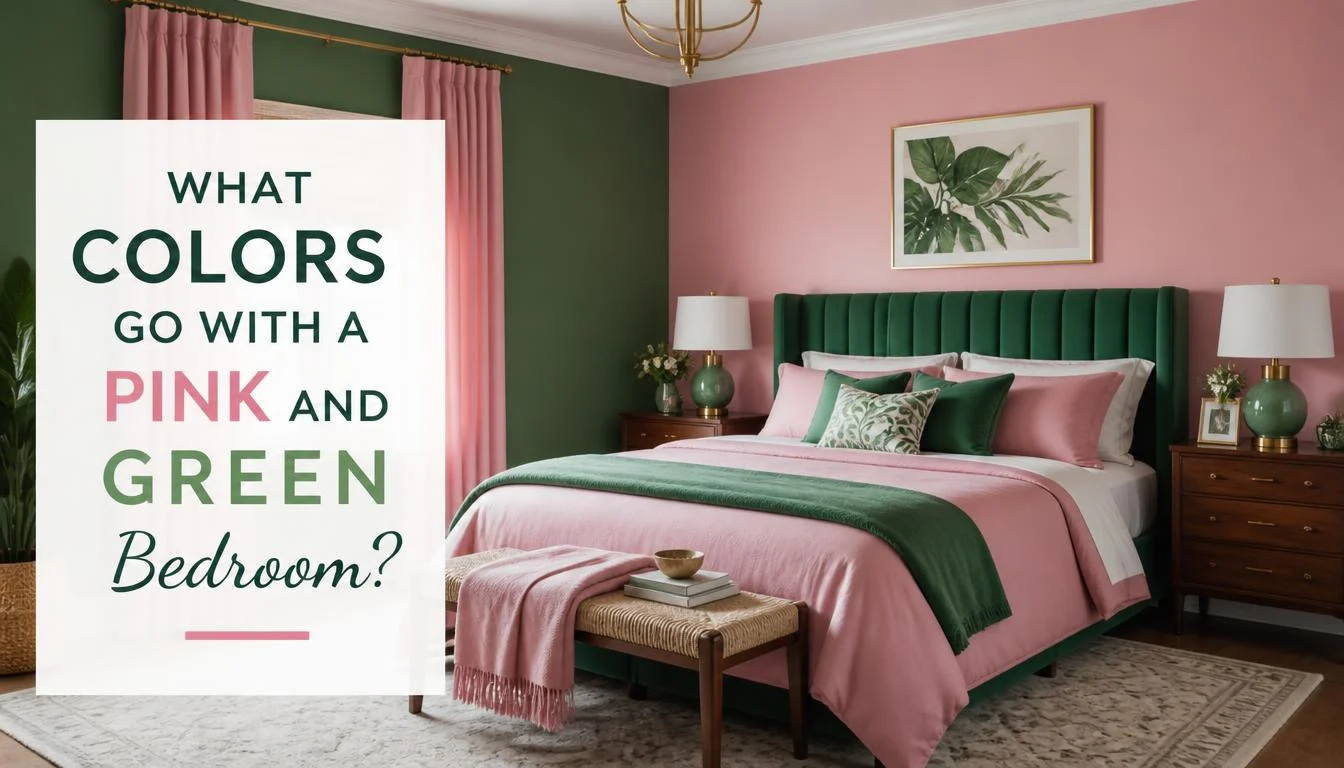
Pink and green rarely need to stand alone.
A third color or material can make the combination much easier to decorate.
Warm White and Cream
These are among the safest choices.
They lighten darker greens, soften pink, and keep the room from feeling crowded.
Use them on walls, bedding, rugs, ceilings, curtains, or furniture.
Beige and Taupe
Beige and taupe add warmth and work particularly well with olive, moss, dusty pink, and rose.
They are useful when bright white feels too sharp.
Natural Wood
Wood acts almost like another neutral.
Use light oak for softer palettes and darker walnut for more dramatic ones.
Brass and Gold
Warm metals suit emerald, forest green, olive, dusty rose, and blush.
Use them in smaller details rather than covering every fixture in gold.
Black
Black can sharpen a soft palette.
A black picture frame, lamp, bedside table, or curtain rod is often enough.
It works particularly well in modern rooms where blush and sage might otherwise feel too delicate.
Soft Grey
Grey can work, but pay attention to undertones.
A very cool grey beside a warm pink and earthy olive may feel disconnected.
Look at the colors together in the actual room before making a final decision.
How Much Pink and Green Should You Use?
There is no universal percentage that every bedroom has to follow.
Instead, decide which color has which job.
Choose a Dominant Color
This is the color that covers the largest visual area.
It might appear on:
- Walls
- A large bed
- Curtains
- A rug
- Large bedding
Choose a Supporting Color
Your second color should be noticeable without fighting the dominant color.
For example:
Sage walls + blush bedding + cream furniture
or
Warm white walls + olive bedding + dusty pink accents
Use Neutrals to Create Space
If the room begins to feel busy, do not automatically remove the pink or green.
First look at how much neutral space remains.
Cream bedding, a plain rug, wood furniture, or simple curtains may be enough to restore balance.
How Lighting Changes Pink and Green in a Bedroom
A paint color that looks perfect online can appear surprisingly different on your wall.
Natural light changes through the day, and the direction your windows face also matters.
Sherwin-Williams notes that north-facing spaces generally receive cooler light, while east- and west-facing rooms change more noticeably as the day progresses. See Sherwin-Williams’ guide to choosing colors by room orientation.
That matters with both pink and green.
A cool sage may become greyer in cool light. A warm dusty pink may look stronger in late afternoon sun. Deep forest green may feel rich in a bright room but much heavier in a poorly lit one.
Before painting the whole room:
- Narrow your choice to a few colors.
- Test them in the actual bedroom.
- Look at them in the morning.
- Check them again in the afternoon.
- View them under your normal evening lighting.
- Compare them beside your flooring, furniture, and bedding.
Benjamin Moore also recommends observing paint samples under the different lighting conditions in the room before making the final choice.
That small step can save you from repainting an entire bedroom.
Common Pink and Green Bedroom Mistakes to Avoid
Using Two Strong Colors Everywhere
If the walls, curtains, bedding, rug, and furniture all compete for attention, the room can quickly become tiring.
Give one element priority.
Trying to Match Every Shade
A bedroom does not need to look like it came from a matching set.
Slight shade variations usually make a room feel more natural.
Forgetting Neutrals
Pink and green need breathing room.
Cream, white, beige, wood, black, and other neutrals help define the palette.
Using Too Many Patterns
Floral wallpaper can look beautiful.
So can patterned bedding.
So can an ornate rug.
That does not mean all three need to be equally detailed.
Choose where you want the main pattern to sit.
Ignoring Undertones
A warm olive and icy pink may not feel as connected as warm olive and dusty rose.
Likewise, mint may work more naturally with pale pink than with a brownish rose.
Place samples beside each other before buying large quantities.
Ignoring Your Existing Furniture
Your floor, bed frame, wardrobe, and other large pieces are already part of the color scheme.
Work with them unless you genuinely plan to replace them.
Buying Everything Before Testing the Paint
Paint is cheaper to change than a bed, rug, or full set of curtains, but it still makes sense to test first.
Choose your general palette, test the wall color, then make larger purchases with the final shade in mind.
How to Plan Your Pink and Green Bedroom Before Buying Anything
A little planning prevents a lot of impulse buying.
Step 1: Decide How the Room Should Feel
Do you want calm, cozy, romantic, modern, bold, earthy, or luxurious?
That answer immediately narrows the shades.
Step 2: Choose the Main Green
Pick sage, mint, olive, moss, forest, emerald, or another green that suits the mood.
Step 3: Choose the Pink
Hold several pink samples beside your green.
Look for a pair that feels connected rather than forcing yourself to use the first pink you find.
Step 4: Pick Your Neutral
Choose cream, warm white, beige, taupe, wood, or another neutral that will create breathing room.
Step 5: Decide Where the Main Color Goes
Do not buy decor yet.
First decide whether your dominant color will appear on the walls, bed, curtains, or another large surface.
Step 6: Test the Colors in the Room
Look at them at several times of day.
Step 7: Choose the Largest Pieces First
Work from large to small:
- Paint
- Bed or headboard
- Bedding
- Curtains
- Rug
- Furniture
- Lighting
- Artwork
- Accessories
This makes it much easier to avoid collecting small decorative pieces that do not fit the final room.
Frequently Asked Questions
Do pink and green go together in a bedroom?
Yes. Pink and green can work particularly well in a bedroom because both colors are available in soft, muted, earthy, and dramatic shades.
The combination usually looks most balanced when one color leads, the other supports it, and neutral colors are used between them.
What shade of green goes best with pink?
It depends on the pink.
Sage works well with blush and pale pink. Olive pairs naturally with dusty pink and muted rose. Forest green suits dusty rose and deeper pinks, while emerald can handle stronger blush, rose, or hot pink accents.
Test the exact shades together because their undertones matter.
Does sage green go with blush pink?
Yes. Sage and blush are both muted enough to create a soft bedroom palette without needing a lot of additional color.
Cream, warm white, beige, oak, and brass can all be used alongside them.
How do you make a pink and green bedroom look grown-up?
Use muted or deeper shades rather than highly saturated candy colors.
Try sage, olive, moss, forest green, blush, dusty rose, or mauve. Add natural wood, linen, wool, velvet, brass, black, or other materials with visual depth.
Also avoid making every object pink or green.
What color furniture works with a pink and green bedroom?
Natural wood is one of the easiest choices.
Light oak works particularly well with sage and blush, while walnut suits forest green, olive, emerald, and dusty rose.
Cream, warm white, black, and selected painted furniture can also work.
What color curtains work with pink and green?
Cream and warm white curtains are easy choices when the room already contains plenty of color.
You can also use sage curtains in a pale pink room or muted pink curtains where green is dominant.
Choose simple curtains when the bedding or wallpaper already contains a strong pattern.
Can you use dark green in a small bedroom?
Yes.
You do not have to avoid dark colors simply because the room is small.
Use deep green deliberately, perhaps on the wall behind the bed, and balance it with lighter bedding, furniture, or adjacent walls.
Lighting and clutter control become especially important when using a dark shade in a compact room.
What neutral colors work with pink and green?
Warm white, cream, beige, taupe, soft grey, black, and natural wood can all work.
The best choice depends on the undertones in your particular pink and green.
Should the walls be pink or green?
Either can work.
If you want the room to feel more nature-inspired or grounded, green is usually an easy wall color to build around.
If you want a warmer or softer background, muted pink can work beautifully.
If you are unsure, keep the walls neutral and introduce both colors through textiles and furniture first.
How can I decorate a pink and green bedroom without repainting?
Use bedding, curtains, rugs, artwork, lampshades, cushions, throws, and removable decor.
A neutral room can take on a completely different palette simply by changing its larger textiles.
This is also one of the most practical approaches for renters.
Final Thoughts
The best pink and green bedroom ideas are not about filling a room with as much pink and green as possible.
Start with the mood you want. Choose shades that work together, let one color take the lead, and give both colors enough neutral space around them.
Sage and blush can feel soft and relaxing. Olive and dusty pink can feel warm and earthy. Forest green and rose can create drama, while emerald and hot pink can make the room bold and expressive.
Once the palette is right, focus on lighting, texture, furniture, and a few well-chosen details. That is what turns two attractive colors into a bedroom that feels comfortable, balanced, and personal.

“A comfortable home and a healthy lifestyle go hand in hand.”
Hi, I’m Ethan Carter, the founder and lead editor of TheBestHomeFit. I’m passionate about helping people create beautiful, functional living spaces while building healthier lifestyles at home. Over the years, I’ve spent countless hours researching home decor trends, testing home gym equipment, and reviewing products to help readers make smarter buying decisions.
Through TheBestHomeFit, I share practical home improvement ideas, honest product reviews, buying guides, and fitness tips designed for everyday homeowners. My goal is to make it easier for you to create a home that looks great, feels comfortable, and supports your well-being.
When I’m not researching the latest products or writing in-depth guides, you’ll usually find me redesigning a room, trying new home workout routines, or enjoying quality time with my family.