

A master bedroom should feel like more than a place to sleep. It is where you begin the day, unwind in the evening, get dressed, and sometimes enjoy a quiet moment away from the rest of the house. That is why its layout, furniture, lighting, and color scheme deserve a little extra attention.
Sage green is a lovely choice for this space because it offers color without feeling too bold. Its muted, earthy appearance works with warm neutrals, natural wood, cream upholstery, and a range of interior styles. Used thoughtfully, it can make a large primary bedroom feel more inviting or give a smaller room a gentle sense of character.
But decorating a master bedroom involves more than choosing a pretty wall color. A king-size bed needs enough surrounding space, nightstands should be practical, storage must be easy to reach, and connected areas such as a dressing room or ensuite bathroom should feel considered.
These 21 sage green master bedroom ideas focus on those real design decisions. Whether you are planning a complete renovation or making a few carefully chosen updates, you will find inspiration for creating a bedroom that looks beautiful and works well every day.
How to Plan a Sage Green Master Bedroom Before Decorating
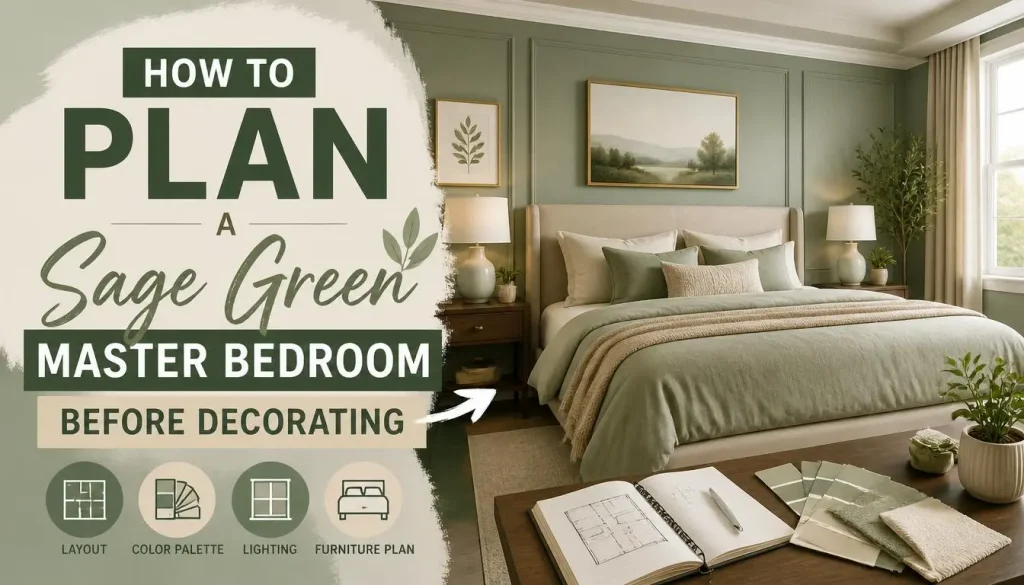
Before choosing furniture or buying paint, look at the room as a whole. A good plan can prevent expensive mistakes and help every part of the bedroom feel connected.
Decide Where the Bed Should Go
The bed is usually the largest piece of furniture in a master bedroom, so its position should guide the rest of the layout. A wall that gives the bed a clear focal point is often a good starting place.
Look for a position where the bed does not block windows, closet doors, heating or cooling vents, or the natural route through the room. If possible, give both sides of the bed comfortable access.
Plan Around a King or Queen-Size Bed
A king-size bed can create a luxurious focal point, but it may leave less room for other furniture than expected. Measure the bed frame, including any extended headboard or footboard, rather than relying only on mattress dimensions.
A queen bed may be a better choice when you need space for a dresser, reading chair, or larger walking area. The right size is the one that provides comfortable sleeping without making the rest of the bedroom difficult to use.
Consider Windows, Doors, and Natural Light
Check where the windows are and how daylight enters the room. A sage green that appears soft in bright morning light may look cooler or darker later in the day.
Also consider door swings, curtain placement, and access to the wardrobe. These details should be settled before the furniture layout is finalized.
Create Separate Sleeping, Dressing, and Seating Zones
A spacious master bedroom can often support more than one activity. The bed area is the main sleeping zone, but a separate corner may work for getting dressed, reading, or relaxing.
You do not need physical partitions to create these zones. Furniture placement, rugs, lighting, and a consistent color palette can make each area feel distinct while keeping the room cohesive.
Coordinate the Bedroom With the Closet and Ensuite
When a master bedroom connects to a walk-in closet or ensuite bathroom, the transitions matter. The finishes do not need to match exactly, but the spaces should feel related.
Repeating a small detail, such as a warm wood finish, brushed brass hardware, or a similar neutral tone, can connect the rooms without making them look identical.
21 Sage Green Master Bedroom Ideas
These ideas focus on the features that make a master bedroom different from an ordinary bedroom. Choose the ones that suit your room’s proportions, architecture, storage needs, and decorating budget.
1. Center a King-Size Bed Against a Sage Green Wall
A centered king-size bed can give a spacious master bedroom a natural focal point. Paint the wall behind it in a muted sage green and keep the remaining walls warm white, cream, or a light neutral.
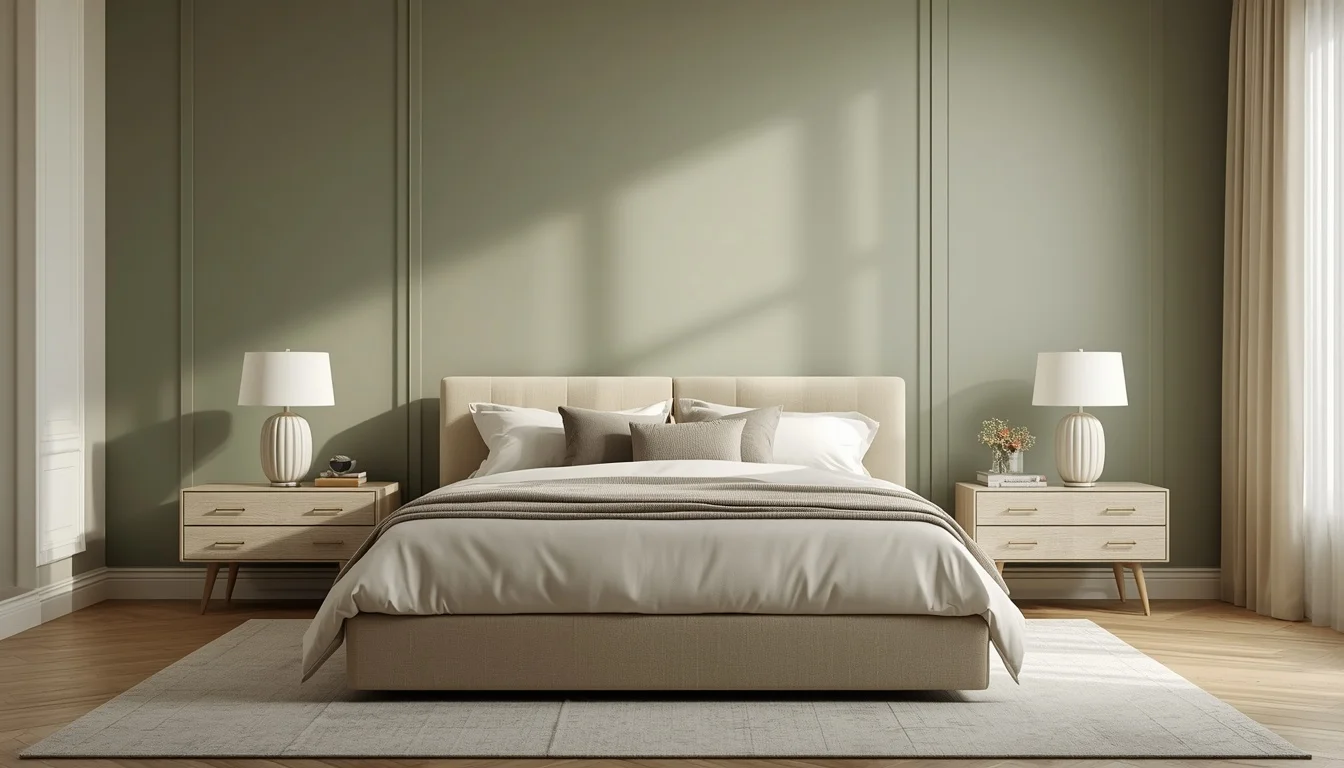
Use matching nightstands if you like a balanced appearance, and place a lamp or wall light on either side. A wide headboard can help the bed feel properly proportioned against a large wall.
This arrangement works particularly well when the room feels empty or the bed seems visually lost among larger furniture pieces.
2. Create a Wide Sage Green Feature Wall Behind the Bed
Instead of painting the entire room, use sage green across the full width of the bed wall. This gives the sleeping area a clear identity while allowing the other walls to remain light.
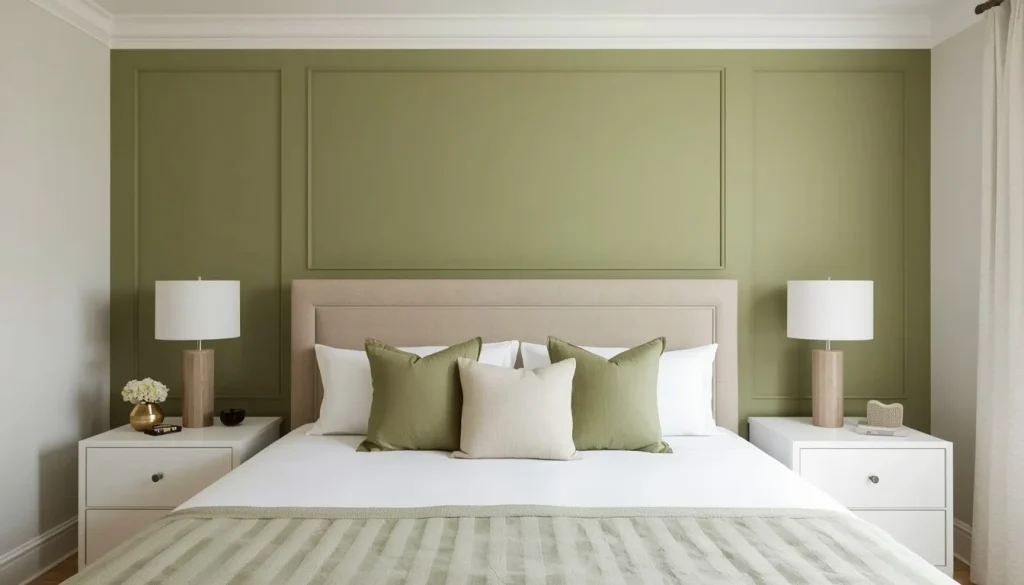
For a more considered finish, let the color extend behind both nightstands rather than stopping immediately at the edges of the headboard. This helps the bed and bedside furniture read as one coordinated arrangement.
A wide feature wall is often a more useful design choice than a small accent panel that feels disconnected from the furniture.
3. Use a Four-Poster Bed Against a Soft Sage Backdrop
A four-poster bed naturally draws attention, making it a good centerpiece for a traditional or transitional master bedroom.
Choose a wood or dark metal frame and set it against a soft sage wall. Cream bedding, warm neutral curtains, and simple bedside furniture will keep the overall look from becoming too formal.
If the bed has a heavy frame, keep the surrounding furniture relatively light. This gives the bed room to stand out without overcrowding the space.
4. Add a Full-Width Headboard to a Sage Green Bed Wall
A full-width headboard can create a custom, hotel-inspired appearance. It can extend behind the bedside tables or include built-in shelves and practical storage.
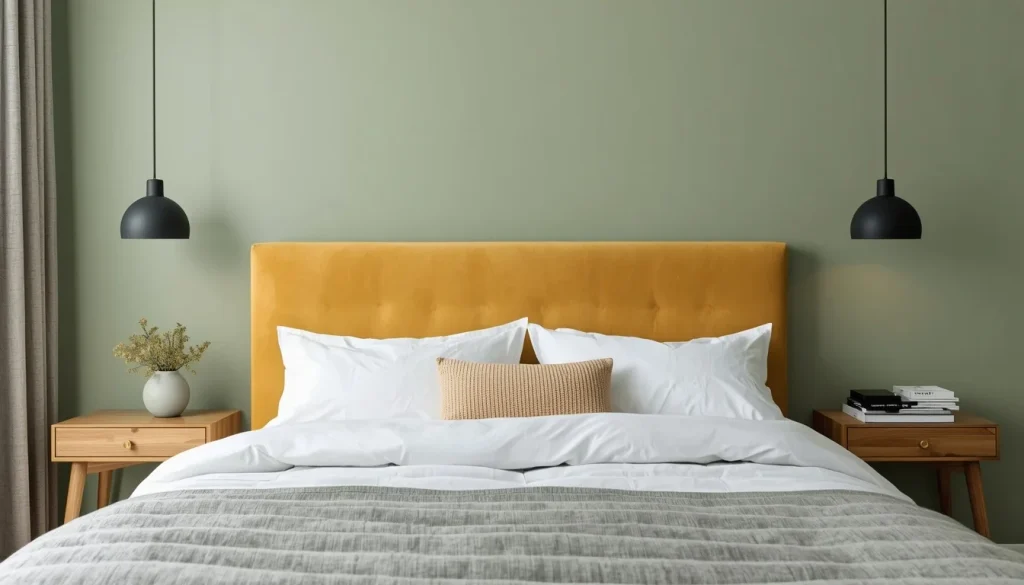
Use a fabric finish in beige, oatmeal, or warm gray against a sage green wall. If you prefer a simpler design, choose a low-profile upholstered headboard that spans most of the bed wall.
Think about the placement of sockets, switches, and reading lights before installing it. A beautiful headboard should also make everyday use convenient.
5. Combine Sage Green Wall Panels With Bedside Lighting
Wall panels introduce architectural detail without relying on patterned wallpaper or lots of accessories.
For a master bedroom, consider simple vertical panels behind the bed. Paint them sage green and position bedside wall lights so they illuminate the sleeping area without taking up space on the nightstands.
This arrangement is particularly useful when you want a finished, built-in look. Keep the panel design in proportion to the wall and avoid adding too many decorative details around it.
6. Add a Bay Window Seating Area
If your master bedroom has a bay window, it may be the ideal place for a small seating area.
A fitted bench with neutral cushions can make use of the window space without taking over the rest of the room. For a larger bay, consider a pair of compact chairs and a small side table.
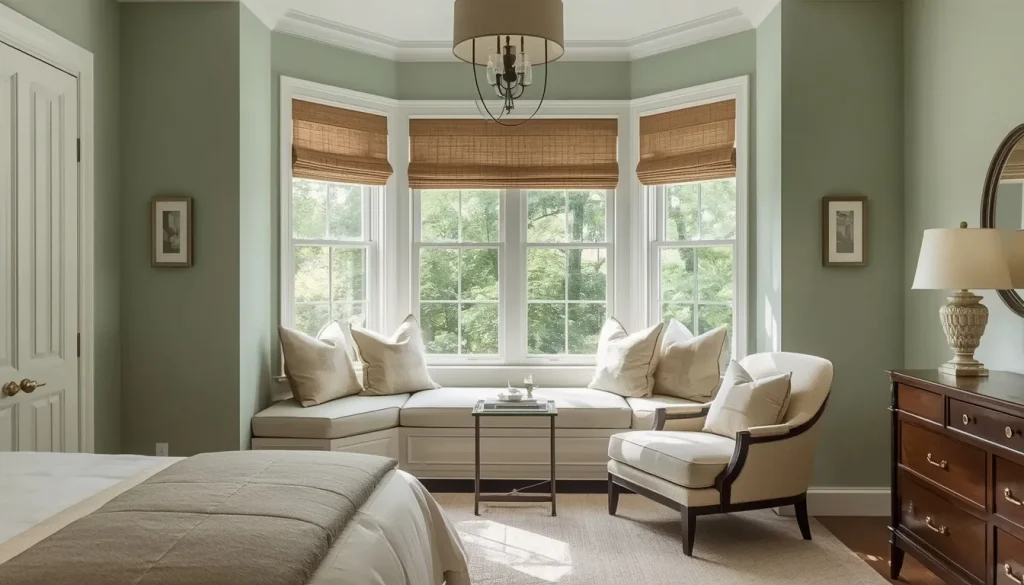
Use sage green through the upholstery, cushions, or nearby wall color. Keep the window treatments practical so the seating area remains comfortable during the day.
7. Create a Two-Chair Conversation Area
A larger master bedroom may have enough space for two chairs away from the bed. This creates a useful place to read, talk, or enjoy a quiet drink without sitting on the bed.
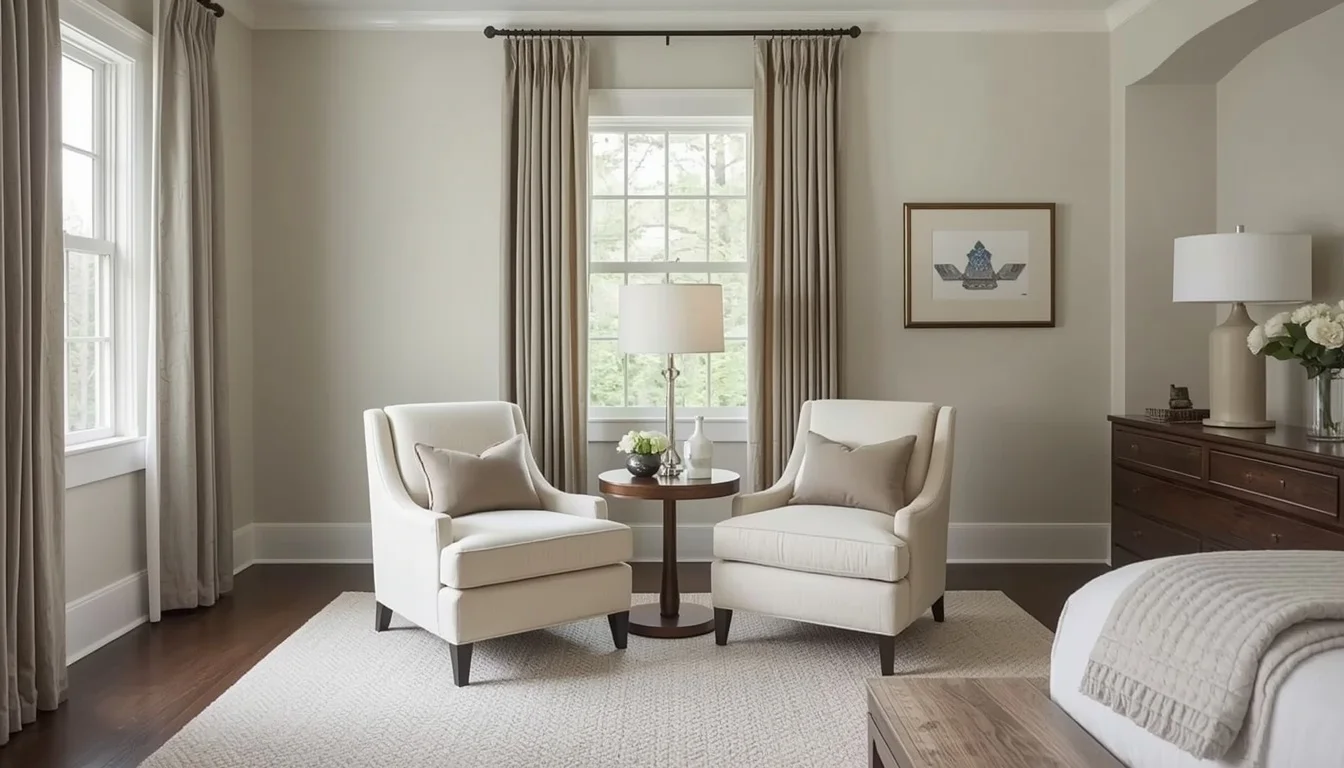
Choose chairs in cream, beige, or a muted natural fabric. Add a small table between them and a floor lamp nearby.
A rug can help define the seating zone, making it feel intentional rather than like furniture placed in an empty corner. Make sure the chairs do not block the route to the closet or bathroom.
8. Make a Fireplace the Secondary Focal Point
If your bedroom already has a fireplace, let it become a second feature alongside the bed.
Sage green can work beautifully on the fireplace wall, surrounding cabinetry, or nearby built-in shelves. Keep the bed wall simple so the two focal points do not compete.
For a traditional room, pair the green with warm wood and classic furnishings. In a more contemporary space, use cleaner lines and fewer decorative objects.
Always follow the fireplace manufacturer’s clearance and safety guidance when arranging furniture or soft furnishings nearby.
9. Place a Chaise Lounge Near a Window
A chaise lounge can make a spacious master bedroom feel more personal and comfortable.
Position it near a window or in a quiet corner where there is enough room to sit and stretch out. Choose a neutral fabric if the walls are sage green, or a muted green upholstery if the rest of the room is light.
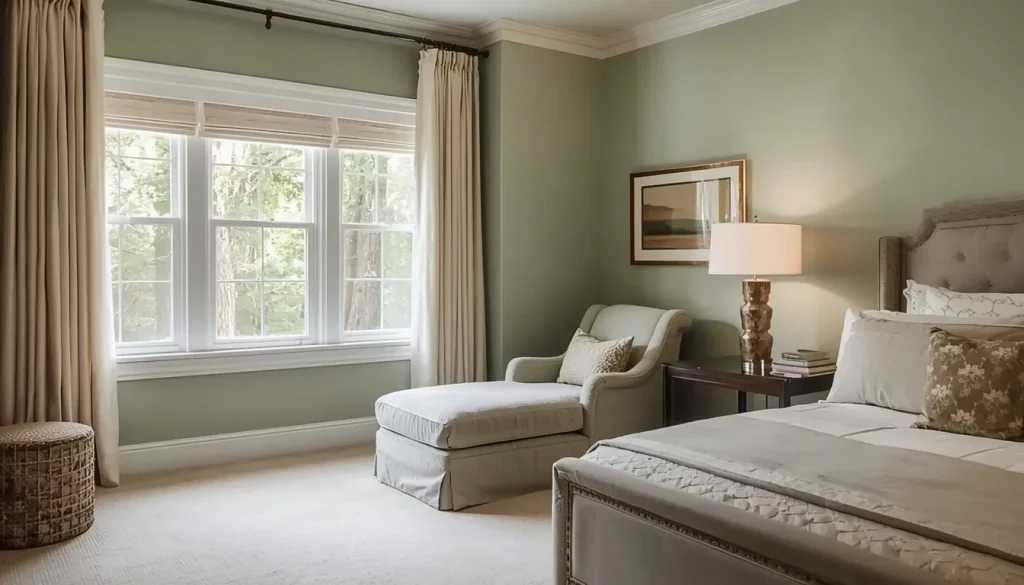
A small side table gives you somewhere to place a book or drink. Avoid squeezing a chaise into a walkway simply to fill an empty corner.
10. Design a Reading Corner With Built-In Shelves
A reading corner is especially useful when the master bedroom has an unused alcove or a wide wall that could support additional storage.
Install shelves for books and a few personal items, then add a comfortable chair and a focused reading light. Sage green can appear on the back of the shelves or on the nearby wall.
Keep the books and accessories organized rather than filling every shelf. Leaving some open space makes the corner feel calmer and easier to maintain.
11. Use Sage Green Built-In Wardrobes
Built-in wardrobes can make a master bedroom feel more finished while providing storage that fits the available wall space.
Sage green cabinetry works well with warm white walls, natural wood floors, and understated hardware. For a softer appearance, choose a muted shade rather than a very dark green.
Think about the internal organization before choosing the door style. Hanging space, drawers, shelves, and accessible everyday storage are just as important as the exterior finish.
12. Coordinate a Walk-In Closet With the Bedroom
A walk-in closet does not need to repeat every finish in the bedroom. Instead, carry across one or two details to create a connection.
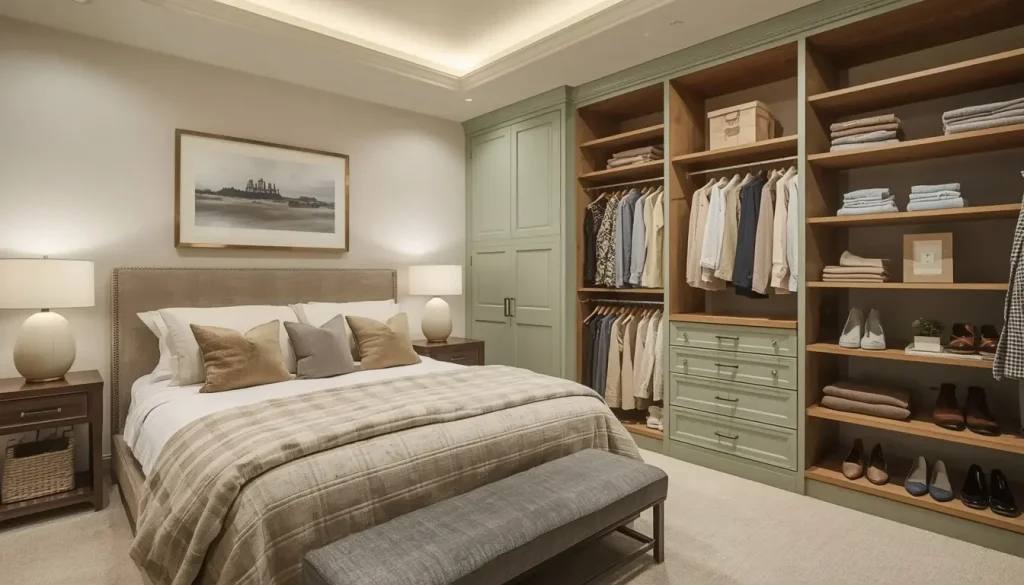
For example, use sage green cabinetry in the closet, then repeat the color through a bedroom cushion, artwork, or small upholstered detail. Warm wood shelves and neutral flooring can make the transition feel natural.
Good closet lighting is particularly important. Make sure clothes, shoes, and accessories are easy to see without relying on the light from the bedroom alone.
13. Add a Dedicated Dressing Vanity
A dressing vanity can make a master bedroom more convenient, especially when the closet does not have enough room for a separate dressing area.
Choose a compact desk or vanity with useful drawers and a mirror positioned at a comfortable height. A small stool can slide underneath when it is not needed.
Sage green can appear on the wall behind the vanity or through a painted furniture finish. Add suitable task lighting around the mirror so the area is practical as well as attractive.
14. Use a Storage Bench at the Foot of the Bed
A storage bench can make the area at the foot of a king or queen bed more useful. It provides somewhere to sit while getting dressed and a place to keep extra bedding or other items.
Choose a bench that leaves enough room to move around the bed. A beige upholstered finish works well with sage green walls, while a wooden bench can introduce warmth.
Avoid using a bench simply because it looks good in a photograph. It should open comfortably and should not obstruct the natural route through the room.
15. Create a Sage Green Master Suite With a Coordinated Ensuite
If your master bedroom has an ensuite bathroom, treat both rooms as connected spaces.
You could use sage green on the bedroom walls and repeat a related tone through the bathroom vanity, towels, or accessories. Warm white, cream, and natural stone finishes can help connect the two spaces.
The goal is not to make the bedroom and bathroom identical. A little variation in shade and material gives each room its own character while maintaining a consistent overall feel.
16. Use a Soft Neutral Transition Between Bedroom and Bathroom
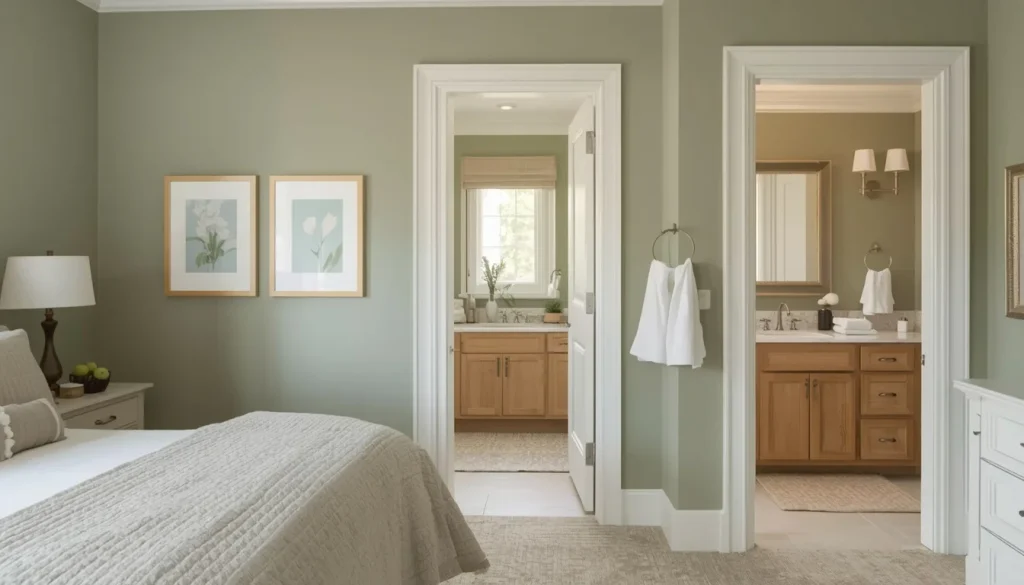
A more subtle approach is to keep the bedroom sage green and use warm neutrals in the ensuite.
For example, pair sage walls with a bathroom finished in warm white, beige tile, and natural wood cabinetry. Repeat a small amount of sage through towels or accessories if you want a clearer connection.
This is a practical choice when you prefer the bathroom to feel bright and uncomplicated. It also allows you to update accessories without changing permanent surfaces.
17. Use Sage Green in a High-Ceiling Master Bedroom
High ceilings can make a master bedroom feel impressive, but they can also make the furniture look small in comparison.
A muted sage wall color can help the room feel more grounded. Consider a large headboard, substantial bedside tables, and appropriately scaled lighting rather than several small decorative pieces.
If the ceiling is unusually high, artwork or wall detailing can help fill the vertical space. Keep the arrangement balanced with the size of the bed and the other furniture.
18. Plan a Sage Green Layout for a Long or Narrow Master Bedroom
Long bedrooms can be difficult to furnish because the bed, wardrobe, and seating area may end up spread too far apart.
Start by identifying the main route from the entrance to the bed, closet, and bathroom. Place the bed where it has enough surrounding space, then use a rug or furniture arrangement to define a separate seating area if the room allows.
Sage green can help connect the different zones. Use it on the bed wall or in repeated details rather than introducing several unrelated colors along the length of the room.
19. Work With a Sloped or Vaulted Ceiling
A sloped or vaulted ceiling can become an attractive feature rather than a design problem.
For a gentle look, paint the walls sage green and keep the ceiling warm white. If you want a more immersive appearance, consider carrying a lighter version of sage onto the ceiling.
Place the bed where the ceiling height feels comfortable and avoid putting tall furniture under the lowest part of the slope if it makes access awkward.
For inspiration on using clean lines and practical furniture in unusual room layouts, explore these modern bedroom ideas.
20. Create a Compact Sage Green Primary Bedroom With Smart Storage
Not every primary bedroom has space for a king bed, a large dresser, and separate seating.
In a smaller room, prioritize the bed, a practical wardrobe, and a clear route through the space. Consider floating nightstands, wall-mounted reading lights, or a bed with integrated drawers if those features solve a genuine storage problem.
Use sage green on one main surface or through selected furniture and textiles. A lighter neutral around it can keep the room from feeling visually crowded.
For more detailed layout and storage solutions, see these small bedroom ideas.
21. Design the Bedside Area Around Two People’s Needs
A shared master bedroom should work for both people using it. Matching nightstands may look attractive, but they do not always need identical contents or storage.
One person may need space for books and glasses, while the other may prefer a charging station or a small drawer for personal items. Choose bedside furniture that accommodates those routines.
You can still create a coordinated appearance with matching finishes, similar lamps, or a shared sage green and neutral palette. The important thing is that each side feels comfortable and useful.
How Much Sage Green Should You Use in a Master Bedroom?
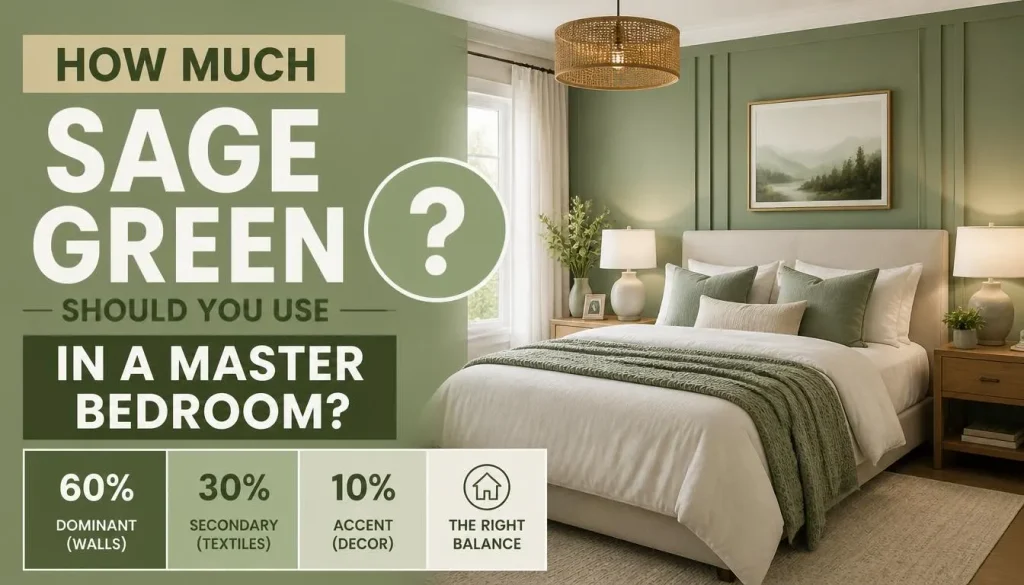
There is no fixed amount of sage green that works for every master bedroom. The best approach depends on the room’s light, dimensions, existing finishes, and the atmosphere you want.
Use Sage Green on All the Walls
Painting all four walls can create a cohesive appearance, especially when the shade is muted and the room has enough natural or artificial light.
Balance it with lighter bedding, curtains, and furniture. A large rug can also soften the contrast between the walls and the floor.
Use Sage Green Only Behind the Bed
A feature wall is a good option when you want a clear focal point but prefer the rest of the room to stay neutral.
It can work especially well with a large upholstered headboard or a wide bed wall.
Introduce Sage Through Built-In Furniture
Wardrobes, vanity units, and shelving can provide a more distinctive use of green than simply painting the walls.
This approach works best when the cabinetry is a major part of the room’s design and the color is repeated in a few smaller details.
Consider Natural Light Before Choosing the Shade
A room that receives cool or limited daylight may make some sage paints look grayer than expected. A brighter room may reveal warmer or more yellow undertones.
Before purchasing a large quantity of paint, test a sample in the actual bedroom. The Sherwin-Williams guide to choosing paint colors recommends considering existing finishes and checking how colors look under different light sources.
You can also read its guidance on choosing paint colors for different room orientations if your bedroom receives particularly strong morning, afternoon, or limited daylight.
Best Furniture and Finish Combinations for a Sage Green Master Bedroom
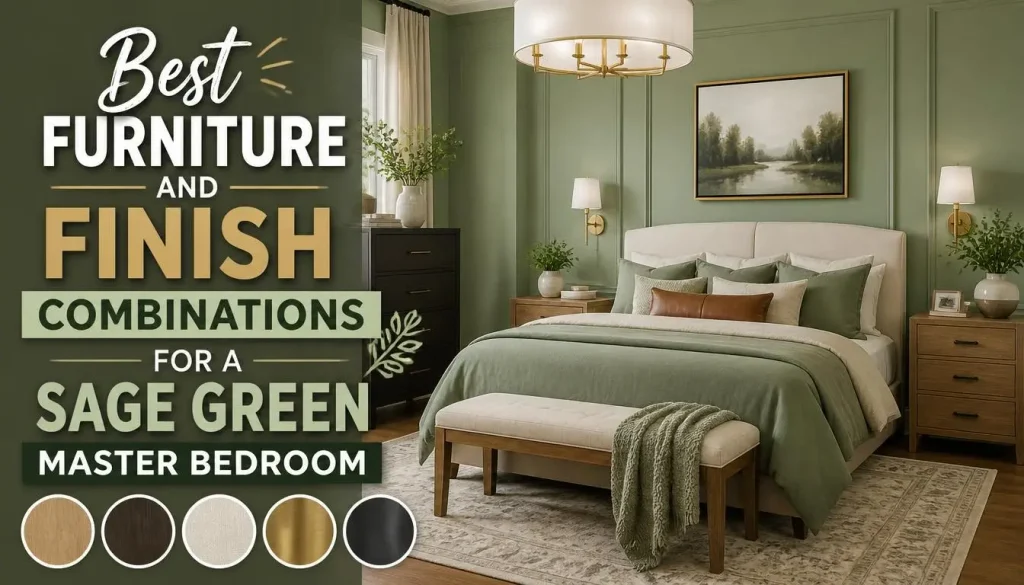
Furniture and finishes should support the bedroom’s layout as well as its color scheme. A beautiful room can quickly become inconvenient if storage is limited or the pieces are too large.
Choose a Bed Frame That Suits the Room
An upholstered headboard adds softness, while a wooden frame introduces warmth and natural texture. A simple platform bed can suit a modern room, and a more detailed frame may work better in a traditional home.
Choose the bed before finalizing the bedside tables and rug. Its size and shape will influence the proportions of everything around it.
Match Nightstands to Everyday Use
Nightstands should have enough surface area for the items you use regularly. Drawers are useful for keeping personal belongings out of sight, while open shelves can work for books or baskets.
Matching tables create symmetry, but two different pieces can also work when their height and visual weight feel balanced.
Select Wood Finishes Carefully
Light oak can make a sage green room feel fresh and relaxed. Walnut adds depth and can create a richer appearance. Medium-toned wood is a useful middle ground when the room already contains warm flooring.
You do not need every wooden item to match exactly. Aim for finishes that complement each other rather than buying an entire furniture collection in one finish.
Choose Rugs and Curtains That Support the Layout
A rug should relate to the size of the bed and the available floor area. It needs to extend far enough to be useful when getting in and out of bed.
Curtains should provide the privacy and light control you need. Full-length panels can make the room look more complete, but make sure they do not interfere with radiators, vents, doors, or furniture.
For a wider look at furniture, finishes, and bedroom styling, visit these master bedroom ideas.
How to Plan Lighting for a Sage Green Master Bedroom
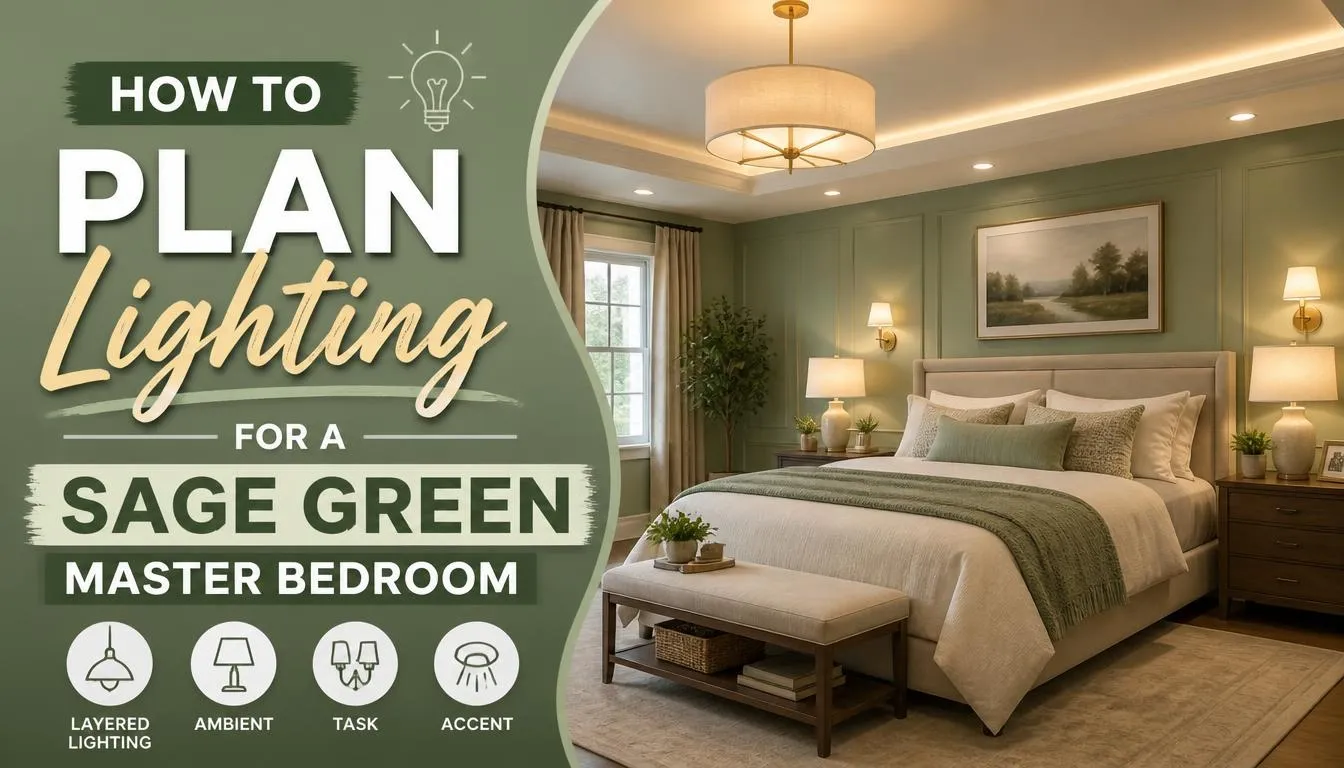
Lighting should support the different activities that take place in a master bedroom. A single ceiling fixture rarely does everything well.
Use General Lighting for Everyday Movement
A ceiling fixture or recessed lights can provide overall illumination. Choose a fitting that suits the ceiling height and the scale of the room.
If the bedroom has a large bed or a seating area, make sure the light reaches the parts of the room you use rather than focusing only on the center.
Add Separate Bedside Reading Lights
Bedside lamps or wall-mounted reading lights make it easier for one person to read without lighting the entire room.
Wall lights can free up nightstand space, which is especially useful when the bedside tables are narrow.
Light the Dressing and Vanity Areas Separately
A wardrobe or vanity needs more focused lighting than a general bedroom ceiling light can provide.
Choose lighting that lets you see clothing and personal items clearly. Position mirror lighting to reduce unwanted shadows, and make sure switches are easy to reach.
Highlight Architectural Details
A wall light, picture light, or carefully planned indirect lighting can draw attention to panelling, artwork, or a feature wall.
Use these details selectively. Too many accent lights can make the room feel busy.
The U.S. Department of Energy’s residential lighting guidance discusses the value of general bedroom lighting and separate task lighting for activities such as reading.
How to Coordinate a Sage Green Bedroom With an Ensuite Bathroom
The ensuite should feel like a natural extension of the bedroom, but it does not need to use exactly the same color scheme.
Repeat Sage Green Through Small Details
If you have neutral bathroom walls and tiles, repeat sage through towels, accessories, a vanity finish, or a small decorative detail.
This gives the two rooms a visual connection without making the bathroom feel like a copy of the bedroom.
Pair Sage With Warm White and Natural Materials
Warm white surfaces, natural stone, and wood finishes can soften the transition between a sage bedroom and a brighter bathroom.
Consider the permanent finishes first, particularly tiles, countertops, and cabinetry. These are more difficult and expensive to change than towels or accessories.
Keep Hardware Finishes Consistent
You can create continuity by repeating a metal finish in both rooms. For example, use brushed brass on bedroom lighting and carry it into bathroom hardware where suitable.
The fixtures do not need to be identical. A similar finish is often enough to make the rooms feel coordinated.
Make the Transition Practical
Think about door access, privacy, flooring transitions, ventilation, and moisture management. The bedroom should remain comfortable and the bathroom should be suitable for a humid environment.
Choose materials designed for the conditions in each space rather than using the same fabric or finish everywhere.
Common Sage Green Master Bedroom Decorating Mistakes to Avoid
A master bedroom needs to look good, but it also needs to work well. These mistakes can make even a carefully chosen color scheme frustrating to live with.
Choosing a King Bed That Overwhelms the Room
A large bed can look impressive, but it should not block access to closets, drawers, windows, or the ensuite. Measure the full frame and the remaining circulation space before buying.
Blocking Access to Wardrobes or Bathroom Doors
It is easy to focus on how furniture looks from the bed and forget how doors open. Check the full movement of wardrobe doors, drawers, and bathroom doors before settling on the layout.
Using Too Much Dark Sage in a Low-Light Room
A deep sage can create an intimate atmosphere, but it may feel heavy if the room receives little daylight and has limited artificial lighting.
Use lighter textiles, suitable lamps, and a more restrained application of dark green to keep the space comfortable.
Ignoring Storage and Bedside Functionality
A master bedroom should support daily routines. Make sure there is enough space for clothing, bedding, personal items, and bedside essentials before spending money on decorative accessories.
Relying on One Light Source
A central ceiling light may be adequate for basic movement, but it is rarely ideal for reading, dressing, or relaxing. Plan lighting for each activity.
Making the Bedroom and Bathroom Look Disconnected
If the bedroom and ensuite use completely unrelated finishes, the suite may feel unfinished. Repeating a color, material, or hardware finish can make the transition more natural.
Buying Furniture Before Measuring
Always check the room dimensions, bed size, window position, door swing, and storage access first. A piece that looks right online may not fit the way you expect.
How to Create a Sage Green Master Bedroom on a Budget
You do not need to renovate the entire room to create a more polished master bedroom. Start with the changes that solve the biggest problems.
Update Bedding and Soft Furnishings First
If your bedroom already has neutral walls and furniture, sage green bedding, cushions, or curtains can establish the color scheme without the expense of painting.
Choose items that work with the existing floor and furniture rather than buying a complete matching set.
Refresh the Bed Wall
Painting the wall behind the bed or adding a simple decorative detail can make a noticeable difference.
A single well-planned wall is often more effective than spreading your budget across several small updates.
Reuse Existing Furniture
A dresser, bedside table, or wooden bed frame may still work perfectly well. Consider replacing handles, refreshing the finish, or changing the surrounding decor before replacing the furniture.
Improve Lighting Before Buying More Accessories
A useful bedside lamp or a better ceiling fitting can improve the room every day. Prioritize practical lighting over decorative objects that do not solve a specific need.
Plan Larger Purchases Over Time
If you eventually want a new bed, wardrobe, or rug, decide which one would make the biggest improvement first. Buying everything at once can stretch your budget without necessarily creating a better result.
Frequently Asked Questions About Sage Green Master Bedrooms
Is Sage Green a Good Color for a Master Bedroom?
Yes. Sage green is a flexible, muted color that works with warm neutrals, natural wood, cream, and several furniture finishes. It can suit both contemporary and traditional master bedrooms.
What Colors Go Best With a Sage Green Primary Bedroom?
Warm white, cream, beige, taupe, natural wood, and muted brown are useful choices. Brass or black accents can add definition, while soft blush can introduce a gentle contrast.
What Furniture Works Best With Sage Green Bedroom Walls?
Upholstered beds in beige or cream, natural oak nightstands, walnut dressers, and simple neutral storage furniture can all work well. Choose finishes that complement the existing flooring and room size.
Does Sage Green Look Good With a King-Size Bed?
Yes. A king-size bed can look especially balanced against a wide sage green wall. Make sure the room still has enough space for bedside tables, walking routes, and access to storage.
How Can I Coordinate a Sage Green Bedroom With an Ensuite?
Repeat sage in a few bathroom details, then use connecting materials such as warm white, wood, natural stone, or matching metal finishes. The spaces should feel related without needing identical walls or accessories.
Can a Small Primary Bedroom Use Dark Sage Green?
It can, but use deeper sage carefully. A feature wall, headboard, or selected furniture finish may create the look you want without making every surface feel dark. Good lighting and lighter surrounding finishes are important.
How Do You Create a Luxury Sage Green Master Suite?
Focus on the overall design rather than simply adding expensive accessories. A well-proportioned bed, coordinated nightstands, quality bedding, tailored curtains, layered lighting, organized storage, and a considered ensuite transition can make the suite feel more complete.
Should the Bedroom and Walk-In Closet Use the Same Shade of Sage Green?
They do not have to match exactly. You can use sage cabinetry in the closet and a lighter or more muted version in the bedroom. Repeating one or two finishes is usually enough to create a cohesive look.
Final Thoughts
A beautiful sage green master bedroom starts with a good layout, not just a paint color. The bed needs to fit comfortably, storage should be easy to reach, lighting should support everyday activities, and connected spaces such as a dressing area or ensuite should feel considered.
For a bright, relaxed room, combine sage green with warm white, cream, and light wood. For a richer look, use deeper green with walnut, tailored upholstery, and warm lighting. If the bedroom is compact, focus on practical furniture and a clear walking route before adding decorative pieces.
You do not need to change everything at once. Plan the layout first, choose finishes that suit your natural light, and make improvements in a sensible order. When the design supports the way you actually use the room, sage green can become the foundation for a master bedroom that feels calm, personal, and comfortable for years to come.

“A comfortable home and a healthy lifestyle go hand in hand.”
Hi, I’m Ethan Carter, the founder and lead editor of TheBestHomeFit. I’m passionate about helping people create beautiful, functional living spaces while building healthier lifestyles at home. Over the years, I’ve spent countless hours researching home decor trends, testing home gym equipment, and reviewing products to help readers make smarter buying decisions.
Through TheBestHomeFit, I share practical home improvement ideas, honest product reviews, buying guides, and fitness tips designed for everyday homeowners. My goal is to make it easier for you to create a home that looks great, feels comfortable, and supports your well-being.
When I’m not researching the latest products or writing in-depth guides, you’ll usually find me redesigning a room, trying new home workout routines, or enjoying quality time with my family.