

A green boho bedroom brings together two things that make a bedroom feel welcoming: the natural character of green and the relaxed personality of bohemian design. The combination can look soft and airy, warm and earthy, or rich and dramatic, depending on the shades and materials you choose.
But getting the balance right is not always easy. Too much dark green can make a small bedroom feel heavy. Too many patterns can make the room look busy, while too many decorative accessories can take away the relaxed feeling that makes boho interiors appealing.
The solution is to build your design around a clear color palette, choose natural-looking materials, and give every decorative element a purpose.
Whether you are refreshing a rented apartment, decorating a small bedroom, or planning a complete makeover, these green boho bedroom ideas will help you create a comfortable space that feels personal, practical, and beautifully balanced.
How to Choose the Right Green for a Boho Bedroom
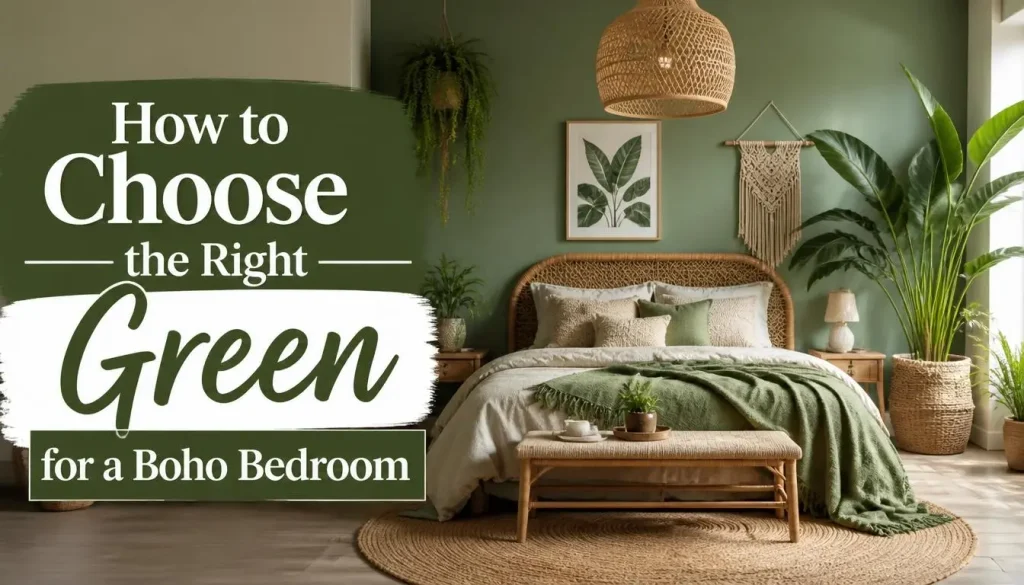
Before choosing furniture, bedding, or wall decor, decide which shade of green you want to use. The right shade should work with your room’s natural light, flooring, existing furniture, and the atmosphere you want to create.
You do not need to use several shades of green. One main shade with one or two supporting tones is often enough.
Sage Green for a Soft, Airy Look
Sage green is a lovely choice when you want a relaxed bedroom without making the walls feel too bold. Its muted appearance works particularly well with warm white, cream, oatmeal, pale oak, and natural linen.
Try sage green walls with an off-white duvet, light wood bedside tables, and a few terracotta or woven accents. This combination creates a gentle bohemian look without relying on too many decorative pieces.
If you are still deciding how to use this shade, explore these sage green bedroom ideas for more color and styling inspiration.
Olive Green for a Warm, Earthy Look
Olive green has warmer, earthier undertones than many pale greens. It works beautifully with terracotta, camel, beige, walnut, and natural woven materials.
Consider olive green bedding or curtains if you do not want to repaint the room. You can also use olive on a feature wall and balance it with cream textiles and warm wood furniture.
Olive is particularly useful when you want a boho bedroom to feel cozy rather than overly bright.
Forest and Emerald Green for a Richer Bedroom
Forest and emerald green create a stronger visual statement. They can make a bedroom feel more intimate and sophisticated, especially when paired with ivory, warm wood, and carefully chosen metallic details.
Forest green generally suits an earthy, understated palette, while emerald green creates a more vivid focal point.
You do not have to cover every wall in a deep shade. An upholstered headboard, a feature wall, or a set of curtains can introduce enough color without overwhelming the room.
How Bedroom Lighting Changes the Appearance of Green
A green paint sample can look different in morning sunlight, late-afternoon light, and under artificial lighting. A shade that looks soft during the day may appear cooler or darker at night.
Before buying paint, test a sample in the actual bedroom. Look at it from different parts of the room and check it at different times of day. Benjamin Moore’s guide to testing paint samples explains how to compare samples under different lighting conditions.
Artificial light matters too. Warm-white lighting around 2700K to 3000K can create a softer atmosphere, while cooler light can make some colors appear less warm. The U.S. Department of Energy’s guide to light bulb color temperature explains the differences between warm, soft, neutral, and cool light.
Best Color Combinations for a Green Boho Bedroom
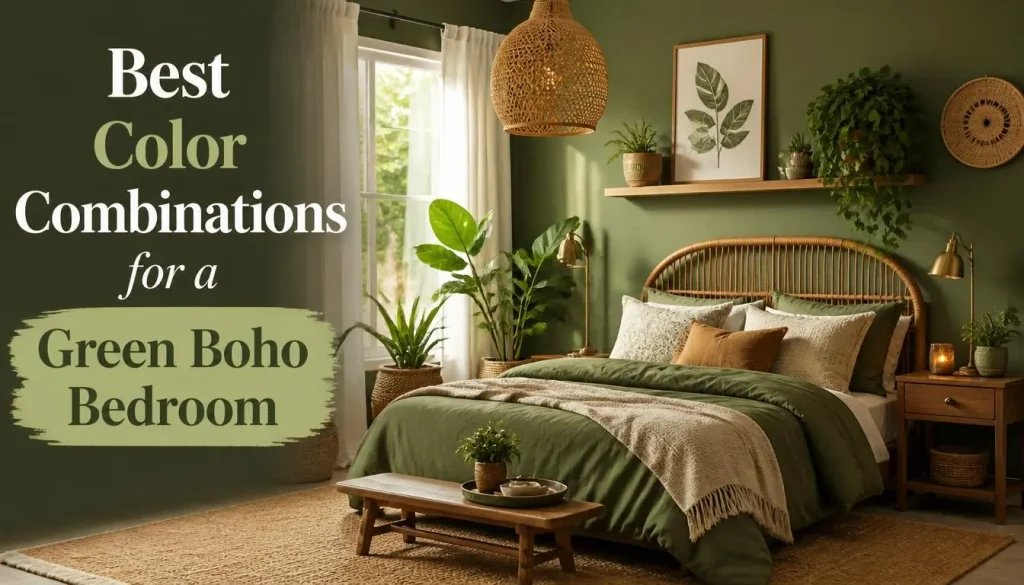
Green does not have to work alone. The supporting colors you choose determine whether the room feels light, earthy, romantic, or dramatic.
Here are four combinations that are easy to adapt to different bedroom sizes and furniture styles.
Sage Green, Cream, and Natural Wood
This is one of the easiest palettes to work with. Sage gives the bedroom a subtle color foundation, cream softens the overall look, and natural wood adds warmth.
Use sage on the walls or bedding, cream for larger textiles, and oak or pale wood for furniture. Add a woven basket or a small textured rug to introduce a bohemian detail.
The result is calm and uncomplicated, making it a good option for bedrooms where you want a light, relaxed appearance.
Olive Green, Terracotta, and Warm Beige
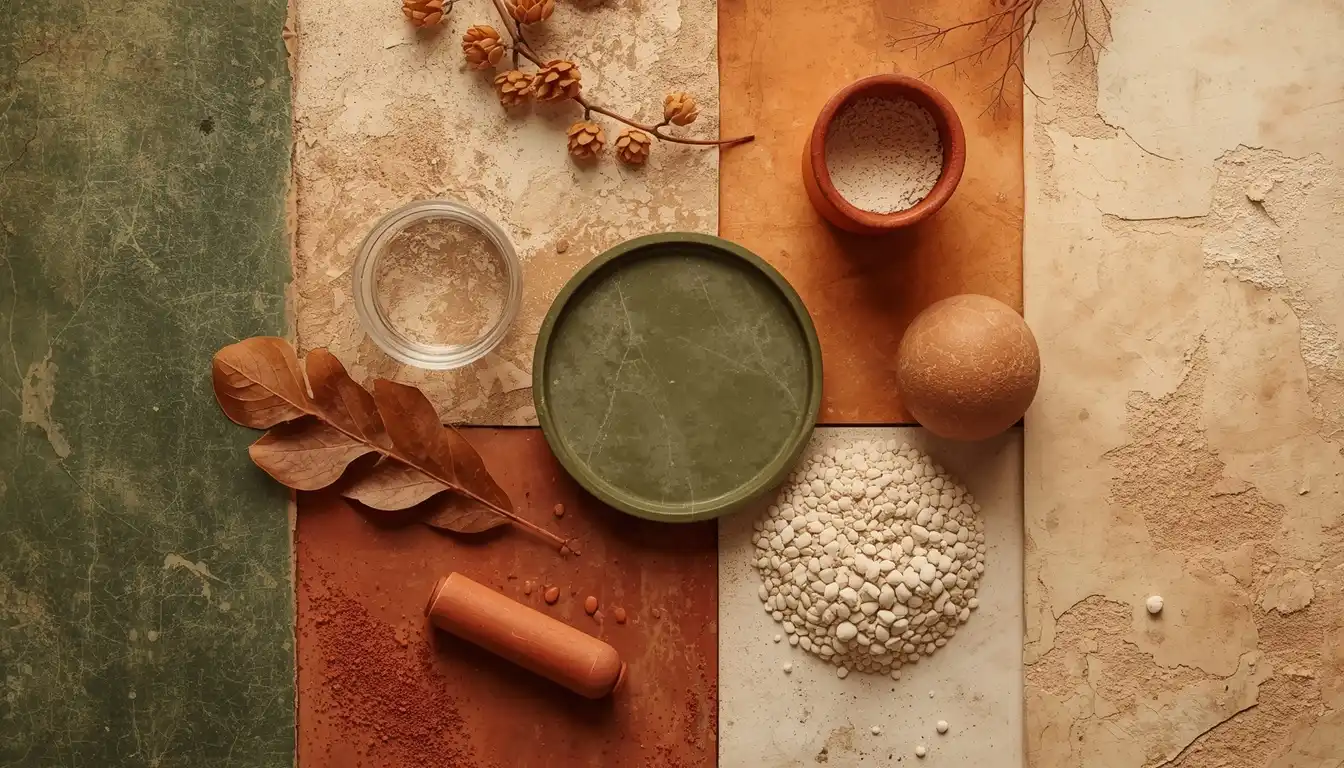
Olive and terracotta create a naturally warm combination. Beige helps connect the two colors and prevents the palette from becoming too strong.
You might use olive bedding, a beige rug, and terracotta cushions. If you prefer a more subtle approach, introduce clay-colored pottery or artwork instead of using terracotta on large surfaces.
This palette works especially well with medium or dark wood furniture.
Forest Green, Ivory, and Walnut
Forest green and walnut create a deeper, more dramatic bedroom. Ivory bedding and curtains provide contrast, while the darker wood gives the space a grounded appearance.
This combination is suitable for a larger bedroom or a smaller room where you want one strong focal point.
Keep the accessories limited. A few carefully chosen pieces will usually look better than several competing dark finishes.
Moss Green, Rust, and Muted Pink
Moss green has an earthy character that works well with rust and muted pink. The pink adds softness, while rust makes the palette feel warmer.
Try moss green bedding with a rust-colored throw and one or two dusty-pink cushions. Alternatively, use a muted pink artwork or bedside accessory to introduce a gentle contrast.
For another example of combining green with soft pink, see these sage green and blush pink bedroom ideas.
21 Green Boho Bedroom Ideas for a Cozy, Natural Look
The ideas below focus on practical combinations rather than simply adding more decorations. You can adapt them to your existing furniture, room size, and budget.
1. Sage Green Walls With Soft Neutral Linen Bedding
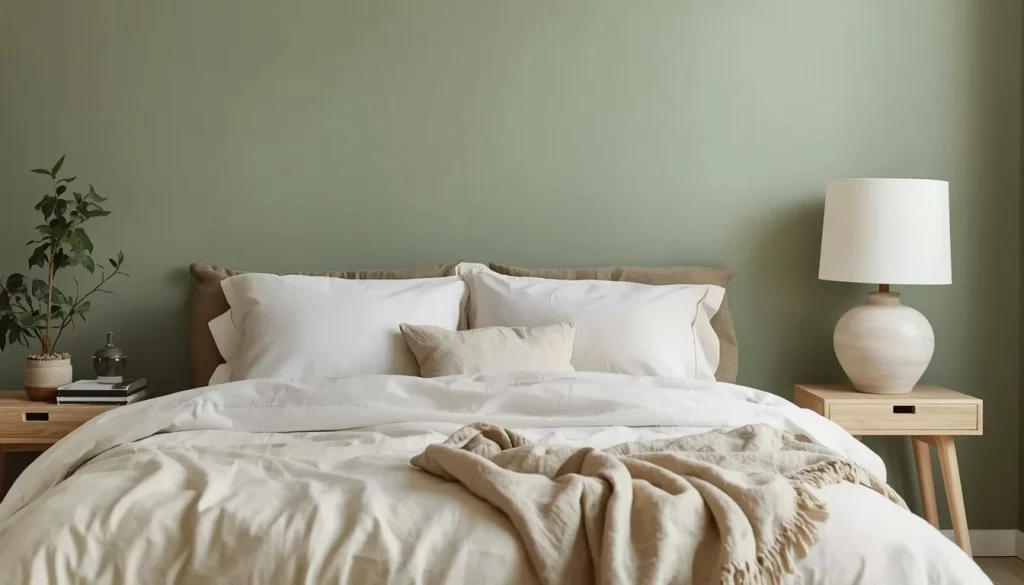
Paint the walls in a muted sage and use cream or oatmeal bedding to keep the room feeling balanced.
Natural linen is a useful choice because its relaxed texture suits bohemian interiors without requiring bold patterns. Add a light wood bedside table and a simple ceramic lamp.
This approach works especially well when you want the green to be noticeable but not overpowering.
2. Olive Green Bedding Against Warm Neutral Walls
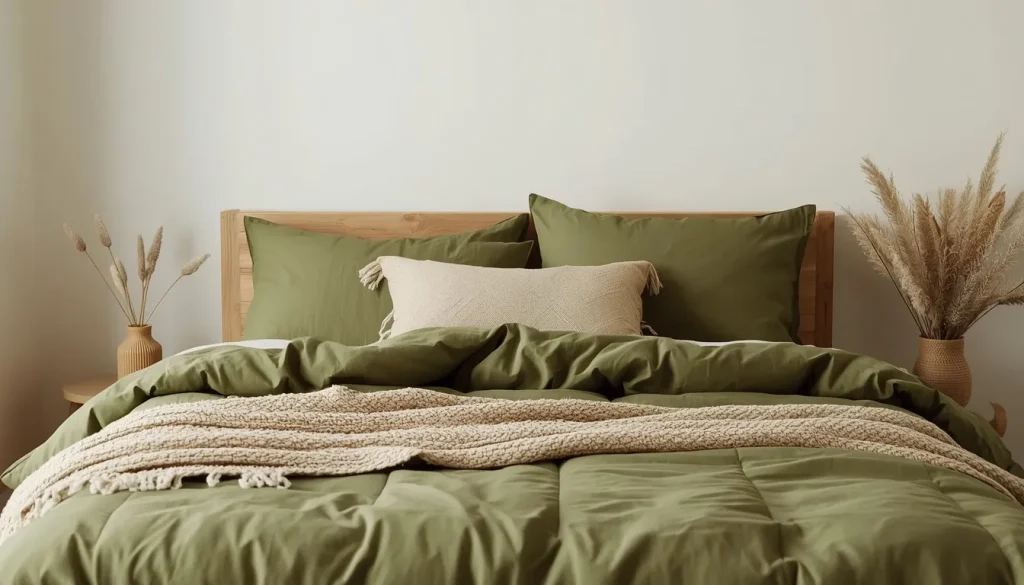
You do not need painted green walls to create a green boho bedroom. Olive bedding can provide the main color while warm white, beige, or cream walls keep the background light.
Choose an olive duvet cover, then add two neutral pillows and a textured throw. A wooden bed frame or woven bedside accessory can complete the look.
This is also a useful option for renters who want a noticeable change without making permanent alterations.
3. A Forest Green Accent Wall With Light Wood Furniture
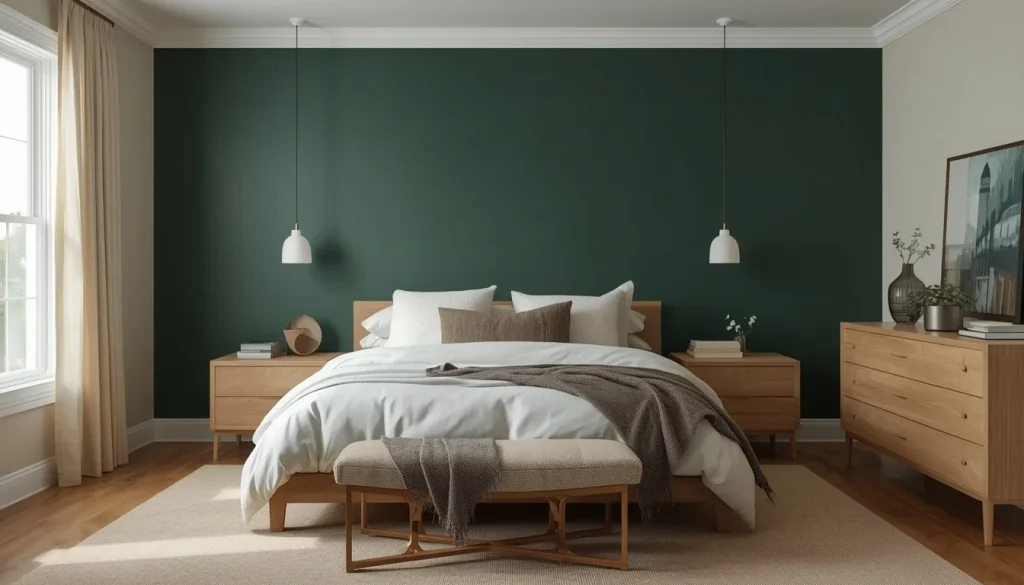
A forest green wall behind the bed creates a natural focal point. The darker color gives the bed more visual presence, while light wood furniture helps balance its depth.
Keep the remaining walls a warm neutral if you do not want the whole room to feel dark. Choose ivory bedding, simple curtains, and one or two pieces of understated artwork.
Before painting, check the wall color in both daylight and evening light.
4. A Moss Green Upholstered Bed as the Main Focal Point
An upholstered bed in moss green can bring color into a bedroom without changing the walls.
Choose linen-look fabric for a relaxed finish or a softly textured upholstery for a more refined appearance. Keep the bedding neutral so the headboard remains the main feature.
This is a good choice when the existing wall color and flooring already work well and you would rather update the furniture.
5. Botanical Wallpaper With Simple Boho Furniture
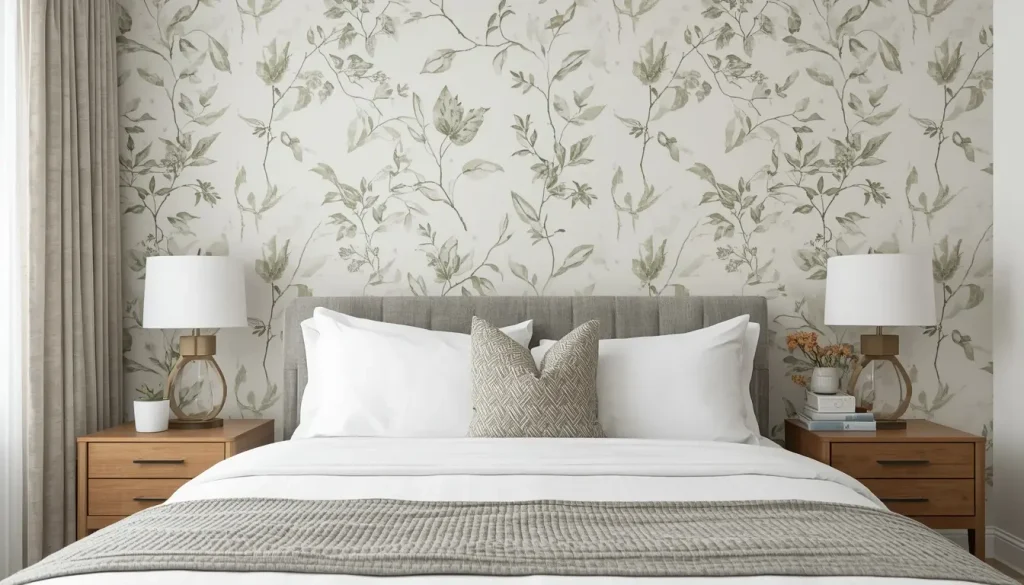
Botanical wallpaper can introduce pattern and green tones in one step. Look for designs with muted leaves, delicate branches, or small-scale botanical illustrations.
Use the wallpaper behind the bed or on one limited section of the room. Pair it with plain bedding and simple furniture so the pattern has room to stand out.
For a more subtle look, choose a wallpaper with a cream background and soft green details rather than a highly saturated print.
6. Layered Green Bedding With Warm Neutral Accents
Layer different textures rather than using several unrelated colors.
Start with a lighter green duvet cover, add an olive or moss throw, and finish with cream or beige cushions. You can vary the fabric textures through cotton, linen, or a soft knitted blanket.
Keep the number of patterns limited. When the colors already provide visual interest, simple fabrics often create a more balanced bed.
7. A Rattan Headboard With Sage Green Textiles
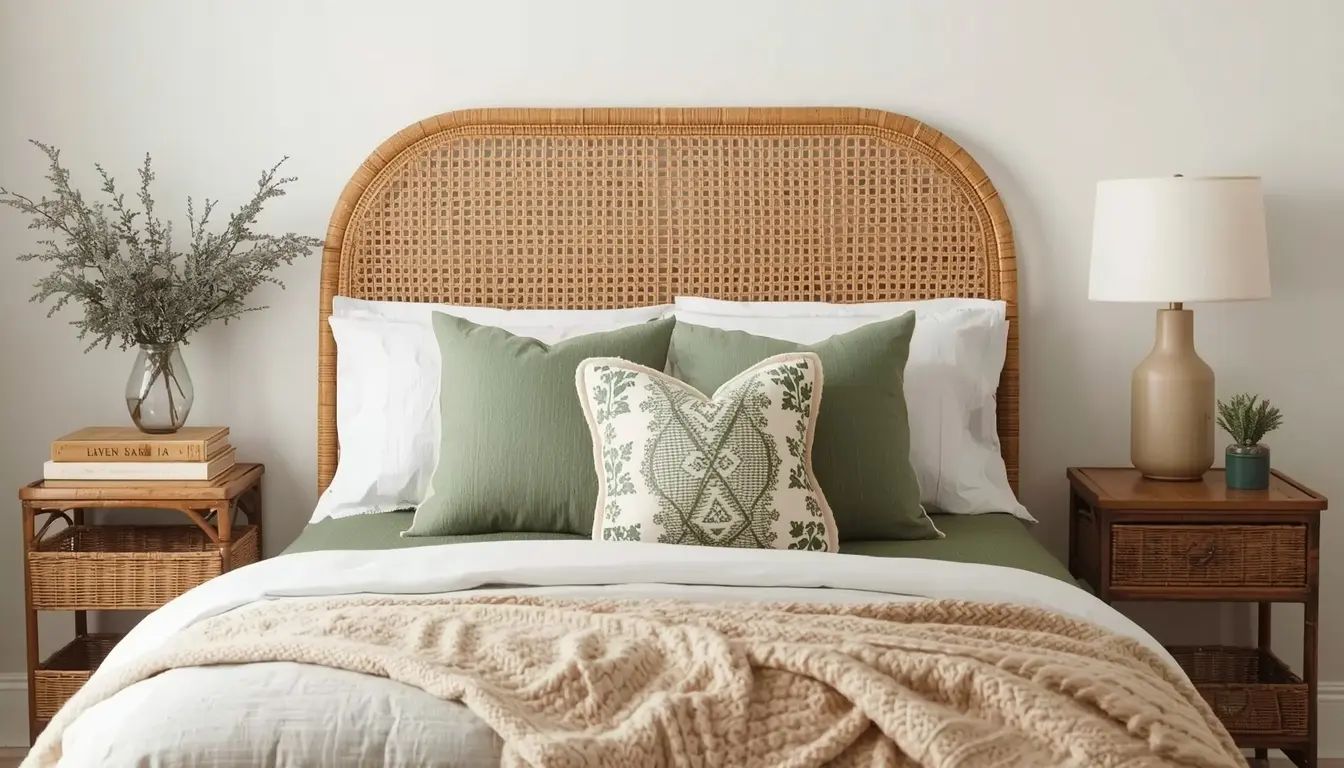
A rattan or cane headboard adds natural texture and works particularly well with sage green.
Use sage bedding, warm white sheets, and a pale neutral rug. If the headboard has a strong woven pattern, avoid adding too many other decorative patterns around the bed.
This combination gives the room a relaxed bohemian character without needing a large collection of accessories.
8. A Vintage Rug With Olive and Terracotta Details
A vintage-inspired rug can bring several colors together. Look for a faded design that includes muted olive, rust, beige, or warm brown.
Place it beneath the bed so that the pattern frames the sleeping area. Keep the bedding relatively simple and repeat one or two rug colors in cushions or artwork.
This helps the room look coordinated instead of making the rug feel like an unrelated purchase.
9. Terracotta Accents in an Earthy Green Bedroom
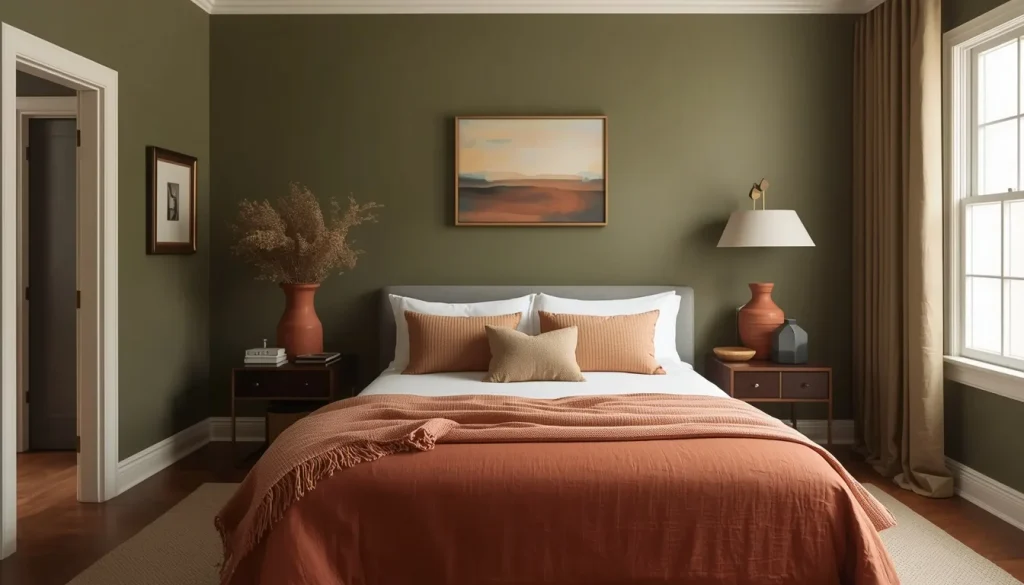
If an olive or moss green bedroom feels too cool, introduce terracotta through smaller details.
Try a clay-colored vase, a cushion, a bedside accessory, or a piece of artwork. These details add warmth without requiring another major color on the walls.
The key is repetition. Two or three small terracotta accents usually look more intentional than placing many unrelated warm colors around the room.
10. Muted Pink and Sage Green Boho Styling
Muted pink can soften sage green without making the room look overly sweet.
Use sage as the dominant color and introduce dusty pink through cushions, a throw, or a small artwork. Keep the remaining elements neutral, particularly the bedding and curtains.
This combination works well when you want a gentle, slightly romantic atmosphere while keeping the room recognizably earthy and natural.
11. Natural Wood Furniture With Deep Green Textiles
Deep green textiles can look especially attractive alongside natural wood.
A walnut bedside table, oak dresser, or reclaimed-wood bed frame provides a warm base for forest or olive green. Add ivory bedding to create contrast and prevent the room from becoming too dark.
Try to repeat the same wood tone in at least two places. This makes the furniture feel connected even when the pieces do not belong to a matching set.
12. Green Curtains With Soft, Neutral Bedding
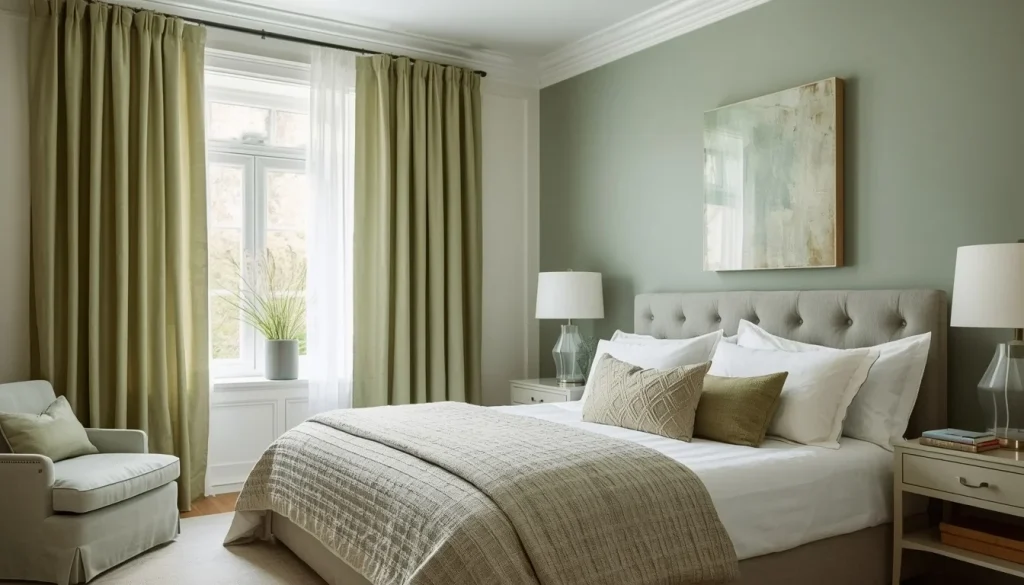
Curtains are an effective way to introduce a larger area of green without painting the walls.
Choose sage for a light appearance or olive for a warmer, deeper effect. Linen-look or softly textured curtains can complement the relaxed style.
Consider the amount of daylight the bedroom receives. Heavy, dark curtains may make a poorly lit room feel smaller, so a lighter fabric can be a better option.
13. Woven Pendant Lighting and Warm Bedside Lamps
Lighting can change how the entire bedroom feels after sunset.
A woven pendant light adds texture overhead, while bedside lamps provide softer light where it is needed. Choose warm-white bulbs if you prefer a cozy atmosphere.
If you read in bed, make sure the bedside light is bright enough for the task. Decorative lighting should support the way you use the room rather than simply look attractive.
14. Botanical and Handmade Wall Art
Artwork is an easy way to bring the green palette across the room.
Try botanical prints, abstract nature-inspired artwork, or handmade-looking pieces with muted green, cream, and earthy brown. Natural wood frames can connect the art with other furniture.
Instead of filling an entire wall, choose a few pieces that work together. Leave some space around them so the arrangement does not compete with the bed or wallpaper.
15. A Green-Toned Gallery Wall Above the Bed
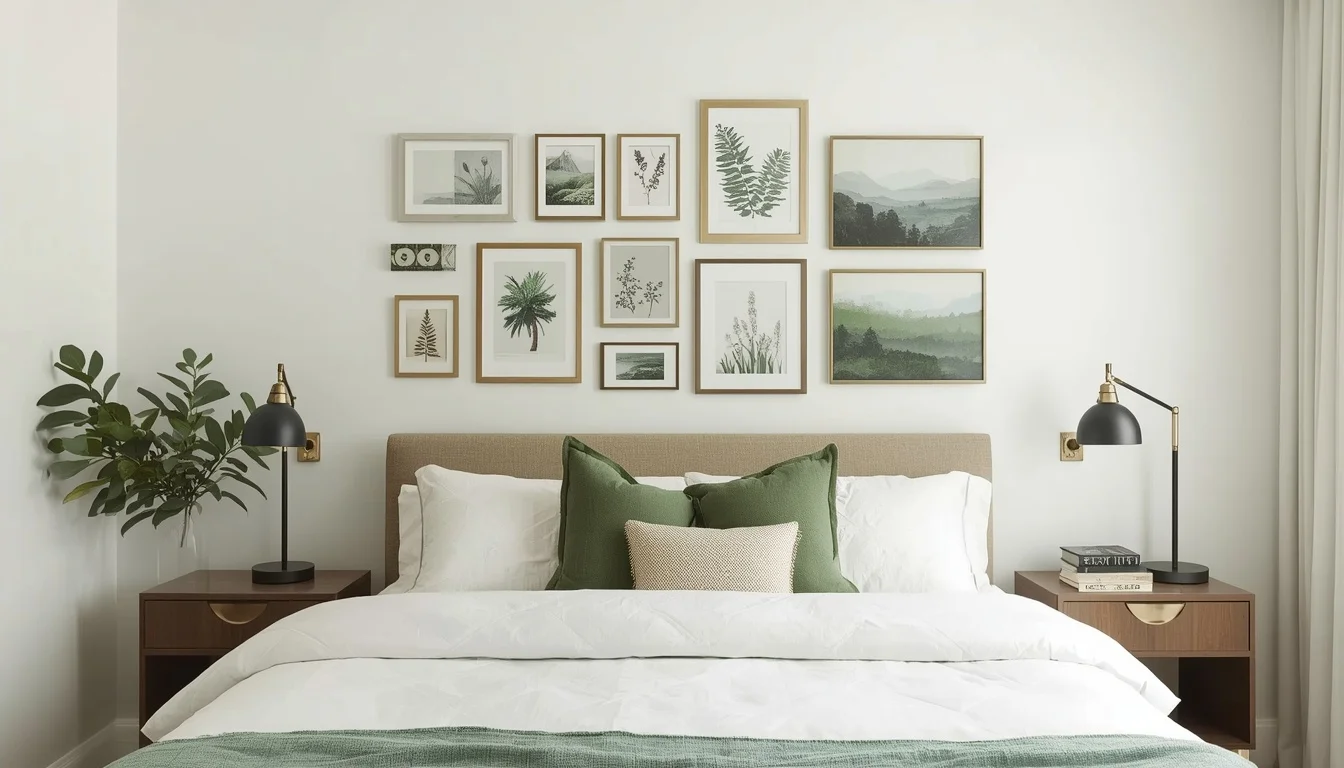
A gallery wall can make a neutral bedroom feel more personal.
Combine a few botanical illustrations, landscape prints, small photographs, and simple abstract designs. Use frames in a limited range of finishes, such as natural wood and aged brass.
Before putting holes in the wall, arrange the frames on the floor and test the layout. This helps you adjust the spacing and avoid an arrangement that feels crowded.
16. A Relaxed Fabric Canopy With Earthy Green Decor
A soft fabric canopy can create a comfortable focal point around the bed.
Choose lightweight cream, oatmeal, or muted green fabric. Keep the arrangement simple so it does not overwhelm the room or interfere with movement.
In a smaller bedroom, a partial fabric detail behind the headboard may be more practical than a full canopy. Make sure the fabric is securely installed and kept clear of lighting that could become hot.
17. Antique Brass Details With Dark Green Accents
Antique brass can warm up a deep green palette. Introduce it through a bedside lamp, mirror frame, drawer handles, or a small decorative tray.
You do not need brass everywhere. Repeating the finish in two or three places is usually enough to create a deliberate look.
Pair it with ivory textiles and natural wood to keep the bedroom from feeling too formal.
18. A Small Green Boho Bedroom With Space-Saving Furniture
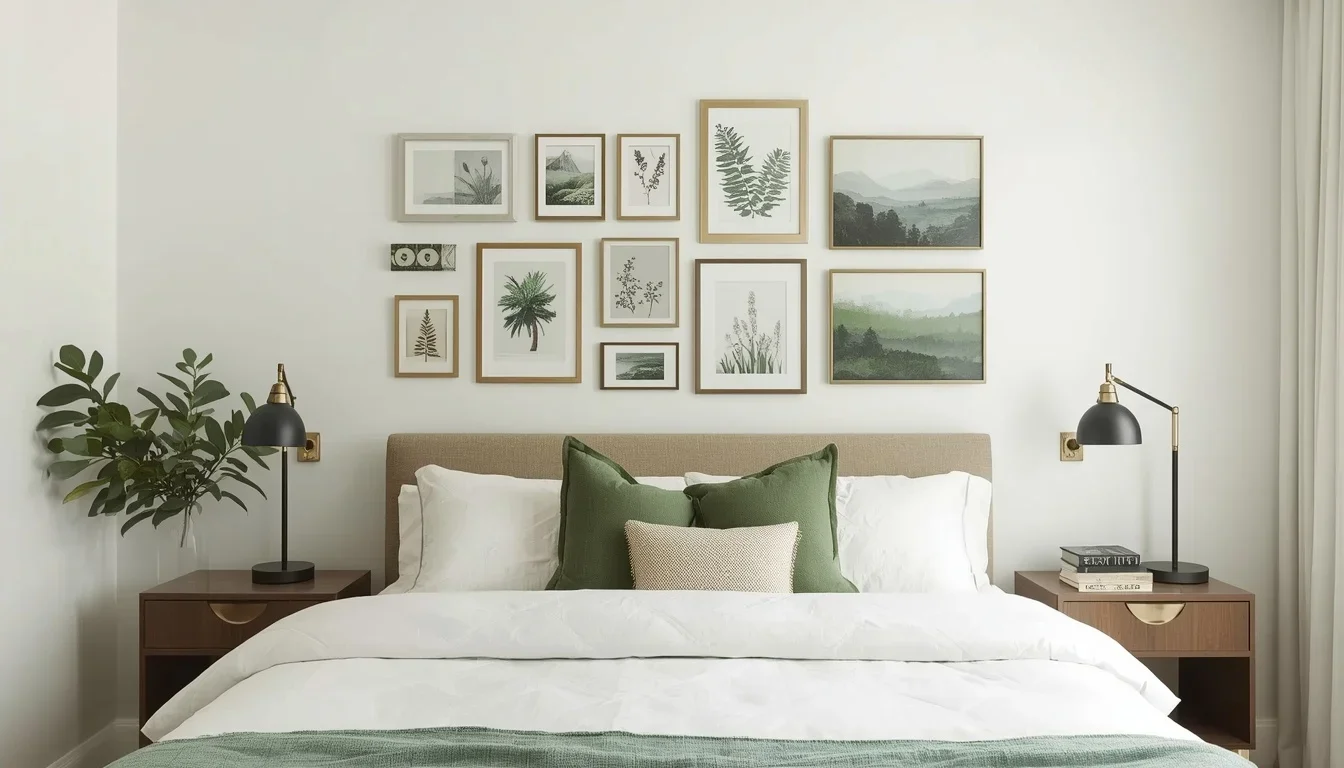
A small room can still have a layered bohemian appearance, but furniture size and placement matter.
Choose a bed with built-in storage or use boxes beneath the bed. Replace bulky nightstands with narrow tables or floating shelves, and use one or two woven baskets to organize everyday items.
Keep the largest color blocks simple. For example, use sage bedding, warm white walls, and one patterned rug rather than introducing several large patterns.
For more help with layouts and storage, explore these small bedroom ideas.
19. A Cozy Green Boho Bedroom With Limited Natural Light
A bedroom with a small window or limited daylight needs a little more planning.
Instead of covering every surface in dark green, use a lighter olive, muted sage, or warm neutral as the main background. Introduce deeper green through cushions, artwork, or a headboard.
Use more than one light source. A ceiling fixture, bedside lamps, and a small accent light can make the room easier to use after dark.
Also avoid blocking the window with bulky furniture or heavy curtains.
20. A Green Boho Bedroom Without Painting the Walls
If you rent your home or simply do not want to paint, use removable and movable elements.
Start with green bedding, curtains, cushions, and artwork. Add a rug with earthy green details and use freestanding furniture or woven storage to bring in the bohemian character.
Removable wallpaper may also be an option, but check the manufacturer’s instructions and your rental agreement before applying it.
This approach allows you to create a clear green theme while keeping the existing walls untouched.
21. A Modern Green Boho Bedroom With Simple, Functional Decor
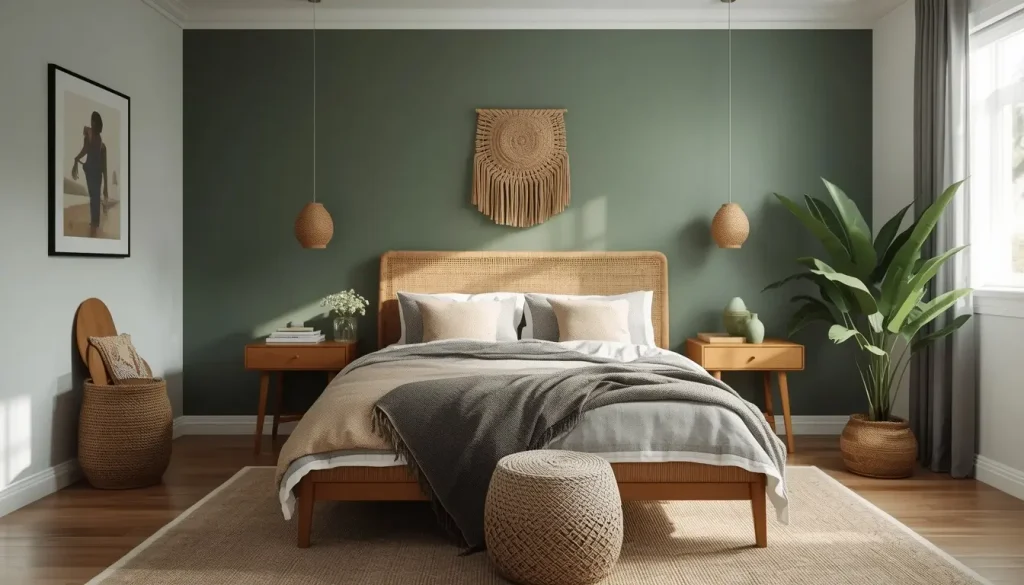
You can combine modern furniture with bohemian details without making the bedroom feel too traditional or too decorative.
Start with a simple bed frame, clean-lined nightstands, and a restrained green-and-neutral palette. Then introduce character through a woven headboard, textured bedding, handmade artwork, or a vintage-style rug.
Keep the furniture practical and let a few natural materials provide the bohemian personality.
If you prefer simpler layouts and cleaner furniture lines, these modern bedroom ideas offer additional inspiration.
How to Mix Patterns and Textures Without Creating Clutter
Texture is an important part of bohemian design, but adding more materials does not automatically make a bedroom look better. The goal is to create contrast while keeping the overall palette connected.
Combine Linen, Cotton, Jute, and Woven Materials
Start with soft materials around the bed. Linen or cotton bedding can provide a comfortable base, while a jute rug or woven basket adds a rougher natural texture.
You can also introduce a cane headboard, a wooden bedside table, or a ceramic accessory. The combination of soft, smooth, and textured surfaces makes the room feel layered without needing extra colors.
Choose a few materials and repeat them rather than introducing every possible texture.
Mix Boho Patterns With Plain Fabrics
If you have a patterned rug, keep the bedding relatively simple. If the wallpaper has a strong botanical print, use plain curtains and a more restrained cushion design.
A useful approach is to choose one main pattern and one smaller supporting pattern. Make sure they share at least one color.
This creates visual variety without making the room feel chaotic.
Balance Natural Wood and Soft Textiles
Wood furniture adds structure to a room filled with soft fabrics. Light oak can make a green bedroom feel airy, while walnut brings more depth.
Repeat the wood tone in a frame, bedside table, shelf, or mirror. The repeated finish creates continuity without requiring every piece of furniture to match.
Green Walls or Neutral Walls: Which Works Better?
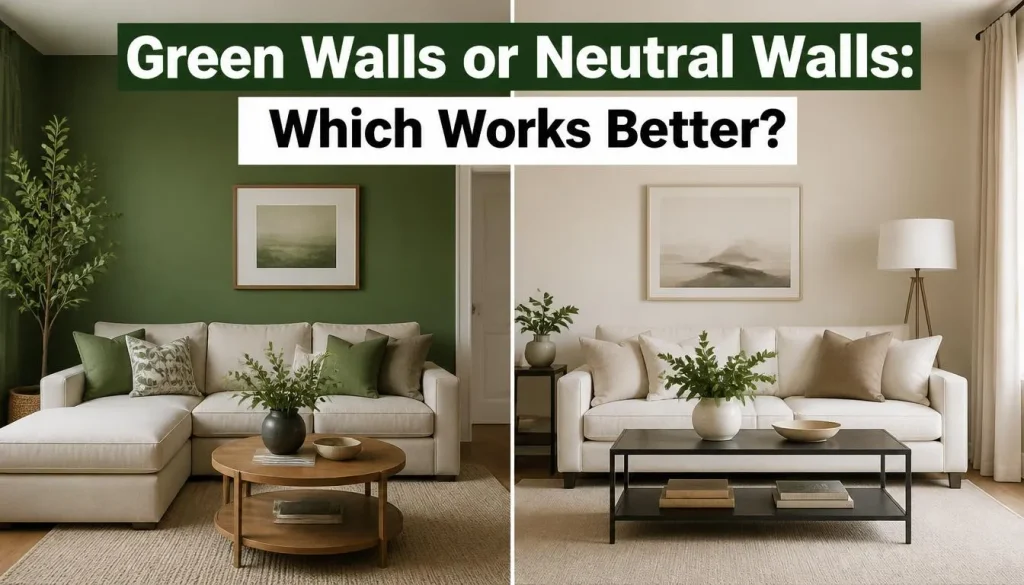
There is no single right answer. The best option depends on how much color you want, whether you own or rent the property, and how the bedroom looks in natural light.
When to Choose Green Painted Walls
Green walls make sense when you want the color to be a major part of the room rather than a small accent.
A full sage or olive room can feel cohesive, while a forest green feature wall creates a stronger focal point. Before committing, compare paint samples with your flooring, bedding, and furniture.
If you are planning a larger decorating update, these bedroom paint ideas can help you compare different finishes and color combinations.
When painting, follow the paint manufacturer’s preparation and drying instructions. Provide suitable ventilation during and after the work. The EPA’s advice on painting and indoor air quality during remodeling explains why ventilation matters and why older painted surfaces may need additional precautions before sanding.
When to Keep Walls Neutral
Neutral walls are a practical choice when your existing furniture, flooring, or curtains already have strong colors or patterns.
Warm white, cream, beige, and soft greige allow green bedding and decorative elements to stand out. This is also easier to change later if your taste or budget changes.
A neutral background can be especially useful in rented homes where repainting is not allowed.
Using Green Wallpaper and Removable Wall Decor
Wallpaper is another way to introduce green without relying on a plain painted surface. Botanical prints, subtle leaves, and small-scale patterns can suit a bohemian room.
For renters, removable wallpaper or wall decals may be suitable, depending on the wall finish and product instructions. Always test a small area first if the manufacturer recommends it.
How to Choose Plants for a Green Boho Bedroom
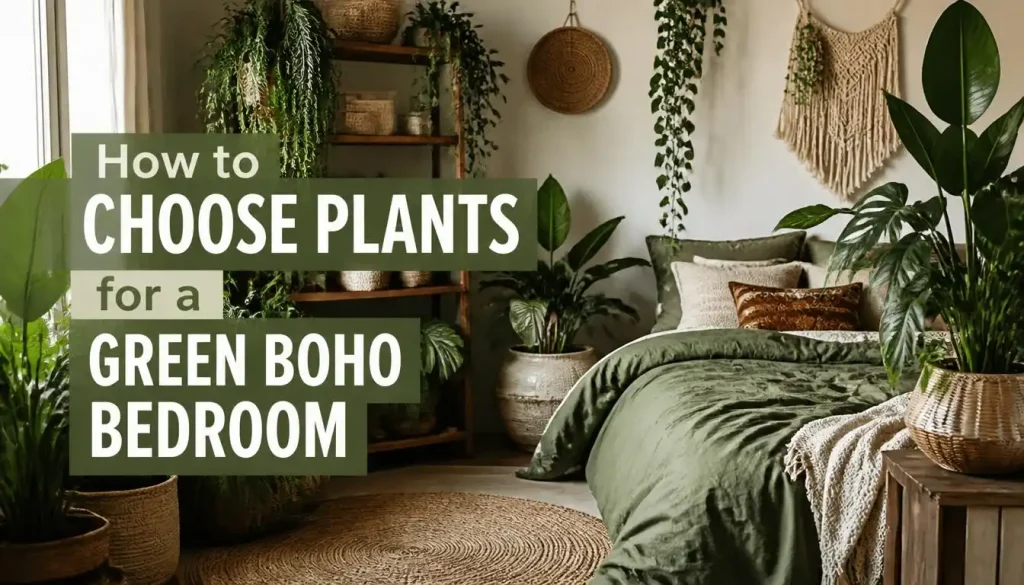
Plants can complement a green boho bedroom, but they should be chosen for the room’s actual conditions rather than appearance alone.
Real vs. Faux Plants
Real plants bring natural variation and changing leaf shapes into a room. They are a good choice when you can provide the light, water, and care they need.
Faux plants are more practical when the bedroom has very little natural light, when you travel frequently, or when you prefer not to manage plant care. Choose realistic foliage and avoid placing too many artificial plants in one area.
Choosing Plants Based on Natural Light
Different plants need different light levels. A bright windowsill may suit plants that need stronger light, while a spot farther from a window may require a more shade-tolerant option.
Before buying, check the plant’s specific care requirements. The Royal Horticultural Society’s houseplant growing guide explains how light, temperature, humidity, and watering affect indoor plants.
Remember that a room with no natural light is not a suitable growing environment for most live houseplants. In that situation, a good-quality faux plant may be the more sensible decorating choice.
Using Planters Without Creating Clutter
Choose planters that connect with the bedroom’s existing materials. Terracotta, matte ceramic, natural woven covers, and simple neutral pots all work well with green and earthy tones.
Use different plant heights carefully. One floor plant, one small bedside plant, or a single hanging planter may be enough.
Keep leaves and trailing stems away from walking paths, electrical equipment, and areas where they could be knocked over.
How to Create a Green Boho Bedroom on a Budget
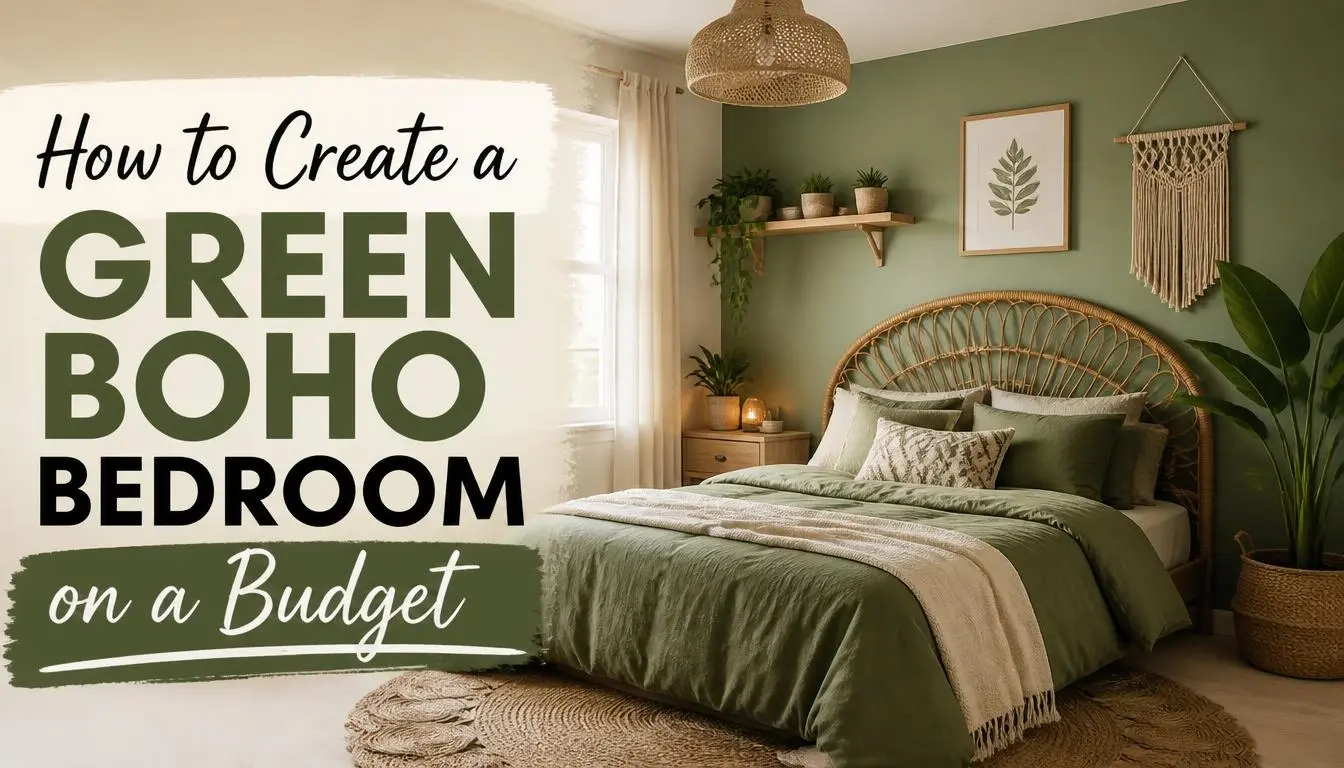
A complete bedroom makeover is not always necessary. In many cases, changing a few visible items can create a noticeable difference.
Affordable Bedding and Decorative Accessories
Start with the bed because it usually occupies a large part of the room.
A green duvet cover, a neutral throw, and two textured cushions can establish the palette without replacing the furniture. You can then add a small rug, a framed print, or a woven basket as your budget allows.
Before buying new accessories, check what you already own. A neutral blanket or wooden tray may fit the design perfectly.
DIY Wall Decor and Thrifted Furniture
Second-hand furniture can add character to a boho bedroom. Look for a bedside table, mirror, stool, or small dresser that has a useful shape and a finish you can work with.
You can refresh an existing piece with new handles, a suitable paint finish, or a light cleaning and refinishing process. For DIY wall decor, consider simple botanical prints in inexpensive frames or a handmade textile piece.
If you are working with older painted furniture, check its age and condition before sanding or disturbing the finish.
Where to Save and Where to Spend
Spend first on items that affect everyday comfort and have a large visual impact, such as a comfortable mattress, practical bedding, suitable curtains, and functional lighting.
Save on decorative accessories that are easy to change. Cushions, small prints, planters, and styling pieces do not need to be expensive to work well.
A useful rule is to buy the main pieces first and add decorative details gradually. This reduces impulse purchases and helps you avoid filling the room with items that do not fit the final design.
How to Put Together Your Green Boho Bedroom Step by Step
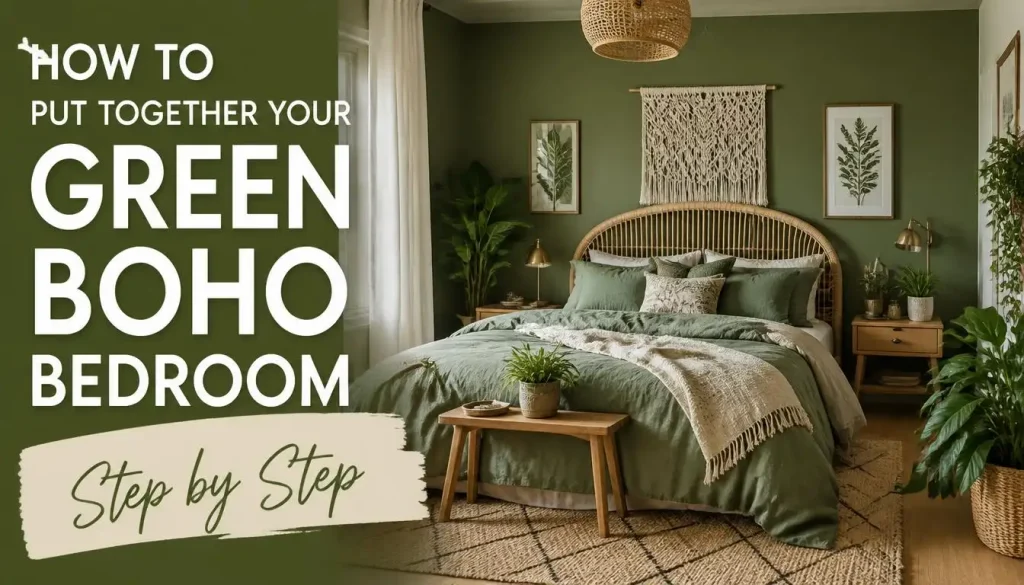
If you are unsure where to begin, follow this order. It keeps the project manageable and helps prevent unnecessary purchases.
1. Choose Your Main Green Shade
Decide whether sage, olive, moss, forest, or emerald green suits your room. Consider the flooring, existing furniture, natural light, and the overall mood you want.
2. Work With Your Existing Furniture
You may not need a new bed or dresser. See whether your current furniture can work with the new palette through bedding, paint, hardware, or a few carefully chosen accessories.
3. Build a Balanced Textile and Color Palette
Choose a main green, one or two supporting neutrals, and a limited accent color. Then coordinate the bedding, curtains, rug, and cushions.
4. Add Lighting, Plants, and Personal Decor
Once the larger items are in place, introduce lighting and a small number of decorative pieces. Add real plants only where their light and care requirements can be met.
5. Edit the Room to Keep It Functional
Step back and look at the bedroom as a whole. Remove anything that blocks movement, collects dust unnecessarily, or makes the room feel crowded.
A boho bedroom should feel relaxed and personal, not like every available surface needs decoration.
Green Boho Bedroom Decorating Mistakes to Avoid
Even a beautiful color palette can look unbalanced when the details are not considered. Keep these common mistakes in mind.
Using Too Many Competing Green Shades
Combining several greens can create depth, but using too many unrelated shades may make the room feel inconsistent.
Choose one dominant green and add only one or two supporting tones. Vary the materials and textures instead of trying to include every shade you like.
Mixing Too Many Bold Patterns
A patterned rug, botanical wallpaper, printed bedding, and several patterned cushions can compete for attention.
Choose one main pattern and let the other surfaces support it. Plain fabrics are often the easiest way to create balance.
Choosing Dark Colors Without Considering Lighting
Forest or emerald green can look beautiful, but a poorly lit room may become too dark when several large surfaces use deep colors.
Test your paint or fabric samples in the room. Add lighter bedding and layered lighting if you want to keep the atmosphere cozy without making the bedroom difficult to use.
Adding Too Many Decorative Objects
Bohemian style encourages personal expression, but that does not mean every shelf needs to be filled.
Choose objects that have meaning or contribute to the color palette. Leave some surfaces open so the room has visual breathing space.
Ignoring Storage and Furniture Placement
A beautiful bedroom still needs to work for everyday life. Make sure drawers open fully, walking paths remain clear, and clothes or extra bedding have a proper place.
Woven baskets, under-bed storage, and practical bedside furniture can help maintain the relaxed look without allowing clutter to take over.
Frequently Asked Questions
What Colors Go With Green in a Boho Bedroom?
Cream, beige, warm white, terracotta, rust, muted pink, and natural brown all work well with green. The best combination depends on the shade you choose. Sage looks particularly good with cream and pale wood, while olive and forest green suit warmer materials and deeper accents.
What Shade of Green Is Best for a Boho Bedroom?
Sage and olive are versatile choices because they work with many earthy neutrals and natural materials. Forest and emerald green are better when you want a stronger, richer focal point. Consider the room’s lighting and existing furniture before choosing.
How Do You Make a Green Boho Bedroom Look Cozy?
Use comfortable bedding, soft rugs, textured fabrics, warm lighting, and natural wood. Choose a green shade that suits the room and add a few warm accents, such as terracotta or rust. Avoid filling the bedroom with too many decorative objects.
Can You Create a Green Boho Bedroom Without Painting?
Yes. Use green bedding, curtains, cushions, artwork, rugs, and accessories to introduce color. A green upholstered headboard or removable wallpaper can also make a noticeable difference without repainting the entire room.
How Do You Decorate a Small Green Boho Bedroom?
Use a controlled palette, furniture that fits the room, and storage that keeps everyday items out of sight. Choose one main green and add texture through bedding, a small rug, and a few woven accessories. Avoid too many large patterns or bulky decorative pieces.
Are Real or Faux Plants Better for a Boho Bedroom?
Real plants are suitable when the room provides the light and care conditions they need. Faux plants are a practical alternative for bedrooms with limited daylight or for people who prefer low-maintenance decor. Choose based on your room rather than appearance alone.
How Can You Create a Green Boho Bedroom on a Budget?
Start with bedding, cushion covers, and accessories you can change easily. Reuse existing furniture, look for second-hand pieces, and add simple artwork or woven storage. Make changes gradually instead of buying everything at once.
Final Thoughts
A beautiful green boho bedroom does not depend on expensive furniture or a large collection of decorations. It comes down to choosing a green shade that works in your room, combining it with warm neutrals, and using natural-looking textures in a thoughtful way.
Sage and cream can create a soft, airy space. Olive and terracotta bring warmth, while forest green and walnut offer a deeper, more dramatic look. You can introduce these combinations through painted walls, bedding, curtains, furniture, or smaller accessories.
Start with the pieces you already own, decide what your bedroom needs most, and make changes one at a time. When the colors, materials, lighting, and layout work together, the result can feel relaxed, personal, and comfortable enough to enjoy every day.

“A comfortable home and a healthy lifestyle go hand in hand.”
Hi, I’m Ethan Carter, the founder and lead editor of TheBestHomeFit. I’m passionate about helping people create beautiful, functional living spaces while building healthier lifestyles at home. Over the years, I’ve spent countless hours researching home decor trends, testing home gym equipment, and reviewing products to help readers make smarter buying decisions.
Through TheBestHomeFit, I share practical home improvement ideas, honest product reviews, buying guides, and fitness tips designed for everyday homeowners. My goal is to make it easier for you to create a home that looks great, feels comfortable, and supports your well-being.
When I’m not researching the latest products or writing in-depth guides, you’ll usually find me redesigning a room, trying new home workout routines, or enjoying quality time with my family.