

A headboard can change the look of a bedroom more than you might expect. It gives the bed a clear visual centre, adds texture behind your pillows and can make even a simple bedroom feel more thoughtfully designed. A green headboard takes that one step further by introducing colour without requiring you to repaint the walls or replace all your existing furniture.
The challenge is choosing the right shade and design. A soft sage linen headboard creates a very different atmosphere from a deep emerald velvet one. Shape, fabric, height and the colour of your existing walls also influence how the finished room looks.
The good news is that green headboards work with many decorating styles, from relaxed and natural to modern and luxurious. Whether you are updating a small guest bedroom or giving your main bedroom a more distinctive look, these ideas will help you find a design that suits your space.
Along the way, you will also find practical advice about upholstery, measurements, installation and what to check before buying a new headboard.
21 Green Headboard Bedroom Ideas to Inspire Your Space
1. Create a Calm Look With a Sage Green Linen Headboard
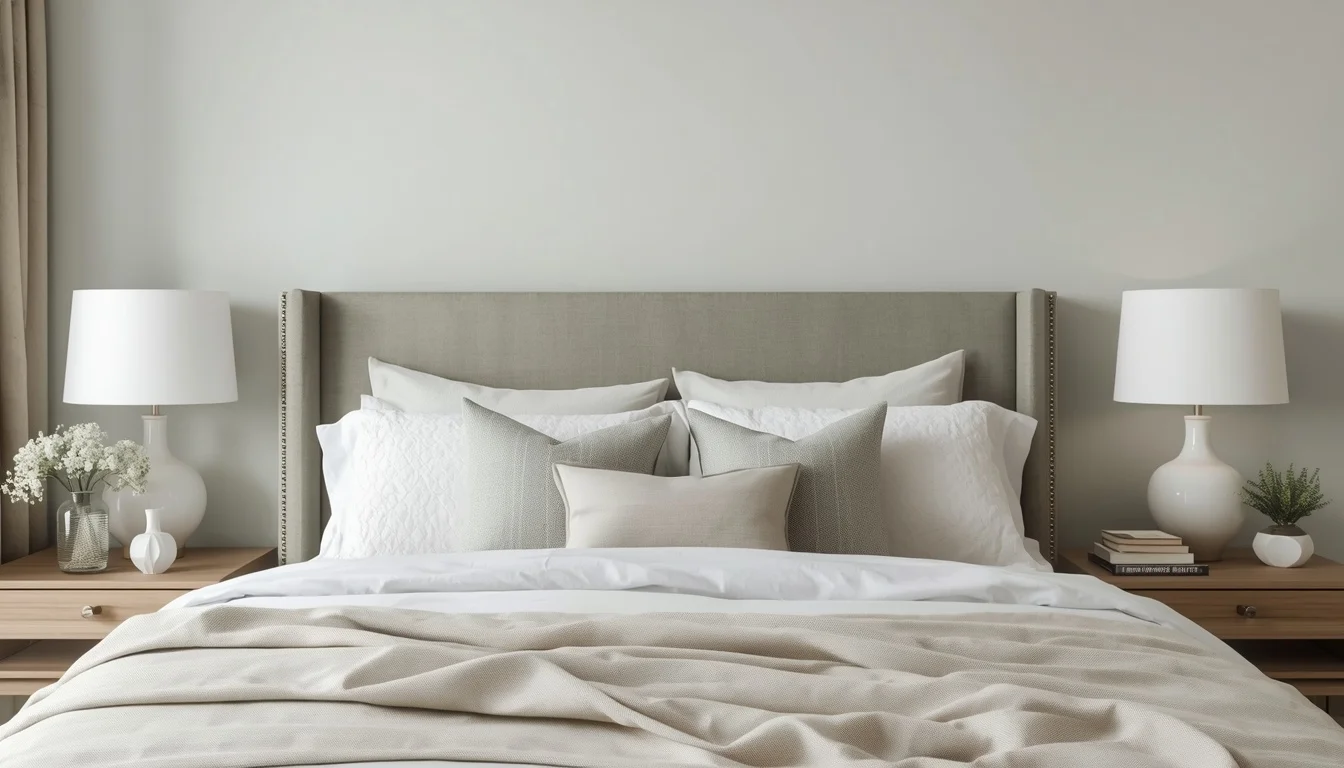
A sage green linen headboard is a lovely choice when you want colour without making the bedroom feel too bold. Its muted appearance works particularly well with warm white walls, cream bedding and light oak furniture.
Choose a simple rectangular shape if you prefer a clean, understated look. For extra texture, look for a linen or linen-look fabric with a visible weave.
This combination is especially useful in bedrooms where you want the headboard to stand out gently rather than dominate the entire room. Add a soft beige throw and a pair of understated bedside lamps to complete the look.
2. Add Luxury With an Emerald Green Velvet Headboard
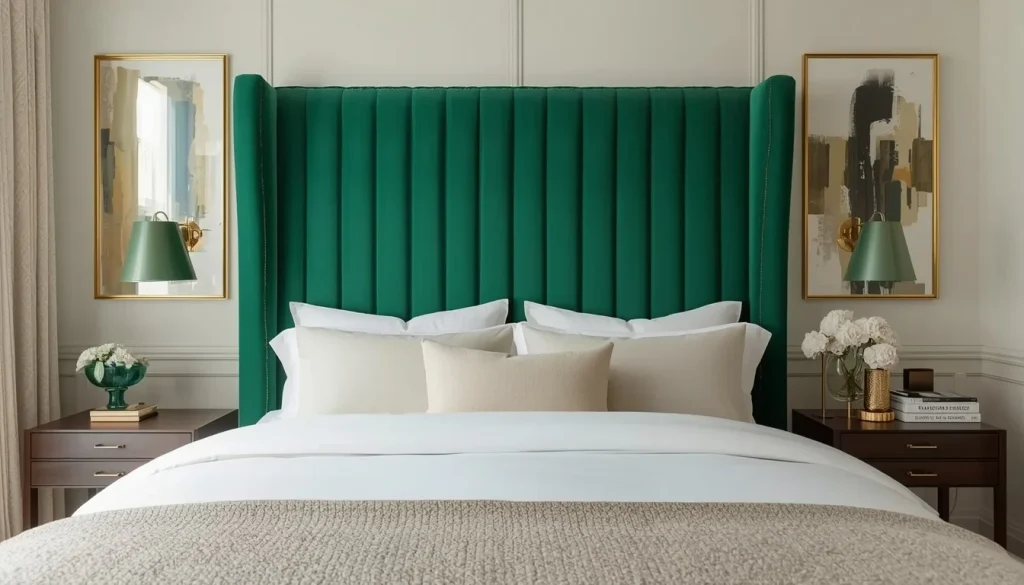
Emerald green velvet brings depth and richness to a bedroom. Because the fabric has a soft pile that reflects light differently depending on its direction, the colour can appear slightly different across the headboard.
A tall or channel-tufted design can make emerald velvet feel especially striking. Pair it with cream or ivory bedding, warm brass bedside lamps and simple furniture.
You do not need to introduce emerald green everywhere. Let the headboard provide the main colour statement and repeat the shade through one or two smaller accessories.
3. Choose an Olive Green Headboard With Walnut Details
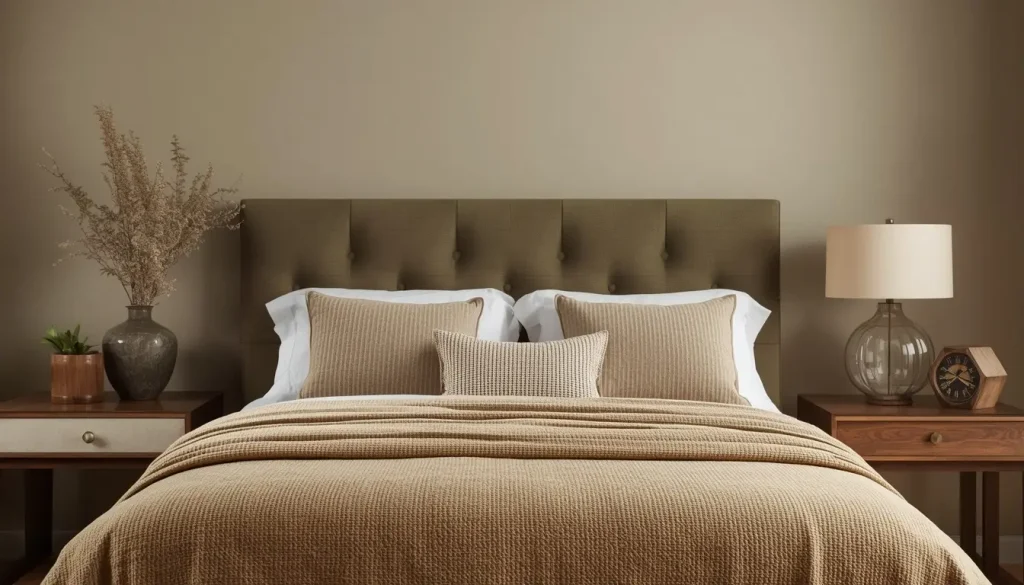
Olive green and walnut make a natural-looking combination. The warm undertones of walnut furniture can balance the earthy quality of olive upholstery, creating a bedroom that feels comfortable rather than overly formal.
Try an olive fabric headboard with walnut bedside tables, a warm beige bedspread and natural-textured cushions.
This is a good option if you enjoy earthy interiors but do not want a rustic theme. Keep the furniture lines relatively simple and let the wood grain and upholstery provide most of the character.
4. Make a Statement With a Forest Green Wingback Headboard
A forest green wingback headboard creates a more traditional and substantial look. The extended sides frame the bed, making it feel like a defined feature rather than just another piece of furniture.
This design works particularly well in larger bedrooms where there is enough space around the bed. Choose a deep upholstered finish for a classic appearance, or a simpler wingback with minimal detailing for a more contemporary result.
Balance the darker green with light bedding, warm wood and soft lighting. Before buying, check the total width of the headboard, including its wings, to make sure it will fit comfortably between bedside tables or walls.
5. Try an Arched Green Headboard for a Softer Silhouette
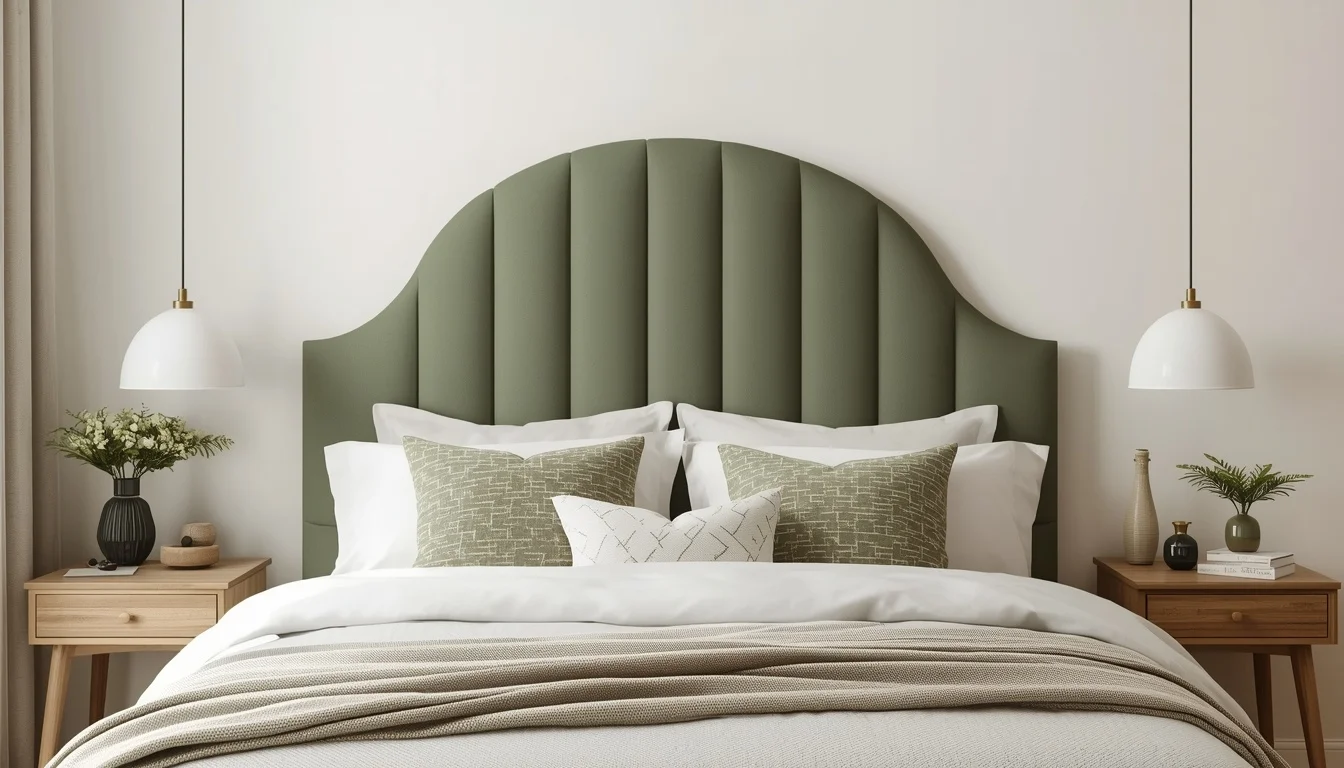
An arched green headboard can soften a bedroom filled with straight lines and rectangular furniture. Its rounded top creates a gentle focal point without relying on elaborate decoration.
Sage and muted olive are particularly easy to style in this shape. Place the headboard against a simple cream or warm white wall so its outline remains clear.
An arched design can also work well in a smaller bedroom, provided its overall width and height suit the bed. Avoid choosing an oversized model that leaves too little visual space around the bedside furniture.
6. Add Character With a Scalloped Green Headboard
A scalloped headboard has a decorative, curved outline that gives the bed a more playful and distinctive appearance. It can suit bedrooms with vintage-inspired details, soft textiles or a relaxed boutique-hotel feel.
For a balanced result, choose a solid shade such as sage, olive or muted emerald rather than a fabric with a complicated print.
Keep the surrounding furniture relatively simple. A scalloped headboard already has a noticeable shape, so it usually does not need an elaborate wall display or several competing decorative details.
7. Use a Vertical Channel-Tufted Green Headboard
A vertical channel-tufted headboard features repeated padded sections that run from top to bottom. These lines create texture and give the bed a more structured appearance.
Emerald, forest and deep olive are strong options if you want a dramatic finish. Sage can make the same design feel lighter and more relaxed.
This style works particularly well in modern bedrooms with clean-lined bedside tables and simple bedding. Check the spacing and depth of the channels before buying, as very deep sections may require more careful cleaning.
8. Choose a Classic Button-Tufted Green Headboard
Button tufting adds a traditional upholstered detail that can make a bedroom feel more established and elegant.
A green button-tufted headboard pairs nicely with cream bedding, warm wood furniture and classic bedside lamps. For a more contemporary interpretation, choose a simple rectangular frame and avoid too many additional decorative details.
The buttons and folds can collect dust, so consider how easy the upholstery will be to maintain. A soft brush attachment and the manufacturer’s recommended cleaning method are useful for routine care.
9. Create a Minimal Look With a Low-Profile Green Headboard
A low-profile headboard is a practical choice when you prefer a simple bedroom or have limited vertical space behind the bed.
Choose a slim upholstered design in sage, olive or muted green. Pair it with plain bedding, compact bedside tables and a restrained colour palette.
This approach is useful in rooms with low ceilings, sloped ceilings or windows positioned close to the bed. Measure the available wall space before choosing the height, especially if the headboard needs to fit below a windowsill or wall-mounted light.
10. Make an Impact With a Tall Upholstered Green Headboard
A tall headboard can give the bed a more substantial appearance and create a strong focal point. Deep green upholstery is particularly effective when you want the bed to feel like the main feature of the room.
Try a tall rectangular headboard in forest or emerald green with warm neutral bedding. Wall-mounted bedside lights can help keep the area around the bed uncluttered.
Before choosing this design, consider the ceiling height, window position and location of wall fixtures. A headboard that looks impressive in a large showroom may feel overwhelming in a compact bedroom.
11. Extend the Look With an Extra-Wide Green Headboard
An extra-wide headboard stretches beyond the edges of the mattress, creating a more architectural look. It can visually connect the bed with the bedside tables and make the sleeping area feel more deliberate.
This design is especially useful in larger bedrooms with enough wall space to accommodate the wider panel.
You could choose a simple upholstered rectangle in olive or sage, or use a deeper emerald shade for more contrast. Measure the wall and the space between surrounding furniture carefully. The headboard should not block switches, sockets, doors or access to wardrobes.
12. Introduce Texture With a Green Bouclé Headboard
Bouclé upholstery has a looped, textured surface that gives a headboard a soft and tactile appearance. In sage or muted olive, it can create a relaxed, contemporary look.
Pair it with smooth cotton bedding, light wood furniture and simple lighting. The contrast between the textured headboard and smoother materials helps the bedroom feel layered without looking busy.
Before purchasing bouclé, check the care instructions and fabric construction. Some textured materials may catch on jewellery, claws or sharp objects more easily than tightly woven upholstery.
13. Pair a Green Headboard With Botanical Wallpaper
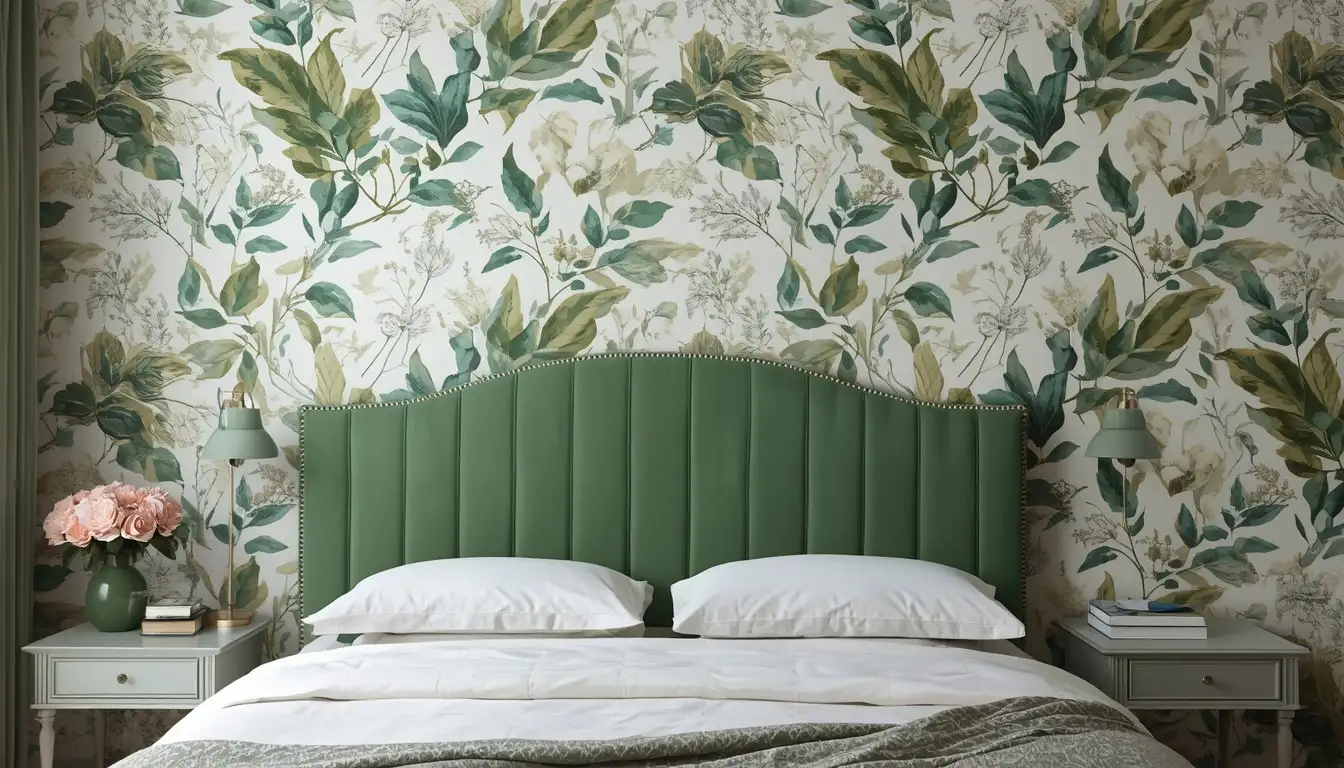
A green headboard can look beautiful against botanical wallpaper, but the two elements need to work together rather than compete.
If the wallpaper has large leaves or a busy pattern, choose a plain green headboard in a shade that appears in the print. A simpler botanical design can give the room interest without overwhelming the bed.
For example, a muted sage headboard can sit comfortably against a warm white wallpaper with subtle green foliage. If the wallpaper is darker, cream bedding can create a useful visual break.
This approach suits bedrooms where you want more personality than a plain painted wall but still want the headboard to remain the main feature.
14. Keep It Elegant With a Green Headboard and Neutral Walls
One of the easiest ways to style a green headboard is to keep the walls neutral. White, cream, beige and warm greige can all provide a quiet background for the upholstery.
This arrangement is particularly practical when you rent your home or prefer not to commit to a strong wall colour.
Choose the wall shade according to the headboard’s undertone. A warm olive may look more balanced against cream or beige, while a cooler sage can work well with soft white or gentle grey.
If you are deciding between several shades, take a look at these green bedroom ideas for broader colour inspiration. Keep your new article’s focus on the headboard itself rather than repeating general room-decorating ideas.
15. Combine a Green Headboard With Light Oak Furniture
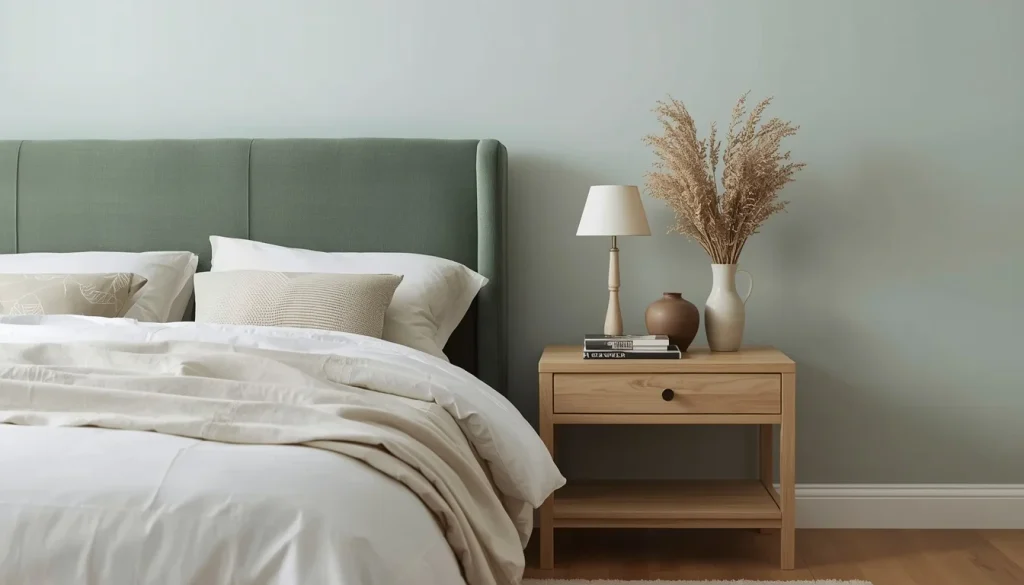
Light oak furniture gives a green headboard a fresh and relaxed setting. The pale wood helps balance deeper upholstery and works especially well with sage, eucalyptus and muted olive.
Try a sage upholstered headboard with an oak bedside table, cream duvet and a natural-fibre rug. Simple ceramic lamps or small framed prints can finish the arrangement.
This combination is a good choice for Scandinavian-inspired and contemporary bedrooms. It also gives you flexibility if you decide to change your bedding or accessories later.
16. Style a Green Headboard With Dark Wood Furniture
Dark wood creates more contrast and gives a green headboard a richer appearance. Walnut, deep brown and other dark timber finishes can work particularly well with olive, forest and emerald upholstery.
To stop the room from feeling too heavy, introduce lighter elements around the bed. Cream bedding, ivory curtains and a warm neutral rug can provide enough contrast.
You can also use brass or brushed-metal details to connect the furniture and upholstery. Keep the number of finishes limited so the room feels coordinated rather than overly decorated.
17. Add Contrast With Cream, Beige or Blush Bedding
Bedding can completely change how a green headboard looks. Cream and beige create a soft, understated combination, while muted blush adds a gentle contrast.
For a simple arrangement, start with white or ivory sheets, add a beige duvet cover and finish with two or three green or blush cushions.
If your headboard is already a strong emerald or forest green, avoid adding too many competing colours. A neutral bedspread will usually let the upholstery stand out more clearly.
18. Highlight a Green Headboard With Brass or Black Details
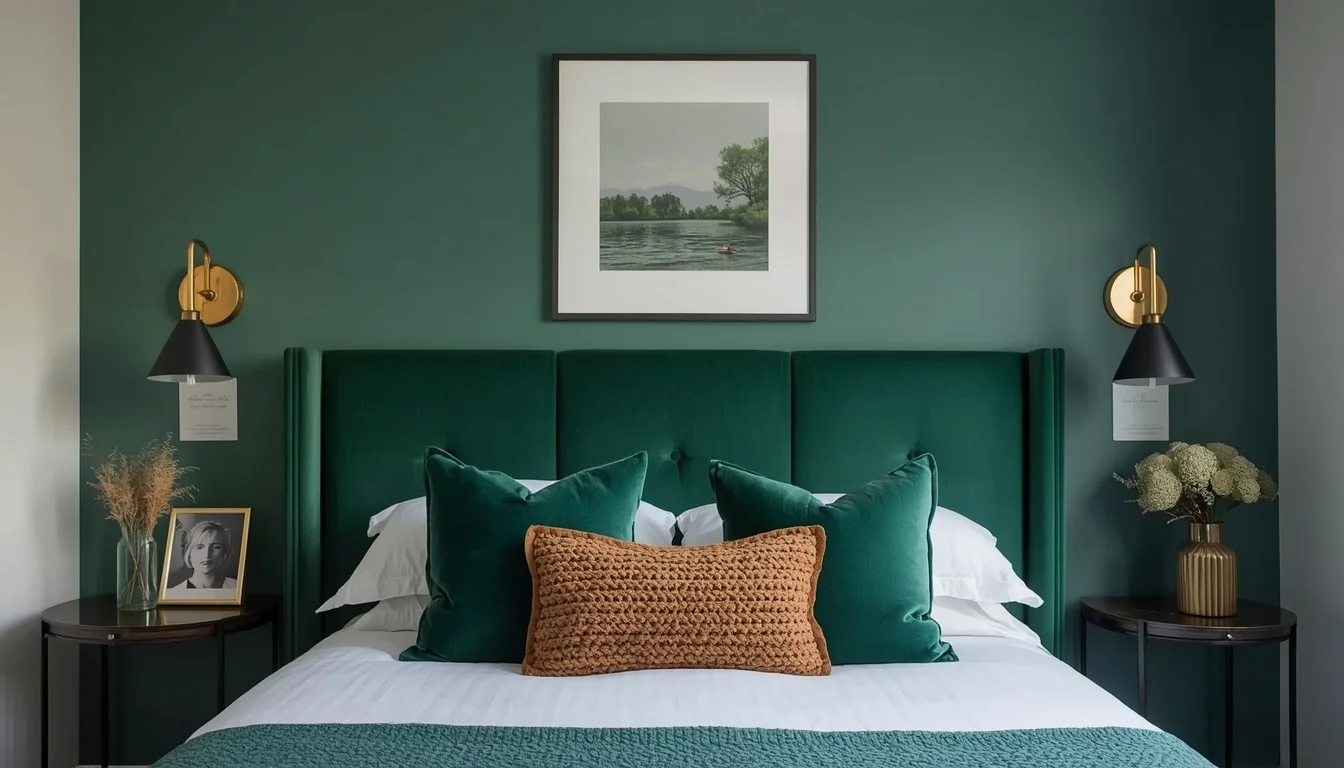
Lighting and hardware can help a green headboard feel more connected to the rest of the bedroom.
Brass or warm gold finishes add warmth to emerald and forest green. Matte black can create a sharper, more modern contrast, particularly with sage or olive upholstery.
You could use matching bedside lamps, wall sconces, picture frames or drawer handles. Repeating one finish in a few places often looks more considered than mixing several metals throughout the room.
Check the placement of wall lights before installation so they provide useful reading light without interfering with the headboard.
19. Choose a Green Headboard With Decorative Piping
Decorative piping is a narrow strip of fabric or trim that outlines the shape of an upholstered headboard. It is a small detail, but it can make a plain design feel more tailored.
A sage headboard with cream piping gives a subtle contrast. Emerald upholstery with dark piping can create a more defined and dramatic finish.
This style is useful if you want something more distinctive than a plain rectangular headboard but do not want the bulk of a wingback or elaborate tufted design.
20. Refresh an Existing Bed With a DIY Green Headboard Cover
Replacing a complete bed is not always necessary when you want to introduce green. Reupholstering an existing headboard or using a suitable removable cover may provide a more affordable update.
Choose a fabric designed for upholstery rather than a lightweight decorative material. Measure the headboard carefully and check whether its shape, padding and construction are suitable for the method you plan to use.
For a permanent reupholstery project, you may need appropriate tools, padding and fastening materials. If the existing headboard is damaged or structurally unstable, repairing it before adding new fabric is important.
A removable cover can be convenient, but make sure it fits securely and does not interfere with the headboard’s mounting system.
21. Use a Slim Green Headboard in a Small Bedroom
A slim green headboard can bring colour into a small bedroom without taking up too much visual or physical space.
Look for a design with a shallow profile, simple edges and a colour that works with the room’s existing furniture. Sage and muted olive are useful options when you want a softer appearance.
Floating bedside shelves or narrow tables can help preserve walking space on either side of the bed. Keep bedding relatively simple and avoid oversized cushions that make the sleeping area feel crowded.
In a compact room, accurate measurements matter more than decorative details. Check the headboard’s total width, depth and fixing requirements before ordering.
How to Choose the Best Green Shade for Your Headboard
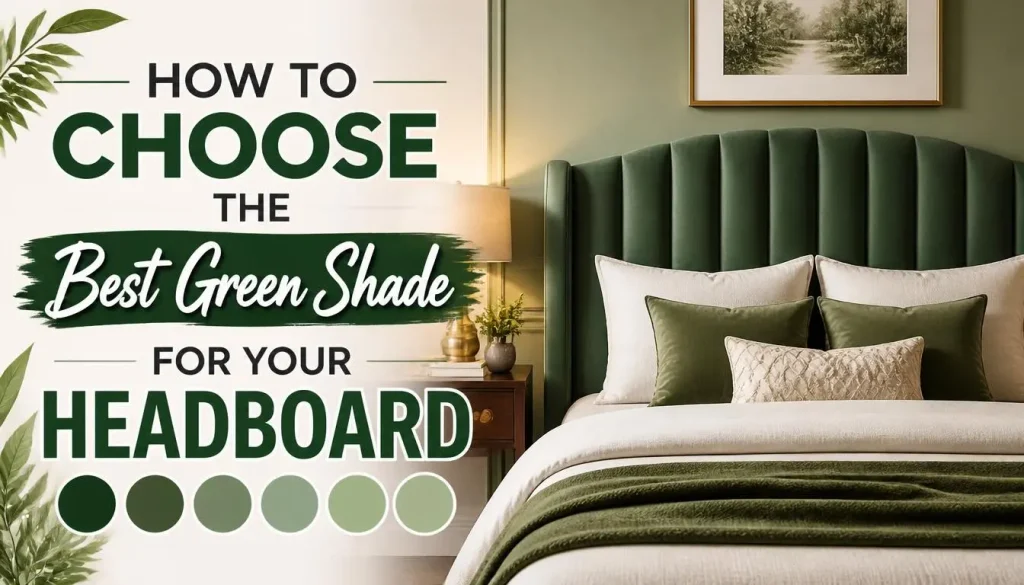
The right green depends on the atmosphere you want and the colours already in your bedroom. A shade that looks attractive on a product photograph may appear different under your own lighting.
Before making a purchase, compare fabric samples with your wall colour, flooring and bedding. Look at them during the day and again in the evening.
Sage Green for a Soft, Relaxed Look
Sage green is a muted shade that often has grey or earthy undertones. It works well in bedrooms where you want a gentle accent rather than a dramatic focal point.
Pair it with cream, warm white, pale wood and natural fabrics. Sage is also a useful starting point if you prefer a light, flexible colour scheme.
For more shade inspiration, explore these sage green bedroom ideas.
Olive Green for an Earthy Bedroom
Olive green has a warmer, more grounded appearance. It can bring out the natural tones in walnut furniture, beige bedding and woven accessories.
Choose olive when you want a green headboard that feels distinctive but still easy to combine with neutral materials.
Emerald Green for a Rich, Elegant Finish
Emerald green is a deeper, more saturated option. It can create a striking focal point, especially in velvet or other upholstery with a subtle sheen.
Cream, ivory, brass and dark wood are useful companions. If the room is already dark, use lighter bedding and curtains to balance the colour.
Forest Green for a Dramatic Focal Point
Forest green is a deep shade that works well when you want the bed to feel substantial. It suits wingback, tall and channel-tufted headboards particularly well.
Give it enough contrast with light bedding, warm lighting and a lighter wall colour. This helps the upholstery remain noticeable instead of blending into the background.
Which Fabric Is Best for a Green Upholstered Headboard?
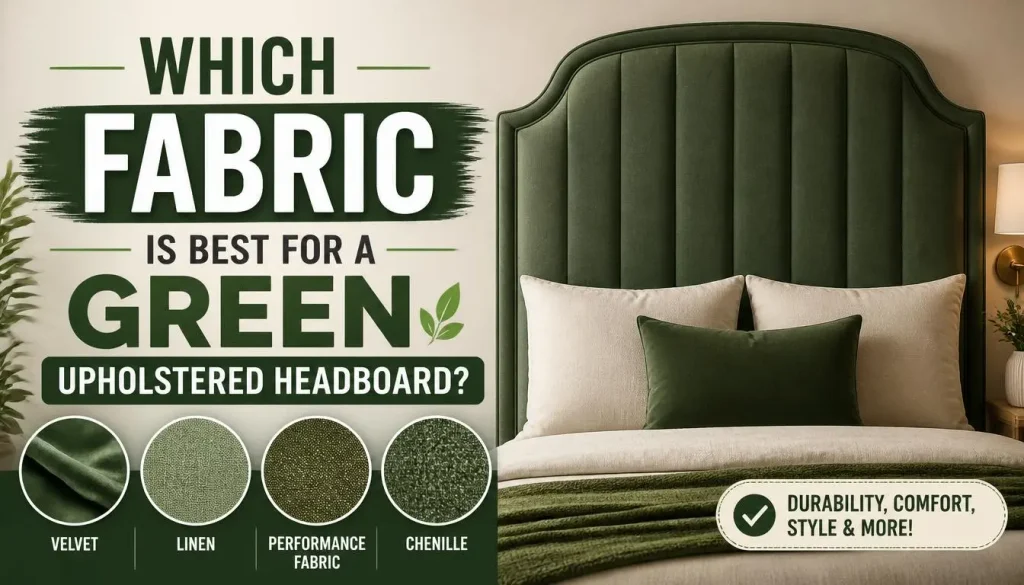
The fabric affects more than the appearance of a headboard. It also influences comfort, durability, cleaning and how well the colour looks under different lighting.
Velvet: A Rich and Soft Finish
Velvet creates a smooth, soft finish with visible changes in light and texture. It is a popular choice for emerald, forest and dark olive headboards.
However, velvet can show pressure marks or changes in pile direction. These characteristics are not necessarily defects. Check the manufacturer’s care instructions before cleaning, and avoid assuming that every velvet can be treated in the same way.
Linen and Linen-Look Fabric: A Relaxed Appearance
Linen and linen-look upholstery offer a more natural, understated texture. They work particularly well with sage and muted olive.
The visible weave can help the headboard feel less formal than velvet. Check the fabric composition and cleaning instructions, as natural and synthetic blends may have different care requirements.
Bouclé: A Tactile, Textured Style
Bouclé gives the headboard a soft, looped surface. It can create a cosy, contemporary look, especially when paired with smooth bedding and simple furniture.
Look closely at the weave and product care details before buying. Textured upholstery may need more attention if you have pets or frequently use the bed for activities beyond sleeping.
Performance Fabric: A Practical Option for Everyday Use
Performance upholstery may be worth considering if your bedroom sees regular use or you need a material that is easier to maintain.
Do not rely on the term “performance fabric” alone. Check the manufacturer’s information for stain resistance, cleaning methods, durability and any restrictions on using household cleaners.
If children or pets regularly use the bedroom, prioritise a fabric with clear care instructions and a construction suited to your household.
How to Style a Green Headboard With Your Existing Bedroom
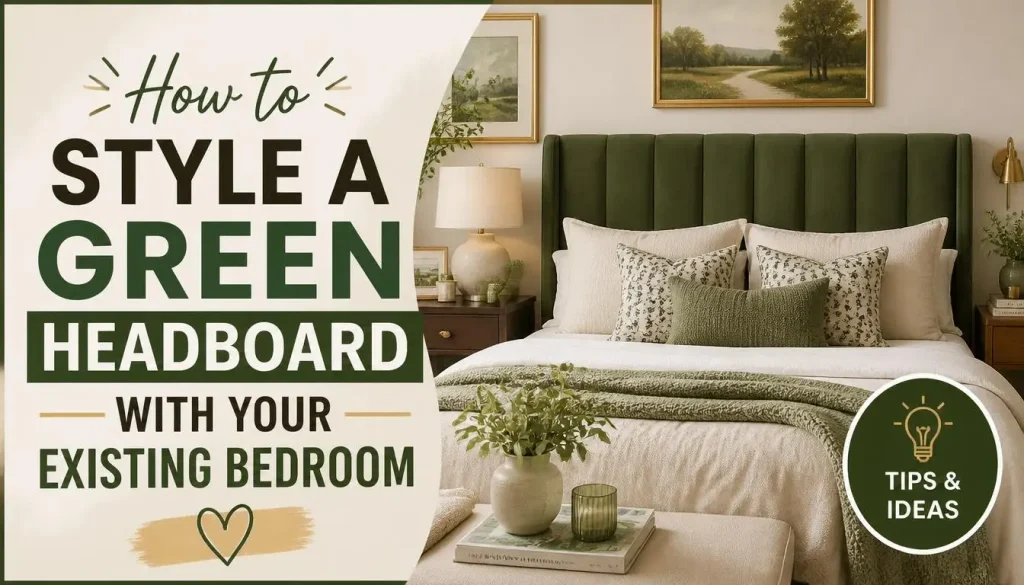
A new headboard should feel connected to the rest of the room. You do not need to replace all your furniture, but a few coordinated choices can make the change look intentional.
Choose Wall Colours That Complement the Green
White, cream, beige and greige are dependable backgrounds for many green headboards. Soft grey can also work, particularly with cooler sage tones.
If you already have grey walls, these grey and green bedroom ideas can help you understand how the two colours work together. For a headboard-focused design, use the wall colour as support rather than letting it become the main feature.
Select Bedding That Balances the Headboard
Neutral bedding is usually the easiest place to start. Cream, ivory, beige and warm white can soften a dark green headboard.
You can then introduce a secondary accent through cushions, a throw or a bed runner. Dusty pink, muted blue and terracotta can work, but use them in smaller amounts if the headboard is already bold.
Match the Headboard With Your Furniture
Natural oak, walnut, white and black furniture can all work with green upholstery. The best choice depends on the shade and the overall light level in your bedroom.
You do not need to buy matching furniture. In fact, combining different but compatible materials can make the room feel more personal.
Use Wallpaper or Wall Panelling Carefully
Wallpaper and wall panelling can give the area behind the bed extra interest. However, consider the headboard’s height and shape before adding more detail.
A plain headboard can sit comfortably against a patterned wall. If the headboard already has tufting, piping or a decorative silhouette, a simpler backdrop may be more effective.
Choose Useful Bedside Lighting
Bedside lighting should look good and serve a practical purpose. Wall sconces can free up table space, while table lamps are easier to move when you rearrange the bedroom.
Warm, comfortable lighting can bring out the richness of olive, emerald and forest green. Check the position of switches, cables and mounting points before installing fixtures.
How to Choose the Right Green Headboard Size
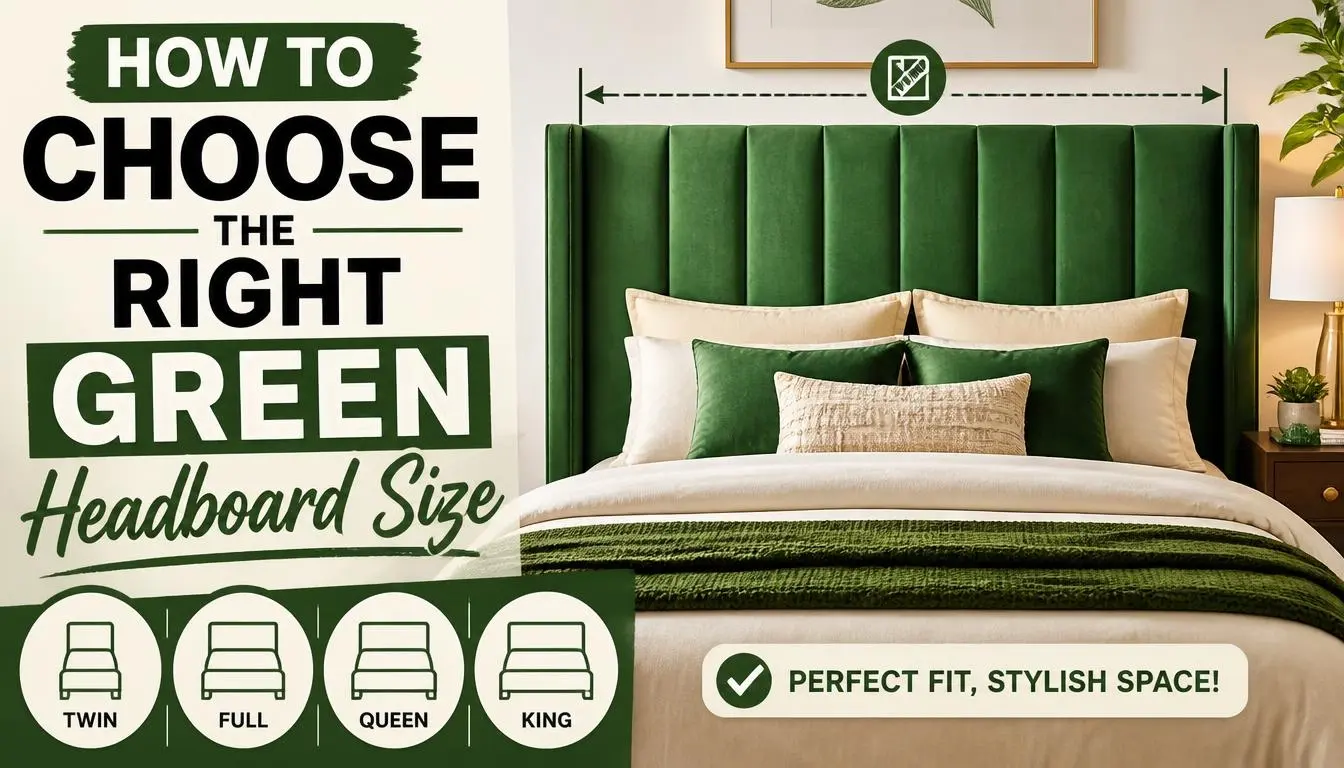
A beautiful headboard can still look wrong if its measurements do not suit the bed. Before ordering, measure the bed frame and the available wall space rather than relying only on the mattress size printed on the label.
Measure Your Bed Frame Before Buying
Measure the outside width of the bed frame, then compare it with the headboard’s stated dimensions. Do not assume the mattress and frame have identical measurements.
Check whether the product is designed to fit a particular frame or whether it requires separate brackets. The Morris & Co. upholstered headboard measuring guide provides a useful explanation of measuring and fitting considerations.
Choose a Suitable Headboard Height
Think about how much of the headboard you want to see above the mattress and pillows. A low design creates a quieter look, while a taller model provides a stronger focal point.
Also consider windowsills, wall lights, shelves and sloped ceilings. The tallest option is not automatically the best one for every bedroom.
Check Queen and King Bed Dimensions
Bed-size names can vary between countries and manufacturers. A Queen or King label does not always guarantee that two products have identical measurements.
For readers in the USA, UK, Canada and Australia, it is safer to compare the actual width and height in inches or centimetres. The Saatva headboard size and dimensions guide offers additional information to help with size comparisons.
Consider Mattress Height and Bedside Space
The mattress height affects how much of the headboard remains visible. A thick mattress or mattress topper can cover more of a low headboard than you expect.
Measure the space between the bed and nearby furniture too. An extra-wide design may look attractive but become inconvenient if it makes bedside tables difficult to access.
Wall-Mounted vs Bed-Frame-Mounted Green Headboards
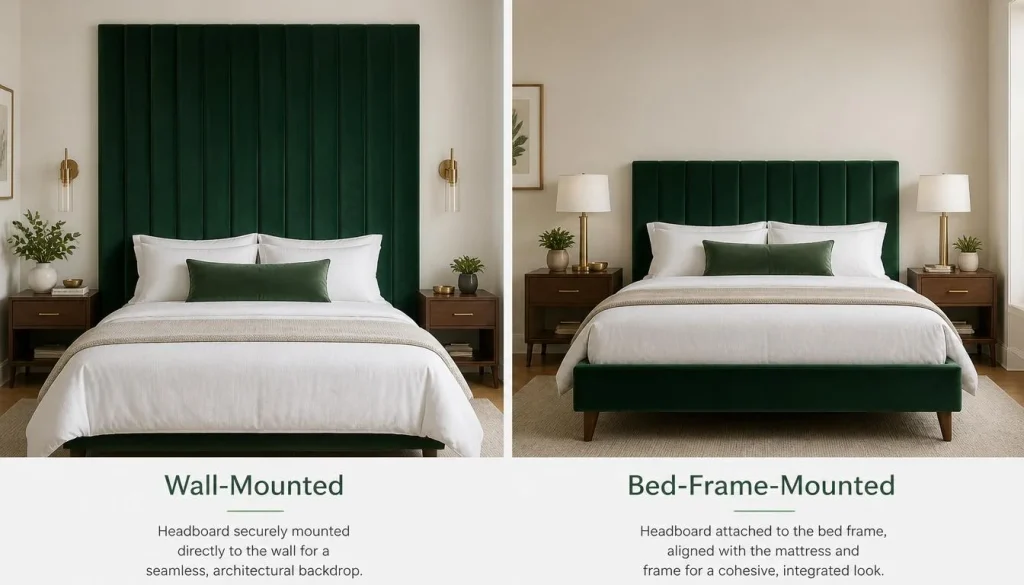
Not every headboard attaches to a bed in the same way. The correct mounting method depends on the product, bed frame and wall construction.
Benefits of Wall-Mounted Headboards
A wall-mounted headboard attaches directly to the wall rather than relying on the bed frame. It can provide flexibility when the bed frame does not have suitable fixing points.
It is particularly important to use the mounting hardware specified by the manufacturer. Wall construction, stud locations and the weight of the headboard all affect which fixings are suitable.
The Jane Clayton headboard fitting guide explains the general considerations for fitting headboards to a wall or bed.
Benefits of Bed-Frame-Mounted Headboards
A frame-mounted headboard attaches to compatible brackets or fixing points on the bed frame. This can make it easier to move the bed and headboard together.
However, compatibility is not universal. Some platform beds and adjustable bases may not accept a standard headboard without additional brackets or a separate mounting solution.
Check your bed manufacturer’s instructions before buying. For example, Leesa’s headboard compatibility guidance explains why some bases need specific attachments or a different headboard arrangement.
What to Check Before Installation
Before drilling or attaching anything, confirm the headboard’s weight, mounting method and supplied hardware. Check for cables or pipes before drilling into a wall.
If you are unsure about the wall construction or the correct fixings, get appropriate installation advice rather than guessing. Follow the headboard and bed-frame manufacturer’s instructions.
What to Check Before Buying a Green Headboard
A headboard should suit your bedroom in more ways than colour alone. Use this checklist before placing an order.
- Fabric quality: Check the fabric composition, weave and product details. Look for information about wear, texture and colour variation.
- Padding and comfort: If you like reading or watching television in bed, consider whether the headboard has enough padding to lean against comfortably.
- Measurements: Confirm the width, height, depth and mounting position. Compare these with your actual bed frame and available wall space.
- Frame compatibility: Make sure the headboard can attach to your bed or be installed using an appropriate alternative.
- Cleaning requirements: Read the care label and find out which cleaning methods are permitted.
- Sunlight exposure: Consider whether direct sunlight falls on the headboard. Prolonged exposure can affect some upholstery fabrics.
- Warranty and returns: Check the return policy, delivery conditions and warranty before ordering, especially for made-to-measure products.
A little preparation can prevent common problems such as buying the wrong size, choosing a fabric that is difficult to maintain or discovering that the headboard cannot attach to your existing bed.
How to Clean and Maintain a Green Upholstered Headboard
Upholstered headboards collect dust, hair and everyday marks because they sit close to the pillows and are often touched when people sit up in bed.
Start by checking the manufacturer’s cleaning instructions. Different fabrics require different methods, so avoid applying water, detergent or solvent cleaners without checking whether they are suitable.
For routine care, a soft upholstery attachment may be appropriate for removing dust. If a spill occurs, follow the fabric manufacturer’s guidance rather than rubbing the area aggressively.
Be particularly careful with velvet and textured fabrics. Brushing in the wrong direction or using too much moisture can affect the surface. Sleep Number’s upholstered furniture cleaning instructions explain why fabric-specific care and testing cleaners on a hidden area matter.
Also try to keep the headboard away from unnecessary direct heat and prolonged sunlight where practical. These simple precautions can help preserve its appearance over time.
Common Green Headboard Decorating Mistakes to Avoid
Even a well-chosen headboard can look out of place when the surrounding details are not considered. Watch out for these common mistakes:
- Choosing a headboard before measuring: Always check the bed frame, wall and surrounding furniture before ordering.
- Ignoring colour undertones: A green that looks perfect online may appear too grey, yellow or dark in your bedroom.
- Mixing too many strong patterns: If the headboard is already decorative, keep wallpaper and bedding relatively simple.
- Forgetting fabric maintenance: Check cleaning instructions before buying, especially for velvet and textured upholstery.
- Choosing an oversized design for a small room: Consider depth and overall width, not just the headboard’s height.
- Assuming every headboard fits every bed: Confirm the mounting system and compatibility with your frame.
- Making everything match exactly: A few related green accents usually look more natural than trying to match every item perfectly.
Frequently Asked Questions About Green Headboard Bedroom Ideas
What Bedding Goes Best With a Green Headboard?
Cream, ivory, beige and warm white bedding are easy choices for most green headboards. They provide contrast without competing with the upholstery. Blush pink, muted blue and terracotta can also work as smaller accents.
What Wall Colour Looks Best Behind a Green Headboard?
Warm white, cream, beige and greige are versatile options. Soft grey can also work with certain sage and muted green shades. The best choice depends on the headboard’s undertone, room lighting and existing furniture.
Is a Green Velvet Headboard Difficult to Clean?
Velvet requires fabric-specific care because its pile can show pressure marks and changes in direction. Follow the manufacturer’s instructions and use only approved cleaning methods. Do not assume that every velvet fabric can be cleaned with water.
Does a Green Headboard Look Good in a Small Bedroom?
Yes. A green headboard can work well in a small bedroom when its size and depth suit the available space. Slim, low-profile designs in sage or muted olive can be particularly easy to style.
Can I Attach a Green Headboard to My Existing Bed Frame?
Possibly, but it depends on the bed frame and headboard. Check whether the frame has compatible brackets or fixing points. Some platform beds and adjustable bases require special attachments or a wall-mounted alternative.
Should a Headboard Be Wider Than the Bed?
A headboard can be the same width as the bed frame or slightly wider, depending on the design. The important thing is to check the manufacturer’s measurements and make sure the extra width does not interfere with bedside tables, doors or other furniture.
Is a Wall-Mounted Headboard Better Than a Frame-Mounted One?
Neither is automatically better. Wall-mounted designs can be useful when the bed frame has no suitable fixing points, while frame-mounted headboards can move with compatible beds. Choose the option that works with your bed, wall and installation requirements.
What Is the Best Green Headboard Fabric for Homes With Pets?
There is no single fabric that suits every pet or household. Look for tightly constructed upholstery with clear durability and cleaning information. Check the manufacturer’s guidance on snagging, stains and maintenance before choosing a fabric.
Final Thoughts on Green Headboard Bedroom Ideas
A green headboard can be a simple way to give your bedroom more character without making permanent changes to the walls or replacing all your furniture. The right design depends on the look you prefer, the size of your bed and how much maintenance you are comfortable with.
Sage and linen create a softer, relaxed appearance. Olive works beautifully with natural wood, while emerald velvet and forest green offer a richer focal point. Arched, scalloped, wingback and channel-tufted designs provide different ways to introduce shape and texture.
Before buying, take time to compare fabric samples, measure your bed frame and check the mounting requirements. Think about how the headboard will work with your bedding, wall colour and bedside furniture.
Most importantly, choose a design that feels comfortable and practical for everyday use. A well-fitted green headboard should not only look good in a photograph; it should make your bedroom a space you genuinely enjoy spending time in.

“A comfortable home and a healthy lifestyle go hand in hand.”
Hi, I’m Ethan Carter, the founder and lead editor of TheBestHomeFit. I’m passionate about helping people create beautiful, functional living spaces while building healthier lifestyles at home. Over the years, I’ve spent countless hours researching home decor trends, testing home gym equipment, and reviewing products to help readers make smarter buying decisions.
Through TheBestHomeFit, I share practical home improvement ideas, honest product reviews, buying guides, and fitness tips designed for everyday homeowners. My goal is to make it easier for you to create a home that looks great, feels comfortable, and supports your well-being.
When I’m not researching the latest products or writing in-depth guides, you’ll usually find me redesigning a room, trying new home workout routines, or enjoying quality time with my family.