

Green and brown have a natural connection that makes them a beautiful combination for a bedroom. Green brings freshness and character, while brown adds warmth, depth, and a sense of comfort. Together, they can create anything from a relaxed modern retreat to a rich, rustic bedroom.
The challenge is getting the balance right. Dark green walls with heavy brown furniture can make a small room feel crowded, while using too many similar wood tones may leave the space looking flat. The right shades, textures, lighting, and furniture choices make all the difference.
These green brown bedroom decorating ideas will help you bring the two colors together in a way that feels intentional and comfortable. Whether you already own a dark wood bed, want to introduce olive green walls, or prefer a few simple decorative changes, you will find practical ideas you can adapt to your room and budget.
Do Green and Brown Go Together in a Bedroom?
Yes. Green and brown work well together because they are both strongly associated with natural materials and outdoor landscapes. Think of green foliage against tree trunks, moss growing around rocks, or leaves surrounded by warm earth tones. That familiar relationship makes the combination feel grounded rather than overly coordinated.
The two colors also perform different jobs. Green can become the main visual feature through painted walls, bedding, curtains, or upholstery. Brown provides structure through wooden furniture, leather, flooring, and decorative details.
The result depends on the shades you choose. Soft sage with light oak creates a gentle, relaxed bedroom. Olive with walnut feels warmer and more traditional. Forest green with chocolate brown produces a deeper, more dramatic look.
The combination is not limited to rustic interiors. With simple furniture, clean lines, and carefully chosen accessories, it can also work in modern, minimalist, vintage, and contemporary bedrooms.
Best Green and Brown Color Combinations for a Bedroom
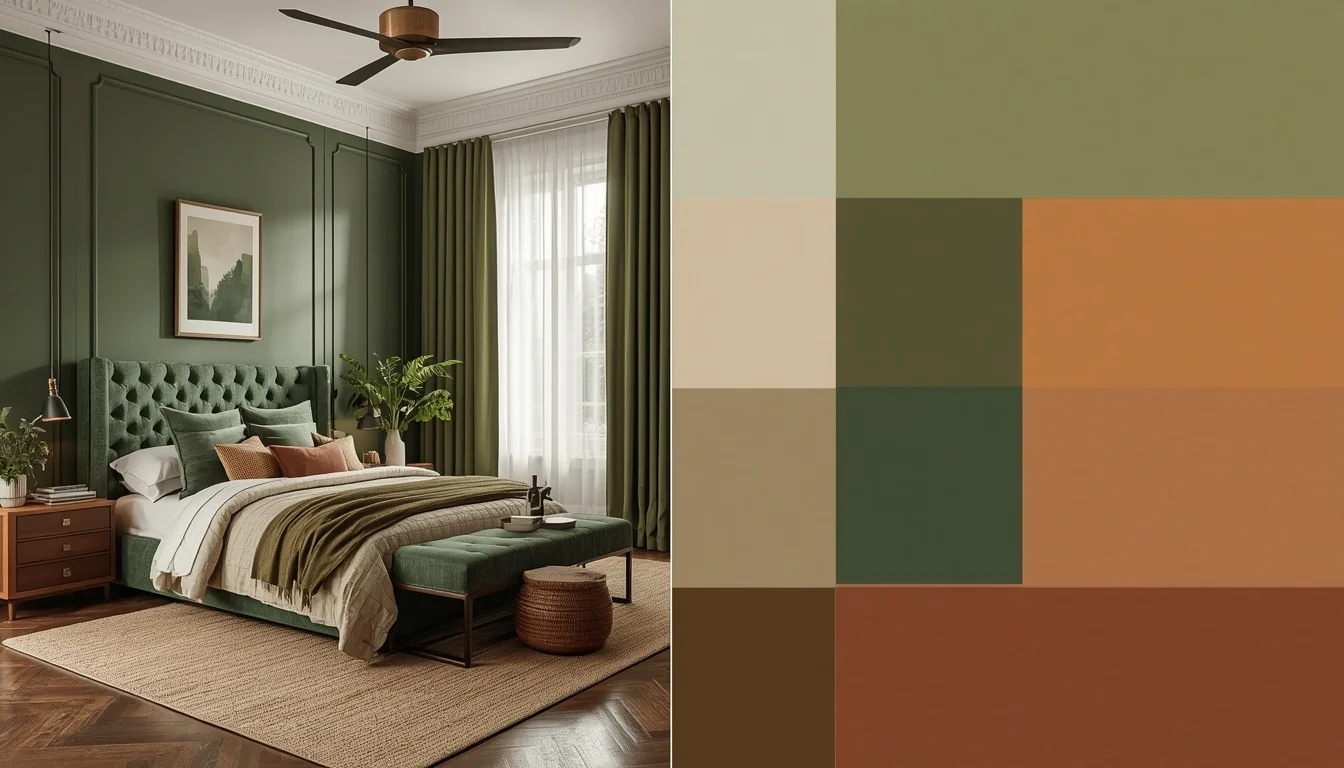
Before choosing paint or buying furniture, decide which green and brown shades suit your room. A color combination that looks attractive in a large, bright bedroom may feel too heavy in a smaller space.
Use this guide as a starting point:
| Green shade | Brown shade | Overall look |
|---|---|---|
| Sage green | Walnut brown | Soft, relaxed, and modern |
| Olive green | Chocolate brown | Warm and earthy |
| Forest green | Cognac brown | Rich and dramatic |
| Moss green | Chestnut brown | Natural and rustic |
| Emerald green | Espresso brown | Elegant and luxurious |
| Eucalyptus green | Caramel brown | Light and contemporary |
| Pale green | Light oak brown | Airy and understated |
Sage Green and Walnut Brown
Sage green is a muted shade that often has gray or earthy undertones. It works particularly well with walnut because the wood’s warm appearance gives the green more depth.
Use sage on the walls or headboard and introduce walnut through the bed frame, nightstands, dresser, or shelving. Cream bedding can soften the contrast and keep the room from looking too coordinated.
Olive Green and Chocolate Brown

Olive green has a warm, earthy character that pairs naturally with chocolate brown. This combination is ideal when you want a cozy bedroom with a little more depth.
Try olive walls with chocolate brown bedding, or reverse the arrangement by keeping the walls neutral and using olive textiles with dark wooden furniture.
Forest Green and Cognac Brown
Forest green has a strong presence, so it looks especially good with warm cognac leather or medium brown wood.
A forest green feature wall behind a cognac upholstered headboard can create a striking focal point. Keep the remaining walls and bedding lighter to prevent the room from feeling too dark.
Emerald Green and Espresso Brown
Emerald green is richer and more saturated than sage or olive. Pairing it with espresso brown creates an elegant, dramatic bedroom.
This combination works well through an emerald velvet headboard, dark brown bedside tables, warm metallic details, and cream bedding. Use emerald selectively if the room does not receive much natural light.
Moss Green and Chestnut Brown
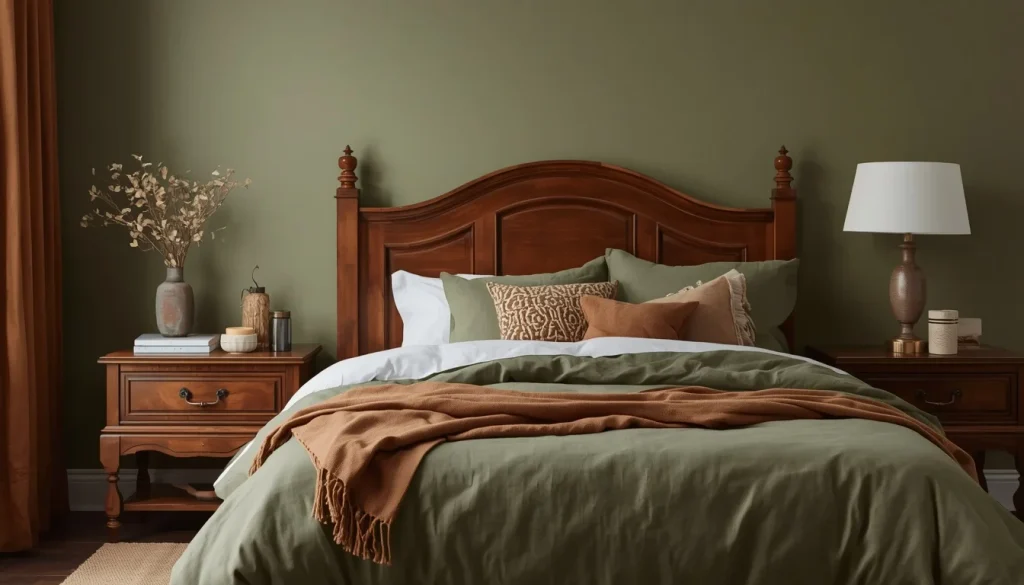
Moss green and chestnut brown create a softer, nature-inspired palette. Try moss green bedding with chestnut wood furniture, or use a muted green wall behind a traditional wooden bed.
Natural fabrics such as linen, cotton, and wool help this combination feel comfortable rather than overly styled.
21 Green and Brown Bedroom Decorating Ideas
You do not need to use both colors in equal amounts. Some bedrooms look best with green walls and brown furniture, while others use brown as the main color and introduce green through smaller details.
The following ideas show different ways to make the combination work.
1. Sage Green Walls With Walnut Brown Furniture
Sage green walls provide a calm background for walnut furniture. The muted wall color prevents the warm wood from making the room feel overly traditional.
Start with a sage shade on the wall behind the bed or across all four walls. Add a walnut bed frame, matching bedside tables, and a dresser if the room has enough space.
For bedding, choose cream, oatmeal, or warm white. A textured throw and a simple rug will add softness without introducing too many competing colors.
This combination is a good starting point if you want a bedroom that feels warm and modern without using very dark shades.
2. Olive Green Walls With Chocolate Brown Bedding
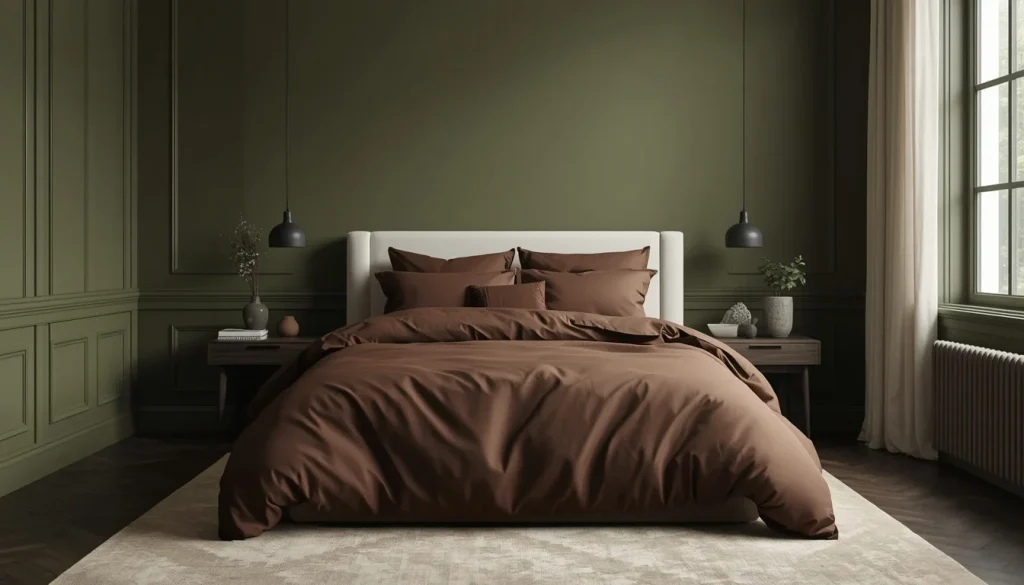
If you prefer a deeper, more enveloping bedroom, try olive green walls with chocolate brown bedding.
The green creates an earthy backdrop, while the brown duvet cover or quilt adds visual weight to the bed. Choose a slightly lighter brown for cushions or throws so the layers do not blend into one solid block.
A cream rug or warm white curtains can provide contrast. This is especially helpful when the bedroom has dark flooring or limited daylight.
3. Forest Green Accent Wall With Cognac Leather
A forest green accent wall creates a strong focal point behind the bed. Cognac leather adds warmth and helps the dark green feel more inviting.
You can introduce cognac through a leather headboard, an upholstered bench, a bedside chair, or smaller decorative accessories.
Keep the other walls a warm neutral and choose bedding in cream or light beige. Brass or antique bronze lamps can complete the look without making the room feel too formal.
This idea works particularly well when you want a dramatic bedroom without painting every wall a dark color.
4. Emerald Green Headboard With Espresso Brown Furniture
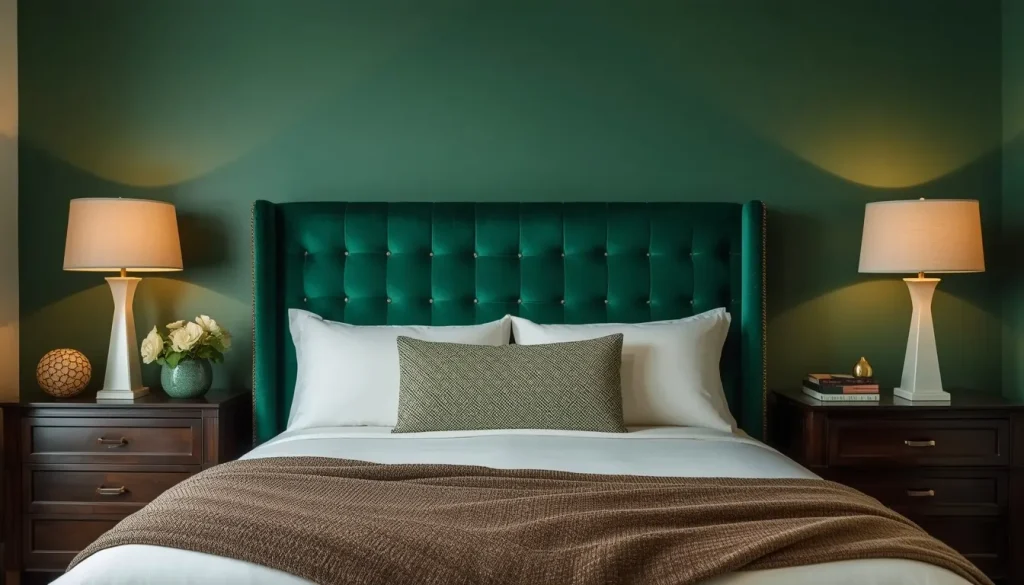
You do not need green walls to create a green and brown bedroom. An emerald upholstered headboard can provide all the color you need.
Choose velvet or a textured fabric for the headboard, then pair it with espresso brown nightstands and a dark wooden bed base.
Use simple cream bedding to give the richer materials enough space. A pair of warm-toned bedside lamps can make the room feel comfortable in the evening.
This approach is useful if you want a bold focal point but prefer to keep the walls neutral.
5. Brown-Dominant Bedroom With Green Accent Decor
Green does not have to be the dominant color. If you already have dark brown furniture or warm wood floors, let those elements lead the design.
Start with a brown wooden bed, wardrobe, and nightstands. Introduce green through bedding, cushions, curtains, artwork, or an upholstered chair.
Olive and moss are particularly suitable because their earthy undertones connect easily with brown furniture. If the room feels too dark, add cream bedding and lighter window treatments.
This is one of the most practical options for anyone who wants to refresh an existing brown bedroom without replacing large furniture pieces.
6. Mocha Brown Accent Wall With Soft Green Bedding
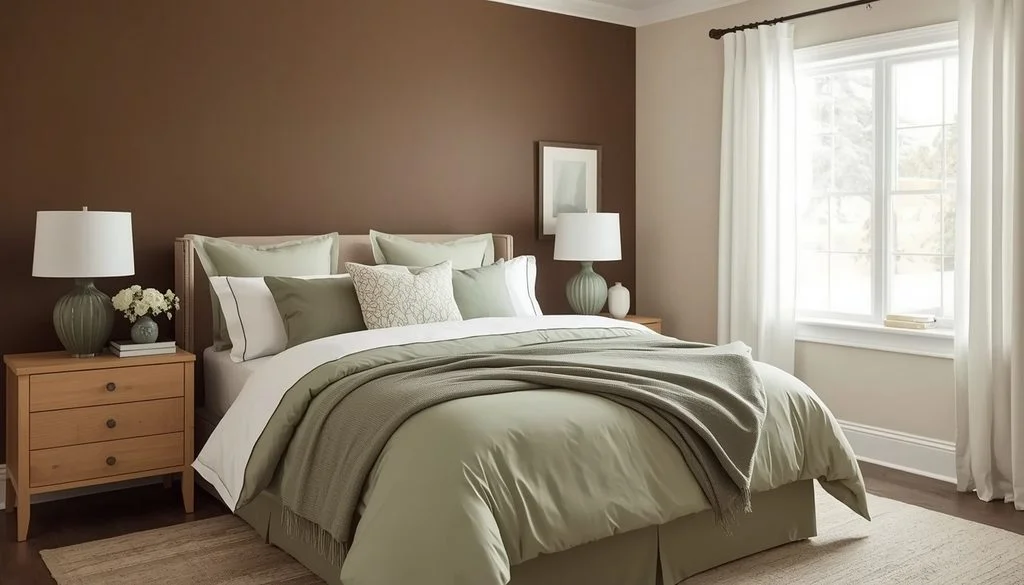
A mocha brown wall behind the bed can create a warm backdrop for soft green bedding.
Choose a brown that is muted rather than extremely dark if the room is small. Then use sage, eucalyptus, or pale olive through the duvet cover, cushions, and throw.
Light wood furniture and warm white curtains help balance the arrangement. Repeat the green in one or two smaller details, such as a ceramic vase or framed artwork, to make the room feel connected.
7. Green and Brown Two-Tone Bedroom Walls
Two-tone walls can bring both colors into the room without requiring elaborate decoration.
One option is to paint the lower portion of the wall a muted olive or sage and keep the upper section warm white. Another is to use a brown painted section behind the bed with green on the adjacent walls.
A horizontal division can make a wall feel more structured, while a simple vertical color block can create a modern feature.
Before painting, mark the intended dividing line with painter’s tape and check the proportions from the doorway and from the bed.
8. Green Wall Paneling With Dark Walnut Wood Details
Wall paneling adds architectural interest and gives a green bedroom a more finished appearance.
Consider sage or olive board-and-batten behind the bed, with dark walnut nightstands and a matching picture frame or mirror.
For a traditional room, use simple rectangular molding. For a more contemporary result, try vertical paneling or narrow slats.
Keep the bedding relatively plain so the wall remains the main feature. If you want more ideas for using green across different bedroom styles, explore these green bedroom ideas.
9. Botanical Green and Brown Wallpaper Behind the Bed
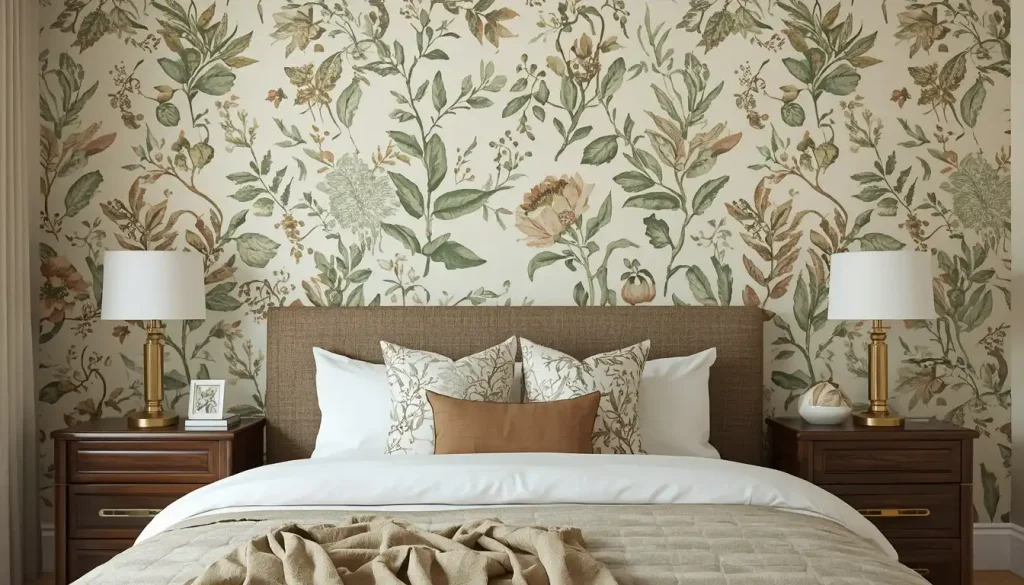
Botanical wallpaper can combine green and brown in a single pattern. Look for designs featuring leaves, branches, soft floral details, or woodland-inspired illustrations.
Use it behind the headboard rather than covering every wall if the pattern is large or detailed.
Pair the wallpaper with plain brown wood furniture and neutral bedding. Pull one of the lighter colors from the wallpaper into the curtains or rug to connect the overall scheme.
This is a good option if you want a decorative wall without choosing several separate paint colors.
10. Soft Green Ceiling With Brown Wooden Details
A green ceiling is an interesting alternative to a traditional accent wall. It draws the eye upward and can make the bedroom feel more distinctive.
Choose a muted sage or eucalyptus shade if you want a subtle result. Pair it with brown wooden furniture, simple cream walls, and natural bedding.
You can repeat the brown through a wooden ceiling light, picture frames, or bedside tables. Avoid introducing too many strong patterns because the ceiling already provides a noticeable design feature.
If your ceiling is low, test the paint first and consider a lighter green so the room does not feel visually compressed.
11. Green Painted Dresser With Warm Brown Furniture
A painted dresser is an easy way to introduce green without changing the walls or buying a new bed.
If you already own a brown wooden bed and wardrobe, consider refreshing an older dresser in muted sage, olive, or moss green.
Keep the finish consistent with the room’s style. A matte or satin finish can feel understated, while new brass or dark metal handles can make the furniture look more intentional.
Before painting, check that the existing surface is suitable for the product you plan to use and follow its preparation and drying instructions.
12. Brown Wood Slat Wall With Sage Green Bedding
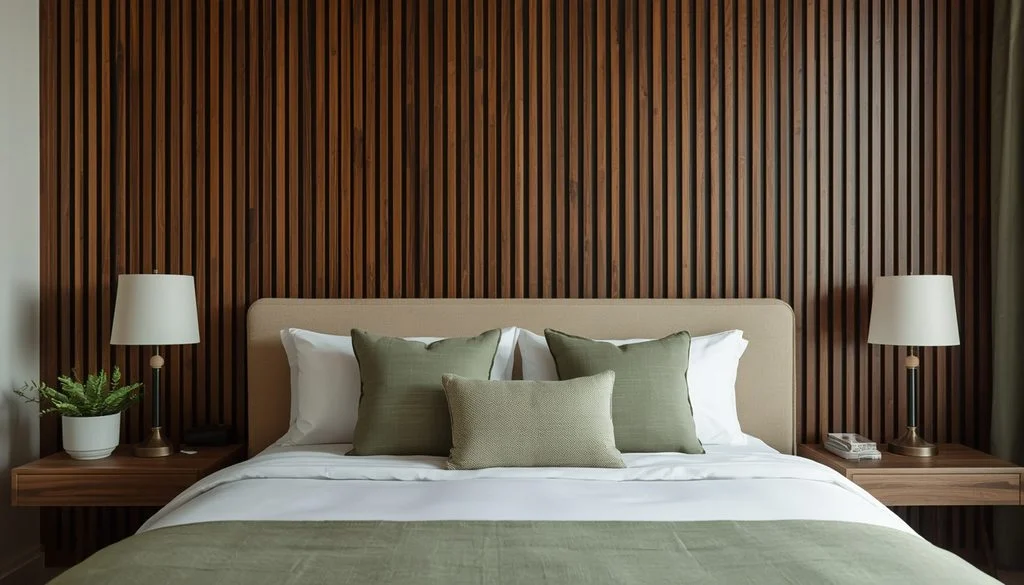
A wooden slat wall provides texture and warmth behind the bed. Choose walnut, oak, or another brown-toned finish depending on how dark you want the room to feel.
Then introduce sage through bedding, cushions, or a soft upholstered headboard.
The vertical lines can make the wall feel taller, while the softer green prevents the wood from dominating the room.
Use simple bedside tables and restrained decoration. The wood slats should remain the main architectural feature.
13. Green and Brown Striped Bedding and Curtains
Stripes offer a simple way to bring the two colors together through fabric.
Try a duvet cover with narrow green and brown stripes, then repeat one of the colors in the curtains or cushions. You can also mix a striped bedspread with plain sage sheets and a chocolate brown throw.
For a calm look, choose muted colors and subtle stripe widths. Large, high-contrast stripes can make the bed feel busy, particularly in a small bedroom.
14. Layer Green and Brown Textures for a Cozy Bedroom
A successful color scheme is not only about paint and furniture. Texture can make green and brown feel more natural and comfortable.
Try combining:
- Washed cotton or linen bedding.
- A soft wool or knitted throw.
- A brown leather or fabric headboard.
- A woven rug or jute basket.
- Wooden bedside tables.
- Velvet or textured cushions.
The materials do not need to match exactly. A mix of smooth, soft, and slightly rough surfaces makes the room feel more lived-in.
Keep the color palette controlled so the different textures add interest without making the bedroom look cluttered.
15. Rustic Bedroom With Moss Green and Reclaimed Wood
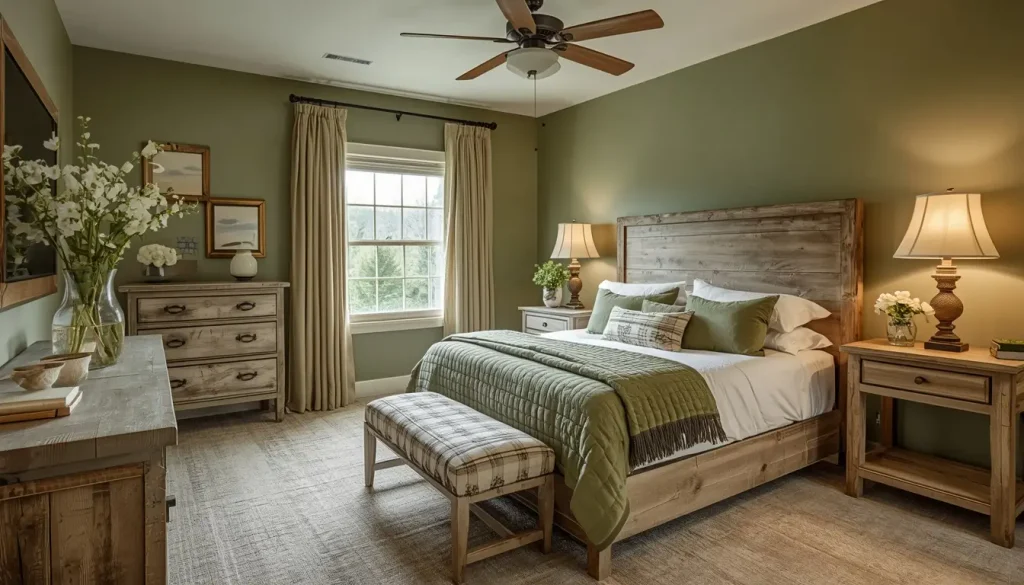
Moss green and reclaimed wood are a natural match for a rustic bedroom.
Use moss green on the walls, bedding, or a padded headboard. Add reclaimed wood through a bed frame, nightstands, shelves, or a simple bench.
Aged finishes and natural imperfections can add character. Use cream or warm beige fabrics to soften the stronger wood tones.
This look works particularly well in farmhouse, cottage, and country-inspired bedrooms.
16. Modern Organic Bedroom With Olive Green and Natural Oak
For a more contemporary look, combine olive green with natural oak and simple furniture.
Use olive on one wall or through the bedding, then add an oak bed frame, streamlined nightstands, and a neutral rug.
Choose fabrics with visible texture, such as linen or cotton, but avoid too many decorative objects. A large mirror, one piece of artwork, and a simple table lamp may be enough.
For more ideas about clean-lined furniture and contemporary styling, see these modern bedroom ideas.
17. Dark Academia Bedroom With Hunter Green and Espresso Brown
Hunter green and espresso brown can create a dramatic bedroom inspired by traditional libraries and study spaces.
Consider deep green walls, dark wood furniture, a leather or upholstered headboard, and warm metal details. Add framed artwork, a reading lamp, and a small stack of books for character.
To keep the bedroom comfortable, use soft bedding in cream, oatmeal, or muted brown. Make sure the room has enough lighting for reading and everyday tasks.
This style is better suited to people who enjoy a darker interior rather than those looking for a bright, minimal bedroom.
18. Vintage Bedroom With Deep Green and Antique Brown Furniture
Vintage furniture can add personality that is difficult to achieve with a matching bedroom set.
Pair a muted green wall with an antique brown dresser, traditional bedside table, or an older wooden bed frame. Brass handles, vintage-style lamps, framed prints, and patterned fabrics can help bring the pieces together.
You do not need every item to come from the same period. A mix of old and new furniture often feels more natural, provided the wood tones and colors are reasonably coordinated.
19. Retro Bedroom With Olive Green, Walnut, and Rust Accents
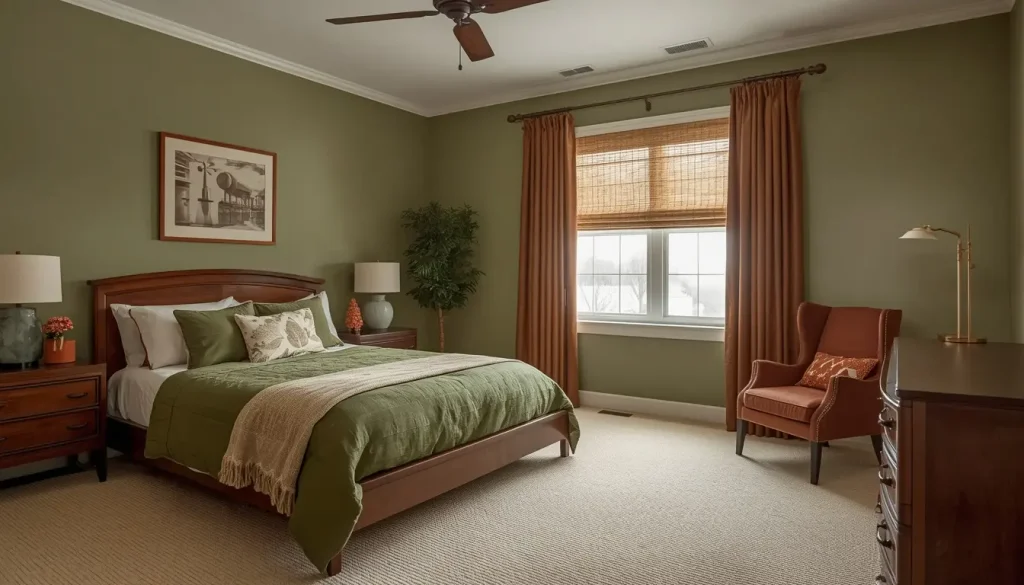
Olive green and walnut already have a warm, retro character. Add a small amount of rust or terracotta to give the room more personality.
Use olive bedding or a feature wall with walnut furniture. Introduce rust through a cushion, throw, artwork, or a small upholstered chair.
Keep the remaining surfaces neutral. The extra accent color should support the green and brown rather than compete with them.
20. Small Bedroom With Pale Green and Light Brown Wood
In a small bedroom, pale green and light brown wood can create a softer look without making the room feel visually crowded.
Try a light sage or eucalyptus shade on the walls, then use an oak or pale brown bed frame and compact bedside tables.
Choose bedding in warm white or cream and use curtains that do not create a heavy visual block. Wall-mounted lighting and slim storage can free up valuable floor space.
If your room is particularly small, keep the furniture practical and avoid buying decorative pieces that do not serve a purpose.
21. Renter-Friendly Green and Brown Bedroom Without Painting
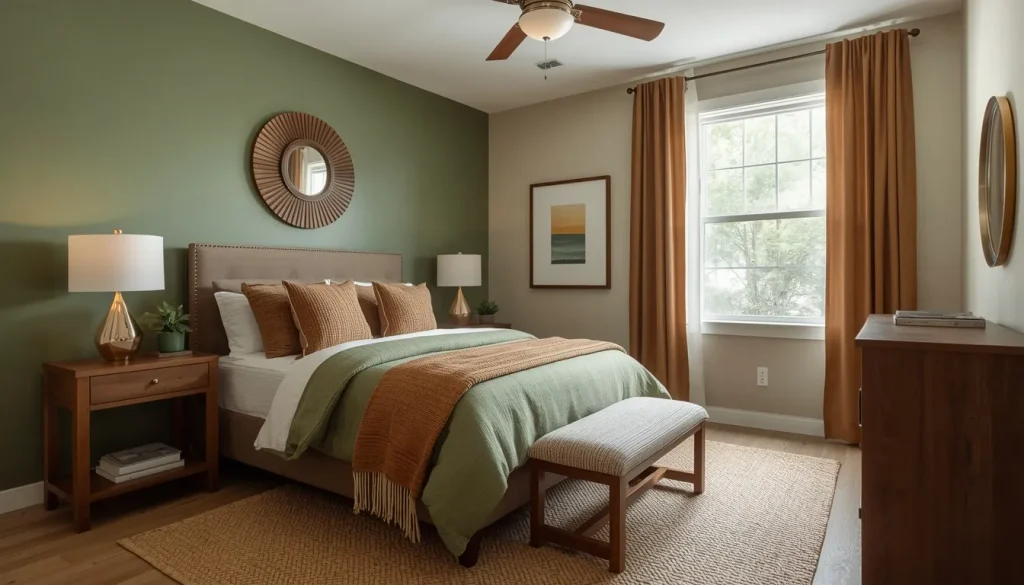
You can create a green and brown bedroom even when painting is not allowed.
Start with a green duvet cover or bedspread and add brown through cushions, a throw, and wooden accessories. Use removable wall art, freestanding mirrors, rugs, and curtains to introduce more color.
A removable wallpaper panel may also work if your landlord permits it and the product is suitable for the wall surface.
Choose pieces that can move with you. This approach gives renters flexibility while still creating a coordinated bedroom.
How to Balance Green and Brown Without Making Your Bedroom Too Dark
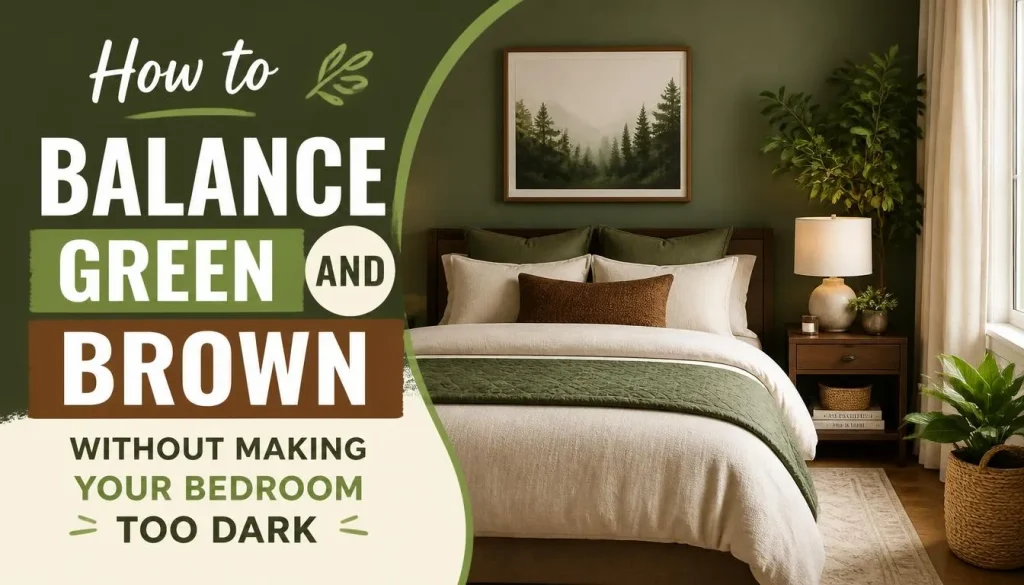
Green and brown can look beautiful together, but using too many dark surfaces may make a bedroom feel smaller or heavier than intended.
The solution is not necessarily to avoid dark colors. It is to control where they appear and provide enough contrast.
Choose One Dominant Color and One Supporting Color
Decide which color should attract the most attention.
For example, if you want green walls and brown furniture, let green establish the room’s main mood and allow brown to provide warmth through the bed, nightstands, and accessories.
If your furniture is already dark brown, use green in selected places rather than introducing another large dark surface.
Use Cream, Beige, or Warm White as a Balancing Color
A third color can give the eye a break between green and brown.
Cream bedding, beige curtains, or a warm white rug can lighten the combination without taking away its earthy character.
If you like softer neutral interiors, you may also enjoy these beige and green bedroom ideas.
Follow a Flexible 60-30-10 Color Balance
The 60-30-10 approach is a useful starting point for organizing a color palette:
- 60% main color: The largest visual area, such as walls or major surfaces.
- 30% supporting color: Furniture, curtains, bedding, or larger textiles.
- 10% accent color: Smaller details such as cushions, artwork, lamps, or decorative objects.
These proportions are a guideline, not a strict rule. In a bedroom with existing brown furniture, brown may naturally occupy more visual space than green.
Mix Light and Dark Wood Finishes Carefully
You do not need every wooden item to have the same finish. However, too many unrelated wood tones can make the room feel disjointed.
Try to repeat one main wood tone in at least two places. For example, use walnut on the bed and nightstands, then introduce a lighter oak detail through a shelf or chair.
Use Mirrors and Layered Lighting
A mirror can reflect available daylight or artificial light and make a bedroom feel more open. Position it carefully so it reflects something pleasant rather than clutter.
Also use more than one type of lighting. A ceiling light provides general illumination, while bedside lamps or wall lights make the room more comfortable in the evening.
How to Decorate a Bedroom With Existing Brown Furniture
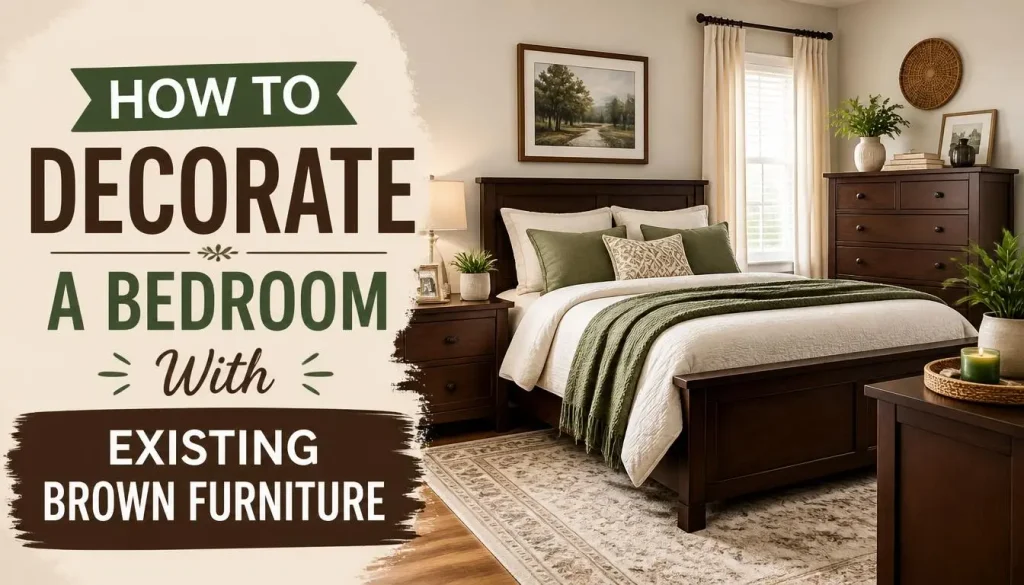
You do not need to replace a brown bed, wardrobe, or nightstand to create a green and brown bedroom. In many cases, the furniture can become the starting point for the entire color scheme.
Best Green Wall Colors for Dark Brown Furniture
Dark brown furniture often looks good with muted sage, olive, eucalyptus, or warmer gray-green shades.
If you want a softer result, choose a lighter green and balance it with cream curtains and bedding. If you prefer a richer bedroom, try olive or forest green on a single wall.
Before buying paint, compare the green with the actual wood finish. A shade that works with walnut may look different beside reddish-brown or espresso furniture.
Best Green Bedding for a Brown Wooden Bed
Sage bedding is an easy choice for a light, relaxed bedroom. Olive adds more warmth, while forest green creates stronger contrast.
You can also combine two greens. For example, use a sage duvet cover with darker olive cushions and a cream throw.
Choosing Curtains and Rugs for Brown Furniture
Cream, oatmeal, muted green, and warm beige curtains can all complement brown furniture.
For a rug, look at the floor color first. If the floor is dark, a lighter rug can help define the bed area. If the floor is pale wood, an earthy green or brown patterned rug can add depth.
Refresh an Old Brown Bedroom Without Replacing Furniture
Start by identifying what actually makes the room look dated. It may be heavy curtains, worn bedding, outdated handles, or too many matching dark furniture pieces.
Change one or two of those elements before buying anything expensive. New bedding, a lighter rug, updated lamps, or a freshly painted dresser may be enough to change the overall appearance.
Best Furniture, Bedding, Curtains, and Accessories for Green and Brown Bedrooms
Once you have chosen the main colors, select the remaining items according to their function and visual weight.
Bed Frames and Nightstands
Walnut, oak, chestnut, and other warm wood finishes are natural choices. Choose a finish that works with your existing floor and furniture rather than trying to match every piece perfectly.
If the room is small, consider a bed with built-in storage or slim nightstands to make better use of the available space.
Headboards
A brown leather headboard can look striking against a muted green wall. Green upholstered headboards also work well with brown wood furniture.
Choose a fabric that suits your lifestyle. Velvet gives the bed a richer look, while linen and textured cotton feel more relaxed.
Bedding and Duvet Covers
Bedding is one of the easiest ways to adjust the color balance.
Good starting combinations include:
- Sage green with cream and walnut.
- Olive green with chocolate brown and beige.
- Forest green with cognac and warm white.
- Pale eucalyptus with caramel and ivory.
- Moss green with chestnut and oatmeal.
You do not need to use all the colors at once. Two main colors and one neutral are usually enough.
Curtains and Window Treatments
For green walls, neutral curtains can soften the room. For neutral walls, green curtains can introduce a larger area of color.
Consider the amount of daylight you want to preserve. Heavy, dark curtains may look attractive, but they can make a small bedroom feel more enclosed when drawn.
Rugs and Flooring
Natural wood floors complement the palette, but the rug needs to work with both the floor and the furniture.
A cream or oatmeal rug can brighten a room with dark brown furniture. A patterned green and brown rug can connect separate elements when the walls and bedding are mostly neutral.
Lamps, Mirrors, and Decorative Accessories
Brass, bronze, black, ceramic, and natural wood finishes can all work with green and brown.
Repeat a finish rather than introducing a different metal or material in every corner. A pair of matching bedside lamps, for example, can make the room feel more organized.
What Accent Colors Work With Green and Brown?
Green and brown do not have to be the only colors in the bedroom. A small supporting accent can make the palette feel more personal.
Green, Brown, and Cream
Cream is one of the easiest colors to introduce. It softens dark shades and works through bedding, curtains, rugs, and upholstered furniture.
Green, Brown, and Beige
Beige creates a warm transition between green and brown. Use it when you want the bedroom to feel understated rather than dramatic.
Green, Brown, and Terracotta
Terracotta brings a warm, earthy accent. Add it through a cushion, ceramic vase, throw, or piece of artwork.
Green, Brown, and Rust
Rust works particularly well with olive, moss, and forest green. Use it sparingly if the bedroom already contains several strong wood tones.
Green, Brown, and Mustard
Mustard adds a slightly retro character. A small cushion or throw is usually enough to introduce the color without making the room feel busy.
Green, Brown, and Brass
Brass adds a warm metallic detail that complements both colors. Try it in lamps, handles, mirror frames, or picture frames.
How to Decorate a Small or Dark Green and Brown Bedroom
A small or poorly lit bedroom needs a little more planning, but you do not have to give up on the combination.
First, decide which surfaces will be dark. If the bed and wardrobe are already brown, choose a lighter green for the walls or bedding. If you want a dark green feature wall, keep the remaining walls and larger textiles lighter.
Avoid filling every corner with furniture. Choose bedside storage that fits the available space, use wall-mounted lights where practical, and keep the route around the bed clear.
Mirrors can help reflect available light, while a combination of ceiling lighting and bedside lamps makes the room more functional after sunset.
Do not assume that every small bedroom needs white walls. A carefully chosen olive or muted green can look comfortable in a compact room when it is balanced with lighter materials.
Budget-Friendly Green and Brown Bedroom Makeover
A new bedroom look does not always require a full renovation. The best starting point is often the furniture and decor you already own.
Refresh the Bedding First
A new duvet cover, quilt, or set of cushion covers can make a noticeable difference. Choose a green that works with the existing brown furniture and repeat it in one or two smaller details.
Reuse and Refresh Existing Furniture
Instead of replacing a brown dresser or bedside table, consider cleaning it, updating its handles, or repainting a suitable piece.
Always check the surface condition and product instructions before sanding or painting furniture.
Add a Small Green Accent Wall
If painting is allowed and your budget permits it, consider one wall rather than the entire room. An accent wall behind the bed can change the overall feel without requiring as much paint.
Use Affordable Textiles
Curtains, rugs, throws, cushions, and bedding can introduce color and texture without changing the main furniture.
Look for pieces that serve more than one purpose. A warm brown throw, for example, can add color and provide an extra layer on cooler nights.
Decorate With a Few Well-Chosen Accessories
A mirror, lamp, framed print, or plant can help connect the palette. You do not need to fill every shelf or bedside surface.
If you are painting or refinishing items indoors, follow the product label and provide plenty of fresh-air ventilation. The US Environmental Protection Agency’s indoor air quality guidance explains why ventilation is important during activities such as painting and remodeling.
Common Green and Brown Bedroom Decorating Mistakes to Avoid
Even a good color combination can become difficult to live with when the room is not balanced.
Using Too Many Dark Shades
Dark green walls, dark brown furniture, dark flooring, and heavy curtains can make the room feel visually crowded.
Keep at least some larger surfaces lighter, especially in bedrooms with limited daylight.
Ignoring Color Undertones
Some greens have yellow undertones, while others lean blue or gray. Brown finishes can also appear reddish, golden, or neutral.
Compare samples beside the actual furniture and flooring. For more help identifying undertones, see Sherwin-Williams’ guide to understanding paint undertones.
Choosing Paint Without Testing It
A paint color can look different on a large wall than it does on a small color card.
Test the shade in more than one area and check it in daylight and artificial light. Benjamin Moore’s paint sample guide explains how moving samples around the room can help you judge the color under different conditions.
Making Every Furniture Piece Match
A matching furniture set can look coordinated, but using the same wood finish everywhere is not essential. A little variation can make the room feel more collected and personal.
Just repeat a few finishes so the overall design still feels connected.
Forgetting Texture
When every surface is smooth, the room can feel flat. Add linen, cotton, wool, leather, wood grain, or woven materials to create more depth.
Overusing Accent Colors
Terracotta, mustard, brass, and cream can all work with green and brown. However, using all of them in large amounts may make the palette feel unfocused.
Choose one or two supporting accents and repeat them thoughtfully.
Frequently Asked Questions
Is Green and Brown a Good Color Combination for a Bedroom?
Yes. Green and brown create a natural, earthy palette that can feel warm and comfortable. The best result depends on choosing shades that suit the room’s furniture, flooring, natural light, and overall style.
What Shade of Green Goes Best With Dark Brown Bedroom Furniture?
Sage, olive, moss, and muted eucalyptus are useful starting points. Sage creates a softer contrast, while olive and moss produce a warmer look. Forest green can also work, but it may make a room with limited light feel darker.
What Color Bedding Goes With Green Walls and Brown Furniture?
Cream, warm white, beige, oatmeal, and soft brown are easy choices. Sage or olive bedding can also work if you want to repeat green in the room. Choose the bedding according to how much contrast the walls and furniture need.
Can You Use Brown Walls With Green Bedroom Decor?
Yes. A warm mocha or muted brown wall can provide a backdrop for sage, olive, or eucalyptus bedding. Use lighter curtains and bedding to prevent the room from feeling too heavy.
How Do You Make a Green and Brown Bedroom Look Brighter?
Use lighter bedding, cream or beige curtains, mirrors, and layered lighting. You can also limit dark furniture to a few main pieces rather than using it on every wall and surface.
Does Green and Brown Work in a Small Bedroom?
Yes. Pale green with light brown or oak furniture is a particularly useful combination for compact rooms. Dark green and chocolate brown can also work, but they are easier to balance when used selectively.
What Accent Colors Go With Green and Brown?
Cream, beige, terracotta, rust, mustard, and brass can all complement green and brown. Choose one or two accents rather than using every color at once.
How Can I Create a Green and Brown Bedroom Without Painting?
Use green bedding, curtains, cushions, rugs, artwork, or an upholstered headboard. Add brown through wooden furniture, leather accessories, woven materials, and warm-toned textiles.
Final Thoughts on Green and Brown Bedroom Decorating Ideas
A green and brown bedroom does not need complicated decoration to look complete. The key is to choose shades that work with your existing furniture, then build the room around a comfortable balance of color, texture, and light.
Sage and walnut create a soft, modern combination. Olive and chocolate brown feel warm and earthy. Forest green and cognac add drama, while pale green and light oak are useful when you want a brighter, more relaxed space.
Start with the biggest elements you already own, such as the bed, wardrobe, flooring, and curtains. Then decide where green will have the greatest effect. You may only need a painted wall, new bedding, or a few carefully chosen accessories to bring the entire room together.
Most importantly, test paint samples in your actual bedroom and look at them at different times of day. A color that looks perfect in a photograph may behave differently in your home. When the shades, furniture, and lighting work together, green and brown can create a bedroom that feels personal, warm, and comfortable for everyday living.

“A comfortable home and a healthy lifestyle go hand in hand.”
Hi, I’m Ethan Carter, the founder and lead editor of TheBestHomeFit. I’m passionate about helping people create beautiful, functional living spaces while building healthier lifestyles at home. Over the years, I’ve spent countless hours researching home decor trends, testing home gym equipment, and reviewing products to help readers make smarter buying decisions.
Through TheBestHomeFit, I share practical home improvement ideas, honest product reviews, buying guides, and fitness tips designed for everyday homeowners. My goal is to make it easier for you to create a home that looks great, feels comfortable, and supports your well-being.
When I’m not researching the latest products or writing in-depth guides, you’ll usually find me redesigning a room, trying new home workout routines, or enjoying quality time with my family.